GRADE & PURITYMoligand™?Moligand™ — Aladdin's line of ligands and bioactive small molecules. Use for receptor, pathway, and binding studies needing defined small-molecule tools.10 mM in DMSO
Zertifikate (CoA, COO, BSE/TSE und Analyse-Diagramm)
C of A & Other Certificates(BSE/TSE, COO):
Analytical Chart:
Lösungsrechner
Molarity Calculator
Determine the necessary mass, volume, or concentration for preparing a solution.
Dilution Calculator
Determine the dilution needed to prepare a stock solution.
Reconstitution Calculator
Bewertungen
Kundenbewertungen
Application Protocols
No tested application protocols, dilutions, or assay conditions are provided in the Product Data for SKU K1497949.
Recommended uses or validated methods: Not specified for this item; refer to CoA/Spec Sheet.
Positive controls, assay windows, and detection methods: Not specified for this item; refer to CoA/Spec Sheet.
General guidance for small-molecule probe handling can be found in the sections Solvent Selection and Reaction & Applications. Users should optimize protocols to their specific assay systems and verify compound behavior experimentally.
Biological Roles
The following provides general, literature-level context on the biological systems that KAT6-class inhibitors are designed to interrogate. It is not item-specific potency/efficacy data.
Target family: KAT6A (MYST3/MOZ) and KAT6B (MORF/QKF) are members of the MYST family of histone acetyltransferases (HATs). They transfer acetyl groups from acetyl-CoA to lysine residues on histone tails, influencing chromatin accessibility and transcriptional regulation.
Functional domains: MYST HATs contain a C2H2 zinc finger, a chromodomain, and a catalytic MYST acetyltransferase domain. The catalytic site binds acetyl-CoA; small-molecule inhibitors commonly exploit this cofactor-binding region.
Biological processes: KAT6 enzymes participate in hematopoietic differentiation, developmental gene expression programs, and maintenance of specific transcriptional states by acetylating histone H3 (e.g., H3K9/H3K14 in certain contexts). Altered KAT6 activity can modulate enhancer activity and promoter acetylation.
Research utility of inhibitors: Chemical probes enable temporal, reversible suppression of KAT6 catalytic activity to dissect epigenetic mechanisms. Typical readouts include changes in histone acetylation marks, chromatin accessibility (ATAC-seq), and transcriptional shifts (RNA-seq). Off-target profiling against other HAT families (e.g., p300/CBP, GNAT) is routinely evaluated to confirm on-target biology.
Note: The Product Data do not provide target specificity, selectivity, or cellular phenotypes for KAT6-IN-1. Users should consult the CoA/technical notes and perform internal validation in their system of interest. For research use only.
Buffer Applications
This item is not a buffering reagent. It is a small-molecule research ligand. Buffer formulation guidance is therefore not directly applicable.
Practical notes (general, for assay setup):
Select assay buffers that preserve KAT6 catalytic activity and are compatible with DMSO carryover (commonly ≤1% v/v). Typical components may include HEPES or Tris, physiological salts, reducing agents (as needed), and BSA to minimize nonspecific binding—optimize per your assay.
Maintain consistent pH and DMSO concentration across control and treated wells to ensure interpretable results.
Item-specific buffer recommendations are Not specified for this item; refer to any available technical datasheet or optimize empirically.
Green Alternatives
This product is a research-grade small molecule (tool compound), not a process solvent or bulk reagent. The concept of greener alternatives generally applies to solvent or reagent selection in synthesis rather than to the choice of an investigational ligand itself.
Practical sustainability notes (general):
Prefer minimal volumes and high-concentration DMSO stocks to reduce solvent usage in screening.
When feasible, select greener co-solvents (e.g., ethanol) over higher-toxicity options for assay dilutions, provided target compatibility is maintained.
Implement microplate formats and miniaturized assays to reduce material and waste.
There are no direct “green substitutes” for KAT6-IN-1 as a specific ligand. Optimization of assay design and solvent systems is the appropriate lever for greener practice.
Pharmaceutical Uses
This product is supplied strictly for research use and is not an approved pharmaceutical ingredient or excipient.
Regulatory status: Not a pharmacopeial-grade substance; no USP/EP/JP monograph is indicated in the Product Data.
Intended use: discovery research, assay development, and target validation in laboratory settings. Not for human or veterinary use, not for diagnostic procedures, and not for clinical applications.
Formulation context: If used in preclinical research formulations (e.g., in vitro dosing solutions), solvent systems should be developed with attention to target tolerance and compound stability. However, no item-specific formulation guidance or stability-in-vehicle data are provided.
Any translation of methods toward regulated studies would require independent qualification, additional quality documentation, and stability studies beyond the scope of Moligand™ grade. Always consult institutional guidelines and regulatory frameworks before any non-research use.
Physical Properties
Item-specific physicochemical specifications are not provided in the Product Data for SKU K1497949. Do not treat any values below as specifications.
Appearance: Not specified for this item; refer to CoA/Spec Sheet.
Melting point: Not specified for this item; refer to CoA/Spec Sheet.
Boiling point: Not applicable/unknown for a solid research ligand; Not specified for this item; refer to CoA/Spec Sheet.
Density: Not specified for this item; refer to CoA/Spec Sheet.
Solubility: Not specified for this item; refer to CoA/Spec Sheet.
LogP, pKa, refractive index: Not specified for this item; refer to CoA/Spec Sheet.
General guidance (literature-level for small-molecule KAT6 inhibitor class; not specific to this item):
Many epigenetic tool compounds are moderately lipophilic and are routinely prepared as concentrated DMSO stocks (e.g., 10–50 mM) for screening. Water solubility can be limited and may require co-solvents or surfactants for aqueous assays.
Solid powders are typically stable at low temperature when protected from moisture and light.
Always rely on the CoA/SDS for the definitive physical properties of KAT6-IN-1.
Quality and Grades
Grade/Purity (item-specific): Moligand™.
About Moligand™ (general description of grade intent; consult CoA for exact tests):
Moligand™ denotes a screening-grade small-molecule ligand intended for discovery applications (e.g., target validation, assay development, preliminary SAR). The emphasis is on reliable identity and suitability for biochemical/cellular screening.
Typical quality controls for this class may include structure confirmation (e.g., NMR and/or MS) and chromatographic purity by HPLC/UPLC. Exact acceptance criteria, residual solvent limits, counter-ion content, water content, and inorganic impurities for this SKU are Not specified for this item; refer to CoA/Spec Sheet.
UV characteristics and LC-MS ionization behavior, if critical for HTS/SPR/biophysics, should be verified against the CoA to ensure compatibility with your detection modality.
What this means practically:
Moligand™ materials are supplied to enable rapid deployment in screening cascades. For later-stage lead optimization or in vivo enabling studies, users may require elevated quality documentation (stability data, extended impurity profiling). If needed, contact us with the SKU for lot-specific CoA and any available supplementary data.
Note: No stabilizers, salts, or counter-ions are specified in the Product Data; verify the exact presentation (free base/acid, salt form, solvate) on the CoA.
Reaction and Applications
This SKU represents a bioactive small molecule (KAT6-IN-1) intended as a research ligand/probe rather than a synthetic reagent. It is not typically employed as a stoichiometric reactant or solvent in preparative chemistry.
Research applications (general to KAT6 inhibitor class; not item-specific claims):
Biochemical assays: characterization of MYST-family histone acetyltransferase activity (e.g., KAT6A/MYST3 and KAT6B/MORF) using enzymatic readouts such as radiometric acetyl transfer, fluorescence-based coupled assays, or end-point LC–MS peptide acetylation analysis.
Cellular studies: modulation of histone acetylation patterns and downstream transcriptional programs in cell models to probe epigenetic regulation by KAT6. Users typically quantify effects via western blot for acetyl-H3 marks, ChIP-qPCR/ChIP-seq, or transcriptomics.
Biophysics: target engagement assessment using DSF, CETSA, nanoBRET, SPR, ITC, or MST, including competition with acetyl-CoA.
Structural biology: co-crystallization or cryo-EM sample prep with KAT6 catalytic domains to elucidate binding mode and guide SAR. Compound purity and homogeneity are important; verify via CoA.
Note: All uses are for research only. For specific potency, selectivity, and off-target profiles of KAT6-IN-1, consult the lot-specific CoA/technical sheet if available; such data are not provided in the Product Data.
Reaction Conditions
This product is not used as a synthetic reagent; therefore, preparative reaction conditions are not applicable.
Assay-related conditions (general, not item-specific):
Biochemical HAT assays are commonly run at near-physiological pH (7.4–8.0) with Mg2+ as required, using acetyl-CoA and histone peptide substrates. Temperature is often ambient to 30 °C. Compound is introduced from DMSO stocks, maintaining consistent solvent percentage (e.g., 0.1–1% v/v).
Cellular assays typically expose cells to serial dilutions prepared from DMSO stocks; exposure times range from 2–24 h or longer, with viability and off-target controls. Confirm target engagement via biochemical or proximal readouts (e.g., histone acetylation).
These conditions are generalized guidance for the KAT6 target class only; no item-specific potency, kinetics, or stability information for KAT6-IN-1 is provided in the Product Data.
Safety and Handling
Authoritative safety information must be obtained from the SDS. The Product Data provided does not include GHS classifications for this item.
GHS/CLP information (item-specific):
Signal word: Not specified for this item; refer to SDS.
Hazard statements (H-codes): Not specified for this item; refer to SDS.
Pictograms: Not specified for this item; refer to SDS.
General laboratory handling practices for research ligands (not item-specific):
Use in a chemical fume hood. Avoid inhalation of dust and contact with skin/eyes.
PPE: lab coat, safety glasses, and appropriate chemical-resistant gloves. Consider double-gloving for DMSO stock handling to reduce dermal uptake potential.
Avoid generating dust; handle solids with anti-static tools or weigh boats with covers. Wipe down surfaces to prevent cross-contamination in screening labs.
Storage incompatibilities: keep away from strong oxidizers and acids/bases unless stability is known from the CoA/SDS. Protect from moisture and light.
First aid (general): rinse skin with water upon contact; flush eyes for at least 15 minutes; move to fresh air if inhaled; seek medical attention if symptoms persist. Provide SDS to responders.
Waste: collect in halogenated/non-halogenated organic waste streams as appropriate to your solvent system and local regulations.
Note: No medical/clinical use. For research use only.
Solvent Selection
This product is a small-molecule research ligand rather than a solvent. Nevertheless, solvent choice is crucial for preparing assay stocks and working solutions.
Item-specific solubility is Not specified for this item; refer to CoA/Spec Sheet. The following guidance is general/literature-level for KAT6 inhibitor–class tool compounds:
Primary stock solvent: anhydrous DMSO is the default for preparing concentrated stocks (e.g., 10–50 mM), stored at low temperature and protected from moisture/light. Filter sterilization (0.22 μm) can be used if particulates are a concern.
Aqueous compatibility: dilute DMSO stocks into assay buffer immediately before use. Keep final DMSO percentage consistent across controls (commonly 0.1–1% v/v), as higher DMSO can affect enzyme/cell behavior.
Co-solvent strategies: for challenging solubility, small percentages of DMF, ethanol, or solubilizing excipients (e.g., cyclodextrins, non-ionic surfactants) may be evaluated in method development. Validate target/enzyme tolerance to co-solvents.
Adsorption minimization: use low-binding plastics or silanized glass for low-nanomolar assays to reduce compound loss.
Light and oxygen: some heteroaromatics are photosensitive; minimize light exposure and avoid prolonged aeration during solution prep unless stability is known from CoA/SDS.
Always test solubility and stability empirically for your assay conditions; do not assume behavior without item-specific data.
Storage and Reconstitution
Storage conditions (item-specific): Store at -80°C.
Shipping (item-specific): Shipped on dry ice packs + cold packs.
Long-term stability: Not specified for this item; refer to CoA/Spec Sheet.
Protect from: In the absence of item-specific data, protect from moisture and light as a precaution for small-molecule ligands.
Reconstitution: Not specified for this item; refer to CoA/Spec Sheet. In general practice for screening compounds, reconstitution in anhydrous DMSO to prepare concentrated stocks is common, but do not treat this as a specification for this SKU.
Aliquoting: For best practice in screening labs, prepare single-use aliquots to minimize freeze–thaw cycles; however, specific freeze–thaw tolerance for this item is not provided.
Always consult the lot-specific CoA and SDS for definitive storage stability, reconstitution solvents, and handling limits. For research use only.
Structure and Identity
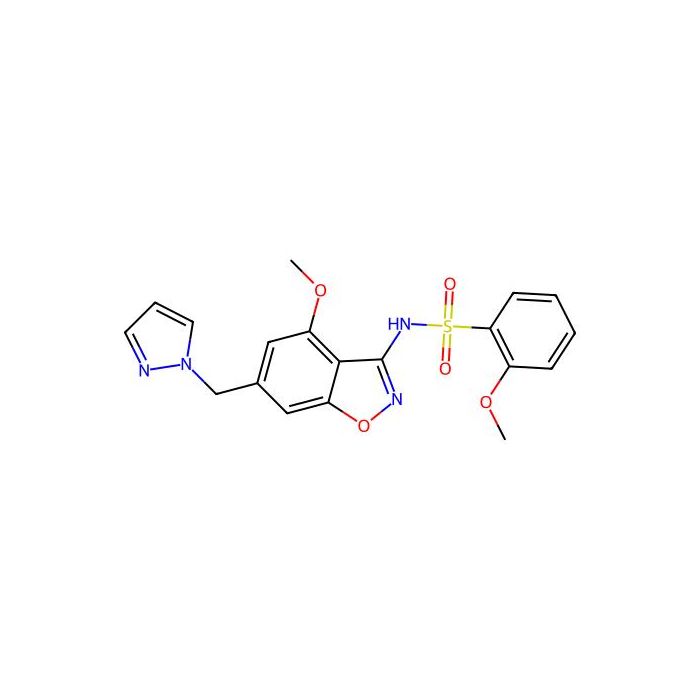
This product is a small-molecule research ligand designated KAT6-IN-1, offered for discovery screening against epigenetic targets in the KAT6 family.
Item-specific identifiers (from Product Data):
CAS: 2569008-99-5
InChIKey: Not specified for this item; refer to CoA/Spec Sheet.
SMILES: Not specified for this item; refer to CoA/Spec Sheet.
Molecular formula: Not specified for this item; refer to CoA/Spec Sheet.
Molecular weight: Not specified for this item; refer to CoA/Spec Sheet.
Structural features (general/contextual, literature-level for KAT6 inhibitor class, not item-specific):
KAT6 (MOZ/MYST3 and KAT6B/MORF) inhibitors are typically heteroaromatic, H-bonding-capable scaffolds designed to engage the acetyl-CoA binding site of MYST-family HATs.
Common motifs include fused aromatic systems, amide/urea linkers, and polar heterocycles to balance potency and permeability. This description is generic and may not reflect the exact structure of KAT6-IN-1.
2D structural description (generic to class): often a rigid polycyclic core bearing one or more heteroatoms (N/O), appended with substituents that project into the cofactor pocket and a solubilizing tail. Exact atom connectivity for this SKU is not provided in the Product Data.
Note: For definitive identity (structure, stereochemistry, and analytical identifiers) consult the CoA/Spec Sheet for SKU K1497949.
Synthetic Utility
KAT6-IN-1 is a finished research ligand, not a general synthetic building block. It is not typically used as a reagent, catalyst, or intermediate in organic synthesis workflows.
General considerations for chemists (non-item-specific):
If analog synthesis or SAR expansion is desired, typical strategies around KAT6 inhibitor cores involve modification of heteroaromatic scaffolds, linker motifs (amide/urea/ether), and solubilizing substituents, guided by co-crystal structures with the KAT6 catalytic domain.
Protecting-group strategies are commonly selected to preserve heteroatom-rich pharmacophores; late-stage diversification (Suzuki/Sonogashira/amide couplings) is often used to explore vectors that address the acetyl-CoA pocket.
For this SKU, no reactive handles or functional-group inventory are provided in the Product Data. Consult the CoA or original discovery literature for any derivatization potential if probe functionalization (e.g., biotinylation, photoaffinity tags) is contemplated.
Target Specificity
Item-specific biological target data are not provided in the Product Data for SKU K1497949.
Target, selectivity profile, Kd/IC50, and off-target characterization: Not specified for this item; refer to CoA/Spec Sheet or relevant technical literature if available.
Species cross-reactivity: Not specified for this item; refer to CoA/Spec Sheet.
Given the product name, KAT6-IN-1 is positioned as a KAT6-family inhibitor for research use, but definitive specificity metrics must be established from primary data in your laboratory or from the supplier’s technical documentation.
Häufig gestellte Fragen
What is Moligand??
Moligand? is one of Aladdin Scientific's premium product lines, formulated for high-purity applications across multiple workflows. Compared to standard grades in the same workflow, Moligand? products typically offer tighter specifications, more rigorous QC, and stronger lot-to-lot consistency.
How should this product be stored?
Store at ?80 °C. Ultra-low temperature storage is required to maintain the specified shelf life.
How is this product shipped?
This product ships frozen with dry ice and cold packs. Unpack on arrival and transfer it to the storage condition stated above; handle dry ice with insulated gloves in a ventilated area.
What are the CAS number, molecular formula and molecular weight?
The CAS Number is 2569008-99-5, the molecular formula is C19H18N4O5S, and the molecular weight is 414.44 g/mol.
What documentation is provided?
Available product documentation, including Certificates of Analysis (COA), Safety Data Sheets (SDS), and specification sheets, is shown in the product document area. Document availability and access follow the current site policy.
Need help choosing the grade?
Our grade selection guide covers purity, stabilizer status, and application suitability for all variants in our catalog.
Wir verwenden Cookies, um die ordnungsgemäße Funktion der Website sicherzustellen und, soweit zulässig, Ihr Nutzererlebnis zu verbessern. Sie können Ihre Einstellungen jederzeit unter „Einstellungen“ verwalten. Weitere Informationen finden Sie in unserer Cookie-Richtlinie.
Dürfen wir Sie über Rabattaktionen informieren?
Später erinnern
Vielen Dank! Bitte überprüfen Sie Ihren E-Mail-Posteingang, um zu bestätigen.
Products are supplied to verified businesses, institutions, and qualified professionals for research and development use only. Not for use in humans, animals, diagnosis, or therapy.