QUALITÄT & REINHEITMoligand™?Moligand™ — Aladdin's line of ligands and bioactive small molecules. Use for receptor, pathway, and binding studies needing defined small-molecule tools.≥99%
This compound belongs to the class of organic compounds known as alpha amino acids. These are amino acids in which the amino group is attached to the carbon atom immediately adjacent to the carboxylate group (alpha carbon).
External Descriptors
Not available
1. Djoumbou Feunang Y, Eisner R, Knox C, Chepelev L, Hastings J, Owen G, Fahy E, Steinbeck C, Subramanian S, Bolton E, Greiner R, and Wishart DS. ClassyFire: Automated Chemical Classification With A Comprehensive, Computable Taxonomy. Journal of Cheminformatics, 2016, 8:61.
Determine the necessary mass, volume, or concentration for preparing a solution.
Dilution Calculator
Determine the dilution needed to prepare a stock solution.
Reconstitution Calculator
Bewertungen
Kundenbewertungen
Application Protocols
Tested applications, recommended dilutions, and assay-specific protocols are Not specified for this item; refer to CoA/Spec Sheet.
For general guidance on using this compound in research, see the Reaction & Applications and Reaction Conditions tabs.
Biological Roles
Research-use context (no medical/clinical claims):
L-NIL is widely used as a selective inhibitor of inducible nitric oxide synthase (iNOS) in biochemical and cellular studies (literature). By attenuating iNOS-catalyzed NO formation, it helps delineate NO-dependent signaling, transcriptional responses, and nitrosative stress pathways in immunology and inflammation models.
Selectivity context (literature): Relative to nonselective NOS inhibitors, L-NIL demonstrates preferential inhibition of iNOS over endothelial (eNOS) and neuronal (nNOS) isoforms in many in vitro systems. Actual selectivity can be assay-dependent and should be verified experimentally.
Pathway mapping: Modulates downstream S-nitrosylation events and cyclic GMP signaling indirectly through NO availability. Researchers often combine L-NIL with NO donors or guanylate cyclase modulators to dissect pathway nodes.
Chemical biology utility: As a lysine-derived scaffold, L-NIL provides a cationic, polyfunctional surface that can engage the NOS active site, serving as a reference ligand in SAR and docking studies.
Important: The above reflects general literature roles for L-NIL-like inhibitors and does not imply any therapeutic use. Performance parameters (e.g., potency in a specific assay) depend on experimental conditions and should be independently confirmed.
Buffer Applications
This compound is not a buffering agent and is not typically used to establish or maintain solution pH.
Practical notes for assay buffers (general guidance):
Prepare working solutions in physiologically relevant buffers such as PBS, HBSS, or HEPES-buffered saline at pH 7.2–7.4 for cell-based assays, or in enzyme assay buffers recommended for NOS activity measurements (e.g., Tris or HEPES systems with appropriate cofactors for enzymology).
Filter-sterilize working solutions when used in cell culture. Maintain low organic cosolvent content to avoid confounding biological effects.
Item-specific buffer recipes, pH ranges, and compatibility are Not specified for this item; refer to CoA/Spec Sheet and your assay SOP.
Green Alternatives
This product is a bioactive small-molecule inhibitor used as a research tool, not a volatile organic solvent or process reagent where greener drop-in replacements are typical.
Practical sustainability considerations for users:
Prefer aqueous buffers over high DMSO content when solubility and assay design allow.
Minimize organic solvent volumes during stock preparation and cleaning; collect solvent waste separately for proper disposal.
Use microplate-based assays to reduce per-experiment compound consumption.
Because L-NIL functions as a target-selective probe rather than a consumable solvent or reagent, there are no direct “green alternative” molecules with identical function. Instead, focus on greener handling practices and right-sizing experiments to reduce chemical footprint.
Pharmaceutical Uses
This product is sold strictly for research use only.
Non-clinical, pre-formulation, and discovery contexts (general):
Tool compound/reference inhibitor: Utilized to benchmark iNOS inhibition in target validation studies and to profile structure–activity relationships during hit-to-lead campaigns.
Analytical reference: May serve as a system suitability or comparator standard in bioanalytical method development for NOS-related studies.
Formulation screening (in vitro only): Solubility and stability screens in aqueous media or DMSO for high-throughput screening collections.
There are no pharmacopeial monographs or excipient roles cited for this item. No clinical, therapeutic, or diagnostic claims are made or implied.
Physical Properties
Item-specific specifications
Appearance: Not specified for this item; refer to CoA/Spec Sheet.
Molecular weight: Not specified for this item; refer to CoA/Spec Sheet.
Physical state: Typically an off-white to white solid for free base or salt forms (literature).
Ionization: As an amino-acid–like zwitterionic molecule, multiple protonation sites are present (α-amine, side-chain imine/amine; α-carboxyl) with pH-dependent speciation (literature).
Solubility: Frequently soluble in water and aqueous buffers; DMSO is commonly used for concentrated stock solutions when preparing screening libraries (literature). Actual solubility and solvent recommendations should be verified on the CoA.
pKa considerations: Amino acid α-amine and side-chain basic functionality typically have basic pKa values, and the carboxyl group acidic pKa in the 2–3 range (qualitative, literature for lysine-like scaffolds; exact pKa values for L-NIL vary by salt form and ionic strength).
Melting point, density, refractive index, logP, BP: Not specified for this item; refer to CoA/Spec Sheet.
Always consult the specific CoA for definitive numerical specifications applicable to SKU L303929.
Quality and Grades
Item-specific grade
Grade/Purity: Moligand™ (as provided in Product Data). Numeric purity, stabilizers, and spectral/analytical release criteria: Not specified for this item; refer to CoA/Spec Sheet.
What Moligand™ typically implies (general information)
The Moligand™ line denotes small-molecule ligands/tool compounds curated for screening, target validation, and chemical biology workflows. Typical expectations for this class include structure confirmation and a chromatography-based purity assessment appropriate for discovery assays. However, exact tests and thresholds vary by item and batch.
Analytical considerations for professional use (general guidance)
Identity confirmation: Users commonly verify by LC–MS and 1H NMR before critical studies.
Purity for bioassays: Many screening applications prefer ≥95% HPLC purity and low residual solvents/metals; verify your batch’s CoA.
UV profile/impurities: If performing quantitative UV assays, obtain a spectrum to account for any background absorbance from minor impurities.
For this SKU, any specific numeric purity, residual solvents/metals, water content, and salt form are Not specified for this item; refer to CoA/Spec Sheet.
Reaction and Applications
Applicability to synthetic reactions
L-NIL is primarily a bioactive tool compound rather than a general-purpose synthetic reagent. It is not commonly used as a stoichiometric reagent or catalyst in standard organic transformations.
Research and assay applications (literature/general)
Nitric oxide synthase (NOS) pathway studies: Widely used in cell and biochemical assays to modulate nitric oxide production and interrogate iNOS-dependent signaling cascades, cytokine responses, and redox biology (research use only).
Chemical biology: Employed as a probe/ligand to examine structure–activity relationships (SAR) around lysine/arginine-mimetic scaffolds and to benchmark iNOS-selective inhibition in enzymology panels.
Comparative selectivity experiments: Utilized alongside nonselective NOS inhibitors (e.g., L-NAME) to distinguish iNOS from eNOS/nNOS contributions (literature practice).
Practical tips (general)
Prepare fresh working solutions; avoid prolonged exposure at room temperature, especially in aqueous media. Filter-sterilize (0.22 µm) if needed for cell-based assays.
Control experiments should include solvent-only controls and, when relevant, counter-screening against eNOS/nNOS to validate selectivity in the specific assay system.
Note: No manufacturer-verified application list is provided for this SKU; details above are general literature practices.
Reaction Conditions
This section is framed for experimental use conditions rather than organic synthesis, as L-NIL is a bioactive probe.
General conditions for biological assays (literature/practice):
Stock solutions: Commonly prepared at 10–100 mM in water or DMSO, then diluted into assay buffer. Keep final DMSO ≤0.1–0.5% v/v for cell assays.
Working concentrations: Frequently 0.1–100 µM in cells; enzyme assays often span broader ranges (e.g., 0.01–1000 µM) to generate full inhibition curves. Optimize per system.
Temperature and time: Incubations at 25–37°C for 15 min to several hours depending on endpoint (acute NO output vs. longer gene-expression effects). Protect from light and avoid extended room-temperature storage of aqueous solutions.
Controls: Include vehicle controls and, when assessing selectivity, parallel testing against eNOS/nNOS controls.
Potency/selectivity (illustrative literature guidance, not item-specific):
L-NIL is described as iNOS-preferring; reported inhibition constants are in the low-to-mid micromolar range for iNOS, with weaker effects on eNOS/nNOS in many systems. Exact values are assay- and species-dependent and should be determined under your conditions.
Always corroborate conditions with preliminary range-finding and confirm compound integrity by LC–MS/NMR where critical.
Safety and Handling
Regulatory and hazard classification (item-specific)
GHS classification: Not specified for this item; refer to SDS.
Signal word / H-statements / Pictograms: Not specified for this item; refer to SDS.
General laboratory safety guidance (not a substitute for SDS)
Handle in a chemical fume hood or well-ventilated area. Avoid inhalation of dust and contact with skin/eyes.
Recommended PPE: Lab coat, safety glasses, and appropriate chemical-resistant gloves (e.g., nitrile). Use dust mask or respirator if dust generation cannot be controlled (per institutional policy).
First aid (general): If on skin/eyes, rinse cautiously with water for several minutes; remove contaminated clothing. If inhaled, move to fresh air. If ingested, rinse mouth; seek medical attention as needed. Always follow the SDS.
Incompatibilities: Strong oxidizing agents and strong acids/bases may cause decomposition or salt/metathesis reactions (general for amine/imine-containing organics). Avoid moisture uptake for free base powders; minimize repeated freeze–thaw for solutions.
Environmental precautions: Prevent release to the environment. Collect spillage with inert absorbent and dispose according to local regulations.
Always defer to the product’s SDS for authoritative hazards, exposure limits, and emergency procedures. This product is designated for research use only.
Solvent Selection
Item-specific notes
Preferred solvents and exact solubility: Not specified for this item; refer to CoA/Spec Sheet.
General guidance (literature/practice for L-NIL–type amino-acid derivatives)
Aqueous compatibility: Amino-acid–like inhibitors are commonly water-soluble as free bases/zwitterions or salts. Many users prepare stocks in water or aqueous buffer (pH 6–7.4) for biological assays.
DMSO stocks: For high-concentration screening stocks, DMSO (anhydrous) is frequently used, then diluted into assay buffer to ≤0.1–0.5% v/v DMSO final to limit solvent effects.
pH effects: Ionization state strongly influences solubility. Slight acidification (e.g., dilute HCl) may enhance dissolution of free-base materials; slight basification aids dissolution of the acid form. Adjust gently and verify assay compatibility.
When to choose alternatives
If hydrophobic interference, consider aqueous buffers without organic cosolvents. If precipitation upon dilution from DMSO is observed, pre-dilute DMSO stocks stepwise with buffer containing a small amount of surfactant (e.g., 0.01% Tween-20) or prepare direct aqueous stocks when feasible (general practice).
Confirm solvent compatibility and final assay tolerances empirically for your system.
Storage and Reconstitution
Item-specific storage and shipping
Storage conditions: Store at -20°C (from Product Data).
General handling guidance (supplemental, not item-specific specs)
Solid material: Keep tightly closed in a desiccated environment. Allow container to equilibrate to room temperature before opening to minimize moisture condensation.
Solution stocks: For aqueous or DMSO stocks, aliquot and store at -20°C to avoid repeated freeze–thaw cycles. Protect from light and air exposure when feasible. Typical working aliquots are prepared to support 1–2 weeks of usage; discard if turbidity, color change, or precipitation occurs.
Reconstitution: If solubility is uncertain, begin with a small volume of water or DMSO, sonicate gently, and adjust pH slightly if compatible with intended assays. Sterile-filter (0.22 µm) for cell culture use.
Item-specific solvent recommendations, stability timelines, and permissible freeze–thaw cycles are Not specified for this item; refer to CoA/Spec Sheet and the SDS for authoritative guidance.
Structure and Identity
Item-specific identifiers (from Product Data)
SKU: L303929
Product name: L-NIL
CAS: 53774-63-3
PubChem CID: 3863
InChIKey: Not specified for this item; refer to CoA/Spec Sheet.
SMILES: Not specified for this item; refer to CoA/Spec Sheet.
Molecular formula and molecular weight
Molecular formula: Not specified for this item; refer to CoA/Spec Sheet.
Molecular weight: Not specified for this item; refer to CoA/Spec Sheet.
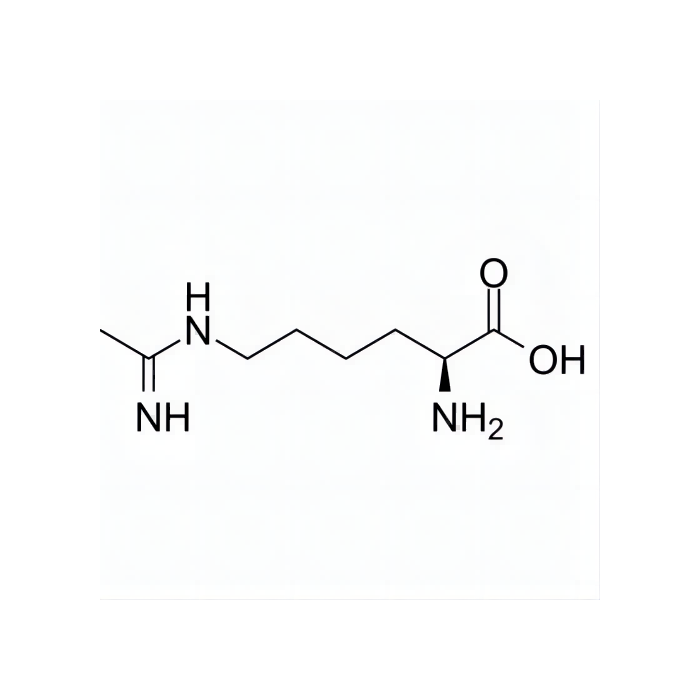
Common chemical name: L-N6-(1-iminoethyl)-L-lysine (abbrev. L-NIL), an L-lysine derivative bearing an Nε-substituted iminoethyl group.
Core features: L-α-amino acid backbone with α-amine and α-carboxylate, and a primary ε-amine of lysine modified to an iminoethyl functionality (–CH(CH3)=NH) on the side chain.
Stereochemistry: L-configuration at the α-carbon (literature).
Functional groups: α-amino (protonatable), α-carboxylic acid (deprotonatable), side-chain imine/amine functionality capable of protonation and H-bonding (literature).
2D description: An amino acid with a four-methylene side chain (–(CH2)4–) terminating in an N-substituent that forms a C=N–H (imino) linked to a methyl-bearing carbon; the α-carbon bears –NH2 and –CO2H in the L arrangement (literature).
Note: Exact structural strings (SMILES/InChI) and elemental analysis for this catalog item are not provided here and should be confirmed on the item’s CoA/Spec Sheet.
Synthetic Utility
L-NIL is principally used as a biological probe rather than a building block; however, the scaffold suggests some limited synthetic utility (general perspective):
Functional-group handles: Contains an α-carboxyl and α-amine (as in amino acids) and a basic side-chain imine/amine motif, enabling salt formation, amide coupling at the carboxyl, and potential protection/deprotection strategies if derivatization is pursued.
Derivatization: Researchers may attach reporters (e.g., fluorophores, biotin) via amide bonds to the α-carboxyl or through linker strategies from the α-amine, to create affinity probes for NOS-binding studies (literature practice). Protecting groups (Boc, Fmoc) can be employed as needed.
Immobilization: Carboxyl- or amine-mediated coupling to solid supports for pull-down experiments or target engagement assays.
Note: Such transformations are specialized and not typical “commodity” synthetic chemistry. The product as sold is intended for direct use as a tool compound; if chemical modification is desired, verify the exact salt/form, purity, and counterions on the CoA to plan appropriate protection strategies.
Target Specificity
No manufacturer-verified target specificity data are provided for this SKU.
General note: While literature frequently employs L-NIL as an iNOS-preferring inhibitor, any selectivity profile applicable to this specific batch/formulation is Not specified for this item; refer to CoA/Spec Sheet and confirm empirically in your assay system.
Häufig gestellte Fragen
What is the purity of this product?
This product is supplied at ≥99% purity (chemical assay). Lot-specific values are stated on the Certificate of Analysis.
What is Moligand??
Moligand? is one of Aladdin Scientific's premium product lines, formulated for high-purity applications across multiple workflows. Compared to standard grades in the same workflow, Moligand? products typically offer tighter specifications, more rigorous QC, and stronger lot-to-lot consistency.
How should this product be stored?
Store at ?20 °C. Freezer storage is required to maintain the specified shelf life.
How is this product shipped?
This product ships in an insulated container with ice pads. Unpack on arrival and transfer it to the storage condition stated above.
What are the CAS number, molecular formula and molecular weight?
The CAS Number is 53774-63-3, the molecular formula is C8H17N3O2, and the molecular weight is 187.24 g/mol. InChIKey ONYFNWIHJBLQKE-UHFFFAOYSA-N.
What documentation is provided?
Available product documentation, including Certificates of Analysis (COA), Safety Data Sheets (SDS), and specification sheets, is shown in the product document area. Document availability and access follow the current site policy.
Benötigen Sie Hilfe bei der Auswahl der Qualität?
Unser Leitfaden zur Qualitätsauswahl behandelt Reinheit, Stabilisatorstatus und Anwendungseignung für alle Varianten in unserem Katalog.
Wir verwenden Cookies, um die ordnungsgemäße Funktion der Website sicherzustellen und, soweit zulässig, Ihr Nutzererlebnis zu verbessern. Sie können Ihre Einstellungen jederzeit unter „Einstellungen“ verwalten. Weitere Informationen finden Sie in unserer Cookie-Richtlinie.
Dürfen wir Sie über Rabattaktionen informieren?
Später erinnern
Vielen Dank! Bitte überprüfen Sie Ihren E-Mail-Posteingang, um zu bestätigen.
Products are supplied to verified businesses, institutions, and qualified professionals for research and development use only. Not for use in humans, animals, diagnosis, or therapy.

 K2218609