QUALITÄT & REINHEITReagent Grade?General reagent-grade purity suitable for most laboratory work. Use as a dependable default when no specific higher grade is required.High-purity?High-purity grade with substantially reduced impurity levels. Use when trace contaminants would interfere with your measurement or process.≥99.9% metals basispowder,<10μm
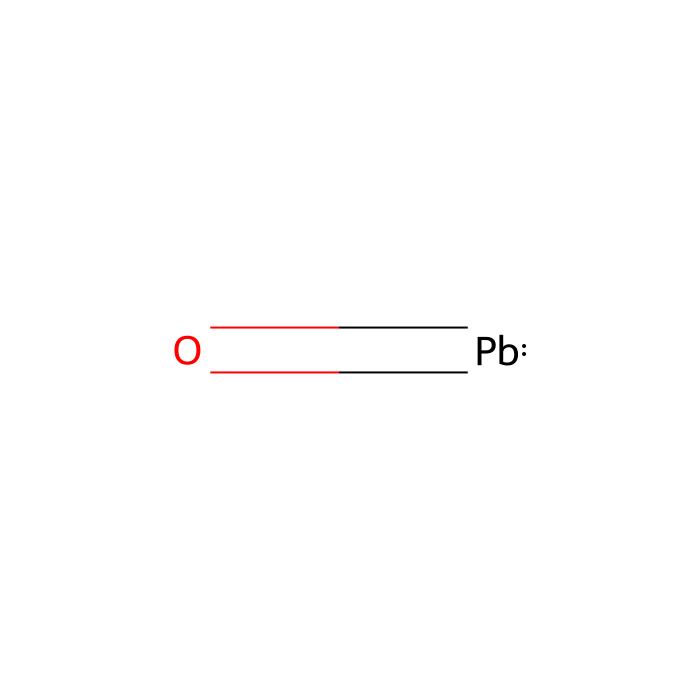
Lead (II) oxide is amphoteric in nature, capable of reacting with both acid and base. It exists in two forms, litharge and massicot. Lead (II) oxide is commonly used in making lead glass and glazing pottery. Addition of PbO (as a dopant) to Ni-Cu-Zn ferrite increases the densification rate and final sintered density, whereas activation energy of densification was reduced.
Application
Lead(II) oxide (PbO) has been used in the preparation of (Pb 0.93 La 0.07 )(Zr 0.65 Ti 0.35 )O 3 powder (PLZT 7/65/35), (Pb 0.97 La 0.03 )(Zr 0.52 Ti 0.48 )O 3 (PLZT) ceramics and (Pb 0.84 Ba 0.16 )(Zr 0.54 Ti 0.46 )O 3 (PBZT) ceramics.
Spezifikationen
Synonyme
Bleimonoxid | Lead Oxide Yellow | Lead oxide, PbO | oxolead | Lead(II) oxide | Lead oxide (PbO) | Lead oxide, (PbO) | Plumbous oxide | Lead( cento) oxide | oxygen lead | Yellow Lead Ocher | Litharge (PbO) | Lead monoxide | Lead(2+) oxide | Litharge Yellow L-28 | Bleioxyd | Litharge | Lead protoxide | Lead(II) oxide, low silver | Massicot Show more
Post-transition metal oxide - Inorganic lead salt - Inorganic oxide - Inorganic salt
Beschreibung
This compound belongs to the class of inorganic compounds known as post-transition metal oxides. These are inorganic compounds containing an oxygen atom of an oxidation state of -2, in which the heaviest atom bonded to the oxygen is a post-transition metal.
External Descriptors
Not available
1. Djoumbou Feunang Y, Eisner R, Knox C, Chepelev L, Hastings J, Owen G, Fahy E, Steinbeck C, Subramanian S, Bolton E, Greiner R, and Wishart DS. ClassyFire: Automated Chemical Classification With A Comprehensive, Computable Taxonomy. Journal of Cheminformatics, 2016, 8:61.
Wir verwenden Cookies, um die ordnungsgemäße Funktion der Website sicherzustellen und, soweit zulässig, Ihr Nutzererlebnis zu verbessern. Sie können Ihre Einstellungen jederzeit unter „Einstellungen“ verwalten. Weitere Informationen finden Sie in unserer Cookie-Richtlinie.
Dürfen wir Sie über Rabattaktionen informieren?
Später erinnern
Vielen Dank! Bitte überprüfen Sie Ihren E-Mail-Posteingang, um zu bestätigen.
Products are supplied to verified businesses, institutions, and qualified professionals for research and development use only. Not for use in humans, animals, diagnosis, or therapy.

 K2613591