QUALITÄT & REINHEITMoligand™?Moligand™ — Aladdin's line of ligands and bioactive small molecules. Use for receptor, pathway, and binding studies needing defined small-molecule tools.10 mM in DMSO
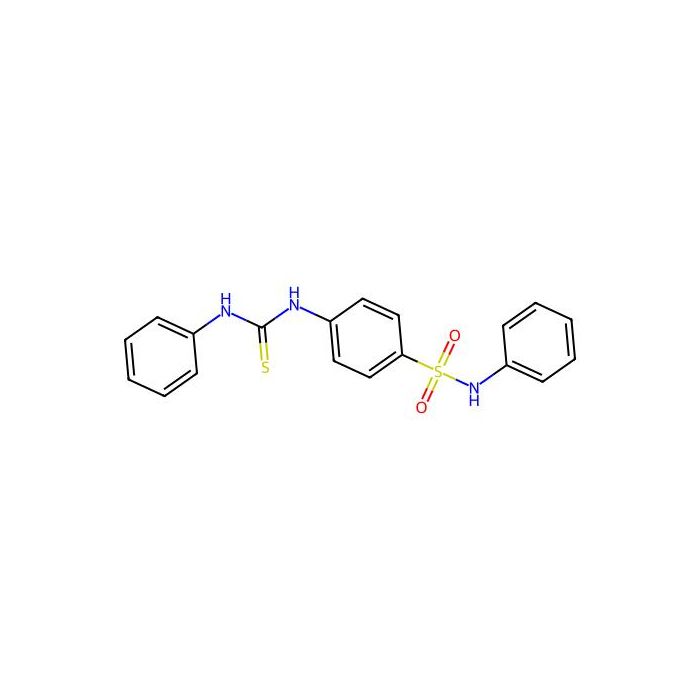
LED209 is a potent and orally active small molecule inhibitor of the bacterial receptor QseC and a potent prodrug with high selectivity for QseC. LED209 inhibits the binding of signaling molecules to QseC. LED209 has antibacterial activity.
Spezifikationen
Spezifikationen & Reinheit
Moligand™, 10 mM in DMSO
Storage
Store at -80°C
Verschickt in
Dry ice packs + Cold packs
Dieses Produkt erfordert Kühlkettenversand. Grundversand und andere Economy-Optionen sind nicht verfügbar.
Zertifikate (CoA, COO, BSE/TSE und Analyse-Diagramm)
C of A & Other Certificates(BSE/TSE, COO):
Analytical Chart:
Chemische und physikalische Eigenschaften
Brechungsindex
n20D1.74 (Predicted)
Siedepunkt (°C)
~549.4° C at 760 mmHg (Predicted)
Schmelzpunkt (°C)
237.34° C (Predicted)
Lösungsrechner
Molarity Calculator
Determine the necessary mass, volume, or concentration for preparing a solution.
Dilution Calculator
Determine the dilution needed to prepare a stock solution.
Reconstitution Calculator
Bewertungen
Kundenbewertungen
Application Protocols
No tested or validated application protocols are specified for this item in the product data. The following are general, non-binding guidelines for handling small-molecule ligands in research settings; adapt to your system and verify empirically.
General handling and use (guidance, not specifications):
Stock preparation: Prepare a concentrated stock in anhydrous DMSO (e.g., 10–50 mM). Vortex/sonicate to ensure full dissolution. Record the achieved concentration.
Working solutions: Dilute into assay buffer or media with thorough mixing; maintain constant final DMSO across controls and treatments. Typical final DMSO ≤0.5% v/v for many cell assays.
Controls: Include vehicle controls, positive controls (if available), and orthogonal readouts to detect off-target or assay-interference effects.
Stability: Aliquot stocks to avoid repeated freeze–thaw. Assess stability by LC–MS or activity retention over the assay timeframe.
Plate handling: Use low-binding tips/plates for hydrophobic compounds; pre-wet tips with solution to improve pipetting accuracy.
For any lot-specific recommendations or known assay compatibilities, refer to the CoA/Spec Sheet or contact technical support.
Biological Roles
Item-specific biological roles are not specified in the product data. The following information summarizes typical research contexts for compounds referenced as LED209 in the scientific literature; verify relevance to your application and do not treat as product specifications.
Literature (general):
LED209 has been reported as a small-molecule modulator of bacterial two-component signaling, described to interact with the histidine sensor kinase QseC that responds to adrenergic signals, leading to modulation of virulence-associated gene expression in certain Gram-negative bacteria. These studies focus on pathogenesis mechanisms and quorum sensing-like interkingdom signaling.
Reported use cases include probing regulatory cascades, assessing transcriptional changes downstream of QseC, and evaluating effects on motility, biofilm, and secretion system regulation in laboratory models. Concentration ranges and organismal responses vary widely and should be optimized per system.
Important notes:
No clinical or therapeutic claims are made for this product. All uses are for laboratory research only.
Target specificity, on-target versus off-target effects, and potency can be context-dependent; rigorous controls (isogenic knockouts, chemical analogs, orthogonal readouts) are recommended.
If you require confirmation of target engagement or affinity data for your lot, please contact technical support for any available characterization or refer to the primary literature for assay methodologies.
Buffer Applications
This product is a discrete small-molecule ligand and is not itself a buffering agent. It does not define a buffer system or pH range.
Practical notes for use in buffered systems (general):
Prepare concentrated stocks in DMSO or another suitable solvent and dilute into your chosen buffer (e.g., PBS, HEPES, MOPS) with vigorous mixing to avoid localized supersaturation.
Maintain consistent final organic solvent percentages across controls and treatments.
If precipitation occurs upon dilution, consider adding a small amount of non-ionic surfactant or adjusting ionic strength; verify that these changes do not confound the assay.
For specific buffer recipes, pH ranges, or ionic strengths, refer to your assay protocol; no buffer-related specifications are provided for this item.
Green Alternatives
As a discrete small-molecule ligand (not a solvent or bulk reagent), “green alternative” considerations focus on how you handle, formulate, and dispose of the compound rather than substituting the compound itself.
Practical green chemistry considerations (general):
Solvent minimization: Use the highest feasible stock concentration in DMSO to reduce solvent volumes across assays; plan plate maps to minimize replicate waste.
Greener solvent selection: Where compatible, prefer ethanol/water systems over DMF or acetonitrile for preparative handling. Validate compound solubility and assay tolerance.
Micro-scale workflows: Adopt miniaturized assay formats (e.g., 384- or 1536-well plates) to reduce chemical use and waste.
Analytical efficiency: Use LC–MS methods with shorter gradients and lower flow rates to cut solvent consumption.
Waste management: Segregate halogenated from non-halogenated organic waste and avoid unnecessary use of chlorinated solvents during any preparative steps.
Trade-offs:
DMSO is often necessary for solubility; while not particularly hazardous, it can increase dermal absorption of solutes—use gloves and avoid spills.
Ethanol/water may lower environmental impact but can reduce solubility for hydrophobic chemotypes and may precipitate compounds upon dilution.
There are no compound-for-compound “alternatives” to LED209 defined for this item; selection should be guided by your specific biological target and assay design.
Pharmaceutical Uses
No pharmacopeial status or excipient role is specified for this item. This product is supplied strictly for research use only and is not intended for human or veterinary use, diagnostics, or clinical applications.
General considerations for formulation research (non-clinical):
For preclinical in vitro studies, DMSO stocks are commonly used and diluted into assay media with matched vehicle controls.
For exploratory in vivo research (if applicable under institutional approvals), formulation screening often evaluates vehicles such as PEG/solutol systems, aqueous cyclodextrins, or lipid emulsions to improve solubility and exposure; ensure all studies comply with regulations and institutional ethics. Note: No in vivo suitability is claimed or implied for this item.
Any claims regarding dosage forms, pharmacokinetics, or regulatory status are out of scope for this product. Consult your institutional guidelines and do not repurpose research-grade materials for clinical use.
Physical Properties
For this catalog item, definitive physical constants are not listed. Do not treat general or literature values as specifications. Always confirm with the item’s CoA/Spec Sheet.
Item-specific specifications:
Appearance: Not specified for this item; refer to CoA/Spec Sheet.
Molecular weight: Not specified for this item; refer to CoA/Spec Sheet.
Melting point (MP): Not specified for this item; refer to CoA/Spec Sheet.
Boiling point (BP): Not applicable/not typically reported for screening solids; Not specified for this item; refer to CoA/Spec Sheet.
Density: Not specified for this item; refer to CoA/Spec Sheet.
Solubility: Not specified for this item; refer to CoA/Spec Sheet.
LogP, pKa, refractive index: Not specified for this item; refer to CoA/Spec Sheet.
Practical guidance (general, not specifications):
Small-molecule screening compounds are commonly prepared as DMSO stocks (e.g., 10–50 mM) due to broad solubilizing power. If aqueous use is required, cosolvents (DMSO, ethanol) and surfactants (e.g., 0.01–0.05% Tween 80) may aid dissolution; verify compatibility with your assay.
If crystalline, gentle warming (ambient to 37 °C) and vortexing/sonication can assist dissolution. Filter sterilize solutions for cell-based assays when needed.
Always record lot-specific solubility outcomes and visually inspect for precipitation over time at working temperature.
Quality and Grades
Grade/Purity designation: Moligand™
About Moligand™ (general description):
Moligand™ indicates a small-molecule ligand screening grade, suitable for discovery biology, target engagement studies, and high-throughput screening where consistent identity and assay performance are key.
This designation emphasizes reliable identity and handling for research use; it does not imply pharmaceutical GMP or clinical suitability.
What is specified for this item:
Purity level, stabilizers, residual solvents, and analytical limits are not specified in the provided data. Refer to the CoA/Spec Sheet for lot-specific purity (e.g., HPLC/LC-MS), water content (Karl Fischer), and residual solvent profiles.
Implications for use:
For quantitative assays, verify lot-specific purity and confirm the absence of interfering chromophores or fluorescent impurities if the readout is spectroscopic.
If using in biochemical/binding assays, document counter-ion form (if any), salt content, and hydration state from the CoA to ensure reproducibility.
For structure-based work, request structure files (SDF, SMILES) associated with the lot to ensure alignment between computational and wet-lab studies.
Reaction and Applications
This product is supplied as a small-molecule research ligand under the Moligand™ designation and is not primarily intended as a general synthetic reagent or solvent.
Applications (as typically pursued with small-molecule ligands):
Target engagement studies in biochemical assays (e.g., thermal shift, fluorescence polarization, SPR), contingent on target availability and validated assay design.
Phenotypic screening in bacterial or eukaryotic systems to explore pathway modulation. Optimize dose–response ranges and exposure times empirically.
Structure–activity relationship (SAR) reference: LED209 is commonly used in the literature as a benchmark compound within its chemotype; include it as a positive control when building SAR tables. Confirm identity/purity for comparability.
Assay design tips (general guidance):
Prepare fresh DMSO stocks; minimize freeze–thaw cycles. Validate stability by LC–MS if assays extend >24–48 h.
Include solvent controls matched to the highest DMSO content. Run serial dilutions (e.g., half-log) to characterize potency windows.
Assess interference: test for intrinsic fluorescence/absorbance at assay wavelengths and for aggregation (detergent sensitivity, dynamic light scattering, or counter-screens).
Note: If you intend to use this compound as a reactant or building block, consult the structural data in the CoA/Spec Sheet first; no synthetic reactivity or functional group information is specified for this catalog item.
Reaction Conditions
Not typically applicable. This product is not supplied as a reagent or catalyst but as a research ligand for screening. No reaction condition data (solvent, temperature, catalyst, yields) are specified for this item.
If you intend to use this compound in chemical reactions (e.g., derivatization, conjugation):
Verify structural information from the CoA/Spec Sheet and perform compatibility tests on a micro-scale.
Monitor reactions by LC–MS to quickly assess conversion and degradation pathways.
Protect from moisture, light, and heat as appropriate based on stability assessments; item-specific stability is not specified here.
For analytical method development (general):
LC–MS with water/acetonitrile or water/methanol gradients and 0.1% formic acid is commonly used for small molecules. Optimize ionization mode after inspecting the structure.
Safety and Handling
GHS information for this specific item is not provided in the product data. Treat as a research chemical of unknown hazards. Consult the SDS for the authoritative and most current safety information.
Item-specific hazard fields:
Signal word: Not specified for this item; refer to SDS.
H-statements: Not specified for this item; refer to SDS.
GHS classification/pictograms: Not specified for this item; refer to SDS.
General laboratory precautions (guidance):
PPE: Wear lab coat, safety glasses or goggles, and appropriate chemically resistant gloves (e.g., nitrile). Use in a fume hood to avoid inhalation of dust or vapors.
Avoid contact with skin/eyes and inhalation of particulates. Prevent ingestion; do not pipette by mouth.
Incompatibilities: Without structural details, avoid strong oxidizers, strong acids/bases, and reactive metals until compatibility is verified.
Hygiene: Wash hands thoroughly after handling; avoid cross-contamination of communal equipment.
First aid (overview; consult SDS): If inhaled—move to fresh air; if on skin—wash with soap/water; if in eyes—rinse cautiously with water for several minutes; if swallowed—rinse mouth and seek medical attention. Provide SDS to responders.
Spill response: For small spills, avoid dust formation; absorb with inert material and collect in chemical waste. Ventilate area and decontaminate surfaces.
Waste: Dispose in accordance with institutional and local regulations for organic research chemicals.
Solvent Selection
Item-specific solubility data are not provided; consult the CoA/Spec Sheet. The guidance below reflects common practices for small-molecule screening compounds and should be validated empirically with your lot.
Primary solvent for stocks: Dimethyl sulfoxide (DMSO) is typically preferred due to broad solvating power and compatibility with many biochemical and cell assays at ≤0.5% v/v final.
Secondary solvents: Ethanol or methanol can be used for certain assays; ensure assay components tolerate these cosolvents. For purely chemical testing, acetonitrile or DMF may be suitable.
Aqueous work: For aqueous delivery, prepare a concentrated DMSO stock and dilute into buffered media with mixing; consider adding minimal non-ionic surfactant (e.g., 0.01–0.05% Tween 80) to mitigate precipitation.
Compatibility checks: Monitor for precipitation or turbidity after dilution; verify final organic solvent content is within assay tolerance.
Filtration: Use 0.22–0.45 µm PTFE or PES filters if particulates persist; avoid filters that non-specifically adsorb hydrophobic compounds.
Brief comparison (general):
DMSO: Highest success rate for diverse chemotypes; hygroscopic; low volatility.
Ethanol: Biocompatible, but lower solubilizing power for highly lipophilic scaffolds.
Acetonitrile: Good for analytical injections; limited compatibility in cell assays.
DMF: Strong solvent but less favored in biology due to toxicity; suitable for chemical assays.
Always document actual achieved concentration/clarity for your specific lot.
Storage and Reconstitution
Storage conditions (from product data): Store at -80°C.
Appearance: Not specified for this item; refer to CoA/Spec Sheet.
Reconstitution and handling (general guidance; not specifications):
Allow shipments to equilibrate to a dry, cold environment before opening to prevent condensation. If supplied as a solid, briefly warm to room temperature in a desiccator prior to opening.
Prepare concentrated stocks (commonly in anhydrous DMSO) immediately after first opening to minimize air/moisture exposure; aliquot into single-use vials.
Working solution stability depends on solvent and temperature; keep on ice during assay setup and return stocks promptly to -80°C.
Avoid repeated freeze–thaw cycles. Use inert-atmosphere storage (e.g., nitrogen overlay) if sensitivity to oxidation or moisture is suspected.
Shelf-life and retest:
Not specified for this item; refer to CoA/Spec Sheet. For ongoing projects, re-check integrity periodically by LC–MS/HPLC and update internal records with storage history.
Research Use Note: For research use only.
Structure and Identity
Item-specific identifiers provided for this catalog entry are limited. Where exact identifiers are not listed below, they are not specified for this item; refer to CoA/Spec Sheet.
Product name: LED209 (SKU: L1498926)
CAS: 245342-14-7
CID: 3421033
InChIKey: Not specified for this item; refer to CoA/Spec Sheet.
SMILES: Not specified for this item; refer to CoA/Spec Sheet.
Molecular formula: Not specified for this item; refer to CoA/Spec Sheet.
Molecular weight: Not specified for this item; refer to CoA/Spec Sheet.
Structural features (general description):
LED209 is a small organic molecule used in screening libraries. Detailed functional groups, ring systems, and stereochemistry are not specified for this item. Refer to the CoA/Spec Sheet for a structure image and stereochemical information if applicable.
2D structural description:
Not specified for this item; refer to CoA/Spec Sheet. If you require cheminformatics annotations (e.g., atom numbering, heteroatom placement, substituent positions), please request the latest structure file (SDF/MOL) from our technical support.
Synthetic Utility
This catalog entry is provided as a finished small-molecule ligand for biological screening and is not positioned as a synthetic building block. Without item-specific structural disclosure in the product data, synthetic transformations or functional group strategies cannot be reliably detailed.
General guidance if used in synthesis or derivatization:
Confirm full structural identity (including stereochemistry and counter-ions) from the CoA/Spec Sheet before planning modifications.
If derivatives or probe conjugates are desired, obtain or generate a structure file to identify potential vectors for substitution and to assess liabilities (e.g., oxidizable motifs, hydrolysis-prone linkages).
Conduct small-scale stability studies under your planned reaction conditions (acid/base, redox, photolysis) prior to scale-up.
For SAR campaigns, consider parallel synthesis around the LED209 chemotype using standard medicinal chemistry workflows; however, no specific named-reaction routes or handles can be recommended for this item without the structural details.
Target Specificity
Only item-specific information may be listed here. For this product entry, no target, binding partner, or specificity data are provided in the product data.
Target name/epitope: Not specified for this item; refer to CoA/Spec Sheet or technical notes if available.
Species reactivity: Not specified for this item; refer to CoA/Spec Sheet.
Assay-validated applications: Not specified for this item; refer to CoA/Spec Sheet.
For exploratory work, consult the primary literature on compounds referred to as LED209 for hypotheses about potential biological targets, but verify independently within your assay system. No claims of specificity are made for this catalog item.
Häufig gestellte Fragen
What is Moligand??
Moligand? is one of Aladdin Scientific's premium product lines, formulated for high-purity applications across multiple workflows. Compared to standard grades in the same workflow, Moligand? products typically offer tighter specifications, more rigorous QC, and stronger lot-to-lot consistency.
How should this product be stored?
Store at ?80 °C. Ultra-low temperature storage is required to maintain the specified shelf life.
How is this product shipped?
This product ships frozen with dry ice and cold packs. Unpack on arrival and transfer it to the storage condition stated above; handle dry ice with insulated gloves in a ventilated area.
What are the CAS number, molecular formula and molecular weight?
The CAS Number is 245342-14-7, the molecular formula is C19H17N3O2S2, and the molecular weight is 383.49 g/mol.
What documentation is provided?
Available product documentation, including Certificates of Analysis (COA), Safety Data Sheets (SDS), and specification sheets, is shown in the product document area. Document availability and access follow the current site policy.
Benötigen Sie Hilfe bei der Auswahl der Qualität?
Unser Leitfaden zur Qualitätsauswahl behandelt Reinheit, Stabilisatorstatus und Anwendungseignung für alle Varianten in unserem Katalog.
Wir verwenden Cookies, um die ordnungsgemäße Funktion der Website sicherzustellen und, soweit zulässig, Ihr Nutzererlebnis zu verbessern. Sie können Ihre Einstellungen jederzeit unter „Einstellungen“ verwalten. Weitere Informationen finden Sie in unserer Cookie-Richtlinie.
Dürfen wir Sie über Rabattaktionen informieren?
Später erinnern
Vielen Dank! Bitte überprüfen Sie Ihren E-Mail-Posteingang, um zu bestätigen.
Products are supplied to verified businesses, institutions, and qualified professionals for research and development use only. Not for use in humans, animals, diagnosis, or therapy.