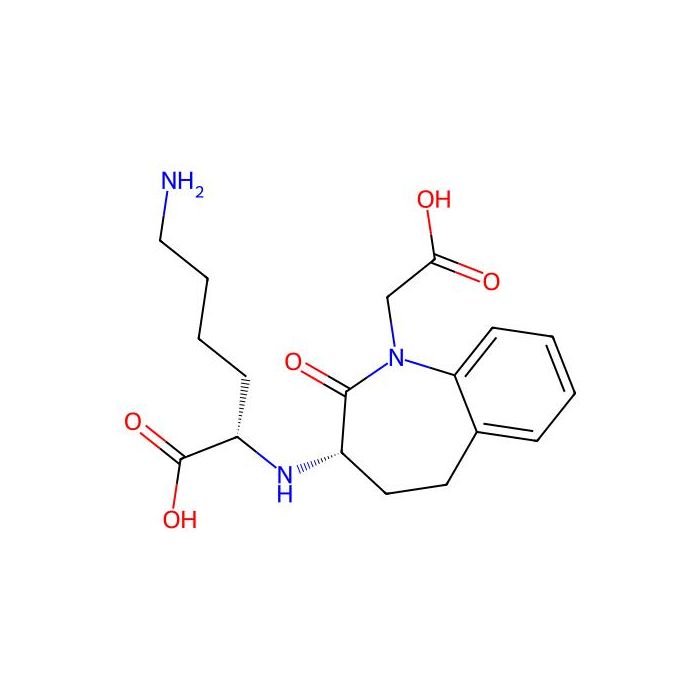
This compound belongs to the class of organic compounds known as dipeptides. These are organic compounds containing a sequence of exactly two alpha-amino acids joined by a peptide bond.
External Descriptors
Not available
1. Djoumbou Feunang Y, Eisner R, Knox C, Chepelev L, Hastings J, Owen G, Fahy E, Steinbeck C, Subramanian S, Bolton E, Greiner R, and Wishart DS. ClassyFire: Automated Chemical Classification With A Comprehensive, Computable Taxonomy. Journal of Cheminformatics, 2016, 8:61.
Zertifikate (CoA, COO, BSE/TSE und Analyse-Diagramm)
C of A & Other Certificates(BSE/TSE, COO):
Analytical Chart:
Chemische und physikalische Eigenschaften
Molekulargewicht
363.400 g/mol
XLogP3
-3.900
Hydrogen Bond Donor Count
4
Hydrogen Bond Acceptor Count
7
Rotatable Bond Count
9
Exact Mass
363.179 Da
Monoisotopic Mass
363.179 Da
Topological Polar Surface Area
133.000 Ų
Heavy Atom Count
26
Formal Charge
0
Complexity
513.000
Isotope Atom Count
0
Defined Atom Stereocenter Count
2
Undefined Atom Stereocenter Count
0
Defined Bond Stereocenter Count
0
Undefined Bond Stereocenter Count
0
The total count of all stereochemical bonds
0
Covalently-Bonded Unit Count
1
Lösungsrechner
Molarity Calculator
Determine the necessary mass, volume, or concentration for preparing a solution.
Dilution Calculator
Determine the dilution needed to prepare a stock solution.
Reconstitution Calculator
Bewertungen
Kundenbewertungen
Application Protocols
Item-specific, validated protocols and recommended working concentrations are not provided for this product. The following are general, non-item-specific examples for small-molecule inhibitor handling in biochemical assays:
Enzyme inhibition assay (general ACE assay):
Prepare a 10 mM stock in DMSO. Make serial dilutions (final DMSO ≤1%).
Incubate recombinant ACE with fluorogenic substrate (e.g., Abz-FRK(Dnp)-P-OH) in HEPES buffer (pH 7.5, 10 µM Zn2+). Add inhibitor dilutions and record fluorescence increase over time. Fit IC50 from normalized rate data.
Metabolic stability (plasma hydrolysis):
Incubate 1–10 µM compound in pooled plasma at 37 °C; sample at defined intervals, quench with ACN containing internal standard, centrifuge, and analyze supernatant by LC–MS for parent and acid metabolite.
Permeability (PAMPA):
Dose donor well in PBS with 1% DMSO; incubate across lipid-coated membrane for 4–6 h at room temperature; quantify by LC–MS.
These protocols are illustrative only. Optimize conditions for your system, and consult the SDS/CoA for any item-specific constraints. For regulated work, validate all methods according to appropriate guidance documents.
Biological Roles
Note: For research use only. No medical or clinical claims are made for this product.
Biological context (literature, general): Angiotensin-converting enzyme (ACE) catalyzes the conversion of angiotensin I to angiotensin II and degrades bradykinin. Small-molecule ACE inhibitors bind the catalytic Zn2+ center via carboxylate-containing motifs, often mimicking dipeptidic substrates.
Role of prodrug forms: Esterification of the terminal carboxylate can enhance membrane permeability and oral absorption in vivo; in research systems, such prodrugs hydrolyze to the active diacid that displays higher ACE-binding affinity (class-based concept).
Experimental usage:
Enzyme inhibition kinetics: determining Ki/IC50 against recombinant human ACE and related metallopeptidases to assess selectivity profiles (research-only context).
Metabolic profiling: evaluating ester hydrolysis rates in plasma or tissue fractions to understand conversion to active species; identification of metabolites by LC–MS/MS.
Protein–ligand interaction studies: using spectroscopic or calorimetric methods (e.g., ITC) to quantify binding thermodynamics to ACE domains (N- vs C-domain selectivity assessments, literature-general for ACE inhibitors).
Item-specific biochemical constants (IC50, Ki, selectivity ratios) are Not specified for this item and should be established experimentally under defined assay conditions.
Buffer Applications
This compound is not a buffering agent. However, buffer choice is relevant when using Libenzapril in biochemical assays.
Practical buffer guidance (general):
Use neutral to slightly acidic buffers (e.g., 50 mM HEPES or MES, pH 6.5–7.5) during handling to mitigate base-catalyzed hydrolysis of ester functionalities.
Maintain low organic cosolvent fractions (≤1–2% DMSO or ethanol) to preserve enzyme activity in ACE assays.
Include 0.005–0.01% nonionic surfactant to prevent adsorption losses for low-nM assays.
Example assay buffer (general, literature practice): 50 mM HEPES, 300 mM NaCl, 10 µM ZnCl2, pH 7.5 for ACE activity assays, with fluorogenic substrate; adjust ionic strength and Zn2+ according to the specific protocol.
No item-specific buffer capacity or pKa data are provided; refer to assay-specific SOPs and validate stability in the selected buffer.
Green Alternatives
As Libenzapril is a research analyte rather than a process solvent or bulk reagent, green chemistry considerations primarily concern solvent choices for handling, analysis, and formulation of stock solutions.
Preferred greener solvents for preparation/dilution (general guidance):
Water (with pH control and cosolvents as needed) when solubility permits.
Ethanol or isopropanol as less hazardous organic cosolvents for intermediate solubility ranges.
Ethyl acetate or 2-methyltetrahydrofuran (2-MeTHF) for workups/extractions in synthetic or analytical sample preparation contexts.
Comparison (general, literature-based):
DMSO: Excellent solvency but problematic for large-scale waste; often unavoidable for hydrophobic analytes—use minimal volumes and recycle when possible.
ACN: HPLC-friendly yet petro-derived; consider ethanol-water mobile phases for suitable chromatographic methods.
Operational green practices:
Minimize DMSO/ACN content in assay buffers (≤1–2% v/v).
Use microscale assay formats to reduce solvent waste.
Employ aqueous LC methods or supercritical CO2 for purification when compatible.
Item-specific environmental metrics (biodegradability, LCA, solvent-free handling windows) are not specified for this item.
Pharmaceutical Uses
For research use only. No therapeutic claims are made for this product.
Typical roles in pharmaceutical R&D (general):
Reference standard: Employed as a comparator ACE-inhibitor analog in discovery screening and QC analytics.
ADME studies: Used to probe prodrug hydrolysis, permeability, protein binding, and metabolic conversion to the active acid.
Analytical method development: Calibration of LC–UV or LC–MS quantification in complex matrices; evaluation of extraction recoveries and matrix effects.
Formulation research considerations (general):
Solubility enhancement: DMSO stocks with subsequent dilution; cyclodextrin inclusion complexes or cosolvents for aqueous delivery in preclinical assay models.
Solid-state: If crystalline, polymorph and salt-form screening may affect dissolution rate and stability (item-specific form not specified).
Regulatory status: Pharmacopeial monographs or compendial status for Libenzapril are not cited here; users should consult relevant pharmacopeias if required.
Item-specific excipient compatibility, residual solvent limits, and impurity profiles are Not specified for this item; consult the CoA/Spec Sheet for regulated workflows.
Physical Properties
Item-specific facts (from Product Data)
Appearance: Not specified for this item; refer to CoA/Spec Sheet.
Grade/Purity: Not specified for this item; refer to CoA/Spec Sheet.
Molecular weight: Not specified for this item; refer to CoA/Spec Sheet.
Physical state: Many ACE-inhibitor prodrug analogs are crystalline solids with limited aqueous solubility but good solubility in polar aprotic solvents (literature, class-based).
Solubility guidance (typical, literature): stock solutions are commonly prepared in DMSO (10–50 mg/mL), with subsequent dilution into aqueous buffers containing a small percentage of cosolvent and/or surfactant to prevent precipitation in biochemical assays.
pKa/logP (class-based expectations): carboxylate pKa typically ~3–5 for the free acid; esterified prodrugs suppress acidity and increase lipophilicity, yielding logP values often in the 2–4 range prior to ionization (literature, qualitative ranges for class).
UV characteristics: peptide-mimetic ACE inhibitors without extended aromatics usually show modest UV absorbance near 200–220 nm; detection at 210–215 nm is common for HPLC (literature practice, not item-specific).
All quantitative physical constants (mp/bp/density/refractive index/precise solubility) are Not specified for this item; refer to CoA/Spec Sheet and SDS for definitive values.
Quality and Grades
Item-specific quality information (from Product Data)
Grade/Purity: Not specified for this item; refer to CoA/Spec Sheet.
How to interpret common grades (general guidance)
Research grade: Suitable for discovery chemistry, screening, and mechanistic studies. May not include low-UV or trace-metal specifications.
Analytical/Reference grade: Tight assay (e.g., ≥98% by HPLC), detailed impurity profiling, and confirmed identity by orthogonal methods—recommended for quantitative bioassays and analytical standards.
Stabilizers: If present for ester-containing compounds, stabilizers may suppress hydrolysis or racemization. Presence/absence should be verified on the CoA.
Recommended verifications for this item
Identity: Confirm by LC–MS (exact mass and isotope pattern), 1H/13C NMR, and, when needed, chiral HPLC to verify enantiopurity for proline-mimetic centers.
Purity: Assess by HPLC with diode-array detection at low-UV (210–215 nm) to reveal nonchromophoric impurities common in peptide-mimetics.
Residual solvents/water content: For rigorous studies, determine by GC headspace and Karl Fischer, respectively (item-specific spec not provided; check CoA).
Always defer to the item’s CoA/SDS for definitive specifications and acceptance criteria.
Reaction and Applications
Libenzapril is supplied as a research compound rather than a synthetic reagent. Accordingly, its laboratory applications are typically in bioanalytical and medicinal chemistry contexts rather than as a stoichiometric reagent.
Common research uses (literature, general):
As a reference ACE-inhibitor analog for in vitro ACE activity assays (fluorometric or HPLC-based), enabling benchmarking of enzyme inhibition under controlled conditions.
In ligand-binding and computational docking studies to probe ACE active-site interactions with prodrug-type inhibitors.
As a substrate for metabolic stability experiments (e.g., ester hydrolysis in plasma, microsomes, or esterase-containing buffers) with LC–MS readout.
In permeability and transport assays (e.g., PAMPA, Caco-2) to evaluate prodrug properties relative to the corresponding diacid.
Practical notes:
Prepare fresh aqueous dilutions immediately before assays to limit hydrolysis of ester functionalities.
Include matched vehicle controls for DMSO content when comparing IC50/Ki values.
For LC–MS bioanalysis, monitor both parent and de-esterified metabolites; consider enzyme inhibitors (e.g., esterase inhibitors) during sample prep to stabilize parent compound (general technique guidance).
This product is not typically employed as a reagent in named organic reactions; for synthesis-focused needs, refer to building blocks with defined reactive handles.
Reaction Conditions
As a research analyte, Libenzapril is not generally employed as a reagent in named synthetic reactions. However, certain transformations and handling conditions are commonly explored in characterization and stability testing (general guidance; not item-specific specifications):
Hydrolysis studies (literature, class-based):
Base-catalyzed ester hydrolysis: Aqueous NaOH or K2CO3 in MeOH/H2O (0–25 °C) to generate the corresponding diacid; monitor by HPLC at 210–215 nm.
Enzymatic hydrolysis: Porcine liver esterase or human carboxylesterases in phosphate buffer (pH 7.4) at 37 °C; LC–MS tracking of parent-to-acid conversion.
Stability screening:
Acidic stress: 0.1 N HCl, ambient–60 °C, 1–24 h to probe amide/ester robustness.
Oxidative stress: 1–3% H2O2 at ambient temperature for forced-degradation method development (avoid if structure contains oxidation-sensitive moieties; confirm experimentally).
Chromatographic conditions (analytical, typical):
RP-HPLC: C18 column, water (0.1% formic acid)/acetonitrile gradient, detection at 210–215 nm; flow 0.3–1.0 mL/min.
LC–MS: ESI+ and ESI− modes may both be informative depending on ionizable groups; optimize source conditions for peptide-mimetics.
Exact experimental parameters and yields are system-dependent and should be optimized empirically.
Safety and Handling
Item-specific hazard information (from Product Data)
Signal word: Not specified for this item; refer to SDS.
H-statements: Not specified for this item; refer to SDS.
GHS classification/pictograms: Not specified for this item; refer to SDS.
General laboratory safety guidance (not a substitute for SDS)
Handling: Work in a chemical fume hood. Avoid inhalation of dusts and contact with skin/eyes. Use standard PPE: lab coat, nitrile gloves, and safety glasses or face shield.
First aid (general): If inhaled—move to fresh air; if on skin—wash with soap and water; if in eyes—rinse cautiously with water for several minutes and remove contact lenses if present; if ingested—rinse mouth and seek medical advice. Always follow the SDS for the specific product.
Storage incompatibilities: Avoid strong oxidizers and strong acids/bases that can catalyze hydrolysis or amide cleavage. Protect solutions from moisture; ester-containing prodrugs can hydrolyze in basic aqueous media.
Waste: Collect organic solutions and contaminated disposables in properly labeled containers for solvent/organic waste streams according to institutional and local regulations.
Special risks relevant to class: Prodrug-like esters may be hydrolytically sensitive; prepare fresh aqueous working solutions and minimize prolonged exposure to elevated pH and elevated temperature.
Consult the product-specific SDS for authoritative hazard codes, exposure limits, and spill/fire-fighting measures.
Solvent Selection
This product is a small-molecule research compound rather than a process solvent; solvent selection concerns solubilization for assays and stock preparation.
Polarity considerations: Prodrug-type ACE inhibitor analogs frequently dissolve well in polar aprotic solvents such as DMSO or DMF; solubility in methanol, ethanol, or acetonitrile can be moderate. Aqueous solubility is often limited unless salt forms are used (literature, class-based guidance).
Recommended approach (general):
Prepare a concentrated DMSO stock (e.g., 10–50 mg/mL), filter if needed (0.22 µm PTFE), and store aliquots at −20 to 4 °C to minimize freeze–thaw (solution storage guidance; confirm stability experimentally).
For biochemical assays, dilute the DMSO stock into buffer keeping final DMSO ≤1–2% v/v to avoid enzyme perturbation; include a small amount of nonionic surfactant (e.g., 0.01% Tween 20) if precipitation is observed (general practice).
pH effects: If the compound is in esterified prodrug form, neutral to slightly acidic buffers (pH 5.5–7.4) mitigate hydrolysis during handling. Avoid prolonged exposure to pH >8.
Co-solvent comparisons (general):
DMSO: highest solvating power; widely used in screening.
ACN/MeOH: compatible with LC; useful for analytical dilutions.
Aqueous buffers: use only at low concentrations or with solubilizing aids.
Item-specific solubility parameters are Not specified for this item; verify empirically and refer to the CoA.
Storage and Reconstitution
Item-specific directives (from Product Data)
Storage conditions: Room temperature.
Shipped in: Not specified for this item; refer to CoA/Spec Sheet.
General guidance (supplemental; verify with CoA/SDS)
Solid storage: Keep tightly closed in a dry, inert atmosphere (desiccator with desiccant, optional argon/nitrogen backfill). Protect from prolonged exposure to light and moisture to minimize hydrolysis of ester functionalities common to prodrug analogs.
Solution handling: Prepare concentrated stocks in dry DMSO or ACN. Aliquot to minimize freeze–thaw. For long-term solution storage, 4 °C to −20 °C is typical, but confirm stability experimentally.
Reconstitution example (general): To prepare a 10 mM DMSO stock, weigh the appropriate mass based on the molecular weight (Not specified for this item; obtain from CoA), add dry DMSO to volume, vortex until fully dissolved, and filter through 0.22 µm PTFE if particulate remains.
Working solutions: Dilute into assay buffer immediately before use; maintain final organic cosolvent at ≤1–2% v/v.
Stability/expiry: Without item-specific data, use fresh solutions and monitor by HPLC for degradation if stored >24–48 h at room temperature.
Always prioritize the item’s CoA and SDS for definitive storage and handling requirements.
Structure and Identity
Item-specific facts (from Product Data)
SKU: L667955
Product name: Libenzapril
CAS: 109214-55-3
PubChem CID: 71320
InChIKey (as provided): 17673
Molecular formula: Not specified for this item; refer to CoA/Spec Sheet.
Molecular weight: Not specified for this item; refer to CoA/Spec Sheet.
SMILES: Not specified for this item; refer to CoA/Spec Sheet.
Literature/General information (non-item-specific)
Compound type: small-molecule, prodrug-type angiotensin-converting enzyme (ACE) inhibitor analog used in research settings for enzymology and medicinal chemistry benchmarking.
Structural features (general): typical ACE inhibitor chemotypes incorporate a secondary amine, a carboxylate (or masked ester) and a proline or proline-mimetic substructure arranged to chelate Zn2+ in the ACE active site. Libenzapril is reported in the literature as an esterified (prodrug-like) form that can be hydrolyzed to an active diacid in biological systems (literature, general class description).
2D description (general): dipeptidic framework with a proline-mimetic bicyclic or constrained ring region attached via an amide linkage to an acyl side chain bearing a terminal carboxylate/ester functionality; one stereogenic center is typically present at the proline-like carbon (literature, class-based description).
Note: Exact structural identifiers for this specific lot/item are not specified above and should be confirmed from the product CoA or spec sheet before use in regulated or quantitative studies.
Synthetic Utility
Libenzapril is a finished research compound rather than a general synthetic building block. While not typically used as a reagent, it can be informative in method development and metabolism-mimic chemistry.
Transformations relevant to mechanistic studies (general):
Ester hydrolysis to the corresponding diacid under aqueous basic conditions or with esterases (useful for generating the active acid for reference comparisons).
Amide stability studies under acidic/basic stress to delineate degradation pathways of peptide-mimetic drugs.
Stereochemical integrity checks under coupling or deprotection conditions typical of peptidomimetic synthesis.
Analytical synthetic support:
Serves as a probe molecule for validating chiral HPLC methods and reversed-phase gradients optimized for dipeptidic inhibitors.
Useful as a positive control in Zn2+-metalloprotease binding assays during ligand design campaigns.
If a building-block role is required (e.g., for SAR elaboration), consider purchasing or preparing the corresponding protected fragments (proline-mimetic acids, acyl chlorides, or activated esters). Item-specific reactive-functional-group content is not provided in the Product Data.
Target Specificity
Only item-specific target data should appear here.
Target, binding constants, selectivity, and domain preferences: Not specified for this item; refer to CoA/Spec Sheet or primary literature for Libenzapril.
General note: In research contexts, ACE inhibitors are typically profiled against ACE (somatic N- and C-domains) and counter-screened versus related metallopeptidases (e.g., neprilysin, endothelin-converting enzyme) to establish selectivity. Such data for this product are not provided here.
Häufig gestellte Fragen
How should this product be stored?
Store at room temperature.
What are the CAS number, molecular formula and molecular weight?
The CAS Number is 109214-55-3, the molecular formula is C18H25N3O5, and the molecular weight is 363.4 g/mol. InChIKey AXTCRUUITQKBAV-KBPBESRZSA-N.
What documentation is provided?
Available product documentation, including Certificates of Analysis (COA), Safety Data Sheets (SDS), and specification sheets, is shown in the product document area. Document availability and access follow the current site policy.
Wir verwenden Cookies, um die ordnungsgemäße Funktion der Website sicherzustellen und, soweit zulässig, Ihr Nutzererlebnis zu verbessern. Sie können Ihre Einstellungen jederzeit unter „Einstellungen“ verwalten. Weitere Informationen finden Sie in unserer Cookie-Richtlinie.
Dürfen wir Sie über Rabattaktionen informieren?
Später erinnern
Vielen Dank! Bitte überprüfen Sie Ihren E-Mail-Posteingang, um zu bestätigen.
Products are supplied to verified businesses, institutions, and qualified professionals for research and development use only. Not for use in humans, animals, diagnosis, or therapy.