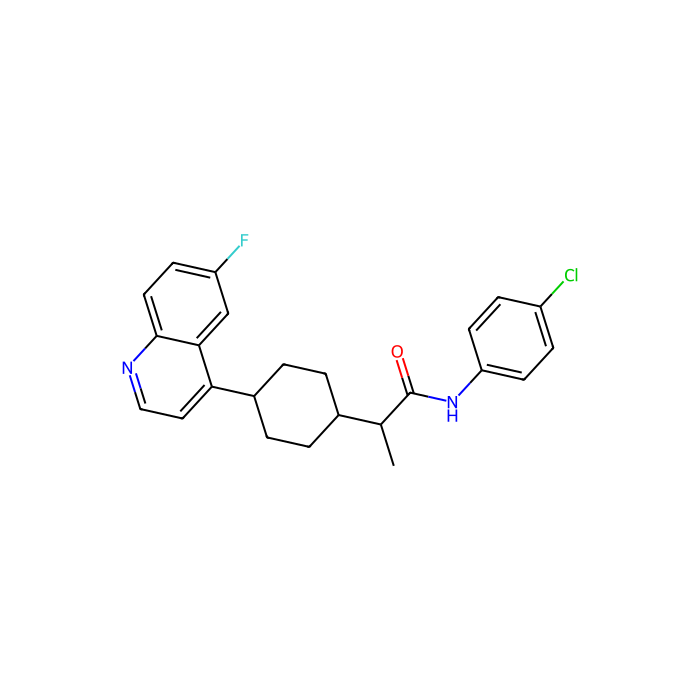
Linrodostat (BMS-986205) - Moligand™, ≥98% , Inhibitor of indoleamine 2;3-dioxygenase 1, CAS No.1923833-60-6, Inhibitor of indoleamine 2;3-dioxygenase 1

CAS: 1923833-60-6 Cat. No.: L414088 Summenformel: C24H24ClFN2O Molekulargewicht: 410.91
Zu bestellen verfügbar
QUALITÄT & REINHEIT Moligand™ ? Moligand™ — Aladdin's line of ligands and bioactive small molecules. Use for receptor, pathway, and binding studies needing defined small-molecule tools. ≥98%
Synonyms
ONO7701|ONO-7701|ONO 7701|Linrodostat|(R)-N-(4-chlorophenyl)-2-((1s,4S)-4-(6-fluoroquinolin-4-yl)cyclohexyl)propanamide;(R)-N-(4-chlorophenyl)-2-((1s,4S)-4-(6-fluoroquinolin-4-yl)cyclohexyl)propanamide|BMS 986205|(R)-N-(4-Chlorophenyl)-2-((1r,4R)-4-(6-fluoroquinolin-4-yl)cyclohexyl)propanamide|CYCLOHEXANEACETAMIDE, N-(4-CHLOROPHENYL)-4-(6-FLUORO-4-QUINOLINYL)-.ALPHA.-METHYL-, CIS-(.ALPHA.R)-|BMS-986205(Linrodostat)|Cyclohexaneacetamide, N-(4-chlorophenyl)-4-(6-fluoro-4-quinolinyl)-alpha-methyl-, cis-(alphaR)-|(2R)-N-(4-Chlorophenyl)-2-(cis-4-(6-fluoro-4-quinolinyl)cyclohexyl)propanamide|Linrodostat [USAN]|LINRODOSTAT [INN]|BMS986205|BMS-986205|(2R)-N-(4-chlorophenyl)-2-[4-(6-fluoroquinolin-4-yl)cyclohexyl]propanamide|LINRODOSTAT [WHO-DD]|(R)-N-(4-Chlorophenyl)-2-(cis-4-(6-fluoroquinolin-4-yl)cyclohexyl)propanamide|(2R)-N-(4-CHLOROPHENYL)-2-(4-(6-FLUORO-4-QUINOLYL)CYCLOHEXYL)PROPANAMIDE, CIS-|Cyclohexaneacetamide, N-(4-chlorophenyl)-4-(6-fluoro-4-quinolinyl)-AA+/--methyl-, cis-|Linrodostat (USAN)|(R)-N-(4-chlorophenyl)-2-((1s,4S)-4-(6-fluoroquinolin-4-yl)cyclohexyl)propanamide|(2R)-N-(4-chlorophenyl)-2-[4-(6-fluoroquinolin-4-yl)cyclohexyl]propanamid
Storage
Store at -20°C
Shipped In
Ice chest + Ice pads
★
Größe
Deutschland (EU)
USA*
Preis
Menge
5mg
L414088-5mg
—
2 Auf Lager
173,46€
10mg
L414088-10mg
—
3 Auf Lager
288,00€
25mg
L414088-25mg
Auf Bestellung · 8–12 Wochen
714,93€
50mg
L414088-50mg
—
2 Auf Lager
1.088,06€
100mg
L414088-100mg
Auf Bestellung · 8–12 Wochen
1.608,70€
Enter a quantity for the sizes you want to add.

Übersicht

Information

Linrodostat (BMS-986205) Linrodostat (BMS-986205, ONO-7701) is an irreversible inhibitor of IDO1 with an IC50 of 1.7 nM. It inhibits kynurenine production with IC50 values of 1.7, 1.1 and > 2000 in human HeLa, HEK293 expressing human IDO-1 and tryptophan-2, 3-dioxygenase cell-based assays.


Targets

IDO1 (Cell-free assay) 1.7 nM


In vitro

BMS-986205 exhibits potent inhibition of kynurenine (kyn) production in IDO1-HEK293 cells (IC50 = 1.1 nM) but not in TDO-HEK293 cells. It is an irreversible suicide inhibitor.


Product description:

BMS-986205 is a selective indoleamine 2,3-dioxygenase 1 (IDO1) inhibitor.

Spezifikationen

Synonyme
ONO7701 | ONO-7701 | ONO 7701 | Linrodostat | (R)-N-(4-chlorophenyl)-2-((1s,4S)-4-(6-fluoroquinolin-4-yl)cyclohexyl)propanamide;(R)-N-(4-chlorophenyl)-2-((1s,4S)-4-(6-fluoroquinolin-4-yl)cyclohexyl)propanamide | BMS 986205 | (R)-N-(4-Chlorophenyl)-2-((1r,4R)-4-(6-fluoroquinolin-4-yl)cyclohexyl)propanamide | CYCLOHEXANEACETAMIDE, N-(4-CHLO Show more
Spezifikationen & Reinheit
Moligand™, ≥98%
Biochemische und physiologische Mechanismen
Linrodostat (BMS-986205, ONO-7701) is an irreversible inhibitor of IDO1 with an IC50 of 1.7 nM. It inhibits kynurenine production with IC50 values of 1.7, 1.1 and > 2000 in human HeLa, HEK293 expressing human IDO-1 and tryptophan-2, 3-dioxygenase cell-based assays.
Storage
Store at -20°C
Verschickt in
Ice chest + Ice pads
Dieses Produkt erfordert Kühlkettenversand. Grundversand und andere Economy-Optionen sind nicht verfügbar.
Note
Moligand™
Aktionsart
INHIBITOR
Mechanismus der Wirkung
Inhibitor of indoleamine 2;3-dioxygenase 1
Reinheit
≥98%
Namen und Kennungen
Pubchem Sid
Pubchem Sid Url
https://pubchem.ncbi.nlm.nih.gov/substance/504772947
SMILES
CC(C1CCC(CC1)C2=C3C=C(C=CC3=NC=C2)F)C(=O)NC4=CC=C(C=C4)Cl
IUPAC Name
(2R)-N-(4-chlorophenyl)-2-[4-(6-fluoroquinolin-4-yl)cyclohexyl]propanamide
InChIKey
KRTIYQIPSAGSBP-KLAILNCOSA-N
InChI
1S/C24H24ClFN2O/c1-15(24(29)28-20-9-6-18(25)7-10-20)16-2-4-17(5-3-16)21-12-13-27-23-11-8-19(26)14-22(21)23/h6-17H,2-5H2,1H3,(H,28,29)/t15-,16?,17?/m1/s1
Isomere SMILES
C[C@H](C1CCC(CC1)C2=C3C=C(C=CC3=NC=C2)F)C(=O)NC4=CC=C(C=C4)Cl
Alternative CAS-Nummer
1923833-60-6
MeSH-Eintrag
(2R)-N-(4-Chlorophenyl)-2-(cis-4-(6-fluoro-4-quinolinyl)cyclohexyl)propanamide;BMS-986205;Cyclohexaneacetamide, N-(4-chlorophenyl)-4-(6-fluoro-4-quinolinyl)-\u03b1-methyl-, cis-;linrodostat
Molekulargewicht
410.91
Reaxys
39662458
Reaxys-RN_link_address
https://www.reaxys.com/reaxys/secured/hopinto.do?context=S&query=IDE.XRN=39662458&ln=

Erweiterte Daten

Taxonomic Classification

Taxonomy Tree

KingdomOrganic compounds
SuperclassOrganoheterocyclic compounds
KlasseQuinolines and derivatives
SubclassHaloquinolines
Intermediate Tree Nodes Not available
Direct ParentHaloquinolines
Alternative Parents Menthane monoterpenoids  Bicyclic monoterpenoids  Aromatic monoterpenoids  Anilides  N-arylamides  Chlorobenzenes  Pyridines and derivatives  Aryl fluorides  Aryl chlorides  Heteroaromatic compounds  Secondary carboxylic acid amides  Azacyclic compounds  Organopnictogen compounds  Organofluorides  Organochlorides  Organic oxides  Hydrocarbon derivatives  Carbonyl compounds  
Molecular FrameworkAromatic heteropolycyclic compounds
Substituents Haloquinoline - P-menthane monoterpenoid - Monoterpenoid - Bicyclic monoterpenoid - Aromatic monoterpenoid - Anilide - N-arylamide - Halobenzene - Chlorobenzene - Benzenoid - Pyridine - Monocyclic benzene moiety - Aryl halide - Aryl fluoride - Aryl chloride - Heteroaromatic compound - Secondary carboxylic acid amide - Carboxamide group - Azacycle - Carboxylic acid derivative - Organic nitrogen compound - Organic oxygen compound - Organopnictogen compound - Organic oxide - Hydrocarbon derivative - Organooxygen compound - Organonitrogen compound - Organofluoride - Organochloride - Organohalogen compound - Carbonyl group - Aromatic heteropolycyclic compound
BeschreibungThis compound belongs to the class of organic compounds known as haloquinolines. These are compounds containing a quinoline moiety, which is substituted at one or more ring positions by n halogen atom.
External Descriptors Not available
3D-Struktur
Interaktives chemisches Strukturmodell


Zugehörige Ziele (menschlich)
IDO1 Tchem Indoleamine 2,3-dioxygenase 1 (0 Activities)
Activity TypeActivity Value -log(M)Mechanism of ActionActivity ReferencePublications (PubMed IDs)
Zertifikate (CoA, COO, BSE/TSE und Analyse-Diagramm)
C of A & Other Certificates(BSE/TSE, COO):
Analytical Chart:

Find and download the COA for your product by matching the lot number on the packaging.

5 results found

Lot NumberCertificate TypeDatumArtikel
I2620019I2620019Certificate of AnalysisSep 27, 2026 L414088
G2216554G2216554Certificate of AnalysisApr 07, 2025 L414088
G2216555G2216555Certificate of AnalysisApr 07, 2025 L414088
G2216556G2216556Certificate of AnalysisApr 07, 2025 L414088
L2420464L2420464Certificate of AnalysisJun 07, 2022 L414088
Chemische und physikalische Eigenschaften
LöslichkeitSolubility (25°C) In vitro DMSO: 82 mg/mL (199.55 mM); Ethanol: 82 mg/mL (199.55 mM); Water: Insoluble;
Molekulargewicht410.9
XLogP36.500
Hydrogen Bond Donor Count1
Hydrogen Bond Acceptor Count3
Rotatable Bond Count4
Exact Mass410.156 Da
Monoisotopic Mass410.156 Da
Topological Polar Surface Area42.000 Ų
Heavy Atom Count29
Formal Charge0
Complexity545.000
Isotope Atom Count0
Defined Atom Stereocenter Count1
Undefined Atom Stereocenter Count0
Defined Bond Stereocenter Count0
Undefined Bond Stereocenter Count0
The total count of all stereochemical bonds0
Covalently-Bonded Unit Count1
Sicherheit und Gefahren (GHS)
Piktogramm(e)
Signal
Warning
Gefahrenhinweise

H302:Harmful if swallowed

H315:Causes skin irritation

H319:Causes serious eye irritation

H335:May cause respiratory irritation

Sicherheitshinweise

P261:Avoid breathing dust/fume/gas/mist/vapors/spray.

P305+P351+P338:IF IN EYES: Rinse cautiously with water for several minutes. Remove contact lenses if present and easy to do - continue rinsing.

Reaxys
39662458
Reaxys-RN_link_address
https://www.reaxys.com/reaxys/secured/hopinto.do?context=S&query=IDE.XRN=39662458&ln=
Lösungsrechner
Bewertungen

Kundenbewertungen

Application Protocols

Not specified for this item; refer to CoA/Spec Sheet.

Only protocols and recommended conditions validated for this specific catalog item are reported in this section when available (e.g., assay types, working concentrations, positive controls). In the absence of such item-specific information, users should develop and validate protocols under their own laboratory conditions and QA standards.

Biological Roles

Linrodostat (BMS-986205) is widely referenced in the literature as a research tool compound developed to modulate a defined metabolic/signaling pathway via enzyme inhibition. While this catalog entry does not specify target details, linrodostat is commonly used by researchers to interrogate tryptophan catabolism and downstream pathway biology in non-clinical settings.

General pathway context (literature/general knowledge):

  • Tryptophan is metabolized through the kynurenine pathway, generating bioactive metabolites that influence redox balance, NAD+ biosynthesis, and cellular signaling. Rate-limiting dioxygenase enzymes catalyze the initial oxidative cleavage of the indole ring, steering flux toward kynurenine and related species.
  • Pharmacological inhibition within this pathway is a standard strategy to probe immune-regulatory mechanisms, metabolic crosstalk, and stress responses in cell culture and biochemical systems.

Research use-cases (non-clinical):

  • In vitro enzyme-inhibition studies to quantify changes in substrate-to-product conversion (e.g., LC–MS measurement of pathway metabolites).
  • Cellular assays tracking pathway metabolite ratios in response to inhibitor treatment, typically with careful control of DMSO content and exposure time.
  • Mechanistic exploration of transcriptional feedback and compensatory pathway activation following enzymatic blockade.

Important boundaries:

  • No medical, diagnostic, or therapeutic claims are made for this product. All uses are restricted to laboratory research. Specific selectivity profiles, off-targets, and potency parameters are not provided in this listing and should be obtained from primary literature or the CoA before experimental design.
Buffer Applications

This product is not a buffering agent and is not used to establish or maintain pH. Accordingly, standard buffer system recipes (e.g., phosphate, HEPES, Tris) are not applicable here.

Practical note for assay buffers (general):

  • When preparing working solutions from DMSO stocks, use biologically relevant buffers (e.g., PBS, HEPES) and maintain consistent final DMSO content across controls and treatments. Consider adding non-ionic surfactant (if compatible) to mitigate precipitation or surface adsorption.

For pH control or buffering capacity requirements in your assay, select a dedicated buffer system appropriate to the biological context; this compound does not provide buffering functionality.

Green Alternatives

As a research-only tool compound, linrodostat is not readily substitutable; however, greener choices can be applied to its handling and formulation.

Greener solvent considerations (general):

  • Primary stocks: DMSO is already a comparatively green, low-volatility, low-toxicity polar aprotic relative to DMF/NMP.
  • If alternatives to DMSO are required, consider propylene carbonate (PC) for certain analytical preparations; it offers good solvency with improved environmental and safety profiles, though biocompatibility can be limiting.
  • For work-up and cleaning, replace chlorinated solvents with ethyl acetate or isopropanol where feasible.

Comparison (general guidance):

  • DMSO: High solvency, miscible with water, broadly accepted in bioassays; typically preferred.
  • DMF/NMP: Strong solvency but reproductive toxicity concerns; avoid for routine biological handling when DMSO suffices.
  • Ethanol/IPA: Greener and benign, but may not dissolve poly-heteroaromatic inhibitors at required concentrations.

Operational green tips:

  • Use minimal volumes for stock preparation and aliquot to reduce waste.
  • Implement microscale assays and 96/384-well formats to curtail solvent consumption.
  • Employ closed containers and cold-chain logistics to extend shelf-life and reduce the need for re-preparation.

Note: These suggestions concern the workflow around the compound, not the substitution of the compound itself, which is typically not interchangeable without affecting biological readouts.

Pharmaceutical Uses

This listing is for research use only and does not imply suitability for human or veterinary applications, clinical trials, or GMP manufacturing.

Permitted research/formulation roles (general):

  • Reference standard in bioanalytical method development and validation (e.g., retention time, qualifier/quantifier ion selection) after confirming identity/purity from the CoA.
  • Positive control article in non-clinical in vitro assays to benchmark pathway inhibition.
  • Stability studies (forced-degradation mapping) to design analytical methods capable of distinguishing degradants and the parent compound.

What is not claimed:

  • No pharmacopeial monograph compliance is stated (USP/EP/JP status: not specified for this item; refer to CoA/Spec Sheet).
  • No clinical, therapeutic, or diagnostic claims are made or implied.

Handling/formulation caveats:

  • If preparing solutions intended for regulated bioanalytical work, document preparation steps, solvent lots, storage conditions, and assign in-house reference numbers with audit trails. Establish solution stability (freeze–thaw tolerance, bench-top stability) under your specific conditions.

Always align usage with your institution’s QA policies for research chemicals and consult the SDS for safety-related constraints.

Physical Properties

Item-specific physicochemical specifications are not provided in this listing.

  • State/appearance: Not specified for this item; refer to CoA/Spec Sheet.
  • Melting point (MP): Not specified for this item; refer to CoA/Spec Sheet.
  • Boiling point (BP): Not applicable/Not measured (typical for solids); item-specific value not provided.
  • Density: Not specified for this item; refer to CoA/Spec Sheet.
  • Solubility: Not specified for this item; refer to CoA/Spec Sheet.
  • logP/logD: Not specified for this item; refer to CoA/Spec Sheet.
  • pKa: Not specified for this item; refer to CoA/Spec Sheet.
  • UV/Vis λmax or cutoff: Not specified for this item; refer to CoA/Spec Sheet.

Literature/general guidance (for planning only; verify experimentally):

  • Many heteroaromatic enzyme inhibitors of this class are crystalline or amorphous solids with low intrinsic aqueous solubility at neutral pH and good solubility in strong organic solvents such as DMSO and DMF. Buffered aqueous solubility can often be improved by co-solvents (DMSO ≤1–2% v/v in working solutions) or by pH adjustment when ionizable centers are present.
  • Typical stock solutions for screening are 10–50 mM in dry DMSO, aliquoted to minimize freeze–thaw.
  • UV absorption in the 220–300 nm range is common for conjugated heteroaromatics and is useful for HPLC/UPLC-UV tracking; exact λmax must be confirmed experimentally for this item.

Always prioritize experimental determination or the certificate of analysis for any property that affects assay design, formulation, or analysis.

Quality and Grades
  • Grade: Moligand™ (item-specific). This designation indicates a research-grade small-molecule ligand/tool compound suitable for discovery workflows such as target validation, biochemical/cellular assays, and method development. It does not imply compliance with GMP or pharmacopoeial monographs.

What Moligand™ typically signifies (general guidance):

  • Intended for screening, SAR, and mechanistic studies in research laboratories.
  • Packaged to preserve integrity during shipping and storage; however, no clinical or GMP claims are made.

What is not specified for this item (consult CoA/Spec Sheet):

  • Purity assay method and value, residual solvents, water content, metal/peroxide limits, chromatographic identity, and UV profile are not specified in this listing. Do not assume specific thresholds; verify on the CoA.

Implications for users:

  • For quantitative work (e.g., KD/IC50 determination, bioanalytical standardization), confirm identity and purity by orthogonal methods available in your lab (e.g., LC–MS, 1H NMR) if the CoA data are insufficient for your use case.
  • For cell biology applications, consider additional internal qualification (endotoxin testing, sterility filtration) as required by your protocols, noting that these attributes are not part of typical research-grade specifications unless explicitly stated.
Reaction and Applications

Chemical reaction applications: This product is a finalized small-molecule tool compound rather than a synthetic reagent or building block. It is not typically used as a substrate, catalyst, or stoichiometric reagent in preparative organic chemistry.

Research applications (general, non-clinical):

  • Biochemical and cell-based pathway interrogation using a characterized small-molecule inhibitor as a tool compound.
  • Target engagement studies, time-course experiments, and mechanism-of-action exploration in vitro.
  • Analytical standard for LC–MS method development (e.g., retention, ionization behavior), after confirming identity and purity from the CoA.

Practical considerations for assay use (general guidance):

  • Prepare concentrated DMSO stocks (e.g., 10–50 mM), aliquot to minimize freeze–thaw, and dilute freshly into assay buffer/media.
  • Confirm absence of assay interference (detergent interactions, fluorescence/absorbance overlap, redox cycling) by appropriate controls.
  • Include vehicle controls matching the final DMSO percentage.

Noteworthy: If you require a reactive handle or prodrug-like functionality for conjugation studies, this compound is not designed for derivatization; instead, consider purchasing or synthesizing an analog with an appropriate functional group.

All applications are for research use only. No clinical or in vivo claims are made or implied by this listing.

Reaction Conditions

Not applicable as a reagent: This compound is provided as a research tool compound and is not commonly employed as a substrate, catalyst, or auxiliary in synthetic reactions. Therefore, standard synthetic reaction conditions (solvents, temperatures, catalysts, yields) are not relevant to typical use.

Assay preparation conditions (general guidance for small-molecule inhibitors):

  • Stock solutions: Dissolve in anhydrous DMSO to a convenient concentration (e.g., 10–50 mM), vortex/sonicate briefly, and avoid elevated temperatures.
  • Working solutions: Dilute into assay buffer or media immediately before use; maintain consistent final DMSO across wells/samples (commonly ≤0.1–1% v/v depending on assay tolerance).
  • Stability checks: Verify short-term bench stability and freeze–thaw robustness under your lab’s conditions by LC–MS or HPLC-UV.

These guidelines are general and should be optimized empirically; item-specific parameters are not provided in this listing and should be confirmed from the CoA or in-house characterization.

Safety and Handling

Safety details are limited in this listing; consult the product SDS for authoritative guidance.

  • GHS classification: Not specified for this item; refer to SDS.
  • Signal word / H-statements / Pictograms: Not specified for this item; refer to SDS.

General laboratory precautions (good practice for small-molecule research compounds):

  • Handle in a fume hood, wearing appropriate PPE: lab coat, safety glasses, and suitable chemical-resistant gloves (e.g., nitrile). Avoid dust generation and inhalation. Prevent contact with skin and eyes.
  • Storage incompatibilities: Keep away from strong oxidizers, strong acids/bases, and sources of ignition. Avoid prolonged exposure to light and ambient humidity.
  • First aid (overview; defer to SDS): In case of skin/eye contact, rinse with water for ≥15 minutes and remove contaminated clothing. If inhaled, move to fresh air. If ingested, rinse mouth; do not induce vomiting; seek medical attention.
  • Spill response: For small spills, avoid dust, absorb/collect with inert material, and dispose according to institutional chemical waste procedures.
  • Thermal/photostability: Many heteroaromatic inhibitors can be light- and heat-sensitive; minimize freeze–thaw cycles and exposure to elevated temperatures.

Regulatory note: For research use only. Not for human or veterinary use, diagnostic procedures, or clinical applications.

Always defer to the SDS and institutional EHS policies for risk assessment and handling procedures.

Solvent Selection

This product is a small-molecule heteroaromatic inhibitor and is typically handled as concentrated organic stock solutions for research assays. Item-specific solubility is not provided; verify experimentally or consult the CoA.

General solvent guidance (literature/general):

  • Primary stock solvent: DMSO is preferred due to broad solvating power, chemical compatibility, and biological tolerability at low assay percentages.
  • Alternative strong solvents: DMF, NMP, or DMAc can dissolve challenging solids but may be less biocompatible; use minimal carryover into aqueous systems.
  • Aqueous media: Due to often limited intrinsic water solubility, prepare concentrated DMSO stocks and dilute into buffer immediately prior to use, maintaining final DMSO typically ≤0.1–1% v/v for cellular or biochemical assays (optimize per assay tolerance).
  • Co-solvent strategies: In PBS/HEPES buffers, incorporate small fractions of DMSO or add non-ionic surfactants (e.g., 0.01–0.05% Tween 80) when compatible to mitigate precipitation and adsorption losses.

Polarity/miscibility context (general):

  • DMSO: polar aprotic, fully miscible with water and most organics; excellent for HTS stocks.
  • Ethanol/IPA: greener, but may offer lower solubilization for poly-heteroaromatics; evaluate case-by-case.

Practical tips:

  • Warm and vortex/sonicate DMSO stocks gently to speed dissolution; avoid high heat.
  • Filter 0.22 µm if particulate persists and filtration is compatible with the compound and assay.
  • Record exact dilutions and final DMSO percentages to ensure assay reproducibility.

Note: These are general recommendations for this compound class; determine actual solubility and stability empirically for this item.

Storage and Reconstitution

Item-specific storage and shipping:

  • Storage conditions: Store at −20°C (item-specific).
  • Shipped in: Ice chest + ice pads (item-specific) to maintain a cold chain and limit thermal excursions.

Reconstitution and handling (general guidance for small-molecule research compounds):

  • Solvent: Dissolve in anhydrous DMSO to prepare a concentrated stock (e.g., 10–50 mM). Actual solubility for this item is not specified; determine empirically.
  • Aliquoting: Dispense single-use aliquots in inert, solvent-resistant vials or plates to minimize freeze–thaw cycles and headspace moisture.
  • Light/moisture: Protect from light and ambient humidity. Cap tightly; consider using desiccant in secondary containment.
  • Working solutions: Prepare immediately before use by diluting the DMSO stock into assay buffer or media. Maintain consistent final DMSO content across samples.
  • Stability: Item-specific shelf-life, solution stability, and freeze–thaw tolerance are not specified for this item; establish in-house or refer to the CoA.

Disposal: Dispose of unused material and solutions according to institutional chemical waste procedures and local regulations.

Research use note: For research use only. Not for human or veterinary use or for diagnostic procedures.

Structure and Identity

Linrodostat (BMS-986205) is supplied as a research-only small-molecule tool compound. Limited item-specific identifiers are provided with this catalog entry; consult the CoA/SDS for definitive identifiers.

  • CAS: 1923833-60-6 (item-specific)
  • PubChem CID: 121328278 (item-specific)
  • InChIKey (as provided): 187877 — Not a standard-length InChIKey; verify against CoA/Spec Sheet.
  • SMILES: Not specified for this item; refer to CoA/Spec Sheet.
  • Molecular formula: Not specified for this item; refer to CoA/Spec Sheet.
  • Molecular weight: Not specified for this item; refer to CoA/Spec Sheet.

General structural notes (literature/general knowledge):

  • Linrodostat is described in the literature as a nitrogen-rich, heteroaromatic small molecule designed as a pathway inhibitor. Public sources depict multiple heteroatoms (N, O, and often F/halogen) and at least one fused or linked heteroaromatic ring system. Precise atom connectivity, stereochemistry (if any), and tautomeric preference should be verified from a primary reference or the product CoA.

2D structure (verbal description, literature/general):

  • A compact, polyheteroaromatic scaffold bearing H-bond donor/acceptor functionality typical of target-enzyme ligands; ring nitrogens and urea/amide-like motifs are commonly reported in this class. Substituents may include electron-withdrawing aryl/aza-aryl units to tune potency and ADME properties.

Important: Because structural strings (SMILES/InChI) and exact formula are not specified for this item, users should cross-check identifiers prior to registration in ELNs/LIMS, LC–MS libraries, or HTS decks.

Synthetic Utility

This product is a finished, target-directed small-molecule inhibitor and is not designed as a synthetic intermediate or reagent. As such, it has limited utility in preparative organic synthesis.

If your objective is derivatization or probe development (general guidance):

  • Consider procuring or synthesizing structural analogs bearing functional handles (e.g., amine, azide, alkyne) at positions tolerant to modification to enable conjugation (fluorophores, biotin, or affinity tags).
  • For immobilization on solid supports (chemoproteomics), a spacered analog with a linker-ready site is generally preferred over the parent inhibitor to maintain target engagement while allowing capture.

Analytical/synthetic considerations (general):

  • The parent compound may serve as an internal standard for route scouting, degradation profiling, or for benchmarking chromatographic methods (e.g., gradient scouting, stationary-phase selection) but is not a reagent per se.

Conclusion: Use this compound as a biological tool or analytical reference in research workflows. For synthetic campaigns, employ purpose-built intermediates or functionalized analogs instead of the parent molecule.

Target Specificity

Not specified for this item; refer to CoA/Spec Sheet.

Note: This section lists target, enzyme/protein name, selectivity, species reactivity, and other bioactivity metrics only when explicitly provided in the product data. As these details are not included here, please consult primary literature and the product documentation before designing experiments that depend on specific target engagement.

Häufig gestellte Fragen

What is the purity of this product?
This product is supplied at ≥98% purity (chemical assay). Lot-specific values are stated on the Certificate of Analysis.
What is Moligand??
Moligand? is one of Aladdin Scientific's premium product lines, formulated for high-purity applications across multiple workflows. Compared to standard grades in the same workflow, Moligand? products typically offer tighter specifications, more rigorous QC, and stronger lot-to-lot consistency.
How should this product be stored?
Store at ?20 °C. Freezer storage is required to maintain the specified shelf life.
How is this product shipped?
This product ships in an insulated container with ice pads. Unpack on arrival and transfer it to the storage condition stated above.
What are the CAS number, molecular formula and molecular weight?
The CAS Number is 1923833-60-6, the molecular formula is C24H24ClFN2O, and the molecular weight is 410.91 g/mol. InChIKey KRTIYQIPSAGSBP-KLAILNCOSA-N.
What documentation is provided?
Available product documentation, including Certificates of Analysis (COA), Safety Data Sheets (SDS), and specification sheets, is shown in the product document area. Document availability and access follow the current site policy.

Dürfen wir Sie über Rabattaktionen informieren?

Später erinnern

Vielen Dank! Bitte überprüfen Sie Ihren E-Mail-Posteingang, um zu bestätigen.

Hoppla! Benachrichtigungen sind deaktiviert.