≥98% für empfindliche chromatographische und analytische Workflows, die minimale Basislinieninterferenzen erfordern.
🌡
Lagerung & Versand
Store at -20°C,Desiccated Versand Ice chest + Ice pads. Genaue Spezifikationen finden Sie im chargenspezifischen COA.
📋
Qualitätsdokumente
SDS, COA, Datenblatt und Spezifikationsblatt stehen zum Download bereit. Chargenspezifische COA über Chargennummernsuche abrufbar.
📚
Literaturbeleg
In 0 peer-reviewten Publikationen zu Chromatographie, organischer Synthese und Kreuzkupplungsreaktionen zitiert.
Übersicht
Product Introduction
Necrostatin-5 is an inhibitor of necroptosis (non-apoptotic cell death pathway) by indirect inhibition of RIP1 kinase. Necroptosis is defined as alternative active cell death pathway: Death-Domain Receptor (DRs, e.g. Fas/TNFR) mediated and caspase-inhibitor insensitive with specific morphology (nuclear condensation, organelle swelling, loss of plasma membrane integrity). The necrostatins have been discovered to inhibit this pathway by inhibition of the death domain receptor-associated adaptor kinase RIP1. Three distinct mechanisms appear to be involved: T-loop dependent inhibition by necrostatin-1 partially T-loop independent inhibition by necrostatin-3 and indirect inhibition of RIP1 by necrostatin-5, since necrostatin-5 is a potent inhibitor of immunnoprecipitated RIP1, but does not inhibit recombinant RIP1.
Application
Necrostatin-5 is an inhibitor of necroptosis by indirect inhibition of RIP1 kinase
Inhibitor of necroptosis (non-apoptotic cell death pathway) by indirect inhibition of RIP1 kinase.
Stabilität und Lagerung
Store at -20°C. Store under desiccating conditions. The product can be stored for up to 2 years.
Storage
Store at -20°C,Desiccated
Verschickt in
Ice chest + Ice pads
Dieses Produkt erfordert Kühlkettenversand. Grundversand und andere Economy-Optionen sind nicht verfügbar.
Aktionsart
INHIBITOR
Hinweis
Wherever possible, you should prepare and use solutions on the same day. However, if you need to make up stock solutions in advance, we recommend that you store the solution as aliquots in tightly sealed vials at -20°C. Generally, these will be useable for up to one month. Before use, and prior to opening the vial we recommend that you allow your product to equilibrate to room temperature for at least 1 hour. Need more advice on solubility, usage and handling? Please visit our frequently asked questions (FAQ) page for more details.
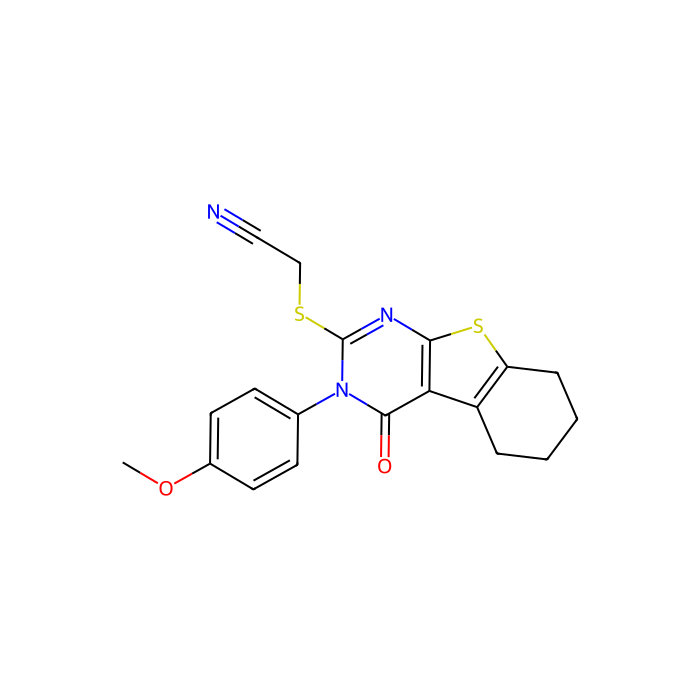
This compound belongs to the class of organic compounds known as thienopyrimidines. These are heterocyclic compounds containing a thiophene ring fused to a pyrimidine ring. Thiophene is 5-membered ring consisting of four carbon atoms and one sulfur atom. Pyrimidine is a 6-membered ring consisting of four carbon atoms and two nitrogen centers at the 1- and 3- ring positions.
External Descriptors
Not available
1. Djoumbou Feunang Y, Eisner R, Knox C, Chepelev L, Hastings J, Owen G, Fahy E, Steinbeck C, Subramanian S, Bolton E, Greiner R, and Wishart DS. ClassyFire: Automated Chemical Classification With A Comprehensive, Computable Taxonomy. Journal of Cheminformatics, 2016, 8:61.
Determine the necessary mass, volume, or concentration for preparing a solution.
Dilution Calculator
Determine the dilution needed to prepare a stock solution.
Reconstitution Calculator
Bewertungen
Kundenbewertungen
Application Protocols
Only tested applications and parameters from product data may be listed here.
Tested applications: Not specified for this item; refer to CoA/Spec Sheet.
Recommended working concentrations, incubation times, positive controls, or assay workflows: Not specified for this item; refer to CoA/Spec Sheet.
General research-use guidance (not item-specific):
For cell-based assays, consider a concentration range that spans at least one order of magnitude around expected activity from literature for necrostatin analogs; include vehicle controls and, if available, an orthogonal pathway inhibitor as control.
For biochemical assays, validate compound integrity and avoid detergent systems that interfere with readouts.
For research use only.
Biological Roles
Context (literature, general):
Necrostatins are widely used as chemical probes to investigate necroptosis, a programmed necrosis pathway distinct from apoptosis. This pathway often involves receptor-interacting serine/threonine-protein kinase 1 (RIPK1), RIPK3, and mixed lineage kinase domain-like protein (MLKL).
Necrostatin-5 has been reported within the necrostatin series used to modulate RIPK1-dependent signaling in cell-based systems; exact molecular target selectivity and binding modality for Necrostatin-5 should be verified from the primary references for this specific analog.
How it is used in biology (tool-compound perspective):
Dissecting cell death decisions: Compare outcomes under caspase inhibition to distinguish apoptosis vs. necroptosis contributions.
Temporal pathway mapping: Add before vs. after ligand stimulation (e.g., TNF family ligands) to locate site of action within the signaling cascade.
Genetic/chemical orthogonality: Combine with genetic knockdown/knockout of RIPK1/RIPK3/MLKL or with mechanistically distinct small molecules to confirm pathway dependence.
Assay considerations (general):
DMSO vehicle controls are essential; keep final vehicle ≤0.1–0.5% v/v as tolerated by your system.
Endpoint selection: Consider both early signaling markers (phosphorylation events) and late outcomes (membrane integrity, cytokine release) to capture necroptosis dynamics.
Note: No clinical/medical claims are made. Use is restricted to research applications. Item-specific biological potency parameters (IC50/Ki, off-targets) are not specified for this item; refer to literature and CoA/SDS for additional details.
Buffer Applications
This product is a small-molecule research tool and is not itself a buffering agent. Therefore, it does not have a defined buffering range or standard buffer recipes.
Practical guidance for use in buffered systems (general):
Prepare a concentrated DMSO stock and dilute into your desired assay buffer (e.g., HEPES, PBS, HBSS) with vigorous mixing to avoid local supersaturation. Maintain final DMSO at a minimal level tolerated by your assay.
If precipitation occurs upon dilution into aqueous buffer, consider:
Stepwise dilution with an intermediate co-solvent (ethanol or PEG 400) before entering purely aqueous media.
Use of solubilizing excipients (e.g., 0.01–0.1% Tween 80) or cyclodextrins as permitted by your biological system.
Filter sterilize final working solutions when sterility is required (0.2 μm PVDF or PES, low-binding).
Item-specific pKa or solubility in particular buffers: Not specified for this item; refer to CoA/Spec Sheet.
Green Alternatives
While Necrostatin-5 itself is a target compound used in biological studies (not a solvent or commodity reagent), you can align handling and formulation with green chemistry principles.
Greener formulation choices (general):
Prefer aqueous delivery when feasible: Use minimal DMSO by preparing higher-concentration stocks and diluting into buffered media to ≤0.1–0.2% v/v DMSO.
Co-solvent strategy: Replace DMF with ethanol or propylene glycol/water co-solvent systems where biologically compatible.
Minimize waste: Aliquot stocks to reduce repeated thawing and discard, and scale experiments to needed volumes.
Comparison of solvent options for stock preparation (general guidance):
DMSO: Excellent solvency; common in bioassays. Tradeoff: facilitates dermal absorption; handle carefully and keep final assay % low.
Ethanol: Renewable feedstock routes exist; usually acceptable up to ~1% v/v in many cell lines. Tradeoff: membrane effects at higher %.
PEG 400 or cyclodextrin vehicles: Can enhance aqueous delivery; assess biological compatibility and viscosity.
Operational green practices:
Use microscale assays and 96–384-well formats to reduce solvent consumption.
Implement closed-well incubation to limit VOC emissions when ethanol is used.
Note: Item-specific solubility and stability data are not provided; verify compatibility of greener vehicles empirically for your system.
Pharmaceutical Uses
This product is supplied strictly for research use only; it is not an excipient or drug substance for human or veterinary use.
Formulation context (general/laboratory):
Tool-compound dosing in preclinical research commonly employs DMSO-based stocks with dilution into aqueous media for in vitro assays. For in vivo exploratory studies in research animals (outside the scope of this catalog entry), vehicles may include aqueous solutions with co-solvents/surfactants (e.g., PEG 400, ethanol, polysorbates); ensure all work follows institutional approvals and regulations. No formulation guidance is provided or implied for clinical use.
Regulatory status:
No pharmacopeial monograph is known for Necrostatin-5 (literature context); this is not an API-grade material.
Item-specific excipient compatibility, stability in formulation, endotoxin specifications, and bioburden controls: Not specified for this item; refer to CoA/Spec Sheet if available.
Important: No therapeutic claims are made. This product is for laboratory research only.
Physical Properties
Item-specific physical constants have not been provided for this catalog entry.
Appearance: Not specified for this item; refer to CoA/Spec Sheet.
Molecular Weight: Not specified for this item; refer to CoA/Spec Sheet.
Melting point: Not specified for this item; refer to CoA/Spec Sheet.
Boiling point: Not applicable for most organic solids; Not specified for this item; refer to CoA/Spec Sheet.
Density: Not specified for this item; refer to CoA/Spec Sheet.
Solubility: Not specified for this item; refer to CoA/Spec Sheet.
LogP, pKa, refractive index: Not specified for this item; refer to CoA/Spec Sheet.
General/literature guidance (non-spec):
Many necrostatin analogs are moderately lipophilic, typically formulated as DMSO stock solutions (e.g., 10–50 mM) for cell biology assays. Aqueous solubility may be limited without co-solvent or surfactant systems; actual solubility should be confirmed experimentally for this lot.
If crystalline, an approximate melting transition can be expected, but do not use literature values as specifications for this product; always verify with the product CoA.
Note: All numeric values for this item must be taken from the CoA/Spec Sheet for regulatory or QC purposes. Literature data are for planning only and are not specifications.
Quality and Grades
Grade/purity details for this catalog item are not provided in the Product Data.
Grade/Purity: Not specified for this item; refer to CoA/Spec Sheet.
Guidance on interpreting quality information (general):
Research-grade small molecules are typically qualified by identity (e.g., 1H/13C NMR, HRMS) and purity (e.g., HPLC/UPLC area %). When available, review chromatograms and spectra on the CoA to confirm suitability for your application (biological assays often require ≥95% area purity; binding/biophysics workflows may demand even higher).
Stabilizers: None stated. If a stabilizer or counter-ion is present, it will be explicitly indicated on the CoA. Absence of a stated stabilizer does not imply any; verify on documentation.
Residual solvents/water content, inorganic residues, and UV absorbance characteristics: Not specified for this item; refer to CoA/Spec Sheet.
Recommendations:
For quantitative biology or medicinal chemistry, document batch identity via supplied analytical data. If LC-MS method conditions (column, gradient, detection wavelength) affect apparent purity, align methods across batches for comparability.
If you require specialized grade (e.g., endotoxin-tested, salt-form control), contact us prior to ordering to confirm availability.
Reaction and Applications
Primary use domain: cellular and biochemical research as a necroptosis-pathway tool compound (literature). This product is not typically used as a reagent/solvent in synthetic transformations.
Research applications (general/literature):
Pathway interrogation: Modulation of regulated necrosis (necroptosis) signaling cascades in cellular systems; often studied alongside TNFα, caspase inhibitors, and RIPK1/RIPK3/MLKL pathway stimuli.
Timing studies: Pre- vs. post-stimulation addition to delineate pathway order and checkpoint sensitivity.
Orthogonal controls: Use with other necrostatins or inactive analogs to confirm on-target pathway effects.
Assay types (general):
Cell viability and death phenotyping (Annexin V/PI, LDH release, SYTOX, IncuCyte live-cell imaging).
Western blotting for pathway markers (phospho-RIPK1/RIPK3, MLKL, pMLKL) and downstream inflammatory readouts (e.g., NF-κB activation), as appropriate.
Biochemical binding/kinase assays to probe target engagement (literature: necrostatins classically associated with RIPK1-dependent processes; exact target profile for Necrostatin-5 should be confirmed from primary sources).
Practical tips (general):
Prepare concentrated DMSO stocks; aliquot to avoid freeze–thaw. Titrate concentration across at least one log range to map IC50-like behavior in your assay. Verify vehicle controls.
Confirm compound integrity by LC-MS or HPLC upon receipt and periodically during prolonged studies.
Note: No item-specific application testing data are provided here; consult the primary literature and your internal SOPs. For research use only.
Reaction Conditions
This product is not generally used as a reagent in chemical synthesis; therefore, no canonical reaction conditions apply.
General laboratory handling (solution preparation) relevant to biological assays:
Stock solutions: Commonly prepared at 10–50 mM in anhydrous DMSO (general practice for hydrophobic bioactives). Aliquot and store at −20 °C, desiccated, to limit freeze–thaw.
Working solutions: Dilute into pre-warmed assay buffer or media with vigorous mixing to mitigate precipitation. Maintain final DMSO at the lowest compatible percentage for your system (often ≤0.1–0.5% v/v). Verify solution clarity before dosing.
Stability checks: Periodically evaluate by LC-MS/HPLC if experiments span multiple weeks. Protect from light and moisture per storage guidance.
Any literature conditions for chemical synthesis of Necrostatin-5 (routes, catalysts, temperatures) are outside the scope of this product listing and should be sourced from primary references. Item-specific kinetic/thermodynamic data are not provided here.
Safety and Handling
Safety overview (product-specific):
GHS Classification: Not specified for this item; refer to SDS.
Signal Word: Not specified for this item; refer to SDS.
Hazard (H) statements: Not specified for this item; refer to SDS.
Pictograms: Not specified for this item; refer to SDS.
General laboratory precautions (best practice; not a substitute for SDS):
Handle in a chemical fume hood. Avoid inhalation of dust/aerosols and contact with skin or eyes.
Wear appropriate PPE: lab coat, nitrile gloves, and safety glasses or face shield. Change gloves frequently when handling DMSO solutions (enhanced dermal transport risk).
Avoid incompatible reagents typical for organic small molecules (strong oxidizers/strong acids or bases) unless stability is known. Confirm incompatibilities on the SDS.
First-aid (general): In case of skin contact, wash with soap and water. For eye exposure, rinse cautiously with water for several minutes and seek medical attention. If inhaled, move to fresh air. If ingested, rinse mouth; do not induce vomiting—seek medical advice.
Storage and stability (product-specific):
Storage Conditions: Store at −20 °C, desiccated (per Product Data). Keep container tightly closed, protected from light and moisture. Minimize freeze–thaw cycles by aliquoting.
Shipped In: Ice chest + ice pads (per Product Data). Allow package to equilibrate to room temperature before opening to avoid condensation.
Authoritative safety information is provided in the SDS; always consult the current SDS before use. For research use only.
Solvent Selection
This compound is a hydrophobic small-molecule tool compound; item-specific solubility is not provided.
General/literature guidance (non-spec):
Primary stock solvent: DMSO is commonly used for necrostatin analogs due to good solvating power for aromatic heterocycles. Typical lab stocks: 10–50 mM.
Secondary solvents/co-solvents: DMF can be used for initial dissolution, then dilute into aqueous media; ethanol or isopropanol may also assist. Surfactants (e.g., 0.01–0.1% Tween 80) or cyclodextrins can improve aqueous delivery; verify biological compatibility.
Aqueous media: Direct dissolution in aqueous buffers is often limited. Use serial dilution from a DMSO stock to keep final DMSO ≤0.1–0.5% v/v for most cell assays (confirm tolerance for your system).
Polarity/miscibility context (general):
DMSO and DMF: polar aprotic, fully miscible with water; excellent for preparing concentrated stocks.
Ethanol: protic, water-miscible; may affect cellular membranes and assay readouts at >1–2% v/v.
Comparison notes (general):
If precipitation occurs upon dilution, warm gently (room temp to 37 °C), vortex, and consider stepwise dilution or co-solvent strategies. Filter sterilize through low-protein-binding 0.2 μm membranes when needed.
All solvent choices should be validated empirically for your specific assay. Item-specific solubility limits: Not specified for this item; refer to CoA/Spec Sheet.
Storage and Reconstitution
Product-specific instructions:
Storage Conditions: Store at −20 °C, desiccated (per Product Data). Keep tightly capped with desiccant. Protect from moisture and light.
Shipping: Ice chest + ice pads (per Product Data). Allow the container to reach room temperature before opening to prevent condensation.
Reconstitution (general guidance; not item-specific):
Solvent: Prepare concentrated stock solutions in anhydrous DMSO (e.g., 10–50 mM). If needed, confirm maximum achievable concentration empirically.
Aliquoting: Dispense single-use aliquots (amber vials or microtubes) to minimize freeze–thaw cycles. Flush headspace with inert gas if long-term storage is anticipated.
Working solutions: Dilute into assay buffer or media with thorough mixing. Maintain final DMSO content at the minimum compatible level for your assay.
Sterility: For cell culture, sterile-filter DMSO stocks or final diluted solutions through 0.2 μm low-binding membranes.
Stability notes:
Avoid repeated freeze–thaw. Track preparation dates; re-assess purity by HPLC/LC-MS for long-term studies.
Item-specific attributes such as exact solubility limits, hygroscopicity, and solution stability half-life: Not specified for this item; refer to CoA/Spec Sheet.
For research use only.
Structure and Identity
Brief overview: Necrostatin-5 is a small-molecule research tool from the necrostatin series, widely used to probe regulated necrosis (necroptosis) pathways in cells (literature). Item-specific identifiers below reflect the catalog entry.
SKU: N274792 (product-specific)
Product Name: Necrostatin-5 (product-specific)
CAS: 337349-54-9 (product-specific)
PubChem CID: 1913406 (product-specific)
InChIKey: 378525 (product-specific; note that this format is atypical for an InChIKey; defer to CoA/SDS for confirmation)
Molecular Formula: Not specified for this item; refer to CoA/Spec Sheet.
Molecular Weight: Not specified for this item; refer to CoA/Spec Sheet.
SMILES: Not specified for this item; refer to CoA/Spec Sheet.
Structural features (general/literature):
Necrostatins are typically heteroaromatic small molecules with functionality enabling kinase-target engagement, often featuring hydrogen-bond donors/acceptors and an aromatic core. Exact ring system and functional group arrangement for Necrostatin-5 should be confirmed from primary literature or the product CoA.
2D structure description (general):
Expect an aromatic/heteroaromatic scaffold with substituents conferring kinase-binding properties; without an item-specific structure disclosure here, consult primary references or analytic data (NMR, HRMS) on the CoA for definitive connectivity and stereochemistry (if any).
Synthetic Utility
Necrostatin-5 is supplied as a finished small-molecule tool compound and is not typically employed as a reagent or building block in routine synthetic chemistry workflows.
General commentary (literature):
Members of the necrostatin series arise from medicinal chemistry campaigns optimizing heteroaromatic scaffolds for modulation of necroptosis pathways. While such compounds can, in principle, be elaborated or derivatized for SAR, this product is intended for biological assay use rather than as a synthetic intermediate.
If derivatization is desired (research-only considerations):
Late-stage functionalization strategies (e.g., selective halogen exchange, cross-coupling on aryl/heteroaryl positions, or amide coupling) depend on the specific functional groups present in Necrostatin-5; confirm structure via CoA and literature before planning chemistry.
Analytical control (LC-MS/HPLC, NMR) is essential to confirm purity and avoid confounding biological readouts from impurities.
Conclusion: Treat this item primarily as a bioactive probe for cell/death pathway studies. For synthetic transformations or as a reagent, select well-characterized building blocks or commodity reagents more suitable for that purpose.
Target Specificity
Only item-specific data may be listed here.
Target, binding constants, selectivity profile, clone/isotype/species reactivity: Not specified for this item; refer to CoA/Spec Sheet and primary literature.
General note (literature context, not item-specific):
The necrostatin class is commonly associated with modulation of RIPK1-dependent necroptosis signaling; however, exact target specificity, binding site, and off-target profile for Necrostatin-5 should be confirmed from authoritative sources for this specific analog.
No additional target data are provided in this catalog entry.
Häufig gestellte Fragen
What is the purity of this product?
This product is supplied at ≥98% purity (chemical assay). Lot-specific values are stated on the Certificate of Analysis.
How should this product be stored?
Store at ?20 °C, desiccated. Keep the container tightly closed with desiccant — the material is moisture-sensitive.
How is this product shipped?
This product ships in an insulated container with ice pads. Unpack on arrival and transfer it to the storage condition stated above.
What are the CAS number, molecular formula and molecular weight?
The CAS Number is 337349-54-9, the molecular formula is C19H17N3O2S2, and the molecular weight is 383.49 g/mol. InChIKey VGONMECBFMCKBS-UHFFFAOYSA-N.
What documentation is provided?
Available product documentation, including Certificates of Analysis (COA), Safety Data Sheets (SDS), and specification sheets, is shown in the product document area. Document availability and access follow the current site policy.
Wir verwenden Cookies, um die ordnungsgemäße Funktion der Website sicherzustellen und, soweit zulässig, Ihr Nutzererlebnis zu verbessern. Sie können Ihre Einstellungen jederzeit unter „Einstellungen“ verwalten. Weitere Informationen finden Sie in unserer Cookie-Richtlinie.
Dürfen wir Sie über Rabattaktionen informieren?
Später erinnern
Vielen Dank! Bitte überprüfen Sie Ihren E-Mail-Posteingang, um zu bestätigen.
Products are supplied to verified businesses, institutions, and qualified professionals for research and development use only. Not for use in humans, animals, diagnosis, or therapy.

 C2329319