QUALITÄT & REINHEITMoligand™?Moligand™ — Aladdin's line of ligands and bioactive small molecules. Use for receptor, pathway, and binding studies needing defined small-molecule tools.10mM in DMSO
NVS-PI3-4 is a specific PI3Kγ inhibitor. NVS-PI3-4 can be used for the research of allergies, inflammatory and cancer diseases
In Vitro
NVS-PI3-4 shows an exquisite cellular selectivity for PI3Kγ. NVS-PI3-4 reduces IgE/antigen-mediated phosphorylation of PKB/Akt in p110δ DA . NVS-PI3-4 (5 μM; 30 minutes; BMMCs) is not accumulate in specifically in mast cells. MCE has not independently confirmed the accuracy of these methods. They are for reference only.
IC50& Target:PI3Kγ
Spezifikationen
Spezifikationen & Reinheit
Moligand™,10mM in DMSO
Biochemische und physiologische Mechanismen
NVS-PI3-4 is a specific PI3Kγ inhibitor. NVS-PI3-4 can be used for the research of allergies, inflammatory and cancer diseases.
Storage
Store at -80°C
Verschickt in
Dry ice packs + Cold packs
Dieses Produkt erfordert Kühlkettenversand. Grundversand und andere Economy-Optionen sind nicht verfügbar.
Zertifikate (CoA, COO, BSE/TSE und Analyse-Diagramm)
C of A & Other Certificates(BSE/TSE, COO):
Analytical Chart:
Lösungsrechner
Molarity Calculator
Determine the necessary mass, volume, or concentration for preparing a solution.
Dilution Calculator
Determine the dilution needed to prepare a stock solution.
Reconstitution Calculator
Bewertungen
Kundenbewertungen
Application Protocols
No vendor-tested applications or protocol parameters are specified for this item.
General protocol framework for small-molecule assay use (not item-specific):
Stock preparation: Dissolve compound in anhydrous DMSO to 10 mM. Vortex and sonicate as needed; filter through 0.22 µm (PTFE) if particulates remain.
Working solutions: Serially dilute in assay-compatible buffer/media, ensuring vehicle control matches the highest DMSO concentration.
Dose–response: Use at least 10–12 half-log dilutions spanning anticipated activity range; perform in technical triplicates and biological replicates.
Plate handling: Equilibrate plates to room temperature to minimize edge effects; seal to limit evaporation for longer incubations.
Data integrity: Include positive/negative controls, counter-screens (e.g., reporter-only), and orthogonal readouts (biochemical vs. cellular) where feasible.
Refer to internal SOPs and primary literature for target-specific protocols once the mechanism of action is established.
Biological Roles
This item is part of a small-molecule/compound library (Moligand™) and is intended as a bioactive research ligand. The Product Data do not specify a biological target or mode of action for NVS-PI3-4.
General context (not item-specific):
Small-molecule ligands are commonly used to modulate or probe protein function (e.g., enzymes, receptors, transporters) in biochemical and cellular systems to elucidate signaling pathways, validate targets, and inform SAR.
Proper characterization includes verifying the compound’s identity and purity, then establishing concentration–response behavior and selectivity using orthogonal assay formats (enzymatic, biophysical, and cellular readouts).
Best practices:
Begin with a solubility/tolerability assessment in the intended assay matrix. Confirm that vehicle (e.g., DMSO) controls match the highest solvent exposure in test wells.
If a literature-reported target is identified for the CAS 941580-60-5 or CID 23585510, confirm activity under your assay conditions and include counterscreens to assess off-target effects.
Consider plasma protein binding, cell permeability, and efflux if translating from biochemical to cellular assays; quantify compound carryover/adsorption in plastics when working at low nM–µM levels.
Important: No specific biological function, target selectivity, or potency data are provided for this item. Users should consult primary literature or internal profiling data before drawing mechanistic conclusions.
Buffer Applications
This product is a bioactive small molecule, not a buffering agent. It does not form a standardized laboratory buffer system.
Practical notes for assay buffers (general, not item-specific):
Prepare compound stocks in DMSO and dilute into biologically compatible buffers (e.g., PBS, HEPES, Tris) ensuring final DMSO ≤0.5% v/v to avoid solvent-induced artifacts.
Maintain buffer pH and ionic strength appropriate to the biological assay; include detergents (e.g., 0.01–0.05% Tween-20) if nonspecific adsorption or aggregation is observed.
Filter (0.22 µm) and degas buffers when coupling to LC–MS or biosensor platforms to minimize noise and bubble formation.
No buffer pKa/pH range is applicable to this item.
Green Alternatives
As a bioactive small molecule intended for screening and chemical biology, NVS-PI3-4 itself is not a process solvent or reagent targeted by green substitution. However, solvent choices and handling practices around its use can be optimized using green chemistry principles.
Greener handling recommendations (general):
Prefer water-miscible, lower-toxicity solvents for intermediate dilutions (e.g., ethanol or isopropanol) when compatible with assays, minimizing DMF/NMP use.
Keep DMSO volumes minimal in final assay media (≤0.1–0.5% v/v) to reduce cellular solvent stress and environmental load.
Use microscale operations and pre-weighed unit-dose vials to reduce waste and exposure.
Illustrative comparison (general, not item-specific):
DMSO vs. DMF/NMP: DMSO offers high solvency with more favorable toxicity and biodegradability profiles than DMF/NMP; choose DMSO first.
Ethanol/isopropanol vs. acetonitrile: Where analytical requirements allow, EtOH/IPA have lower environmental impact than MeCN; however, MeCN remains preferred for many LC methods due to volatility and UV transparency.
Operational green metrics:
Adopt high-throughput miniaturization (384/1536-well) to reduce solvent volumes per assay.
Note: No chemical alternatives apply to the molecule itself; green improvements focus on solvent selection, scale minimization, and waste management.
Pharmaceutical Uses
No pharmacopeial status, excipient role, or clinical application is provided for this research-only item.
Relevant uses in pharmaceutical R&D (general, not item-specific):
Reference standard/control: Employed as a comparator in bioassays and analytical methods during hit validation and lead optimization.
Chemical probe candidate: Utilized to explore target engagement and pathway modulation in nonclinical systems.
ADME/tox screening: Can be evaluated for metabolic stability, permeability, and off-target liabilities during discovery research.
Compliance and restrictions:
For research use only; not for human or veterinary use, diagnostic procedures, or as an API/excipient in manufacturing.
If used to support regulated studies, generate fit-for-purpose characterization (identity, purity, impurity profile, stability) and document chain-of-custody.
Formulation notes (general):
Preclinical dosing vehicles often include co-solvent systems (e.g., 10–20% PEG400, 2–10% Tween-80, 10–20% ethanol in saline/buffer), but suitability depends on the compound’s properties and is outside the scope of this listing. Follow institutional guidelines and compound-specific safety data.
Physical Properties
Item-specific physical data
Appearance: Not specified for this item; refer to CoA/Spec Sheet.
Molecular weight: Not specified for this item; refer to CoA/Spec Sheet.
Molecular formula: Not specified for this item; refer to CoA/Spec Sheet.
Melting point (mp): Not specified for this item; refer to CoA/Spec Sheet.
Boiling point (bp): Not applicable/unknown for a non-volatile bioactive solid; specific value not specified for this item; refer to CoA/Spec Sheet.
Density: Not specified for this item; refer to CoA/Spec Sheet.
Refractive index: Not applicable for a solid; not specified for this item; refer to CoA/Spec Sheet.
Solubility: Not specified for this item; refer to CoA/Spec Sheet.
Small-molecule screening ligands are commonly supplied as amorphous or microcrystalline solids with limited aqueous solubility and good solubility in high-boiling polar aprotic solvents (e.g., DMSO, DMF) and moderate solubility in alcohols (MeOH, EtOH).
Typical working stock concentrations for bioactive ligands are 1–10 mM in anhydrous DMSO, subsequently diluted into assay buffers (<0.5% v/v DMSO final).
Light and moisture sensitivity vary across chemotypes; handle under low humidity and minimize repeated warming/cooling to preserve integrity.
Analytical characterization suggestions (general)
Verify identity/purity by LC–MS (ESI), 1H NMR (400–600 MHz, DMSO‑d6 or CDCl3, depending on solubility), and HPLC area% at 220–254 nm.
Establish a stability-indicating HPLC method (C18, gradient 5–95% acetonitrile/water + 0.1% formic acid, 10–20 min) and document RT and UV profile for your lot.
Note: All numeric physical property values are not specified for this item; consult the lot CoA.
Quality and Grades
Grade for this item (from Product Data)
Grade/Purity: Moligand™
What Moligand™ implies (general explanation, not a specification)
Moligand™ designates a bioactive small-molecule ligand suitable for discovery screening, chemical biology, and target/pathway interrogation. Such materials are typically provided with analytical confirmation of identity and purity appropriate for in vitro research.
Typical analytical package (check your CoA for this item)
Identity: LC–MS and/or HRMS; 1H NMR.
Purity: HPLC area % at UV 220–254 nm (method-dependent). Specific purity value is not specified for this item; refer to CoA/Spec Sheet.
Water/peroxide/metal content, residual solvents, and salt form: Not specified for this item; refer to CoA/Spec Sheet.
Implications for use
Moligand™-grade materials are intended for biochemical/cellular assays, profiling, and SAR. They are not certified for clinical, diagnostic, or GMP manufacturing use.
If low-UV background is critical (e.g., HPLC detection at 210–220 nm) or if elemental impurities must be controlled, verify requirements against the lot-specific CoA.
Lot-to-lot considerations
Record lot number and retain aliquots for cross-comparison. Small differences in form (free base vs. salt, solvate state, particle size) can influence solubility and assay reproducibility.
For any performance-critical specifications, defer to the lot’s CoA/SDS.
Reaction and Applications
This product is supplied as a bioactive small-molecule ligand for discovery and screening rather than as a synthetic reagent. Accordingly, classical synthetic reaction families (e.g., Grignard, cross-coupling) are not the primary use case for this item.
Relevant applications (general, not item-specific):
Chemical biology: Use as a small-molecule probe candidate in target/pathway studies after verifying the compound’s identity and purity against literature or the CoA.
Assay development: Preparation of reference standards and controls in biochemical or cell-based assays; establishing dose–response curves; confirming signal windows.
Profiling: Inclusion in focused or diversity panels for SAR, target deconvolution, or phenotypic screening workflows.
Practical implementation tips:
Prepare concentrated DMSO stocks (e.g., 10 mM), verify concentration by UV–Vis if chromophore allows (use compound-specific ε once known), and aliquot to avoid freeze–thaw.
For orthogonal confirmation, use LC–MS to track parent ion and relevant adducts/fragments during assay handling to detect degradation.
Where mechanistic hypotheses are tested, include inactive or orthogonal chemotype controls to diagnose off-target effects and assay artifacts.
Note: No manufacturer-supplied reaction applications are listed for this item. If employing this compound in synthesis (e.g., as a reference scaffold), standard organic reaction guidance applies but is outside the intended scope for Moligand™ materials.
Reaction Conditions
This product is not supplied for use as a reagent in chemical synthesis; it is intended as a bioactive small-molecule ligand for research assays. As such, standardized reaction conditions are not applicable.
If derivatization or analytical method development is pursued (general, not item-specific):
LC–MS method setup: Reverse-phase C18, 5–95% MeCN/H2O + 0.1% formic acid over 10–20 min, 0.3–1.0 mL/min, detection at 220–254 nm.
Solid dissolution: Begin with anhydrous DMSO, sonication (5–10 min), gentle warming (≤40°C). Filter (0.22 µm) before use in bioassays.
Stability checks: Store working solutions at 2–8°C for short term (<24 h) and at −80°C for long term; monitor by LC–MS for degradation.
No yields, catalysts, or temperature profiles can be provided for chemical reactions with this item based on the available data.
Safety and Handling
GHS/SDS status for this item
Signal word: Not specified for this item; refer to SDS.
Hazard statements (H-phrases): Not specified for this item; refer to SDS.
GHS classification and pictograms: Not specified for this item; refer to SDS.
General laboratory precautions for bioactive small molecules (not item-specific)
Handle in a certified chemical fume hood.
Wear appropriate PPE: lab coat, safety glasses, and nitrile gloves (double-glove for DMSO stock handling). Change gloves frequently when working with DMSO solutions.
Avoid inhalation of dust or aerosols; prevent skin contact and ingestion. Use microbalances with draft shields when weighing milligram quantities.
First-aid overview (consult SDS for authoritative guidance)
Inhalation: Move to fresh air; seek medical attention if symptoms persist.
Skin contact: Wash with soap and water; remove contaminated clothing.
Eye contact: Rinse with water for several minutes; remove contact lenses if present and easy to do.
Ingestion: Rinse mouth; seek medical attention.
Storage incompatibilities and stability (general)
Store under inert, dry, and cold conditions; avoid exposure to light and repeated freeze–thaw cycles of DMSO stocks.
Keep away from strong oxidizers and strong acids/bases unless compatibility is established.
Always defer to the product’s SDS and your institution’s EHS protocols for definitive hazard classification and response.
Solvent Selection
Item-specific solubility
Not specified for this item; refer to CoA/Spec Sheet.
General guidance for bioactive small molecules (not item specifications)
Primary stock solvent: DMSO (anhydrous) is the default for many discovery ligands due to broad solubilizing power and assay compatibility at ≤0.5% v/v.
Secondary solvents: DMF and NMP (for challenging solutes); MeOH or EtOH for moderate polarity; acetonitrile (MeCN) for LC compatibility. Aqueous buffers typically require co-solvent or pH adjustment.
Miscibility profile: DMSO mixes with water across all ratios, enabling easy preparation of aqueous working solutions from concentrated stocks.
Practical tips
Perform a small-scale solubility screen (e.g., 1 mg in 1 mL) across DMSO, MeOH, EtOH, MeCN, buffer pH 2–9. Use sonication and gentle warming (≤40°C) to assist dissolution.
Filter sterilize assay solutions (0.22 µm PTFE/nylon) to remove particulates prior to cell-based work.
Avoid prolonged exposure of DMSO solutions to moisture and air; aliquot and store at −80°C to mitigate hydrolysis/oxidation if the chemotype is labile.
Comparison snapshot (general)
DMSO: Highest solvency; biologically tolerated at low %; hygroscopic.
MeOH/EtOH: Volatile, easy to remove; limited solubility for some heteroaromatics.
DMF/NMP: Strong solvency; consider cytotoxicity and remove before sensitive assays.
Note: Establish solvent choices empirically for your lot; do not rely on generic assumptions for critical assays.
Storage and Reconstitution
Item-specific conditions (from Product Data)
Storage Conditions: Store at −80°C
Shipped In: Dry ice packs + Cold packs
General handling recommendations (not item-specific)
Upon receipt: Keep frozen. Allow outer packaging to equilibrate briefly to minimize condensation, then transfer vials immediately to −80°C.
Aliquoting: If supplied as a solid, consider preparing pre-weighed, single-use aliquots under low humidity. If supplied in solution, subdivide into small, sealed aliquots (amber vials) to avoid repeated freeze–thaw.
Reconstitution: Use anhydrous DMSO as a first choice unless CoA indicates otherwise. Typical research stocks are 5–10 mM. Record exact concentration gravimetrically or by UV–Vis if extinction coefficient is known.
Freeze–thaw guidance: Avoid repeated cycles. Thaw on ice, mix gently, and promptly return unused portions to −80°C. Discard aliquots showing precipitation, discoloration, or degradation by LC–MS/HPLC.
Light/moisture: Protect from light and moisture during handling; use desiccated storage where possible.
Note: Appearance, exact solubility, and any stabilizers are not specified for this item; consult the lot-specific CoA/SDS for definitive instructions.
Structure and Identity
Overview
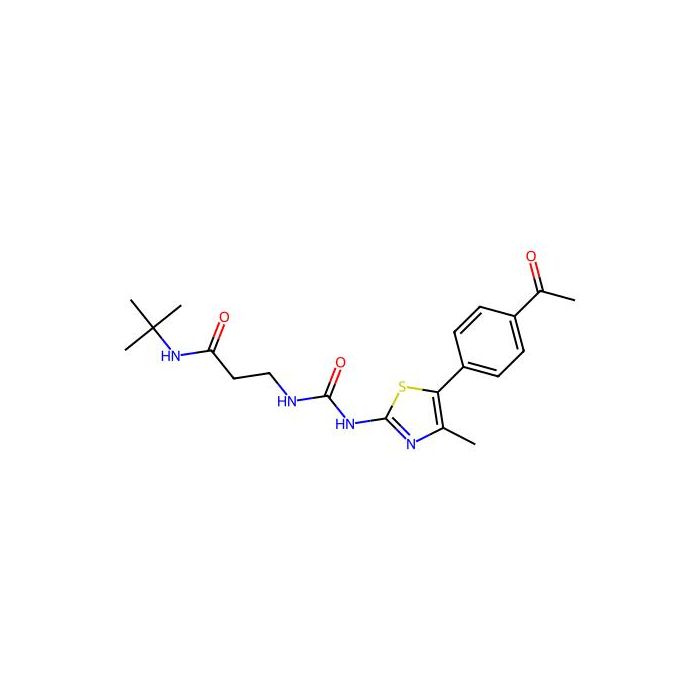
This product is supplied as a bioactive small-molecule entry in Aladdin’s Moligand™ collection under the identifier NVS-PI3-4.
Item-specific identifiers (from Product Data)
SKU: N655906
Product Name: NVS-PI3-4
CAS: 941580-60-5
PubChem CID: 23585510
Category: Small molecules and compound libraries (小分子和化合物库)
Research Use: For research use only
Molecular descriptors for this specific item
Molecular formula: Not specified for this item; refer to CoA/Spec Sheet.
Molecular weight: Not specified for this item; refer to CoA/Spec Sheet.
SMILES: Not specified for this item; refer to CoA/Spec Sheet.
InChIKey: Not specified for this item; refer to CoA/Spec Sheet.
Structural features (general guidance)
NVS-PI3-4 is a named small molecule; detailed functional groups, ring systems, and stereochemistry are not provided in the Product Data. Consult the lot-specific CoA/SDS or primary literature indexed under the provided CAS or CID for definitive structure.
2D structure (descriptive, general note)
Without an explicit SMILES/InChI, a reliable 2D description cannot be provided here. Users should retrieve the vendor CoA or the PubChem record (CID 23585510) for an authoritative structure diagram prior to method development, LC–MS method setup, or spectral verification.
Synthetic Utility
NVS-PI3-4 is offered as a bioactive ligand for screening and assay use rather than as a synthetic building block.
General considerations if used synthetically (not item-specific):
Structural derivatization for SAR typically proceeds via functional handles present on the scaffold (e.g., aryl halides for cross-coupling, amines/amides for acylation/alkylation). The presence/absence of such handles is not specified for this item; consult the compound’s structure (CAS/CID) before planning transformations.
For analytical support, retain a portion of the original material as a reference standard to benchmark any derivatives.
Maintain detailed records of salt form/solvate state; transformations can alter counterions or solvation, which affects analytical comparability.
Because the Product Data do not provide functional group information, no reaction-specific synthetic recommendations can be made for this item.
Target Specificity
Target, selectivity, clone/isotype, and species reactivity information are not provided for this item in the Product Data.
Notes:
This product is part of a small-molecule/compound library (Moligand™) intended for research use. If a biological target is reported in the literature for CAS 941580-60-5 or CID 23585510, users should verify target engagement and selectivity under their specific assay conditions before drawing conclusions.
No antigen/epitope/clone details apply, as this is not an antibody or biological reagent.
Häufig gestellte Fragen
What is Moligand??
Moligand? is one of Aladdin Scientific's premium product lines, formulated for high-purity applications across multiple workflows. Compared to standard grades in the same workflow, Moligand? products typically offer tighter specifications, more rigorous QC, and stronger lot-to-lot consistency.
How should this product be stored?
Store at ?80 °C. Ultra-low temperature storage is required to maintain the specified shelf life.
How is this product shipped?
This product ships frozen with dry ice and cold packs. Unpack on arrival and transfer it to the storage condition stated above; handle dry ice with insulated gloves in a ventilated area.
What are the CAS number, molecular formula and molecular weight?
The CAS Number is 941580-60-5, the molecular formula is C20H26N4O3S, and the molecular weight is 402.51 g/mol.
What documentation is provided?
Available product documentation, including Certificates of Analysis (COA), Safety Data Sheets (SDS), and specification sheets, is shown in the product document area. Document availability and access follow the current site policy.
Benötigen Sie Hilfe bei der Auswahl der Qualität?
Unser Leitfaden zur Qualitätsauswahl behandelt Reinheit, Stabilisatorstatus und Anwendungseignung für alle Varianten in unserem Katalog.
Wir verwenden Cookies, um die ordnungsgemäße Funktion der Website sicherzustellen und, soweit zulässig, Ihr Nutzererlebnis zu verbessern. Sie können Ihre Einstellungen jederzeit unter „Einstellungen“ verwalten. Weitere Informationen finden Sie in unserer Cookie-Richtlinie.
Dürfen wir Sie über Rabattaktionen informieren?
Später erinnern
Vielen Dank! Bitte überprüfen Sie Ihren E-Mail-Posteingang, um zu bestätigen.
Products are supplied to verified businesses, institutions, and qualified professionals for research and development use only. Not for use in humans, animals, diagnosis, or therapy.