QUALITÄT & REINHEITMoligand™?Moligand™ — Aladdin's line of ligands and bioactive small molecules. Use for receptor, pathway, and binding studies needing defined small-molecule tools.10 mM in DMSO
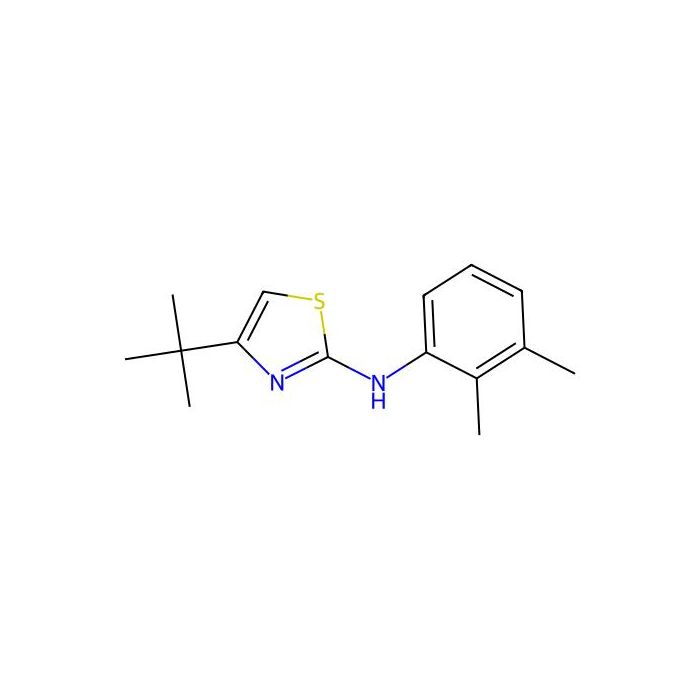
O4I4 (compound 23) is a OCT4-inducing compound with metabolical stability. O4I4 extends lifespan in Caenorhabditis elegans and Drosophila. O4I4 can be used for regenerative medicine and rejuvenation research.
Spezifikationen
Spezifikationen & Reinheit
Moligand™, 10 mM in DMSO
Storage
Store at -80°C
Verschickt in
Dry ice packs + Cold packs
Dieses Produkt erfordert Kühlkettenversand. Grundversand und andere Economy-Optionen sind nicht verfügbar.
Note
Moligand™
Namen und Kennungen
Molekulargewicht
260.40
Erweiterte Daten
Zertifikate (CoA, COO, BSE/TSE und Analyse-Diagramm)
C of A & Other Certificates(BSE/TSE, COO):
Analytical Chart:
Lösungsrechner
Molarity Calculator
Determine the necessary mass, volume, or concentration for preparing a solution.
Dilution Calculator
Determine the dilution needed to prepare a stock solution.
Reconstitution Calculator
Bewertungen
Kundenbewertungen
Application Protocols
No tested application protocols are supplied for O4I4.
Item-specific status
Recommended assay types, concentrations, incubation times, and positive controls: Not specified for this item; refer to CoA/Spec Sheet.
General HTS/HCS workflow (literature/general)
Stock preparation: Dissolve in anhydrous DMSO to 10 mM (or higher if soluble). Vortex and, if needed, sonicate briefly. Record exact mass and volume to enable gravimetric back-calculation of concentration.
Plate handling: Pre-dispense into source plates under low humidity; seal immediately. Use acoustic or pin-tool transfer to destination plates to minimize DMSO carryover.
Assay execution: Validate vehicle tolerance, include intra-plate and inter-plate controls, and run an 8–10 point dose–response series (≥3.5 log units) for curve fitting.
Data quality: Track Z’ factor, S/B ratio, and include replicate wells to detect edge effects. Follow up actives with confirmatory retests from fresh solid and orthogonal detection modes.
Documentation
Maintain chain-of-custody and instrument method files. Archive raw LC–MS/HPLC confirmation for each working stock prior to screening.
Biological Roles
Specific biological roles, targets, or pathways for O4I4 are not disclosed on this page. Without structural or mechanistic information, definitive statements about biochemical function are not possible.
General context for library compounds (literature/general)
Screening compounds may modulate a wide range of protein classes (enzymes, receptors, ion channels, transporters) depending on their functional groups, 3D shape, and physicochemical profile (e.g., HBD/HBA count, cLogP, TPSA).
Hit compounds are typically advanced through orthogonal assays to confirm on-target activity, followed by preliminary ADME assessments (solubility, permeability, microsomal stability) to inform chemical optimization.
Photophysical properties (intrinsic fluorescence, quenching) can interfere with certain assays; verify excitation/emission behavior when using fluorescence-based readouts.
Item-specific note
Any claimed biological activity, target specificity, or pathway engagement for O4I4 is Not specified for this item; refer to CoA/Spec Sheet or your library metadata. Use results solely for research and method development; no clinical or diagnostic use is intended or implied.
Buffer Applications
O4I4 is a small-molecule screening compound and is not a buffering agent. As such, there are no standard buffer formulations associated with this item.
Practical guidance (general)
When dosing into biological buffers, prepare a concentrated DMSO stock and perform serial dilutions into assay buffer while keeping final organic content low (typically ≤1–2% v/v).
If compound ionization is known (pKa), select buffer pH to favor desired solubility or membrane permeability. Common assay buffers include HEPES, PBS, and Tris; compatibility must be verified experimentally for each compound.
Item-specific status
Buffer capacity, pKa, and aqueous solubility for O4I4 are Not specified for this item; refer to CoA/Spec Sheet.
Green Alternatives
Because O4I4 is a screening compound rather than a process solvent or commodity reagent, “green alternatives” primarily concern solvent choices for stock preparation, analytics, and any synthetic follow-up work.
Greener handling strategies (general)
Prefer ethanol or water-cosolvent systems when compatible with solubility and assay tolerance, reducing reliance on DMF/DMAC or chlorinated solvents.
For preparative or follow-up synthesis, consider 2-MeTHF or CPME as greener ethers versus THF/diethyl ether; ethyl acetate over dichloromethane for extractions; and propylene carbonate or Cyrene in place of dipolar aprotics when feasible.
Implement microscale assays and miniaturized HTS plates (1536-well) to lower solvent use and waste.
DMSO vs. ethanol: DMSO offers superior solvency but higher environmental persistence; ethanol is renewable and lower toxicity but limited for highly lipophilic compounds.
Acetonitrile vs. methanol for LC: ACN generally improves chromatographic efficiency but has supply volatility; MeOH is greener but may increase backpressure.
Item-specific guidance
No solvent or stabilizer is specified for O4I4; refer to CoA/Spec Sheet. Validate solubility in greener media first (EtOH/H2O with minimal DMSO) before resorting to harsher solvents.
Pharmaceutical Uses
This product is sold strictly for research use only. It is not formulated as a drug substance, excipient, or for any clinical application.
Formulation and manufacturing context (general)
Library compounds like O4I4 may be investigated in preclinical discovery assays to identify structure–activity relationships (SAR). If progressed, they can inform medicinal chemistry campaigns but are not suitable for human or veterinary use in their catalog form.
No pharmacopeial monographs or compendial specifications apply to O4I4 based on the information provided. Any cGMP, ICH Q3A/B impurity profiling, or stability studies would need to be developed de novo for later-stage programs.
Item-specific details
Excipient functions, acceptable daily intake data, and formulation roles are Not specified for this item; refer to CoA/Spec Sheet. Any use beyond basic research is prohibited by the Research Use Only notice.
Physical Properties
Item-specific physicochemical constants have not been disclosed for O4I4 on this page.
Appearance: Not specified for this item; refer to CoA/Spec Sheet.
Molecular weight: Not specified for this item; refer to CoA/Spec Sheet.
Melting point (MP): Not specified for this item; refer to CoA/Spec Sheet.
Boiling point (BP): Not specified for this item; refer to CoA/Spec Sheet.
Density: Not specified for this item; refer to CoA/Spec Sheet.
Refractive index: Not applicable for solids; if liquid, not specified for this item; refer to CoA/Spec Sheet.
Solubility: Not specified for this item; refer to CoA/Spec Sheet. Typical library compounds are supplied as solids that dissolve in DMSO at 10–50 mM (literature/general), with variable solubility in aqueous buffers depending on ionization state.
logP/logD, pKa: Not specified for this item; refer to CoA/Spec Sheet. These may be estimated from the structure when available (literature/computed).
General guidance (literature/general)
For unknown solubility, begin with anhydrous DMSO to prepare a concentrated stock. If needed, co-solubilize with small fractions of ethanol or DMF, then dilute into assay buffer maintaining final organic content ≤1–2% v/v to minimize bioassay interference.
If the compound is hygroscopic or polymorphic (unknown here), handle quickly at ambient and tightly cap to avoid moisture uptake; verify by mass balance and visual inspection.
Quality and Grades
Grade/purity: Moligand
About Moligand grade (general description)
Moligand denotes screening-quality small molecules curated for chemical biology and early discovery. Emphasis is placed on structural diversity, purity suitable for biochemical or cell-based assays, and batch-to-batch traceability. While exact purity and analytical thresholds for O4I4 are not specified here, purchasers typically receive supporting documentation (CoA) listing structure (if disclosed), batch ID, purity by HPLC/LC–MS, and storage guidance.
What this means for O4I4 (item-specific)
Reported analytical specifications (e.g., HPLC area %, residual solvents, water content, metal content, stabilizers, UV cutoff) are Not specified for this item; refer to CoA/Spec Sheet.
Appearance and physical form are Not specified for this item; refer to CoA/Spec Sheet.
Analytical expectations (literature/general)
Library compounds are commonly qualified by LC–MS identity confirmation and HPLC purity, typically ≥90–95% area by a single method. If orthogonal methods (qNMR, HRMS) are required by your workflow, request them at time of order.
For HTS compatibility, low endotoxin and minimal fluorescent impurities are preferred; verify with pilot plates if using optical readouts.
Implications for method development
Unknown UV characteristics suggest using MS or ELSD detection during LC screening. If UV detection is required, perform a short scan (200–400 nm) to identify absorbance maxima and avoid detector saturation.
Reaction and Applications
No manufacturer application notes were provided for O4I4. As a Moligand small-molecule library member, its primary use is in discovery and chemical biology screening rather than as a reagent for stoichiometric or catalytic transformations.
Discovery applications (general)
High-throughput screening (HTS) against enzymatic or receptor targets to identify primary hits.
Fragment-like or lead-like profiling for SAR-by-catalog or SAR-by-synthesis campaigns, depending on molecular size and features (structure not disclosed here).
Biophysical binding assays (SPR, MST, DSF) when solubility and optical properties permit; ensure buffer compatibility and DMSO matching.
Assay development tips (general)
Establish a fresh DMSO stock at a defined concentration (e.g., 10 mM), validate by quantitative UV (if chromophore known) or qNMR where possible.
Check for aggregation using detergent supplementation or DLS. Include redox controls if the target is oxidation sensitive.
For cell-based assays, titer vehicle control and monitor cytotoxicity independently of target readout.
Item-specific status
Mechanistic class, target hypotheses, and recommended assay modalities for O4I4 are Not specified for this item; refer to CoA/Spec Sheet or library metadata.
Reaction Conditions
Item-specific reaction conditions are not applicable without a disclosed structure. O4I4 is primarily intended for screening rather than as a reagent.
General conditions for follow-up synthesis (literature/general)
Cross-coupling: Pd-catalyzed Suzuki–Miyaura (aqueous DMA/EtOH/H2O, K2CO3, 40–90 °C) or Buchwald–Hartwig amination (t-BuONa or Cs2CO3, BrettPhos-Pd, 80–110 °C) for aryl halide/boronate/amino motifs.
Amide formation: EDCI/HOBt or HATU/DIPEA in DMF/MeCN at 0–25 °C; or green alternatives with CDI in EtOAc/2-MeTHF.
Reductive amination: NaBH3CN or NaBH(OAc)3 in MeOH/MeCN at 0–25 °C; hydrogenation over Pd/C at 1–5 bar for nitro/olefin reductions.
Heterocycle derivatization: SNAr in DMSO/DMF with inorganic base if electron-deficient rings present.
Assay handling conditions (general)
Prepare 10–50 mM DMSO stocks, store at −80 °C, and minimize freeze–thaw. Equilibrate to room temperature before opening to prevent moisture condensation. Verify stability by LC–MS after 1–2 weeks of storage.
Item-specific limits
Optimal temperatures, catalysts, and yields for any transformation of O4I4 are Not specified for this item; refer to CoA/Spec Sheet and internal method development.
Safety and Handling
Hazard classification for O4I4 is not provided on this page. Treat as a research chemical of unknown toxicity and follow prudent laboratory practices.
GHS information (item-specific)
Signal word: Not specified for this item; refer to SDS.
Hazard statements (H-phrases): Not specified for this item; refer to SDS.
Pictograms: Not specified for this item; refer to SDS.
GHS classification: Not specified for this item; refer to SDS.
General laboratory precautions (literature/general)
PPE: lab coat, safety glasses, and appropriate chemically resistant gloves (nitrile recommended). Work in a certified chemical fume hood to avoid inhalation.
Avoid ingestion, inhalation, and skin/eye contact. Prevent environmental release. Use dedicated tools for micro-aliquoting to limit exposure.
Incompatibilities: Unknown for this item. As a precaution, keep away from strong oxidizers/reducers and strong acids/bases until compatibility is known.
First aid overview: In case of contact, rinse affected area with water for ≥15 minutes; remove contaminated clothing. If inhaled, move to fresh air. If ingested, rinse mouth and seek medical attention. Always consult the SDS for authoritative instructions.
Spill response: Absorb with inert material, avoid dust generation, and dispose per institutional chemical waste procedures.
Special handling tips for screening compounds
Minimize freeze–thaw cycles and headspace to reduce oxidative/hydrolytic degradation.
Use amber vials or subdued light if photosensitivity is suspected; confirm by small-scale stability checks.
Solvent Selection
Item-specific solvent compatibility for O4I4 is not disclosed. The following guidance reflects common practices for small-molecule library compounds in discovery workflows.
Primary stock solvent: Anhydrous DMSO is the default for HTS/HCS stocks due to broad solvency and assay compatibility up to ~0.5–1% v/v final (literature/general).
Alternative solvents: DMF and ethanol can serve as co-solvents for difficult-to-dissolve compounds, with final assay organic content kept minimal. Acetonitrile may be suitable for analytical dilutions.
Aqueous buffers: For buffers, first assess ionization (pKa) from structure (when available) to choose appropriate pH for solubilization; employ cosolvent or cyclodextrin if needed.
Filtration: If particulate persists, filter through 0.2 µm PTFE (organic) or PVDF (mixed aqueous/organic). Avoid nylon if strong H-bond donors/acceptors risk adsorption.
DMF: strong solvent, higher toxicity concerns; limit use in biology-facing assays.
Ethanol: greener profile, limited solvency for highly lipophilic solids.
2-MeTHF/CPME: greener for synthesis, but atypical for bioassay stocks.
Item-specific notes
Solubility, stability, and recommended diluents for O4I4 are Not specified for this item; refer to CoA/Spec Sheet. Perform a 3–5 solvent mini-screen to document solubility limits and stability over 24–72 h at room temperature and 4 °C.
Storage and Reconstitution
Storage and logistics (item-specific)
Storage conditions: Store at −80 °C.
Shipped in: Dry ice packs + Cold packs to maintain sub-zero temperatures during transit.
Research use note: For research use only.
General best practices for library compounds (literature/general)
Upon receipt, allow the sealed container to warm to room temperature in a desiccator before opening to prevent condensation on the solid.
If supplied as a solid: Aliquot into small, dry, inert-atmosphere vials to minimize freeze–thaw and moisture exposure. Consider storing in amber glass if photosensitivity is suspected.
If supplied as a DMSO solution (unspecified here): Store at −80 °C in low-bind tubes with minimal headspace; avoid repeated freeze–thaw by preparing single-use aliquots. Verify concentration periodically by LC–MS or qNMR.
Reconstitution solvent: Not specified for this item; refer to CoA/Spec Sheet. DMSO is commonly used for initial dissolution. For aqueous use, pre-dilute the DMSO stock into buffer slowly with mixing, ensuring the final DMSO fraction is within assay tolerance.
Stability: Not specified for this item; refer to CoA/Spec Sheet. Perform a small stability study (room temperature, 4 °C, −20 °C, −80 °C) to define workable handling windows.
Disposal
Dispose of unused material and solutions as organic chemical waste in accordance with institutional and regulatory guidelines.
Structure and Identity
Concise identity summary for O4I4 (SKU: O1498096), supplied as a Moligand small-molecule library member.
Product name: O4I4
CAS: 412008-21-0
Category: Small molecules and compound libraries (screening compound)
Molecular formula: Not specified for this item; refer to CoA/Spec Sheet.
Molecular weight: Not specified for this item; refer to CoA/Spec Sheet.
SMILES: Not specified for this item; refer to CoA/Spec Sheet.
InChIKey: Not specified for this item; refer to CoA/Spec Sheet.
Stereochemistry and functional groups: Not specified for this item; refer to CoA/Spec Sheet.
Structural features
As a Moligand library entry, O4I4 is intended for target-agnostic or target-focused screening workflows. Without a provided structure, detailed functional group analysis, ring system description, and 2D topology cannot be given for this catalog page. Please consult the accompanying Certificate of Analysis (CoA) or structure disclosure file (if provided under your library agreement) for exact atom connectivity, heteroatom content, and any chiral descriptors.
2D structure (text description)
Not specified for this item; refer to CoA/Spec Sheet. If your purchase includes an SD file, use cheminformatics tools (e.g., RDKit, ChemDraw) to visualize substituent patterning, planarity, H-bond donors/acceptors, and computed descriptors (cLogP, TPSA) to guide assay design.
Synthetic Utility
The structure of O4I4 is not provided; therefore, specific synthetic transformations, functional group reactivity, and named-reaction participation cannot be described for this item.
General guidance for library compounds (literature/general)
If the structure is available under your license, evaluate retrosynthetic disconnections to standard building blocks and cross-coupling handles (aryl halides, boronates, vinyl groups) to enable rapid analog synthesis.
Assess functional group compatibility for late-stage diversification (e.g., C–H activation, Minisci alkylation, SuFEx, amide coupling, click reactions) based on heteroatom content and directing groups.
For analog generation, consider parallel synthesis using robust chemistries (amide/urea formation, SNAr, Buchwald–Hartwig, Suzuki–Miyaura) and automate purification with mass-directed prep-LC.
Item-specific note
Any reactive handles or protecting-group strategies pertinent to O4I4 are Not specified for this item; refer to CoA/Spec Sheet or structural metadata.
Target Specificity
Target, pathway, and binding site information for O4I4 are not provided on this page.
Antigen/target name: Not specified for this item; refer to CoA/Spec Sheet or library metadata.
Species reactivity: Not specified for this item; refer to CoA/Spec Sheet.
Mechanism of action: Not specified for this item; refer to CoA/Spec Sheet.
General guidance (literature/general)
For HTS hits, confirm specificity via orthogonal assay formats, counterscreens against related protein family members, and concentration–response profiling with Hill slope analysis. Employ biophysical methods (SPR, ITC, MST) to quantify binding affinity and stoichiometry where feasible.
Häufig gestellte Fragen
How is this product shipped?
This product ships frozen with dry ice and cold packs. Unpack on arrival and transfer it to the storage condition stated above; handle dry ice with insulated gloves in a ventilated area.
What is Moligand??
Moligand? is one of Aladdin Scientific's premium product lines, formulated for high-purity applications across multiple workflows. Compared to standard grades in the same workflow, Moligand? products typically offer tighter specifications, more rigorous QC, and stronger lot-to-lot consistency.
How should this product be stored?
Store at ?80 °C. Ultra-low temperature storage is required to maintain the specified shelf life.
What are the CAS number, molecular formula and molecular weight?
The CAS Number is 412008-21-0, the molecular formula is C15H20N2S, and the molecular weight is 260.40 g/mol.
What documentation is provided?
Available product documentation, including Certificates of Analysis (COA), Safety Data Sheets (SDS), and specification sheets, is shown in the product document area. Document availability and access follow the current site policy.
Benötigen Sie Hilfe bei der Auswahl der Qualität?
Unser Leitfaden zur Qualitätsauswahl behandelt Reinheit, Stabilisatorstatus und Anwendungseignung für alle Varianten in unserem Katalog.
Wir verwenden Cookies, um die ordnungsgemäße Funktion der Website sicherzustellen und, soweit zulässig, Ihr Nutzererlebnis zu verbessern. Sie können Ihre Einstellungen jederzeit unter „Einstellungen“ verwalten. Weitere Informationen finden Sie in unserer Cookie-Richtlinie.
Dürfen wir Sie über Rabattaktionen informieren?
Später erinnern
Vielen Dank! Bitte überprüfen Sie Ihren E-Mail-Posteingang, um zu bestätigen.
Products are supplied to verified businesses, institutions, and qualified professionals for research and development use only. Not for use in humans, animals, diagnosis, or therapy.