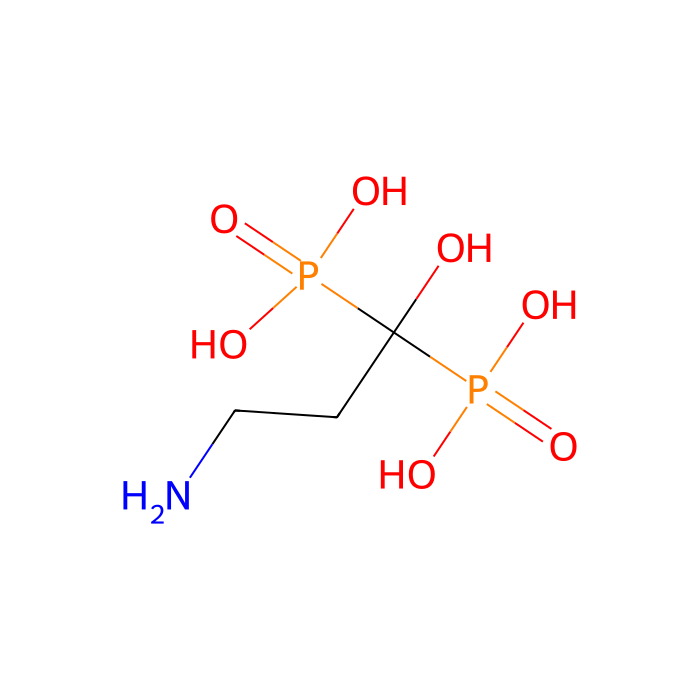
Pamidronic acid - Moligand™, ≥98% , Inhibitor of farnesyl diphosphate synthase, CAS No.40391-99-9, Inhibitor of farnesyl diphosphate synthase

CAS: 40391-99-9 Cat. No.: P338425 Summenformel: C3H11NO7P2 Molekulargewicht: 235.07 EG-Nummer: 254-905-2 PubChem CID: 4674
Zu bestellen verfügbar
GRADE & PURITY Moligand™ ? Moligand™ — Aladdin's line of ligands and bioactive small molecules. Use for receptor, pathway, and binding studies needing defined small-molecule tools. ≥98%
Synonyms
FT-0630610 | SR-01000514873-1 | 1159812-33-5 | Acidum pamidronicum | Disodium pamidronate | SCHEMBL18361 | BIDD:GT0538 | NCGC00165862-02 | A825084 | Aminomux | JMC515594 Compound 62 | PAMIDRONIC ACID | Acide pamidronique | C07395 | starbld0044121 | (3-ami
Storage
Store at -20°C,Argon charged
Shipped In
Ice chest + Ice pads
★
Size
Deutschland (EU)
USA*
Price
Qty
100mg
P338425-100mg
Auf Bestellung · 8–12 Wochen
363,50€
Enter a quantity for the sizes you want to add.
🧪
Why this grade

Moligand™, ≥98% Moligand™ for sensitive chromatographic and analytical workflows requiring minimal baseline interference.

🌡

Storage & shipping

Store at -20°C,Argon charged Ships Ice chest + Ice pads Check lot-specific COA for exact specifications.

📋

Quality documents

SDS, COA, datasheet, and spec sheet available for download. Lot-specific COA accessible via lot number lookup.

📚

Literature proof

Cited in 0 peer-reviewed publications across chromatography, organic synthesis, and cross-coupling reactions.

Specifications

Synonyme
FT-0630610 | SR-01000514873-1 | 1159812-33-5 | Acidum pamidronicum | Disodium pamidronate | SCHEMBL18361 | BIDD:GT0538 | NCGC00165862-02 | A825084 | Aminomux | JMC515594 Compound 62 | PAMIDRONIC ACID | Acide pamidronique | C07395 | starbld0044121 | (3-ami
Spezifikationen & Reinheit
Moligand™, ≥98%
Storage
Store at -20°C,Argon charged
Verschickt in
Ice chest + Ice pads
Dieses Produkt erfordert Kühlkettenversand. Grundversand und andere Economy-Optionen sind nicht verfügbar.
Note
Moligand™
Aktionsart
INHIBITOR
Mechanismus der Wirkung
Inhibitor of farnesyl diphosphate synthase
Reinheit
≥98%
Namen und Kennungen
Kanonisches Lächeln
C(CN)C(O)(P(=O)(O)O)P(=O)(O)O
IUPAC Name
(3-amino-1-hydroxy-1-phosphonopropyl)phosphonic acid
InChIKey
WRUUGTRCQOWXEG-UHFFFAOYSA-N
INCHI
1S/C3H11NO7P2/c4-2-1-3(5,12(6,7)8)13(9,10)11/h5H,1-2,4H2,(H2,6,7,8)(H2,9,10,11)
Isomere SMILES
C(CN)C(O)(P(=O)(O)O)P(=O)(O)O
PubChem CID
4674
Molekulargewicht
235.07

Documentation

📋 Safety Data Sheet (SDS)

Comprehensive hazard, handling, storage, and regulatory compliance document.

Download SDS →

✅ Certificate of Analysis (COA)

Lot-specific quality data. Enter your lot number to retrieve the exact COA.

Look up COA →

📊 Datasheet

Quick-reference summary of product specifications and applications.

View datasheet →

🔬 Specification Sheet

Full quality attributes and acceptance criteria for this grade.

View spec sheet →

Advanced Data

Taxonomic Classification

Taxonomy Tree

KingdomOrganic compounds
SuperclassOrganic acids and derivatives
KlasseOrganic phosphonic acids and derivatives
SubclassBisphosphonates
Intermediate Tree Nodes Not available
Direct ParentBisphosphonates
Alternative Parents Organic phosphonic acids  1,3-aminoalcohols  Organopnictogen compounds  Organophosphorus compounds  Organooxygen compounds  Organic oxides  Monoalkylamines  Hydrocarbon derivatives  
Molecular FrameworkAliphatic acyclic compounds
Substituents Bisphosphonate - Organophosphonic acid - 1,3-aminoalcohol - Organic nitrogen compound - Organic oxygen compound - Organopnictogen compound - Organic oxide - Hydrocarbon derivative - Primary amine - Organophosphorus compound - Organooxygen compound - Organonitrogen compound - Primary aliphatic amine - Amine - Aliphatic acyclic compound
BeschreibungThis compound belongs to the class of organic compounds known as bisphosphonates. These are organic compounds containing two phosphonate groups linked together through a carbon atoms.
External Descriptors Not available
3D-Struktur
Interaktives chemisches Strukturmodell


Zugehörige Ziele (menschlich)
FDPS Tclin Farnesyl pyrophosphate synthase (7 Activities)
Activity TypeActivity Value -log(M)Mechanism of ActionActivity ReferencePublications (PubMed IDs)
ESR1 Tclin Estrogen receptor alpha (17718 Activities)
Activity TypeRelationActivity valueUnitsAction TypeJournalPubMed IddoiAssay Aladdin ID
NR3C1 Tclin Glucocorticoid receptor (14987 Activities)
Activity TypeRelationActivity valueUnitsAction TypeJournalPubMed IddoiAssay Aladdin ID
PGR Tclin Progesterone receptor (8562 Activities)
Activity TypeRelationActivity valueUnitsAction TypeJournalPubMed IddoiAssay Aladdin ID
ADRB2 Tclin Beta-2 adrenergic receptor (11824 Activities)
Activity TypeRelationActivity valueUnitsAction TypeJournalPubMed IddoiAssay Aladdin ID
CHRM2 Tclin Muscarinic acetylcholine receptor M2 (10671 Activities)
Activity TypeRelationActivity valueUnitsAction TypeJournalPubMed IddoiAssay Aladdin ID
ADRB1 Tclin Beta-1 adrenergic receptor (6630 Activities)
Activity TypeRelationActivity valueUnitsAction TypeJournalPubMed IddoiAssay Aladdin ID
HTR1A Tclin Serotonin 1a (5-HT1a) receptor (14969 Activities)
Activity TypeRelationActivity valueUnitsAction TypeJournalPubMed IddoiAssay Aladdin ID
ADRA2A Tclin Alpha-2a adrenergic receptor (9450 Activities)
Activity TypeRelationActivity valueUnitsAction TypeJournalPubMed IddoiAssay Aladdin ID
AR Tclin Androgen Receptor (11781 Activities)
Activity TypeRelationActivity valueUnitsAction TypeJournalPubMed IddoiAssay Aladdin ID
CHRM1 Tclin Muscarinic acetylcholine receptor M1 (12690 Activities)
Activity TypeRelationActivity valueUnitsAction TypeJournalPubMed IddoiAssay Aladdin ID
FDPS Tclin Farnesyl diphosphate synthase (1240 Activities)
Activity TypeRelationActivity valueUnitsAction TypeJournalPubMed IddoiAssay Aladdin ID
DRD2 Tclin Dopamine D2 receptor (23596 Activities)
Activity TypeRelationActivity valueUnitsAction TypeJournalPubMed IddoiAssay Aladdin ID
GABRA1 Tclin GABA receptor alpha-1 subunit (399 Activities)
Activity TypeRelationActivity valueUnitsAction TypeJournalPubMed IddoiAssay Aladdin ID
MAOA Tclin Monoamine oxidase A (11911 Activities)
Activity TypeRelationActivity valueUnitsAction TypeJournalPubMed IddoiAssay Aladdin ID
CNR1 Tclin Cannabinoid CB1 receptor (20913 Activities)
Activity TypeRelationActivity valueUnitsAction TypeJournalPubMed IddoiAssay Aladdin ID
DRD1 Tclin Dopamine D1 receptor (9720 Activities)
Activity TypeRelationActivity valueUnitsAction TypeJournalPubMed IddoiAssay Aladdin ID
DRD4 Tchem Dopamine D4 receptor (7907 Activities)
Activity TypeRelationActivity valueUnitsAction TypeJournalPubMed IddoiAssay Aladdin ID
PTGS1 Tclin Cyclooxygenase-1 (9233 Activities)
Activity TypeRelationActivity valueUnitsAction TypeJournalPubMed IddoiAssay Aladdin ID
SLC6A2 Tclin Norepinephrine transporter (10102 Activities)
Activity TypeRelationActivity valueUnitsAction TypeJournalPubMed IddoiAssay Aladdin ID
HRH2 Tclin Histamine H2 receptor (5428 Activities)
Activity TypeRelationActivity valueUnitsAction TypeJournalPubMed IddoiAssay Aladdin ID
HTR2A Tclin Serotonin 2a (5-HT2a) receptor (14758 Activities)
Activity TypeRelationActivity valueUnitsAction TypeJournalPubMed IddoiAssay Aladdin ID
HTR2C Tclin Serotonin 2c (5-HT2c) receptor (11471 Activities)
Activity TypeRelationActivity valueUnitsAction TypeJournalPubMed IddoiAssay Aladdin ID
AVPR2 Tclin Vasopressin V2 receptor (2912 Activities)
Activity TypeRelationActivity valueUnitsAction TypeJournalPubMed IddoiAssay Aladdin ID
ADORA1 Tclin Adenosine A1 receptor (17603 Activities)
Activity TypeRelationActivity valueUnitsAction TypeJournalPubMed IddoiAssay Aladdin ID
AGTR1 Tclin Type-1 angiotensin II receptor (5176 Activities)
Activity TypeRelationActivity valueUnitsAction TypeJournalPubMed IddoiAssay Aladdin ID
SLC6A4 Tclin Serotonin transporter (12625 Activities)
Activity TypeRelationActivity valueUnitsAction TypeJournalPubMed IddoiAssay Aladdin ID
CRHR1 Tclin Corticotropin releasing factor receptor 1 (2996 Activities)
Activity TypeRelationActivity valueUnitsAction TypeJournalPubMed IddoiAssay Aladdin ID
ADRA1A Tclin Alpha-1a adrenergic receptor (8359 Activities)
Activity TypeRelationActivity valueUnitsAction TypeJournalPubMed IddoiAssay Aladdin ID
PTGS2 Tclin Cyclooxygenase-2 (13999 Activities)
Activity TypeRelationActivity valueUnitsAction TypeJournalPubMed IddoiAssay Aladdin ID
HRH1 Tclin Histamine H1 receptor (7573 Activities)
Activity TypeRelationActivity valueUnitsAction TypeJournalPubMed IddoiAssay Aladdin ID
OPRM1 Tclin Mu opioid receptor (19785 Activities)
Activity TypeRelationActivity valueUnitsAction TypeJournalPubMed IddoiAssay Aladdin ID
DRD3 Tclin Dopamine D3 receptor (14368 Activities)
Activity TypeRelationActivity valueUnitsAction TypeJournalPubMed IddoiAssay Aladdin ID
AVPR1A Tclin Vasopressin V1a receptor (5412 Activities)
Activity TypeRelationActivity valueUnitsAction TypeJournalPubMed IddoiAssay Aladdin ID
OPRD1 Tclin Delta opioid receptor (15096 Activities)
Activity TypeRelationActivity valueUnitsAction TypeJournalPubMed IddoiAssay Aladdin ID
OPRK1 Tclin Kappa opioid receptor (16155 Activities)
Activity TypeRelationActivity valueUnitsAction TypeJournalPubMed IddoiAssay Aladdin ID
HTR3A Tclin Serotonin 3a (5-HT3a) receptor (3366 Activities)
Activity TypeRelationActivity valueUnitsAction TypeJournalPubMed IddoiAssay Aladdin ID
GCGR Tclin Glucagon receptor (2563 Activities)
Activity TypeRelationActivity valueUnitsAction TypeJournalPubMed IddoiAssay Aladdin ID
SLC6A3 Tclin Dopamine transporter (10535 Activities)
Activity TypeRelationActivity valueUnitsAction TypeJournalPubMed IddoiAssay Aladdin ID
GRIN1 Tclin Glutamate (NMDA) receptor subunit zeta 1 (122 Activities)
Activity TypeRelationActivity valueUnitsAction TypeJournalPubMed IddoiAssay Aladdin ID
KCNH2 Tclin HERG (29587 Activities)
Activity TypeRelationActivity valueUnitsAction TypeJournalPubMed IddoiAssay Aladdin ID
CACNA1C Tclin Voltage-gated L-type calcium channel alpha-1C subunit (766 Activities)
Activity TypeRelationActivity valueUnitsAction TypeJournalPubMed IddoiAssay Aladdin ID
PDE3A Tclin Phosphodiesterase 3A (3309 Activities)
Activity TypeRelationActivity valueUnitsAction TypeJournalPubMed IddoiAssay Aladdin ID
ESR2 Tclin Estrogen receptor beta (9272 Activities)
Activity TypeRelationActivity valueUnitsAction TypeJournalPubMed IddoiAssay Aladdin ID
SLC29A1 Tclin Equilibrative nucleoside transporter 1 (1711 Activities)
Activity TypeRelationActivity valueUnitsAction TypeJournalPubMed IddoiAssay Aladdin ID
ADRA2B Tclin Alpha-2b adrenergic receptor (4412 Activities)
Activity TypeRelationActivity valueUnitsAction TypeJournalPubMed IddoiAssay Aladdin ID
ADRA2C Tclin Alpha-2c adrenergic receptor (4876 Activities)
Activity TypeRelationActivity valueUnitsAction TypeJournalPubMed IddoiAssay Aladdin ID
CHRM3 Tclin Muscarinic acetylcholine receptor M3 (7750 Activities)
Activity TypeRelationActivity valueUnitsAction TypeJournalPubMed IddoiAssay Aladdin ID
ADRB3 Tclin Beta-3 adrenergic receptor (5850 Activities)
Activity TypeRelationActivity valueUnitsAction TypeJournalPubMed IddoiAssay Aladdin ID
HTR2B Tclin Serotonin 2b (5-HT2b) receptor (10323 Activities)
Activity TypeRelationActivity valueUnitsAction TypeJournalPubMed IddoiAssay Aladdin ID
TBXA2R Tclin Thromboxane A2 receptor (5717 Activities)
Activity TypeRelationActivity valueUnitsAction TypeJournalPubMed IddoiAssay Aladdin ID
Zugehörige Ziele (nicht menschlich)
Htr7 Serotonin 7 (5-HT7) receptor (19 Activities)
Activity TypeRelationActivity valueUnitsAction TypeJournalPubMed IddoiAssay Aladdin ID
Mc4r Melanocortin receptor 4 (1205 Activities)
Activity TypeRelationActivity valueUnitsAction TypeJournalPubMed IddoiAssay Aladdin ID
Npy1r Neuropeptide Y receptor type 1 (8 Activities)
Activity TypeRelationActivity valueUnitsAction TypeJournalPubMed IddoiAssay Aladdin ID
Cckar Cholecystokinin A receptor (90 Activities)
Activity TypeRelationActivity valueUnitsAction TypeJournalPubMed IddoiAssay Aladdin ID
Ntsr1 Neurotensin receptor 1 (48 Activities)
Activity TypeRelationActivity valueUnitsAction TypeJournalPubMed IddoiAssay Aladdin ID
Pde4d Phosphodiesterase 4D (4 Activities)
Activity TypeRelationActivity valueUnitsAction TypeJournalPubMed IddoiAssay Aladdin ID
Bdkrb1 Bradykinin B1 receptor (77 Activities)
Activity TypeRelationActivity valueUnitsAction TypeJournalPubMed IddoiAssay Aladdin ID
Hdac6 Histone deacetylase 6 (222 Activities)
Activity TypeRelationActivity valueUnitsAction TypeJournalPubMed IddoiAssay Aladdin ID
Escherichia coli (133304 Activities)
Activity TypeRelationActivity valueUnitsAction TypeJournalPubMed IddoiAssay Aladdin ID
Trypanosoma brucei (78846 Activities)
Activity TypeRelationActivity valueUnitsAction TypeJournalPubMed IddoiAssay Aladdin ID
Entamoeba histolytica (2676 Activities)
Activity TypeRelationActivity valueUnitsAction TypeJournalPubMed IddoiAssay Aladdin ID
Plasmodium falciparum (966862 Activities)
Activity TypeRelationActivity valueUnitsAction TypeJournalPubMed IddoiAssay Aladdin ID
Leishmania donovani (89745 Activities)
Activity TypeRelationActivity valueUnitsAction TypeJournalPubMed IddoiAssay Aladdin ID
Trypanosoma cruzi (99888 Activities)
Activity TypeRelationActivity valueUnitsAction TypeJournalPubMed IddoiAssay Aladdin ID
Toxoplasma gondii (4585 Activities)
Activity TypeRelationActivity valueUnitsAction TypeJournalPubMed IddoiAssay Aladdin ID
Plasmodium berghei (192651 Activities)
Activity TypeRelationActivity valueUnitsAction TypeJournalPubMed IddoiAssay Aladdin ID
Mus musculus (284745 Activities)
Activity TypeRelationActivity valueUnitsAction TypeJournalPubMed IddoiAssay Aladdin ID
Rattus norvegicus (775804 Activities)
Activity TypeRelationActivity valueUnitsAction TypeJournalPubMed IddoiAssay Aladdin ID
Trypanosoma brucei rhodesiense (7991 Activities)
Activity TypeRelationActivity valueUnitsAction TypeJournalPubMed IddoiAssay Aladdin ID
Dictyostelium discoideum (81 Activities)
Activity TypeRelationActivity valueUnitsAction TypeJournalPubMed IddoiAssay Aladdin ID
13762 (31 Activities)
Activity TypeRelationActivity valueUnitsAction TypeJournalPubMed IddoiAssay Aladdin ID
L929 (3802 Activities)
Activity TypeRelationActivity valueUnitsAction TypeJournalPubMed IddoiAssay Aladdin ID
Farnesyl pyrophosphate synthase (85 Activities)
Activity TypeRelationActivity valueUnitsAction TypeJournalPubMed IddoiAssay Aladdin ID
GCN5 Histone acetyltransferase GCN5 (89 Activities)
Activity TypeRelationActivity valueUnitsAction TypeJournalPubMed IddoiAssay Aladdin ID
FTL Ferritin light chain (43324 Activities)
Activity TypeRelationActivity valueUnitsAction TypeJournalPubMed IddoiAssay Aladdin ID
Wirkungsmechanismen
Zertifikate (CoA, COO, BSE/TSE und Analyse-Diagramm)
C of A & Other Certificates(BSE/TSE, COO):
Analytical Chart:
Chemische und physikalische Eigenschaften
LöslichkeitSoluble in DMSO
Molekulargewicht235.070 g/mol
XLogP3-6.900
Hydrogen Bond Donor Count6
Hydrogen Bond Acceptor Count8
Rotatable Bond Count4
Exact Mass235.001 Da
Monoisotopic Mass235.001 Da
Topological Polar Surface Area161.000 Ų
Heavy Atom Count13
Formal Charge0
Complexity243.000
Isotope Atom Count0
Defined Atom Stereocenter Count0
Undefined Atom Stereocenter Count0
Defined Bond Stereocenter Count0
Undefined Bond Stereocenter Count0
The total count of all stereochemical bonds0
Covalently-Bonded Unit Count1
Lösungsrechner
Bewertungen

Kundenbewertungen

Application Protocols

No vendor-validated protocols are provided in the Product Data for this SKU. The following are generalized, literature-informed workflows for common research uses of pamidronic acid.

  • Preparation of aqueous stock (example)

    1. Add required amount of pamidronic acid to ~80% of final volume of ultrapure water.
    2. While stirring, adjust to pH 7.5 with 1–2 M NaOH, forming the disodium salt in situ.
    3. Bring to volume, filter through 0.22 µm, aliquot, and store at −20 °C.
  • Hydroxyapatite surface functionalization (example)

    1. Disperse hydroxyapatite powder or HAp-coated substrate in aqueous buffer (10 mM HEPES, pH 7.4; phosphate-free).
    2. Add pamidronic acid stock to 100–500 µM final concentration.
    3. Incubate 2–16 h at room temperature with gentle agitation.
    4. Wash 3× with buffer to remove unbound ligand; dry or proceed to further conjugation.
  • NHS-ester coupling to attach a label (example)

    1. Prepare label with NHS-activated carboxyl group.
    2. Mix with pamidronic acid in 50 mM bicarbonate buffer, pH 8.5, using 1.5–2.0 equiv of pamidronic acid.
    3. React 1–2 h at room temperature; quench unreacted NHS-ester with Tris or ethanolamine.

Always validate and optimize these conditions for your specific substrates and analytical endpoints.

Biological Roles

Provided strictly for biochemical context in research; no clinical/therapeutic claims are made.

  • Chemical biology context (literature/general)

    • Bisphosphonates are stable analogs of pyrophosphate. Their high affinity for hydroxyapatite underlies their use as mineral-surface ligands in biological materials research.
    • Nitrogen-containing bisphosphonates (including pamidronic acid) are widely studied in vitro as inhibitors of enzymes in the mevalonate pathway, notably farnesyl pyrophosphate synthase (FPPS). In biochemical assays, this can modulate protein prenylation pathways.
  • Experimental implications

    • Strong binding to Ca2+-rich matrices enables selective localization to bone-mineral–like substrates, useful for targeting probes or cargos in cell-free and ex vivo model systems.
    • The primary amine provides a convenient handle for bioconjugation (linkers, fluorophores, peptides) to create mineral-binding probes.
  • Physicochemical considerations in biological media

    • At physiological pH, phosphonic acid groups are largely deprotonated and strongly anionic, promoting water solubility (as salts) and metal complexation.
    • Presence of serum proteins and phosphate can compete with or modulate binding; buffer selection (phosphate-free when assessing mineral binding) is recommended.

Note: Any studies involving cells, tissues, or organisms should follow institutional approvals and safety protocols; this product is for research use only.

Buffer Applications

Pamidronic acid is not a conventional buffering agent. While it is a polyprotic acid, its multiple, widely spaced pKa values and strong metal-binding behavior make it unsuitable as a primary pH buffer for analytical or biological assays.

  • Practical guidance

    • Use standard buffers (HEPES, Tris, MOPS, acetate) for pH control. Avoid phosphate buffers when evaluating mineral-surface binding to prevent competition with bisphosphonate adsorption.
    • If included in buffered solutions, prepare pamidronic acid as its sodium or potassium salt and adjust the bulk pH with an independent buffering system.
  • Recipes/specifications

    • No standardized buffer formulations are recommended for this reagent. For solution preparation guidelines, see “Storage & Reconstitution.”
Green Alternatives

Pamidronic acid is itself a highly polar, water-compatible ligand that can often be handled in predominantly aqueous media—aligning with green chemistry principles by minimizing hazardous organic solvents.

  • Greener handling strategies

    • Use water as primary solvent; adjust pH with NaOH/KOH instead of amine bases. Employ water/ethanol mixtures rather than aprotic polar solvents when co-solvents are needed.
    • Conduct surface functionalization and chelation steps at ambient temperature to reduce energy consumption; avoid unnecessary drying/heating that can cause condensation of phosphonates.
  • Alternatives and trade-offs (literature/general)

    • Alternative anchors: Phosphoserine peptides or polyphosphates offer renewable, biodegradable options for some mineral-surface binding tasks, but usually with lower binding persistence compared to bisphosphonates.
    • Carboxylate-based ligands (e.g., poly(acrylic acid), citrate) are greener and inexpensive, but adsorption to hydroxyapatite is weaker and more salt-sensitive than bisphosphonate binding.
  • Comparison snapshot

    • Criterion | Bisphosphonate (this product) | Citrate/Carboxylate
    • Binding to Ca-phosphate | Very strong, multidentate | Moderate, reversible
    • Aqueous processing | Excellent | Excellent
    • Biodegradability | Low (persistent) | Higher
    • Solvent needs | Water/pH control | Water/pH control

Select the greener approach that meets binding strength and lifetime requirements while minimizing solvent and energy use.

Pharmaceutical Uses

For research and development use only. No clinical or therapeutic claims are made for this product.

  • Formulation research roles (literature/general)

    • Mineral-targeting excipient component in investigational delivery systems: The bisphosphonate motif can serve as a surface-anchoring group for hydroxyapatite-rich materials in drug delivery and imaging probe research (e.g., ligand component on nanoparticles or polymers).
    • Chelation platform for radiometal attachment in exploratory diagnostic agent development when combined with appropriate chelators/linkers, leveraging mineral affinity (conceptual; application-specific optimization required).
  • Manufacturing/analytical considerations

    • Salt selection: Disodium/dipotassium salts are commonly used for aqueous formulations due to higher solubility and controlled pH.
    • Counterion/ionic strength: Monitor sodium/potassium content and osmolarity in prototype formulations; strong calcium binding can deplete free Ca2+ in media.
    • Quality attributes to monitor: Identity (1H/13C/31P NMR), assay purity, hydration state, residual solvents (if any), trace metals, and bioburden/endotoxin where applicable for preclinical materials (as per institutional guidelines).

Note: Pharmacopoeial status, monographs, or excipient-grade certifications are not specified for this item; refer to CoA/Spec Sheet.

Physical Properties

Item-specific physicochemical specifications are not provided for this catalog entry. Consult the CoA/Spec Sheet for lot-specific values.

  • Item-specific (spec-level)

    • Appearance: Not specified for this item; refer to CoA/Spec Sheet.
    • Molecular formula: Not specified for this item; refer to CoA/Spec Sheet.
    • Molecular weight: Not specified for this item; refer to CoA/Spec Sheet.
  • Literature/general (non-spec) properties for pamidronic acid (free acid)

    • Physical state: typically a white to off-white, hygroscopic solid (literature/general)
    • Melting behavior: often decomposes on heating; reported >200 °C with decomposition (literature)
    • Acid–base properties: polyprotic acid (two phosphonic acid groups plus a protonated amine under acidic conditions). Multiple pKa values spanning strongly acidic to basic regions have been reported for related bisphosphonates; exact values vary by medium and ionic strength (literature).
    • Solubility: high aqueous solubility upon neutralization to the mono-/di-sodium salt; free acid shows moderate water solubility and is practically insoluble in nonpolar organic solvents (literature/general). Aqueous solubility increases markedly above pH ~3 due to stepwise deprotonation (literature).
    • Partitioning: strongly hydrophilic, very low logP; preferentially partitions into aqueous phases (literature/general).
    • Hygroscopicity: polyacid salts can be hygroscopic; minimize atmospheric moisture exposure during weighing (general best practice).

Note: The above values are provided for context only and should not be interpreted as item-specific specifications.

Quality and Grades
  • Item-specific grade

    • Grade/Purity: Moligand™ (per Product Data).
  • What Moligand™ implies (general description)

    • Moligand™ designates reagents curated for ligand/coordination chemistry, surface functionalization, and metal-binding studies. For bisphosphonates like pamidronic acid, this typically emphasizes high assay purity, controlled inorganic impurity profiles, and consistent acid/base stoichiometry suitable for reproducible chelation and immobilization workflows. Note: This is a grade description, not a specification; for exact analytical limits, refer to the CoA/Spec Sheet.
  • Analytical considerations for this compound class (guidance)

    • Identity/purity verification: 1H/13C/31P NMR, FTIR (P=O and P–OH stretches), and HRMS/elemental analysis are commonly used. Acid–base titration can confirm total acidity and counterion content if converted to salts.
    • Trace metals: Given the strong affinity for divalent cations, trace metal levels can influence performance in coordination studies. Where relevant, pair with trace-metal-grade solvents and plasticware.
    • Water content: Hydration state can vary (hydrates are common for polyacids). Use Karl Fischer titration if the exact stoichiometry is critical. Item-specific water specification: Not specified for this item; refer to CoA/Spec Sheet.
  • UV/LC suitability

    • Not typically used as a UV-transparent mobile-phase additive; if used analytically, low-UV-cutoff solvents and ELSD/RI detection may be preferred. UV cutoff/UV-Vis profile: Not specified for this item; refer to CoA/Spec Sheet.
Reaction and Applications

This compound is primarily used as a functional ligand/anchoring group rather than a typical organic reaction substrate.

  • Coordination and materials applications (literature/general)

    • Strong, multidentate chelation to Ca2+, Mg2+, and other hard metal centers via the bisphosphonate oxygens; forms stable complexes and surface adlayers on calcium phosphate minerals (e.g., hydroxyapatite).
    • Widely used to functionalize nanoparticles, polymers, and inorganic surfaces to impart calcium-phosphate affinity (e.g., bone-mimetic targeting in materials research; no clinical claims). The primary amine can be further derivatized (e.g., amide formation) to tether dyes, peptides, or polymers while retaining the bisphosphonate anchor.
  • Synthetic handles and transformations

    • Amine conjugation: NHS-ester coupling, carbodiimide (EDC/NHS) chemistry after converting to appropriate carboxyl-bearing linkers, or via isothiocyanates to form thioureas.
    • Phosphonate reactivity: Under dehydrating conditions, bisphosphonates can form anhydrides/condensed species; typically avoided. Esterification (e.g., to tetraalkyl esters) can be used as protecting groups for downstream organic synthesis.
  • Practical tips

    • Maintain aqueous, slightly basic conditions (pH 7–8) to keep the ligand deprotonated for binding. For amine coupling, protect or adjust pH to balance nucleophilicity of –NH2 versus deprotonation of phosphonates.
    • For surface modification, pre-clean inorganic substrates and control ionic strength; presence of competing phosphate can reduce adsorption.
  • Manufacturer Applications

    • The catalog lists no additional application notes for this SKU; the above reflects common literature use-cases for pamidronic acid in research settings.
Reaction Conditions

General guidance for typical laboratory uses of pamidronic acid (literature-based; not item-specific specifications):

  • Stock solution preparation

    • Dissolve the solid in water while stirring; adjust pH to 7.0–8.0 with 1–2 M NaOH or KOH to form the corresponding disodium/dipotassium salt and enhance solubility. Typical lab stocks: 10–100 mM in water. Filter sterilize (0.22 µm) for biological assays.
  • Amine coupling (to NHS-activated esters)

    • Solvent: Aqueous buffer (e.g., 50–100 mM HEPES or bicarbonate), pH 8.0–8.5 to maintain amine nucleophilicity while limiting hydrolysis.
    • Temperature/time: 20–25 °C for 1–4 h (optimize by substrate). Use 1.2–2.0 equiv of pamidronic acid relative to activated ester.
    • Notes: Minimize phosphate in buffers to avoid competition in downstream mineral-binding assays.
  • Surface adsorption onto hydroxyapatite

    • Medium: Water or low-ionic-strength buffer, pH 7–8.
    • Loading: 10–1000 µM ligand, depending on surface area. Equilibration 0.5–24 h at room temperature with gentle mixing.
    • Rinse with buffer to remove unbound ligand; quantify by phosphorus assay or label tracking.
  • Metal complexation

    • pH 6–8 preferred for stable complexes with hard cations; avoid high concentrations of competing chelators (citrate, phosphate, EDTA).

These conditions are typical literature practices; optimize for your system and verify compatibility with your substrates and analytical methods.

Safety and Handling
  • GHS/SDS status

    • Signal word: Not specified for this item; refer to CoA/Spec Sheet and the product SDS.
    • Hazard statements, pictograms, classification: Not specified for this item; refer to SDS for authoritative details.
  • General hazards and precautions (literature/general for bisphosphonic acids)

    • Irritation/Corrosivity: Polyphosphonic acids and their salts may cause eye and skin irritation and are harmful if inhaled as dust. Avoid generating dust and aerosols; handle in a fume hood when weighing powders.
    • Incompatibilities: Avoid strong oxidizers and strong bases/acids for extended storage in solution; complexation with divalent cations is strong—use plastic or acid-washed glassware if trace-metal contamination is a concern.
    • PPE: Wear lab coat, safety glasses or face shield, and appropriate chemically resistant gloves (e.g., nitrile). Use respiratory protection if dust formation is likely and adequate ventilation is not available.
    • First aid (summary; defer to SDS): Inhalation—move to fresh air, seek medical attention if symptoms persist. Skin/eyes—rinse with water for at least 15 minutes; remove contaminated clothing. Ingestion—rinse mouth, do not induce vomiting; seek medical attention.
  • Special handling notes for this item

    • Storage conditions: Store at −20 °C, argon charged (per Product Data). Keep container tightly closed, desiccated, and protected from moisture.
    • Solution stability: Aqueous solutions are most stable near neutral pH and refrigerated; prepare fresh where possible and filter sterilize through 0.22 µm for biological assays (general guidance). Always consult the SDS for definitive safety information.
Solvent Selection

Pamidronic acid is a highly polar polyacid; solvent choice is governed by ionization state and intended application.

  • Polarity/miscibility profile (literature/general)

    • Strongly hydrophilic; practically insoluble in nonpolar organic solvents.
    • Water: good solubility upon neutralization (e.g., to Na+/K+ salts); free acid dissolves slowly in pure water but solubility increases with pH.
    • Alcohols: limited solubility in lower alcohols; co-solvent systems (water/MeOH, water/EtOH) can aid dissolution after partial neutralization.
    • Aprotic polar solvents (DMSO, DMF): limited usefulness for the free acid; small amounts can be used as co-solvents for stock solutions before aqueous dilution.
  • Practical selection tips

    • For stock solutions: Prepare as the disodium or dipotassium salt in water (adjust pH ~7–8 with NaOH/KOH). Filter through 0.22 µm.
    • For coatings/surface binding to calcium phosphates: Use aqueous buffers at pH 6–8 to maintain bisphosphonate anionic form while minimizing surface dissolution.
    • Avoid metal-contaminated solvents and hard water when chelation stoichiometry matters.
  • Comparison (typical alternatives)

    • Pamidronic acid vs. alendronic/zoledronic acids: Similar water-based handling; differences in amine substituent affect metal-binding nuances and surface affinity (choose based on desired nitrogen substitution and binding strength).
    • Versus phosphoric acid or EDTA: Bisphosphonates offer multidentate, surface-anchoring behavior on hydroxyapatite that simple acids or aminopolycarboxylates do not replicate.
Storage and Reconstitution
  • Item-specific storage and shipping

    • Storage Conditions: Store at −20 °C, argon charged (per Product Data). Keep tightly closed and protected from moisture; consider desiccant.
    • Shipped In: Ice chest + ice pads (per Product Data) to maintain low temperature during transit.
  • Stability considerations (general)

    • Solid state: Stable when kept dry, cold, and under inert gas. Polyacids can absorb moisture; minimize headspace and exposure.
    • Solution state: Best stored at 2–8 °C for short term (days) and at −20 °C for longer term (weeks to months) as aliquots. Avoid repeated freeze–thaw cycles. Filter sterilization (0.22 µm) is recommended for biological assays.
  • Reconstitution guidance (general)

    • For aqueous stocks: Dissolve in ultrapure water with stirring; adjust pH to 7–8 using NaOH/KOH to improve solubility (forms sodium/potassium salts). Typical stock concentrations: 10–100 mM.
    • For organic media: Not recommended; if necessary, prepare a minimal-volume DMSO co-solvent stock (e.g., ≤10% v/v) and immediately dilute into aqueous buffer; verify compatibility.
    • Metal contamination: Use plasticware and metal-free reagents if chelation stoichiometry is critical.
  • Additional notes

    • Appearance and exact hydration state are batch-dependent and not specified for this item; refer to CoA/Spec Sheet.
    • For research use only (per Product Data).
Structure and Identity

Pamidronic acid (pamidronate, free acid) is a small-molecule, nitrogen-containing bisphosphonic acid used widely as a chelating/anchoring ligand in materials and coordination chemistry research.

  • Item-specific identifiers (from Product Data)

    • SKU: P338425
    • CAS: 40391-99-9
    • CID: 4674
    • InChIKey: 406428 (as provided)
    • SMILES: Not specified for this item; refer to CoA/Spec Sheet.
  • Literature structural description (for reference)

    • Preferred name: 3-amino-1-hydroxypropane-1,1-diyl bis(phosphonic acid)
    • Core features: a geminal bisphosphonate [C(OH)(P(O)(OH)2)2] attached to a 2-aminoethyl substituent (–CH2–CH2–NH2). Functional groups: primary amine, tertiary carbinol (C–OH), and two phosphonic acid groups (each –P(=O)(OH)2). No stereocenters.
    • Molecular formula (free acid, literature): C3H12NO7P2
    • Approximate molecular weight (literature): ~236.07 g/mol
    • 2D structure in words: Starting from a central quaternary carbon, one substituent is hydroxyl; two are phosphonic acid groups; the fourth is an ethylamine chain terminating in a primary amine. The two phosphonate moieties are equivalent and confer strong metal-binding and surface affinity.
  • Related identity notes

    • Category Path: 全部 / 可售 / 化学和生化试剂
    • Synonyms in literature: Pamidronate (free acid), aminohydroxypropylidene diphosphonic acid (APD).
Synthetic Utility

Pamidronic acid functions primarily as a bifunctional ligand rather than a building block for complex molecule synthesis, but it offers useful handles for derivatization and materials-oriented synthesis.

  • Functional group leverage

    • Primary amine: Amenable to acylation (acyl chlorides/anhydrides), carbodiimide-mediated coupling with activated carboxylates (EDC/NHS), urea/thiourea formation (isocyanates/isothiocyanates), and reductive amination (with suitable aldehydes/ketones under aqueous-compatible conditions).
    • Bisphosphonate motif: Can be transiently protected as trialkyl/ tetraalkyl phosphonate esters for organic-phase reactions; deprotection typically via acidic hydrolysis. As free acid/salt, it is a strong, multidentate, hard oxygen donor ligand.
  • Materials synthesis

    • Surface modification: Provides durable anchoring to calcium phosphate and many metal oxide surfaces. Amine derivatization enables orthogonal attachment of fluorophores, PEG, peptides, or click handles while retaining the mineral-binding anchor.
    • Complex formation: Forms stable inner-sphere complexes with hard Lewis acids (e.g., Ca2+, Mg2+, Al3+, Fe3+), enabling templating or crosslinking in hybrid materials.
  • Retrosynthetic/value notes

    • As a terminal ligand, pamidronic acid is typically introduced late in a sequence to avoid compatibility issues from strong chelation and high polarity.
    • For modular design, amine-first conjugation to a linker bearing a terminal bisphosphonate (or vice versa) provides flexibility in assembling multifunctional constructs.
Target Specificity

This product is a small-molecule ligand, not an antibody or biological macromolecule. No antigen/epitope or isotype information applies.

  • Item-specific data

    • Target specificity details: Not applicable for this item; no such data provided in the Product Data.
  • Functional binding (literature/general)

    • Exhibits high affinity for calcium-phosphate mineral phases (e.g., hydroxyapatite) via the bisphosphonate motif. In coordination chemistry, displays preference for hard Lewis-acid metal centers (e.g., Ca2+, Mg2+, Fe3+).

Need help choosing the grade?

Our grade selection guide covers purity, stabilizer status, and application suitability for all variants in our catalog.

View Moligand™ grade guide →

Shall we send you a message when we have discounts available?

Remind me later

Thank you! Please check your email inbox to confirm.

Oops! Notifications are disabled.