Poly(methyl methacrylate)(PMMA) - Mw 100KDa , CAS No.9011-14-7

CAS: 9011-14-7 Cat. No.: P1506434 Summenformel: [C5H8O2]n EG-Nummer: 618-466-4
Zu bestellen verfügbar
GRADE & PURITY Mw 100KDa
Synonyms
2-methylacrylic acid methyl ester | 2-Methyl-acrylic acid methyl ester | 2-Methyl-acrylic acid methyl ester | Metakrylan metylu | Methylester kyseliny methakrylove [Czech] | NCI-C50680 | RCRA waste no. U162 | METHYL METHACRYLATE [HSDB] | NCGC00257921-01 |
Storage
Protected from light,Room temperature
Shipped In
Normal
★
Size
Deutschland (EU)
USA*
Price
Qty
25g
P1506434-25g
Auf Bestellung · 8–12 Wochen

60,65€

69,33€
Speichern 8,68 € (12.52%)
100g
P1506434-100g
Auf Bestellung · 8–12 Wochen

173,46€

208,17€
Speichern 34,71 € (16.67%)
Enter a quantity for the sizes you want to add.
🧪
Why this grade

Mw 100KDa for sensitive chromatographic and analytical workflows requiring minimal baseline interference.

🌡

Storage & shipping

Protected from light,Room temperature Ships Normal Check lot-specific COA for exact specifications.

📋

Quality documents

SDS, COA, datasheet, and spec sheet available for download. Lot-specific COA accessible via lot number lookup.

📚

Literature proof

Cited in 459 peer-reviewed publications across chromatography, organic synthesis, and cross-coupling reactions.

Specifications

Synonyme
2-methylacrylic acid methyl ester | 2-Methyl-acrylic acid methyl ester | 2-Methyl-acrylic acid methyl ester | Metakrylan metylu | Methylester kyseliny methakrylove [Czech] | NCI-C50680 | RCRA waste no. U162 | METHYL METHACRYLATE [HSDB] | NCGC00257921-01 |
Spezifikationen & Reinheit
Mw 100KDa
Storage
Protected from light,Room temperature
Verschickt in
Normal
Namen und Kennungen
Isomere SMILES
CC(=C)C(=O)OC
RTECS
TR0400000
Reaxy-Rn
605459
Reaxys-RN_link_address
https://www.reaxys.com/reaxys/secured/hopinto.do?context=S&query=IDE.XRN=605459&ln=

Documentation

📋 Safety Data Sheet (SDS)

Comprehensive hazard, handling, storage, and regulatory compliance document.

Download SDS →

✅ Certificate of Analysis (COA)

Lot-specific quality data. Enter your lot number to retrieve the exact COA.

Look up COA →

📊 Datasheet

Quick-reference summary of product specifications and applications.

View datasheet →

🔬 Specification Sheet

Full quality attributes and acceptance criteria for this grade.

View spec sheet →

Advanced Data

Zertifikate (CoA, COO, BSE/TSE und Analyse-Diagramm)
C of A & Other Certificates(BSE/TSE, COO):
Analytical Chart:

Find and download the COA for your product by matching the lot number on the packaging.

4 results found

Lot NumberCertificate TypeDatumArtikel
J2621519Certificate of AnalysisSep 29, 2026 P1506434
J2621521Certificate of AnalysisSep 29, 2026 P1506434
A2604490Certificate of AnalysisNov 10, 2025 P1506434
A2604491Certificate of AnalysisNov 10, 2025 P1506434
Chemische und physikalische Eigenschaften
Brechungsindex1.49
Flammpunkt (°F)>250 ℉
Flammpunkt (°C)>121.11℃
FAQs und Artikel
Nanowires: Properties, Preparation Routes, and Process Selection (Comprehensive Analysis of Top-Down and Bottom-Up Approaches with Recommended Aladdin Reagents)
SOFC Solid Oxide Fuel Cells: From “What It Is and How It Generates Power” to a Key Materials Map, Application Scenarios, and Selection Navigation (Electrolytes / Electrodes / Interconnects / Sealing)
A Panorama Guide to Synthetic Resins: Definitions & Polymerization Mechanisms, Classification Frameworks, Common Resins and Applications, Packaging Codes, and a Selection Roadmap (Tables 1–3)
Optical & Optoelectronic Materials Selection Guide:Positioning materials, key metrics, and validation paths along “Generation → Guiding → Control → Readout” (with product navigation and Tables 1–4)
Biomedical Polymer Insights: Role-Based Task Map, Six Key Material Levers, and a Risk-Driven Evidence Chain (including the Product Navigation Guide and Product Tables 1–3)
uide to Hydrophobic Polymers and Hydrophobic Surfaces: Wetting Models, Evaluation Metrics, and Task-Oriented Material Selection (including Tables 1–3)
Applications of Self-Assembled Monolayers (SAMs), Microcontact Printing, and Soft Lithography in Surface Functionalization and Micro/Nanopatterning
How Matting Agents in Coatings Build Low-Gloss Coating Surfaces: Mechanisms, Formulation Trade-Offs, and Product Selection
PVDF, FEVE and Functional Fluororesins: System Differences and Application Selection in Fluorocarbon Coatings
Fluorocarbon Resin Coating Formulation Design: Resin Selection, Supporting Systems, and Key Application Control Points
When Should You Choose Silicone Resin? Selection Comparison with Epoxy, Acrylic, Polyurethane, Fluororesin, and Other Coating Resins
Formulation Design of Chlorinated Rubber Coatings: Component Synergy and Performance Control
Applicability Boundaries, Failure Risks, and Alternative System Selection for Chlorinated Rubber Resin in Coatings
Mechanism, Diagnosis, and Control of Coating Lifting: Solvent Penetration, Film Swelling, and Interlayer Instability
Resin Polarity in Coating Formulations: From Molecular Structure to Dissolution, Compatibility, Interfacial Interactions, and Formulation Design
Color-Development Mechanisms, Formulation Forms, and Selection/Application Logic of Colorants in Personal Care Products
Structure, Properties, and Mechanisms of Powdered Fragrances and Fragrance Delivery Materials: Stability, Release Mechanisms, and Selection Logic
UVA Absorption Mechanism of Avobenzone: Keto–Enol Tautomerism, Photochemical Instability, and Formulation Photostabilization Strategies
Citations of This Product
Lösungsrechner
Bewertungen

Kundenbewertungen

Application Protocols

The following generic protocols are provided as literature-based guidance for processing PMMA; they are not specifications or performance claims for this SKU. Adjust parameters to your material’s molecular weight and additives (not specified here).

  1. Preparing a PMMA coating solution
  • Choose solvent (anisole, acetone, ethyl acetate, toluene, or DCM) based on safety and drying profile.
  • Target solids: 2–6% w/w for thin films; 6–12% for thick cast films (Mw dependent).
  • Stir at room temperature or 30–50 °C until fully dissolved; filter through 0.2 μm PTFE to remove gels/particulates.
  1. Spin coating (general)
  • Dispense 0.5–1.0 mL on a 100 mm substrate; spin at 2000–4000 rpm for 30–60 s.
  • Soft-bake at 150–180 °C for 60–120 s to remove residual solvent; cool gradually to minimize stress.
  1. Film casting
  • Pour solution onto a leveled substrate; allow slow evaporation under a covered chamber to reduce dust/defects.
  • Post-dry at 50–80 °C for several hours; optional vacuum dry to reduce residual solvent.
  1. Surface activation (optional)
  • Oxygen plasma (20–50 W, 30–120 s) to increase wettability; proceed quickly with coating or grafting to mitigate hydrophobic recovery.

Safety note: Manage flammable solvents with appropriate ventilation and ignition control. For lithography or device fabrication, run small trials to calibrate thickness and quality.

Biological Roles

PMMA is a synthetic, non-ionic thermoplastic with no intrinsic biological role or metabolic pathway. It is widely regarded as chemically inert under physiological conditions, and it does not participate in cellular signaling or enzymatic processes.

Research context (literature/general)

  • As a materials platform, PMMA is used to fabricate microfluidic devices, optical components, and substrates for cell culture studies where surface properties (roughness, wettability) are engineered via plasma treatment, grafting, or coating.
  • Surface modification (e.g., oxygen plasma followed by silanization or protein adsorption) can render PMMA more hydrophilic for short durations; hydrophobic recovery occurs unless further functionalized.
  • Extractables/leachables are typically low for additive-free grades; however, residual monomer or processing aids (if present) can affect cell compatibility—empirical testing is advised.

Note: No biological function or clinical claim is implied for this SKU; it is provided strictly for research and laboratory use, as stated in the Product Data.

Buffer Applications

Not typically applicable. PMMA is a hydrophobic polymeric solid and does not serve as a buffering agent. For research workflows, refer instead to sections on Solvent Selection, Reaction & Applications, and Application Protocols for guidance on dissolving, processing, or coating PMMA.

Green Alternatives

Greener considerations focus on solvent/process choices and potential polymer substitutes. The polymer itself is a durable, non-biodegradable thermoplastic; selection should weigh performance vs. environmental impact.

Solvent and process substitutions (literature/general)

  • Replace chlorinated solvents (e.g., DCM, chloroform) with lower-toxicity options where feasible: anisole, ethyl acetate, propylene carbonate (with co-solvent), or acetone (fast-evaporating, flammable).
  • Use closed-loop solvent recovery and low-VOC formulations (higher-solids, slower-evaporating esters) to reduce emissions.
  • Consider reactive diluents or transesterification to higher-boiling green esters (e.g., methyl/ethyl lactate blends) for specific coatings.

Potential material alternatives (application-dependent)

  • Polylactic acid (PLA): bio-based, compostable; lower Tg and mechanical strength vs. PMMA; poorer optical clarity long-term under UV.
  • Cellulose acetate/cellulose esters: bio-derived; good film formers; moisture sensitivity and lower chemical resistance.
  • Cyclic olefin polymers (COP/COC): excellent optical clarity and low extractables; petroleum-derived but recyclable; different solvent windows.

Trade-off snapshot (general)

  • PMMA: outstanding optical quality and scratch resistance; recyclable via depolymerization; not biodegradable; typically requires VOC solvents for processing.
  • Greener solvents (anisole/ethyl acetate) may lengthen drying times and alter film morphology; optimize bake/evaporation profiles accordingly.

Note: Choice of alternative depends on optical demands, thermal budget, and solvent infrastructure; pilot trials are recommended.

Pharmaceutical Uses

Item-specific regulatory/grade status

  • Not specified for this item; refer to CoA/Spec Sheet. No pharmacopeial status is claimed in the provided data.

Materials/formulation context (literature/general)

  • Methacrylate polymers are used in research and industrial formulation science for coatings, taste-masking films, and controlled-release matrices. Commercial pharmaceutical products often employ specific copolymers (e.g., Eudragit series), not necessarily homopolymer PMMA.
  • PMMA microspheres/beads are studied as inert carriers or opacifiers in non-therapeutic product development; particle size distribution and residual monomer content are critical quality attributes.
  • Optical-grade PMMA components can be used in laboratory photonics and diagnostic devices; suitability depends on extractables/adsorption behavior for assay reagents.

Practical considerations

  • If contemplating use in pre-formulation or device prototyping, verify additive-free status, residual monomer (ppm), ash/ionic content, and solvent history.
  • Conduct extractables/leachables studies with intended media (aqueous buffers, alcohols) since PMMA can sorb hydrophobic analytes, potentially biasing assays.

No therapeutic or clinical claims are made for this product. It is supplied strictly for research use only, per the Product Data.

Physical Properties

Item-specific specifications (this SKU)

  • Grade/Purity: Not specified for this item; refer to CoA/Spec Sheet.
  • Appearance: Not specified for this item; refer to CoA/Spec Sheet.
  • Molecular Formula: Not specified for this item; refer to CoA/Spec Sheet. (Polymer composition depends on n.)
  • Molecular Weight: Not specified for this item; refer to CoA/Spec Sheet. (Critical for viscosity/film formation.)

Literature/general polymer properties (typical ranges; not product specifications)

  • Physical state: clear, glassy, amorphous thermoplastic; no true melting point; softens near Tg.
  • Glass transition temperature (Tg): ~105 °C for atactic PMMA (molecular-weight and tacticity dependent).
  • Thermal behavior: softening above Tg; thermal degradation typically >200–250 °C in inert atmosphere; depolymerization can regenerate MMA monomer at elevated temperatures.
  • Density (23 °C): ~1.17–1.20 g/cm³ (grade and tacticity dependent).
  • Refractive index (nD, 589 nm): ~1.490–1.492.
  • Solubility: insoluble in water; soluble in many polar aprotic and some protic organic solvents (e.g., chloroform, dichloromethane, acetone, methyl ethyl ketone, ethyl acetate, anisole, toluene; solubility depends on Mw and tacticity). Often swells rather than dissolves in alcohols of lower polarity.
  • Film properties: forms transparent, tough films; haze and brittleness increase at low temperature (below Tg).
  • Viscosity metrics: solution viscosity relates to Mw via Mark–Houwink parameters (solvent-specific); exact [η] and Đ (PDI) are product-dependent and not specified here.

Note: For processing-critical parameters (Mw, PDI, residual monomer, additive content), consult the item’s CoA/Spec Sheet.

Quality and Grades

Item-specific grade/purity information

  • Grade/Purity: Not specified for this item; refer to CoA/Spec Sheet.

How PMMA quality is typically defined (literature/general guidance)

  • Molecular weight (Mw, Mn) and dispersity (Đ): Primary determinants of viscosity, film formation, mechanical strength, and dissolution rate. Common research grades span Mn from ~50 kDa to >1,000 kDa with Đ ≈ 1.1–2.5 depending on synthesis route (RAFT/ATRP vs. free-radical).
  • Tacticity: Atactic PMMA is standard; isotactic/syndiotactic variants exhibit different Tg/solubility and are specialty grades.
  • Residual monomer/oligomers: Low residual MMA is important for optical, odor, and outgassing performance; reported as wt% or ppm on CoA.
  • Additives: Some PMMA grades may contain processing stabilizers (UV absorbers, HALS, antioxidants) or mold-release agents; optical/e-beam grades are typically additive-free to minimize background and absorbance.
  • Optical quality: Haze, yellowness index, and transmittance in the visible/near-UV are critical for photonics and microfabrication.
  • Ash/ionic content: Relevant for microelectronics and battery separators; low metal/ash grades are preferred.

Interpreting the CoA (practical tips)

  • Verify Mw/Mn/Đ, residual MMA, volatiles, and any additive package.
  • Match solvent recommendation and solution viscosity to your process (spin coating, casting, fiber spinning).
  • For lithography or high-precision optics, request lot data on absorbance (e.g., at 365 nm), particulates, and gel fraction.
Reaction and Applications

Primary use domains (literature/general for PMMA)

  • Optics and photonics: high visible transparency, stable refractive index (~1.49), and low birefringence enable lenses, light guides, and waveguides.
  • Micro/nanofabrication: widely used as a positive electron-beam/UV resist (specialty grades), sacrificial templates, and spacer layers.
  • Coatings and membranes: durable, scratch-resistant coatings; gas separation supports; protective encapsulants for devices and sensors.
  • Composites: matrix or modifier in particulate- or fiber-reinforced systems; surface-treatable for adhesion.

Chemical transformations on PMMA (polymer-level reactions)

  • Hydrolysis/saponification: ester side chains can be partially converted to carboxylates (poly(methacrylic acid)-like) using aqueous base/alcoholates, tuning surface energy and adhesion.
  • Transesterification: exchange of the methyl ester with other alcohols (acidic or basic catalysis) to tailor solubility and Tg; often performed in solution or melt with catalysts.
  • Grafting and surface functionalization: UV/benzophenone or peroxide initiation enables grafting-from/to of acrylates, methacrylates, or styrenics to adjust wettability and compatibility.
  • End-group chemistry: if synthesized by controlled radical methods (RAFT/ATRP), chain-end handles (e.g., dithioester, trithiocarbonate, halide) permit block copolymer formation or surface immobilization.

Practical tips

  • Maintain temperatures below the onset of degradation (>200 °C) unless under inert atmosphere.
  • For high-quality films and microfabrication, ensure low moisture/particulate levels in solutions and use staged solvent evaporation to minimize pinholes and striations.

Note: No specific application testing is claimed for this SKU; use cases above are general for PMMA.

Reaction Conditions

General processing and modification conditions for PMMA (literature; not product-specific)

  • Dissolution for film formation

    • Solvents: anisole, acetone, MEK, ethyl acetate, toluene, DCM, chloroform.
    • Typical concentrations: 1–10% w/w depending on molecular weight and target thickness; higher Mw requires lower concentration.
    • Procedure: add PMMA to solvent under stirring; mild heating (30–50 °C) can accelerate dissolution; filter (0.2–0.45 μm PTFE) before use.
  • Spin coating (positive-tone PMMA resists as a general example)

    • Spin speeds: ~1000–5000 rpm; thickness scales inversely with speed and solids content.
    • Soft-bake: 150–190 °C for 60–120 s on a hotplate to remove residual solvent (keep below degradation onset).
    • Development (for lithography-grade PMMA): common developer is MIBK:IPA (1:3 v/v); times depend on dose and thickness. Note: This SKU is not claimed as resist grade; parameters provided as literature context only.
  • Hydrolysis/surface activation

    • Aqueous base (e.g., NaOH in MeOH/H2O, 0.1–1 M) at ambient to reflux can partially hydrolyze surface/bulk ester groups; monitor to avoid embrittlement.
    • Oxygen plasma (10–100 W, seconds to minutes) increases hydrophilicity; hydrophobic recovery occurs unless further functionalized.
  • Thermal processing

    • Avoid exceeding ~200 °C in air; use inert atmosphere for higher-temperature steps.

Always confirm compatibility of solvents and conditions with your specific PMMA lot (Mw, additives), which are not specified here.

Safety and Handling

GHS and hazard information (this SKU)

  • Signal Word: Not specified for this item; refer to SDS.
  • H-Statements: Not specified for this item; refer to SDS.
  • GHS Classification/Pictograms: Not specified for this item; refer to SDS.

General safety considerations for PMMA (literature/general)

  • Inert polymer solid; low acute toxicity. Dust may cause mechanical irritation to eyes/respiratory tract.
  • Combustible thermoplastic. Burning or overheating can release irritating fumes, including MMA monomer, CO/CO2; avoid temperatures well above Tg unless under controlled processing conditions with ventilation.
  • Static accumulation: pellets/powder can accumulate static; implement grounding/bonding during transfer to minimize ignition of flammable vapors in vicinity.

PPE and handling

  • Wear safety glasses with side shields, lab coat, and suitable gloves (e.g., nitrile) especially when handling in organic solvents.
  • Use local exhaust ventilation when cutting, sanding, or dissolving PMMA to control dust/solvent vapors.

Storage incompatibilities and precautions

  • Store away from strong oxidizers and strong acids/bases that can catalyze degradation or surface hydrolysis.
  • Keep dry and protected from UV/visible light to limit photo-oxidative embrittlement; avoid prolonged exposure to elevated temperatures.

First aid (overview; defer to SDS)

  • Inhalation of dust: move to fresh air; seek attention if irritation persists.
  • Eye contact (dust/particles): rinse cautiously with water for several minutes.
  • Skin contact: wash with soap and water; remove contaminated clothing (particularly if solvents are present).

Always consult the product SDS for authoritative safety data and emergency procedures.

Solvent Selection

Applicability

  • PMMA is a polymeric solid; this section addresses solvent choices for dissolving/processsing PMMA rather than selecting PMMA as a solvent.

Solubility profile (literature/general)

  • Good solvents: chlorinated solvents (chloroform, dichloromethane), ketones (acetone, MEK), esters (ethyl acetate, n-butyl acetate), anisole, acetonitrile (for some Mw), and aromatics (toluene) to varying degrees.
  • Marginal/conditional: alcohols (methanol/ethanol/isopropanol) often cause swelling or precipitation; mixtures with better solvents can tune morphology.
  • Poor solvents: water, aliphatic hydrocarbons (hexane, heptane).

Selection by application

  • Spin coating and lithography: anisole, chlorobenzene, or chlorinated solvents yield smooth films; anisole favored for lower toxicity/odor.
  • Solution casting: acetone, MEK, ethyl acetate, toluene, or anisole; choose boiling point to align with drying rate and defect control.
  • Fiber/electrospinning: DMF/acetone mixtures enable conductivity and evaporation balance.

Practical considerations

  • Molecular weight dictates concentration window: higher Mw requires lower wt% to manage viscosity (e.g., 1–8% w/w typical; optimize empirically).
  • Filter solutions (0.2–0.45 μm PTFE) before coating to remove gels/particulates.
  • Avoid prolonged exposure to strong bases/alcoholates that can hydrolyze ester side chains.

Note: Exact dissolution behavior and recommended solvents for this SKU are not specified; consult the CoA/Spec Sheet and conduct a small-scale solubility screen.

Storage and Reconstitution

Item-specific storage/shipping (from Product Data)

  • Storage Conditions: Protected from light, Room temperature.
  • Shipped In: Normal.
  • Research Use Note: For research use only.

General best practices for PMMA (literature/general)

  • Keep container tightly closed in a dry, well-ventilated place; include desiccant if ambient humidity is high to minimize moisture-assisted surface hydrolysis over long periods.
  • Protect from UV/visible light to limit photo-oxidative aging and yellowing; use amber or opaque containers.
  • Avoid proximity to strong oxidizers, acids, and bases.
  • For long-term storage, maintain at stable room temperature; avoid heat cycling across Tg to reduce internal stress in molded parts.

Reconstitution / solution preparation

  • Use clean, dry glassware. Add PMMA gradually to the selected solvent (anisole, acetone, MEK, ethyl acetate, toluene, DCM, etc.) under stirring.
  • Gentle warming (30–50 °C) can accelerate dissolution; avoid overheating and ensure good ventilation.
  • Filter solutions through 0.2–0.45 μm PTFE before coating/printing to remove particulates and gels.
  • Store prepared solutions in airtight, light-protected bottles; many PMMA solutions remain usable for weeks if kept sealed and clean, but monitor viscosity and clarity. Label with date and solvent to track stability.

Note: If this SKU includes specific molecular weight or additive information, follow the CoA/Spec Sheet for any storage nuances (e.g., avoid specific solvents, solution shelf life).

Structure and Identity

Poly(methyl methacrylate) (PMMA) is an amorphous vinyl polymer derived from the methyl methacrylate (MMA) monomer.

  • Item-specific identifiers (from Product Data)

    • SKU: P1506434
    • Product Name: Poly(methyl methacrylate)(PMMA)
    • CAS: 9011-14-7 (PMMA)
    • CID: 6658 (note: this PubChem CID corresponds to the MMA monomer; polymers often reference the monomer record in databases)
    • InChIKey: Not specified for this item; refer to CoA/Spec Sheet. (Polymers typically lack a single definitive InChIKey.)
    • SMILES: Not specified for this item; refer to CoA/Spec Sheet. (Polymers are better described by a repeat-unit motif.)
  • Structural description (literature/general)

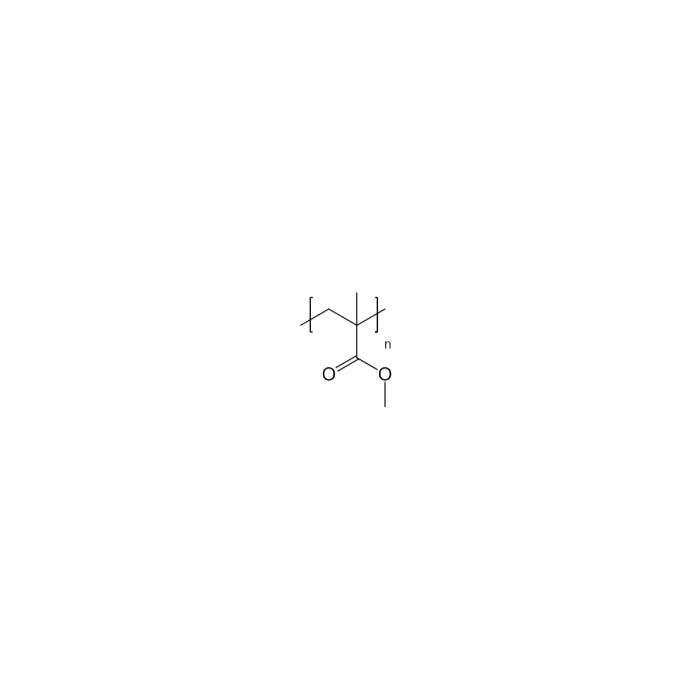
    • Repeat unit: derived from methyl 2-methylpropenoate; backbone is a saturated, carbon–carbon chain with pendant methyl (–CH3) and methyl ester [–CO2CH3] substituents on every other carbon.
    • Idealized repeat unit formula: (C5H8O2)n; overall molecular formula depends on degree of polymerization (n).
    • 2D depiction in words: a head-to-tail –[CH2–C(CH3)(CO2CH3)]–n chain with no intentional stereocontrol (commercial PMMA is typically atactic unless otherwise specified).
    • Representative notations (literature): repeat unit SMILES fragment [-CH2–C(CH3)(C(=O)OCH3)-]n; monomer SMILES: C=C(C)C(=O)OC.
  • Key features

    • Functional groups: pendant methyl ester; hydrophobic carbon backbone.
    • Polymer class: methacrylate; glassy, amorphous thermoplastic; optically clear with low intrinsic birefringence (literature).
Synthetic Utility

While PMMA is not a small-molecule reagent, it provides valuable synthetic utility as a functional materials scaffold and polymer-chemistry platform (literature/general):

  • Solid support and templating: PMMA beads/films serve as sacrificial templates to create porous ceramics or metals; thermal depolymerization or solvent dissolution removes PMMA, leaving designed porosity.
  • Surface chemistry: Pendant methyl ester groups enable post-polymer modifications—hydrolysis to carboxylates, amidation after activation (e.g., EDC/NHS on hydrolyzed surfaces), or transesterification to tune compatibility.
  • Controlled polymer architectures: If prepared via RAFT/ATRP, PMMA can be chain-extended to block copolymers (PMMA-b-PS, PMMA-b-PEO) for nanostructured films and lithographic masks.
  • Composite interfaces: Grafting-to/from strategies on fillers (silica, CNTs, graphene) improve dispersion and interfacial adhesion in PMMA matrices.
  • Photopatterning: PMMA’s clean scission under high-energy irradiation supports micro/nanolithography; developer systems (e.g., MIBK:IPA) selectively remove exposed regions in positive-tone resists (specialty grades).

Caveats

  • Exact end-group functionality, additive content, and molecular weight—determinants of the above utility—are not specified for this SKU. Confirm via CoA or independent characterization (GPC/SEC, FTIR, DSC, TGA) before critical applications.
Target Specificity

Not applicable. PMMA is a synthetic polymeric material and does not possess biological target specificity (no antigen/epitope/isotype attributes). This section is relevant to antibodies or affinity reagents, not to materials like PMMA.

Häufig gestellte Fragen

How should this product be stored?
Store at room temperature, protected from light. The material is light-sensitive — keep it in its original opaque or amber container.
How is this product shipped?
This product ships under standard ambient conditions. No temperature-controlled packaging is required.
What are the CAS number, molecular formula and molecular weight?
The CAS Number is 9011-14-7, the molecular formula is [C5H8O2]n.
What documentation is provided?
Available product documentation, including Certificates of Analysis (COA), Safety Data Sheets (SDS), and specification sheets, is shown in the product document area. Document availability and access follow the current site policy.

Dürfen wir Sie über Rabattaktionen informieren?

Später erinnern

Vielen Dank! Bitte überprüfen Sie Ihren E-Mail-Posteingang, um zu bestätigen.

Hoppla! Benachrichtigungen sind deaktiviert.