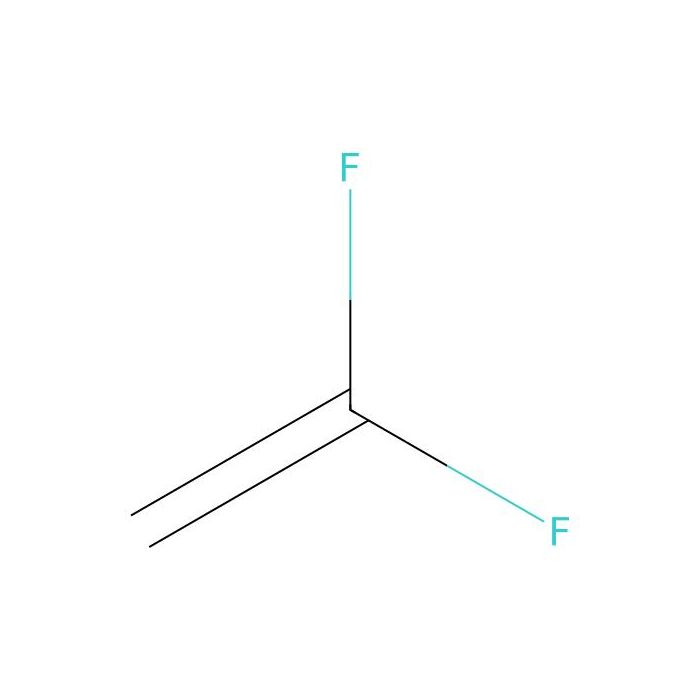
Poly(vinylidene fluoride)(PVDF) - Melting viscosity 2200Pa S , CAS No.24937-79-9

CAS: 24937-79-9 Cat. No.: P741973 Summenformel: (CH2CF2)n EG-Nummer: 607-458-6
Zu bestellen verfügbar
QUALITÄT & REINHEIT Melting viscosity 2200Pa S
Synonyms
Vinylidene fluoride | 1,1-Difluoroethylene | Vinylidene difluoride | Genetron 1132a | PVDF | Genetron 1132a | Halocarbon 1132A | NCI-C60208 | NCI-C60204 | UN1959 | CCRIS 6744 | Kynar | HSDB 520 | fluorovinylidene
Storage
Room temperature
Shipped In
Normal
★
Größe
Deutschland (EU)
USA*
Preis
Menge
100g
P741973-100g
—
1 Auf Lager
34,62€
500g
P741973-500g
1 Auf Lager
2 Auf Lager
112,72€
Enter a quantity for the sizes you want to add.
🧪
Warum diese Qualität

Melting viscosity 2200Pa S für empfindliche chromatographische und analytische Workflows, die minimale Basislinieninterferenzen erfordern.

🌡

Lagerung & Versand

Room temperature Versand Normal. Genaue Spezifikationen finden Sie im chargenspezifischen COA.

📋

Qualitätsdokumente

SDS, COA, Datenblatt und Spezifikationsblatt stehen zum Download bereit. Chargenspezifische COA über Chargennummernsuche abrufbar.

📚

Literaturbeleg

In 1124 peer-reviewten Publikationen zu Chromatographie, organischer Synthese und Kreuzkupplungsreaktionen zitiert.

Übersicht

Widely used as a binder for lithium-ion batteries
Excellent chemical resistance and mechanical strength
Stable electrochemical properties in the wide potential field

Spezifikationen

Synonyme
Vinylidene fluoride | 1,1-Difluoroethylene | Vinylidene difluoride | Genetron 1132a | PVDF | Genetron 1132a | Halocarbon 1132A | NCI-C60208 | NCI-C60204 | UN1959 | CCRIS 6744 | Kynar | HSDB 520 | fluorovinylidene
Spezifikationen & Reinheit
Melting viscosity 2200Pa S
Storage
Room temperature
Verschickt in
Normal
Namen und Kennungen
Pubchem Sid
Kanonisches Lächeln
FC(F)=C
IUPAC Name
1,1-difluoroethene
InChIKey
BQCIDUSAKPWEOX-UHFFFAOYSA-N
INCHI
1S/C2H2F2/c1-2(3)4/h1H2
Isomere SMILES
C=C(F)F

Dokumentation

📋 Sicherheitsdatenblatt (SDS)

Umfassendes Dokument zu Gefahren, Handhabung, Lagerung und Einhaltung regulatorischer Vorschriften.

<<<<<<< HEAD SDS herunterladen → ======= SDS herunterladen → >>>>>>> release248-p3

✅ Analysezertifikat (COA)

Chargenspezifische Qualitätsdaten. Geben Sie Ihre Chargennummer ein, um das genaue COA abzurufen.

COA nachschlagen →

📊 Datenblatt

Kurzübersicht über Produktspezifikationen und Anwendungen.

Datenblatt ansehen →

🔬 Spezifikationsblatt

Vollständige Qualitätsmerkmale und Akzeptanzkriterien für diese Qualität.

Spezifikationsblatt ansehen →

Erweiterte Daten

Taxonomic Classification

Taxonomy Tree

KingdomOrganic compounds
SuperclassOrganic oxygen compounds
KlasseOrganooxygen compounds
SubclassKetene acetals
Intermediate Tree Nodes Not available
Direct ParentKetene acetals
Alternative Parents Vinyl fluorides  Fluoroalkenes  Organofluorides  Hydrofluorocarbons  Hydrocarbon derivatives  
Molecular FrameworkAliphatic acyclic compounds
Substituents Ketene acetal or derivatives - Fluoroalkene - Haloalkene - Vinyl halide - Vinyl fluoride - Hydrofluorocarbon - Hydrocarbon derivative - Organofluoride - Organohalogen compound - Aliphatic acyclic compound
BeschreibungThis compound belongs to the class of organic compounds known as ketene acetals. These are organic compounds comprising the ketene acetal functional group, with the general structure XC(Y)=C(R3)R4 (R1,R2=H, alkyl, aryl; X,Y=any hetero atom).
External Descriptors acetal
3D-Struktur
Interaktives chemisches Strukturmodell


Wirkungsmechanismen
Zertifikate (CoA, COO, BSE/TSE und Analyse-Diagramm)
C of A & Other Certificates(BSE/TSE, COO):
Analytical Chart:

Find and download the COA for your product by matching the lot number on the packaging.

10 results found

Lot NumberCertificate TypeDatumArtikel
E2609561E2609561Certificate of AnalysisApr 28, 2026 P741973
E2609562E2609562Certificate of AnalysisApr 28, 2026 P741973
H2422500H2422500Certificate of AnalysisAug 28, 2024 P741973
H2422509H2422509Certificate of AnalysisAug 28, 2024 P741973
A2514209A2514209Certificate of AnalysisAug 27, 2024 P741973
H2422501H2422501Certificate of AnalysisAug 27, 2024 P741973
H2422502H2422502Certificate of AnalysisAug 27, 2024 P741973
H2422503H2422503Certificate of AnalysisAug 27, 2024 P741973
I2517060I2517060Certificate of AnalysisAug 27, 2024 P741973
L2525082L2525082Certificate of AnalysisAug 27, 2024 P741973
Chemische und physikalische Eigenschaften
Schmelzpunkt (°C)155-165°C
Molekulargewicht64.030 g/mol
XLogP31.300
Hydrogen Bond Donor Count0
Hydrogen Bond Acceptor Count2
Rotatable Bond Count0
Exact Mass64.0125 Da
Monoisotopic Mass64.0125 Da
Topological Polar Surface Area0.000 Ų
Heavy Atom Count4
Formal Charge0
Complexity27.000
Isotope Atom Count0
Defined Atom Stereocenter Count0
Undefined Atom Stereocenter Count0
Defined Bond Stereocenter Count0
Undefined Bond Stereocenter Count0
The total count of all stereochemical bonds0
Covalently-Bonded Unit Count1
FAQs und Artikel
How to Choose a Hydrogen Evolution (HER) Catalyst: Kinetic Barriers in Water Electrolysis, AWE/PEM/AEM Pathways, and a Materials-Family Roadmap (with a Product Map)
Panorama Guide to Lithium-Ion Battery Electrode Materials: Working Principles, Materials Map, and Selection Navigation (incl. Tables 1–4)
A Panorama Guide to Synthetic Resins: Definitions & Polymerization Mechanisms, Classification Frameworks, Common Resins and Applications, Packaging Codes, and a Selection Roadmap (Tables 1–3)
Optical & Optoelectronic Materials Selection Guide:Positioning materials, key metrics, and validation paths along “Generation → Guiding → Control → Readout” (with product navigation and Tables 1–4)
uide to Hydrophobic Polymers and Hydrophobic Surfaces: Wetting Models, Evaluation Metrics, and Task-Oriented Material Selection (including Tables 1–3)
Research Value of Polyelectrolyte Multilayers: Layer-by-Layer Design of Interfacial Composition, Mass Transport, and Function
Why Fluorocarbon Resins Are Weatherable: Structural Stability, Low Surface Energy, and Coating Film Appearance Retention
PVDF, FEVE and Functional Fluororesins: System Differences and Application Selection in Fluorocarbon Coatings
Fluorocarbon Resin Coating Formulation Design: Resin Selection, Supporting Systems, and Key Application Control Points
When Should You Choose Silicone Resin? Selection Comparison with Epoxy, Acrylic, Polyurethane, Fluororesin, and Other Coating Resins
Applicability Boundaries, Failure Risks, and Alternative System Selection for Chlorinated Rubber Resin in Coatings
Citations of This Product
Lösungsrechner
Bewertungen

Kundenbewertungen

Dürfen wir Sie über Rabattaktionen informieren?

Später erinnern

Vielen Dank! Bitte überprüfen Sie Ihren E-Mail-Posteingang, um zu bestätigen.

Hoppla! Benachrichtigungen sind deaktiviert.