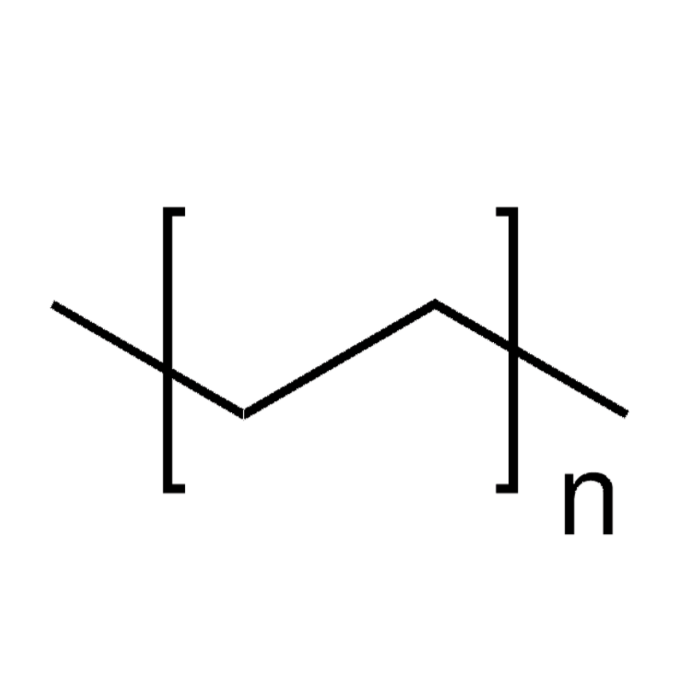
Polyethylene(PE) - average Mw ~4,000 by GPC, average Mn ~1,700 by GPC , CAS No.9002-88-4

CAS: 9002-88-4 Cat. No.: P434352 Summenformel: H(CH2CH2)nH EG-Nummer: 618-339-3
Zu bestellen verfügbar
QUALITÄT & REINHEIT average Mw ~4,000 by GPC, average Mn ~1,700 by GPC
Synonyms
PE
Storage
Room temperature
Shipped In
Normal
★
Größe
Deutschland (EU)
USA*
Preis
Menge
250g
P434352-250g
—
1 Auf Lager
138,75€
Enter a quantity for the sizes you want to add.

Übersicht

Application

Mold release additive, lubricant in rubber processing, extrusion and calendering aid for PVC and dispersing aid for color concentrates.PEG-4000 may be used as a precipitant during protein fractionation and virus precipitation.Influence of PEG of various molecular weights on mammalian cell hybridization.

Spezifikationen

Synonyme
PE
Spezifikationen & Reinheit
average Mw ~4,000 by GPC, average Mn ~1,700 by GPC
Storage
Room temperature
Verschickt in
Normal
Namen und Kennungen
Pubchem Sid
Pubchem Sid Url
https://pubchem.ncbi.nlm.nih.gov/substance/528774817
SMILES
C=C
IUPAC Name
ethene
InChIKey
VGGSQFUCUMXWEO-UHFFFAOYSA-N
InChI
1S/C2H4/c1-2/h1-2H2
Isomere SMILES
C=C

Erweiterte Daten

Taxonomic Classification

Taxonomy Tree

KingdomOrganic compounds
SuperclassHydrocarbons
KlasseUnsaturated hydrocarbons
SubclassUnsaturated aliphatic hydrocarbons
Intermediate Tree Nodes Not available
Direct ParentUnsaturated aliphatic hydrocarbons
Alternative Parents Alkenes  
Molecular FrameworkAliphatic acyclic compounds
Substituents Unsaturated aliphatic hydrocarbon - Olefin - Alkene - Acyclic olefin - Aliphatic acyclic compound
BeschreibungThis compound belongs to the class of organic compounds known as unsaturated aliphatic hydrocarbons. These are aliphatic Hydrocarbons that contains one or more unsaturated carbon atoms. These compounds contain one or more double or triple bonds.
External Descriptors a small molecule
3D-Struktur
Interaktives chemisches Strukturmodell


Wirkungsmechanismen
Zertifikate (CoA, COO, BSE/TSE und Analyse-Diagramm)
C of A & Other Certificates(BSE/TSE, COO):
Analytical Chart:

Find and download the COA for your product by matching the lot number on the packaging.

12 results found

Lot NumberCertificate TypeDatumArtikel
H2613447H2613447Certificate of AnalysisMar 24, 2026 P434352
C2626566C2626566Certificate of AnalysisMar 14, 2026 P434352
C2626568C2626568Certificate of AnalysisMar 14, 2026 P434352
J2527600J2527600Certificate of AnalysisOct 18, 2025 P434352
G2511546G2511546Certificate of AnalysisMar 25, 2025 P434352
A2517497A2517497Certificate of AnalysisDec 17, 2024 P434352
F2411416F2411416Certificate of AnalysisApr 29, 2024 P434352
C2405634C2405634Certificate of AnalysisFeb 06, 2024 P434352
C2405635C2405635Certificate of AnalysisFeb 06, 2024 P434352
K2320287K2320287Certificate of AnalysisNov 03, 2023 P434352
K2320288K2320288Certificate of AnalysisNov 03, 2023 P434352
J2320528J2320528Certificate of AnalysisOct 10, 2023 P434352
Chemische und physikalische Eigenschaften
Schmelzpunkt (°C)100-125℃
Molekulargewicht28.05
XLogP31.200
Hydrogen Bond Donor Count0
Hydrogen Bond Acceptor Count0
Rotatable Bond Count0
Exact Mass28.0313 Da
Monoisotopic Mass28.0313 Da
Topological Polar Surface Area0.000 Ų
Heavy Atom Count2
Formal Charge0
Complexity0.000
Isotope Atom Count0
Defined Atom Stereocenter Count0
Undefined Atom Stereocenter Count0
Defined Bond Stereocenter Count0
Undefined Bond Stereocenter Count0
The total count of all stereochemical bonds0
Covalently-Bonded Unit Count1
FAQs und Artikel
Chemicals for Battery Research and Development
Comprehensive Overview of Polyethylene (PE) Materials: Type Differences, Applications, and Safety & Environmental Aspects—With Aladdin PE / PP Products and Reference Material Selection Guide
A Panorama Guide to Synthetic Resins: Definitions & Polymerization Mechanisms, Classification Frameworks, Common Resins and Applications, Packaging Codes, and a Selection Roadmap (Tables 1–3)
Biomedical Polymer Insights: Role-Based Task Map, Six Key Material Levers, and a Risk-Driven Evidence Chain (including the Product Navigation Guide and Product Tables 1–3)
uide to Hydrophobic Polymers and Hydrophobic Surfaces: Wetting Models, Evaluation Metrics, and Task-Oriented Material Selection (including Tables 1–3)
Titanate Coupling Agents: Structural Features, Classification, Typical Applications, and Differences from Silane Coupling Agents
How Matting Agents in Coatings Build Low-Gloss Coating Surfaces: Mechanisms, Formulation Trade-Offs, and Product Selection
Guide to Selecting Polyurethane Coating Systems: Application Analysis for Wood, Flooring, Plastics, Automotive, and Industrial Protection
Comprehensive Performance Analysis of Polyurethane Coating Films: Soft/Hard Segment Structure, Microphase Separation, Crosslinking and Curing, and Selection of Representative Chemicals
Applications and Selection of Polyester Resins in Industrial Coatings: Powder, Coil, Baking, Packaging, and Metal Coating Scenarios
Resin Polarity in Coating Formulations: From Molecular Structure to Dissolution, Compatibility, Interfacial Interactions, and Formulation Design
Application of Conductive Carbon Black in Coatings: Selection Criteria, Dispersion Control, and Conductive Network Construction
How to Select Binding/Gel Materials for Neutral Wall Putty? A Comparison of Pregelatinized Starch, PVA, and Redispersible Polymer Powder Based on Four Application Trials
Common Problems and Formulation Adjustment Strategies for Neutral Putty Under High Summer Temperatures
Citations of This Product
Lösungsrechner
Bewertungen

Kundenbewertungen

Dürfen wir Sie über Rabattaktionen informieren?

Später erinnern

Vielen Dank! Bitte überprüfen Sie Ihren E-Mail-Posteingang, um zu bestätigen.

Hoppla! Benachrichtigungen sind deaktiviert.