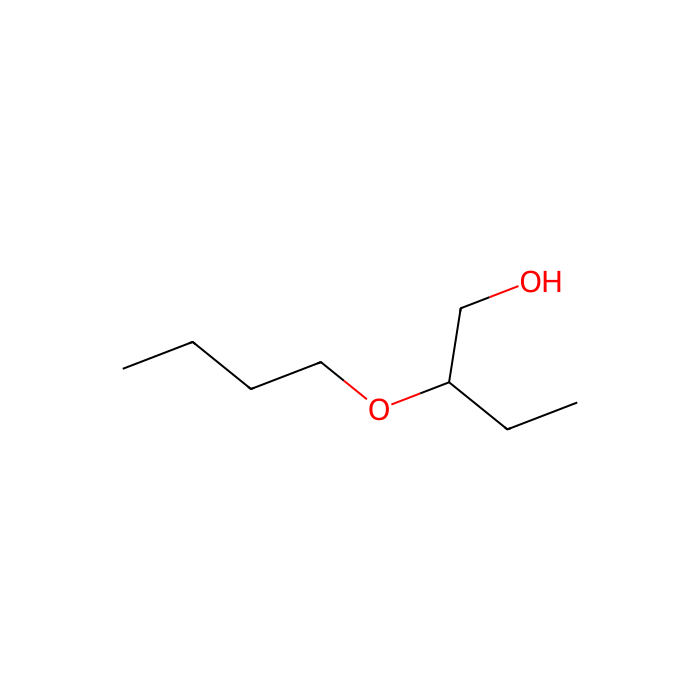
Polytetramethylene Ether Glycol (PTHF) - average Mn ~850 , CAS No.25190-06-1

CAS: 25190-06-1 Cat. No.: P141386 Summenformel: H(OCH2CH2CH2CH2)nOH EG-Nummer: 607-637-9
Zu bestellen verfügbar
QUALITÄT & REINHEIT average Mn ~850
Synonyms
PTMEG|Terathane 1000|(2S)-2-butoxybutan-1-ol|PTMG
Storage
Room temperature
Shipped In
Normal
★
Größe
Deutschland (EU)
USA*
Preis
Menge
100ml
P141386-100ml
—
3 Auf Lager

45,90€

54,58€
Speichern 8,68 € (15.90%)
500ml
P141386-500ml
—
7 Auf Lager

100,57€

117,93€
Speichern 17,35 € (14.72%)
Enter a quantity for the sizes you want to add.

Spezifikationen

Synonyme
PTMEG | Terathane 1000 | (2S)-2-butoxybutan-1-ol | PTMG
Spezifikationen & Reinheit
average Mn ~850
Storage
Room temperature
Verschickt in
Normal
Namen und Kennungen
Pubchem Sid
Pubchem Sid Url
https://pubchem.ncbi.nlm.nih.gov/substance/508816171
SMILES
OCCCCO
IUPAC Name
(2S)-2-butoxybutan-1-ol
InChIKey
BJZYYSAMLOBSDY-QMMMGPOBSA-N
InChI
1S/C8H18O2/c1-3-5-6-10-8(4-2)7-9/h8-9H,3-7H2,1-2H3/t8-/m0/s1
Isomere SMILES
CCCCO[C@@H](CC)CO
WGK Deutschland
3
RTECS
MD0916000
Reaxys
1633445
Reaxys-RN_link_address
https://www.reaxys.com/reaxys/secured/hopinto.do?context=S&query=IDE.XRN=1633445&ln=

Erweiterte Daten

3D-Struktur
Interaktives chemisches Strukturmodell


Zertifikate (CoA, COO, BSE/TSE und Analyse-Diagramm)
C of A & Other Certificates(BSE/TSE, COO):
Analytical Chart:

Find and download the COA for your product by matching the lot number on the packaging.

6 results found

Lot NumberCertificate TypeDatumArtikel
B2306870B2306870Certificate of AnalysisNov 17, 2026 P141386
G2618179G2618179Certificate of AnalysisJul 29, 2026 P141386
E2526070E2526070Certificate of AnalysisJun 07, 2025 P141386
F2115190F2115190Certificate of AnalysisMar 04, 2025 P141386
F2115358F2115358Certificate of AnalysisMar 04, 2025 P141386
F2115360F2115360Certificate of AnalysisMar 04, 2025 P141386
Chemische und physikalische Eigenschaften
Flammpunkt (°C)246 °C
Schmelzpunkt (°C)25-33℃
Sicherheit und Gefahren (GHS)
Piktogramm(e)
Signal
Warning
Gefahrenhinweise

H315:Causes skin irritation

H319:Causes serious eye irritation

H335:May cause respiratory irritation

H412:Harmful to aquatic life with long lasting effects

Sicherheitshinweise

P261:Avoid breathing dust/fume/gas/mist/vapors/spray.

P264:Wash hands [and …] thoroughly after handling.

P271:Use only outdoors or in a well-ventilated area.

P273:Avoid release to the environment.

P280:Wear protective gloves/protective clothing/eye protection/face protection.

P321:Specific treatment (see ... on this label).

P302+P352:IF ON SKIN: wash with plenty of water.

P304+P340:IF INHALED: Remove person to fresh air and keep comfortable for breathing.

P305+P351+P338:IF IN EYES: Rinse cautiously with water for several minutes. Remove contact lenses if present and easy to do - continue rinsing.

P362+P364:Take off contaminated clothing and wash it before reuse.

P405:Store locked up.

P403+P233:Store in a well-ventilated place. Keep container tightly closed.

P501:Dispose of contents/container to an approved waste disposal plant.

P264+P265:Wash hands [and …] thoroughly after handling. Do not touch eyes.

P337+P317:If eye irritation persists: Get medical help.

P332+P317:If skin irritation occurs: Get medical help.

P319:Get medical help if you feel unwell.

WGK Deutschland
3
RTECS
MD0916000
Reaxys
1633445
Reaxys-RN_link_address
https://www.reaxys.com/reaxys/secured/hopinto.do?context=S&query=IDE.XRN=1633445&ln=
FAQs und Artikel
Adding a Temperature-Triggered Switch to NCO: How Blocked Isocyanates Affect the Storage, Curing, and Film Performance of 1K Baking Coatings
Guide to Selecting Polyurethane Coating Systems: Application Analysis for Wood, Flooring, Plastics, Automotive, and Industrial Protection
How Do Isocyanates and Polyols Affect the Performance of Polyurethane Coating Films: Structure, Raw Material Selection, and Performance Design Essentials
Comprehensive Performance Analysis of Polyurethane Coating Films: Soft/Hard Segment Structure, Microphase Separation, Crosslinking and Curing, and Selection of Representative Chemicals
When Should You Choose Silicone Resin? Selection Comparison with Epoxy, Acrylic, Polyurethane, Fluororesin, and Other Coating Resins
Polyurethane Coating Resins: Not a Single Resin, but a Designable High-Performance System
Waterborne Resin Technology Explained: Waterborne Forms, Performance Balance, and a Technology Map
Diagnosis of Coating Performance Issues and Selection of Resin Modification Routes
Application of Aldimine Latent Curing Agents in One-Component Moisture-Curing Polyurethane Systems —— Mechanism of CO₂ Bubble Control and Key Formulation Design Points
Bis-Oxazolidine Latent Curing Agents: Turning Moisture from a Foaming Risk into a Trigger for Moisture Curing
Differences Between Cast CPU and Thermoplastic TPU in Structure, Processing, Performance, and Applications
Structure and Reactivity of Furan Compounds: How Substituents, Ring Fusion, and Degree of Hydrogenation Affect Reaction Sites and Application Directions
Citations of This Product
Lösungsrechner
Bewertungen

Kundenbewertungen

Dürfen wir Sie über Rabattaktionen informieren?

Später erinnern

Vielen Dank! Bitte überprüfen Sie Ihren E-Mail-Posteingang, um zu bestätigen.

Hoppla! Benachrichtigungen sind deaktiviert.