GRADE & PURITYMoligand™?Moligand™ — Aladdin's line of ligands and bioactive small molecules. Use for receptor, pathway, and binding studies needing defined small-molecule tools.10 mM in DMSO
Moligand™, 10 mM in DMSO Moligand™ for sensitive chromatographic and analytical workflows requiring minimal baseline interference.
🌡
Storage & shipping
Store at -80°C Ships Dry ice packs + Cold packs Check lot-specific COA for exact specifications.
📋
Quality documents
SDS, COA, datasheet, and spec sheet available for download. Lot-specific COA accessible via lot number lookup.
📚
Literature proof
Cited in 0 peer-reviewed publications across chromatography, organic synthesis, and cross-coupling reactions.
Übersicht
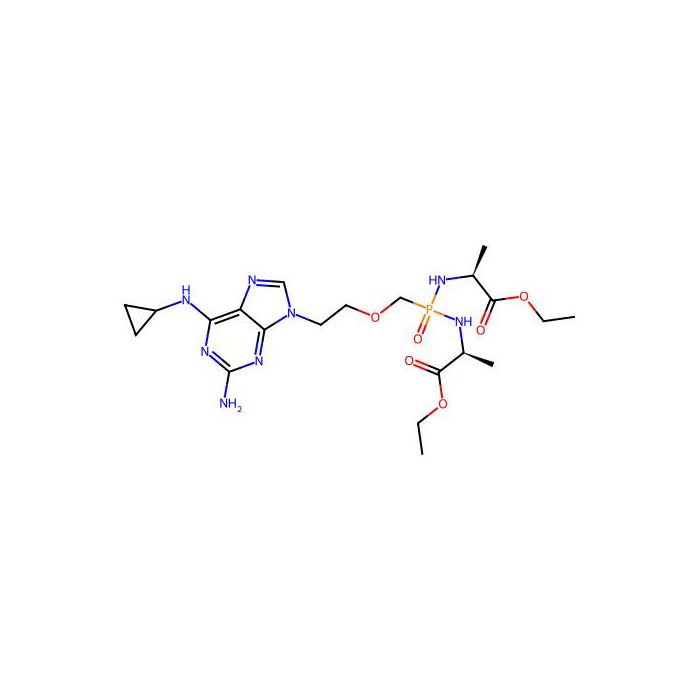
Rabacfosadine (GS-9219), a novel proagent of the nucleotide analogue PMEG, is designed as a cytotoxic agent that preferentially targets lymphoid cells.
Specifications
Spezifikationen & Reinheit
Moligand™, 10 mM in DMSO
Storage
Store at -80°C
Verschickt in
Dry ice packs + Cold packs
Dieses Produkt erfordert Kühlkettenversand. Grundversand und andere Economy-Optionen sind nicht verfügbar.
Zertifikate (CoA, COO, BSE/TSE und Analyse-Diagramm)
C of A & Other Certificates(BSE/TSE, COO):
Analytical Chart:
Lösungsrechner
Molarity Calculator
Determine the necessary mass, volume, or concentration for preparing a solution.
Dilution Calculator
Determine the dilution needed to prepare a stock solution.
Reconstitution Calculator
Bewertungen
Kundenbewertungen
Application Protocols
No tested application protocols are provided in the Product Data for this item.
General research-use guidance (non-prescriptive):
Cell-based assays: Prepare fresh DMSO stocks (e.g., 10–20 mM), dilute into pre-warmed culture medium to desired concentrations, and include vehicle controls. Monitor exposure time to balance prodrug activation with chemical stability.
Enzymatic assays: Use buffered systems near neutral pH and include appropriate cofactors/enzymes if studying activation steps; quench and analyze by LC–MS/MS to quantify intermediate and active species.
Analytical QC: Confirm identity/integrity of working solutions by LC–MS and, if available, 31P NMR to detect hydrolysis products.
These suggestions are general best practices for phosphoramidate nucleotide prodrugs and are not item-specific validated protocols. Always optimize for your model system and consult the CoA/Spec Sheet.
Biological Roles
Mechanistic class (literature context): Rabacfosadine is a cyclic phosphoramidate prodrug designed to deliver an acyclic nucleoside phosphonate (ANP) guanine analogue intracellularly. Following cellular uptake, enzymatic cleavage of the phosphoramidate releases the parent phosphonate, which can be phosphorylated to its diphosphate form that interacts with DNA polymerases and can impede DNA synthesis by acting as a chain-terminating substrate analogue.
Biochemical pathway engagement:
Uptake/activation: relies on esterases, phosphoramidases, and possibly histidine triad nucleotide-binding proteins (HINT) to unmask the phosphonate; kinases convert the nucleoside phosphonate to nucleotide diphosphate species.
Target processes: DNA replication and repair pathways are biochemically impacted when the active diphosphate accumulates, providing a handle to study S-phase checkpoints, replication stress responses, and apoptosis signaling cascades in cell models.
Research utility:
Tool for dissecting prodrug activation kinetics across cell types; enables correlation of enzyme expression (e.g., carboxylesterases) with intracellular exposure to the active species.
Comparative studies: useful in side-by-side evaluation with related ANPs and prodrug architectures to map structure–metabolism–activity relationships (SMAR/SAR).
Important notes:
This product is supplied for research use only. No medical or veterinary claims are made. Biological effects should be characterized in controlled laboratory models.
Potent bioactivity is expected at low micromolar to sub-micromolar levels in sensitive systems (general literature statement); define empirical concentration–response for your specific model and include appropriate vehicle controls.
Buffer Applications
Rabacfosadine is not a buffering agent and is not used to control solution pH. Consequently, classic buffer recipes and buffering ranges are not applicable.
Practical note: When preparing assay solutions, use established biological buffers (e.g., PBS, HEPES, or culture media) at near-neutral pH to limit non-enzymatic hydrolysis of the phosphoramidate. Verify compound stability in the chosen buffer over the experimental timeframe.
Green Alternatives
Because rabacfosadine is a specialized bioactive analyte rather than a process solvent or reagent, “green alternatives” primarily concern solvent choices and handling practices in assays.
Solvent considerations (general):
Prefer aqueous buffers for final assay dilutions whenever solubility allows; keep DMSO content at or below the minimal level compatible with solubility (commonly ≤0.1–0.5% v/v in cell culture).
If high-boiling polar aprotic solvents are needed, DMSO is generally favored over DMF/NMP for cytotoxicity and operator exposure reasons, though all require appropriate controls.
Comparison (literature-based; not product specifications):
DMSO: broad solvency, miscible with water; relatively benign profile among polar aprotics; supports cold storage of aliquots.
DMF/NMP: effective solvents but with higher occupational health concerns; avoid when DMSO suffices.
Ethanol/water co-solvent: greener option if the compound’s salt form supports sufficient solubility and stability; verify no premature hydrolysis.
Operational green practices:
Prepare concentrated stocks to minimize solvent volumes; aliquot to reduce waste from freeze–thaw cycles.
Use micro-scale assay formats (96-/384-well) to reduce chemical consumption.
Segregate halogenated and non-halogenated waste; neutralize aqueous waste only under validated procedures to avoid releasing active species.
Pharmaceutical Uses
Use context for this catalog item: research use only. This product is intended as a reference compound or tool molecule in discovery and preclinical laboratory studies. It is not produced under GMP and is not intended for therapeutic administration, compounding, or diagnostic use.
Formulation considerations for research studies (general, non-clinical):
Stock solutions are commonly prepared in sterile, anhydrous DMSO and diluted into buffered aqueous media immediately prior to in vitro testing.
For in vivo preclinical research (if permitted institutionally), formulation strategies typically favor aqueous vehicles with cosolvents/surfactants to balance solubility and stability; however, no formulation guidance is provided for this specific item—consult internal protocols and ensure all work remains within research-use-only boundaries.
Regulatory status: No pharmacopeial monograph is implied. Do not infer suitability for human or veterinary administration from this listing.
Documentation: For exact salt form, residual solvents, and purity data, consult the CoA/Spec Sheet accompanying the lot.
Physical Properties
Item-specific specifications:
Appearance: Not specified for this item; refer to CoA/Spec Sheet.
Molecular weight (spec): Not specified for this item; refer to CoA/Spec Sheet.
Molecular formula (spec): Not specified for this item; refer to CoA/Spec Sheet.
Literature/general expectations for rabacfosadine (for context only; not product specifications):
Physical state: typically obtained as a solid (salt form common for handling polar phosphonate prodrugs).
Polarity: high polarity due to phosphonate/phosphoramidate and purine base; hydrophilic character with potential amphiphilic behavior depending on counterion.
Solubility: frequently soluble in polar aprotic solvents (e.g., DMSO) and in aqueous buffers when supplied as a salt; exact solubility and pH dependence are formulation- and salt-dependent.
Stability: phosphoramidate prodrugs can hydrolyze in aqueous media, especially at extremes of pH and elevated temperature; stability is enhanced under dry, cold, and neutral conditions.
Partitioning: expected low to moderate logP/logD owing to charged/ionizable phosphonate functionality masked by the promoiety; actual values depend on the specific salt and stereochemistry.
Practical guidance:
For working stocks, many labs prepare 10–20 mM solutions in anhydrous DMSO, then dilute into aqueous assay media immediately before use. Verify compatibility with your specific assay system and consult the CoA for any solubility guidance.
Avoid prolonged exposure to elevated temperature or basic/acidic pH during handling to minimize premature prodrug cleavage.
Quality and Grades
Item-specific grade: Moligand™
Moligand™ denotes Aladdin Scientific’s curated quality tier for bioactive small molecules and ligand-like research compounds intended for screening, target engagement, and SAR workflows. Materials in this tier emphasize identity confirmation and suitability for in vitro research.
What this means in practice:
Intended use: discovery research, biochemical/cellular assays, and reference studies. Not for human or veterinary therapeutic use.
Documentation: For exact analytical details (identity, purity method, residual solvents, counterion, and salt form), consult the item’s CoA/Spec Sheet. Where specific numeric specifications (e.g., % purity by HPLC, water content) are not listed here, they are Not specified for this item; refer to CoA/Spec Sheet.
Stabilizers and additives:
No stabilizers are listed in the Product Data. If present, they will be disclosed on the CoA. Absence of disclosure here does not imply absence; verify on receipt.
Fit for purpose considerations:
Chromatographic purity alone may not guarantee biological performance; confirm activity in your assay system and control for prodrug hydrolysis.
For quantitative bioanalysis, consider orthogonal identity checks (HRMS, 1H/31P NMR) to confirm salt form and integrity after receipt and storage.
Compliance:
Research use only. No pharmacopoeial grade is claimed. No GMP or GLP status is implied unless explicitly stated on accompanying documentation.
Reaction and Applications
This product is primarily a bioactive reference compound rather than a synthetic reagent. Accordingly, its most relevant “applications” are in chemical biology and assay development rather than in preparative organic transformations.
Research applications (literature context, no clinical claims):
Tool compound for studying activation pathways of cyclic phosphoramidate prodrugs and intracellular release of acyclic nucleoside phosphonates (ANPs).
Probe for DNA synthesis biochemistry: once metabolically unmasked, the parent nucleotide analogue can be phosphorylated to the diphosphate and engage DNA polymerases; laboratories use such systems to interrogate polymerase selectivity, chain termination, and DNA damage responses.
Cell-based studies: evaluation of uptake, esterase/amidase-mediated cleavage, and phosphoramidase pathways; time-dependent accumulation of active metabolites can be quantified by LC–MS/MS.
Enzymology: assessment of interactions with kinases and phosphatases responsible for prodrug activation; use in competition or inhibition formats to map metabolic flux.
Not typically used in synthetic reactions:
Due to its complexity and sensitivity, rabacfosadine is not commonly used as a reagent or building block in routine organic synthesis. If derivatization is required for mechanistic studies (e.g., isotopic labeling), it is generally performed on early intermediates, not on the finished prodrug.
Practical tips for assays:
Work quickly at near-neutral pH and ambient temperature; pre-warm media only immediately before dosing.
Include stability controls (compound in media without cells) to deconvolute chemical versus enzymatic activation/degradation.
Reaction Conditions
Not typically applicable. Rabacfosadine is not used as a reagent or catalyst in synthetic chemistry, so standard “reaction conditions” (solvent, temperature, catalysts) are not defined for transformations using this compound as an input.
For biological experiments (general guidance only; not product specifications):
Stock preparation: dissolve in anhydrous DMSO under dry conditions; typical stock concentrations are 10–20 mM, adjusted to assay needs.
Working solutions: dilute into neutral aqueous buffers or culture media immediately before dosing; maintain low final DMSO (≤0.1–0.5% v/v as tolerated by the system).
Temperature: handle at ambient temperature briefly; keep samples on ice for prolonged setup to limit hydrolysis.
Stability checks: include time-course controls in matrix (buffer/media without cells) and analyze by LC–MS/MS or HPLC to confirm integrity over the assay window.
If any chemical transformation or conjugation is attempted for analytical purposes, use very mild, neutral conditions and validate integrity by 1H/13C/31P NMR and LC–MS. However, such modifications are outside the typical use case for this product.
Safety and Handling
GHS information (item-specific):
Signal word: Not specified for this item; refer to SDS.
Hazard statements (H): Not specified for this item; refer to SDS.
GHS classification and pictograms: Not specified for this item; refer to SDS.
General laboratory precautions (good practice for nucleotide analogue prodrugs; not a substitute for SDS):
Use in a chemical fume hood; avoid inhalation, ingestion, and skin contact.
Wear appropriate PPE: lab coat, safety glasses, and chemically resistant gloves (e.g., nitrile). Double-gloving is recommended for potent bioactive small molecules.
Prevent environmental release; collect aqueous and organic wastes in appropriate labeled containers.
Handling notes specific to phosphoramidate prodrugs (literature-based):
Hydrolysis-sensitive: minimize exposure to moisture and extremes of pH; prepare solutions immediately prior to use.
Light/heat sensitivity: protect from prolonged light and heat to limit degradation.
Weighing: allow container to equilibrate to ambient temperature in a desiccator before opening to avoid condensation.
First aid overview (defer to SDS for authoritative instructions):
Skin/eye contact: rinse with copious water for at least 15 minutes; remove contaminated clothing; seek medical evaluation.
Inhalation: move to fresh air; monitor respiration; obtain medical attention.
Ingestion: rinse mouth; do not induce vomiting; seek medical attention.
Always consult the product-specific SDS before use and implement institutional controls appropriate for handling potent research chemicals.
Solvent Selection
Rabacfosadine is a polar phosphoramidate prodrug; dissolution behavior depends on salt form and counterion.
Item-specific note: No solvent recommendations are specified for this item; refer to CoA/Spec Sheet.
Literature-based guidance (typical for ANP phosphoramidates):
Primary stock solvent: anhydrous DMSO is commonly used due to broad solvency and compatibility with cell-based assays.
Aqueous media: once in DMSO, dilute into buffered aqueous solutions (e.g., PBS, culture media) immediately before use to limit hydrolysis. Gentle warming (room temperature) and vortexing/sonication can assist dissolution.
Alternative solvents: DMF can dissolve many phosphoramidate prodrugs; ethanol or water may be suitable depending on salt form. Avoid strong basic/acidic conditions during dissolution to prevent premature cleavage of the promoiety.
Solvent polarity and miscibility (general):
DMSO (highly polar, aprotic; completely miscible with water) supports high-concentration stocks (10–50 mM typical, assay-dependent).
Aqueous buffers should be near neutral pH (≈6.8–7.4) for short-term handling to reduce degradation.
Practical tips:
Filter sterilize final working solutions through 0.22 µm if used for cell culture assays, provided the compound remains soluble.
Minimize freeze–thaw of solutions; aliquot DMSO stocks and store at −80°C per Storage tab.
Confirm absence of precipitation upon dilution; include vehicle controls matching final DMSO percentage in assays.
Storage and Reconstitution
Item-specific storage and shipping (from Product Data):
Storage: Store at −80°C.
Shipped in: Dry ice packs + Cold packs.
Reconstitution (general guidance for research use; verify with CoA/Spec Sheet):
Equilibrate the sealed vial to room temperature in a desiccator before opening to prevent condensation.
Dissolve the material in anhydrous solvent (commonly DMSO) to prepare a concentrated stock (e.g., 10–20 mM). If water solubility is adequate for the supplied salt form, sterile water or buffer may be used; confirm compatibility first on a small scale.
Filter sterilize if required for cell culture (0.22 µm) and dispense into single-use aliquots to avoid repeated freeze–thaw.
Solution storage:
DMSO stocks: store tightly sealed at −80°C, protected from light. Avoid repeated freeze–thaw; use aliquots.
Aqueous solutions: prepare fresh for same-day use whenever possible; if short-term storage is necessary, keep on ice and use within the validated stability window determined in your lab.
Stability caution:
Phosphoramidate prodrugs can hydrolyze on exposure to moisture, heat, and extremes of pH. Maintain dry, cold, and neutral conditions during handling.
Documentation:
For lot-specific details (salt form, counterion, purity, residual solvents), consult the CoA/Spec Sheet included with the product.
Research Use Note: For research use only.
Structure and Identity
Rabacfosadine (SKU R1496507) is a bioactive, small-molecule prodrug belonging to the acyclic nucleoside phosphonate (ANP) class that delivers a guanine-derived nucleotide analogue intracellularly.
InChIKey: Not specified for this item; refer to CoA/Spec Sheet.
SMILES: Not specified for this item; refer to CoA/Spec Sheet.
Molecular formula: Not specified for this item; refer to CoA/Spec Sheet.
Molecular weight: Not specified for this item; refer to CoA/Spec Sheet.
Structural features (general literature description, not item-specific):
Prodrug of an ANP guanine analogue that bears a phosphonate moiety masked as a cyclic phosphoramidate to enhance cellular uptake and deliver the active nucleotide analogue intracellularly.
Core heterocycle: 1,3,7,9-substituted purine (guanine-like) linked via a methoxyethyl chain to a phosphonate functionality.
Prodrug masking group: cyclic phosphoramidate forming a five-membered ring with an amino alcohol motif; designed to be cleaved enzymatically to release the parent phosphonate.
Functional groups: purine base, ether/methylene linker, phosphonate (P–C) backbone masked as a phosphoramidate, amide/amine and hydroxyl functionalities in the promoiety.
Stereochemistry: the cyclic phosphoramidate can embed defined stereochemistry at phosphorus and/or carbon in the promoiety (literature note); specific configuration for this item is not provided in the Product Data.
Synthetic Utility
Rabacfosadine is a finished, structurally complex prodrug and is not generally employed as a synthetic building block.
Limited preparative utility:
The presence of a masked phosphonate (phosphoramidate), a purine base, and multiple labile functional groups makes the molecule sensitive to bases, acids, and nucleophiles—conditions routinely used in synthesis—thus limiting downstream derivatization.
When chemistry is performed (literature context):
Analytical derivatizations (e.g., isotopic labeling or reporter conjugation) are typically conducted on precursor fragments (the purine alcohol, the phosphonate core, or the amino alcohol promoiety) prior to final cyclization to the phosphoramidate.
The P(V) center may display diastereomerism; stereochemical control is addressed during prodrug installation rather than by post-modifying the final compound.
Recommendations for researchers considering modifications:
If structural analogs are desired for SAR, design and synthesize at the level of the acyclic nucleoside phosphonate or at the prodrug promoiety before coupling/cyclization. Avoid attempts to functionalize the intact prodrug under harsh conditions.
Overall, treat rabacfosadine as a bioactive endpoint molecule for biological testing rather than a reagent for further synthetic transformations.
Target Specificity
No target specificity data are provided in the Product Data for this catalog item.
Item-specific fields not specified: antigen/target name, epitope, species reactivity, clone/isotype (not applicable), or binding constants. For mechanistic background, see Biological Roles, which discusses general engagement of DNA replication biochemistry by the active nucleotide analogue released from the prodrug. Refer to the CoA/Spec Sheet or primary literature for any target-binding data if required for your study.
Need help choosing the grade?
Our grade selection guide covers purity, stabilizer status, and application suitability for all variants in our catalog.
Wir verwenden Cookies, um die ordnungsgemäße Funktion der Website sicherzustellen und, soweit zulässig, Ihr Nutzererlebnis zu verbessern. Sie können Ihre Einstellungen jederzeit unter „Einstellungen“ verwalten. Weitere Informationen finden Sie in unserer Cookie-Richtlinie.
Shall we send you a message when we have discounts available?
Remind me later
Thank you! Please check your email inbox to confirm.
Products are supplied to verified businesses, institutions, and qualified professionals for research and development use only. Not for use in humans, animals, diagnosis, or therapy.