Reactive Yellow 86 - ≥95% , CAS No.61951-86-8

CAS: 61951-86-8 Cat. No.: R331861 Summenformel: C18H14Cl2N8Na2O9S2 Molekulargewicht: 667.37
Zu bestellen verfügbar
GRADE & PURITY ≥95%
Synonyms
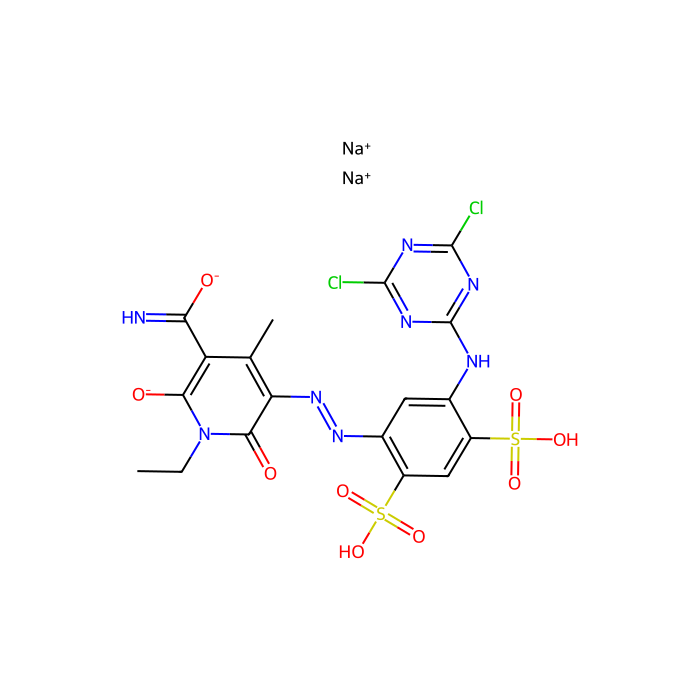
CID 101531203 | DTXSID80894186 | disodium;5-[[5-[(4,6-dichloro-1,3,5-triazin-2-yl)amino]-2,4-disulfophenyl]diazenyl]-1-ethyl-4-methyl-2-oxido-6-oxopyridine-3-carboximidate
Storage
Room temperature
Shipped In
Normal
★
Size
Deutschland (EU)
USA*
Price
Qty
1g
R331861-1g
—
2 Auf Lager
20,74€
Enter a quantity for the sizes you want to add.
🧪
Why this grade

≥95% for sensitive chromatographic and analytical workflows requiring minimal baseline interference.

🌡

Storage & shipping

Room temperature Ships Normal Check lot-specific COA for exact specifications.

📋

Quality documents

SDS, COA, datasheet, and spec sheet available for download. Lot-specific COA accessible via lot number lookup.

📚

Literature proof

Cited in 1 peer-reviewed publications across chromatography, organic synthesis, and cross-coupling reactions.

Specifications

Synonyme
CID 101531203 | DTXSID80894186 | disodium;5-[[5-[(4,6-dichloro-1,3,5-triazin-2-yl)amino]-2,4-disulfophenyl]diazenyl]-1-ethyl-4-methyl-2-oxido-6-oxopyridine-3-carboximidate
Spezifikationen & Reinheit
≥95%
Storage
Room temperature
Verschickt in
Normal
Reinheit
≥95%
Namen und Kennungen
Kanonisches Lächeln
CCN1C(=C(C(=C(C1=O)N=NC2=C(C=C(C(=C2)NC3=NC(=NC(=N3)Cl)Cl)S(=O)(=O)O)S(=O)(=O)O)C)C(=N)[O-])[O-].[Na+].[Na+]
IUPAC Name
disodium;5-[[5-[(4,6-dichloro-1,3,5-triazin-2-yl)amino]-2,4-disulfophenyl]diazenyl]-1-ethyl-4-methyl-2-oxido-6-oxopyridine-3-carboximidate
InChIKey
WOFHPDGARHNFJI-UHFFFAOYSA-L
INCHI
1S/C18H16Cl2N8O9S2.2Na/c1-3-28-14(30)11(13(21)29)6(2)12(15(28)31)27-26-8-4-7(22-18-24-16(19)23-17(20)25-18)9(38(32,33)34)5-10(8)39(35,36)37;;/h4-5,30H,3H2,1-2H3,(H2,21,29)(H,32,33,34)(H,35,36,37)(H,22,23,24,25);;/q;2*+1/p-2
Isomere SMILES
CCN1C(=C(C(=C(C1=O)N=NC2=C(C=C(C(=C2)NC3=NC(=NC(=N3)Cl)Cl)S(=O)(=O)O)S(=O)(=O)O)C)C(=N)[O-])[O-].[Na+].[Na+]
Alternative CAS-Nummer
70865-29-1
Molekulargewicht
667.37

Documentation

📋 Safety Data Sheet (SDS)

Comprehensive hazard, handling, storage, and regulatory compliance document.

Download SDS →

✅ Certificate of Analysis (COA)

Lot-specific quality data. Enter your lot number to retrieve the exact COA.

Look up COA →

📊 Datasheet

Quick-reference summary of product specifications and applications.

View datasheet →

🔬 Specification Sheet

Full quality attributes and acceptance criteria for this grade.

View spec sheet →

Advanced Data

Taxonomic Classification

Taxonomy Tree

KingdomOrganic compounds
SuperclassBenzenoids
KlasseBenzene and substituted derivatives
SubclassBenzenesulfonic acids and derivatives
Intermediate Tree Nodes Not available
Direct ParentBenzenesulfonic acids and derivatives
Alternative Parents 1-sulfo,2-unsubstituted aromatic compounds  Benzenesulfonyl compounds  Nicotinamides  Aniline and substituted anilines  Pyridinones  Pyridinolates  Aminotriazines  Chloro-s-triazines  Dihydropyridines  Methylpyridines  Aryl chlorides  Sulfonyls  Organosulfonic acids  Heteroaromatic compounds  Azo compounds  Lactams  Organic metal halides  Carboximidic acids  Propargyl-type 1,3-dipolar organic compounds  Azacyclic compounds  Organic oxides  Organic sodium salts  Organochlorides  Organooxygen compounds  Amines  Hydrocarbon derivatives  Organic cations  
Molecular FrameworkAromatic heteromonocyclic compounds
Substituents Benzenesulfonate - 1-sulfo,2-unsubstituted aromatic compound - Nicotinamide - Arylsulfonic acid or derivatives - Benzenesulfonyl group - Aniline or substituted anilines - Pyridinolate - Amino-1,3,5-triazine - Pyridinone - Chloro-s-triazine - Halo-s-triazine - Dihydropyridine - Methylpyridine - Aminotriazine - Hydropyridine - Pyridine - Triazine - 1,3,5-triazine - Aryl chloride - Aryl halide - Heteroaromatic compound - Organic sulfonic acid or derivatives - Organosulfonic acid or derivatives - Organosulfonic acid - Sulfonyl - Azo compound - Lactam - Propargyl-type 1,3-dipolar organic compound - Organic 1,3-dipolar compound - Organic metal halide - Organoheterocyclic compound - Carboximidic acid - Carboximidic acid derivative - Azacycle - Organic alkali metal salt - Organic oxygen compound - Organic salt - Organohalogen compound - Organochloride - Organonitrogen compound - Amine - Organooxygen compound - Organosulfur compound - Organic sodium salt - Hydrocarbon derivative - Organic oxide - Organic nitrogen compound - Organic cation - Aromatic heteromonocyclic compound
BeschreibungThis compound belongs to the class of organic compounds known as benzenesulfonic acids and derivatives. These are organic compounds containing a sulfonic acid or a derivative thereof that is linked to a benzene ring.
External Descriptors Not available
3D-Struktur
Interaktives chemisches Strukturmodell


Zertifikate (CoA, COO, BSE/TSE und Analyse-Diagramm)
C of A & Other Certificates(BSE/TSE, COO):
Analytical Chart:

Find and download the COA for your product by matching the lot number on the packaging.

3 results found

Lot NumberCertificate TypeDatumArtikel
C23071033Certificate of AnalysisDec 12, 2025 R331861
C23071225Certificate of AnalysisFeb 08, 2023 R331861
C23071230Certificate of AnalysisFeb 08, 2023 R331861
Citations of This Product
Lösungsrechner
Bewertungen

Kundenbewertungen

Application Protocols

No manufacturer-validated protocols are provided for this item. The following procedure outlines a general lab-scale cellulose dyeing test for reactive dyes (literature/general). Optimize for your substrate and this SKU.

Lab-scale exhaust dyeing (cotton):

  1. Prepare dye stock: Dissolve the dye in deionized water to 5–10 g/L. Filter (0.45 µm).
  2. Set bath: Liquor ratio 20:1. Add electrolyte (e.g., Na2SO4, 30–50 g/L). Bring to 30–40 C.
  3. Add substrate: Pre-wetted cotton. Circulate 10–15 min for wet-out and initial exhaustion.
  4. Alkali addition: Add Na2CO3 in 2–3 portions to reach pH 10.5–11.0 over 10–20 min. Maintain temperature appropriate to reactive group class (often 30–60 C).
  5. Hold: 30–60 min with agitation. Monitor bath absorbance to track fixation.
  6. Rinse and soap: Rinse cold, then hot (60–95 C) with nonionic detergent to remove hydrolyzed/unfixed dye. Final rinse to neutral pH.
  7. Dry and evaluate: Measure color strength and shade (e.g., reflectance spectroscopy) and calculate exhaustion/fixation.

Notes:

  • Adjust salt and temperature for levelness vs. fixation. Excessive alkali or prolonged time increases hydrolysis.
  • For labeling amine-containing polymers or biomolecules, substitute a carbonate buffer (pH 9–10), operate at lower temperature, and quench unreacted dye before purification.

This guidance is non-specific; confirm parameters with small trials and consult the item’s CoA.

Biological Roles

This product is a synthetic reactive dye supplied for research use and does not have an inherent biological role.

Literature/general context:

  • Reactive dyes have been used as chromogenic labels for biomolecules by forming covalent bonds to nucleophilic residues (e.g., lysine –NH2) under controlled pH, enabling visualization in electrophoresis gels, membranes, or labeled conjugates. These applications are methodological and do not imply physiological function.
  • Azo dyes are not endogenous to biological systems. Their interactions with proteins or polysaccharides are typically driven by covalent coupling at the reactive moiety, supplemented by electrostatic and π–π interactions.
  • In cell-free assays, reactive dyes can serve as absorbance reporters for enzyme immobilization studies, biosensor optimization, or tracking immobilized ligand density on functionalized surfaces.

Caution:

  • Avoid extrapolating in vitro labeling behavior to biological activity or safety. Ensure removal of unreacted dye and hydrolyzed byproducts when preparing dye–biomolecule conjugates for analytical workflows.
  • Some reactive moieties may alkylate or acylate nucleophiles non-specifically; optimize reaction time and quenching to preserve biomolecule function.

For research use only: As specified in the Product Data, this material is not intended for clinical or in vivo applications.

Buffer Applications

This product is a colorant and is not a buffering agent. Therefore, it is not typically used to establish or maintain solution pH.

Practical notes for related workflows (literature/general):

  • When employing reactive dyes in aqueous systems, buffers (e.g., carbonate, borate, or phosphate) may be used to control pH during coupling or dyeing. Be aware that some buffer components are nucleophilic and can consume reactive groups, decreasing effective labeling/fixation.
  • For alkaline activation of many reactive dyes, carbonate/bicarbonate (pH ~9.5–10.8) or borate buffers (pH ~9–10) are commonly used; adjust ionic strength and temperature to balance reaction rate and hydrolysis.

If your application requires a specific buffer recipe or pH profile, design it around the kinetics of the reactive moiety you are employing and verify performance experimentally with this SKU.

Green Alternatives

Considerations for greener practice with reactive azo dyes (literature/general):

  • Challenge: Reactive dyeing can generate hydrolyzed dye and halide byproducts, contributing to effluent load (color, COD, AOX for halogenated reactive groups).

Strategies and alternatives:

  • Higher-fixation systems: Select reactive dyes/conditions that maximize fixation to substrates, reducing unfixed dye in effluent. Shorter liquor ratios and pad–batch or cold-batch methods can reduce water and energy use.
  • Alternative reactive chemistries: Reactive systems lacking halogens (e.g., sulfate-activated vinyl systems) may lower AOX vs. monochlorotriazine types, albeit with different temperature/pH requirements. Verify performance tradeoffs.
  • Process optimization: Implement counter-current rinsing, salt recovery, and in-bath monitoring with online UV–Vis to minimize overdosing.
  • Effluent treatment: Advanced oxidation (ozonation, UV/H2O2), biological treatment adapted to azo dyes, and coagulation–flocculation can markedly reduce color and COD.
  • Dye selection: Where application allows, consider dyes with higher biodegradability profiles or natural colorants (e.g., curcumin) for non-critical research demonstrations, acknowledging limitations in wash/photofastness and batch consistency.

Tradeoffs (general):

  • Vinyl-sulfone-type reactive groups: Often higher fixation, potentially less AOX, but may require higher temperatures and careful pH control.
  • Halotriazine groups: Efficient at lower temperatures; may introduce halide load and AOX concerns.

Recommendation: Conduct a small design-of-experiments (DOE) varying pH, temperature, and electrolyte to map fixation vs. hydrolysis for your substrate, then scale under the most resource-efficient conditions.

Pharmaceutical Uses

No pharmacopeial grade or excipient role is specified for this item.

Context (literature/general):

  • Reactive dyes are generally not used as pharmaceutical excipients due to their covalent reactivity and complex chromophore structures. Non-reactive colorants with established compendial status (e.g., certain FD&C or EU-approved dyes) are typically chosen for drug product coloration.
  • In pharmaceutical research, reactive dyes may occasionally be used as tracers or to visualize processes (e.g., flow paths, adsorption onto excipients) in development settings. Such uses are strictly non-clinical.

Compliance reminder:

  • As stated in the Product Data, this material is for research use only and is not intended for use in food, drugs, cosmetics, or medical devices.

Recommendation:

  • If a colorant is needed for GMP or clinical applications, select an approved excipient-grade dye/pigment meeting relevant pharmacopeial monographs and regulatory guidelines, and ensure full impurity and residual solvent profiles are available.
Physical Properties

Item-specific physical property specifications are not provided in the Product Data for SKU R331861.

  • Appearance: Not specified for this item; refer to CoA/Spec Sheet.
  • Molecular weight: Not specified for this item; refer to CoA/Spec Sheet.
  • Molecular formula: Not specified for this item; refer to CoA/Spec Sheet.
  • Melting point / decomposition: Not specified for this item; refer to CoA/Spec Sheet.
  • Solubility: Not specified for this item; refer to CoA/Spec Sheet.
  • UV/Vis characteristics: Not specified for this item; refer to CoA/Spec Sheet.
  • LogP, pKa, refractive index, density: Not specified for this item; refer to CoA/Spec Sheet.

Literature/general notes for reactive azo dyes (context, not product specifications):

  • Physical form is commonly a colored powder or granules; many reactive dyes are highly water-soluble due to sulfonate groups and may form intensely colored aqueous solutions.
  • Thermal behavior often shows gradual darkening and decomposition rather than a sharp melting point; azo dyes can decompose on strong heating.
  • UV/Vis: intense absorption in the visible region corresponding to the yellow hue; exact λmax and molar absorptivity depend on the chromophore and substituents and should be taken from the specific CoA/Spec.
  • Hygroscopicity can vary; some reactive dyes pick up moisture depending on counterions and formulation aids.

Practical guidance:

  • Prepare fresh aqueous stock solutions for quantitative work; filter (0.22–0.45 µm) to remove particulates before spectroscopic or application testing.
  • If spectral purity (baseline noise in HPLC/UV) is critical, verify by recording a reference UV–Vis spectrum and consult the item’s CoA for any specified absorbance limits.
Quality and Grades
  • Item-specific grade/purity: Not specified for this item; refer to CoA/Spec Sheet.
  • Stabilizers/additives: Not specified for this item; refer to CoA/Spec Sheet.

Interpretation and guidance (general):

  • Research-grade reactive dyes are typically supplied with assay or strength on a dye-content basis (e.g., % dye content vs. moisture/salt). If dye content is important for mass balance or color strength calculations, consult the CoA and adjust dosages accordingly.
  • Low-ionic or salt-reduced grades are preferred for analytical or high-precision applications (e.g., spectrophotometry, microfabrication), as inorganic salts can affect conductivity and deposition behavior.
  • For chromatography or spectroscopic applications, a high-purity grade with low UV-absorbing impurities is advantageous; verify any UV cutoff/absorbance limits on the CoA when available.
  • Batch-to-batch consistency: Colorimetric parameters (e.g., CIELAB values, λmax) and moisture/volatile content can vary between lots. Record and normalize to dye content when reproducing experiments.

Research use only: As stated in the Product Data, this material is for research use only. It is not intended for food, drug, cosmetic, household, or clinical applications.

Recommendation: Prior to critical experiments, document the following from the CoA for this SKU: dye content (%), moisture (%), inorganic salt (%), λmax and ε (if given), and any stated impurity limits. Where not provided, establish internal QC (UV–Vis fingerprint, HPLC profile) for your application.

Reaction and Applications

Manufacturer applications are not provided. The following summarizes literature/general uses of reactive yellow dyes (including C.I. Reactive Yellow 86 as a class designation) in research and processing; verify suitability for your workflow.

  • Covalent coloration of hydroxyl-rich substrates: Under alkaline conditions, reactive dyes bond to cellulose (cotton, paper) via nucleophilic substitution/addition at the reactive center, providing washfast shades and enabling controlled colorimetric studies.
  • Protein and polymer labeling (research): The electrophilic reactive group can couple to –NH2 (lysine on proteins, polyamines) or –OH on polysaccharides to create chromophore-labeled materials for visualization, binding assays, or flow studies. Reaction conditions must be adapted to preserve biomolecule function.
  • Tracer/flow visualization: Intense visible absorbance makes reactive dyes useful as non-fluorescent tracers in microfluidics, porous media studies, and calibration of spectrophotometric methods.
  • Surface functionalization: Immobilization of dyes onto hydrogel or membrane surfaces for optical sensing, ion-exchange studies, or affinity matrices.

Practical tips (general):

  • Control pH and temperature to balance fixation vs. hydrolysis. For many halotriazine systems, moderate temperatures (30–40 C) suffice; vinyl-sulfone-type systems often require 50–60 C. Confirm for your specific material.
  • Minimize pre-activation time in alkaline media to limit self-hydrolysis; prepare alkaline working solutions immediately before use.
  • Salt addition (NaCl/Na2SO4) can modulate exhaustion on cellulose; optimize electrolytes for uniformity vs. fixation.
  • Quantify with UV–Vis at the dye’s λmax; construct calibration curves in the same medium used in process to account for activity coefficients.

Note: Exact reactivity and shade depth depend on the specific structure and dye content for the supplied lot; consult the CoA and perform small-scale trials.

Reaction Conditions

Item-specific reaction conditions are not provided. The following are literature/general conditions commonly employed for reactive dyes and should be adapted/validated for this SKU and substrate.

  • For cellulose (exhaust dyeing):

    • Liquor: water with electrolyte (e.g., 30–80 g/L Na2SO4 or NaCl, application-dependent).
    • Temperature: 30–60 C depending on reactive group; lower end for many chlorotriazines, higher for vinyl-sulfone-type systems.
    • pH: 10.0–11.0, created with Na2CO3 (and/or mild NaOH). Add alkali after initial exhaustion to reduce premature hydrolysis.
    • Time: 30–90 min total; stage additions of salt and alkali improve levelness and fixation.
  • For protein/amine labeling (analytical scale):

    • Buffer: 50–200 mM bicarbonate/carbonate, pH 9–10; avoid primary amine buffers (e.g., Tris) that compete for labeling.
    • Temperature: 4–25 C for sensitive biomolecules, up to 37 C if tolerated.
    • Stoichiometry: 2–10 mol eq. dye per mol of accessible amines; optimize to prevent over-labeling.
    • Quench: Ethanolamine or glycine (10–50 mM) after desired conversion; purify by gel filtration or dialysis.
  • Surface functionalization:

    • Use aqueous or aqueous–organic systems (e.g., water/DMF) to wet hydrophobic substrates; maintain alkaline pH locally while minimizing bulk hydrolysis.

Monitoring and QA:

  • Track concentration and reaction progress by UV–Vis at the dye’s λmax; construct calibration curves in the working medium.
  • Assess fixation by measuring color in bath before and after alkali addition and after rinsing; calculate fixation and exhaustion percentages.

Caution: Hydrolysis of the reactive group competes under alkaline conditions; prepare alkaline baths immediately before use.

Safety and Handling

Safety data specific to this item (GHS classification, H-statements, pictograms, signal word) are not provided in the Product Data. Always consult the product SDS for authoritative hazard classification and emergency measures.

General laboratory safety guidance for reactive azo dyes (literature/general):

  • Hazards: Powders may cause mechanical irritation to eyes/respiratory tract and can strongly stain skin and surfaces. Some reactive groups (e.g., halotriazines, vinyl sulfones) are electrophilic and can cause skin/eye irritation or sensitization in susceptible individuals.
  • PPE: Wear lab coat, nitrile gloves, and splash goggles. Use a dust mask/respirator if airborne dust generation is possible; weigh in a fume hood or ventilated enclosure.
  • Handling: Avoid creating dust clouds. Clean spills promptly with damp wipes, minimizing dry sweeping. Prevent release to drains without proper treatment.
  • Incompatibilities (general): Strong oxidizers and strong reducing agents. Reactive functional groups can be quenched by strong nucleophiles; avoid unintended contact with amines/thiols when material integrity must be preserved.
  • First aid (summary; follow SDS):
    • Inhalation: Move to fresh air; seek medical attention if symptoms persist.
    • Skin: Wash with soap and water; remove contaminated clothing.
    • Eyes: Rinse cautiously with water for several minutes; remove contact lenses if present and easy to do; seek medical attention for persistent irritation.
    • Ingestion: Rinse mouth; do not induce vomiting; seek medical advice.
  • Fire: Use water spray, CO2, dry chemical, or foam as appropriate for surrounding materials. Combustion may produce oxides of carbon, nitrogen, sulfur.

Storage conditions: Room temperature (per Product Data). Keep container tightly closed, dry, and protected from light and sources of contamination. Refer to SDS for detailed stability and incompatibility information.

Solvent Selection

Item-specific solubility data are not provided. The following guidance reflects literature/general properties of anionic reactive azo dyes and should be verified experimentally for this SKU.

  • Primary solvent: Water is typically the solvent of choice due to sulfonate groups that enhance aqueous solubility. Warm water can speed dissolution.
  • Aqueous additives (general practice):
    • Electrolytes (e.g., NaCl, Na2SO4) influence exhaustion onto substrates in dyeing workflows.
    • Alkali (e.g., Na2CO3, NaOH) activates reactive groups (halotriazine/vinyl sulfone) for covalent bonding to –OH/–NH substrates.
  • Organic solvents: Reactive dyes are usually poorly soluble in most nonpolar organics; limited solubility can occur in polar aprotics (DMSO, DMF) if water is contraindicated. Confirm compatibility with your process and stability of the reactive moiety.
  • pH considerations: Maintain neutral to slightly basic pH during dissolution to minimize hydrolysis of reactive groups; adjust to target alkaline pH immediately before application to promote reaction.

Comparison (general):

  • Water vs. DMSO: Water maximizes ionic dissociation and process relevance for aqueous dyeing; DMSO can be useful for surface functionalization of non-aqueous polymer matrices but may increase hydrolysis of some reactive handles.
  • Buffered aqueous media: Suitable when controlling pH drift is critical; choose carbonate/borate buffers as appropriate but be aware that nucleophilicity of buffer components can consume reactive groups.

Tip: Pre-wet powders and add incrementally under vigorous stirring to prevent agglomeration and to achieve homogeneous solutions.

Storage and Reconstitution
  • Storage conditions (from Product Data): Room temperature. Shipments are under normal conditions.
  • Container: Keep tightly closed in a dry place. Protect from light and humidity to preserve shade and reactive integrity. Store away from strong acids/bases and oxidizing agents.

Reconstitution (general guidance; not item-specific):

  • Solvent: Use deionized water as the default solvent unless your process requires an alternative. Some applications may use aqueous–organic mixtures (e.g., water/DMF) to aid wetting of hydrophobic substrates.
  • Procedure: Add powder gradually to stirred solvent. Rinse weighing vessel to quantitative transfer. Warm mildly (≤40 C) if needed. Filter through 0.22–0.45 µm to remove particulates before analytical use.
  • Concentration: Prepare concentrated stocks (e.g., 5–20 g/L) based on solubility and application; verify stability at your working pH.
  • Stability: Reactive dyes can hydrolyze under alkaline conditions; prepare alkaline working solutions immediately before use. Neutral or slightly acidic aqueous stocks are typically more stable; confirm by UV–Vis over time.
  • Freeze–thaw: Generally not required; if preparing aliquots, store at ambient or refrigerated conditions as compatible with your workflow. Avoid repeated drying/rehydration cycles that can alter particle characteristics.

Documentation: For any item-specific constraints (e.g., moisture limits, dye content, λmax), consult the CoA/Spec Sheet. Always label solutions with preparation date, concentration, and pH.

Structure and Identity

Reactive Yellow 86 is a member of the reactive dye class (Color Index: Reactive Yellow 86), commonly used to covalently color hydroxyl-containing substrates (e.g., cellulose) under alkaline conditions.

  • Item-specific identifiers (from Product Data):

    • CAS: 61951-86-8
    • PubChem CID: 101531203
    • InChIKey: 403630 (as provided)
    • Molecular formula: Not specified for this item; refer to CoA/Spec Sheet.
    • Molecular weight: Not specified for this item; refer to CoA/Spec Sheet.
    • SMILES: Not specified for this item; refer to CoA/Spec Sheet.
  • Structural features (literature/general, not item-specific):

    • Reactive dyes in this class typically feature an azo chromophore (–N=N–) conferring the yellow hue, combined with one or more anionic sulfonate groups for water solubility.
    • A covalent “reactive” handle (often a halotriazine or a vinyl sulfone-type moiety in the broader Reactive Yellow family) enables nucleophilic substitution or addition–elimination with substrate –OH/–NH groups under alkaline conditions.
    • The overall structure is typically polyaromatic and polyanionic in aqueous media; counterions are often sodium.
  • 2D structural description (literature/general):

    • One or more aromatic rings joined by an azo linkage, bearing sulfonate substituents; a reactive heteroaromatic ring (e.g., triazine) or activated ethylsulfone sidechain may be appended via an –NH– or –O– bridge. Exact substitution pattern for C.I. Reactive Yellow 86 should be confirmed from the specific CoA/Spec Sheet, as commercial variants and tautomers/salt forms can exist.

Note: Exact atom-level structure for this catalog item is not specified here; consult the supplied Certificate of Analysis (CoA) for definitive identity parameters.

Synthetic Utility

While primarily a colorant, reactive dyes can serve as useful electrophilic tagging reagents in materials and polymer chemistry (literature/general):

  • Nucleophile-selective tagging: Reactive centers such as halotriazines or vinyl-sulfone-type groups (commonly found in reactive dyes) undergo substitution/addition with –OH and –NH nucleophiles, allowing covalent attachment of a chromophore to polymers (cellulose, PVA), resins, or amine-functional surfaces for visualization and quantitation.
  • Conjugation to biomacromolecules: Under carefully controlled pH, proteins or polysaccharides can be labeled for assay development. Post-reaction quenching (e.g., with ethanolamine) and desalting are critical to remove unreacted dye and hydrolyzed species.
  • Solid support construction: Immobilization of dye molecules onto silica or agarose affords affinity phases for studying adsorption/ion-exchange behavior or creating optical sensors.
  • Crosslink mapping: Differential labeling intensities can indicate accessibility of functional groups in porous substrates, aiding in materials characterization.

Practical considerations:

  • Kinetics vs. hydrolysis: Optimize pH and temperature to favor coupling over hydrolysis of the reactive group. Work rapidly after basification.
  • Stoichiometry: For precise loading, determine active dye content (from CoA or UV–Vis assay) and apply slight excess under controlled conditions.
  • Solvent system: Use water or mixed aqueous-organic media compatible with both the substrate and the reactive moiety; avoid strongly nucleophilic cosolvents that compete for reaction.

Note: Exact reactivity parameters for this SKU should be verified experimentally; no item-specific reactive group is specified in the Product Data.

Target Specificity

Not applicable. This product is a small-molecule dye, not a biological targeting reagent or antibody.

General note (literature): Reactive dyes exhibit chemical, not biological, specificity—they react with nucleophilic functional groups (e.g., –OH on cellulose; –NH2 on proteins/polymers) under alkaline conditions. Any selectivity arises from reaction conditions and substrate accessibility, not molecular recognition of a biological target.

Shall we send you a message when we have discounts available?

Remind me later

Thank you! Please check your email inbox to confirm.

Oops! Notifications are disabled.