GRADE & PURITYRecombinant?Recombinant — produced via recombinant expression for defined sequence and consistency. Use for reproducible, animal-free proteins of known origin.ExactAb™?ExactAb™ — Aladdin's antibody line emphasizing precision and validated quality. Use for reliable, specificity-validated antibody applications.Validated?Validated grade — performance confirmed in defined applications before release. Use when you want documented assurance the reagent works as stated.0.1 mg/mL
ExactAb™, Validated, Recombinant, 0.1 mg/mL ExactAb™,Recombinant,Validated for sensitive chromatographic and analytical workflows requiring minimal baseline interference.
🌡
Storage & shipping
Store at -20°C,Avoid repeated freezing and thawing Ships Ice chest + Ice pads Check lot-specific COA for exact specifications.
📋
Quality documents
SDS, COA, datasheet, and spec sheet available for download. Lot-specific COA accessible via lot number lookup.
📚
Literature proof
Cited in 0 peer-reviewed publications across chromatography, organic synthesis, and cross-coupling reactions.
Übersicht
Rabbit anti Human LEF1 Antibody, Recombinant, could be used for WB, ICC, IF and so on. Application: WB: 1/500 - 1/1000 ICC/IF: 1/50 - 1/200 Protein Function Participates in the Wnt signaling pathway. Activates transcription of target genes in the presence of CTNNB1 and EP300. May play a role in hair cell differentiation and follicle morphogenesis. TLE1, TLE2, TLE3 and TLE4 repress transactivation mediated by LEF1 and CTNNB1. Regulates T-cell receptor alpha enhancer function. Binds DNA in a sequence-specific manner. PIAG antagonizes both Wnt-dependent and Wnt-independent activation by LEF1 (By similarity). Isoform 3 lacks the CTNNB1 interaction domain and may be an antagonist for Wnt signaling. Isoform 5 transcriptionally activates the fibronectin promoter, binds to and represses transcription from the E-cadherin promoter in a CTNNB1-independent manner, and is involved in reducing cellular aggregation and increasing cell migration of pancreatic cancer cells. Isoform 1 transcriptionally activates MYC and CCND1 expression and enhances proliferation of pancreatic tumor cells.
Specifications
Product Name
Recombinant LEF1 Antibody - Primärer Antikörper, specific to LEF1, Rabbit IgG
Store at -20°C,Avoid repeated freezing and thawing
Verschickt in
Ice chest + Ice pads
Stabilität und Lagerung
Store at 4°C short term (1-2 weeks). Store at -20°C long term (24 months). Upon receipt, it is recommended to aliquot. Avoid freeze/thaw cycle.
Bilder
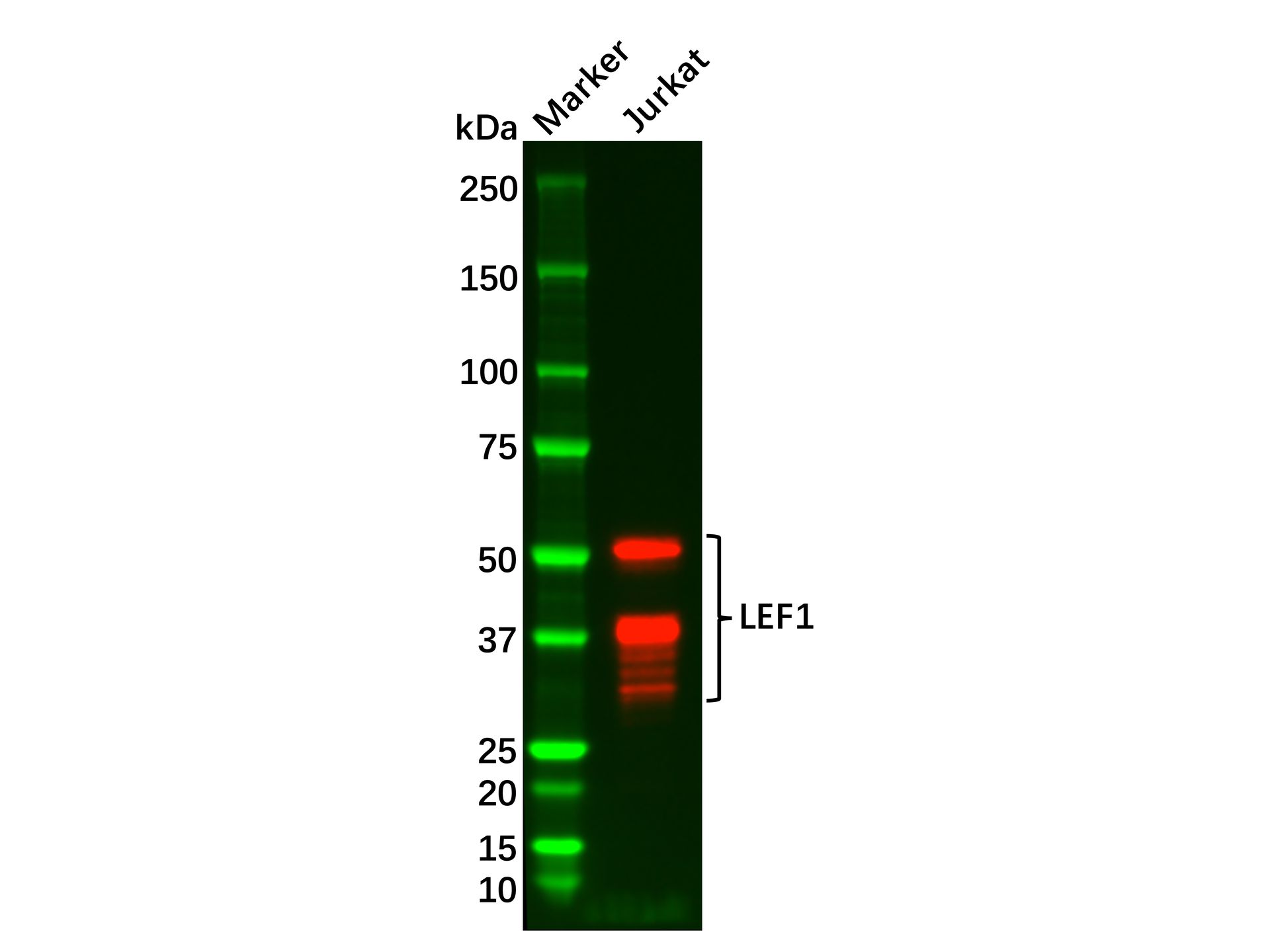
Recombinant LEF1 Antibody (Ab112963) - Western Blot All lanes: Recombinant LEF1 Antibody (Ab112963) at 1/1000 dilution Samples: Lysates at 20 µg per lane Secondary: Goat Anti-Rabbit IgG H&L (HRP) (Ab170144) at 1/20000 dilution
Predicted band size: 44 kDa Observed band size: 25-58 kDa Exposure time: 150.0 s
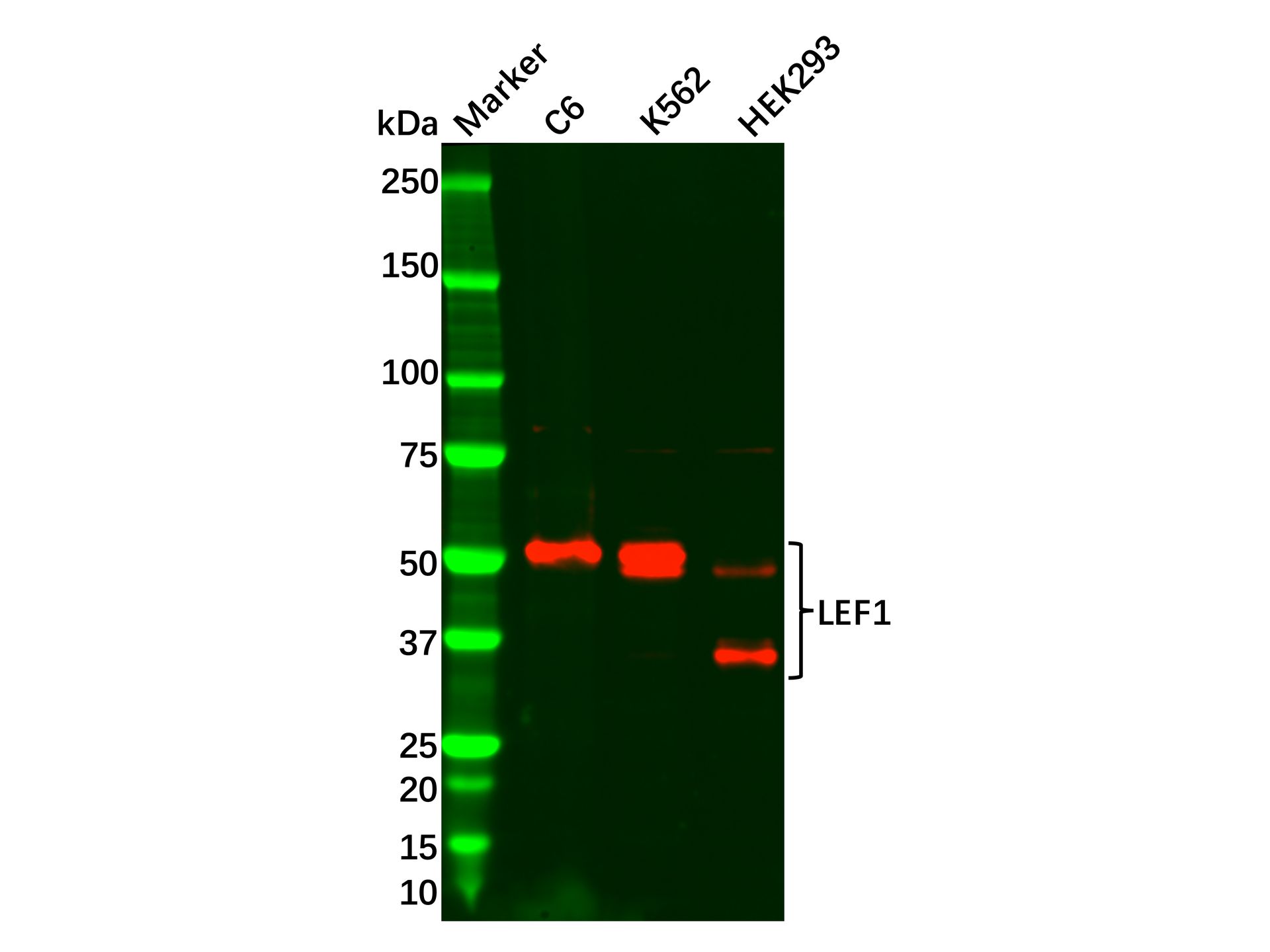
Recombinant LEF1 Antibody (Ab112963) - Western Blot All lanes: Recombinant LEF1 Antibody (Ab112963) at 1/1000 dilution Samples: Lysates at 20 µg per lane Secondary: Goat Anti-Rabbit IgG H&L (HRP) (Ab170144) at 1/10000 dilution
Predicted band size: 44 kDa Observed band size: 25-58 kDa Exposure time: 150.0 s
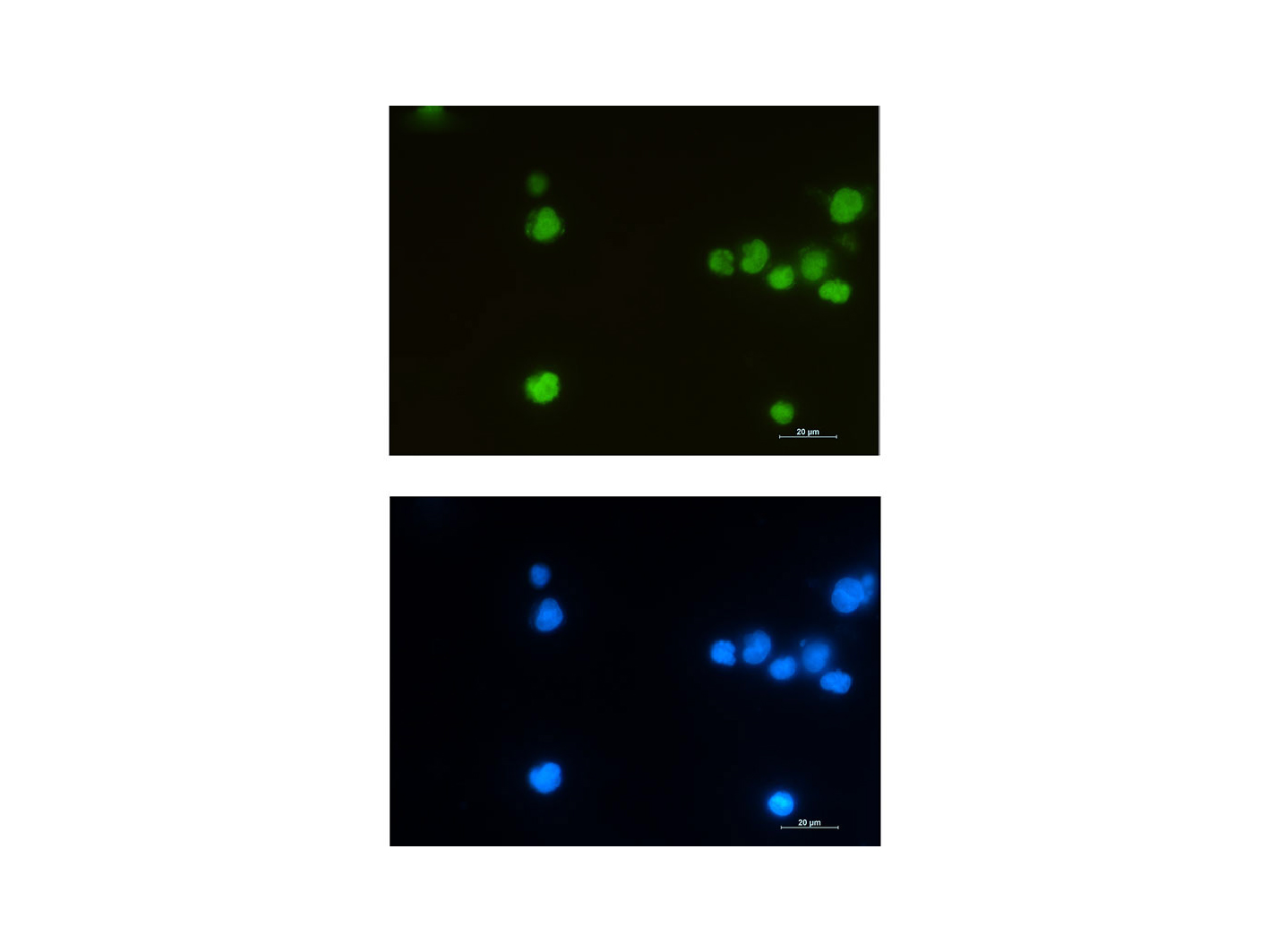
Recombinant LEF1 Antibody (Ab112963) - IF/ICC Immunocytochemistry analysis of LEF1 (green) in Jurkat cells using Recombinant LEF1 Antibody (Ab112963), and cells were counterstained with DAPI (blue).
Anwendung
Anwendung
Dilution info
WB
1/500-1/1000
IF/ICC
1/50-1/200
Documentation
📋 Safety Data Sheet (SDS)
Comprehensive hazard, handling, storage, and regulatory compliance document.
Determine the necessary mass, volume, or concentration for preparing a solution.
Dilution Calculator
Determine the dilution needed to prepare a stock solution.
Reconstitution Calculator
Bewertungen
Kundenbewertungen
Application Protocols
Only manufacturer-validated, item-specific protocols can be provided here. For SKU Ab112963, the catalog entry does not list the validated applications or recommended conditions.
Item-specific status:
Validated applications (e.g., WB, IHC, IF, IP, ELISA, ChIP): Not specified for this item; refer to CoA/Spec Sheet.
Recommended working dilutions, incubation times, and antigen retrieval conditions: Not specified for this item; refer to CoA/Spec Sheet.
Positive control samples (cell lines/tissues) and detection systems: Not specified for this item; refer to CoA/Spec Sheet.
General guidance (literature; not item-specific):
Start with a dilution series (e.g., 1:200–1:2,000 for WB or IHC/IF) and optimize blocking and incubation parameters.
Include positive and negative controls, and verify species cross-reactivity before use.
For authoritative usage instructions, consult the product’s CoA/Spec Sheet.
Biological Roles
Target: LEF1 (Lymphoid Enhancer-binding Factor 1), a transcription factor in the TCF/LEF family that integrates canonical Wnt/β-catenin signaling. This section provides biological context for research use; it does not imply clinical utility.
General biology of LEF1 (literature):
Function: LEF1 binds DNA at Wnt-responsive elements and, in concert with β-catenin and co-regulators, modulates transcription of target genes controlling cell fate, proliferation, and differentiation.
Domains: Contains an HMG-box DNA-binding domain that induces DNA bending, and a β-catenin–binding region that recruits co-activators to promoter/enhancer complexes.
Regulation: LEF1 activity is controlled by Wnt ligand availability, β-catenin stabilization, nuclear translocation, and interactions with TLE/Groucho co-repressors. Post-translational modifications (phosphorylation, acetylation) can fine-tune activity.
Expression (literature): Observed in developing tissues and various immune lineages; expression patterns are context dependent and species specific.
Research relevance: Widely used as a readout or node in studies of Wnt signaling, developmental biology, stem cell biology, and transcriptional networks. Antibody-based detection of LEF1 helps map pathway activation, assess lineage programs, and perform chromatin occupancy studies (e.g., ChIP) when validated for such applications.
Note: The epitope, species cross-reactivity, and validated assay formats for this specific Recombinant LEF1 Antibody are not specified for this item; refer to the CoA/Spec Sheet for authoritative performance details.
Buffer Applications
This product is an antibody and not a buffering agent; buffer capacity/pKa systems are not inherently provided by the antibody itself.
Practical buffer guidance for using antibodies (general, literature):
Working buffers: PBS or TBS at pH 7.2–8.0. Include 0.01–0.1% Tween-20 for wash steps to reduce nonspecific binding in immunoassays (WB, ELISA, IF).
Blocking buffers: 3–5% BSA, nonfat dry milk, or serum (species-appropriate) can reduce background. Choice depends on detection chemistry (e.g., avoid milk with biotin–streptavidin systems if high background occurs).
Antigen retrieval (IHC): Citrate (pH 6) or Tris-EDTA (pH 9) buffers are commonly used; selection is antigen- and tissue-dependent and must be empirically optimized for LEF1.
Storage buffers: Maintain neutral pH; stabilizers (glycerol, sugars) can improve freeze–thaw resilience. For this item, the supplied buffer and recommended diluents are not specified; refer to CoA/Spec Sheet.
Since this antibody’s validated protocols are not provided here, users should optimize buffer composition and blocking conditions based on the CoA recommendations and standard control experiments.
Green Alternatives
Environmental considerations for antibody reagents are centered on buffer systems, preservatives, and packaging rather than solvent replacement.
General best practices (literature):
Preservatives: If azide is present (not specified for this item), consider azide-free formats when compatible with your assay and storage scheme to reduce hazardous waste burden. Alternatively, use sterile technique and small aliquots to avoid the need for high preservative levels.
Concentrate and aliquot: Order concentrations and pack sizes that minimize waste and shipments. Aliquot to avoid freeze–thaw cycles that cause early disposal.
Cold-chain efficiency: Coordinate deliveries to reduce dry ice/ice pack waste. This item ships cold (ice chest + ice pads as provided). Batch orders to reduce transport emissions where feasible.
Buffer selection: Use standard, low-toxicity buffers (PBS/TBS) and avoid unnecessary detergents/solvents. Choose biodegradable surfactants where possible.
Plastics reduction: Employ reusable secondary containers and recycle outer packaging according to local programs.
Trade-offs:
Azide-free products may require stricter aseptic handling or glycerol addition to maintain stability at −20 °C. Glycerol increases carbon footprint but can significantly reduce product loss from freeze–thaw.
For this item: Specific preservative/buffer composition is not specified; consult the CoA/Spec Sheet to align your green handling choices with the supplied formulation.
Pharmaceutical Uses
Not applicable. This product is labeled “For research use only” and is not intended for use in humans or for manufacturing of drugs or diagnostics.
Context (general information for researchers):
Research antibodies may be used in preclinical discovery workflows (assay development, target validation) but are not qualified as GMP-grade or clinical-grade materials.
No pharmacopeial monograph, excipient role, or clinical formulation information is provided for this item.
For any translational or regulated application, obtain appropriate grade (e.g., GMP), full documentation, and perform comprehensive qualification. For this specific product, no pharmaceutical use information is supplied; refer to CoA/Spec Sheet for research-only specifications.
Physical Properties
Antibodies are aqueous protein formulations; conventional small-molecule physicochemical constants (bp, mp, logP) do not apply.
Item-specific properties:
Appearance: Not specified for this item; refer to CoA/Spec Sheet.
Molecular weight: Not specified for this item; refer to CoA/Spec Sheet. (Literature: typical IgG ~150 kDa; fragment formats vary.)
Concentration, buffer composition, preservatives (e.g., sodium azide, glycerol), and protein content: Not specified for this item; refer to CoA/Spec Sheet.
pH and osmolality: Not specified for this item; refer to CoA/Spec Sheet.
General literature guidance (typical for recombinant IgG antibodies; not item-specific):
Physical state: aqueous solution or lyophilized cake.
Solubility: soluble in physiological buffers (e.g., PBS, TBS). Insoluble in organic solvents.
Stability: enhanced by neutral pH (≈7–8), low ionic strength to moderate salt, cryoprotectants (e.g., 10–50% glycerol) for −20 °C storage; minimize freeze–thaw.
Extinction coefficient: sequence-dependent; often approximated via A280 using calculated E (literature; not item-specific). For accurate quantification, refer to the product’s CoA.
Note: Exact buffer, concentration, and any carrier proteins (e.g., BSA, trehalose) for this item are not specified; consult the CoA/Spec Sheet for definitive values.
Recombinant: Produced in a defined expression system rather than animal immunization. Benefits include lot-to-lot consistency, ethical sourcing, and sequence control. Recombinant production facilitates engineering (isotype selection, Fc mutations) and stringent purification. Specific expression host, isotype/subclass, and sequence are not specified for this item; refer to CoA/Spec Sheet.
ExactAb™: Denotes Aladdin Scientific’s high-precision recombinant antibody line emphasizing sequence-defined reagents and rigorous QC. The specific QC panel applied to this lot is not specified; refer to CoA.
Validated: Indicates performance verified in defined assay(s) under manufacturer conditions. The exact validated applications (e.g., WB, IHC, IF, IP, ELISA), species reactivity, and sample types are not specified for this item; refer to CoA/Spec Sheet.
Quality attributes typically assessed for recombinant antibodies (literature/good practice):
Purity by SDS-PAGE/CE-SDS; monomer content by SEC-HPLC.
Identity by intact mass/peptide mapping; binding by ELISA, BLI/SPR.
Host cell protein/DNA and endotoxin controls for research-grade materials.
Functional validation against target antigen.
Important: Do not extrapolate performance beyond the validated conditions on the CoA. If low background and high specificity are required, request the product’s validation images, dilution recommendations, and any cross-reactivity data specific to LEF1.
Reaction and Applications
This section focuses on chemical reaction utility, which is not applicable to an antibody reagent.
For practical use, please refer instead to:
Target Specificity: antigen/epitope and species reactivity (not specified for this item; see CoA/Spec Sheet).
Application Protocols: validated applications (e.g., WB, IHC, IF, IP, ELISA) and recommended dilutions (not specified for this item; see CoA/Spec Sheet).
General note (literature): Antibodies function in binding assays, enrichment (immunoprecipitation, ChIP), detection (immunoblot, IHC/IF), and quantification (ELISA). Exact suitability for LEF1 detection with this product must be confirmed against the manufacturer’s validation data.
Reaction Conditions
Not applicable to chemical reaction conditions. Antibodies function under assay conditions rather than synthetic reaction conditions.
Assay environment guidance (general, literature):
Temperature: Most immunoassays are performed at room temperature or 4 °C for overnight incubations to enhance specificity.
Incubation buffers: PBS/TBS with protein blockers and mild detergents to minimize nonspecific binding.
Time: Primary antibody incubations typically range from 1–2 h at RT to overnight at 4 °C; optimization is assay- and epitope-dependent.
For this specific item, validated incubation times, temperatures, and dilutions are not specified; consult the CoA/Spec Sheet.
Safety and Handling
This product is a research-grade recombinant antibody. While proteins are generally considered low hazard, always handle according to good laboratory practice.
GHS/SDS information (item-specific):
Signal word: Not specified for this item; refer to SDS.
Hazard statements (H-Statements): Not specified for this item; refer to SDS.
GHS classification and pictograms: Not specified for this item; refer to SDS.
General laboratory precautions (literature/best practice):
PPE: lab coat, gloves, and safety glasses. Avoid ingestion, inhalation of aerosols, and skin or eye contact.
Biosafety: Treat all biological reagents as potentially bioactive; avoid creating aerosols. Work in a clean area to prevent contamination.
Preservatives: If present (e.g., sodium azide), avoid contact with acids (can form hydrazoic acid) and do not dispose into copper/lead plumbing. This item’s preservative content is not specified; refer to the SDS/CoA.
Incompatibilities: Avoid strong oxidizers and proteases. Keep away from microbial contamination and extreme pH.
First aid (overview): Rinse skin/eyes with water if contacted; remove contaminated clothing. If inhaled, move to fresh air. If swallowed, rinse mouth. Seek medical attention if symptoms persist. Defer to SDS for authoritative instructions.
Spill and disposal:
Small spills: absorb with disposable towels, clean with appropriate disinfectant (e.g., 70% ethanol or dilute bleach), then water.
Waste: Dispose of proteinaceous/biological lab waste according to institutional and local regulations; consider azide-containing waste protocols if applicable.
Solvent Selection
Not typically applicable: Antibodies are handled in aqueous buffers, not organic solvents.
Practical guidance (general, literature):
Preferred media: phosphate-buffered saline (PBS) or Tris-buffered saline (TBS), pH ~7.2–8.0. Avoid extremes of pH and high concentrations of denaturants unless intentionally used for elution/regeneration.
Additives: Carrier proteins (e.g., BSA), sugars (trehalose/sucrose), and cryoprotectants (glycerol) can enhance stability; composition for this item is not specified—consult CoA/Spec Sheet.
Detergents: Low levels of mild nonionic detergents (e.g., 0.05% Tween-20) can reduce nonspecific binding in immunoassays.
Avoid: Organic solvents (MeOH, ACN, DMSO) and high salt/chaotropes for storage, as they may destabilize binding or structure unless required for specific procedures.
Comparison (general):
PBS vs TBS: PBS is broadly compatible; TBS may reduce phosphate-sensitive interactions or background in alkaline phosphatase–based detection. Choose based on downstream assay chemistry.
For this item: The supplied buffer and recommended diluents are not specified; refer to the CoA/Spec Sheet for authoritative guidance.
Storage and Reconstitution
Item-specific storage/shipping:
Storage conditions: Store at −20 °C. Avoid repeated freezing and thawing (as provided).
Shipping: Ice chest + ice pads (as provided).
Additional best practices (general, literature):
Aliquoting: Upon first receipt, centrifuge briefly to collect contents, then aliquot into low-protein-binding tubes to minimize freeze–thaw cycles. Use sterile technique to prevent contamination.
Reconstitution: The product form (liquid vs lyophilized) and buffer composition are not specified for this item; refer to CoA/Spec Sheet. If lyophilized, reconstitute with sterile water or the recommended buffer to the stated concentration, then equilibrate gently at RT and mix by slow inversion—avoid vigorous vortexing.
Storage buffers: For long-term storage at −20 °C, many antibodies are stabilized in 30–50% glycerol at neutral pH; for short-term (≤1–2 weeks), 2–8 °C may be acceptable. Confirm with item-specific guidance.
Freeze–thaw: Avoid repeated cycles; thaw on ice, keep protected from light if fluorescently labeled (labeling status not specified here).
Stability/expiration: Lot-specific shelf life and stability after reconstitution are not specified; refer to CoA/Spec Sheet.
Disposal: Follow institutional guidelines for biological materials. If preservatives such as sodium azide are present (not specified for this item), dispose according to local hazardous waste regulations.
Structure and Identity
Recombinant LEF1 Antibody is a protein-based affinity reagent targeting the LEF1 transcription factor. As an antibody, it is a macromolecule composed of polypeptide chains and post-translational modifications rather than a defined small-molecule structure.
Item-specific identifiers:
SKU: Ab112963
Product name: Recombinant LEF1 Antibody
Grade/Purity: Recombinant, ExactAb™, Validated
Category: Antibody (research use only)
Small-molecule-style identifiers (not applicable to antibodies):
Molecular formula: Not specified for this item; refer to CoA/Spec Sheet.
Molecular weight: Not specified for this item; refer to CoA/Spec Sheet. (Note: typical IgG antibodies are ~150 kDa, literature.)
SMILES: Not applicable to proteins.
InChIKey: Not applicable to proteins.
Structural features (general, literature):
Typical recombinant antibodies are IgG formats with two heavy and two light chains forming a Y-shaped heterotetramer with antigen-binding domains (Fabs) and an Fc region. Actual isotype/subclass, clonality, and species of this ExactAb™ are not specified for this item; refer to CoA/Spec Sheet.
Binding specificity is conferred by complementarity-determining regions (CDRs) within the variable domains; epitope for LEF1 is not specified for this item; refer to CoA/Spec Sheet.
2D/Domain description (general):
Variable regions at the tips of the Y mediate LEF1 binding; constant regions (Fc) mediate effector functions and purification via Protein A/G (format-dependent). Exact domain architecture and tags (e.g., His, Fc engineering) are not specified; refer to CoA/Spec Sheet.
Synthetic Utility
Not applicable. Antibodies are biological affinity reagents and are not used as synthetic building blocks or reagents in chemical synthesis.
For research utility, see instead:
Biological Roles: overview of LEF1 pathway relevance.
Application Protocols: assay-specific usage (not specified for this item; refer to CoA/Spec Sheet).
Target Specificity
Only item-specific information may be listed here.
Epitope, immunogen, and binding region: Not specified for this item; refer to CoA/Spec Sheet.
Species reactivity (human/mouse/rat/others): Not specified for this item; refer to CoA/Spec Sheet.
Clonality, isotype/subclass, and host species (for recombinant format): Not specified for this item; refer to CoA/Spec Sheet.
Cross-reactivity and competition data: Not specified for this item; refer to CoA/Spec Sheet.
Please consult the CoA/Spec Sheet for definitive specificity data, validation evidence, and sequence/clone identifiers associated with this ExactAb™ reagent.
Häufig gestellte Fragen
What does ExactAb? mean?
ExactAb? indicates the product has been validated for use in rigorous antibody validation workflows. Validation may include positive/negative control samples, signal-to-noise testing, and protocol-specific QC. Lot-specific test data is published on the Certificate of Analysis where available.
What does Recombinant mean?
Recombinant is a defined analytical purity tier suitable for workflows requiring a specific validated property. It specifies a minimum assay percentage, controlled limits on common impurities (water, heavy metals, residue on ignition), and lot-to-lot consistency. Recombinant is one of several purity tiers — choose based on the sensitivity and regulatory requirements of your method.
How should this product be stored?
Store at ?20 °C. Avoid repeated freeze–thaw cycles. Aliquot into single-use volumes before freezing.
How is this product shipped?
This product ships in an insulated container with ice pads. Unpack on arrival and transfer it to the storage condition stated above.
What documentation is provided?
Available product documentation, including Certificates of Analysis (COA), Safety Data Sheets (SDS), and specification sheets, is shown in the product document area. Document availability and access follow the current site policy.
Which species reactivity has this antibody been validated against?
Validated reactivity is listed on the PDP and on each lot's datasheet. We validate against the most commonly tested species for the target (Recombinant LEF1 Antibody); cross-reactivity in untested species may exist but is not guaranteed. Contact technical support for specific species inquiries.
Need help choosing the grade?
Our grade selection guide covers purity, stabilizer status, and application suitability for all variants in our catalog.
Wir verwenden Cookies, um die ordnungsgemäße Funktion der Website sicherzustellen und, soweit zulässig, Ihr Nutzererlebnis zu verbessern. Sie können Ihre Einstellungen jederzeit unter „Einstellungen“ verwalten. Weitere Informationen finden Sie in unserer Cookie-Richtlinie.
Dürfen wir Sie über Rabattaktionen informieren?
Später erinnern
Vielen Dank! Bitte überprüfen Sie Ihren E-Mail-Posteingang, um zu bestätigen.
Products are supplied to verified businesses, institutions, and qualified professionals for research and development use only. Not for use in humans, animals, diagnosis, or therapy.


 ZJ24F1011847