Determine the necessary mass, volume, or concentration for preparing a solution.
Dilution Calculator
Determine the dilution needed to prepare a stock solution.
Reconstitution Calculator
Bewertungen
Kundenbewertungen
Application Protocols
Tested application data, recommended dilutions, or validated protocols are not specified for this item; refer to the CoA/Spec Sheet.
General note: Because this is an isotopically labeled aqueous solution, end-users typically apply it by spiking into media or assay buffers to a defined molarity and tracing 13C incorporation via NMR or MS. Establish concentration and sterility requirements according to your laboratory’s SOPs before use.
Biological Roles
Lactate is a central metabolite in carbohydrate metabolism, and the 1-13C label enables precise tracking of the carboxyl carbon through biochemical networks (research use only).
Core pathways (literature):
Glycolysis/fermentation: Pyruvate is reduced to L-lactate by LDH while oxidizing NADH to NAD+; interconversion maintains redox balance.
Cori cycle: Lactate shuttling between tissues and its reconversion to glucose (gluconeogenesis) can be probed using 13C tracing.
Monocarboxylate transport: MCTs mediate cellular uptake/efflux of lactate with proton symport; isotope-labeled substrates help quantify flux.
TCA linkages: Oxidation of lactate to pyruvate allows entry into the TCA cycle via acetyl-CoA or anaplerotic carboxylation; 1-13C label reports on decarboxylation steps and CO2 evolution.
Spectroscopic utility:
NMR: The 13C label at C1 provides a distinct resonance, enabling pool-size measurements and exchange rates; coupling patterns to 1H at C2 may be resolved with appropriate pulse sequences.
MS: Mass +1 isotopologue facilitates isotopomer distributions in targeted metabolomics.
Experimental considerations (general):
Buffering: Lactate/lactic acid has pKa ~3.86; at physiological pH, lactate exists as the anion; pH and ionic strength modulate transporter activity and enzyme kinetics.
Carbonate exchange: Carboxyl 13C may equilibrate with dissolved inorganic carbon under certain enzyme-catalyzed conditions; minimize unintended exchange by controlling pH, CO2, and enzyme background.
Note: No clinical or diagnostic claims are made; use is restricted to research.
Buffer Applications
Sodium lactate forms a conjugate base/acid pair with lactic acid suitable for low-pH buffering; however, this product is primarily used as an isotopic tracer rather than a buffer component.
Applicability:
Effective buffering range: Approximately pH 2.9–4.9 (pKa of lactic acid ≈ 3.86, literature). Above pH ~6, buffering capacity is minimal.
For biological assays near neutrality, lactate contributes ionic strength rather than buffering; pair with phosphate, HEPES, or MOPS for pH control.
Practical use (general guidance):
To prepare a lactic acid/lactate buffer, titrate lactic acid with NaOH to desired pH or mix defined ratios of lactic acid and sodium lactate; for isotopic work, account for isotopic dilution if mixing labeled and unlabeled components.
Ionic background: Sodium content influences osmolarity; adjust when preparing media or perfusates.
This item:
Concentration and acid/base composition are not specified; do not assume buffering capacity without CoA confirmation. If used as a buffer component, verify pH after mixing and before use.
Conclusion: While lactate buffers are well defined in the acidic range, for this 13C-labeled solution the primary value lies in tracing rather than buffering.
Green Alternatives
Sodium L-lactate-1-13C is inherently aligned with greener chemistry in many contexts due to its aqueous medium and non-radioactive label.
Advantages (general):
Non-radioactive: 13C labeling avoids radiological hazards associated with 14C tracers, simplifying waste handling and EHS compliance.
Aqueous use: Minimizes reliance on volatile organic solvents; compatible with water-based assays and separations.
Biogenic origin: Lactate can be sourced from bio-based feedstocks; isotopic enrichment still requires specialized processes.
Potential alternatives, depending on goal:
[U-13C3]-L-lactate: Higher information density for fluxomics but costlier; more complex isotopomer analysis.
13C-bicarbonate or 13C-pyruvate: Alternative probes for carboxylation/decarboxylation and glycolysis–TCA junction studies; selection depends on pathway of interest.
Unlabeled sodium L-lactate: For non-isotopic controls and method development without isotope cost.
Comparison (general, literature-based):
13C vs 14C lactate:
Safety: 13C is stable and non-radioactive; 14C requires radiological controls.
Detection: 13C relies on NMR/MS; 14C on radiometric counting with higher sensitivity but hazardous waste.
Aqueous sodium lactate vs organic esters (e.g., methyl lactate):
Medium: Water vs organic; sodium salt avoids VOCs and is better for biological systems.
Reactivity: Esters useful for organic synthesis; sodium salt better for biochemical studies.
Practical tip: Choose the minimal isotope labeling that answers your mechanistic question to reduce resource use and cost.
Pharmaceutical Uses
No therapeutic or clinical claims are made for this product; it is for research use only.
General formulation context (literature):
Sodium lactate (unlabeled) is recognized as a buffering and osmolarity-adjusting excipient in some pharmacopeias and is used in manufacturing environments for pH control in the acidic range. The isotopically labeled variant is typically not used in commercial drug products but may be employed in process development studies and analytical methods.
In bioprocessing research, lactate levels are monitored as a critical process parameter; 13C-labeled lactate can aid in pathway elucidation and metabolism modeling.
This item:
Excipient grade, sterility, endotoxin limits, and compliance (USP/EP/JP) are not specified for this item; refer to CoA/Spec Sheet if your intended use demands such attributes.
Not intended for human or veterinary administration.
Practical note: If using in formulation research or process analytics, ensure segregation of isotopically labeled materials from GMP areas to prevent cross-contamination with production streams.
Physical Properties
Supplied as an aqueous solution; bulk properties (density, refractive index, freezing point) depend on concentration, which is not specified for this item.
Item-specific (Product Data):
Physical state/appearance: Not specified for this item; refer to CoA/Spec Sheet.
Concentration: Not specified for this item; refer to CoA/Spec Sheet.
Literature/general values for the solute (sodium L-lactate; unlabeled and 1-13C-labeled behave similarly):
pKa of conjugate acid (L-lactic acid, 25 °C): 3.86 (literature)
Solubility: Highly soluble in water; miscible at all practical concentrations (literature)
Hygroscopicity: Sodium lactate solids are deliquescent; solutions can absorb atmospheric CO2 minimally impact pH near neutrality (literature)
LogP: Not applicable (ionic species; remains in aqueous phase)
Optical activity: L-series corresponds to (S) at C2; optical rotation pertains to lactic acid/lactate and depends on medium and concentration (literature)
Practical implications (general):
As an aqueous salt solution, volatility is negligible; boiling behavior follows water with colligative elevation depending on concentration.
Refractive index and density are useful for concentration checks but require calibration curves specific to sodium lactate; because this item’s concentration is not specified, consult the CoA for exact ranges before relying on physico-chemical checks.
Where exact numeric specifications are required for QC (e.g., density at 20 °C), use the item’s CoA/Spec Sheet.
Quality and Grades
Item-specific (Product Data):
Grade/Purity: Not specified for this item; refer to CoA/Spec Sheet.
Appearance: Not specified for this item; refer to CoA/Spec Sheet.
Shipped In: Not specified for this item; refer to CoA/Spec Sheet.
Interpreting potential grades (general guidance):
Isotopic labeling quality: For 13C reagents, two key metrics are chemical purity and isotopic enrichment (% 13C at the labeled carbon). If not stated on the product page, the CoA typically lists enrichment (e.g., ≥98 atom % 13C at C1) and residual isotope distribution.
Trace impurities: Water-borne ions, residual solvents, or microbial bioburden can impact sensitive applications (e.g., NMR baselines, metabolic flux quantification). HPLC or GC analyses may be included in the CoA.
Sterility/endotoxin: Only relevant if offered as “cell culture grade” or similar; not specified for this item.
Practical implications:
For quantitative NMR or MS tracer studies, request or review isotopic enrichment and chemical purity on the CoA.
For cell metabolism experiments, verify bioburden and endotoxin where applicable; filter-sterilize if required by your protocol.
UV background and optical clarity matter for spectrophotometric enzyme assays; ensure low turbidity and absence of chromophoric impurities.
Conclusion: Use the CoA/Spec Sheet for definitive purity, isotopic enrichment, and appearance for SKU S466610.
Reaction and Applications
This 1-13C-labeled L-lactate is a versatile stable-isotope tracer for metabolism and spectroscopy.
Stable isotope tracing (literature):
13C NMR: The enriched carboxyl carbon gives a strong 13C resonance, enabling direct observation of lactate pools and exchange with pyruvate, alanine, and TCA intermediates.
LC–MS/GC–MS: Monoisotopic +1 mass shift enables precise quantification in targeted metabolomics and flux analysis; use isotope-dilution strategies for accurate quantitation.
Enzyme kinetics and pathways:
LDH assays: Monitor conversion between lactate and pyruvate; 13C label facilitates tracking carboxyl carbon fate and exchange with bicarbonate/CO2 under certain conditions.
Transport studies: Evaluate monocarboxylate transporters (MCTs) using labeled lactate in uptake/efflux experiments (research use only).
Sample preparation tips (general):
Use CO2-impermeable caps for long incubations to minimize isotopic dilution of the carboxyl pool via carbonate exchange.
For NMR, adjust to desired pH/pD; add standard (e.g., DSS for 1H, TSP-d4) and consider proton decoupling for 13C spectra.
For MS, quench metabolism rapidly (cold MeOH/H2O extraction), include internal standards, and control for natural abundance corrections.
Synthetic/derivatization use:
Convert to lactic acid by acidification for esterification or chiral auxiliary studies while preserving the 13C label at C1.
Note: Concentration of this item is not specified; calibrate working solutions by weight or titration where exact molarity is required.
Reaction Conditions
Typical conditions below are general literature guidance for transforming or analyzing lactate; they are not item-specific specifications.
Acidification to lactic acid (general):
Medium: Aqueous, 0–1 M strong acid (e.g., HCl) at 0–25 °C.
Workup: Ion exchange (H+ form) or liquid–liquid extraction after in situ esterification (e.g., MeOH/HCl) to obtain methyl lactate, preserving the 1-13C label at the carbonyl carbon.
Esterification (Fischer, literature):
Reagents: Alcohol (ROH), catalytic strong acid (H2SO4 or HCl), reflux 1–6 h depending on solvent and concentration.
Notes: Employ azeotropic removal of water or use acid chloride activation if water-sensitive; monitor for racemization—keep temperature moderate.
Derivatization for GC–MS (literature):
Silylation: BSTFA or MSTFA in anhydrous acetonitrile or pyridine, 60–70 °C, 15–60 min; yields TMS derivatives suitable for EI/CI with clear M+1 due to 13C.
Enzymatic LDH assay (overview):
Buffer: Near-neutral phosphate or Tris; monitor NADH at 340 nm or track 13C label by NMR/MS for flux.
Temperature: 20–37 °C typical; kinetics depend on isoform and substrate concentration.
NMR acquisition (13C, literature):
Solvent: D2O; decouple 1H for sensitivity; 13C pulse sequences (e.g., DEPTQ, HSQC for indirect detection if 1H observed at C2).
Quantitation: Use inverse-gated decoupling to avoid NOE for accurate integrals; include an internal 13C standard.
Always validate conditions in small-scale trials and confirm 13C retention by spectroscopy.
Safety and Handling
Sodium lactate solutions are generally considered low hazard for laboratory handling, but risk assessments must follow the item’s SDS.
Item-specific (Product Data):
GHS classification, pictograms, signal word, H-statements: Not specified for this item; refer to SDS.
Storage: Room temperature (as provided). Protect container from damage and contamination.
General safety guidance (literature/best practice):
PPE: Wear lab coat, safety glasses, and appropriate gloves. For large volumes or splash risk, use a face shield.
Incompatibilities: Strong oxidizing agents may react with organic salts; strong acids will protonate lactate to lactic acid and can evolve heat upon neutralization. Avoid contact with reactive acylating agents or dehydrating agents.
Handling: Use clean, dedicated tools to avoid microbial contamination of the aqueous solution, especially for cell-based research. Work under aseptic conditions if sterility is required.
First aid (overview; defer to SDS):
Skin/eye contact: Rinse with water for several minutes; remove contact lenses if present and easy to do; seek medical advice if irritation persists.
Ingestion/inhalation: Rinse mouth; move to fresh air; obtain medical attention if unwell.
Spills: Wipe up with absorbent material; wash area with water. For large spills, collect for disposal per institutional guidelines.
Environmental: Low ecological hazard expected for small laboratory quantities; prevent large releases to drains.
Special notes for 13C-labeled materials:
Non-radioactive; handle as stable isotopic reagent. Label all containers clearly to prevent mix-up with unlabeled stocks.
Always consult the product’s SDS and institutional EHS procedures for authoritative instructions.
Solvent Selection
As supplied, this product is an aqueous sodium lactate solution; water is the default and preferred matrix.
Polarity/miscibility (general properties):
Sodium lactate is ionic and highly hydrophilic; it is fully miscible with water. Insoluble in most nonpolar organic solvents; limited solubility in lower alcohols depends on water content.
For NMR, D2O is preferred to suppress proton signals; 13C NMR in D2O provides clear detection of the 13C-carboxyl carbon.
Typical use scenarios:
Aqueous biochemical assays (e.g., LDH-coupled assays) and cell culture supplementation (research use) where lactate concentration/pH control are critical.
Metabolic flux analysis with LC–MS/GC–MS or NMR in buffered aqueous media.
Buffer compatibility (general):
Compatible with common biological buffers (phosphate, HEPES, Tris) at neutral pH. Avoid strong acids if lactate/CO2 off-gassing or heat from neutralization is undesirable.
Ionic strength and cation exchange: Presence of Na+ may impact ion-exchange chromatography and specific transport studies; adjust ionic background accordingly.
When to choose alternatives:
If organic-phase incorporation is necessary, use lactic acid (free acid) in miscible cosolvents or derivatize (e.g., to esters) for nonaqueous systems.
For reduced sodium load, consider ammonium or potassium lactate salts (where compatible with your system).
Small comparison (general):
Water vs D2O: D2O enables NMR studies; water is standard for bioassays. D2O may shift pH to pD (pD ≈ pH meter reading + 0.4).
Storage and Reconstitution
Item-specific (Product Data):
Storage Conditions: Room temperature.
Shipped In: Not specified for this item; refer to CoA/Spec Sheet.
Reconstitution: Not applicable; supplied as a solution.
General best practices (for aqueous sodium lactate solutions):
Keep container tightly closed to prevent evaporation and contamination; use clean, preferably sterile techniques if employing in cell-based assays.
If long-term storage is anticipated, aliquoting minimizes repeated opening; refrigeration (2–8 °C) can reduce microbial growth, but follow the item’s CoA/SDS and ensure no precipitation forms at lower temperatures.
Avoid strong acid/base vapors that could alter pH or concentration.
Label aliquots with preparation date and concentration (verify by weight, titration, or refractive index if needed).
For NMR studies, prepare working stocks in D2O immediately prior to acquisition to limit exchange and pH drift.
Disposal: Follow institutional guidelines for aqueous organic salts; 13C-labeled material is non-radioactive and may be collected with nonhazardous aqueous waste unless local regulations specify otherwise.
Structure and Identity
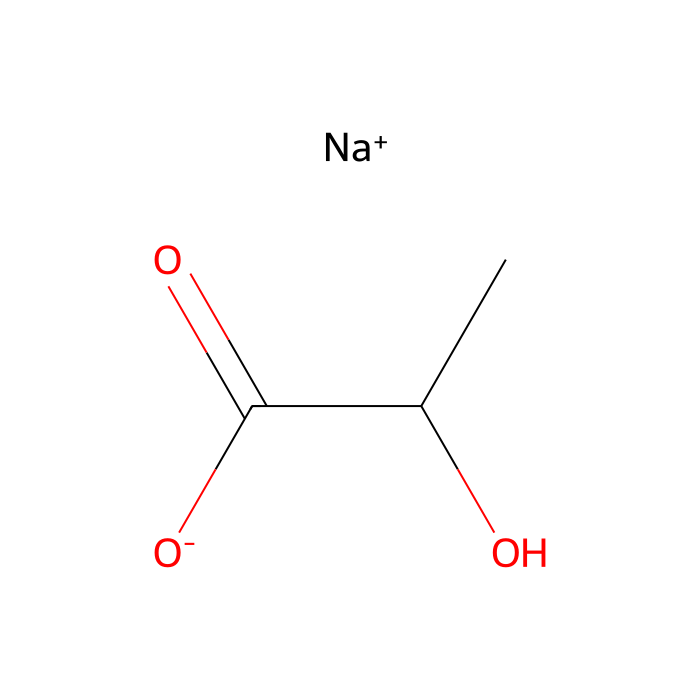
Isotopically labeled monocarboxylate salt supplied as an aqueous solution; L-configuration at the α-carbon and 13C label at the carboxyl carbon (C1).
Item-specific (Product Data):
SKU: S466610
Product Name: Sodium L-lactate-1-¹³C solution
CAS: 81273-81-6
InChIKey: 238100 (as provided)
Storage Conditions: Room temperature
Research Use: For research use only
Literature/Computed (for identification context; not item specifications):
Synonym: Sodium (S)-2-hydroxypropanoate-1-13C; Na L-lactate-1-13C
Molecular formula (isotopic composition): 13C1 12C2 H5 O3 Na
Nominal molar mass: ~113.06 g/mol (13C adds ~1.00 u relative to unlabeled sodium L-lactate, literature/computed)
2D structural description: A three-carbon α-hydroxycarboxylate. C1 = 13C-labeled carboxylate carbon bound to two oxygens (one doubly bonded O and one deprotonated O− coordinated to Na+); C2 = chiral center bearing a hydroxyl group (S configuration; L series); C3 = methyl substituent. Counterion: Na+.
Key functional groups/features: α-hydroxy carboxylate (lactate), sodium carboxylate salt, single stereocenter (S/L). Isotopic label at the carboxyl carbon.
InChI (literature, schematic): InChI=1S/C3H6O3.Na/c1-2(4)3(5)6;/h2,4H,1H3,(H,5,6);/q; +1/p-1/t2-;/m0/s1 (with 13C at C1)
Notes: Exact concentration, stabilizers, and additional identifiers for this specific item are not specified; refer to CoA/Spec Sheet.
Synthetic Utility
Although supplied as an aqueous salt for biochemical applications, L-lactate remains a chiral pool synthon, and the 1-13C label provides positional isotopic information in mechanistic studies.
Functional group reactivity (general):
Carboxylate can be converted to the free acid by acidification, enabling esterification (Fischer, Steglich) or amide formation (via activation), thereby transferring the 13C label into downstream carboxyl-derived products.
The α-hydroxyl group allows derivatization (e.g., silylation for GC, acylation for protecting strategies) while retaining stereochemistry at C2.
Applications:
Mechanistic probes: Track decarboxylation, acyl transfer, and exchange processes using 13C NMR or MS, distinguishing carboxyl carbon fates from the α- and methyl carbons.
Chiral induction: The (S)-center can be leveraged in auxiliary-type transformations after suitable derivatization (e.g., formation of lactate esters) with the 13C tag aiding structural assignment.
Practical considerations:
Convert to lactic acid with a volatile acid (e.g., HCl then remove as HCl gas or by ion exchange) when water-sensitive steps are planned; isolate and dry the acid or an ester to carry 13C into nonaqueous routes.
Maintain isotopic integrity by minimizing exchange at the carboxyl position (avoid prolonged exposure to high-temperature strongly acidic/basic aqueous media that could promote isotopic scrambling via carbonate pools).
Note: For quantitative isotope balance in synthetic sequences, confirm labeling by 13C NMR or HRMS after each key step.
Target Specificity
Not applicable. This product is a small-molecule isotopically labeled metabolite, not an antibody or affinity reagent. No target, clone, epitope, or species reactivity information is provided or relevant for this item.
Häufig gestellte Fragen
What is the purity of this product?
This product is isotopically enriched to ≥99 atom% carbon-13. Isotopic enrichment is a separate specification from chemical purity — a labelled compound has both. This product is supplied at ≥98% purity (chemical assay). Lot-specific values are stated on the Certificate of Analysis.
How should this product be stored?
Store at room temperature.
What are the CAS number, molecular formula and molecular weight?
The CAS Number is 81273-81-6, the molecular formula is (13C)C2H5O3?Na, and the molecular weight is 113.05 g/mol. InChIKey NGSFWBMYFKHRBD-FWGDTYFGSA-M.
What documentation is provided?
Available product documentation, including Certificates of Analysis (COA), Safety Data Sheets (SDS), and specification sheets, is shown in the product document area. Document availability and access follow the current site policy.
Wir verwenden Cookies, um die ordnungsgemäße Funktion der Website sicherzustellen und, soweit zulässig, Ihr Nutzererlebnis zu verbessern. Sie können Ihre Einstellungen jederzeit unter „Einstellungen“ verwalten. Weitere Informationen finden Sie in unserer Cookie-Richtlinie.
Dürfen wir Sie über Rabattaktionen informieren?
Später erinnern
Vielen Dank! Bitte überprüfen Sie Ihren E-Mail-Posteingang, um zu bestätigen.
Products are supplied to verified businesses, institutions, and qualified professionals for research and development use only. Not for use in humans, animals, diagnosis, or therapy.