QUALITÄT & REINHEITMoligand™?Moligand™ — Aladdin's line of ligands and bioactive small molecules. Use for receptor, pathway, and binding studies needing defined small-molecule tools.≥98%(HPLC)
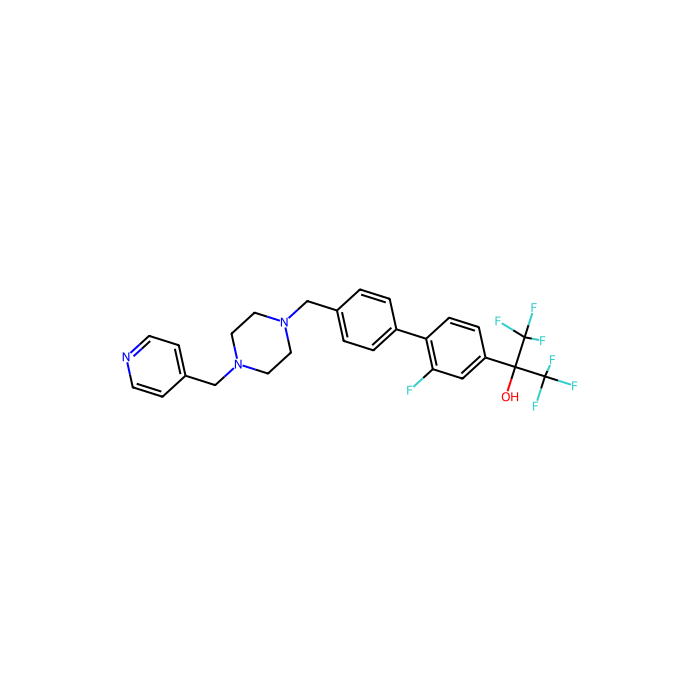
SR2211 (ML310) is a potent and selective inverse agonist of retinoic acid receptor-related orphan receptor gamma (RORγ). RORγ is essential for interleukin 17 expression and differentiation of TH17 cells, important in autoimmune diseases including multiple
Storage
Store at -20°C
Verschickt in
Ice chest + Ice pads
Dieses Produkt erfordert Kühlkettenversand. Grundversand und andere Economy-Optionen sind nicht verfügbar.
This compound belongs to the class of organic compounds known as biphenyls and derivatives. These are organic compounds containing to benzene rings linked together by a C-C bond.
External Descriptors
Not available
1. Djoumbou Feunang Y, Eisner R, Knox C, Chepelev L, Hastings J, Owen G, Fahy E, Steinbeck C, Subramanian S, Bolton E, Greiner R, and Wishart DS. ClassyFire: Automated Chemical Classification With A Comprehensive, Computable Taxonomy. Journal of Cheminformatics, 2016, 8:61.
Zertifikate (CoA, COO, BSE/TSE und Analyse-Diagramm)
C of A & Other Certificates(BSE/TSE, COO):
Analytical Chart:
Chemische und physikalische Eigenschaften
Löslichkeit
Solvent:DMSO, Max Conc. mg/mL: 52.75, Max Conc. mM: 100; Solvent:1eq. HCl, Max Conc. mg/mL: 26.37, Max Conc. mM: 50
Molekulargewicht
527.500 g/mol
XLogP3
4.900
Hydrogen Bond Donor Count
1
Hydrogen Bond Acceptor Count
11
Rotatable Bond Count
6
Exact Mass
527.181 Da
Monoisotopic Mass
527.181 Da
Topological Polar Surface Area
39.600 Ų
Heavy Atom Count
37
Formal Charge
0
Complexity
698.000
Isotope Atom Count
0
Defined Atom Stereocenter Count
0
Undefined Atom Stereocenter Count
0
Defined Bond Stereocenter Count
0
Undefined Bond Stereocenter Count
0
The total count of all stereochemical bonds
0
Covalently-Bonded Unit Count
1
Lösungsrechner
Molarity Calculator
Determine the necessary mass, volume, or concentration for preparing a solution.
Dilution Calculator
Determine the dilution needed to prepare a stock solution.
Reconstitution Calculator
Bewertungen
Kundenbewertungen
Application Protocols
No item-specific tested applications or protocols are provided in the product data.
General protocol framework for small-molecule ligands (informational):
Stock solution: Prepare a 10–50 mM DMSO stock. Store as single-use aliquots at −20°C, protected from light and moisture.
Dose–response: Prepare serial dilutions (1:3 or 1:2) in DMSO, then dilute into assay buffer to the desired top concentration, maintaining constant final DMSO across wells.
Controls: Include vehicle-only, positive control (if available), and counter-assay to detect assay interference (e.g., luciferase quenchers in reporter assays).
Data quality: Use replicate wells (n ≥ 3) and incorporate plate layout to minimize edge effects; include Z′ factor monitoring for HTS formats.
For validated, target-specific protocols, please refer to your institution’s SOPs, peer-reviewed literature aligned to the exact compound identity, or request additional documentation if available.
Biological Roles
SR 2211 is provided as a research-use small molecule within a screening/probe context. Item-specific target annotations are not listed in the product data. The following guidance outlines typical roles of small-molecule ligands in chemical biology.
General roles of small-molecule research ligands (informational):
Target engagement: Ligands are used to modulate protein function (e.g., receptors, enzymes, transcription factors) to interrogate pathway biology. Readouts include reporter assays, binding displacement, thermal shift, or CETSA.
Phenotypic modulation: Applied to cells or primary systems to elicit measurable phenotypes, enabling MOA hypotheses and pathway mapping.
Reference controls: Benchmark compound performance within a series or across orthogonal assays (e.g., binding vs function vs target engagement).
Chemical probe criteria: Reasonable potency and selectivity, cell activity at feasible concentrations, and sufficient stability/solubility for the intended assay window.
Assay implementation tips (practice):
Establish vehicle controls matching the highest DMSO percentage used.
Generate concentration–response curves spanning at least 8–10 points over 3–4 log units.
Validate activity in at least two orthogonal assay formats (e.g., reporter plus biochemical binding or target engagement) to reduce artifact risk.
Important: Consult the CoA or your internal reference database for the precise biological target and activity profile of SR 2211 to design appropriate assays and controls.
Buffer Applications
Not typically applicable. SR 2211 is a small-molecule research ligand and does not function as a buffering agent.
Practical note for assay buffers (general):
When diluting DMSO stocks into aqueous buffers, maintain consistent final DMSO across conditions and include vehicle controls.
If precipitation occurs, consider including 0.1–0.5% carrier protein (e.g., BSA) or using staged dilution (DMSO → medium → buffer) with gentle mixing.
Filter sterilize only if the compound is known to be stable and non-adsorbing to membranes; otherwise, prepare stocks aseptically and use single-use aliquots.
Green Alternatives
For small-molecule ligands, the main environmental lever is solvent choice during handling, formulation, and assay preparation rather than the active itself. In the absence of item-specific solubility data, consider greener or lower-impact solvent practices where feasible.
Comparison of common stock/dilution solvents (general guidance):
DMSO
Pros: exceptional solvency; low vapor pressure; widely accepted in bioassays.
Considerations: not biorenewable; can transport solutes through gloves—select appropriate PPE.
Use the minimum effective DMSO percentage and validate a vehicle control curve.
Prepare concentrated stocks to reduce solvent volumes in assays.
Employ amber vials and septa caps to minimize waste from repeated aliquoting; use small single-use aliquots to extend shelf life and reduce spoilage.
Note: No alternative “greener” active is specified for SR 2211; selection of alternatives depends on the biological target and assay requirements.
Pharmaceutical Uses
For research use only. No clinical or therapeutic claims are made for this product.
How materials like SR 2211 are used in pharmaceutical R&D (informational):
Reference standard/benchmark: Employed as a comparator in screening cascades, hit validation, or mechanistic assays for a given target class.
Tool compound: Supports exploration of target biology, pathway mapping, and biomarker discovery in preclinical systems.
Lead discovery enablement: Aids in defining structure–activity relationships (SAR) and in calibrating assay windows and off-target counterscreens.
Formulation prototyping for in vitro/in vivo research: If in vivo research is undertaken by qualified laboratories, compounds are typically formulated as DMSO or co-solvent concentrates and diluted in biocompatible vehicles; exact conditions should be derived from internal data and literature and are outside the scope of this listing.
Regulatory status:
No pharmacopeial monograph or GMP status is indicated for this item. It is supplied strictly as a research-grade chemical for laboratory investigations.
Physical Properties
Item-specific physicochemical properties are not provided in the product data for SKU S288529.
Appearance: Not specified for this item; refer to CoA/Spec Sheet.
Melting point: Not specified for this item; refer to CoA/Spec Sheet.
Boiling point: Not applicable/unknown for solids; Not specified for this item; refer to CoA/Spec Sheet.
Density: Not specified for this item; refer to CoA/Spec Sheet.
Solubility: Not specified for this item; refer to CoA/Spec Sheet. (General practice: prepare DMSO stock solutions for small-molecule ligands.)
LogP, pKa, refractive index: Not specified for this item; refer to CoA/Spec Sheet.
General guidance (literature/practice, not item-specific):
Many nuclear-receptor ligands are moderately hydrophobic and are routinely handled as 10–50 mM DMSO stocks. If aqueous use is required, stocks are typically diluted into assay buffers containing carrier protein (e.g., 0.1–0.5% BSA) or co-solvent (≤0.1–0.5% DMSO final).
If a melting range is provided on the CoA, use it to verify identity upon receipt; deviations can indicate moisture uptake, residual solvent, or polymorphism.
Always consult the Certificate of Analysis for lot-specific purity, residual solvent, and identity confirmation data (HPLC/LC–MS, NMR) if available.
Quality and Grades
Grade/Purity: Moligand™
What Moligand™ implies (program context):
Moligand-grade compounds are provided for small-molecule screening, target validation, and mechanistic studies. Emphasis is typically on structural identity and suitability for biochemical/cellular assays rather than on solvent-stabilized chromatographic grades.
UV cutoff, trace metals, water content, and stabilizers are not specified for this item; refer to CoA/Spec Sheet for any lot-specific details.
General quality considerations for research ligands (informational):
Identity and purity are commonly supported by LC–MS and/or HPLC traces; requested documents can be provided where available. For SAR or screening campaigns, consistent lot-to-lot identity and purity are critical.
If your assay is UV-sensitive or requires very low background, consider pre-screening for intrinsic fluorescence/absorbance and including appropriate vehicle controls.
For cell-based assays, endotoxin specifications are typically not applied to small molecules; if required by your workflow, consider additional purification or in-house testing.
Recommendations:
Upon receipt, record the lot number and retain a small sample for reinjection on your in-house LC–MS/HPLC method to harmonize with your internal QC criteria.
If long-term study continuity is essential, consider reserving material from the same lot or performing cross-lot bridging.
Reaction and Applications
This product is supplied as a research ligand/probe and is not primarily intended as a synthetic reagent. Consequently, classical synthetic reaction applications (e.g., as a catalyst, nucleophile, electrophile, or solvent) are not typically applicable.
Practical uses (research context):
Small-molecule screening and profiling in biochemical receptor assays, reporter gene systems, or cellular phenotypic assays.
Reference compound in target-validation studies, potency benchmarking, and pathway modulation experiments.
If you intend to chemically modify or derivatize this molecule for SAR or probe development, consult the structural information in the CoA/Spec Sheet to plan appropriate synthetic disconnections and protection strategies.
Reaction Conditions
Not typically applicable. SR 2211 is supplied as a research ligand/probe rather than a reagent for performing chemical reactions.
Assay-facing conditions (general practice):
Stock preparation: Dissolve in anhydrous DMSO under inert gas if the compound is moisture/air sensitive; prepare single-use aliquots to minimize freeze–thaw.
Working concentrations: Define via concentration–response experiments; typical exploratory ranges span low nanomolar to tens of micromolar depending on potency and assay sensitivity.
Incubation: Equilibrate compounds with targets/cells for sufficient time to reach steady-state effects; verify with time-course pilot studies.
For any synthetic manipulation of this compound (e.g., analog preparation), reaction conditions depend entirely on the confirmed functional groups; consult the CoA/structure and relevant literature.
Safety and Handling
Hazard classification details are not supplied in the product data for this item. Handle as a laboratory research chemical under prudent practices.
GHS classification, pictograms, signal word, H-statements: Not specified for this item; refer to SDS.
Intended use: For research use only. Not for human or veterinary use.
General laboratory precautions (best practice):
PPE: lab coat, safety glasses, and appropriate chemical-resistant gloves (e.g., nitrile). Avoid inhalation of dust and contact with skin/eyes.
Engineering controls: handle powders and weighing in a fume hood or ventilated enclosure to minimize airborne particulates; avoid creating dust.
Incompatibilities: Strong oxidizers and strong acids/bases may react with organic small molecules; segregate accordingly. Avoid excessive heat, light, and moisture.
First aid overview: If on skin/eyes, rinse with water for at least 15 minutes; remove contaminated clothing. If inhaled, move to fresh air. If ingested, rinse mouth; do not induce vomiting; seek medical attention. Always consult the SDS for authoritative instructions.
Spill response: For small spills, gently cover with inert absorbent (e.g., silica/vermiculite), collect, and dispose according to institutional and local regulations. Prevent dust generation.
Waste: Dispose of as organic laboratory chemical waste; do not release to drains.
Storage and shipping conditions for this item are specified separately; see Storage & Reconstitution.
Solvent Selection
Without item-specific solubility data, preparation as DMSO stock solutions is the standard approach for small-molecule research ligands like SR 2211.
Primary stock solvent (practice): DMSO (anhydrous) for 10–50 mM stocks, filtered through 0.2 µm if required for sterile workflows.
Dilution into assay media: Titrate into buffered aqueous media to achieve ≤0.1–0.5% v/v DMSO final, depending on cell line or biochemical assay tolerance.
Alternative co-solvents (if compatible with your assay; literature/practice): ethanol or DMF as intermediate co-solvents, then aqueous buffer; include carrier protein (e.g., BSA) or non-ionic surfactant at low levels if precipitation is observed.
Light and moisture: Many bioactive ligands are light- and moisture-sensitive to varying degrees; protect stocks from ambient light and cap tightly to minimize water uptake into DMSO.
Small comparison (general guidance):
DMSO: highest solvency for diverse chemotypes; broadly assay-compatible at low percentages.
Ethanol: good solvency for moderately lipophilic molecules; higher biological impact at equivalent percentages than DMSO in some systems.
Aqueous buffers: limited direct solubility for hydrophobic ligands; typically used only after pre-dissolution in DMSO/EtOH.
Always confirm solvent compatibility with your assay system and verify absence of precipitation after dilution (visual check or Nephelometry).
Storage and Reconstitution
Storage conditions (as provided): Store at −20°C.
Shipping: Shipped in an ice chest with ice pads to maintain a cool chain.
Appearance: Not specified for this item; refer to CoA/Spec Sheet.
Reconstitution guidance (general best practice for small-molecule ligands):
Solvent: Dissolve in high-purity, anhydrous DMSO to prepare a concentrated stock (e.g., 10–50 mM). Vortex and, if necessary, briefly sonicate to ensure complete dissolution.
Aliquoting: Dispense into small, single-use aliquots (e.g., amber microvials or sealed PCR tubes) to avoid repeated freeze–thaw and headspace moisture ingress.
Light/moisture: Protect from light; minimize headspace and cap tightly to limit water uptake in DMSO.
Freeze–thaw: Avoid repeated cycles; thaw at room temperature just before use, mix, and promptly return unused aliquots to −20°C.
Aqueous working solutions: Prepare fresh immediately before use and discard remaining solution after the experiment to minimize degradation/adsorption.
Shelf-life considerations:
Without item-specific stability data, adopt a conservative approach: store frozen, track open/thaw dates, and periodically verify integrity by LC–MS/HPLC. For long-term studies, qualify a stability-indicating assay under your storage conditions.
Note: For research use only. Consult the product’s SDS and CoA for detailed, lot-specific guidance.
Structure and Identity
SR 2211 is offered as a Moligand-class small-molecule research ligand. Item-specific structure fields are not disclosed in the product data for this SKU.
Chemical name: Not specified for this item; refer to CoA/Spec Sheet.
CAS: 1359164-11-6 (catalog reference)
Molecular formula: Not specified for this item; refer to CoA/Spec Sheet.
Molecular weight: Not specified for this item; refer to CoA/Spec Sheet.
SMILES: Not specified for this item; refer to CoA/Spec Sheet.
InChIKey: Not specified for this item; refer to CoA/Spec Sheet. (Catalog lists a short numeric code that is not a valid InChIKey; consult CoA)
Structural features (general notes for SR-series ligands; literature):
Many SR-series bioactive ligands are small, aromatic/heteroaromatic molecules designed to engage nuclear receptor ligand-binding domains via hydrophobic and H-bond interactions.
They often contain amide or related H-bonding motifs and hydrophobic substituents to occupy receptor pockets. Specific features for SR 2211 should be verified against the CoA/specification for this lot.
Expect a compact, multi-ring or aryl-containing framework with one or more polar interaction sites to balance receptor binding and solubility; exact ring count, substitution pattern, and heteroatoms should be confirmed from the item’s CoA/structure sheet.
Synthetic Utility
This product is intended as a bioactive small-molecule ligand rather than a synthetic building block. Consequently, it is not commonly used as a reagent, catalyst, or monomer in preparative chemistry.
If derivatization is desired (general guidance):
Obtain and review the exact structure from the CoA/Spec Sheet to identify potential points for modification (e.g., amide N-alkylation, aryl substitutions, bioisosteric swaps).
Map liabilities for late-stage diversification (e.g., handle-sensitive heterocycles, acid/base-labile groups) before planning parallel synthesis.
Consider installation of analytical handles for biophysical assays (e.g., photoprobes or alkyne tags) only after confirming that modifications retain activity.
For routine organic synthesis topics (e.g., coupling conditions, protection strategies), limit planning until the confirmed structure and functional groups for this item are in hand.
Target Specificity
Target, pathway, and selectivity details are not provided in the product data for this item.
Target name/class: Not specified for this item; refer to CoA/Spec Sheet or primary literature.
Species selectivity: Not specified for this item; refer to CoA/Spec Sheet.
Off-target profile: Not specified for this item; refer to CoA/Spec Sheet.
Recommendation:
If you require annotated target data for SR 2211, consult peer-reviewed literature and verify that the referenced structure and CAS match this SKU (1359164-11-6). Align assay design with the documented target profile and include orthogonal readouts to confirm specificity.
Häufig gestellte Fragen
What is the purity of this product, and how is it determined?
This product is supplied at ≥98% purity, determined by HPLC. Lot-specific values are stated on the Certificate of Analysis.
What is Moligand??
Moligand? is one of Aladdin Scientific's premium product lines, formulated for high-purity applications across multiple workflows. Compared to standard grades in the same workflow, Moligand? products typically offer tighter specifications, more rigorous QC, and stronger lot-to-lot consistency.
How should this product be stored?
Store at ?20 °C. Freezer storage is required to maintain the specified shelf life.
How is this product shipped?
This product ships in an insulated container with ice pads. Unpack on arrival and transfer it to the storage condition stated above.
What are the CAS number, molecular formula and molecular weight?
The CAS Number is 1359164-11-6, the molecular formula is C26H24F7N3O, and the molecular weight is 527.48 g/mol. InChIKey KVHKWAZUPPBMLL-UHFFFAOYSA-N.
What documentation is provided?
Available product documentation, including Certificates of Analysis (COA), Safety Data Sheets (SDS), and specification sheets, is shown in the product document area. Document availability and access follow the current site policy.
Benötigen Sie Hilfe bei der Auswahl der Qualität?
Unser Leitfaden zur Qualitätsauswahl behandelt Reinheit, Stabilisatorstatus und Anwendungseignung für alle Varianten in unserem Katalog.
Wir verwenden Cookies, um die ordnungsgemäße Funktion der Website sicherzustellen und, soweit zulässig, Ihr Nutzererlebnis zu verbessern. Sie können Ihre Einstellungen jederzeit unter „Einstellungen“ verwalten. Weitere Informationen finden Sie in unserer Cookie-Richtlinie.
Dürfen wir Sie über Rabattaktionen informieren?
Später erinnern
Vielen Dank! Bitte überprüfen Sie Ihren E-Mail-Posteingang, um zu bestätigen.
Products are supplied to verified businesses, institutions, and qualified professionals for research and development use only. Not for use in humans, animals, diagnosis, or therapy.