Zertifikate (CoA, COO, BSE/TSE und Analyse-Diagramm)
C of A & Other Certificates(BSE/TSE, COO):
Analytical Chart:
Lösungsrechner
Molarity Calculator
Determine the necessary mass, volume, or concentration for preparing a solution.
Dilution Calculator
Determine the dilution needed to prepare a stock solution.
Reconstitution Calculator
Bewertungen
Kundenbewertungen
Application Protocols
Tested applications, recommended dilutions, and positive controls: Not specified for this item; refer to CoA/Spec Sheet.
Note:
As procedural details are not provided for SKU S337637, users should follow institutionally validated protocols for enzyme inhibition assays, cell-based signaling studies, or target engagement methods, and adapt solvent controls and dosing to their specific system.
Biological Roles
Scope: Research use only. The following summarizes general roles of Src and EGFR signaling targeted by this class of inhibitors; these are literature-based and not item-specific claims.
Src family kinases (SFKs): Non-receptor tyrosine kinases implicated in adhesion, migration, cytoskeletal regulation, and integration of signals from integrins and growth factor receptors. Inhibition is used to dissect phosphorylation networks and focal adhesion dynamics.
EGFR (ErbB1): A receptor tyrosine kinase controlling proliferation and survival signaling via MAPK, PI3K/AKT, and PLCγ pathways. Inhibition helps delineate receptor-driven signal initiation, receptor trafficking, and downstream transcriptional responses.
Crosstalk: SFK activity can modulate EGFR signaling (and vice versa) through phosphorylation events; dual inhibition is often used to parse pathway interdependencies and compensatory mechanisms.
Experimental readouts: Changes in phosphotyrosine levels (WB/ELISA), kinase activity assays, transcriptomic shifts, cell morphology and motility assays, and live-cell biosensors for pathway flux.
Notes for this item:
Specific potency, selectivity, and binding mode for SKU S337637 are not provided. Users should validate target engagement and off-target profile for their system using appropriate controls and orthogonal assays.
Buffer Applications
This product is not a buffering agent. However, its use commonly involves preparation in biological buffers for assays.
General guidance (not item-specific specifications):
Common assay buffers: HEPES (pH 7.2–7.5), PBS (pH 7.2–7.4), or Tris (pH 7.4–8.0). Choose buffers that do not chelate essential cofactors or interfere with kinase activity where relevant (e.g., Mg2+, ATP).
Cosolvent strategy: Dilute DMSO stocks into buffer with vigorous mixing to avoid precipitation. Keep final DMSO low (≤0.1–0.5% v/v) when cells or enzymes are solvent-sensitive.
Protein carriers: 0.01–0.1% BSA can reduce nonspecific adsorption of hydrophobic inhibitors to plastics; confirm it does not alter assay background.
Plastics vs glass: Low-bind tubes/plates or silanized glassware help maintain accurate dosing at low nanomole masses.
pH effects: For ionizable inhibitors, activity and solubility may vary with pH; maintain tight pH control and constant ionic strength across conditions.
Item-specific data (buffer compatibility, solubility, pKa): Not specified for this item; refer to CoA/Spec Sheet.
Green Alternatives
Context: The main environmental considerations for small-molecule inhibitors are solvent choice, concentration, and waste minimization, as the inhibitor itself is used at low mass.
Greener handling strategies (general guidance):
Minimize DMSO load: Use the lowest feasible final DMSO concentration (≤0.1–0.2% v/v when compatible) to reduce solvent burden and potential biological confounds.
Ethanol or water-first dilution: Where solubility permits, replace part of the DMSO with ethanol or use aqueous complexants (e.g., hydroxypropyl-β-cyclodextrin) to enhance aqueous delivery.
Microdosing stocks: Prepare higher-concentration master stocks to reduce total solvent volume introduced to assays.
DMSO: Excellent solubilizer; high boiling point; fully miscible; potential skin penetrant. Environmental impact manageable with proper capture; often unavoidable for hydrophobic inhibitors.
Ethanol: Renewable origin possible; more benign profile; may limit solubility for some scaffolds; volatility can complicate dosing precision.
PEG-400 or cyclodextrins: Aid solubilization in aqueous media; can alter assay viscosity or binding equilibria—validate carefully.
For SKU S337637:
No solubility data are provided. Select the greenest feasible solvent system that preserves compound integrity and assay performance; confirm stability and recovery with small pilot tests.
Pharmaceutical Uses
Regulatory status: Research use only. Not for human or veterinary use, diagnostic, or therapeutic applications.
Relevance in pharmaceutical R&D (general context, not item-specific claims):
Reference standard: Can serve as a tool/benchmark inhibitor in discovery biology to validate assay systems targeting Src/EGFR pathways.
Formulation screening: Early preformulation studies may evaluate solubilization approaches (DMSO, ethanol/PEG cosolvents, cyclodextrins) to support in vitro ADME or exposure in nonclinical research settings.
Analytical development: Strong UV chromophores common to kinase inhibitors facilitate HPLC/UPLC assay development for quantitation and stability-indicating methods.
Not applicable to this listing:
No pharmacopeial monograph, excipient role, or clinical formulation data are provided for SKU S337637.
Documentation:
For any regulated workstreams (GLP-like studies), obtain the CoA detailing identity, purity, and lot-specific attributes. Stability, impurity profile, and salt/counterion details are required for robust method development but are not specified here.
Physical Properties
Item-specific numeric properties: Not specified for this item; refer to CoA/Spec Sheet.
The following points are general, literature-based characteristics for small-molecule kinase inhibitors (not specifications for this SKU):
Physical state: Often crystalline or amorphous solid; color from off-white to yellow, depending on chromophores.
Solubility: Typically sparingly soluble in water at neutral pH; readily soluble in DMSO and DMF; solubility in ethanol or methanol may be moderate. Cosolvent systems (DMSO→buffer) are commonly used for biological assays.
LogP/logD: Many ATP-competitive inhibitors have logP in the 2–5 range (literature) to balance permeability with solubility.
pKa: Basic heteroaromatic amines or anilines may present pKa values in the 4–9 range (literature), influencing ionization and aqueous solubility as a function of pH.
UV–Vis: Aromatic scaffolds usually exhibit strong UV absorbance in the 250–350 nm range (literature), enabling analytical monitoring by HPLC/UPLC.
Thermal behavior: Melting points vary widely by scaffold; decomposition on prolonged heating is possible for some kinase inhibitors.
Practical guidance (general):
Prepare concentrated DMSO stocks (e.g., 10–50 mM) and dilute into aqueous assay buffers, maintaining final DMSO ≤0.1–0.5% v/v when cell- or enzyme-based assays are sensitive to organic cosolvent.
If precipitation occurs upon dilution, titrate in DMSO or use minimal surfactant/complexing agents (e.g., cyclodextrins) as permitted by the assay.
Quality and Grades
Item-specific grade/purity: Not specified for this item; refer to CoA/Spec Sheet.
Interpretation and guidance:
When grade/purity are not explicitly listed, treat the material as research-grade intended for laboratory R&D only (non-GMP, non-clinical). Request the CoA for assay purity (e.g., HPLC area%), identity confirmation (NMR/LC–MS), and residual solvent content when critical for your application.
Typical expectations for small-molecule bioactives used in screening and mechanistic studies include:
Identity: LC–MS or HRMS confirmation; 1H NMR supportive data.
Purity: Often ≥95% by HPLC for screening; higher thresholds may be required for quantitative SAR/biophysics.
Form: Free base vs. salt form should be indicated on CoA; salt form impacts molecular weight and solubility.
Stabilizers: None are listed for this item. If stabilizers or counterions are present, they will be declared on the CoA/specification and may affect analytical baselines and mass balance.
UV cutoffs, trace metal limits, water content, and other analytical attributes: Not specified for this item; refer to CoA/Spec Sheet.
Recommendation:
For assay-critical work (enzyme kinetics, cell signaling), document the exact lot purity, counterion/form, and any residual moisture content from the CoA to ensure reproducibility across studies.
Reaction and Applications
This product functions as a biochemical tool compound rather than a synthetic reagent.
Applications (research use only):
Kinase pathway interrogation: Employed to modulate Src family kinase and EGFR signaling in enzyme assays and cell-based experiments to study phosphorylation cascades, crosstalk, and feedback regulation.
Mechanistic studies: Time-course inhibition to delineate upstream vs downstream effects on MAPK/PI3K axes, cytoskeletal dynamics, and receptor internalization (general literature context for Src/EGFR pathways).
Assay development: Positive control or reference inhibitor in kinase activity assays, target engagement methods (e.g., CETSA/thermal shift), and binding assays (e.g., DSF or FP) where applicable.
Chemical biology: Used to benchmark off-target profiling or to validate phenotypic screening hits through pathway rescue/antagonism experiments.
Not typical for this product:
It is not generally used as a stoichiometric reagent or catalyst in synthetic transformations. Accordingly, details on Grignard, coupling, or other organic reactions are not applicable.
Caveats:
Potency, selectivity, and off-target spectra can vary widely across Src/EGFR inhibitor chemotypes. For this SKU, target specificity and potency are not specified; consult the CoA or supporting technical notes before designing critical experiments.
Reaction Conditions
Class relevance: This product is not used for synthetic reactions. The following provides general guidance for preparing inhibitor solutions and dosing in biochemical/cellular experiments (research-use only; not item-specific specifications).
General preparation and dosing (literature/good practice):
Stock solutions: Prepare 10–50 mM in anhydrous DMSO. Vortex and, if needed, gently warm (≤40 °C) briefly to aid dissolution. Avoid prolonged heating.
Working solutions: Dilute into assay buffer with thorough mixing. Keep final DMSO at the lowest level compatible with solubility and biology (commonly ≤0.1–0.5% v/v).
Filtration: If particulate is visible, pass through 0.22 µm PTFE/RC filters compatible with organic cosolvent content.
Light/moisture: Protect from light and ambient humidity if the scaffold is photosensitive or hydrolytically labile (verify on CoA).
Stability: Aliquot stocks to minimize freeze–thaw. Short-term benchtop stability in DMSO varies by scaffold; confirm by LC–MS/HPLC.
Assay considerations (general):
Enzyme assays: Include ATP/Mg2+ at defined concentrations; account for competitive mechanism when interpreting IC50 vs Km,ATP.
Cells: Pre-dilute into media to avoid local precipitation; include vehicle controls matched for DMSO.
Item-specific kinetic parameters, optimal temperatures, and pH windows: Not specified for this item; refer to CoA/Spec Sheet and primary literature for the exact chemotype.
Safety and Handling
GHS classification and hazard statements: Not specified for this item; refer to SDS.
General laboratory safety (when GHS data are unavailable):
Handle as a potentially harmful laboratory chemical. Avoid inhalation of dust and contact with skin/eyes. Use in a chemical fume hood.
PPE: Laboratory coat, safety glasses or goggles, and appropriate chemically resistant gloves (e.g., nitrile). Consider double-gloving when handling concentrated DMSO solutions due to skin permeation concerns.
Incompatibilities (general): Strong oxidizers, strong acids/bases may affect stability depending on the scaffold. Avoid prolonged exposure to light and moisture if the compound contains photosensitive or hydrolytically labile groups.
First aid (overview; consult SDS for authoritative guidance):
Inhalation: Move to fresh air; seek medical attention if symptoms persist.
Skin contact: Wash with soap and water; remove contaminated clothing.
Eye contact: Rinse cautiously with water for several minutes; remove contact lenses if present and easy to do; seek medical advice if irritation persists.
Ingestion: Rinse mouth; seek medical attention.
Waste disposal: Collect solutions and solids as organic hazardous waste per institutional and regulatory requirements.
Storage and transport (see also Storage & Reconstitution):
Store at −20°C, desiccated (item-specific). Shipments: ice chest + ice pads (item-specific). Protect from moisture; limit freeze–thaw cycles for solutions.
Solvent Selection
Applicability: This is a small-molecule inhibitor used primarily in biochemical and cell-based assays rather than as a solvent.
General dissolution strategy (class-level guidance for kinase inhibitors):
Primary solvent: DMSO is typically preferred due to broad solvating power for heteroaromatic scaffolds.
Alternative solvents: DMF or NMP (for stock prep), ethanol or methanol (if compatible with assays), PEG-400 or aqueous cyclodextrin complexes for low-DMSO systems.
Aqueous media: Dilute DMSO stocks into assay buffers (e.g., HEPES, PBS, Tris) while mixing to minimize local supersaturation.
Miscibility and polarity (general):
DMSO is fully miscible with water and most polar organics, enabling preparation of concentrated stocks (e.g., 10–50 mM) with subsequent dilution to ≤0.1–0.5% v/v DMSO in the final assay.
Ethanol/water cosolvent systems can reduce DMSO exposure but may affect cells/enzymes at ≥0.5–1% v/v.
Selection considerations:
Choose DMSO when: maximum solubility and chemical stability are needed.
Choose ethanol when: DMSO-sensitive systems are used and solubility permits.
Consider cyclodextrins or minimal surfactants when: precipitation occurs upon aqueous dilution.
Notes for this item:
Exact solubility and preferred solvent for SKU S337637 are not specified; verify on the CoA/Spec Sheet before preparing stocks.
Storage and Reconstitution
Item-specific storage and shipping:
Storage: Store at −20°C, desiccated.
Shipping: Ice chest + ice pads.
General reconstitution guidance (not item-specific specifications):
Solid handling: Allow container to equilibrate to room temperature in a desiccator before opening to prevent moisture condensation. Reseal promptly with desiccant present.
Stock preparation: Dissolve in anhydrous DMSO to prepare 10–50 mM stocks. Filter if necessary using solvent-compatible membranes (PTFE/RC). Prepare single-use aliquots to avoid repeated freeze–thaw cycles.
Working solutions: Dilute into prewarmed assay buffer or media with vigorous mixing to avoid precipitation. Maintain low final DMSO where possible (e.g., ≤0.1–0.5% v/v), and include matched vehicle controls.
Light and moisture: Protect from light if chromophoric/photolabile; keep tightly closed to limit hydrolysis/oxidation.
Stability: Exact shelf-life and solution stability are not specified for this item; refer to CoA/Spec Sheet. As a general practice, store DMSO stocks at −20°C and use within weeks to months, monitoring by HPLC for degradation.
Disposal: Dispose of unused solutions as organic hazardous waste per institutional and regulatory guidance.
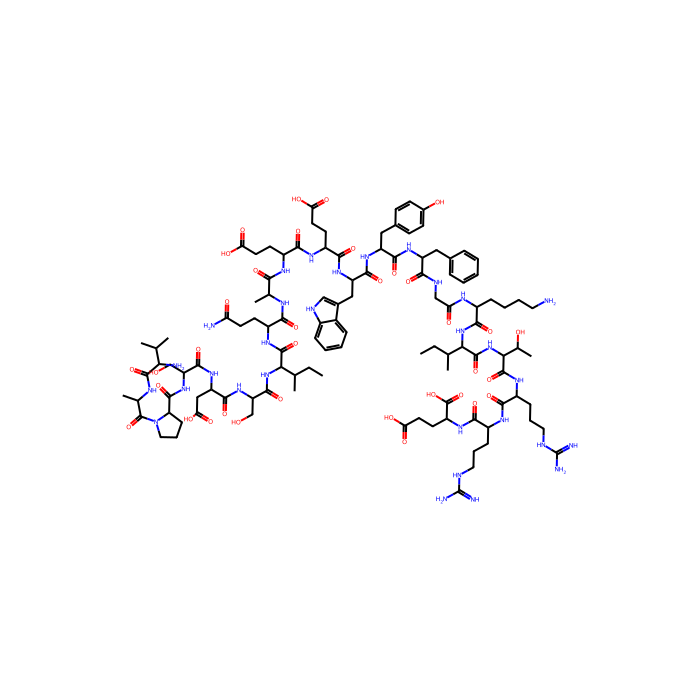
Structure and Identity
Brief: This item is supplied as a small-molecule Src/EGFR inhibitor for research use in chemical biology and signal transduction workflows.
Item-specific (from Product Data):
CAS: 131023-24-0
PubChem CID: 16133844
InChIKey: 315811 (as provided; note: typical InChIKeys are 27 characters — verify on CoA/Spec Sheet)
SMILES: Not specified for this item; refer to CoA/Spec Sheet.
Molecular formula: Not specified for this item; refer to CoA/Spec Sheet.
Molecular weight: Not specified for this item; refer to CoA/Spec Sheet.
Structural features:
The exact 2D/3D structure, ring systems, and stereochemistry are not provided in this listing. Refer to the Certificate of Analysis or technical data sheet for definitive structural identifiers.
General notes (literature/class-level):
Src/EGFR inhibitors are typically heteroaromatic, kinase-directed scaffolds (e.g., anilinoquinazolines, quinolines, pyrimidines, or related motifs) designed to occupy the ATP-binding cleft. Many are planar, aromatic-rich, and moderately lipophilic, often bearing H-bond donor/acceptor arrays for hinge binding.
Without the exact SMILES/InChI, substructure descriptions (halogenation pattern, nitriles, amides, etc.) cannot be confirmed for this specific SKU.
Synthetic Utility
This SKU is supplied as a finished small-molecule inhibitor and is not typically employed as a building block, reagent, or catalyst in synthetic chemistry.
What does apply (research use):
Positive control/benchmark: In medicinal chemistry and chemical biology campaigns focused on Src/EGFR pathways, a known inhibitor is used as a control to validate assay windows and to compare SAR improvements.
Orthogonal confirmation: Serves to confirm that observed cellular phenotypes are driven by Src/EGFR signaling by reproducing effects with an independently sourced or mechanistically distinct inhibitor.
Not typically applicable:
Named organic reactions, cross-couplings, or late-stage functionalizations are not relevant to the usage of this product as supplied.
Item-specific reactivity or derivatization guidance: Not specified for this item; refer to CoA/Spec Sheet if derivatization or conjugation is contemplated.
Target Specificity
Item-specific target data (potency, selectivity, primary/secondary targets, off-target panels): Not specified for this item; refer to CoA/Spec Sheet.
General note:
The Product Name indicates a Src/EGFR inhibitor; however, kinase selectivity within Src family members (e.g., Src, Fyn, Yes, Lyn) and across the wider kinome varies widely among chemotypes. Confirm activity profile and binding mode relevant to your system using vendor documentation and orthogonal assays.
Häufig gestellte Fragen
What is the purity of this product, and how is it determined?
This product is supplied at ≥97% purity, determined by HPLC. Lot-specific values are stated on the Certificate of Analysis.
How should this product be stored?
Store at ?20 °C, desiccated. Keep the container tightly closed with desiccant — the material is moisture-sensitive.
How is this product shipped?
This product ships in an insulated container with ice pads. Unpack on arrival and transfer it to the storage condition stated above.
What are the CAS number, molecular formula and molecular weight?
The CAS Number is 131023-24-0. InChIKey RGNJYLBUIKGQGT-GCWAPHMJSA-N.
What documentation is provided?
Available product documentation, including Certificates of Analysis (COA), Safety Data Sheets (SDS), and specification sheets, is shown in the product document area. Document availability and access follow the current site policy.
Wir verwenden Cookies, um die ordnungsgemäße Funktion der Website sicherzustellen und, soweit zulässig, Ihr Nutzererlebnis zu verbessern. Sie können Ihre Einstellungen jederzeit unter „Einstellungen“ verwalten. Weitere Informationen finden Sie in unserer Cookie-Richtlinie.
Dürfen wir Sie über Rabattaktionen informieren?
Später erinnern
Vielen Dank! Bitte überprüfen Sie Ihren E-Mail-Posteingang, um zu bestätigen.
Products are supplied to verified businesses, institutions, and qualified professionals for research and development use only. Not for use in humans, animals, diagnosis, or therapy.