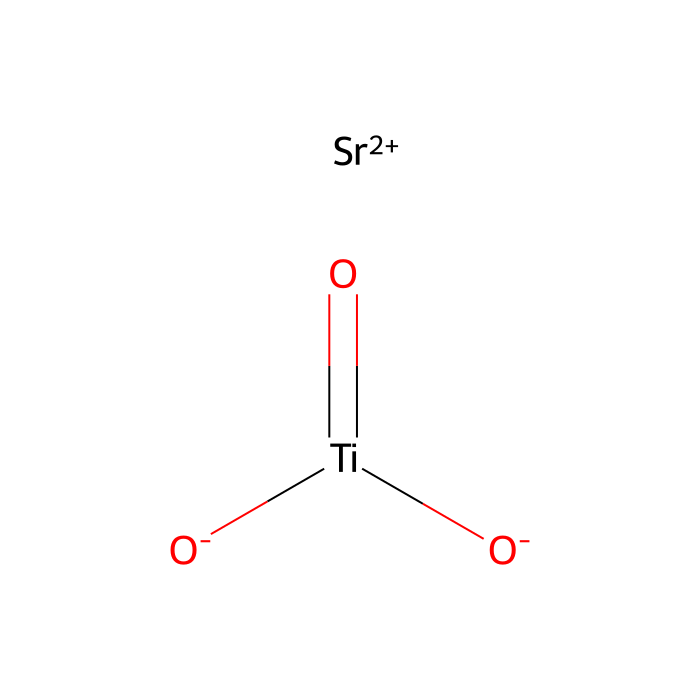
Determine the necessary mass, volume, or concentration for preparing a solution.
Taxonomy Tree
| Kingdom | Inorganic compounds |
|---|---|
| Superclass | Mixed metal/non-metal compounds |
| Klasse | Alkaline earth metal organides |
| Subclass | Alkaline earth metal oxides |
| Intermediate Tree Nodes | Not available |
| Direct Parent | Alkaline earth metal oxides |
| Alternative Parents | Inorganic salts Inorganic oxides |
| Molecular Framework | Not available |
| Substituents | Alkaline earth metal oxide - Inorganic oxide - Inorganic salt |
| Beschreibung | This compound belongs to the class of inorganic compounds known as alkaline earth metal oxides. These are inorganic compounds containing an oxygen atom of an oxidation state of -2, in which the heaviest atom bonded to the oxygen is an alkaline earth metal. |
| External Descriptors | Not available |
| Schmelzpunkt (°C) | 2080℃ |
|---|---|
| Molekulargewicht | 183.490 g/mol |
| XLogP3 | |
| Hydrogen Bond Donor Count | 0 |
| Hydrogen Bond Acceptor Count | 3 |
| Rotatable Bond Count | 0 |
| Exact Mass | 183.838 Da |
| Monoisotopic Mass | 183.838 Da |
| Topological Polar Surface Area | 63.200 Ų |
| Heavy Atom Count | 5 |
| Formal Charge | 0 |
| Complexity | 18.800 |
| Isotope Atom Count | 0 |
| Defined Atom Stereocenter Count | 0 |
| Undefined Atom Stereocenter Count | 0 |
| Defined Bond Stereocenter Count | 0 |
| Undefined Bond Stereocenter Count | 0 |
| The total count of all stereochemical bonds | 0 |
| Covalently-Bonded Unit Count | 2 |
No antibody or biochemical assay protocols are applicable to this inorganic ceramic. For materials applications, representative workflow outlines (literature/general) include:
Powder processing (dielectric ceramics)
Substrate preparation (epitaxy)
Photocatalysis screening
These are general examples; tailor conditions to your equipment and safety protocols. Item‑specific processing parameters are not provided; refer to CoA/Spec Sheet.
Not a biomolecule; strontium titanate is an inorganic solid with no direct biological role. The following points are general background (literature):
Item‑specific biological data (binding targets, metabolic pathways, toxicity benchmarks): Not specified for this item; refer to CoA/Spec Sheet and SDS. For research use only.
Not typically applicable. Strontium titanate is an insoluble inorganic oxide/ceramic and is not used to prepare aqueous buffer systems. For laboratory use, focus instead on its roles as a dielectric ceramic, photocatalyst, or epitaxial substrate as outlined in the Applications and Synthetic Utility sections.
Perspective (literature/general): Strontium titanate contains no lead, making it a useful alternative to lead‑based perovskites (e.g., PbTiO3, PZT) in certain dielectric and piezoelectric contexts. Green considerations focus on lifecycle impacts, processing temperatures, and solvent usage.
Comparison (materials choice)
Lead‑free vs leaded ceramics
Processing routes
Deposition choices
Trade‑offs
Not typically applicable. Strontium titanate is not used as a pharmaceutical active ingredient or common excipient. It is a ceramic/materials research compound intended for laboratory use only. Any formulation or pharmacopeial status is not relevant.
Note: Values below are literature/general for SrTiO3 and are not item‑specific specifications.
Item‑specific property values (this lot)
Item‑specific grade
Interpreting the grade (general guidance)
What to check on receipt (best practices)
UV cutoff, metals, peroxides, water: Not specified for this item; refer to CoA/Spec Sheet.
Applications (materials science; literature/general)
Synthesis/processing routes (practical tips; literature)
Practical considerations
General processing/formation conditions for SrTiO3 (literature; non‑spec guidance):
Solid‑state synthesis
Wet‑chemical routes
Reduction/oxidation (defect tuning)
Thin‑film deposition (substrate use)
These are representative literature conditions; optimize based on equipment, powder characteristics, and targeted microstructure.
Safety summary (general guidance; defer to SDS for authoritative information)
Handling and PPE
Incompatibilities and reactivity (literature)
First‑aid overview (general)
Additional notes
This product is a refractory inorganic solid; traditional “solvent selection” is generally not applicable. Practical media considerations for processing are given below (literature/general guidance):
Dispersions and slurries
Chemical resistance and etching
Thin‑film deposition compatibility
When to choose SrTiO3 versus alternatives (materials perspective)
General guidance (literature/practice for oxide ceramics)
Note: For research use only.
Brief description: Strontium titanate is an inorganic perovskite oxide (ABO3 type) composed of strontium(II), titanium(IV), and oxide, widely used as a dielectric ceramic and single‑crystal substrate.
Item-specific identifiers (from Product Data)
Literature/commonly accepted identity (non‑spec)
Structural features (descriptive, literature)
While not a reagent in organic synthesis, SrTiO3 has notable utility in materials synthesis and catalysis (literature/general):
Practical tips
Not applicable. This product is an inorganic oxide material, not a biological affinity reagent. No antigen/epitope/clone/isotype information applies to strontium titanate.
Unser Leitfaden zur Qualitätsauswahl behandelt Reinheit, Stabilisatorstatus und Anwendungseignung für alle Varianten in unserem Katalog.
PrimorTrace™ Qualitätsleitfaden ansehen →