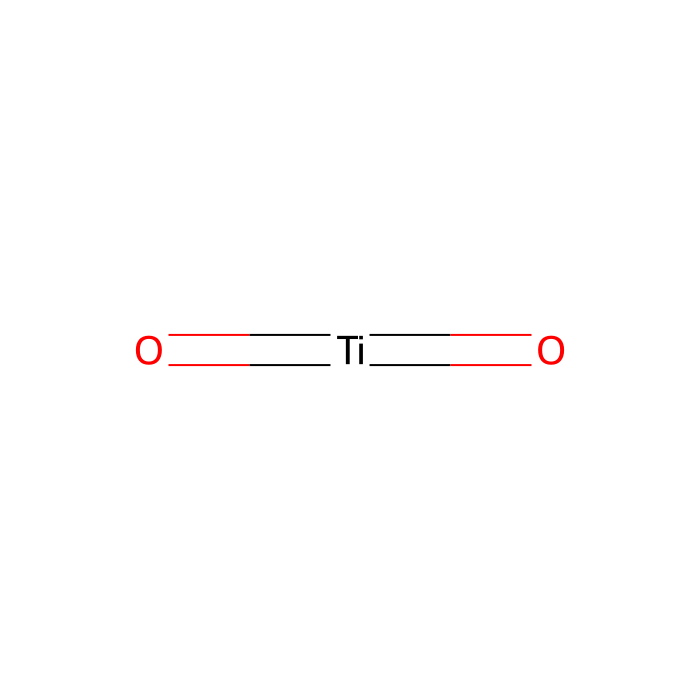
Titanium oxide, rutile - ≥99.8% metals basis, 40 nm particle size,hydrophilic , CAS No.13463-67-7

CAS: 13463-67-7 Cat. No.: T104938 Summenformel: TiO2 Molekulargewicht: 79.87 EG-Nummer: 236-675-5
Zu bestellen verfügbar
QUALITÄT & REINHEIT ≥99.8% metals basis 40 nm particle size,hydrophilic
Synonyms
Aerosil P 25 | A-Fil | Anatase (TiO2) | Bayertitan A | Bayertitan AN 3 | Calcotone White T | NCI-C0424O | Tronox | Tioxide RSM | Tioxide R-SM | Aerosil T 805 | Cosmetic White C47-5175 | Rutiox CR | Kronos RN 40P | Kronos titanium dioxide | Amperit 780.0 |
Storage
Room temperature
Shipped In
Normal
★
Größe
Deutschland (EU)
USA*
Preis
Menge
100g
T104938-100g
3 Auf Lager
5 Auf Lager

22,47€

30,28€
Speichern 7,81 € (25.79%)
500g
T104938-500g
—
3 Auf Lager

74,54€

110,12€
Speichern 35,58 € (32.31%)
Enter a quantity for the sizes you want to add.
🧪
Warum diese Qualität

≥99.8% metals basis, 40 nm particle size,hydrophilic für empfindliche chromatographische und analytische Workflows, die minimale Basislinieninterferenzen erfordern.

🌡

Lagerung & Versand

Room temperature Versand Normal. Genaue Spezifikationen finden Sie im chargenspezifischen COA.

📋

Qualitätsdokumente

SDS, COA, Datenblatt und Spezifikationsblatt stehen zum Download bereit. Chargenspezifische COA über Chargennummernsuche abrufbar.

📚

Literaturbeleg

In 2617 peer-reviewten Publikationen zu Chromatographie, organischer Synthese und Kreuzkupplungsreaktionen zitiert.

Spezifikationen

Synonyme
Aerosil P 25 | A-Fil | Anatase (TiO2) | Bayertitan A | Bayertitan AN 3 | Calcotone White T | NCI-C0424O | Tronox | Tioxide RSM | Tioxide R-SM | Aerosil T 805 | Cosmetic White C47-5175 | Rutiox CR | Kronos RN 40P | Kronos titanium dioxide | Amperit 780.0 |
Spezifikationen & Reinheit
≥99.8% metals basis, 40 nm particle size,hydrophilic
Storage
Room temperature
Verschickt in
Normal
Reinheit
≥99.8% metals basis
Namen und Kennungen
Pubchem Sid
Kanonisches Lächeln
O=[Ti]=O
IUPAC Name
dioxotitanium
InChIKey
GWEVSGVZZGPLCZ-UHFFFAOYSA-N
INCHI
1S/2O.Ti
Isomere SMILES
O=[Ti]=O
Molekulargewicht
79.87

Dokumentation

📋 Sicherheitsdatenblatt (SDS)

Umfassendes Dokument zu Gefahren, Handhabung, Lagerung und Einhaltung regulatorischer Vorschriften.

<<<<<<< HEAD SDS herunterladen → ======= SDS herunterladen → >>>>>>> release248-p3

✅ Analysezertifikat (COA)

Chargenspezifische Qualitätsdaten. Geben Sie Ihre Chargennummer ein, um das genaue COA abzurufen.

COA nachschlagen →

📊 Datenblatt

Kurzübersicht über Produktspezifikationen und Anwendungen.

Datenblatt ansehen →

🔬 Spezifikationsblatt

Vollständige Qualitätsmerkmale und Akzeptanzkriterien für diese Qualität.

Spezifikationsblatt ansehen →

Erweiterte Daten

Taxonomic Classification

Taxonomy Tree

KingdomInorganic compounds
SuperclassMixed metal/non-metal compounds
KlasseTransition metal organides
SubclassTransition metal oxides
Intermediate Tree Nodes Not available
Direct ParentTransition metal oxides
Alternative Parents Inorganic salts  Inorganic oxides  
Molecular FrameworkNot available
Substituents Transition metal oxide - Inorganic oxide - Inorganic salt
BeschreibungThis compound belongs to the class of inorganic compounds known as transition metal oxides. These are inorganic compounds containing an oxygen atom of an oxidation state of -2, in which the heaviest atom bonded to the oxygen is a transition metal.
External Descriptors titanium molecular entity
3D-Struktur
Interaktives chemisches Strukturmodell


Zertifikate (CoA, COO, BSE/TSE und Analyse-Diagramm)
C of A & Other Certificates(BSE/TSE, COO):
Analytical Chart:

Find and download the COA for your product by matching the lot number on the packaging.

12 results found

Lot NumberCertificate TypeDatumArtikel
D2615515D2615515Certificate of AnalysisMar 16, 2026 T104938
D2615520D2615520Certificate of AnalysisMar 16, 2026 T104938
G2610656G2610656Certificate of AnalysisMar 16, 2026 T104938
G2610657G2610657Certificate of AnalysisMar 16, 2026 T104938
C2202122C2202122Certificate of AnalysisDec 12, 2025 T104938
B2429554B2429554Certificate of AnalysisMar 04, 2024 T104938
B2429555B2429555Certificate of AnalysisMar 04, 2024 T104938
B2429556B2429556Certificate of AnalysisMar 04, 2024 T104938
B23271053B23271053Certificate of AnalysisNov 09, 2022 T104938
B23271069B23271069Certificate of AnalysisNov 09, 2022 T104938
B2327945B2327945Certificate of AnalysisNov 09, 2022 T104938
C2202123C2202123Certificate of AnalysisDec 30, 2021 T104938
Chemische und physikalische Eigenschaften
Siedepunkt (°C)2900 °C/1013 hPa
Schmelzpunkt (°C)1855 °C
Molekulargewicht79.866 g/mol
XLogP3
Hydrogen Bond Donor Count0
Hydrogen Bond Acceptor Count2
Rotatable Bond Count0
Exact Mass79.9378 Da
Monoisotopic Mass79.9378 Da
Topological Polar Surface Area34.100 Ų
Heavy Atom Count3
Formal Charge0
Complexity18.300
Isotope Atom Count0
Defined Atom Stereocenter Count0
Undefined Atom Stereocenter Count0
Defined Bond Stereocenter Count0
Undefined Bond Stereocenter Count0
The total count of all stereochemical bonds0
Covalently-Bonded Unit Count1
FAQs und Artikel
Silicon carbide provides technical solutions for the photovoltaic field
Semiconductor Materials: A Summary of Questions
Structure, Synthesis, and Applications of Barium Titanate – A Closer Look at the Core Dielectric Material in MLCCs
Applications of Nanoclay in Materials and Formulations: Dispersion Mechanisms, Performance Enhancement, and Product Selection
High-Refractive-Index vs Low-Refractive-Index Coating Materials: From AR/Waveguide Principles to a Formulation & Material-Selection Map (Including Product Category Tables A/B/C)
Panorama Guide to Lithium-Ion Battery Electrode Materials: Working Principles, Materials Map, and Selection Navigation (incl. Tables 1–4)
The Complete Guide to UV Absorbers: Definition & Scope, Key Engineering Metrics, Validation Methods, and Selection Navigation (Tables 1–3)
Optical & Optoelectronic Materials Selection Guide:Positioning materials, key metrics, and validation paths along “Generation → Guiding → Control → Readout” (with product navigation and Tables 1–4)
Ceramic Materials Guide: Basic Definitions, Classification Framework, and Research-Task-Oriented Selection (with Product Navigation and Tables 1–4)
Why Metal Nanocatalysts Can “Save Energy Yet Lose Performance Easily”: Durability Logic from Active Sites to Support/Interface Engineering (Including Selection Guide and Product Tables A–D)
Applications of Self-Assembled Monolayers (SAMs), Microcontact Printing, and Soft Lithography in Surface Functionalization and Micro/Nanopatterning
Polyetherimide (PEI): Structural Features, Main Properties, and Typical Application Directions
TCA-KTTS, a Titanate Coupling Agent Suitable for Use in Cosmetics: Basic Information, Application Characteristics, and Differences from 130 and 105
Metal Halide Perovskite Solar Cells: Sources of High Efficiency, Stability Bottlenecks, and Experimental Decision Logic
From Barium Titanate Dielectrics to Multilayer Ceramic Capacitors: Dielectric Properties and Experimental Evaluation of Barium Titanate-Based Ceramics
Application and Selection Guide for Alkyd Resin Coatings: Advantages, Limitations, Formulation Control, and Modification Directions
Four Core Applications of Epoxy Resins: Bonding, Protection, Load-Bearing, and Insulation Protection
Why Fluorocarbon Resins Are Weatherable: Structural Stability, Low Surface Energy, and Coating Film Appearance Retention
Fluorocarbon Resin Coating Formulation Design: Resin Selection, Supporting Systems, and Key Application Control Points
Structure–Property Relationship of Silicone Resins: Mechanisms of Heat Resistance, Weatherability, Hydrophobicity, and Coating Performance Analysis
Silicone Resin Coating Formulation Design: From Application Conditions to Matching Resins, Pigments and Fillers, Curing, and Substrates
Applications and Selection of Acrylic Resins in Coatings: Analysis of Architectural, Industrial, and Supporting Materials
Vinyl Acetate-Acrylic Emulsion (Vinyl Acrylic Emulsion): A Cost-Performance Balance Solution for Architectural Coatings
PVAc, VAE, and Vinyl Acetate-Based Emulsions: Film-Forming Logic and Performance Boundaries in Architectural Coatings
How Should Montmorillonite Be Rationally Modified? Organic Modification, Inorganic Modification, and Application-Oriented Selection and Validation
Epoxy Phenolic Coatings: Why Are They Commonly Used for Chemical Resistance, Solvent Resistance, Heat Resistance, and Internal Metal Surface Protection?
Selection and Formulation Design Guidelines for Phenolic Resins in Coatings: Applicable Scenarios, Application Limitations, and Performance Verification
Application Positioning, Scenario Selection, and Key Use Considerations for Chlorinated Rubber Resin in Coatings
Formulation Design of Chlorinated Rubber Coatings: Component Synergy and Performance Control
What Is Silica Sol: Mechanism of Action, Application Scenarios, and Selection Criteria for Nanosilica Dispersions
Applications and Selection of Polyester Resins in Industrial Coatings: Powder, Coil, Baking, Packaging, and Metal Coating Scenarios
How to Select Vinyl-Related Resins: Building Formulation Judgment Based on Substrate, Performance Targets, and Failure Risks
Applicability Boundaries, Failure Risks, and Alternative System Selection for Chlorinated Rubber Resin in Coatings
Waterborne Resin Application Guide: Formulation Synergy, Troubleshooting, and Technology Development Trends
Mechanisms and Control of Coating Yellowing: From Chromophoric Structure Formation to Source Diagnosis and Formulation Optimization
Resin Polarity in Coating Formulations: From Molecular Structure to Dissolution, Compatibility, Interfacial Interactions, and Formulation Design
Why Do Daily Chemical Products Become Opaque? Formation Mechanisms of Milky Turbidity, Pearlescence, and Coverage, and How to Select the Right Ingredients
Color-Development Mechanisms, Formulation Forms, and Selection/Application Logic of Colorants in Personal Care Products
Analysis of the Production Process of Hydroxypropyl Methylcellulose (HPMC) for Putty: Understanding Differences in Substitution Structure and Gelation Temperature from High-Ratio and Low-Ratio Formulations
Key Variable in the Long-Term Stability of Waterborne Pigment Concentrates: How Dispersant Molecular Weight Distribution (MWD) Affects Pigment Dispersion, Surface Adsorption-Layer Formation, and Storage Stability
Types, Mechanisms of Action, Key Quality Indicators, and Selection and Application of Common Cellulose Ethers in Wall Putty
Influencing Factors and Control Strategies for Blistering in Neutral Wall Putty: An Experimental Analysis Based on HPMC Dosage, Viscosity, and Ground Calcium Carbonate Fineness
How to Select Binding/Gel Materials for Neutral Wall Putty? A Comparison of Pregelatinized Starch, PVA, and Redispersible Polymer Powder Based on Four Application Trials
Causes and Mechanism Analysis of Delamination During Sanding of Water-Resistant Putty
What Are the Differences Between Polyvinyl Alcohol 1788, 2488, and 2699? Understanding Workability, Bonding Strength, and Relative Water Resistance from the Perspective of Degree of Polymerization and Degree of Hydrolysis
Differences and Application Selection of Cassava- and Corn-Based Pregelatinized Starch in Neutral Putty Formulations
The Role, Selection, Cracking Risk Analysis, and Dosage Control of Bentonite in Neutral Putty
Mechanism of Kojic Acid in Reducing Hyperpigmentation: From Tyrosinase Inhibition to Melanin Production Regulation
The Dual-Targeted Skin-Brightening Mechanism of 4-MSK: Inhibiting Melanin Production and Reducing Epidermal Pigment Retention
Molecular Structure, Photochemical Behavior, and Role of Octocrylene in Sunscreen Formulations
UVA Absorption Mechanism of Avobenzone: Keto–Enol Tautomerism, Photochemical Instability, and Formulation Photostabilization Strategies
Anti-Photoaging Potential of Artemia Extract: UV-Induced Damage Cascades, HSP70-Related Stress Protection, and GP4G Metabolic Insights
Mechanism of Action of Tranexamic Acid in Pigmentation Care: From the Plasmin System to Regulation of Inflammation-Driven Pro-Melanogenic Signaling
Citations of This Product
Lösungsrechner
Bewertungen

Kundenbewertungen

Verwandte Produkte

Titanium oxide - ≥99.8% metals basis, 30nm,anatase,hydrophilic , CAS No.13463-67-7
Titanium oxide - ≥99.8% metals basis, 100nm,rutile,lipophilic(Before coating) , CAS No.13463-67-7
Titanium oxide, rutile - PrimorTrace™, ≥99.99% metals basis , CAS No.13463-67-7
Titanium dioxide, anatase - ≥99.8% metals basis, <60nm particle size,hydrophilic , CAS No.13463-67-7
Titanium oxide - ≥98% metals basis, nanopowder,≤100nm,rutile,hydrophilic , CAS No.13463-67-7
Titanium oxide - AR, ≥99% , CAS No.13463-67-7
Titanium(IV) oxide - ≥99.8% metals basis, <40nm particle size,hydrophilic , CAS No.13463-67-7
Titanium oxide - ≥99.5% metals basis, 150nm,anatase,hydrophilic , CAS No.13463-67-7
Titanium oxide, rutile - ≥99.5% metals basis, powder,<60nm particle size , CAS No.13463-67-7
Titanium dioxide - Ph.Eur., average particle size:0.1-0.3μm , CAS No.13463-67-7
Titanium oxide, anatase - ≥99.8% metals basis , CAS No.13463-67-7
Titanium(IV) oxide - PrimorTrace™, ≥99.99% metals basis , CAS No.13463-67-7
Titanium oxide - ≥99.8% metals basis, 100-300nm,hydrophilic , CAS No.13463-67-7
Titanium oxide, anatase - ≥99.8% metals basis, 10nm-25 nm particle size,hydrophilic , CAS No.13463-67-7
Titanium oxide, anatase - ≥99.8% metals basis, 100nm ,hydrophilic , CAS No.13463-67-7
Titanium oxide, rutile - ≥99.8% metals basis, nanopowder,
Titanium oxide - ≥99% metals basis, ≤100nm , CAS No.13463-67-7
Titanium oxide - ≥99.8% metals basis, 5 -10nm particle size,hydrophilic/lipophilic , CAS No.13463-67-7
Titanium oxide - ≥99.8% metals basis, 60nm,anatase,lipophilic(stearic acid treatment) , CAS No.13463-67-7
Titanium oxide, rutile - ≥99.8% metals basis, nanopowder, 25 nm particle size, hydrophilic , CAS No.13463-67-7
Titanium(IV) oxide - ≥99% , CAS No.13463-67-7
Titanium oxide - ≥99% metals basis, 100-300nm,hydrophilic,rutile , CAS No.13463-67-7
Titanium(IV) oxide - pellets,diam. × thickness 12.5 mm × 5.5 mm , CAS No.13463-67-7
Titanium(IV) oxide - ≥97%, nanopowder,contains 1% Mn as dopant,<100nm particle size (bET) , CAS No.13463-67-7
Titanium(IV) oxide - PharmPure™, USP, BP, puriss., Ph.Eur., ≥99% , CAS No.13463-67-7
Titanium(IV) oxide, mixture of rutile and anatase - ≥99.5% metals basis, nanopowder,<100nm particle size (bET) , CAS No.13463-67-7
Titanium(IV) oxide - Nanowires, diameter x length~10nm x 10 μ m , CAS No.13463-67-7
Titanium(IV) oxide - nanowires,diam. × L ~100 nm × 10 μm , CAS No.13463-67-7
Titanium(IV) oxide - ≥99.5% metals basis, nanopowder,21nm , CAS No.13463-67-7
Titanium dioxide - nanotubes,25 nm average diameter,powder , CAS No.13463-67-7
Titanium(IV) oxide, mixture of rutile and anatase - ≥99.5% metals basis, Particle size ≤ 150nm,40 wt. % in H2O , CAS No.13463-67-7
Titanium(IV) oxide - PharmPure™,USP,ChP,JP,BP,Ph.Eur. , CAS No.13463-67-7
Titanium dioxide, anatase - PrimorTrace™,≥99.99% metals basis,≤ 50nm, anatase, hydrophilic , CAS No.13463-67-7
Titanium oxide, rutile - ≥99.6% metals basis, 150nm, golden red, oleophilic , CAS No.13463-67-7
Titanium oxide, anatase - ≥99.5% metals basis, ≤ 400nm, anatase, hydrophilic type , CAS No.13463-67-7
Titanium oxide, anatase - ≥99.8% metals basis, ≤ 10nm, anatase, hydrophilic type , CAS No.13463-67-7
Gas-Phase Nano Titanium Dioxide - Hydrophilicity, ≥99.5% metals basis, specific surface area(BET):50m2/g;particle size:10-40nm , CAS No.13463-67-7
Titanium dioxide hydrate - Low sulfur , CAS No.13463-67-7(hydrate)
Nano Titanium oxide - electronic grade, ≥99.8% metals basis, 300-700nm , CAS No.13463-67-7

Dürfen wir Sie über Rabattaktionen informieren?

Später erinnern

Vielen Dank! Bitte überprüfen Sie Ihren E-Mail-Posteingang, um zu bestätigen.

Hoppla! Benachrichtigungen sind deaktiviert.