GRADE & PURITYMoligand™?Moligand™ — Aladdin's line of ligands and bioactive small molecules. Use for receptor, pathway, and binding studies needing defined small-molecule tools.≥98%
Moligand™, ≥98% Moligand™ for sensitive chromatographic and analytical workflows requiring minimal baseline interference.
🌡
Storage & shipping
Store at -20°C Ships Ice chest + Ice pads Check lot-specific COA for exact specifications.
📋
Quality documents
SDS, COA, datasheet, and spec sheet available for download. Lot-specific COA accessible via lot number lookup.
📚
Literature proof
Cited in 1 peer-reviewed publications across chromatography, organic synthesis, and cross-coupling reactions.
Übersicht
Product description
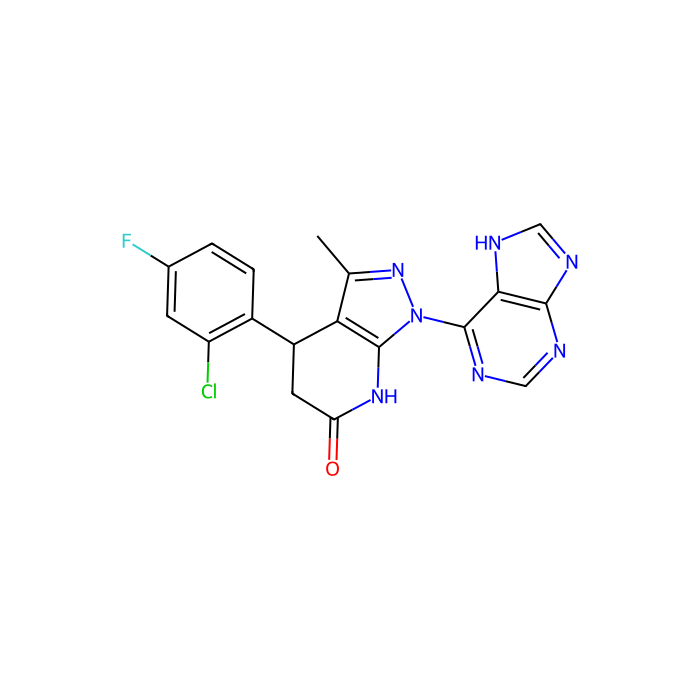
TM-N1324 is an agonist of G-Protein-Coupled Receptor 39 (GPR39) with EC50s of 9 nM/5 nM in the presence of Zn2+, and 280 nM/180 nM in the absence of Zn2+ for human/murine GPR39.
This compound belongs to the class of organic compounds known as purines and purine derivatives. These are aromatic heterocyclic compounds containing a purine moiety, which is formed a pyrimidine-ring ring fused to an imidazole ring.
External Descriptors
Not available
1. Djoumbou Feunang Y, Eisner R, Knox C, Chepelev L, Hastings J, Owen G, Fahy E, Steinbeck C, Subramanian S, Bolton E, Greiner R, and Wishart DS. ClassyFire: Automated Chemical Classification With A Comprehensive, Computable Taxonomy. Journal of Cheminformatics, 2016, 8:61.
Determine the necessary mass, volume, or concentration for preparing a solution.
Dilution Calculator
Determine the dilution needed to prepare a stock solution.
Reconstitution Calculator
Bewertungen
Kundenbewertungen
Application Protocols
No tested application protocols are provided for this item.
General guidance for small-molecule screening (literature/general):
Stock preparation: Dissolve in anhydrous DMSO to 10–50 mM. Vortex/sonicate if needed and verify clarity. Aliquot to avoid freeze–thaw.
Plate handling: Thaw DMSO stocks on ice or at ambient temperature, mix, and briefly spin to collect condensate. Avoid condensation ingress by equilibrating sealed plates to room temperature before opening.
Assay setup: Target final DMSO ≤0.5–1% v/v. Include vehicle controls, positive controls, and counter-screens for fluorescence interference and redox activity where relevant.
Stability checks: Run time-course LC–UV or LC–MS to ensure the compound remains intact over the assay duration under storage and assay conditions.
These are general best practices and not item-specific. For validated protocols, refer to internal SOPs once the compound’s properties are confirmed.
Biological Roles
Item-specific biological function, targets, or pathways: Not specified for this item; refer to CoA/Spec Sheet and any accompanying screening annotations.
General context for screening compounds:
Library members may have unknown or putative biological activities. Establish activity de novo via HTS or targeted assays, then confirm through secondary assays and counter-screens to rule out assay interference compounds (PAINS, redox cyclers, aggregators) (literature/general).
Without structural data, in silico profiling (e.g., substructure alerts, physicochemical predictions, and ADME flags) cannot be performed. If structure becomes available, run cheminformatics filters and aggregate formation assays (e.g., detergent-sensitive activity checks).
For cellular work, evaluate cytotoxicity independently (e.g., resazurin/CellTiter assays) across the intended concentration range and exposure time.
Important note:
No medical or clinical claims are made or implied. TM N1324 is provided strictly for research use only, as stated in the Product Data.
Buffer Applications
This section is generally not applicable. TM N1324 is a small-molecule screening compound, not a buffer reagent, and no acid/base properties are specified.
General guidance (if needed for assay preparation):
If dissolution in aqueous buffers is required, begin with a DMSO stock and dilute into the assay buffer while keeping final DMSO ≤1% v/v where compatible (literature/general).
Common assay buffers (HEPES, PBS, Tris) may be used according to the assay design, but the compound’s stability and solubility in each buffer must be verified experimentally.
Avoid chelators, surfactants, or reducing agents unless validated for your readout; they may interact with small molecules or assay components.
Item-specific buffer recipes, pH ranges, or pKa values: Not specified for this item; refer to CoA/Spec Sheet.
Green Alternatives
Because TM N1324 is a screening compound rather than a process solvent or bulk reagent, the concept of a “green alternative” primarily concerns choice of handling solvents, diluents, and analytical media rather than substituting the compound itself.
General greener-practice suggestions (literature/general):
Stock solution media: Prefer water-miscible solvents with better environmental profiles when compatible (e.g., ethanol or propylene carbonate) in place of high volumes of DMF/DMAC. DMSO remains common given biocompatibility at low percentages, though it is not “green” per se.
Chromatography: Use shorter gradients, higher-efficiency columns, or supercritical CO2 (SFC) where possible to reduce organic solvent consumption vs conventional LC with acetonitrile/methanol.
Micro-scale operations: Miniaturize assay volumes (e.g., 384/1536-well formats) to reduce solvent and plastic waste.
Waste management: Segregate halogenated from non-halogenated waste; consider solvent recovery where feasible.
Tradeoffs:
Ethanol or PEG-400 can offer greener profiles but may interfere with certain assays or alter permeability; validate biological compatibility.
ACN reductions may increase run times or reduce resolution; optimize methods to balance environmental and analytical performance.
Item-specific green substitution is not applicable since the compound’s structure and function are not provided.
Pharmaceutical Uses
No excipient, formulation, or pharmacopeial status is provided for TM N1324. It is sold for research use only and is not intended for human or veterinary use.
General context (literature/general):
Screening compounds can be used in pre-formulation research to explore solubility enhancement strategies (co-solvents, salt formation if ionizable, amorphous dispersions) purely for laboratory investigation.
If structural information becomes available, you may explore enabling formulations (e.g., DMSO/PEG-400/water ternaries) for in vitro studies; ensure compatibility with biological assays and institutional approvals.
Important:
Do not use in drug products or clinical studies. No claims of safety, efficacy, or regulatory compliance are made. Any pharmaceutical development activities require comprehensive CMC characterization that is beyond the scope of this listing.
Physical Properties
Item-specific specifications provided: None for this listing.
Item-specific values:
Appearance: Not specified for this item; refer to CoA/Spec Sheet.
Molecular Weight: Not specified for this item; refer to CoA/Spec Sheet.
Molecular Formula: Not specified for this item; refer to CoA/Spec Sheet.
Melting point: Not specified for this item; refer to CoA/Spec Sheet.
Boiling point: Not specified for this item; refer to CoA/Spec Sheet.
Density: Not specified for this item; refer to CoA/Spec Sheet.
Refractive index: Not specified for this item; refer to CoA/Spec Sheet.
LogP, pKa: Not specified for this item; refer to CoA/Spec Sheet.
Solubility: Not specified for this item; refer to CoA/Spec Sheet.
General guidance (literature/general):
Small-molecule screening compounds are commonly supplied as solids or concentrated DMSO solutions. If supplied solid, initial dissolution is typically attempted in anhydrous DMSO at 10–50 mM, followed by aqueous dilution if soluble and chemically stable.
If the structure contains ionizable groups (unknown here), solubility may benefit from pH adjustment or co-solvents (DMSO, DMF, ethanol, acetonitrile).
Hygroscopic or air/moisture-sensitive behaviors cannot be assumed; verify on receipt via CoA/SDS and small-scale handling tests (e.g., weighback consistency, solution clarity).
Please rely on the authoritative CoA for any numerical specifications that impact method development, formulation, or analytical qualification.
Quality and Grades
Item-specific grade/purity information: Not specified for this item; refer to CoA/Spec Sheet.
Context for small-molecule library items (general):
Screening library compounds are typically provided with an assay-friendly purity (commonly ≥90–95% by HPLC/UPLC, literature/general), minimal volatile impurities, and verified identity (NMR/HRMS). Exact specifications vary by supplier and lot and must be confirmed on the CoA.
UV transparency, residual solvents, and specific impurity profiles (e.g., metal content) are not provided here. Do not assume low-UV or low-metal status unless explicitly stated on the CoA.
Stabilizers: None specified for this item; refer to CoA/Spec Sheet. If present, stabilizers will influence analytical baselines and bioassay interpretations.
Recommended actions:
On receipt, document lot number and request CoA/SDS for precise purity, analytical methods, and acceptance criteria.
For sensitive applications (e.g., biophysical assays, photochemistry), perform incoming QC (HPLC purity check, UV/Vis scan, and HRMS) to verify consistency with your internal standards.
If using as a reference standard, confirm retention time, UV spectrum, and MS fragmentation in your system before routine deployment.
Reaction and Applications
Manufacturer applications: Not provided in the Product Data for this item.
Use context:
TM N1324 is categorized under a small-molecule/compound library, suggesting primary use in discovery screening, chemical biology probes development, or as an internal reference standard rather than as a synthetic reagent.
General research applications for library members (literature/general):
High-throughput screening (HTS) and fragment/lead identification: Evaluate phenotypic or target-based activity across panels; typical working ranges 0.1–50 µM depending on assay.
Orthogonal assay triage: Confirm hits via complementary readouts (biochemical vs biophysical vs cellular) to eliminate artifacts.
Analytical reference: Use to establish retention time, response factors, and MS fragmentation in LC–MS workflows.
Practical considerations:
Solubilization: Prepare initial DMSO stocks, verify clarity, and perform a quick stability scan (LC–UV at 210–400 nm) to detect decomposition.
Adsorption: Minimize nonspecific binding by using low-binding plastics and including small amounts of non-ionic surfactant where compatible.
Light/air sensitivity: Unknown for this item; protect from light and moisture as a precaution until specific data are available.
No reaction-condition guidance or reactivity profile can be provided without structural information; refer to CoA for structure before considering synthetic transformations.
Reaction Conditions
Item-specific reaction conditions are not applicable without structural information and no manufacturer reaction guidance is provided for TM N1324.
General guidance (literature/general) if derivatization is pursued after obtaining the structure:
Cross-coupling: Use Pd(0)/(II) catalysts with appropriate ligands in toluene/1,4-dioxane/THF or aqueous micellar media; temperatures 25–110°C depending on substrate reactivity. Carefully select base (K3PO4, Cs2CO3) and monitor by LC–MS.
Amide coupling: Carbodiimide or uronium reagents (EDC/HOBt alternatives, HATU, T3P) in DMF/CH2Cl2 with organic bases; control epimerization if stereocenters are present.
Nucleophilic substitutions/additions: Choose polar aprotic solvents (DMF, DMSO, MeCN) or alcohols as needed; manage moisture and temperature.
These are general literature conditions and are not item-specific. Do not apply without verifying compatibility once the TM N1324 structure is confirmed.
Safety and Handling
Item-specific hazard information provided: None. Signal word, H-statements, GHS classification, and pictograms are not specified for this item; refer to SDS.
General safety considerations (defer to SDS for authoritative guidance):
PPE: Laboratory coat, suitable chemical-resistant gloves, safety glasses or goggles; handle in a fume hood to minimize inhalation exposure.
Avoid ingestion, inhalation of dust/vapors/aerosols, and skin/eye contact. Wash thoroughly after handling.
Incompatibilities cannot be stated without structure. As a conservative approach, segregate from strong oxidizers, strong acids/bases, and reactive metals until compatibility is known.
First aid (general): If in eyes, rinse with water for several minutes and seek medical attention. If on skin, wash with soap and water and remove contaminated clothing. If inhaled, move to fresh air; obtain medical advice. If swallowed, rinse mouth; do not induce vomiting unless directed by medical personnel.
Spill response (general): Contain solids with inert absorbent, avoid dust formation, and dispose according to local regulations. For solutions, absorb with inert material and ventilate area.
Always consult the product’s SDS for compound-specific hazards, disposal guidance, and transport classifications.
Solvent Selection
Item-specific solubility data are not available for TM N1324; consult the CoA/Spec Sheet. The guidance below is general for small-molecule screening compounds.
General solvent strategy:
Primary stock solvent: Anhydrous DMSO (commonly 10–50 mM stocks) due to broad solvating power and assay compatibility at ≤1% v/v in final wells (literature/general).
Secondary options: DMF, ethanol, methanol, or acetonitrile for analytical injections. For aqueous work, use co-solvent systems (e.g., DMSO:H2O, 1:9) contingent on stability.
pH-assisted solubilization: If the compound is acidic/basic (unknown here), adjust aqueous phase pH to favor ionization while avoiding degradation.
Comparison notes (general):
DMSO vs DMF: DMSO is more commonly accepted in biological assays; DMF has stronger odor and can be more moisture sensitive.
ACN vs MeOH for LC: ACN often yields sharper peaks, while MeOH can improve solubility for more polar analytes; choose based on method development.
Practical tips:
Filter stock solutions (0.2 µm PTFE) if particulate is observed; confirm no adsorption losses.
Record exact solvent, concentration, and lot on vial; avoid repeated freeze–thaw by aliquoting at preparation.
Verify solution stability over time by LC if the assay campaign spans multiple days.
Reconstitution (item-specific details not provided):
Recommended approach (general): Prepare initial stock solutions in anhydrous DMSO (e.g., 10–50 mM), unless the CoA specifies a different solvent. Mix thoroughly and confirm complete dissolution by visual inspection and a quick analytical check if critical.
Aliquoting: Dispense into single-use aliquots (amber vials/tubes when light sensitivity is unknown) to avoid repeated freeze–thaw cycles.
Short-term handling: Keep solutions cold during setup and return promptly to -20°C after use. Allow to reach room temperature before opening to minimize moisture condensation.
Stability notes:
No item-specific stability, hygroscopicity, or light sensitivity data are provided. As a precaution, store under inert headspace if feasible and protect from light.
Document preparation date, solvent, concentration, and lot. Periodically re-qualify solutions by LC if used over extended campaigns.
For definitive instructions (solubility limits, solution stability, and container compatibility), consult the product’s CoA and SDS.
Structure and Identity
Brief overview: TM N1324 is listed as a small-molecule library member for research screening. Item-specific structural identifiers are largely unspecified in the provided data.
Item-specific facts (from Product Data):
SKU: T287495
Product Name: TM N1324
CAS: 1144477-35-9
PubChem CID: 135634901
InChIKey (as provided): 57075
SMILES: Not specified for this item; refer to CoA/Spec Sheet.
Molecular Formula: Not specified for this item; refer to CoA/Spec Sheet.
Molecular Weight: Not specified for this item; refer to CoA/Spec Sheet.
Structural features: Not specified for this item; refer to CoA/Spec Sheet. Without a SMILES or structure, ring systems, functional groups, and stereochemistry cannot be described.
Notes for users:
If you require definitive structural data (full InChIKey, canonical SMILES, stereochemical flags), please consult the item’s CoA/Spec Sheet or the supplier SDS. Cross-referencing the CAS (1144477-35-9) and CID (135634901) may be helpful if your compliance workflow allows literature lookups.
For analytical confirmation, typical approaches include 1H/13C NMR, HRMS, and HPLC/UPLC purity checks once the authentic structure is available from CoA.
Synthetic Utility
Without a disclosed structure, specific synthetic roles (e.g., as a building block, electrophile/nucleophile, ligand, or catalyst component) cannot be described for TM N1324.
General considerations for small-molecule library members (literature/general):
If the structure becomes available and contains common functional handles (halides, boronates, carboxylic acids, amines), typical transformations include cross-couplings (Suzuki–Miyaura, Buchwald–Hartwig), amide couplings, and heterocycle derivatizations.
For SAR exploration, establish a robust route that allows late-stage diversification and parallel synthesis, with orthogonal protection strategies if multiple heteroatoms are present.
Analytical support: Track reactions by LC–MS and qNMR for rapid purity/assay checks. Where possible, use convergent routes to facilitate rapid library expansion around the TM N1324 chemotype once known.
Action item:
Consult the CoA/structure to determine whether TM N1324 is amenable to derivatization or should be treated solely as a test article/reference.
Target Specificity
Not applicable. TM N1324 is not supplied as an antibody, enzyme, or biologic, and no molecular target annotation is provided in the Product Data. If biological target information becomes available through screening, document it alongside assay conditions and controls for internal records.
Häufig gestellte Fragen
What is the purity of this product, and how is it determined?
This product is supplied at ≥98% purity, determined by HPLC. Lot-specific values are stated on the Certificate of Analysis.
How should this product be stored?
Store at ?20 °C. Freezer storage is required to maintain the specified shelf life.
How is this product shipped?
This product ships in an insulated container with ice pads. Unpack on arrival and transfer it to the storage condition stated above.
What are the CAS number, molecular formula and molecular weight?
The CAS Number is 1144477-35-9, the molecular formula is C??H??ClFN?O, and the molecular weight is 397.79 g/mol. InChIKey CYQNVXRIWKKWQG-UHFFFAOYSA-N.
What documentation is provided?
Available product documentation, including Certificates of Analysis (COA), Safety Data Sheets (SDS), and specification sheets, is shown in the product document area. Document availability and access follow the current site policy.
Wir verwenden Cookies, um die ordnungsgemäße Funktion der Website sicherzustellen und, soweit zulässig, Ihr Nutzererlebnis zu verbessern. Sie können Ihre Einstellungen jederzeit unter „Einstellungen“ verwalten. Weitere Informationen finden Sie in unserer Cookie-Richtlinie.
Dürfen wir Sie über Rabattaktionen informieren?
Später erinnern
Vielen Dank! Bitte überprüfen Sie Ihren E-Mail-Posteingang, um zu bestätigen.
Products are supplied to verified businesses, institutions, and qualified professionals for research and development use only. Not for use in humans, animals, diagnosis, or therapy.