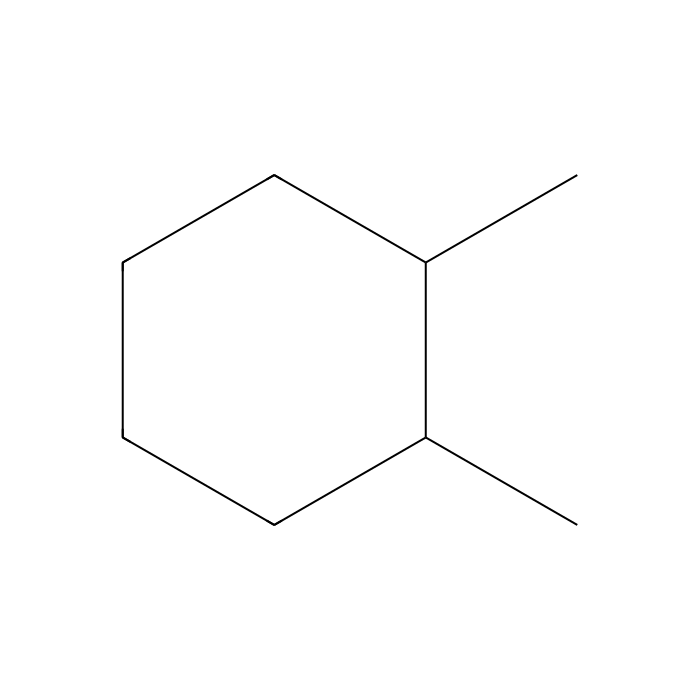
This compound belongs to the class of organic compounds known as cycloalkanes. These are saturated monocyclic hydrocarbons (with or without side chains).
External Descriptors
Hydrocarbons
1. Djoumbou Feunang Y, Eisner R, Knox C, Chepelev L, Hastings J, Owen G, Fahy E, Steinbeck C, Subramanian S, Bolton E, Greiner R, and Wishart DS. ClassyFire: Automated Chemical Classification With A Comprehensive, Computable Taxonomy. Journal of Cheminformatics, 2016, 8:61.
1.Xianjie Wang, Jingdong Gou, Louwei Cui, Jinhui He, Xue Ma, Yaning Zhao, Liuyi Pan, Huiyong Chen, Zhe Jin, Hongyan Wang, Yonghong Zhu, Dong Li. (2025) Carbon molecular sieves for real industrial feedstock separation of C8 cycloalkanes: A study on pore size distribution and surface functionalization. SEPARATION AND PURIFICATION TECHNOLOGY, [PMID:][10.1016/j.seppur.2025.132505]
Lösungsrechner
Molarity Calculator
Determine the necessary mass, volume, or concentration for preparing a solution.
Dilution Calculator
Determine the dilution needed to prepare a stock solution.
Reconstitution Calculator
Bewertungen
Kundenbewertungen
Application Protocols
No item-specific, validated application protocols are provided for this SKU. Typical laboratory uses are method- and goal-dependent (e.g., GC retention indexing, conformational NMR studies, mechanistic probes).
General suggestions (adapt to your SOPs):
GC standard preparation: Weigh by gravimetry into a volumetric flask; dilute in an appropriate nonpolar solvent (e.g., iso-octane or hexane). Store solutions in crimp-sealed vials to minimize evaporation. Document purity and lot in your sequence.
NMR sample for conformational study: 5–20 mg in 0.6 mL CDCl3 or C6D6; VT experiments at multiple temperatures to map coupling constant changes. Add trace TMS only if needed for referencing.
Catalytic test reactions: Charge a sealed reactor with known moles of hydrocarbon, catalyst, and solvent (if any); purge with inert gas; control temperature precisely; and monitor by GC with authentic standards to deconvolute isomeric products.
For any regulated workflow, incorporate appropriate system suitability checks and reference materials.
Biological Roles
Item-specific biological data: Not specified for this item; this product is supplied strictly for research use only.
General/contextual information (literature):
Biochemical activity: trans-1,2-dimethylcyclohexane is a saturated hydrocarbon lacking functional groups; it is considered biologically inert under most physiological conditions and is not known to engage in specific enzymatic pathways.
Environmental/biological fate: Like other C8 alicyclic hydrocarbons, it is highly hydrophobic (high logP) and exhibits very low aqueous solubility. In the environment, volatilization and adsorption to organic matter dominate over dissolution. Biodegradation can occur via monooxygenase-initiated pathways in specialized microbes but is slow compared to functionalized organics.
Toxicology overview: Hydrocarbons in this carbon range may act as narcotics at high vapor concentrations and can pose aspiration hazards if ingested; however, no specific receptor-mediated biological roles are associated.
Laboratory considerations: When used around biological systems (e.g., partitioning experiments), its strong hydrophobicity makes it useful as a model phase for membrane-like environments or for determining partition coefficients of solutes.
For any work intersecting with biological matrices, ensure proper containment due to volatility, avoid emulsions that complicate separation, and confirm that no surfactants or residual polar contaminants confound results.
Buffer Applications
Not typically applicable. trans-1,2-Dimethylcyclohexane is a nonpolar hydrocarbon with negligible aqueous solubility and no acid/base functionality; it does not serve as a buffer component.
Practical note: If your workflow involves aqueous buffers alongside this compound (e.g., biphasic reactions, partition studies), pre-equilibrate phases to minimize volume changes, and use vigorous phase separation techniques (centrifugation or salting-out) to ensure clean partitioning.
Green Alternatives
As a non-functionalized hydrocarbon, trans-1,2-dimethylcyclohexane is typically used as a substrate/standard rather than as a process solvent. Green chemistry considerations therefore focus on source, minimization, and end-of-life rather than substitution.
Opportunities (general guidance):
Source and scale: Prefer material produced via high-yield routes and supplied at the exact scale needed to minimize surplus and waste. When possible, consolidate runs to reduce container waste and shipping emissions.
Use-phase: Because it is volatile and flammable, conduct operations in closed systems or under reflux condensers to curb VOC emissions. Capture vapors via cold traps or carbon adsorbers if venting is unavoidable.
Alternatives for solvent roles: If your use case is as a nonpolar medium, greener options with established EH&S profiles and broader regulatory familiarity include cyclohexane, heptane, or bio-based isoparaffins. These may offer similar polarity with better LCA data and recovery infrastructure.
Comparison snapshot (literature/general):
trans-1,2-dimethylcyclohexane vs cyclohexane: similar nonpolarity; cyclohexane is more widely recovered/recycled industrially; lower boiling point eases solvent recovery but increases VOC emissions if not controlled.
vs heptane/isooctane: comparable nonpolarity and safety class; heptane often preferred in pharma due to compendial coverage and established residue limits.
Waste management:
Segregate as halogen-free flammable organic waste. Consider solvent recovery via distillation when used in bulk as a medium.
Note: Selection should balance performance, availability of recycling, and process safety.
Pharmaceutical Uses
Item-specific pharmacopeial status or excipient role: Not specified for this item; refer to CoA/Spec Sheet.
General context (non-clinical; manufacturing/formulation science):
As a neat compound, trans-1,2-dimethylcyclohexane is not a standard pharmaceutical excipient. However, aliphatic hydrocarbons of similar volatility and purity classes (e.g., heptane, isooctane, cyclohexane) are sometimes used as process solvents or crystallization media in API manufacturing.
If considered for process development studies (e.g., solvate screening, impurity extraction, or hydrophobic phase modeling), ensure that an appropriate, compendially accepted surrogate solvent is selected for scale-up.
Residual solvent perspective: Should not be present in drug product. If used in lab-scale process scouting, it would be treated analogous to a Class 2/3 aliphatic solvent surrogate, and clearance studies would rely on GC headspace.
Regulatory note: There are no therapeutic claims or indications associated with this material. Use is restricted to research and development activities in controlled laboratory settings.
Physical Properties
Item-specific specifications (BP, MP, density, etc.): Not specified for this item; refer to CoA/Spec Sheet.
Literature and general reference values for trans-1,2-dimethylcyclohexane (for informational planning only; verify against primary sources for critical work):
Appearance: colorless, hydrophobic liquid at ambient conditions (literature, hydrocarbon isomer). Cis/trans mixtures may display slightly different physical constants.
Molecular formula / MW: C8H16; 112.21 g/mol (literature).
Boiling point: typically reported in the 125–130 °C range at 1 atm for 1,2-dimethylcyclohexane isomers; the pure trans isomer is similar (literature; values vary with isomeric purity and measurement).
Melting point: trans and cis isomers differ; the trans isomer generally shows a higher MP than the cis, but reported values vary widely due to conformer/enantiomer composition (literature; check primary data if needed).
Density (20–25 °C): hydrocarbons of this size are commonly ~0.76–0.79 g/mL (literature for dimethylcyclohexanes; exact value depends on isomer and temperature).
Refractive index nD20: typically around 1.42–1.44 for aliphatic C8 cycloalkanes (literature).
LogP (octanol/water): expected >3 (literature trend for C8 cycloalkanes; nonpolar).
Aqueous solubility: negligible (literature for saturated hydrocarbons).
Vapor pressure: moderate for a C8 hydrocarbon; increases with temperature; handle as a volatile flammable liquid.
Note: Reported constants often do not distinguish isomeric purity (cis vs trans). For exact values of this item, consult the Aladdin CoA/Spec Sheet.
Quality and Grades
Item-specific grade/purity: Not specified for this item; refer to CoA/Spec Sheet.
Guidance on quality dimensions relevant to this material (general best practice for hydrocarbon isomers):
Isomeric purity: trans-1,2-dimethylcyclohexane can be accompanied by the cis isomer and other positional isomers if not rigorously separated. For stereochemical studies, specify and verify the trans isomer via GC/FID/MS and 1H/13C NMR. Chiral GC can probe enantiomeric composition when relevant.
Residual solvents and light-ends: verify by headspace GC. Hydrocarbons often contain trace low-boiling impurities; distillation under inert gas can improve purity.
Water content: typically very low due to hydrophobicity; Karl Fischer may be used if needed. Item-specific limits: Not specified for this item; refer to CoA/Spec Sheet.
UV background: saturated hydrocarbons exhibit minimal UV absorbance above ~210 nm, advantageous for certain chromatographic baselines. Exact UV cutoff for this SKU: Not specified for this item; refer to CoA/Spec Sheet.
Metals/ions: generally negligible; if using in catalysis, confirm trace metal profiles by ICP-MS as needed. Item-specific limits: Not specified for this item; refer to CoA/Spec Sheet.
Documentation and traceability:
Request the batch CoA for GC purity, isomeric assay, and any stabilizers (none typically used for this hydrocarbon). If you require specific limits (water, non-volatile residue, acidity), contact Aladdin Technical Support for a custom specification.
Reaction and Applications
Representative research uses and reactivity considerations for trans-1,2-dimethylcyclohexane (literature/practice-based):
Conformational analysis and stereochemical probes: The trans-1,2 arrangement provides a classic case for chair interconversion (diaxial ⇄ diequatorial) studies by variable-temperature NMR. It is used to benchmark conformer populations and vicinal 3J coupling patterns in substituted cyclohexanes.
Chromatographic standards: Serves as a nonpolar hydrocarbon GC standard for retention indexing within the C8 alicyclic region, and for studying isomer resolution (cis/trans; positional isomers) on nonpolar and chiral stationary phases.
Radical halogenation test substrate: Although relatively unreactive, free-radical chlorination/bromination under photochemical/thermal initiation yields isomeric mixtures at secondary ring carbons and primary methyl positions—useful for mechanistic selectivity studies.
Oxidation under forcing conditions: Strong oxidants (e.g., hot KMnO4 or nitric acid) can cleave/oxidize the hydrocarbon to oxygenated fragments; used mainly in teaching/mechanistic contexts, not for synthetic efficiency.
Catalytic C–H activation/model hydrogenolysis: Transition-metal catalysts (Pt, Ir, Rh) under elevated T/P provide a platform to study dehydrogenation/re-hydrogenation equilibria of cycloalkanes and ring-opening selectivity on substituted systems.
Spectroscopy/calibration: Low UV absorbance and simple NMR patterns (relative to functionalized substrates) make it a convenient background or internal diluent in non-UV detection workflows.
Practical tips:
Ensure oxygen-free conditions if probing radical/catalytic pathways; sparge with argon or nitrogen.
For clean GC/NMR baselines, dry over molecular sieves (3Å) and pass through activated alumina to remove traces of polar contaminants.
Reaction Conditions
General literature guidance for representative transformations involving 1,2-dimethylcyclohexane; adapt and optimize for your specific setup and scale:
Radical halogenation (unselective benchmark):
Typical reagents: Cl2 (gas) or Br2; initiator (hv, AIBN, or peroxide like benzoyl peroxide).
Solvent: neat or in inert nonpolar solvent (CCl4 historically; modern alternatives include heptane or dichloromethane—mind safety).
Temperature: 25–80 °C (or photolysis at ambient with visible/UV light).
Notes: Expect mixtures of ring-substituted and methyl-substituted products. Use low conversions and rapid GC monitoring to compare relative rates/positions.
Autoxidation (mechanistic studies):
Initiation: thermal or radical initiators under O2.
Conditions: neat or in inert solvent, 50–150 °C; monitor hydroperoxide formation by iodometric titration or GC-MS after reduction/derivatization.
Catalysts: Pt, Pd, or Ir-based on supports; or homogeneous Ir pincer complexes for selective dehydrogenation.
Conditions: dehydrogenation under inert sweep at 200–350 °C (heterogeneous); hydrogenation at 1–10 bar H2, 25–100 °C.
Notes: Use trans isomer to probe substituent effects on rate/selectivity relative to cis.
NMR conformational analysis:
Solvents: CDCl3, C6D6, or other nonpolar deuterated solvents.
Variable temperature: –80 to +60 °C to observe coalescence/line-shape changes for chair interconversion.
These are literature-style, illustrative conditions and not product specifications. Always conduct small-scale trials and consult primary references.
Safety and Handling
Item-specific GHS details (signal word, hazard statements, pictograms, classification): Not specified for this item; refer to the product SDS for authoritative safety information.
General safety guidance for saturated aliphatic hydrocarbons such as trans-1,2-dimethylcyclohexane (literature/practice-based):
Major hazards: highly flammable liquid and vapor; can form explosive mixtures with air. May cause drowsiness or dizziness at high vapor concentrations. Aspiration hazard if swallowed (typical for hydrocarbons of this carbon range).
PPE: use chemical-resistant gloves (e.g., nitrile), safety goggles, lab coat. Employ explosion-proof ventilation or fume hood to control vapor.
Handling: keep away from heat/sparks/open flames/hot surfaces. Ground/bond containers during transfer. Avoid inhalation of vapors; minimize skin contact.
Storage incompatibilities: strong oxidizers (e.g., peroxides, chromates), halogenating agents. Avoid contact with nitrating mixtures. Ethers can form peroxides; however, saturated hydrocarbons themselves are not peroxide-forming under normal storage.
Spill/response: eliminate ignition sources, contain with inert absorbent (vermiculite, sand), and ventilate area. Dispose of as flammable organic waste per local regulations.
First aid (overview; defer to SDS): move exposed persons to fresh air for inhalation; rinse skin with soap/water for contact; flush eyes with water for 15 minutes; do not induce vomiting if ingested—seek medical attention due to aspiration risk.
Fire-fighting: use dry chemical, CO2, or foam. Water spray can cool containers but may be ineffective on burning liquid.
Always consult the SDS for this specific SKU prior to use.
Solvent Selection
This product is not typically used as a laboratory solvent. It is a nonpolar hydrocarbon substrate/standard. If employing it as a medium or diluent, consider the following general characteristics (literature/general):
Polarity/miscibility: strongly nonpolar; immiscible with water; miscible with nonpolar organics (hexanes, heptane, cyclohexane) and soluble in moderately nonpolar solvents (toluene, ethers).
Dielectric constant: expected low (~2–3 for C6–C8 alicyclic hydrocarbons; literature). Corresponds to poor solvating power for ionic species.
Viscosity/volatility: moderate volatility for a C8 hydrocarbon; handle in closed systems to minimize evaporative loss.
When to choose vs alternatives (if used as an environment for reactivity/measurement):
Choose trans-1,2-dimethylcyclohexane as an apolar matrix or model when stereochemical effects of vicinal substitution are pertinent (e.g., NMR conformational probes or calibration standards in GC for C8 cycloalkanes).
Prefer conventional solvents (e.g., cyclohexane, heptane, isooctane) for general-purpose nonpolar solvent needs due to broader data availability and regulatory familiarity.
Note: For extractions, kinetics, or spectroscopic studies requiring nonpolar media, validate solubility and background absorbance empirically under your exact conditions.
Shipping (from Product Data): Shipped under normal conditions.
Container: Keep tightly closed in an airtight container to limit evaporative loss and prevent ingress of contaminants. Use PTFE-lined caps to minimize permeation.
Atmosphere: For long-term analytical work, consider storing under inert gas (N2/Ar) to minimize oxidative byproducts, although saturated hydrocarbons are generally stable.
Light: No special light sensitivity; standard laboratory lighting is acceptable.
Stability: Hydrocarbons of this type are stable under ambient conditions. Avoid proximity to strong oxidants.
Reconstitution: Not applicable; supplied neat. If preparing stock solutions (e.g., for GC standards), use dry, oxygen-free nonpolar solvents and label with concentration, solvent, lot, and preparation date.
Freeze–thaw: Not applicable.
Inventory management: Due to volatility, minimize headspace and use septum-sealed vials for working aliquots. Record opening dates; periodically verify purity by GC if used as a reference standard over extended periods.
Always refer to the CoA and SDS accompanying your lot for any additional handling or stability notes specific to that batch.
Structure and Identity
trans-1,2-Dimethylcyclohexane is a saturated, aliphatic cycloalkane bearing two vicinal methyl substituents in a trans relationship.
Item-specific identifiers (from Product Data):
CAS: 6876-23-9
CID (PubChem): 23313
InChIKey (per product data): 191085
Literature/computed identifiers and descriptors (for reference; not item specifications):
Molecular formula: C8H16 (literature)
Molecular weight: 112.21 g/mol (literature)
SMILES (non-stereo): CC1CCCC(C)C1 (literature)
Example stereo SMILES for trans isomer: C[C@H]1CCCC[C@@H]1C or C[C@@H]1CCCC[C@H]1C (literature; either denotes trans at C1/C2)
InChIKey (literature, trans isomer): values reported in databases may differ in hash blocks from the product entry; consult structure-verified sources.
Structural features (general):
Ring system: cyclohexane (chair-conformational manifold). No heteroatoms; fully saturated.
Substitution pattern: 1,2-disubstitution with two methyl groups in a trans (diaxial/diequatorial) relationship depending on the instantaneous chair.
Stereochemistry: two stereogenic ring carbons (C1, C2); trans-1,2 relationship gives a diastereomer distinct from the cis isomer. The trans form exists as a pair of enantiomeric conformers interconverting via ring flips; enantiomers may be resolvable under chiral conditions.
Functional groups: alkyl C–H only; no acidic/basic sites, no π-systems.
2D description: a six-membered ring with adjacent carbons each bearing a –CH3 substituent oriented on opposite faces of the ring plane (trans).
Synthetic Utility
While lacking functional groups, trans-1,2-dimethylcyclohexane has utility as a model substrate and starting point in hydrocarbon functionalization studies (literature/general):
C–H functionalization platform: Serves as a probe for selectivity in catalytic C–H activation, radical halogenation, and autoxidation. The presence of vicinal methyl substituents perturbs ring electronics/sterics, enabling analysis of positional selectivity in secondary vs primary C–H abstraction.
Stereochemical benchmark: The trans-1,2 relationship allows testing of diastereoselective transformations on cyclohexane frameworks (e.g., directed oxidation after temporary functionalization) and for calibrating NMR coupling/NOE methods in cyclic systems.
Derivatization routes (forcing/stepwise):
Radical halogenation (hv, NBS or Cl2/Br2) → halo-derivatives suitable for subsequent substitution/elimination.
Catalytic hydrogenolysis/dehydrogenation studies to access methyl-substituted cyclohexenes/cyclohexadienes (under dehydrogenation) or to assess ring-opening on metal surfaces.
Oxidative functionalization under strong conditions (e.g., permanganate, nitric acid) to generate complex mixtures of oxygenates; mainly mechanistic.
Analytical/internal standard uses: Non-reactive background for kinetics in nonpolar media and GC retention indexing in method development for aliphatic hydrocarbon separations.
Because transformations often lack directing groups, expect low chemoselectivity without sophisticated catalysts or radical traps; design experiments accordingly and plan rigorous analytical separation (GC, preparative GC, or careful distillation).
Target Specificity
Not applicable. This product is a small-molecule hydrocarbon and is not an antibody, probe, or targeted biological reagent. No target specificity information is provided for this item.
Wir verwenden Cookies, um die ordnungsgemäße Funktion der Website sicherzustellen und, soweit zulässig, Ihr Nutzererlebnis zu verbessern. Sie können Ihre Einstellungen jederzeit unter „Einstellungen“ verwalten. Weitere Informationen finden Sie in unserer Cookie-Richtlinie.
Shall we send you a message when we have discounts available?
Remind me later
Thank you! Please check your email inbox to confirm.
Products are supplied to verified businesses, institutions, and qualified professionals for research and development use only. Not for use in humans, animals, diagnosis, or therapy.