Triorganotin halide salt - Trialkyltin - Metal alkyl halide - Organic metal bromide salt - Hydrocarbon derivative - Organic bromide salt - Organotin compound - Organometallic compound - Organic post-transition metal moeity - Aliphatic acyclic compound
Beschreibung
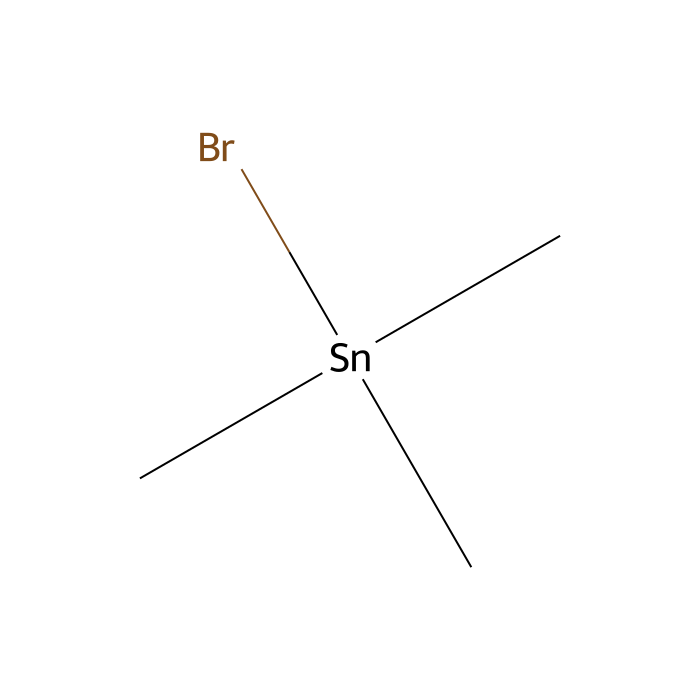
This compound belongs to the class of organic compounds known as triorganotin halide salts. These are organic compounds containing a tin atom bonded to three carbon atoms and a halogen atom.
External Descriptors
Not available
1. Djoumbou Feunang Y, Eisner R, Knox C, Chepelev L, Hastings J, Owen G, Fahy E, Steinbeck C, Subramanian S, Bolton E, Greiner R, and Wishart DS. ClassyFire: Automated Chemical Classification With A Comprehensive, Computable Taxonomy. Journal of Cheminformatics, 2016, 8:61.
Determine the necessary mass, volume, or concentration for preparing a solution.
Dilution Calculator
Determine the dilution needed to prepare a stock solution.
Reconstitution Calculator
Bewertungen
Kundenbewertungen
Application Protocols
Not specified for this item.
No tested biological or analytical application protocols (e.g., WB, IHC, IF, FC) are provided in the Product Data. For synthetic uses, see Reaction Conditions and Synthetic Utility for general literature guidance and adjust to your substrate and scale.
Biological Roles
Item-specific biological information
Not specified for this item; product is designated for research use only.
General/literature perspective
Trimethyltin compounds are xenobiotic organometallics with no known beneficial biological role. They can interact with biological membranes and proteins due to their lipophilicity and soft Lewis acidity at tin, contributing to toxicity.
In biochemical research contexts, organotin species are sometimes used as chemical probes or to induce defined chemical modifications on biomolecules in vitro (e.g., stannylation of nucleosides or as intermediates en route to labeled derivatives), but such uses require strict control to avoid protein/enzyme inactivation from tin residues.
Disposal and decontamination: organotin residues can persist and bioaccumulate; decontaminate glassware with oxidizing washes compatible with lab safety protocols and collect rinses as hazardous waste.
Buffer Applications
Not typically applicable.
Trimethyltin bromide is an organometallic reagent used in non-aqueous synthesis and is incompatible with aqueous buffer systems due to hydrolysis (HBr formation) and potential decomposition. For relevant usage information, see Reaction & Applications and Reaction Conditions.
Green Alternatives
Context
Organotin chemistry is effective but raises health and environmental concerns. Where feasible, consider less hazardous alternatives or greener solvents.
Alternatives to organotin pathways (literature)
Replace Stille coupling with Suzuki–Miyaura coupling using organoboron partners (e.g., pinacol boronates). Benefits: lower toxicity, easier waste handling; Trade-offs: may require different substrate activation and base systems.
Negishi or Kumada couplings can substitute for certain substrates, using organozinc or Grignard reagents with appropriate functional-group tolerance.
If a temporary directing/placeholder group is needed, trialkylsilyl groups (e.g., –SiMe3) can sometimes substitute for –SnMe3 with halodesilylation or Hiyama coupling.
Greener solvent choices (typical)
Consider 2-methyltetrahydrofuran (2-MeTHF) or cyclopentyl methyl ether (CPME) instead of THF/Et2O where compatible. These ethers have improved sustainability metrics and lower peroxide formation rates (CPME) versus Et2O, though they still require peroxide monitoring.
Comparison snapshot (general)
Stille (R–Sn): broad scope; organotin waste; tolerant of many functionalities.
Suzuki (R–B): greener waste profile; widely available boronates; sometimes less effective with certain heteroaryl electrophiles.
Not typically applicable as a formulated excipient.
Trimethyltin bromide is not used as a pharmaceutical excipient or processing aid. It is a research chemical for synthetic applications and intermediate preparation. No pharmacopeial monograph information is provided for this item. Handle exclusively in R&D laboratory settings with appropriate containment.
Physical Properties
Item-specific specifications
Not specified for this item; refer to CoA/Spec Sheet.
Literature/general properties (typical values; not item specifications)
Physical state/appearance: typically a colorless to off‑white crystalline solid or low‑melting solid (literature, organotin halide class).
Molecular weight: ~243.72 g/mol (from formula C3H9BrSn).
Solubility: soluble in common organic solvents such as diethyl ether, THF, toluene, dichloromethane; hydrolyzes slowly in water (literature, organotin halides).
Volatility: lower volatility than alkyl- or hydride-stannanes; can fume slightly in moist air due to hydrolysis (literature trend).
Refractive index, density, melting/boiling points, logP, pKa, UV cutoff: Not specified for this item; consult literature or CoA/SDS for definitive values.
Notes for practitioners
Handle as a moisture-sensitive, halide-bearing tin reagent; water promotes Sn–Br hydrolysis and HBr formation.
Purity and trace-halide content can influence downstream cross-coupling performance; verify by NMR (1H, 13C, 119Sn) if critical.
Quality and Grades
Item-specific
Grade/purity: Not specified for this item; refer to CoA/Spec Sheet for assay, metals, halide content, and other analytical limits.
Appearance: Not specified for this item; refer to CoA/Spec Sheet.
Guidance on grades (general)
Research/technical grade organotin halides are commonly qualified by 1H/13C/119Sn NMR, halide content, and residual solvents. Trace metals and protic impurities can adversely affect transmetalation yields and Stille coupling performance.
Low-water/low-acid content improves stability and minimizes hydrolysis (HBr formation). If low UV background is needed (rare for this reagent), HPLC-grade solvents should be used during handling rather than the reagent having an HPLC grade.
Stabilizers
No stabilizer information provided for this item. If stabilizers are present in other suppliers’ materials, they may affect reactivity in lithiation/transmetalation steps; review the CoA and perform a small-scale test if your transformation is sensitive.
Documentation
For project-critical work, request the latest CoA/SDS lot-specific data (assay method, titratable halide/acid, NMR spectra).
Reaction and Applications
Manufacturer Applications
Not specified in the listing. The following expands on common research uses for trimethyltin bromide (literature context).
Representative applications (literature)
Precursor to aryl- and heteroaryltrimethylstannanes: Halogen–lithium exchange or directed metalation of (hetero)arenes followed by quench with Me3SnBr to furnish Ar–SnMe3. These stannanes are key partners in Stille cross-coupling to build C–C bonds.
Tin–halogen exchange with organomagnesium/organolithium reagents: R–Li/MgX reacts with Me3SnBr to give R–SnMe3 (with LiBr/MgBr2 byproducts). Efficient at low temperature; useful for sensitive heteroarenes.
Installation of –SnMe3 as a removable/directing group: The trimethylstannyl substituent can serve as a temporary handle for subsequent iododestannylation, electrophilic substitutions, or cross-couplings.
Electrophile scavenging/halide transfer: Me3Sn+ behaves as a soft Lewis acid; in some systems, Me3SnBr is used to trap anions or to mediate halide exchange.
Practical notes
Maintain rigorously anhydrous conditions to avoid hydrolysis (HBr generation) and reduced yields.
Verify completion of transmetalation by 119Sn NMR (diagnostic chemical shifts for R–SnMe3) and by disappearance of starting arene-lithium signals in quench tests.
Stannane products are often oils/low-melting solids; purify by Kugelrohr distillation or silica gel with 1–5% triethylamine to suppress protodestannylation.
Reaction Conditions
General guidance from literature (not item specifications)
Arylstannane formation via lithiation:
Solvent: dry THF or Et2O.
Temperature: −78 to −20 °C for halogen–lithium exchange; add Me3SnBr at ≤0 °C to maintain selectivity.
Reagents: n-BuLi or sec-BuLi (1.0–1.2 equiv relative to aryl halide), then Me3SnBr (1.2–1.5 equiv).
Time: 0.5–2 h for metalation; 0.5–1 h for trapping; warm to 0–25 °C if needed.
Workup: quench cautiously (NH4Cl or HOAc in cold conditions), extract with nonpolar solvent, dry, and purify (silica with base additive).
Alkynylstannane preparation:
Generate alkynyllithium (LDA/n-BuLi) at −78 °C in THF; trap with Me3SnBr; typical isolated yields 60–90% depending on substrate.
Handling considerations:
Strictly anhydrous conditions; exclude oxygen and moisture. Hydrolysis produces HBr and reduces yield.
Monitor by TLC/GC and 119Sn NMR when needed; R–SnMe3 shows characteristic 119Sn shifts (substrate-dependent).
Downstream Stille coupling (of R–SnMe3 products):
Catalysts: Pd(PPh3)4 or Pd2(dba)3 with phosphine ligands; bases often unnecessary; polar aprotic solvents (DMF, toluene, dioxane) at 60–110 °C.
Tin scavengers (CuI, LiCl) may accelerate difficult couplings; balance against waste and selectivity.
Note: Optimize stoichiometry and temperature per substrate; consult primary literature for specific systems.
Safety and Handling
Item-specific hazard information
Signal word, H-statements, GHS classification, and pictograms: Not specified for this item; refer to the product SDS for authoritative information.
General safety (organotin halides; literature guidance)
Hazards: Organotin compounds can be acutely toxic and may cause neurotoxic effects upon significant exposure. Halide salts can be corrosive upon hydrolysis (HBr formation). Avoid inhalation of dust/aerosols and skin contact.
PPE: Use lab coat, chemical-resistant gloves (e.g., nitrile; double-glove for extended handling), splash goggles; work in a certified chemical fume hood.
Incompatibilities: Strong oxidizers; strong bases and nucleophiles (can induce disproportionation or exchange); moisture/water (hydrolysis with HBr release). Avoid contact with acids and acid chlorides when not intended.
Handling tips: Keep container tightly closed under dry air or inert gas. Transfer using dry glassware. Avoid grinding/powdering to limit dust. For weighing, use a balance in a hood.
First aid (overview; follow SDS/protocols): If inhaled—move to fresh air and seek medical attention. Skin/eye contact—immediately flush with water for ≥15 min and remove contaminated clothing; seek medical attention. Ingestion—rinse mouth; do not induce vomiting; seek immediate medical care.
Spill/cleanup: Evacuate area, don appropriate PPE, avoid dust; absorb with inert material, place in compatible waste container for hazardous disposal. Prevent entry to drains.
Waste: Collect organotin waste separately for hazardous disposal per institutional and local regulations (organotin compounds are environmentally hazardous).
Solvent Selection
Applicability
Trimethyltin bromide is an organometallic halide used predominantly in non-aqueous synthesis. Solvent choice impacts hydrolytic stability and the efficiency of transmetalation steps.
General solvent behavior (literature)
Polarity class: moderately polarizable, compatible with aprotic organic solvents.
Typical solvents: THF, diethyl ether, toluene, hexanes, dichloromethane. Avoid alcohols, amines, and water which promote exchange/hydrolysis.
Dielectric considerations: Coordinating ethers (THF, Et2O) can solvate associated ions and facilitate reactions with organolithiums/Grignards. Less coordinating media (toluene/hexanes) can help in crystallizations or minimize side reactions.
Selection guidance
Preparation of arylstannanes via lithiation: choose dry THF or Et2O at low temperature to improve organolithium generation and subsequent quench with Me3SnBr.
Storage/handling: toluene or hexanes are suitable for brief slurry transfer under inert atmosphere if needed; they reduce solubility and thus exposure.
Analytical workup: dichloromethane/ethyl acetate/hexanes systems aid in phase separation and chromatography; note that organotin residues can tail—use metal scavengers if necessary.
Comparison (typical)
THF: best for low-temperature metallation and fast tin–halide exchange.
Toluene: good for non-coordinating conditions, higher thermal stability.
Ether: useful for Grignard-related operations; more volatile and peroxide-forming—monitor peroxides.
Storage and Reconstitution
Item-specific storage
Storage conditions: Room temperature (per Product Data).
Shipped in: Not specified for this item; refer to the product label.
General handling/storage guidance (literature)
Keep tightly closed in a dry, inert atmosphere (desiccator or glovebox) to minimize hydrolysis (HBr formation). Protect from moisture and prolonged air exposure.
Avoid temperature cycling that may cause condensation in the container. Store away from acids, bases, oxidizers, and aqueous media.
Reconstitution
Not applicable. This is a neat organometallic reagent; use as supplied. If a solution is required, prepare fresh in dry solvent (e.g., THF, toluene, ether, DCM) under inert atmosphere and use promptly.
Stability notes
Shelf stability is generally good under dry, closed conditions. Any discoloration, fuming on opening, or acid odor may indicate hydrolysis—assess by NMR before critical use.
Structure and Identity
Item-specific (from Product Data)
SKU: T282973
Product name: Trimethyltin bromide
CAS: 1066-44-0
PubChem CID: 14015
InChIKey: 232453 (as provided)
Storage conditions: Room temperature
Literature/computed identity details (for reference only; not item specifications)
2D structural description: A tetracoordinate tin center bound to three methyl groups and one bromide (pseudo-tetrahedral geometry around Sn). Functional groups: polarizable Sn–C(sp3) bonds and a Sn–Br bond; no stereocenters.
General structural features
Organotin halide of the type R3SnX; commonly used as a tin electrophile/transmetalation partner to form R–SnMe3 species after reaction with organolithiums or Grignards.
Synthetic Utility
Key functional elements
Electrophilic tin center (R3Sn–) paired with bromide enables halide/tin exchange with organolithium and Grignard reagents, producing R–SnMe3 derivatives efficiently.
The –SnMe3 moiety is a versatile synthetic linchpin: it stabilizes carbanions/radicals on adjacent carbons and serves as a handle for Stille coupling, iododestannylation, and electrophilic substitution.
Typical transformations (literature)
Directed ortho-metalation or Br/Li exchange on (hetero)arenes at −78 to −40 °C in THF, followed by quench with Me3SnBr to give Ar–SnMe3.
Formation of vinyl- and alkynylstannanes via lithiation of vinyl/alkynyl precursors then trapping with Me3SnBr—useful partners for Csp2–C or Csp–C couplings.
Conversion of R–SnMe3 to R–I (or R–Br) by electrophilic halodestannylation (e.g., NIS/NBS), enabling net halogenation with regiocontrol set at the stannylation step.
Advantages
High functional-group tolerance downstream (Stille), robust transmetalation kinetics, and the ability to prepare otherwise challenging coupling partners.
Considerations
Tin waste management and product purification from tin residues are necessary. Metal scavengers (e.g., silica-bound thiols) or fluorous-phase strategies can aid in cleanup.
Target Specificity
Not applicable.
This product is a small-molecule organometallic reagent, not a biological targeting agent (e.g., antibody, enzyme inhibitor with defined target profile). No target/epitope specificity is provided in the Product Data.
Wir verwenden Cookies, um die ordnungsgemäße Funktion der Website sicherzustellen und, soweit zulässig, Ihr Nutzererlebnis zu verbessern. Sie können Ihre Einstellungen jederzeit unter „Einstellungen“ verwalten. Weitere Informationen finden Sie in unserer Cookie-Richtlinie.
Shall we send you a message when we have discounts available?
Remind me later
Thank you! Please check your email inbox to confirm.
Products are supplied to verified businesses, institutions, and qualified professionals for research and development use only. Not for use in humans, animals, diagnosis, or therapy.