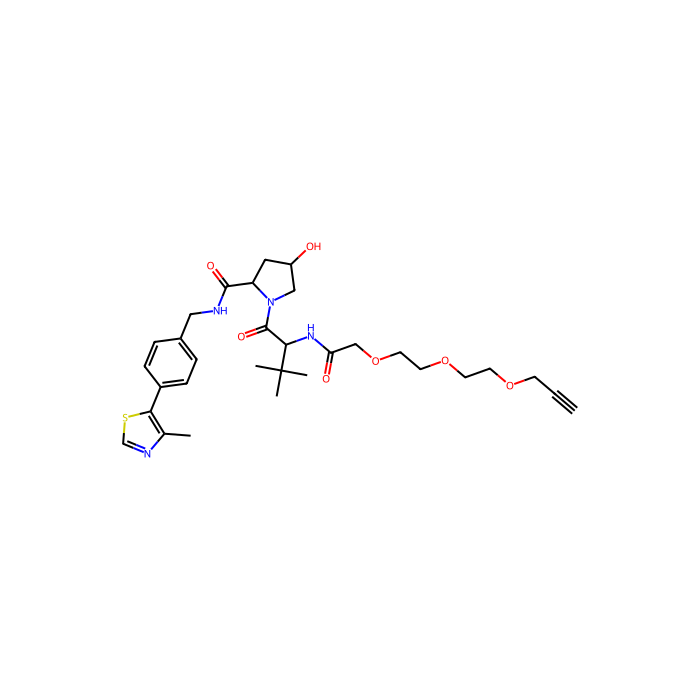
Determine the necessary mass, volume, or concentration for preparing a solution.
≥95%(HPLC) für empfindliche chromatographische und analytische Workflows, die minimale Basislinieninterferenzen erfordern.
Store at -20°C Versand Ice chest + Ice pads. Genaue Spezifikationen finden Sie im chargenspezifischen COA.
SDS, COA, Datenblatt und Spezifikationsblatt stehen zum Download bereit. Chargenspezifische COA über Chargennummernsuche abrufbar.
In 0 peer-reviewten Publikationen zu Chromatographie, organischer Synthese und Kreuzkupplungsreaktionen zitiert.
Umfassendes Dokument zu Gefahren, Handhabung, Lagerung und Einhaltung regulatorischer Vorschriften.
<<<<<<< HEAD SDS herunterladen → ======= SDS herunterladen → >>>>>>> release248-p3Chargenspezifische Qualitätsdaten. Geben Sie Ihre Chargennummer ein, um das genaue COA abzurufen.
COA nachschlagen →Vollständige Qualitätsmerkmale und Akzeptanzkriterien für diese Qualität.
Spezifikationsblatt ansehen →Find and download the COA for your product by matching the lot number on the packaging.
| Lot Number | Certificate Type | Datum | Artikel |
|---|---|---|---|
| Certificate of Analysis | Jan 16, 2026 | V287666 | |
| Certificate of Analysis | Jan 16, 2026 | V287666 | |
| Certificate of Analysis | Jan 16, 2026 | V287666 | |
| Certificate of Analysis | Jan 16, 2026 | V287666 | |
| Certificate of Analysis | Jan 16, 2026 | V287666 | |
| Certificate of Analysis | Jan 16, 2026 | V287666 | |
| Certificate of Analysis | Jan 16, 2026 | V287666 | |
| Certificate of Analysis | Jan 16, 2026 | V287666 | |
| Certificate of Analysis | Jan 16, 2026 | V287666 | |
| Certificate of Analysis | Jan 16, 2026 | V287666 |
No vendor-validated experimental application protocols are provided for this item. As a small-molecule building block, it is typically used in synthetic organic chemistry rather than in direct assay formats.
General workflow guidance (literature/general):
Note: The above are general literature-style procedures and should be optimized for your specific substrates and scale. Always consult the SDS and CoA for item-specific handling and characterization details.
Context (literature/general; no therapeutic claims)
Biochemical considerations
Use in research systems
Note: This catalog item is for research use only.
This product is not a buffering reagent and is not typically employed to prepare analytical or biological buffers. For experimental use, it is usually dissolved in organic solvents (e.g., DMSO, DMF) and then introduced into reaction media or assay systems at low percentages of co-solvent. If aqueous compatibility is required for a conjugation step (e.g., CuAAC), mixed aqueous–organic solvent systems such as t-BuOH/H2O or EtOH/H2O can be used as reaction media (literature guidance), but the compound does not itself define buffer capacity or pH.
For buffer selection related to assays of conjugates made from this building block, choose buffers based on the biological target and technique (e.g., PBS, HEPES, Tris), ensuring compatibility with any residual copper from click reactions (include chelators like EDTA where appropriate).
Solvent and methodology choices (literature/general; evaluate for your system)
Small comparison (general)
Waste minimization
This item is a research-grade small-molecule building block for chemical biology and medicinal chemistry and is not an excipient or GMP material. It does not have a defined role in pharmacopeial formulations.
Research/manufacturing context (general)
Considerations if transitioning to development (general guidance, not specific to this item)
No therapeutic or clinical claims are made for this product. It is supplied strictly for research use only.
Item-specific (Product Data)
Literature/general expectations for this class (VH032–PEG2–alkyne derivatives; not specifications)
For exact numerical values (mp, bp, density, refractive index, water content), consult the CoA/Spec Sheet for this lot.
Item-specific (Product Data)
Interpretation and expectations (general)
Refer to the CoA/Spec Sheet for this specific item’s purity assay, chromatographic method, and analytical data.
Primary application (literature/general)
Typical reaction families
Practical tips
CuAAC (literature general guidance; adjust to your substrate set)
Amide couplings involving complementary partners (general)
Side reaction control
Note: These are literature-style conditions; optimize for your substrates.
Item-specific (Product Data)
General laboratory safety (literature/general guidance; defer to SDS)
Compound class considerations (literature/general)
Choosing among common solvents (general guidance)
Practical tips
Item-specific (Product Data)
General handling guidance (not item specifications)
Reconstitution (general practice for this class)
Stability of solutions (general)
Refer to the CoA/SDS for any additional item-specific storage notes.
Item-specific (Product Data)
Literature/structural interpretation (non-spec; inferred from name)
2D description in words (general)
Note: Exact atom connectivity, stereochemistry, and indices should be confirmed against the Certificate of Analysis or a structure file for this specific catalog item.
Functional group handle
Ligase-recruiting module
Linker engineering
Retrosynthetic planning (general)
Orthogonality and selectivity
Analytics
No target-binding selectivity data are provided for this catalog item. This product is a small-molecule building block rather than a biologic or assay-validated probe. In general literature context, VH032-based ligands bind the VHL E3 ubiquitin ligase, but any actual binding constants and selectivity for this specific item should be confirmed from primary literature or the CoA if available.
Item-specific data required for typical fields (antigen, clone, isotype, host species, species reactivity) are not applicable to this product type.