GRADE & PURITYAnalytical standard?Analytical standard — certified-purity material for quantitative calibration. Use to prepare calibration standards and validate analytical methods.≥98%(HPLC)
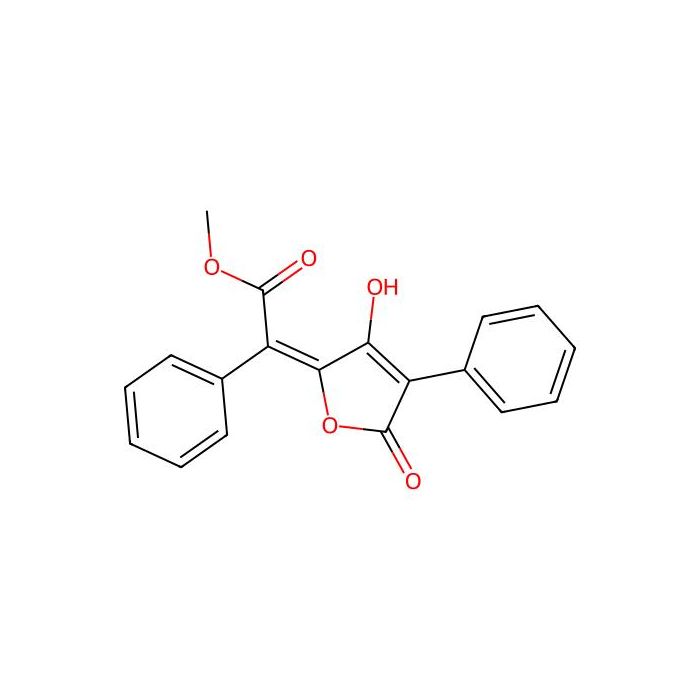
This compound belongs to the class of organic compounds known as butenolides. These are dihydrofurans with a carbonyl group at the C2 carbon atom.
External Descriptors
Not available
1. Djoumbou Feunang Y, Eisner R, Knox C, Chepelev L, Hastings J, Owen G, Fahy E, Steinbeck C, Subramanian S, Bolton E, Greiner R, and Wishart DS. ClassyFire: Automated Chemical Classification With A Comprehensive, Computable Taxonomy. Journal of Cheminformatics, 2016, 8:61.
Zertifikate (CoA, COO, BSE/TSE und Analyse-Diagramm)
C of A & Other Certificates(BSE/TSE, COO):
Analytical Chart:
Chemische und physikalische Eigenschaften
Brechungsindex
n20D1.66 (Predicted)
Siedepunkt (°C)
521.42° C at 760 mmHg (Predicted)
Schmelzpunkt (°C)
150-151 (lit.)
Molekulargewicht
322.300 g/mol
XLogP3
3.000
Hydrogen Bond Donor Count
1
Hydrogen Bond Acceptor Count
5
Rotatable Bond Count
4
Exact Mass
322.084 Da
Monoisotopic Mass
322.084 Da
Topological Polar Surface Area
72.800 Ų
Heavy Atom Count
24
Formal Charge
0
Complexity
575.000
Isotope Atom Count
0
Defined Atom Stereocenter Count
0
Undefined Atom Stereocenter Count
0
Defined Bond Stereocenter Count
1
Undefined Bond Stereocenter Count
0
The total count of all stereochemical bonds
1
Covalently-Bonded Unit Count
1
Lösungsrechner
Molarity Calculator
Determine the necessary mass, volume, or concentration for preparing a solution.
Dilution Calculator
Determine the dilution needed to prepare a stock solution.
Reconstitution Calculator
Bewertungen
Kundenbewertungen
Application Protocols
No vendor-validated bioassay protocols are provided for this analytical standard. Typical analytical uses include:
Preparing calibration curves for HPLC-UV/DAD or LC–MS: weigh an accurately known mass, dissolve in HPLC-grade MeOH or ACN to a primary stock, then serially dilute.
System suitability: inject a mid-range standard at the beginning and end of a sequence to assess retention-time stability and detector response.
Because method conditions vary across instruments and matrices, users should develop and validate protocols under their specific conditions. Refer to the CoA for any lot-specific handling notes.
Biological Roles
No biological or clinical claims are made for this product. The following is general background for professional context only.
Vulpinic acid is a lichen-derived aromatic polyketide of the pulvinic-acid family (literature). Such metabolites function primarily as secondary metabolites, often contributing to pigmentation and ecological interactions of lichens.
The extended conjugation gives rise to yellow coloration and strong UV–vis absorbance, which can be ecologically relevant as a light-absorbing pigment (literature).
In research, vulpinic acid is monitored as a chemotaxonomic marker for certain lichen species; as an analytical standard it supports accurate identification and quantitation in metabolomic surveys. No physiological or therapeutic roles are implied for this SKU.
Buffer Applications
Not typically applicable. Vulpinic acid is a sparingly water-soluble aromatic standard and is not used to prepare laboratory buffers. For analytical use, it is dissolved in organic solvents (e.g., MeOH, ACN) and then introduced into aqueous-organic mobile phases for LC. If pH effects on spectra/retention are being studied, prepare buffered mobile phases separately and spike vulpinic acid solutions immediately before analysis.
Green Alternatives
As an analytical standard, the primary “green” lever is solvent selection and minimization of solvent use. Choose greener solvents where they meet method performance requirements.
Comparison of common choices for preparing standards (general guidance):
Methanol (preferred greener option vs ACN)
Pros: bio-derived routes available, lower toxicity than ACN, excellent solvency, good UV transparency.
Cons: higher viscosity vs ACN; may yield broader peaks in some LC methods.
Ethanol (greener, renewable)
Pros: low toxicity, renewable, good solvency.
Cons: higher UV cutoff; not ideal for UV detection below ~210–215 nm; can alter LC selectivity.
Acetonitrile
Pros: superb LC performance and UV transparency; low viscosity.
Cons: petroleum-derived, higher toxicity/energy intensity than MeOH/EtOH.
Ethyl acetate (extractions)
Pros: relatively benign, biodegradable, effective for medium-polar organics.
Cons: hydrolysis risk in wet conditions over long times; higher volatility.
Green practice tips:
Use micro-volume calibrations (e.g., microliter syringes, microvials) to reduce solvent waste.
Optimize gradient programs to shorten run times without sacrificing resolution.
Consolidate multi-analyte standards when feasible to reduce preparations and vial count.
Implement solvent recycling for isocratic methods where validated.
Pharmaceutical Uses
Not applicable for this SKU. This product is sold strictly as an analytical standard for research use only. It is not an excipient and has no pharmacopeial monograph indicated in the Product Data. Do not use for manufacturing or clinical applications.
Physical Properties
Item-specific specifications are not provided for this SKU beyond storage. The following points summarize what is typical for vulpinic acid and how to handle it for analytical work; do not treat these as product specifications.
Item-specific (Product Data):
Appearance: Not specified for this item; refer to CoA/Spec Sheet.
Storage: Room temperature (Product Data)
General/literature characteristics (non-spec):
Physical state/color: typically a yellow crystalline solid (literature for pulvinic/vulpinic acids).
Solubility: sparingly soluble in water; readily soluble in common organic solvents (MeOH, EtOH, acetone, acetonitrile) and in DMSO (literature). For quantitative work, prepare stock solutions in HPLC-grade MeOH or ACN.
UV–vis: strong absorbance in the near-UV/visible due to an extended conjugated system; convenient for HPLC-UV detection (literature). Exact λmax depends on solvent; verify experimentally for your method.
Acid/base: weakly acidic due to the vinylogous 1,3-dicarbonyl/ester system (literature); avoid strong bases if ester integrity must be preserved.
Not provided for this item; refer to CoA/Spec Sheet:
Melting point, boiling point, density, logP, pKa, refractive index, water content, UV cutoff, metal impurities.
Quality and Grades
Grade/Purity: Analytical standard (Product Data)
What “Analytical standard” implies:
Intended for calibration, system suitability, retention-time confirmation, and quantitative spike/recovery experiments in chromatographic and spectroscopic analyses.
Emphasis is on identity confirmation and assay purity suitable for quantitative work, often accompanied by a Certificate of Analysis (CoA) listing purity determination method (e.g., HPLC area%), residual solvents, and identity tests.
UV behavior is typically consistent and reproducible, facilitating HPLC-UV or diode-array quantitation of lichen metabolites.
Item-specific notes:
Stabilizers: Not specified for this item; refer to CoA/Spec Sheet.
Assay/purity value and allowable impurities: Not specified for this item; refer to CoA/Spec Sheet.
Intended use: For research use only (Product Data). Not for drug, diagnostic, or household use.
Best practices when using analytical standards:
Prepare gravimetrically verified stock solutions in HPLC-grade MeOH or ACN; record exact masses and volumes for traceability.
Store primary stock and working solutions in amber vials to limit photolysis; track lot numbers and expiration dates from the CoA.
Validate response factors and stability under your method conditions (autosampler dwell time, needle wash solvents, temperature).
Reaction and Applications
This SKU is positioned as an analytical standard rather than a synthetic reagent. Nevertheless, understanding its chemical behavior is useful for method development and stability studies.
Analytical applications (most relevant):
Reference standard for lichen metabolite profiling, dereplication, and quantitative analysis by HPLC-UV/DAD and LC–MS. Strong chromophore simplifies UV detection (literature).
System suitability: retention-time marker and spectral match control in natural product workflows; supports validation of extraction and cleanup procedures.
Chemical behavior (literature/general):
Ester functionality can undergo base- or acid-catalyzed hydrolysis and transesterification; avoid strong base or prolonged exposure to strong acid when preparing standards.
The conjugated vinylogous 1,3-dicarbonyl motif can tautomerize; pH and solvent can shift UV–vis spectra. Standardize solvent and pH for consistent quantitation.
Photo-susceptibility: extended conjugation may lead to slow photobleaching; prefer amber vials and minimize bench-top light exposure.
Practical tips:
Use freshly prepared working solutions for LC work; verify stability over autosampler residence times (e.g., 4–24 h) and temperatures.
For LC–MS, keep organic content ≥50% in standards to prevent adsorption losses in vials; consider silanized or PP vials if sticking is observed.
Include internal standards (e.g., a structurally related lichen acid) to correct for matrix effects during quantitation.
Reaction Conditions
As an analytical standard, vulpinic acid is not typically subjected to preparative reactions. For method development and stability studies, the following general observations (literature/general) are useful—these are NOT product specifications:
Stability in solution: stable for typical LC autosampler intervals (hours) in MeOH or ACN at ambient temperature and protected from light. Verify experimentally for your setup.
Hydrolysis sensitivity: increased in aqueous basic media; minimize exposure to pH > 9 at elevated temperatures if ester preservation is required. Acid-catalyzed hydrolysis can occur under strong acid with heat.
Photostability: extended conjugation may slowly degrade under strong light; use amber glassware and minimize light exposure during long runs.
LC method conditions (examples to start with):
Column: C18, 1.7–5 µm.
Mobile phase A: water + 0.1% formic acid (or volatile buffer); B: ACN or MeOH.
Gradient: 30–80% B over 5–15 min; monitor at 254–380 nm depending on spectral response (optimize λ in your system).
Flow: 0.3–1.0 mL/min (HPLC) or 0.1–0.4 mL/min (UHPLC).
Always validate conditions with system suitability tests; adjust gradients and modifiers to achieve desired resolution and peak shape.
Safety and Handling
Safety details specific to this SKU are not provided in the Product Data; consult the SDS for authoritative information.
GHS classification, signal word, pictograms, H-statements: Not specified for this item; refer to SDS.
General hazards (literature/analog class guidance): aromatic polyketide pigments and related esters may cause skin/eye irritation; dust may irritate respiratory tract. Treat as harmful if swallowed/inhaled until data confirm otherwise. Avoid generating dust/aerosols.
PPE: lab coat, safety glasses, and appropriate gloves (e.g., nitrile). Handle powders in a fume hood or ventilated enclosure; use anti-static practices when weighing fine powders.
Incompatibilities: avoid strong bases and strong nucleophiles that can promote ester hydrolysis/transesterification; avoid strong oxidizers that may degrade the conjugated chromophore.
Light/air sensitivity: conjugated lichen pigments can photo-degrade; minimize exposure to strong light and elevated temperatures during method development and storage.
First aid (general):
Skin/eye contact: rinse with plenty of water for several minutes. Remove contaminated clothing.
Inhalation: move to fresh air; seek medical attention if symptoms persist.
Ingestion: rinse mouth; do not induce vomiting; seek medical advice.
Waste: collect organic solutions and contaminated materials in properly labeled hazardous-waste containers; follow institutional and local regulations.
Always defer to the SDS and institutional EHS policies for final guidance.
Solvent Selection
Vulpinic acid is a moderately lipophilic, conjugated aromatic ester used primarily as a reference standard. Solvent choice impacts solution stability, detection, and recovery.
Polarity/miscibility (literature/general):
Poorly soluble in water; readily soluble in polar aprotic and protic organic solvents (MeOH, EtOH, ACN, acetone) and DMSO.
For LC applications, ACN and MeOH are preferred due to low viscosity, UV transparency, and miscibility with aqueous mobile phases.
Selection guidance:
Stock preparation: 0.5–5 mg/mL in MeOH or ACN for HPLC/UPLC; for very concentrated stocks, DMSO can be used then diluted into MeOH/ACN just before injection to avoid peak distortion.
Mobile phases: Water with 0.1% formic acid or ammonium formate buffer paired with MeOH/ACN improves peak shape and ionization for LC–MS. Verify that additives do not induce hydrolysis.
Sample cleanup: Ethyl acetate can efficiently extract vulpinic acid from nonpolar matrices; iso-propanol may improve recovery from biological or plant extracts when water is present.
Quick comparison (general):
MeOH: strong solvency, good UV transparency down to ~205 nm; can strengthen retention less than ACN; widely used for standards.
ACN: lower viscosity, often sharper peaks; excellent UV transparency; sometimes better for gradient LC.
DMSO: highest solvency; use sparingly due to viscosity and ion suppression in LC–MS.
Storage and Reconstitution
Item-specific:
Storage conditions: Room temperature (Product Data). Store tightly closed in a dry place. For best stability, keep in the original container and protect from light.
Shipped in: Not specified for this item; refer to CoA/Spec Sheet.
Reconstitution/preparation (analytical practice):
Stock solutions: Prepare in HPLC-grade methanol or acetonitrile. Typical concentrations: 0.5–5 mg/mL for routine LC work; adjust to detector linear range.
Technique: Use an analytical balance for solid massing; record exact mass and final volume to 4–5 significant figures. Mix gently until fully dissolved.
Containers: Use amber glass autosampler vials with PTFE/silicone septa. For adsorption-sensitive work, consider silanized glass or polypropylene vials.
Stability: Working solutions are generally stable for the duration of an analytical sequence when protected from light. For longer-term storage, aliquot and store sealed at room temperature as per Product Data, or refrigerate if your validation indicates improved stability. Avoid repeated opening that introduces moisture.
General cautions:
Avoid prolonged exposure to strong light and elevated temperatures.
If aqueous buffers are required, dilute immediately before use to minimize hydrolysis; do not store aqueous solutions unless stability has been verified for your method.
Structure and Identity
Vulpinic Acid (SKU V733851) is a lichen-derived aromatic polyketide of the pulvinic-acid family commonly used as an analytical reference standard.
CAS: 521-52-8 (Product Data)
PubChem CID: 54690323 (Product Data)
InChIKey: Not specified for this item; refer to CoA/Spec Sheet. (Product Data lists: "262234", which is not a standard InChIKey format; defer to CoA)
SMILES: Not specified for this item; refer to CoA/Spec Sheet.
Molecular formula: Not specified for this item; refer to CoA/Spec Sheet.
Molecular weight: Not specified for this item; refer to CoA/Spec Sheet.
Structural features (general/literature description):
Member of the pulvinic-acid class of lichen pigments with an extended conjugated system that provides strong UV–vis absorbance (useful for HPLC-UV detection).
Contains an aryl-conjugated vinylogous 1,3-dicarbonyl motif and an ester functionality (literature), making it a moderately lipophilic, weakly acidic aromatic ester.
2D description: an aromatic ring system conjugated through a carbonyl-rich linker to an ester-bearing aryl fragment; overall planar-conjugated chromophore typical of yellow lichen acids.
Notes:
This listing is provided as an analytical standard; for definitive structural identifiers (SMILES/InChI), consult the accompanying CoA/SDS or official databases.
Synthetic Utility
This SKU is intended as an analytical standard, not as a building block. However, from a mechanistic standpoint (literature/general), vulpinic acid contains features relevant to reactivity and stability assessments:
Ester group: susceptible to hydrolysis (acidic or basic) and transesterification; use neutral, anhydrous conditions to preserve integrity during handling.
Conjugated vinylogous 1,3-dicarbonyl system: capable of keto–enol tautomerism; UV–vis properties and chromatographic behavior can be solvent- and pH-dependent.
Aromatic core: relatively deactivated toward electrophilic substitution by conjugation with the electron-withdrawing carbonyl framework; harsh conditions risk degradation of the chromophore.
Implications for labs:
When spiking vulpinic acid into reaction mixtures (e.g., as a tracer or marker), anticipate sensitivity to strong base and nucleophiles.
During sample workup, avoid prolonged exposure to strong base or high-temperature aqueous conditions to minimize ester cleavage and chromophore bleaching.
For preparative synthetic transformations of vulpinic acid itself, consult primary literature; no synthetic use is claimed for this product listing.
Target Specificity
Not applicable. This product is a small-molecule analytical standard and is not an antibody, probe, or affinity reagent. No antigen/epitope or species reactivity is relevant.
Need help choosing the grade?
Our grade selection guide covers purity, stabilizer status, and application suitability for all variants in our catalog.
Wir verwenden Cookies, um die ordnungsgemäße Funktion der Website sicherzustellen und, soweit zulässig, Ihr Nutzererlebnis zu verbessern. Sie können Ihre Einstellungen jederzeit unter „Einstellungen“ verwalten. Weitere Informationen finden Sie in unserer Cookie-Richtlinie.
Shall we send you a message when we have discounts available?
Remind me later
Thank you! Please check your email inbox to confirm.
Products are supplied to verified businesses, institutions, and qualified professionals for research and development use only. Not for use in humans, animals, diagnosis, or therapy.