General description
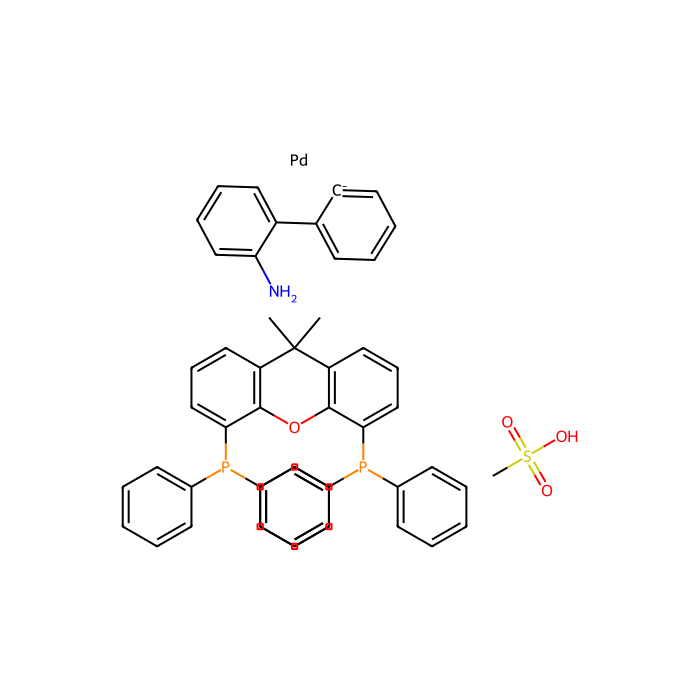
XantPhos Pd G3 is a third generation (G3) Buchwald precatalyst. It is air, moisture and thermally-stable and is highly soluble in a wide range of common organic solvents. It has long life in solutions. XantPhos Pd G3 is an excellent reagent for palladium catalyzed cross-coupling reactions. Some of its unique features include lower catalyst loadings, shorter reaction time, efficient formation of the active catalytic species and accurate control of ligand: palladium ratio.
Application
XantPhos Pd G3 may be used in the following processes:
Negishi cross-coupling reaction during the synthesis of palmerolides.
Aminocarbonylation of heteroaryl bromides with carbon monoxide (CO) in the presence of triethylamine.
Coupling between polyglycosyl thiols and aglycon halides by C-S bond formation.
Product class
M-P, Homogeneous Catalysts, M-N, Buchwald Catalyst, Buchwald Catalyst 3rd Generation, Amino Ligands, Ferrocenyl Ligands - Achiral
Reaction type
Cross Coupling Reactions with Arenes, Amination, Buchwald-Hartwig Aminaton, Suzuki-Miyaura Coupling Reaction
Colorless to yellow liquid
Chemical properties
Empirical formula
Pd(Xantphos)[2-(2'-amino-1,1'-biphenyl)](Ms)
Theoretical metal content