
Construction of 7-Azaindoles Using O-Vinylhydroxylamines: N-Oxide Activation and [3,3]-Sigmatropic Rearrangement
Construction of 7-Azaindoles Using O-Vinylhydroxylamines: N-Oxide Activation and [3,3]-Sigmatropic Rearrangement
Introduction
This article is primarily based on the study “Harnessing O-Vinylhydroxylamines for Ring-Annulation: A Scalable Approach to Azaindolines and Azaindoles,” published by Grimm, Randolph, Buravov, Mykhailiuk, Kürti, and co-workers in the Journal of the American Chemical Society in 2025. In this study, mono-N-protected O-vinylhydroxylamines were used as annulation reagents and underwent N-arylation with azaarene N-oxides, followed by a [3,3]-sigmatropic rearrangement, rearomatization, and intramolecular cyclization to afford hydroxyl-containing 7-azaindoline derivatives, which could be further dehydrated to form 7-azaindoles.[1]
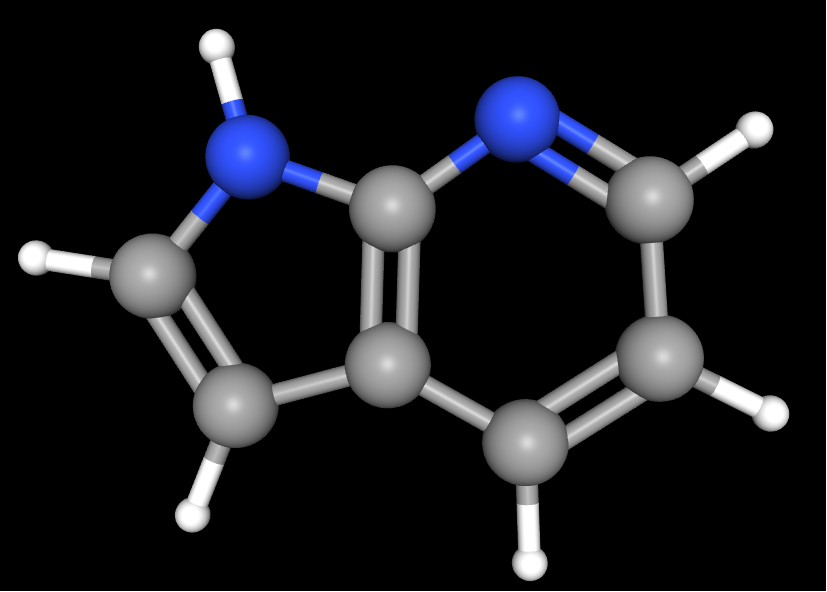
7-Azaindole consists of a fused pyridine and pyrrole ring system. Compared with conventional indole, one carbon atom in the six-membered aromatic ring is replaced by a nitrogen atom, resulting in changes in the molecular electron distribution, basicity, and hydrogen-bonding behavior. 7-Azaindoles and their partially reduced forms, 7-azaindolines, are commonly used in the study of bioactive molecules and medicinal chemistry.
The key feature of this study is the sequential organization of two critical bond-forming events between the two starting materials:
An N-arylation first establishes the C—N bond, followed by formation of the adjacent C—C bond through a [3,3]-sigmatropic rearrangement. Rearomatization and intramolecular cyclization then form the ring-closing N—C bond, completing construction of the fused five-membered ring.
This bond-forming sequence connects a polar reaction, pericyclic rearrangement, restoration of aromaticity, and intramolecular addition to a carbonyl group, and therefore provides the principal framework for understanding the method.
1. Bond-Formation Challenges in Constructing the 7-Azaindole Framework
From the perspective of atom origin, the newly formed five-membered ring is assembled from two types of starting materials:
① The azaarene provides two adjacent fused carbon atoms;
② The O-vinylhydroxylamine provides one nitrogen atom and two carbon atoms.
Accordingly, two key bond-forming events must occur between the two starting materials:
① Formation of a C—N bond between an aryl carbon of the azaarene and the hydroxylamine nitrogen;
② Formation of a C—C bond between the adjacent aryl carbon and a vinyl carbon.
An additional N—C bond must then be formed through intramolecular cyclization to close the five-membered ring.
The C—H positions of an unsubstituted pyridine lack leaving groups suitable for conventional nucleophilic substitution. A stepwise synthesis would therefore generally require the prior preparation of a halogenated azaarene or another prefunctionalized substrate, followed by amination, carbon–carbon coupling, and cyclization.
The strategy adopted in this study was to first use an azaarene N-oxide to accomplish N-arylation, thereby arranging the azaarene, hydroxylamine nitrogen, oxygen atom, and vinyl group in a connectivity suitable for a [3,3]-sigmatropic rearrangement. The adjacent C—C bond was then formed through an intramolecular rearrangement.
The first bond-forming step therefore serves two functions:
① It forms the C—N bond present in the target framework;
② It establishes the six-atom arrangement required for the subsequent C—C bond-forming rearrangement.
2. Structural Roles of the Two Starting Materials
2.1 Azaarene N-Oxides: Providing an Entry Point for N-Arylation
After azaarenes such as pyridines and quinolines are converted into their corresponding N-oxides, the N—O unit on the ring nitrogen can be further activated by an acid anhydride.
The study used p-toluenesulfonic anhydride (Ts₂O) or trifluoromethanesulfonic anhydride (Tf₂O) to activate the azaarene N-oxides. The activated azaarene can then react with the nitrogen atom of the O-vinylhydroxylamine to form an N-arylated intermediate.[1]
Azaarene N-oxides mainly perform the following functions in this reaction:
① Alter the electronic properties of the azaaromatic ring;
② Enable positions that are otherwise difficult to aminate directly to participate in C—N bond formation;
③ Avoid the need to prepare the corresponding halogenated azaarenes in advance;
④ Determine the initial site of connection between the O-vinylhydroxylamine and the azaaromatic ring;
⑤ Provide the aryl terminus required for the subsequent [3,3]-sigmatropic rearrangement.
The oxygen atom of the azaarene N-oxide is not retained in the final product. Its principal role is to provide traceless activation and direct the site of nucleophilic substitution during the reaction.
2.2 O-Vinylhydroxylamines: Providing a Two-Carbon, One-Nitrogen Annulation Unit
A mono-N-protected O-vinylhydroxylamine can be represented in simplified form as:
PG—NH—O—CH=CH₂
where PG represents a nitrogen-protecting group. The protecting groups examined in the study included acetyl (Ac), tert-butoxycarbonyl (Boc), and benzyloxycarbonyl (Cbz), among others.
Structural component | Role in the reaction | Fate in the product |
Hydroxylamine nitrogen | Attacks the activated azaaromatic ring to accomplish N-arylation | Becomes the nitrogen atom of the newly formed five-membered ring |
N—O bond | Participates in bond reorganization during the [3,3]-sigmatropic rearrangement | Cleaved and transformed during the rearrangement |
Two vinyl carbon atoms | Participate in C—C bond formation and subsequent cyclization | Become the two carbon atoms of the newly formed five-membered ring |
Nitrogen-protecting group | Modulates reagent stability and nitrogen reactivity | May be retained or removed under subsequent reaction conditions |
The role of the O-vinylhydroxylamine is not limited to supplying one nitrogen atom and two carbon atoms. Its N—O—vinyl connectivity also predetermines the sequence in which these atoms participate in N-arylation, [3,3]-sigmatropic rearrangement, and intramolecular cyclization.
After N-arylation, the intermediate can directly undergo intramolecular rearrangement without requiring an additional organometallic reagent or a transition-metal-catalyzed coupling component.
3. Preparation of O-Vinylhydroxylamines
The study developed two complementary methods for preparing mono-N-protected O-vinylhydroxylamines.
3.1 Deprotection–Reprotection Route
The first route uses a phthalimide-protected O-vinylhydroxylamine precursor. The phthalimide protecting group is removed by hydrazinolysis, after which an Ac, Boc, Cbz, or other nitrogen-protecting group is introduced.
This route can be used to prepare both the parent compound and a range of substituted O-vinylhydroxylamines. Changing the nitrogen-protecting group allows the reagent stability, nitrogen nucleophilicity, and subsequent dehydration behavior to be adjusted.
3.2 Addition to Activated Alkynes
The second route uses N-Boc hydroxylamine and an activated alkyne as starting materials. Under base-promoted conditions, an oxa-Michael addition occurs to directly form an O-vinylhydroxylamine bearing an electron-withdrawing substituent.
This route provides an alternative method for constructing O-vinylhydroxylamines bearing electron-withdrawing substituents. Substituents such as ester groups introduced from the activated alkyne can be incorporated into the newly formed five-membered ring after annulation, thereby modifying the product structure.
Several representative O-vinylhydroxylamines could be isolated and stored, and some reagents were prepared on gram to multidecagram scales. This allows them to be weighed and used as discrete annulation reagents rather than being restricted to short-lived intermediates generated in situ within the reaction system.[1]
4. N-Arylation–[3,3]-Rearrangement–Cyclization Pathway
The reaction pathway proposed by the authors can be represented in simplified form as follows:
Azaarene N-oxide + O-vinylhydroxylamine
↓ Activation with Ts₂O or Tf₂O
N-Aryl-O-vinylhydroxylamine intermediate
↓ [3,3]-Sigmatropic rearrangement
Dearomatized intermediate containing the newly formed adjacent C—C bond
↓ Rearomatization
Ortho-aminocarbonyl intermediate
↓ Intramolecular cyclization
Hydroxyl-containing 7-azaindolin
↓ Dehydration
7-Azaindole
The paper describes this process as a cascade involving N-arylation, a rapid [3,3]-sigmatropic rearrangement, rearomatization, and cyclization.[1]
4.1 N-Arylation: Formation of the First C—N Bond
After activation of the azaarene N-oxide with Ts₂O or Tf₂O, the nitrogen atom of the O-vinylhydroxylamine reacts with the azaaromatic ring to form an N-aryl-O-vinylhydroxylamine intermediate.
This step accomplishes two changes:
① It establishes the aryl C—N bond required for the target five-membered ring;
② It arranges the azaaromatic ring, nitrogen atom, oxygen atom, and vinyl group into a continuous system suitable for a [3,3]-sigmatropic rearrangement.
N-Arylation is therefore not only an amination reaction but also the initiating step that determines the mode of the subsequent C—C bond formation.
4.2 [3,3]-Sigmatropic Rearrangement: Formation of the Adjacent C—C Bond
The N-aryl-O-vinylhydroxylamine intermediate subsequently undergoes a [3,3]-sigmatropic rearrangement. During the concerted bond reorganization, a new C—C bond forms between the terminal vinyl carbon and the carbon atom adjacent to the azaaromatic ring.
The rearrangement produces three principal outcomes:
① Formation of the adjacent C—C bond required for the target fused framework;
② Conversion of the vinyl group originally attached to oxygen into a carbonyl-containing side chain adjacent to the aromatic ring;
③ Placement of the nitrogen-containing group and the carbonyl side chain at adjacent positions, creating the structural arrangement required for five-membered-ring closure.
The new C—C bond is formed intramolecularly within the same intermediate. Its position is constrained by the connectivity and rearrangement conformation of the N-arylated intermediate, which favors control of the bond-forming site.
4.3 Rearomatization: Restoration of the Azaaromatic Ring
The [3,3]-sigmatropic rearrangement temporarily disrupts the aromaticity of the azaaromatic ring. Subsequent proton transfer and electronic reorganization restore the aromatic structure of the azaarene, generating an ortho-aminocarbonyl intermediate.
Rearomatization serves two functions:
① It converts the dearomatized intermediate into a relatively stable aromatic structure;
② It generates an ortho-aminocarbonyl arrangement suitable for intramolecular addition to the carbonyl group.
Restoration of aromaticity provides an important driving force for the cascade process, promoting further conversion of the rearranged intermediate toward cyclization.
4.4 Intramolecular Cyclization: Closure of the Five-Membered Ring
After rearomatization, the nitrogen-containing group and the carbonyl side chain occupy adjacent positions on the azaaromatic ring. The nitrogen atom undergoes intramolecular nucleophilic addition to the carbonyl group, forming a new N—C bond and closing the five-membered ring.
When the terminal carbon of the vinyl group in the O-vinylhydroxylamine is unsubstituted, the rearrangement can generate an aldehyde-type side chain. When the vinyl group bears a substituent, the corresponding ketone-type or substituted carbonyl intermediate may be formed. It is therefore appropriate to describe this stage as the “intramolecular cyclization of an ortho-aminocarbonyl intermediate.”
The cyclization product is a hydroxyl-containing 7-azaindoline that can be structurally understood as a cyclic hemiaminal. At this stage, the fused five-membered ring has already formed, but the five-membered ring has not yet become fully aromatic.
5. From 7-Azaindolines to 7-Azaindoles
5.1 Dehydrative Aromatization
Hydroxyl-containing 7-azaindolines can undergo further dehydration to form a new double bond within the five-membered ring, thereby generating aromatic 7-azaindoles.
The study used boron trifluoride diethyl etherate (BF₃·Et₂O) to promote the dehydration of various 7-azaindolines, affording the corresponding 7-azaindoles.[1]
The reaction can therefore be directed toward either of two product stages:
① Termination after cyclization to obtain a hydroxyl-containing 7-azaindoline;
② Further dehydration to obtain an aromatized 7-azaindole.
5.2 Influence of the Nitrogen-Protecting Group on Product Form
Different nitrogen-protecting groups exhibit different behavior under the dehydration conditions. The following table summarizes only the trends observed in representative examples from the paper; the specific outcome still depends on the substrate structure and dehydration conditions.
Nitrogen-protecting group | Representative behavior during dehydration | Principal product form |
Ac | Can be retained in some substrates | N-Ac-protected 7-azaindole |
Boc | May be removed concurrently under BF₃·Et₂O conditions | Free-NH 7-azaindole |
Cbz | Outcome depends on the substrate structure and specific conditions | Corresponding protected product or further transformed product |
The nitrogen-protecting group can simultaneously influence:
① The isolation and storage stability of the O-vinylhydroxylamine;
② Nitrogen nucleophilicity during the N-arylation stage;
③ Stability of the cyclic hemiaminal intermediate;
④ Whether deprotection occurs concurrently during dehydration;
⑤ Whether the final product is obtained as a free-NH or N-protected compound.
The choice of protecting group must therefore be considered together with the cyclization efficiency, dehydration method, and desired product form.
6. Factors Controlling the Reaction Outcome
6.1 Selection of Ts₂O or Tf₂O
Ts₂O can effectively activate a range of azaarene N-oxides, whereas strongly electron-deficient substrates may require the more powerful activating agent Tf₂O.
In the original study, 4-nitropyridine N-oxide afforded a 33% yield under the Ts₂O conditions, which increased to 71% when Tf₂O was used instead. This result demonstrates that the ability of a substrate to participate in the reaction does not mean that substrates with different electronic properties are all suited to exactly the same activation conditions.[1]
Selection of the activating agent should take the following factors into account:
① Electronic properties of the azaaromatic ring;
② Efficiency of N-oxide activation;
③ Stability of the O-vinylhydroxylamine;
④ Tolerance of other functional groups toward strongly electrophilic reagents;
⑤ Risk of side reactions and substrate decomposition.
Tf₂O has greater activating power but is also more sensitive to moisture and nucleophilic functional groups. Condition screening should therefore evaluate conversion, selectivity, and substrate stability simultaneously rather than comparing only the relative strength of the activating agents.
6.2 Regioselectivity
For asymmetrically substituted azaarenes, the two adjacent positions may have different reactivities. In the study, some 3-substituted pyridine N-oxides underwent annulation predominantly at the 6-position, and the corresponding 2-position products were not detected.[1]
The regioselectivity may be influenced by a combination of the following factors:
① Electronic distribution in the activated N-oxide;
② Position at which N-arylation occurs;
③ Steric hindrance from the substituent;
④ Conformation required for the [3,3]-sigmatropic rearrangement;
⑤ Geometric requirements of the intramolecular cyclization.
The final annulation site results from the combined effects of multiple steps and should not be attributed solely to the final intramolecular cyclization.
7. Relationship Between the Two Starting Materials and Product Structure
In this method, the two types of starting materials have relatively distinct structural roles.
Starting-material component | Principal product features controlled |
Azaarene N-oxide | Type of fused six-membered ring, position of the nitrogen atom, and substitution pattern of the aromatic ring |
O-Vinylhydroxylamine | Nitrogen atom and two carbon atoms of the newly formed five-membered ring, carbon substituents, and nitrogen-protecting group |
7.1 Modification of the Azaarene N-Oxide
The study examined a range of azaarene N-oxides, including:
① Pyridine N-oxides bearing electron-donating or electron-withdrawing substituents;
② Pyridine N-oxides substituted at different positions;
③ Quinoline N-oxides;
④ Selected polyaza-arene N-oxides;
⑤ N-Oxides derived from structurally complex bioactive molecules.
These results demonstrate that the reaction can be extended from simple pyridines to certain fused or polyaza-aromatic systems, although the substrate must retain positions suitable for N-arylation and subsequent fused-ring construction. The original paper also reported a broad substrate scope and a range of highly functionalized products.
7.2 Modification of the O-Vinylhydroxylamine
Substituents on the vinyl group of the O-vinylhydroxylamine are incorporated into the newly formed five-membered ring. The study examined alkyl-, aryl-, ester-, and fluorine-containing substituted structures, with representative product yields of approximately 43%–75%.[1]
O-Vinylhydroxylamines can therefore be used not only to form an unsubstituted five-membered ring but also to adjust the carbon substitution pattern of the product by modifying the vinyl structure.
This division of structural roles between the two starting materials allows researchers to vary the fused six-membered ring and the newly formed five-membered ring independently, without redesigning the complete synthetic route for every target structure.
8. Applications and Experimental Practicality of the Method
8.1 Late-Stage Annulation of Complex Molecules
The study applied this method to azaarene N-oxides derived from structurally complex molecules such as pyriproxyfen and loratadine, affording the corresponding 7-azaindoline products.
These experiments demonstrate that N-oxide activation, N-arylation, [3,3]-sigmatropic rearrangement, and intramolecular cyclization can still proceed sequentially in complex molecules containing ether linkages, alkyl chains, aromatic rings, and other functional groups. On this basis, the original paper proposed that the method could be used for the late-stage functionalization of complex molecules.
Complex substrates already possess a high degree of structural complexity. Even when the yield is moderate, the ability to construct a fused bicyclic framework directly in a single transformation may reduce the need to redesign earlier stages of the synthetic route.
However, the limited number of complex-substrate examples primarily demonstrates a certain degree of functional-group compatibility. When applying the method to other drugs, agrochemically active molecules, or natural-product derivatives, the following factors must still be considered:
① Whether other nucleophilic sites that can be readily activated by acid anhydrides are present;
② Whether the molecule contains functional groups sensitive to strongly electrophilic reagents;
③ Whether molecular steric hindrance affects N-arylation and rearrangement;
④ Whether the N-oxidation step alters other sensitive structural features.
8.2 One-Pot Reaction and Scale-Up
In the two-step method, the hydroxyl-containing 7-azaindoline is generally isolated first and then dehydrated using BF₃·Et₂O.
To reduce the need for intermediate isolation, the researchers further developed a sequential one-pot operation. Direct addition of BF₃·Et₂O to the annulation reaction mixture did not provide satisfactory results. A base and methanesulfonyl chloride (MsCl) were subsequently used to accomplish the dehydration.
The one-pot process can be summarized as follows:
① The azaarene N-oxide is activated and undergoes N-arylation;
② The intermediate undergoes a [3,3]-sigmatropic rearrangement, rearomatization, and intramolecular cyclization;
③ After formation of the hydroxyl-containing 7-azaindoline, a base and MsCl are added;
④ The hydroxyl group is activated, followed by elimination and aromatization.
Here, “one-pot” means that multiple stages are carried out sequentially in the same reaction vessel, rather than that all reagents are added simultaneously at the beginning of the reaction.
The researchers scaled the one-pot reaction to 160 mmol and obtained 16.2 g of product in 63% yield. This experiment demonstrates that O-vinylhydroxylamines can be prepared and used on a relatively large scale and that annulation and dehydration can be carried out sequentially in the same vessel.[1]
The multidecagram-scale experiment indicates that the method provides a basis for further process development, but it does not mean that industrial development has already been completed. For further scale-up, the heat generated during the addition of the acid anhydride, MsCl, and base, as well as heat transfer, quenching, solvent recovery, and the treatment of sulfur-containing waste, must still be evaluated.
8.3 Further Transformations of 7-Azaindolines
The cyclic hemiaminal unit in hydroxyl-containing 7-azaindolines can display carbonyl-equivalent reactivity through ring opening. Accordingly, in addition to dehydration to form 7-azaindoles, these compounds can also undergo carbonyl-related transformations.
The study used this property to perform a Horner–Wadsworth–Emmons olefination (HWE olefination), forming a new C—C bond at the original carbonyl position and introducing a functionalized side chain.[1]
The study also developed relatively mild conditions for N-Ac deprotection to prepare free-NH 7-azaindole derivatives and completed the transformation on a multigram scale.
The initial annulation products can therefore undergo further transformation along three pathways:
① Retention of the cyclic hemiaminal structure to afford hydroxyl-containing 7-azaindolines;
② Dehydrative aromatization to afford 7-azaindoles;
③ Use of open-chain carbonyl reactivity for C—C bond formation and side-chain extension.
Hydroxyl-containing 7-azaindolines are therefore not merely transitional intermediates en route to aromatic products, but can also serve as independent starting materials for derivatization.
9. Value and Applicability of the Method
The principal value of this study can be summarized in the following four points.
9.1 Formation of the Adjacent C—C Bond Through Rearrangement
The method first uses N-arylation to establish a relatively controllable C—N bond and then changes the connectivity through a [3,3]-sigmatropic rearrangement to form the adjacent C—C bond.
The first bond-forming event not only generates one of the bonds in the target structure but also actively organizes the intermediate required for formation of the second bond.
9.2 O-Vinylhydroxylamines Define Both Atom Origin and Bond-Formation Sequence
The O-vinylhydroxylamine provides one nitrogen atom and two carbon atoms for the newly formed five-membered ring. At the same time, its N—O—vinyl connectivity establishes the arrangement required for the [3,3]-sigmatropic rearrangement.
Its role therefore includes both supplying the atoms required for annulation and defining the sequence in which those atoms are incorporated into the framework.
9.3 N-Oxides Place Azaaromatic Rings in a State Suitable for N-Arylation
Through N-oxidation and activation with an acid anhydride, the azaaromatic ring can undergo N-arylation with the hydroxylamine, thereby reducing dependence on the corresponding halogenated substrates and transition-metal-catalyzed coupling reactions.
9.4 A Single Annulation Can Provide Access to Multiple Product Classes
The reaction first affords a hydroxyl-containing 7-azaindoline. This structure can then be retained, dehydrated to form a 7-azaindole, or further derivatized by exploiting its carbonyl-equivalent reactivity.
The following conditions must also be considered in practical applications:
① Whether the substrate can be readily converted into the corresponding azaarene N-oxide;
② Whether the azaaromatic ring retains positions suitable for N-arylation and fused-ring construction;
③ Whether the electronic properties of the substrate require adjustment of the Ts₂O or Tf₂O conditions;
④ Whether acid-sensitive and electrophile-sensitive functional groups can tolerate the activation conditions;
⑤ Whether the nitrogen-protecting group is compatible with the dehydration and subsequent deprotection requirements;
⑥ The compatibility and operational safety of BF₃·Et₂O, Tf₂O, Ts₂O, and MsCl at the intended reaction scale.
The method does not use a transition-metal catalyst, which helps reduce the use of metal catalysts and concerns related to metal residues. However, it still uses stoichiometric amounts of acid anhydrides, Lewis acids, or sulfonylating reagents. Its material efficiency, environmental impact, and overall cost must therefore be evaluated in relation to the specific substrate, reaction yield, solvent, and work-up process.
10. Classification and Research Applications of Representative Chemicals Related to the Construction of 7-Azaindoles Using O-Vinylhydroxylamines
Note: The following tables include both substrates and reagents used in the original study and related products used for the preparation of O-vinylhydroxylamines, structural comparison, or extended research. Inclusion of an extended product does not indicate that it has been experimentally validated under the conditions reported in the original paper.
Table 1. Azaarene N-Oxide Substrates, Target Frameworks, and Structural Reference Compounds
Category | CAS No. | Aladdin Cat. No. | Name | Specification or Purity | Product Features and Applications |
Electron-donating alkyl-substituted pyridine N-oxide | 1003-67-4 | 4-Methylpyridine N-oxide | ≥98% (GC) | Used to investigate the effects of a 4-alkyl substituent on N-oxide activation, N-arylation, [3,3]-sigmatropic rearrangement, and annulation yield. | |
3-Substituted pyridine N-oxide | 1003-73-2 | 3-Methylpyridine N-oxide | ≥98% | Used to study the regioselectivity of 3-substituted substrates, the position of reaction at adjacent sites, and substitution patterns in 7-azaindoline products. | |
Electron-donating alkoxy-substituted pyridine N-oxide | 1122-96-9 | 4-Methoxypyridine N-oxide | ≥98% | Used to investigate the effects of electron-donating substituents on azaarene activation, N-arylation efficiency, and subsequent rearrangement and cyclization. | |
Strongly electron-withdrawing substituted pyridine N-oxide | 1124-33-0 | 4-Nitropyridine N-oxide | ≥98% | Used to screen activation conditions for strongly electron-deficient substrates and compare the reaction performance of p-toluenesulfonic anhydride and trifluoromethanesulfonic anhydride. | |
Parent azaarene N-oxide | 694-59-7 | Pyridine N-oxide | ≥98% | Used to establish the basic reaction system for N-oxide activation, N-arylation, [3,3]-sigmatropic rearrangement, and construction of the parent 7-azaindoline framework. | |
Fused azaarene N-oxide | 1613-37-2 | Quinoline N-oxide | ≥98% | Used to investigate extension of the annulation reaction to fused azaarenes and the construction of polycyclic nitrogen-containing frameworks. | |
Polyaza-arene N-oxide | 17043-94-6 | Pyrimidine N-oxide | ≥97% | Used to study electronic effects in polyaza-aromatic rings, N-oxide activation behavior, and the construction of fused polyaza-heterocycles. | |
Target aromatic heterocyclic framework | 271-63-6 | 7-Azaindole | ≥98% | Used as a dehydrative aromatization product, structural reference compound, and starting material for 7-azaindole derivatization, analytical-method development, and medicinal chemistry research. | |
Target partially saturated heterocyclic framework | 10592-27-5 | 2,3-Dihydro-7-azaindole | ≥97% | Used as a structural reference for the parent 7-azaindoline framework and related partially saturated ring systems. |
Table 2. Chemicals Related to O-Vinylhydroxylamine Preparation, Protecting-Group Introduction, and Modification of Vinyl Substitution
Category | CAS No. | Aladdin Cat. No. | Name | Specification or Purity | Product Features and Applications |
N-Acetyl group introduction reagent | 108-24-7 | A1506320 | Acetic anhydride (controlled precursor chemical) | European Pharmacopoeia (Ph. Eur.), puriss. p.a., ISO, ACS, ≥99% (GC) | Used for N-acetyl protection of O-vinylhydroxylamines to regulate reagent stability, nitrogen nucleophilicity, and retention of the protecting group after dehydration. |
Boc-protecting reagent | 24424-99-5 | Di-tert-butyl dicarbonate | ≥99% | Used for tert-butoxycarbonyl protection of O-vinylhydroxylamines and the preparation of N-Boc annulation reagents, supporting studies of protecting-group stability and deprotection behavior. | |
Phthalimide deprotection reagent | 7803-57-8 | H104517 | Hydrazine hydrate monohydrate (explosives precursor) | ≥98% (T) | Used for hydrazinolysis of phthalimide-protected O-vinylhydroxylamine precursors to release the hydroxylamine intermediate for subsequent N-protection. |
N-Boc hydroxylamine starting material | 36016-38-3 | tert-Butyl N-hydroxycarbamate | ≥98% (GC) | Used as an N-Boc hydroxylamine source that can undergo oxa-Michael addition with activated alkynes to prepare substituted O-vinylhydroxylamines. | |
Phthalimide-protected precursor | 524-38-9 | N-Hydroxyphthalimide (NHPI) | ≥98% | Used to construct phthalimide-protected hydroxylamine precursors and to investigate O-vinylation, protecting-group interconversion, and annulation-reagent preparation. | |
Cbz-protecting reagent | 501-53-1 | Benzyl chloroformate | ≥96%, contains 0.1% sodium carbonate as stabilizer | Used for benzyloxycarbonyl protection of O-vinylhydroxylamines and to investigate the effects of different nitrogen-protecting groups on reagent stability, annulation efficiency, and subsequent transformations. | |
Monoester-activated alkyne | 922-67-8 | Methyl propiolate | ≥97% | Used in oxa-Michael addition with N-Boc hydroxylamine to prepare an O-vinylhydroxylamine bearing a methoxycarbonyl substituent. | |
Monoester-activated alkyne | 623-47-2 | Ethyl propiolate | ≥98% (GC) | Used to prepare O-vinylhydroxylamines bearing an ethoxycarbonyl substituent and to investigate the influence of a vinyl ester group on substitution patterns in annulation products. | |
Diester-activated alkyne | 762-42-5 | Dimethyl acetylenedicarboxylate (DMAD) | ≥99% | Used to study oxa-addition to an alkyne activated by two electron-withdrawing groups and to construct polysubstituted O-vinylhydroxylamines and substituted five-membered-ring structures. |
Table 3. Chemicals Related to Azaarene N-Oxidation, Activation, and Dehydrative Aromatization to 7-Azaindoles
Category | CAS No. | Aladdin Cat. No. | Name | Specification or Purity | Product Features and Applications |
Lewis acid for dehydrative aromatization | 109-63-7 | Boron trifluoride diethyl etherate | Distillation grade, ≥46.5% on a BF₃ basis | Used for the dehydrative aromatization of hydroxyl-containing 7-azaindolines to prepare 7-azaindoles and to investigate the relationship between dehydration and concurrent removal of nitrogen-protecting groups. | |
Strong N-oxide activator | 358-23-6 | Trifluoromethanesulfonic anhydride | ≥99% | Used to activate strongly electron-deficient azaarene N-oxides, promote N-arylation, and improve annulation conversion for substrates with low reactivity. | |
N-Oxide activator | 4124-41-8 | p-Toluenesulfonic anhydride | ≥95% (T) | Used for azaarene N-oxide activation and N-arylation of O-vinylhydroxylamines and as a key reagent in screening annulation conditions. | |
Azaarene N-oxidizing reagent | 937-14-4 | 3-Chloroperoxybenzoic acid (mCPBA) | ≥85% | Used for N-oxidation of pyridines, quinolines, and other azaarenes to prepare the azaarene N-oxide substrates required for the annulation reaction. |
Note: The products listed above are representative Aladdin products related to scientific and formulation research. Additional product specifications, grades, and certificate of analysis information can be found on the Aladdin website by searching by product name, CAS number, or catalog number.
References
[1] Grimm, Z.; Randolph, C.; Buravov, O.; Mykhailiuk, P.; Kürti, L. Harnessing O-Vinylhydroxylamines for Ring-Annulation: A Scalable Approach to Azaindolines and Azaindoles. J. Am. Chem. Soc. 2025, 147, 27148–27154. DOI: 10.1021/jacs.5c06568.
For more related articles, see below:
Applications of imidazole and its derivatives
Substituted Azetidines in pharmaceutical chemistry, organic synthesis, and biochemistry