
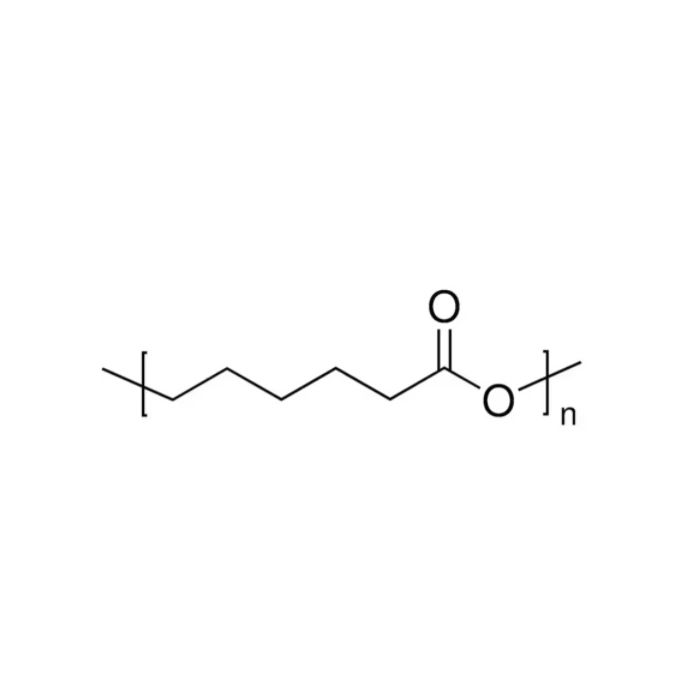
Polycaprolactone(PCL) - viscosity 1.2 dL/g , CAS No.24980-41-4
En stock
SKU
P432382
General Description
Polycaprolactone (PCL) is a biodegradable, semicrystalline polyester for use in tissue engineering and drug delivery research applications. Due to the increased length of the aliphatic chain, polycaprolactone degrades significantly slower than other common biodegradable polymers, such as polylactide. PCL features a low melting point (55-60 °C), making it ideal for thermal processing and increasing its use in novel applications such as 3D bioprinting. In addition to its favorable thermal properties, PCL also features high solubility in organic solvent allowing for a multitude of other processing options. This product features low residual water, monomer, and catalyst (tin) making it an ideal choice for use in tissue engineering and 3D bioprinting research.
Application
Research applications of this material include: Tissue engineering scaffolds. 3D Bioprinting. Drug delivery applications such as sustained release.
| CAS | 24980-41-4 |
|---|---|
| Concentration | viscosity 1.2 dL/g |
| Synonymes | Hexanoic acid, 6-hydroxy-, lactone | 1219802-08-0 | e-Caprolactone--d6 | UNII-56RE988L1R | Hexanoic acid, 6-hydroxy-, .epsilon.-lactone | MFCD00084404 | Oxepan-2-one; Epsilon-Caprolactone | 1,6-Hexanolide | CHEBI:17915 | 2-Oxepanone | 6-Hydroxycaproic aci |
| Spécifications et pureté | viscosity 1.2 dL/g |
| Conditions de stockage de stockage | Store at -20°C,Argon charged |
| Expédié en | Ice chest + Ice pads |
| Product Description | General Description Polycaprolactone (PCL) is a biodegradable, semicrystalline polyester for use in tissue engineering and drug delivery research applications. Due to the increased length of the aliphatic chain, polycaprolactone degrades significantly slower than other common biodegradable polymers, such as polylactide. PCL features a low melting point (55-60 °C), making it ideal for thermal processing and increasing its use in novel applications such as 3D bioprinting. In addition to its favorable thermal properties, PCL also features high solubility in organic solvent allowing for a multitude of other processing options. This product features low residual water, monomer, and catalyst (tin) making it an ideal choice for use in tissue engineering and 3D bioprinting research. Application Research applications of this material include: Tissue engineering scaffolds. 3D Bioprinting. Drug delivery applications such as sustained release. |
| Pubchem Sid | 528774830 |
| Sensibilité | Heat and moisture sensitive |
| PubChem CID | 10401 |
| Formule moléculaire | (C6H10O2)n |

À partir de 112,72 €

À partir de 8,59 €

À partir de 86,69 €

À partir de 272,38 €
À partir de 21,61 €

À partir de 340,07 €

À partir de 337,46 €

À partir de 340,07 €

À partir de 47,64 €

À partir de 240,28 €

À partir de 25,95 €

À partir de 26,81 €

À partir de 15,53 €

À partir de 8,59 €

À partir de 89,29 €