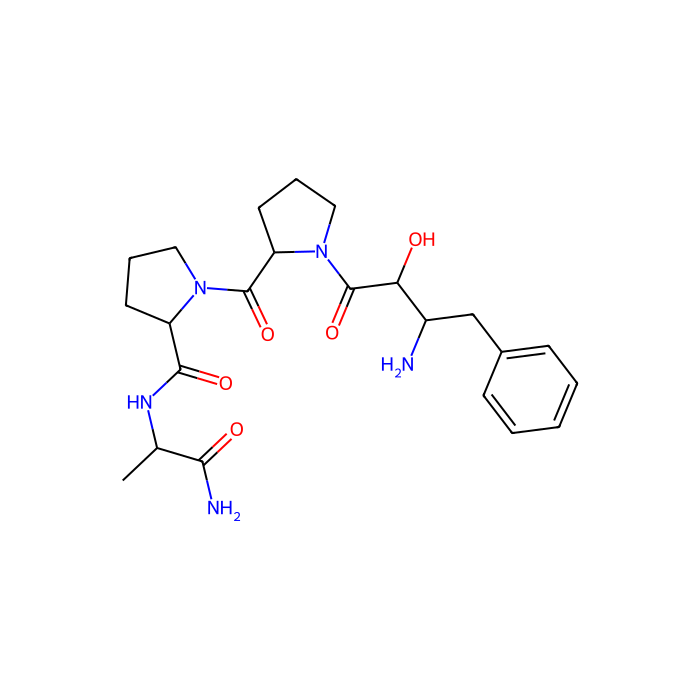
Apstatin - Moligand™, ≥95% , Inhibitor of X-prolyl aminopeptidase 1;Inhibitor of X-prolyl aminopeptidase 2, CAS No.160470-73-5, Inhibitor of X-prolyl aminopeptidase 1;Inhibitor of X-prolyl aminopeptidase 2
Apstatin - Moligand™, ≥95% , Inhibitor of X-prolyl aminopeptidase 1;Inhibitor of X-prolyl aminopeptidase 2, CAS No.160470-73-5, Inhibitor of X-prolyl aminopeptidase 1;Inhibitor of X-prolyl aminopeptidase 2
GRADE & PURITYMoligand™?Moligand™ — Aladdin's line of ligands and bioactive small molecules. Use for receptor, pathway, and binding studies needing defined small-molecule tools.≥95%
Moligand™, ≥95% Moligand™ for sensitive chromatographic and analytical workflows requiring minimal baseline interference.
🌡
Storage & shipping
Store at -20°C Ships Ice chest + Ice pads Check lot-specific COA for exact specifications.
📋
Quality documents
SDS, COA, datasheet, and spec sheet available for download. Lot-specific COA accessible via lot number lookup.
📚
Literature proof
Cited in 0 peer-reviewed publications across chromatography, organic synthesis, and cross-coupling reactions.
Descripción general
Apstatin is a selective inhibitor of aminopeptidase P (APP), with a K|i|of 2.6 μM in rat lung membrane-bound APP. Apstatin is shown to increase Bradykinin-promoted cardioprotection in rats with artificially introduced myocardial infarctions by inhibiting the Bradykinin degradation action of APP. When combined with the angiotensin-converting enzyme inhibitors enalapril , lisinopril , or ramipril , decrease of myocardial infarction size was enhanced.
This compound belongs to the class of organic compounds known as hybrid peptides. These are compounds containing at least two different types of amino acids (alpha, beta, gamma, delta) linked to each other through a peptide bond.
External Descriptors
Not available
1. Djoumbou Feunang Y, Eisner R, Knox C, Chepelev L, Hastings J, Owen G, Fahy E, Steinbeck C, Subramanian S, Bolton E, Greiner R, and Wishart DS. ClassyFire: Automated Chemical Classification With A Comprehensive, Computable Taxonomy. Journal of Cheminformatics, 2016, 8:61.
We use cookies to ensure the website functions properly and, where permitted, to improve your experience. You can manage your preferences at any time in Settings. Learn more in our Cookie Policy.
Shall we send you a message when we have discounts available?
Remind me later
Thank you! Please check your email inbox to confirm.
Products are supplied to verified businesses, institutions, and qualified professionals for research and development use only. Not for use in humans, animals, diagnosis, or therapy.