
Thiazine and Related Scaffolds: Structural Features, Major Types, Typical Applications, and Key Considerations for Research Selection
Thiazine and Related Scaffolds: Structural Features, Major Types, Typical Applications, and Key Considerations for Research Selection
I. Introduction
From the perspective of heterocyclic chemistry, thiazine usually refers to a class of six-membered heterocycles containing one sulfur atom and one nitrogen atom, together with their derivatives. Depending on the relative positions of sulfur and nitrogen in the ring, thiazines can be classified as 1,2-thiazines, 1,3-thiazines, and 1,4-thiazines. Different isomeric forms can differ in electron distribution, nomenclature, and subsequent derivatization pathways; therefore, “thiazine” is first and foremost a structural-chemical concept.
However, in pharmacology and clinical practice, the commonly used term “thiazide diuretics” is not equivalent to the broader category of “thiazine-containing heterocyclic compounds.” This name is primarily a therapeutic classification and typically includes two groups: thiazide-type and thiazide-like drugs. Thiazide-type drugs are commonly represented by the benzothiadiazine scaffold, whereas thiazide-like drugs, although similar in mechanism and also acting on the Na⁺/Cl⁻ cotransporter in the distal convoluted tubule, do not necessarily contain a benzothiadiazine ring system. In other words, “thiazine” in chemical nomenclature refers to a heterocyclic scaffold, whereas “thiazide diuretics” in clinical use denotes a pharmacologically defined class of drugs.
Against this background, this article takes thiazines in heterocyclic chemistry and their important derived scaffolds as its main thread, focusing on their structural features, major types, application directions, and significance for research-oriented compound selection. When drug applications are involved, it will also briefly explain the connections and distinctions between these scaffolds and “thiazide diuretics,” helping readers build a clear correspondence between chemical concepts and pharmacological terminology.
II. Why Thiazines Are Worth Understanding
Nitrogen- and sulfur-containing heterocycles have long been important scaffolds in organic chemistry and medicinal chemistry, because such frameworks can simultaneously influence electron distribution, polarity, redox behavior, interactions with biological targets, and charge-transfer properties in materials. Reviews have pointed out that thiazines and benzothiazines remain of sustained interest in medicinal chemistry, and related derivatives have shown a wide range of activities, including antitumor, anti-inflammatory, antibacterial, antiviral, and antifungal effects. Among them, the phenothiazine scaffold has even developed into a long-established family of clinically used drugs. At the same time, certain thiazinium/phenothiazinium dyes occupy important positions in staining, redox indication, photosensitization, and bioanalysis.
Thiazines are worth studying as a distinct topic because they connect several common research needs:
Some researchers focus on their value as bioactive drug scaffolds, some on their chromogenic, photosensitive, and electrochemical behavior, and others on their role as structural modules in antibiotics, diuretics, or functional materials. Thiazines are not a single-purpose family of compounds; rather, they are a tunable platform that can operate across pharmacology, analysis, photochemistry, and materials chemistry.
III. What Is Meant by the “Thiazine Family”
The core definition can be summarized in one sentence: thiazines are a broad class of compounds built around a six-membered ring containing one N and one S, and further diversified through modification, annulation, oxidation, or ionization in different directions.
This concept can be understood on three levels:
1) Parent scaffold level
The most basic level is the thiazine parent scaffold itself: a six-membered ring containing four carbons, one nitrogen, and one sulfur. Because the positions of N and S within the ring can vary, 1,2-, 1,3-, and 1,4-isomeric forms arise. Different isomers lead to different electronic effects, tautomeric behavior, and downstream reaction selectivity.
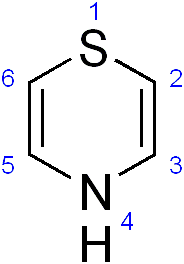
2) Derivative level
On top of the parent scaffold, many variations can occur, for example:
1. 1. Partial or complete hydrogenation of the ring;
2. 2. Oxidation of the sulfur atom to form sulfoxide or sulfone (dioxide) structures;
3. 3. Fusion with a benzene ring to give benzothiazines, phenothiazines, and related systems;
4. 4. Further introduction of additional nitrogen atoms to form medicinally relevant scaffolds such as benzothiadiazines.
3) Functional level
Once the thiazine scaffold is further designed, it is no longer merely “a ring”; it is transformed into different functional modules: some are suitable as drug scaffolds, some as dyes/probes/photosensitizers, some as organic redox units, and others as key structural fragments in certain antibacterial drugs or diuretic families.
IV. What Structural Features Characterize Thiazines?
4.1 Six-membered N/S-containing heterocycles: a change in position changes the properties
The most fundamental structural feature of thiazines is that they place one nitrogen atom and one sulfur atom within the same six-membered ring. That sounds simple, but once the relative positions of N and S change, the entire ring’s electron delocalization, tautomeric forms, nomenclature, reactive sites, and stability can all change accordingly. Therefore, the first step is always to determine whether you are dealing with a 1,2-thiazine, 1,3-thiazine, or 1,4-thiazine.
4.2 Sulfur is not a “fixed-role” atom: it can exist in multiple oxidation states
Unlike many heterocycles in which the heteroatom is present in only one principal state, the sulfur atom in thiazines can often exist in different oxidation states. This means that the same “thiazine framework,” once converted into sulfide, sulfoxide, or sulfone forms (especially dioxides), can show marked changes in molecular polarity, hydrogen-bond accepting ability, electron-withdrawing character, metabolic stability, and solubility behavior.
The literature also specifically notes that many common 1,2-thiazine compounds occur in the sulfur dioxide oxidation state. This is one reason why many drug scaffolds are not simple thiazines, but oxidized derivatives thereof.
4.3 After annulation, thiazines often change from “ordinary heterocycles” into “functional scaffolds”
When a thiazine is fused with a benzene ring, the resulting scaffold often becomes more planar, more rigid, and more able to form a stable conjugated system. This step is highly important, because many truly important “thiazine-related” structures are not simple parent nuclei, but fused systems such as benzothiazines, phenothiazines, and benzothiadiazines.
For example, meloxicam is classified in PubChem as a benzothiazine, whereas hydrochlorothiazide is classified as a benzothiadiazine. This indicates that in practical research and drug nomenclature, the structures that appear most frequently are often fused thiazine-derived scaffolds rather than the unsubstituted parent nucleus itself.
4.4 Certain thiazines can simultaneously provide “color + redox activity + biomolecular interactions”
Thiazinium/phenothiazinium dyes represented by methylene blue reveal a particularly distinctive direction of thiazine chemistry: they are colored molecules, reversible redox mediators, and compounds capable of interacting with biomolecules such as nucleic acids.
Accordingly, these compounds appear simultaneously in cell/tissue staining, redox indication, electrochemical biosensing, and photodynamic-related research. PubChem classifies methylene blue as a dye, a redox indicator, and a medically relevant molecule; related studies also point out that it can serve as a nucleic acid dye, a DNA-interaction probe, and an electrochemical redox indicator molecule.
4.5 The thiazine ring can also serve as part of a larger drug scaffold
In some cases, the research focus is not on “thiazine itself,” but on what the thiazine ring contributes once embedded in a larger structure. For example, reviews note that one characteristic feature of cephalosporins is a β-lactam ring fused to a six-membered dihydrothiazine ring, which differs from the five-membered thiazolidine ring of penicillins. In this sense, thiazine can also serve as a functional building block within a larger scaffold, helping determine the reactivity and configurational features of an entire drug family.
V. Major Classification Framework for Thiazines and Related Scaffolds
Classification Level | Representative Subclass | Structural Key Point | Typical Representative | Common Research/Application Direction |
Parent thiazines | 1,2-thiazines, 1,3-thiazines, 1,4-thiazines | A six-membered ring containing 1 N and 1 S; the relative positions of the heteroatoms differ | Various thiazine parent compounds and simple derivatives | Heterocycle synthesis, reaction methodology, and starting points for structure–activity relationship studies |
Oxidized/hydrogenated derivatives | Dihydrothiazines, thiazine dioxides, etc. | Sulfur oxidation state and ring saturation alter electronic properties and polarity | 4H-1,4-thiazine 1,1-dioxide, etc. | Improving stability, tuning polarity, and designing derived drug scaffolds |
Benzothiazines | benzothiazine | Fusion of a thiazine ring with a benzene ring | Meloxicam, etc. | Drug scaffolds and anti-inflammatory molecular design |
Phenothiazines/phenothiaziniums | phenothiazine / phenothiazinium | Dibenzofused systems or positively charged dye-like structures | Phenothiazine, methylene blue, etc. | Antipsychotic drugs, dyes, photosensitizers, redox mediators, and materials building blocks |
Benzothiadiazine-related compounds | Represented by 1,2,4-benzothiadiazine 1,1-dioxide | An additional N atom is introduced into the thiazine framework; dioxide forms are common | Hydrochlorothiazide, chlorothiazide | Scaffolds for thiazide-type diuretics; one of the structural origins of what medicine commonly calls “thiazide-type” drugs |
Thiazine rings in larger fused drug scaffolds | dihydrothiazine-fused systems | The thiazine ring serves as part of a larger pharmacophoric scaffold | The cepham core of cephalosporins | Structural and structure–activity studies of β-lactam antibiotics |
VI. When to Give Priority to Thiazines
Research Task / Need | Why Thiazines Can Be Prioritized | Subclasses More Suitable for Focus |
Need a heterocyclic scaffold with existing pharmacological precedent and amenable to structure–activity optimization | Phenothiazines, benzothiazines, benzothiadiazines, and related systems all have relatively mature pharmacological and medicinal-chemistry backgrounds, reducing the uncertainty associated with a completely unfamiliar scaffold | Phenothiazines, benzothiazines, benzothiadiazines |
Need a molecule with visible-light absorption, color development, or easily readable output | Certain thiazinium dyes are intrinsically chromogenic molecules and also possess redox and nucleic-acid interaction features | Methylene blue and related phenothiazinium dyes |
Need a tool for photosensitization or antimicrobial photodynamic studies | Phenothiazinium compounds are already an important family of photosensitizers in APDT/PDT | Phenothiazinium/thiazinium dyes |
Need an organic redox unit or an electrode-material module | Phenothiazine has reversible redox properties and is well suited for incorporation into organic energy-storage and electrochemical systems | Phenothiazine and its polymers/functionalized derivatives |
Need to understand the “structural origin” of a mature drug class | Key structural fragments of cephalosporins, thiazide-type diuretics, and related drugs are all associated with thiazine-related scaffolds | Dihydrothiazine-fused systems, benzothiadiazine systems |
VII. Points to Note When Selecting or Using Thiazines
7.1 First distinguish whether you mean “thiazine” or “thiazide diuretics”
This is the point most likely to cause confusion. In drug classification and clinical application, many people directly interpret thiazide as thiazine, but strictly speaking this is not accurate. Thiazine is first and foremost a heterocyclic chemistry term referring to a six-membered sulfur- and nitrogen-containing heterocycle and its derivative systems, whereas the thiazide diuretics commonly referred to in clinical settings are a drug category grouped primarily by pharmacological action. Representative thiazide-type drugs are commonly associated with the benzothiadiazine scaffold, such as hydrochlorothiazide, whereas thiazide-like drugs, although similar in site and mechanism of action, do not necessarily possess that ring system.
7.2 Properties can differ greatly among different subclasses
The “thiazine family” is not a single-property group. Simple thiazine parent nuclei, oxidized thiazine derivatives, benzothiazines, phenothiazines, and phenothiazinium dyes may differ markedly in polarity, color, redox behavior, lipophilicity, solubility, and modes of interaction with biological systems. Thiazine itself is a class of six-membered sulfur- and nitrogen-containing heterocycles that can exist in different positional isomers, oxidation states, and degrees of saturation; accordingly, not all “thiazine-related compounds” should be regarded as a group with similar properties.
In actual compound selection, it is not enough to ask only whether a molecule “belongs to the thiazine family.” One must also determine which ring positional isomer it belongs to, whether it is fused with a benzene ring, whether the sulfur is oxidized, whether the molecule is charged, and whether it carries strongly electron-donating or electron-withdrawing substituents.
7.3 Certain thiazine dyes may interfere with experiments, especially in optical and redox systems
Certain thiazine dyes represented by methylene blue inherently possess strong color and redox activity; some of these molecules can also interact with biological macromolecules such as nucleic acids. Precisely for this reason, they are not only useful analytical and labeling tools, but may also introduce additional interference into experiments.
For example, in experiments involving absorption spectroscopy, colorimetric readouts, redox reactions, or electrochemical signals, the dyes’ own visible absorption and electron-transfer properties may affect data interpretation. For methylene blue, the literature and textbook sources have pointed out that it can interfere with pulse oximetry and certain co-oximetry readouts, producing artifactual changes in oxygen saturation values.
Therefore, when designing relevant experiments, it is best to include blank controls, light-protected or dark controls, and dye-only controls, and to separate “signal changes caused by the dye itself” from “true biological effects” in the analysis.
7.4 When thiazine-related molecules already have defined pharmacological activity, their safety boundaries must be checked separately
If the research object is no longer an ordinary thiazine derivative in the structural-chemical sense, but a thiazine-related molecule with clearly defined pharmacological activity, it should not be treated merely as a general chemical reagent.
For example, among the adverse effects of phenothiazine drugs, relatively common and particularly important ones include extrapyramidal reactions, orthostatic hypotension, and QTc prolongation. Although methylene blue is also a classic thiazine dye, when used as a drug, FDA and NIH materials clearly warn that methylene blue carries a serious/fatal serotonin syndrome warning; in individuals with G6PD deficiency, it can cause severe hemolysis/anemia and should be avoided or handled strictly in accordance with the product labeling and institutional protocols.
This means that once an experimental design involves cells, animals, pharmacodynamic evaluation, or translational research, such molecules should be regarded as active compounds with clearly defined pharmacological and toxicological boundaries. Their dose range, combination contraindications, monitoring endpoints, and safety risks must be checked separately, rather than treating them simply as ordinary dyes or ordinary small molecules.
VIII. Navigation for Selecting Thiazine-Related Products: Quickly Locate Tables 1–4 by Research Task
Research Task / Experimental Need | Recommended Table to Check First | Why This Table Is Recommended First | Typical Focus |
Want to conduct research related to thiazide diuretics, such as diuresis, antihypertension, renal tubular transport, NCC mechanisms, or efficacy comparisons | Table 1: Thiazide Diuretics and Thiazide-Like Diuretics | Table 1 centrally compiles classic thiazide diuretics and thiazide-like diuretics, making it the most direct entry point for renal pharmacology/diuretic-antihypertensive research; it is suitable for looking across mechanism, efficacy, and analytical methods | Chlorothiazide, hydrochlorothiazide, bendroflumethiazide, indapamide, metolazone, chlorthalidone |
Want to compare the differences between classic thiazide diuretics and thiazide-like diuretics | Table 1: Thiazide Diuretics and Thiazide-Like Diuretics | Table 1 contains both categories, facilitating side-by-side comparison of scaffold types, pharmacological positioning, and common experimental uses; it is suitable for reviews, comparative experiments, or teaching materials | Benzothiadiazines vs. thiazide-like diuretics |
Interested in commonly used small-molecule tools in models of hypertension, fluid retention, or edema | Table 1: Thiazide Diuretics and Thiazide-Like Diuretics | Questions of this type essentially correspond first to the screening and comparison of diuretic drugs; Table 1 provides the most complete coverage and is well suited as the first table to consult | Duration of diuresis, transporter targets, antihypertensive pharmacology |
Conducting research on phenothiazine drugs, such as antipsychotic, sedative, antihistamine, antiemetic, or dopamine receptor pharmacology | Table 2: The Phenothiazine Parent Scaffold and Phenothiazine Drugs | Table 2 compiles the “phenothiazine scaffold drug line,” which aligns most closely with clinical pharmacology, neuropsychopharmacology, and receptor studies; if the research focus is on drugs rather than staining or diuresis, this should be the first table to consult | Chlorpromazine, perphenazine, fluphenazine, trifluoperazine, promethazine, thiethylperazine |
Looking for common reference compounds in dopamine receptor or neuropsychopharmacology research | Table 2: The Phenothiazine Parent Scaffold and Phenothiazine Drugs | Several phenothiazine drugs in Table 2 can serve as classic pharmacological tools or reference drugs and are suitable for neuropharmacology, behavioral pharmacology, and mechanistic validation experiments | Chlorpromazine, perphenazine, fluphenazine, trifluoperazine |
Conducting research on cell/tissue staining, hematological staining, nucleic-acid staining, or dye–biomolecule interactions | Table 3: Thiazine-Related Biological Dyes Predominantly Based on Phenothiazinium | Table 3 brings together the most representative thiazine dyes and azure dyes, making it the most direct entry point for microscopy staining, histology, and bioanalytical applications | Methylene blue, Toluidine Blue O, Azure A/B/C, Methylene Green |
Performing glycosaminoglycan (GAG/sGAG), cartilage matrix, or ECM quantification | Table 3: Thiazine-Related Biological Dyes Predominantly Based on Phenothiazinium | This task has a very clear classic reagent path, and DMMB is the most important functional dye in Table 3 | DMMB |
Looking for thiazine-related small molecules suitable for microscopy staining + spectroscopic analysis + dye-binding experiments | Table 3: Thiazine-Related Biological Dyes Predominantly Based on Phenothiazinium | Table 3 is suitable not only for morphological staining, but also for dye-binding studies, absorbance/fluorescence change measurements, and method development; it is the most concentrated table in terms of experimental use | Methylene blue, azure dyes, toluidine blue, Methylene Green |
Conducting NSAID / COX inhibition / anti-inflammatory and analgesic research, especially focused on oxicams | Table 4: Oxicam Anti-Inflammatory Drugs Containing a Fused Thiazine Ring and Other Functional Tool Compounds | Table 4 focuses on oxicam anti-inflammatory drugs containing a fused thiazine ring and their prodrugs, making it suitable for anti-inflammatory mechanisms, analgesic models, pharmacokinetics, and formulation studies | Piroxicam, meloxicam, lornoxicam, tenoxicam |
Interested in prodrug design, in vivo conversion, or formulation optimization with oxicam-related molecules as the target | Table 4: Oxicam Anti-Inflammatory Drugs Containing a Fused Thiazine Ring and Other Functional Tool Compounds | Table 4 contains not only active drugs, but also prodrug molecules, making it convenient to examine the “active form–prodrug–conversion” relationship within a single framework | Ampiroxicam, droxicam |
Conducting AMPA receptor, electrophysiology, or synaptic transmission experiments and looking for classic tool compounds | Table 4: Oxicam Anti-Inflammatory Drugs Containing a Fused Thiazine Ring and Other Functional Tool Compounds | Although this is not the primary theme of Table 4, cyclothiazide is a very commonly used positive allosteric modulator/desensitization inhibitor of AMPA receptors in research; if the experimental core is neuroelectrophysiology, Table 4 should be consulted directly first | Cyclothiazide |
Want a systematic overview of the different lines encompassed by “thiazine-related products” | Recommended order: Table 1 → Table 2 → Table 3 → Table 4 | This sequence first establishes the main line of “classic thiazide diuretics,” then expands to “phenothiazine drugs” and “thiazine dyes,” and finally supplements with “oxicams containing fused thiazine rings and special tool compounds,” providing the clearest structure | Main line first, then expansion, then supplementary special uses |
Table 1 | Thiazide Diuretics and Thiazide-Like Diuretics
Category | CAS No. | Aladdin Cat. No. | Name | Specifications or Purity | Product Features and Applications |
Thiazide diuretics (benzothiadiazines) | 58-94-6 | Chlorothiazide | Moligand™, ≥98% | An early representative thiazide diuretic; commonly used as a reference compound for thiazide mechanism studies, renal pharmacology, and analytical testing. | |
Thiazide diuretics (benzothiadiazines) | 58-93-5 | Hydrochlorothiazide | Moligand™, ≥99% | One of the most commonly used representative thiazide compounds; often used in antihypertensive/diuretic pharmacology, NCC mechanism studies, formulation analysis, and LC/GC method references. | |
Thiazide diuretics (benzothiadiazines) | 91-33-8 | Benzthiazide | Moligand™, ≥99% | A classic thiazide diuretic; suitable for diuretic and antihypertensive pharmacology, renal tubular transport studies, and related analytical method development. | |
Thiazide diuretics (benzothiadiazines) | 73-48-3 | Bendroflumethiazide | Moligand™, analytical standard | A classic benzothiadiazine diuretic; used in pharmacological studies on the Na⁺/Cl⁻ cotransporter (NCC) in the distal convoluted tubule, mechanistic studies of antihypertensive and diuretic effects, and analytical testing. | |
Thiazide diuretics (benzothiadiazines) | 135-07-9 | Methyclothiazide | Moligand™, ≥98% | A benzothiadiazine diuretic; used for evaluation of antihypertensive and diuretic activity, renal tubular transport pharmacology, and analytical method studies. | |
Thiazide diuretics (benzothiadiazines) | 133-67-5 | Trichlormethiazide | Moligand™, ≥98% | A classic thiazide diuretic; suitable for diuretic and antihypertensive pharmacology research, pharmacokinetics, and quality-control analysis. | |
Thiazide diuretics (benzothiadiazines) | 742-20-1 | Cyclopenthiazide | Moligand™, ≥96% | One of the long-acting thiazide diuretics; used for comparing diuretic activity and duration, NCC-related studies, and drug analysis. | |
Thiazide diuretics (benzothiadiazines) | 135-09-1 | Hydroflumethiazide | ≥99% | A classic thiazide diuretic; frequently used in diuretic/antihypertensive pharmacology, renal function models, and analytical testing. | |
Thiazide diuretics (benzothiadiazines) | 346-18-9 | Polythiazide | Moligand™ | A classic thiazide diuretic; suitable for studies of diuretic and antihypertensive effects, comparisons with other thiazides, and analytical testing. | |
Thiazide-like diuretics (non-benzothiadiazines) | 77-36-1 | Chlorthalidone | Moligand™, ≥98% | A typical thiazide-like diuretic; although not a classic benzothiadiazine, it is often discussed alongside thiazides in studies on hypertension, fluid retention, and long-acting diuretic pharmacology. | |
Thiazide-like diuretics (non-benzothiadiazines) | 26807-65-8 | Indapamide | Moligand™, ≥98% | A commonly used thiazide-like diuretic; used in antihypertensive pharmacology, vascular protection and diuretic effect evaluation, and often in clinical drug analysis. | |
Thiazide-like diuretics (non-benzothiadiazines) | 17560-51-9 | Metolazone | Moligand™, ≥98% | A typical thiazide-like diuretic; commonly used in studies of refractory edema, NCC-related transport, and comparative diuretic experiments. |
Table 2 | The Phenothiazine Parent Scaffold and Phenothiazine Drugs
Category | CAS No. | Aladdin Cat. No. | Name | Specifications or Purity | Product Features and Applications |
Phenothiazine parent/core scaffold compound | 92-84-2 | Phenothiazine | Analytical standard | A parent reference compound for the phenothiazine family; used in scaffold-oriented medicinal chemistry studies, redox/photosensitive behavior studies, and often as a polymerization inhibitor or heterocyclic scaffold control. | |
Phenothiazine drugs | 50-53-3 | Chlorpromazine | Moligand™, ≥95% | One of the most representative phenothiazine antipsychotics; beyond dopamine receptor pharmacology, it is also commonly used in studies of membrane transport, endocytosis, and cell-stress-related mechanisms. | |
Phenothiazine drugs | 58-39-9 | Perphenazine | Moligand™, ≥97% | A phenothiazine antipsychotic; commonly used in neuroreceptor pharmacology, comparative efficacy studies, and metabolic analysis. | |
Phenothiazine drugs | 69-23-8 | Fluphenazine | Moligand™, ≥98% | A phenothiazine antipsychotic; frequently used in dopamine receptor pharmacology, neuropsychopharmacological screening, and related metabolism/analytical method studies. | |
Phenothiazine drugs | 117-89-5 | Trifluoperazine | Moligand™, ≥98% | A phenothiazine antipsychotic; in addition to receptor pharmacology, it is also often used as a calmodulin-inhibitory tool compound in cell signaling studies. | |
Phenothiazine drugs | 60-99-1 | Levomepromazine | Moligand™ | A phenothiazine drug with antipsychotic, sedative, and antiemetic pharmacological characteristics; commonly used in receptor pharmacology and drug analysis. | |
Phenothiazine drugs | 60-87-7 | Promethazine | Moligand™, ≥98% | A phenothiazine antihistamine/antiemetic; commonly used in H1 receptor pharmacology, sedative and anti-allergic mechanism studies, and drug analysis. | |
Phenothiazine drugs | 1179-69-7 | Thiethylperazine Dimaleate | ≥98% | A phenothiazine antiemetic; commonly used in dopamine receptor-related antiemetic pharmacology, neuropharmacology, and drug analysis. |
Table 3 | Thiazine-Related Biological Dyes Predominantly Based on Phenothiazinium
Category | CAS No. | Aladdin Cat. No. | Name | Specifications or Purity | Product Features and Applications |
Thiazine/phenothiazinium biological dyes | 61-73-4 | Methylene blue | ≥70% | One of the most classic thiazine dyes; widely used in cell/tissue staining, redox probes, photosensitization, and methodological controls, and is also common in biomedical testing systems. | |
Thiazine/phenothiazinium biological dyes | 6586-05-6 | Methylene blue N | AR | A cationic thiazine dye; commonly used in biological staining, supravital staining such as reticulocyte staining, nucleic-acid staining, and dye-binding studies. | |
Thiazine/phenothiazinium biological dyes | 92-31-9 | Toluidine Blue O | _ | A typical metachromatic thiazine dye; commonly used for staining mast cells, cartilage matrix, acidic mucopolysaccharides/glycosaminoglycans, and nucleic-acid-rich regions. | |
Thiazine/phenothiazinium biological dyes | 531-53-3 | Azure A chloride | Biological stain, ≥70% | A typical cationic thiazine/phenothiazinium dye; commonly used for cell and tissue staining, coloring nucleic acids or acidic biological components, and for spectral-binding and molecular-interaction studies. | |
Thiazine/phenothiazinium biological dyes | 531-55-5 | Azure B | Biological stain | A common component of Romanowsky-type dyes; used for blood smears, cellular nucleic-acid staining, and staining methodology studies, and is a frequently used cationic thiazine dye in microscopic biological observation. | |
Thiazine/phenothiazinium biological dyes | 531-57-7 | Azure C | Moligand™, 10 mM in DMSO | An azure-type phenothiazinium dye; commonly used in biological staining, nucleic-acid binding, and studies of dye–biomacromolecule interactions, and also suitable as a ready-to-use small-molecule staining probe. | |
Thiazine/phenothiazinium biological dyes | 2679-01-8 | Methylene Green | _ | A cationic thiazine dye; commonly used in microscopy staining, nuclear staining/counterstaining, dye–biomacromolecule interaction studies, and spectroscopic analysis. | |
Thiazine/phenothiazinium biological dyes | 931418-92-7 | DMMB | Dye content 80 % | A classic dimethylmethylene-blue-type thiazine dye; most commonly used in the DMMB assay for quantitative determination of sulfated glycosaminoglycans (sGAG) and is an important reagent in cartilage, tissue engineering, and ECM evaluation. Methodologically, however, attention should be paid to interference from polyanions such as HA, DNA, and RNA. |
Table 4 | Oxicam Anti-Inflammatory Drugs Containing a Fused Thiazine Ring and Other Functional Tool Compounds
Category | CAS No. | Aladdin Cat. No. | Name | Specifications or Purity | Product Features and Applications |
Oxicam anti-inflammatory drugs (containing a fused thiazine scaffold) | 36322-90-4 | Piroxicam | Moligand™, ≥98%(HPLC) | A classic oxicam NSAID containing a 1,2-benzothiazine scaffold; commonly used in COX inhibition, anti-inflammatory and analgesic research, prescription analysis, and formulation development. | |
Oxicam anti-inflammatory drugs (containing a fused thiazine scaffold) | 71125-38-7 | Meloxicam | Moligand™, ≥98% | An oxicam NSAID containing a fused thiazine ring; commonly used in inflammation models, COX-related studies, analgesic efficacy evaluation, and formulation/impurity analysis. | |
Oxicam anti-inflammatory drugs (containing a fused thiazine scaffold) | 70374-39-9 | Lornoxicam | ≥98%(HPLC) | An oxicam NSAID containing a fused thiazine scaffold; commonly used in anti-inflammatory and analgesic studies, COX-related experiments, and drug analysis. | |
Oxicam anti-inflammatory drugs (containing a fused thiazine scaffold) | 59804-37-4 | Tenoxicam | ≥98% | An oxicam NSAID; used in COX inhibition, anti-inflammatory and analgesic models, prescription analysis, and formulation studies. | |
Oxicam prodrugs | 99464-64-9 | Ampiroxicam | ≥98% | A prodrug of piroxicam; used in prodrug design, in vivo conversion, optimization of anti-inflammatory drug formulations, and related analytical studies. | |
Oxicam prodrugs | 90101-16-9 | Droxicam | —— | An oxicam prodrug that is converted in vivo to an active anti-inflammatory component; commonly used in prodrug strategies, pharmacokinetics, and formulation studies. | |
Benzothiadiazine neuropharmacology tool | 2259-96-3 | cyclothiazide | Moligand™, ≥98% | In research, this compound is used far more commonly not as a conventional diuretic, but as a classic positive allosteric modulator/desensitization inhibitor of AMPA receptors for studies of synaptic transmission and electrophysiology. |
Note: The above are representative Aladdin products. For more product specifications, please refer to the product list at the end of the article, or search the Aladdin website using the product name/CAS/catalog number.
For more related articles, see below:
Staining Principles and Methods for Cell Death, Proliferation, and Metabolic Viability
Cyclic isomers--Azabicyclic molecular building blocks to aid drug design
Substituted Azetidines in pharmaceutical chemistry, organic synthesis, and biochemistry