GRADE & PURITYMoligand™?Moligand™ — Aladdin's line of ligands and bioactive small molecules. Use for receptor, pathway, and binding studies needing defined small-molecule tools.
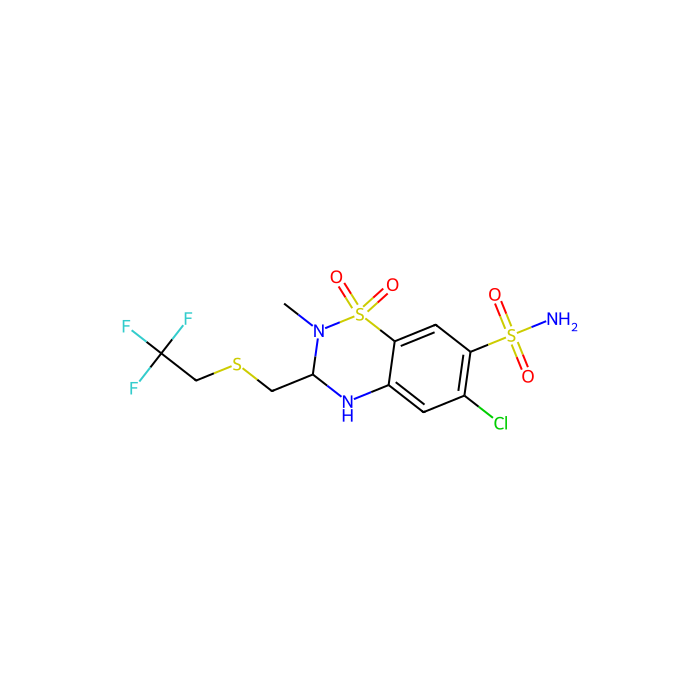
This compound belongs to the class of organic compounds known as 1,2,4-benzothiadiazine-1,1-dioxides. These are aromatic heterocyclic compounds containing a 1,2,4-benzothiadiazine ring system with two S=O bonds at the 1-position.
External Descriptors
benzothiadiazine
1. Djoumbou Feunang Y, Eisner R, Knox C, Chepelev L, Hastings J, Owen G, Fahy E, Steinbeck C, Subramanian S, Bolton E, Greiner R, and Wishart DS. ClassyFire: Automated Chemical Classification With A Comprehensive, Computable Taxonomy. Journal of Cheminformatics, 2016, 8:61.
Determine the necessary mass, volume, or concentration for preparing a solution.
Dilution Calculator
Determine the dilution needed to prepare a stock solution.
Reconstitution Calculator
Reviews
Customer Reviews
Application Protocols
No tested applications or recommended dilutions are provided in the Product Data for this SKU.
General research-use guidance (illustrative, not product specifications):
Stock preparation: dissolve accurately weighed material in anhydrous DMSO to a convenient concentration (e.g., 10–50 mM). Mix thoroughly; filter if necessary (0.2 µm PTFE).
Aliquoting: dispense single-use aliquots to minimize freeze–thaw and moisture uptake; cap tightly.
Assay dosing: add stock to assay buffer under vigorous mixing to achieve target final concentration with minimal DMSO (≤0.1–1% v/v). Include solvent-only controls.
LC-MS reference use: prepare calibration standards across the expected range; verify linearity, carryover, and stability in autosampler conditions.
For detailed, validated protocols, refer to peer-reviewed literature or your institutional SOPs.
Biological Roles
Context for research use (literature; no clinical claims):
Chemical class: thiazide-type benzothiadiazine sulfonamide featuring a –CF3 substituent and aryl chlorine, a scaffold widely studied in ion-transport modulation and renal electrolyte handling pathways.
Mechanistic interest: thiazide-scaffold molecules are employed as chemical probes to interrogate sodium/chloride co-transport processes and related signaling adaptations in epithelial and transport-model systems. Such studies typically analyze downstream changes in ion flux, transporter expression, or compensatory signaling in controlled in vitro models.
Physicochemical determinants: the combination of a weakly acidic sulfonamide and increased lipophilicity (from –CF3) affects membrane partitioning, protein binding, and assay behavior—parameters often quantified in ADME-style research (shake-flask logD, PAMPA/MDCK permeability, protein binding by equilibrium dialysis).
Analytical biology: used as a comparative analyte in bioanalytical method development (e.g., LC-MS/MS quantification) to support transporter and metabolism studies; fragmentation commonly involves sulfonamide-related neutral losses (literature observation for this class).
Important notes:
This product is supplied strictly for research use only.
Any discussion of physiological effects is limited to laboratory mechanism/probe contexts; suitability for in vivo or clinical use is not implied.
For target engagement or pathway studies, ensure appropriate controls and confirm concentration at point-of-assay (adsorption to plastics and limited aqueous solubility can bias results).
Buffer Applications
This product is a small-molecule solid, not a buffering agent. It is not typically used to prepare buffer systems or to control pH.
Practical guidance for assay buffers (general):
When dosing from DMSO stocks into aqueous buffers (e.g., HEPES, phosphate, Tris), maintain low final DMSO content (≤0.1–1% v/v) to preserve buffer properties and biological assay performance.
Limited aqueous solubility may cause precipitation in some buffers, especially near the compound’s pKa; include gentle surfactants or adjust pH within assay tolerance to enhance solubility if necessary.
For buffer recipes and pH control, refer to dedicated buffering reagents rather than this compound.
Green Alternatives
As a solid library compound used in milligram quantities, the principal “green chemistry” lever is solvent choice for dissolution, handling, and analysis rather than substituting the compound itself.
Prefer ethanol or isopropanol over chlorinated solvents when alcohol solubility suffices.
Use water with minimal cosolvent where feasible by adjusting pH to deprotonate the sulfonamide (within assay tolerance), thereby increasing aqueous solubility.
For LC, favor acetonitrile/water over halogenated eluents; optimize gradients to minimize solvent consumption.
Illustrative comparison (qualitative):
DMSO: excellent solubilizer; relatively benign from an environmental perspective and reusable in some workflows; viscous and hygroscopic.
DMF/NMP: effective but carry higher reproductive toxicity concerns; use only if DMSO/alcohols are inadequate.
Methanol vs acetonitrile for LC: both widely used; acetonitrile often enables lower backpressure, reducing energy use in UHPLC.
Operational tips:
Prepare concentrated stock solutions once, aliquot, and store cold to reduce repeat dissolutions and solvent waste.
Employ microscale assay formats (96/384/1536 wells) to reduce total solvent and compound usage.
Note: No “green substitute compound” is applicable—the molecule itself is the experimental variable in screening.
Pharmaceutical Uses
This catalog item is offered solely for research use and screening; it is not manufactured or qualified as a pharmaceutical ingredient or excipient.
Reference/working standard: can serve as a system-suitability or reference analyte in development of chromatographic or mass-spectrometric methods for thiazide-class compounds in QC-style research environments.
Preformulation studies: suitable for academic or industrial research into solid-state behavior (polymorph screening, DSC/TGA) and solubilization strategies (cosolvents, salts, amorphous dispersions) for thiazide scaffolds.
Compliance notes:
No pharmacopeial grade, monograph conformance, or GMP status is specified for this item in the Product Data. Any use in regulated applications would require independent qualification and is outside the intended scope.
Do not construe the above as therapeutic or clinical guidance; Aladdin Scientific supplies this compound strictly for laboratory research.
Melting point, solubility, density, pKa, logP, refractive index: Not specified for this item; refer to CoA/Spec Sheet.
Literature/general properties for polythiazide and closely related benzothiadiazine sulfonamides (for context; not item specifications):
Physical state: typically a crystalline solid.
Aqueous solubility: generally low at neutral pH due to the neutral/weakly acidic sulfonamide; solubility increases modestly in basic media and is high in polar aprotic organics (DMSO, DMF) and in alcohols to a lesser extent.
Acid–base behavior: thiazide sulfonamides often exhibit a weakly acidic sulfonamide proton (pKa commonly in the ~7–9 range, literature), leading to partial ionization near physiological pH in buffered media depending on substituents.
Lipophilicity: incorporation of a –CF3 substituent tends to elevate logP relative to first-generation thiazides (qualitative literature note), which correlates with reduced water solubility and enhanced solubility in nonaqueous media.
Handling implications from these general properties:
For analytical or screening use, dissolve first in dry DMSO to prepare a concentrated stock (e.g., 10–50 mM), then dilute into assay buffer with surfactant or cosolvent to mitigate precipitation.
Avoid prolonged exposure to strong base or strong oxidants which can degrade sulfonamide-containing scaffolds (general organic chemistry guidance).
Quality & Grades
Grade/Purity: Moligand™ (Product Data)
What Moligand™ signifies at Aladdin Scientific (general description):
Curated small-molecule library grade intended for ligand discovery, screening, and biochemical research workflows.
Emphasis on analytical identity confirmation (e.g., NMR/HRMS/UPLC where applicable) and suitability for preparation of DMSO stock solutions typical of screening collections.
Typical release controls for library compounds include identity and purity by chromatographic/ spectrometric methods; exact test suite, threshold purity, and any stabilizers or residual solvents are item-specific and reported on the CoA/Spec Sheet. No such numeric specifications are provided in the Product Data for this SKU.
Highlights relevant to this item:
No stabilizers, residual solvent limits, water content, metal content, or UV cutoff values are specified in the Product Data. For definitive specifications, refer to the Certificate of Analysis for the supplied lot.
Storage and shipping conditions are explicitly defined for this item (2–8 °C; shipped on wet ice), indicating attention to physical stability and consistency during transit and storage.
Use considerations:
For analytical or screening consistency, prepare fresh DMSO aliquots, verify concentration by weight/volume, and, where needed, confirm purity by LC before critical assays.
Reaction & Applications
This SKU is positioned as a ready-to-use small molecule for screening and reference work, not as a synthetic reagent. Accordingly, “reactions” relate primarily to sample preparation and analytical workflows rather than preparative chemistry.
Research applications (non-clinical; literature-informed):
Biochemical and cell-free binding assays: serve as a tool compound/ligand in mechanistic studies of ion-transport–related pathways or transporter-modulating scaffolds using fluorescence, radiometric, or SPR platforms.
Analytical reference: system-suitability or reference standard in LC/UPLC-MS method development for thiazide-class compounds (retention, ionization behavior, fragmentation patterns of benzothiadiazine sulfonamides).
Physicochemical profiling: determination of pKa, logD7.4, solubility, and stability for QSAR/database curation.
Practical notes:
Prepare DMSO stocks under dry conditions; water uptake can shift effective concentration and promote hydrolysis under strong basic conditions.
For LC-MS, negative-ion ESI often affords stable [M–H]− signals for sulfonamide-containing analytes; source tuning may reduce in-source loss of SO2 (method-development observation from literature on sulfonamides).
Photostability: minimize strong UV exposure during long measurements; store samples in amber vials if practical.
If synthetic transformations are needed (derivatization studies), typical reactivity centers are the sulfonamide N–H (acylation, alkylation under appropriate conditions) and aromatic positions (limited electrophilic substitution). Such work is specialized and outside the main use-case of this product.
Reaction Conditions
Not typically applicable: this product is supplied as a final small-molecule reference/screening compound, not as a reagent for stoichiometric or catalytic transformations.
For limited derivatization or analytical tagging (general, literature-based guidance; not item specifications):
N-Acylation of sulfonamide: base (e.g., pyridine or triethylamine), acyl chloride/anhydride, 0–25 °C, hours; monitor by LC. Avoid strong base and high temperature to protect the benzothiadiazine core.
N-Alkylation of sulfonamide: strong, non-nucleophilic base (e.g., NaH) in DMF/DMSO, 0–25 °C, then alkyl halide; minimize exposure time to base and exclude moisture.
Analytical hydrolysis/stability studies: buffered aqueous media (pH 2–10), 25–60 °C, to generate degradation profiles for method validation; analyze by LC-MS.
Expected outcomes depend strongly on substituent pattern and conditions; consult primary literature for detailed procedures specific to benzothiadiazine sulfonamides. For standard laboratory use as a screening compound, no reaction setup is required beyond dissolution and dilution.
Safety & Handling
Authoritative safety information for this specific item is contained in the SDS. The following summarizes general laboratory precautions for benzothiadiazine sulfonamide solids and the storage directives in the Product Data.
From Product Data:
Storage: Store at 2–8 °C. Shipped on wet ice.
GHS classification, pictograms, signal word, hazard (H) statements: Not specified for this item; refer to SDS.
General laboratory safety guidance (not a substitute for the SDS):
PPE: lab coat, safety glasses or goggles, and appropriate chemical-resistant gloves (e.g., nitrile). Handle powders in a fume hood to minimize dust inhalation.
Avoid: inhalation of dusts, skin/eye contact, ingestion. Wash thoroughly after handling.
Incompatibilities: strong oxidizers; strong bases or strong acids may cause degradation. Keep away from ignition sources when using organic solvents.
First aid (general): if inhaled, move to fresh air; if on skin, wash with soap and water; if in eyes, rinse cautiously with water for several minutes; if ingested, seek medical attention. Always follow institutional protocols.
Spill response: avoid dust generation; gently sweep or HEPA-vacuum solids; absorb solutions with inert material; dispose as hazardous waste per local regulations.
Thermal/photostability: store protected from excessive heat and direct light; maintain the cold-chain on receipt (2–8 °C) as specified for this item.
Note: This product is for research use only; not for human or veterinary use.
Solvent Selection
Intended use context: small-molecule library compound for screening/assay development rather than a bulk reaction solvent.
General solubility guidance for benzothiadiazine sulfonamides (literature-based; not item-specific specs):
Poorly soluble: water at neutral pH (solubility may improve in basic aqueous media due to sulfonamide deprotonation) and in nonpolar hydrocarbons.
Selection tips for preparing stocks and working solutions:
Primary stock: dissolve in anhydrous DMSO to 10–50 mM; gentle warming (≤40 °C) and vortex/sonication can assist dissolution. Filter (0.2 µm PTFE) if particulates persist.
Assay dilution: add DMSO stocks into buffered media slowly under mixing; maintain final DMSO ≤0.1–1% v/v as compatible with the bioassay. Consider including 0.01–0.1% nonionic surfactant (e.g., Tween-20) to limit precipitation if allowed by the assay.
Alternative cosolvents: for LC/UPLC analyses, aqueous acetonitrile or methanol with formic acid or ammonium buffers are commonly used.
Comparison (literature, qualitative):
DMSO versus DMF: DMSO typically offers broader solubility, lower volatility, and better biocompatibility in low % v/v dosing; DMF is more volatile and often less preferred in biological assays.
Alcohols versus acetonitrile: alcohols may enhance dissolution of sulfonamides but can affect some bioassays; acetonitrile is favored for LC due to low viscosity and UV transparency.
Storage & Reconstitution
From Product Data:
Storage conditions: Store at 2–8 °C.
Shipping conditions: Shipped on wet ice.
Reconstitution and handling (general best practices for small-molecule library compounds):
Solvent: use anhydrous DMSO for primary stocks unless your application mandates another solvent. Water solubility is typically limited for benzothiadiazine sulfonamides at neutral pH.
Concentration: prepare concentrated stocks (e.g., 10–50 mM) to minimize DMSO in assays. Record exact weights and volumes for traceability.
Filtration: if particulates remain, pass through a 0.2 µm PTFE syringe filter.
Aliquoting and storage of solutions: dispense single-use aliquots in amber vials or plates. Store refrigerated (2–8 °C) short term; for extended storage, frozen (e.g., −20 °C) may be used if compatible with your SOPs. Avoid repeated freeze–thaw.
Stability: solid stability is maximized when protected from light and moisture at 2–8 °C. Solution stability depends on solvent, concentration, temperature, and exposure to air/water; verify by LC before critical experiments.
Note: This product is for research use only. Consult the CoA/SDS for any lot-specific stability, purity, or handling instructions not provided here.
Structure & Identity
Polythiazide is a benzothiadiazine sulfonamide–type small molecule (thiazide-class scaffold) curated for screening libraries.
CAS: 346-18-9 (Product Data)
PubChem CID: 4870 (Product Data)
InChIKey: Not specified for this item; refer to CoA/Spec Sheet.
SMILES: Not specified for this item; refer to CoA/Spec Sheet.
Molecular formula: Not specified for this item; refer to CoA/Spec Sheet.
Molecular weight: Not specified for this item; refer to CoA/Spec Sheet.
Structural features (literature, general description):
Core: 1,2,4-benzothiadiazine-1,1-dioxide ring system (benzothiadiazine “thiazide” framework).
Functional groups: ring sulfone (–SO2– within the heterocycle) and a primary sulfonamide (–SO2NH2).
Typical substituents for polythiazide analogs: aryl chlorine (–Cl) on the benzothiadiazine ring and a trifluoromethyl (–CF3) substituent that increases lipophilicity.
2D description: a benzene ring fused to a 1,2,4-thiadiazine; two sulfonyl oxygens on the diazine sulfur (sulfone), and an exocyclic –SO2NH2 group para/ortho to ring substituents. No stereocenters are present in the canonical structure.
Notes:
The identifiers and exact elemental composition for this specific catalog item are not provided in the Product Data; consult the CoA/SDS for definitive identity elements used for release testing at Aladdin Scientific.
Synthetic Utility
This SKU is a finished small molecule for screening rather than a synthetic intermediate. Nevertheless, understanding functional-group reactivity can aid in limited derivatization or analytical tagging (literature-based general chemistry):
Sulfonamide N–H: can undergo acylation (e.g., with acyl chlorides/anhydrides) or alkylation (via deprotonation then alkyl halide) to yield N-substituted analogs; conditions should be tuned to avoid cleavage or overreaction at the ring sulfone.
Aromatic core: electrophilic substitution is typically deactivated by the strongly electron-withdrawing sulfonyl groups and –CF3; directed metalation is challenging and requires specialized conditions.
Ring stability: the benzothiadiazine-1,1-dioxide is generally robust to neutral conditions but may be sensitive to strong nucleophiles/bases that can open or rearrange the heterocycle.
Analytical derivatization: formation of more UV-active or fluorescent tags on the sulfonamide nitrogen can facilitate detection in tracer studies.
Retrosynthetic perspective (general):
Assembly commonly involves cyclization of appropriately substituted o-aminobenzenesulfonamide derivatives with sulfuryl components and subsequent functionalization (e.g., chlorination, introduction of –CF3 substituents) using electrophilic CF3 sources.
These considerations are provided for context only; this product is not positioned as a building block.
Target Specificity
No target, binding partner, or selectivity data are specified in the Product Data for this item.
General literature context (not item-specific claims): thiazide-class benzothiadiazines are widely used as chemical probes in studies of sodium/chloride cotransport modulation and related ion-handling pathways. If target engagement data are required for your application, consult primary literature and generate confirmatory data under your assay conditions.
Need help choosing the grade?
Our grade selection guide covers purity, stabilizer status, and application suitability for all variants in our catalog.
We use cookies to ensure the website functions properly and, where permitted, to improve your experience. You can manage your preferences at any time in Settings. Learn more in our Cookie Policy.
Shall we send you a message when we have discounts available?
Remind me later
Thank you! Please check your email inbox to confirm.
Products are supplied to verified businesses, institutions, and qualified professionals for research and development use only. Not for use in humans, animals, diagnosis, or therapy.