 I2624544
Determine the necessary mass, volume, or concentration for preparing a solution.
| Activity Type | Activity Value -log(M) | Mechanism of Action | Activity Reference | Publications (PubMed IDs) |
|---|

Moligand™, 10mM in DMSO Moligand™ for sensitive chromatographic and analytical workflows requiring minimal baseline interference.
Store at -80°C Ships Dry ice packs + Cold packs Check lot-specific COA for exact specifications.
SDS, COA, datasheet, and spec sheet available for download. Lot-specific COA accessible via lot number lookup.
Cited in 223 peer-reviewed publications across chromatography, organic synthesis, and cross-coupling reactions.
Information
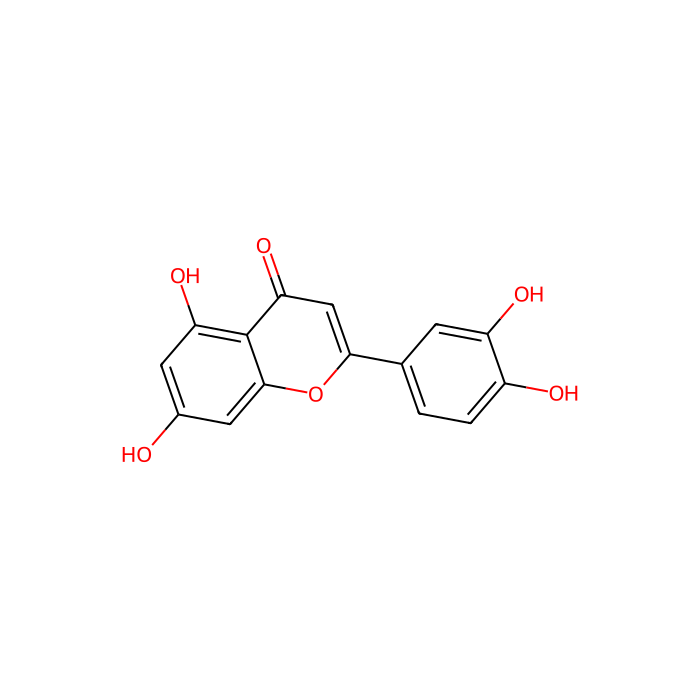
Luteolin (Luteoline, Luteolol, Digitoflavone) is a flavonoid found in Terminalia chebula, which is a non-selective phisphodiesterase PDE inhibitor for PDE1-5 with Ki of 15.0 μM, 6.4 μM, 13.9 μM, 11.1 μM and 9.5 μM, respectively. Phase 2.
In vitro
Luteolin is a flavonoid found in Terminalia chebula, which is a non-selective phisphodiesterase PDE inhibitor for PDE1-5 with Ki of 15.0 μM, 6.4 μM, 13.9 μM, 11.1 μM and 9.5 μM, respectively. Luteolin inhibits LPS-stimulated TNF-alpha production with an IC50 of less than 1 μM. Luteolin inhibites LPS-induced phosphorylation of Akt as well as IkappaBalpha.
In vivo
LD50: Mice >2500mg/kg (i.g.)
Cell Data
cell lines:
Concentrations:
Incubation Time:
Powder Purity:≥97%
Comprehensive hazard, handling, storage, and regulatory compliance document.
Download SDS →Lot-specific quality data. Enter your lot number to retrieve the exact COA.
Look up COA →Full quality attributes and acceptance criteria for this grade.
View spec sheet →| Activity Type | Activity Value -log(M) | Mechanism of Action | Activity Reference | Publications (PubMed IDs) |
|---|
| Activity Type | Activity Value -log(M) | Mechanism of Action | Activity Reference | Publications (PubMed IDs) |
|---|
| Activity Type | Activity Value -log(M) | Mechanism of Action | Activity Reference | Publications (PubMed IDs) |
|---|
| Activity Type | Activity Value -log(M) | Mechanism of Action | Activity Reference | Publications (PubMed IDs) |
|---|
| Activity Type | Activity Value -log(M) | Mechanism of Action | Activity Reference | Publications (PubMed IDs) |
|---|
| Activity Type | Activity Value -log(M) | Mechanism of Action | Activity Reference | Publications (PubMed IDs) |
|---|
| Activity Type | Activity Value -log(M) | Mechanism of Action | Activity Reference | Publications (PubMed IDs) |
|---|
| Activity Type | Activity Value -log(M) | Mechanism of Action | Activity Reference | Publications (PubMed IDs) |
|---|
| Activity Type | Activity Value -log(M) | Mechanism of Action | Activity Reference | Publications (PubMed IDs) |
|---|
| Activity Type | Activity Value -log(M) | Mechanism of Action | Activity Reference | Publications (PubMed IDs) |
|---|
| Activity Type | Activity Value -log(M) | Mechanism of Action | Activity Reference | Publications (PubMed IDs) |
|---|
| Activity Type | Activity Value -log(M) | Mechanism of Action | Activity Reference | Publications (PubMed IDs) |
|---|
| Solubilidad | Solubility (25°C) In vitro DMSO: 38 mg/mL (102.73 mM); Water: 10 mg/mL (27.03 mM); Ethanol: 2 mg/mL (5.4 mM); |
|---|---|
| Punto de fusión (°C) | 330°C |
Our grade selection guide covers purity, stabilizer status, and application suitability for all variants in our catalog.
View Moligand™ grade guide →