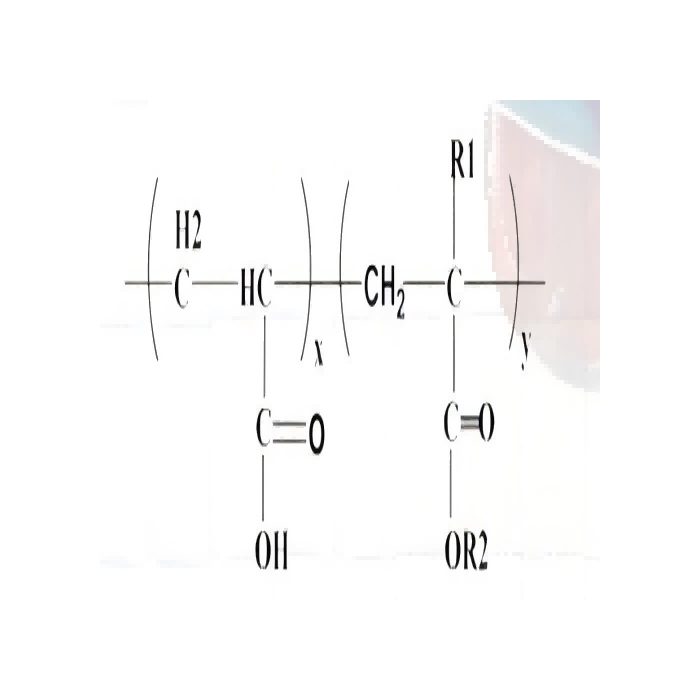
Carbopol® 940 polymer , CAS No.9007-20-9

CAS: 9007-20-9 Cat. No.: C299587 EG-Nummer: 618-435-5
Zu bestellen verfügbar
Synonyms
Chloromethyl-2 beta-naphthyloxymethyl-2 propanediol-1,3 | FT-0778246 | AKOS037646953 | AS-71653 | DTXSID60864160 | Chloromethyl-2 beta-naphthyloxymethyl-2 propanediol-1,3 [French] | 2-(Chloromethyl)-2-{[(naphthalen-2-yl)oxy]methyl}propane-1,3-diol | Carbo
Storage
Room temperature
Shipped In
Normal
★
Size
Deutschland (EU)
USA*
Price
Qty
100g
C299587-100g
—
9 Auf Lager
38,96€
500g
C299587-500g
1 Auf Lager
2 Auf Lager
95,36€
Enter a quantity for the sizes you want to add.
🧪
Why this grade

for sensitive chromatographic and analytical workflows requiring minimal baseline interference.

🌡

Storage & shipping

Room temperature Ships Normal Check lot-specific COA for exact specifications.

📋

Quality documents

SDS, COA, datasheet, and spec sheet available for download. Lot-specific COA accessible via lot number lookup.

📚

Literature proof

Cited in 9 peer-reviewed publications across chromatography, organic synthesis, and cross-coupling reactions.

Übersicht

Carbomer is an acrylic crosslinked resin obtained by crosslinking pentaerythritol and other acrylic acids, and is a very important rheological modifier. Carbomer is a high molecular weight polymer, followed by a number (such as Carbomer 940). The larger the number, the larger the aggregated molecule.
Characteristics: short flow characteristics, high viscosity, extremely high suspension capacity and high transparency.
Scope of use: cosmetic thickener, medical gel, hair styling gel, hydroalcoholic gel, moisturizing gel, shower gel, hand, body and face care lotion, cream, etc.

Specifications

Synonyme
Chloromethyl-2 beta-naphthyloxymethyl-2 propanediol-1,3 | FT-0778246 | AKOS037646953 | AS-71653 | DTXSID60864160 | Chloromethyl-2 beta-naphthyloxymethyl-2 propanediol-1,3 [French] | 2-(Chloromethyl)-2-{[(naphthalen-2-yl)oxy]methyl}propane-1,3-diol | Carbo
Storage
Room temperature
Verschickt in
Normal
Namen und Kennungen
Pubchem Sid
Pubchem Sid Url
https://pubchem.ncbi.nlm.nih.gov/substance/488187642
Kanonisches Lächeln
C1=CC=C2C=C(C=CC2=C1)OCC(CO)(CO)CCl
IUPAC Name
2-(chloromethyl)-2-(naphthalen-2-yloxymethyl)propane-1,3-diol
InChIKey
PLZJMCNBPWEGNQ-UHFFFAOYSA-N
INCHI
1S/C15H17ClO3/c16-8-15(9-17,10-18)11-19-14-6-5-12-3-1-2-4-13(12)7-14/h1-7,17-18H,8-11H2
Isomere SMILES
C1=CC=C2C=C(C=CC2=C1)OCC(CO)(CO)CCl
Reaxy-Rn
2530090
Reaxys-RN_link_address
https://www.reaxys.com/reaxys/secured/hopinto.do?context=S&query=IDE.XRN=2530090&ln=

Documentation

📋 Safety Data Sheet (SDS)

Comprehensive hazard, handling, storage, and regulatory compliance document.

Download SDS →

✅ Certificate of Analysis (COA)

Lot-specific quality data. Enter your lot number to retrieve the exact COA.

Look up COA →

📊 Datasheet

Quick-reference summary of product specifications and applications.

View datasheet →

🔬 Specification Sheet

Full quality attributes and acceptance criteria for this grade.

View spec sheet →

Advanced Data

Taxonomic Classification

Taxonomy Tree

KingdomOrganic compounds
SuperclassBenzenoids
KlasseNaphthalenes
SubclassNot available
Intermediate Tree Nodes Not available
Direct ParentNaphthalenes
Alternative Parents Alkyl aryl ethers  Primary alcohols  Organochlorides  Hydrocarbon derivatives  Alkyl chlorides  
Molecular FrameworkAromatic homopolycyclic compounds
Substituents Naphthalene - Alkyl aryl ether - Ether - Organic oxygen compound - Hydrocarbon derivative - Primary alcohol - Organooxygen compound - Organochloride - Organohalogen compound - Alkyl halide - Alkyl chloride - Alcohol - Aromatic homopolycyclic compound
BeschreibungThis compound belongs to the class of organic compounds known as naphthalenes. These are compounds containing a naphthalene moiety, which consists of two fused benzene rings.
External Descriptors Not available
3D-Struktur
Interaktives chemisches Strukturmodell


Zertifikate (CoA, COO, BSE/TSE und Analyse-Diagramm)
C of A & Other Certificates(BSE/TSE, COO):
Analytical Chart:

Find and download the COA for your product by matching the lot number on the packaging.

21 results found

Lot NumberCertificate TypeDatumArtikel
H2604534Certificate of AnalysisJul 23, 2026 C299587
H2604535Certificate of AnalysisJul 08, 2026 C299587
H2604533Certificate of AnalysisJul 08, 2026 C299587
B2528285Certificate of AnalysisFeb 13, 2025 C299587
B2528286Certificate of AnalysisFeb 13, 2025 C299587
B2528287Certificate of AnalysisFeb 13, 2025 C299587
B2528340Certificate of AnalysisFeb 13, 2025 C299587
B2626054Certificate of AnalysisFeb 13, 2025 C299587
G2521064Certificate of AnalysisFeb 13, 2025 C299587
I2426168Certificate of AnalysisSep 13, 2024 C299587
A2503308Certificate of AnalysisSep 13, 2024 C299587
I2426167Certificate of AnalysisSep 13, 2024 C299587
I2426135Certificate of AnalysisSep 13, 2024 C299587
I2426134Certificate of AnalysisSep 13, 2024 C299587
C2318433Certificate of AnalysisJan 04, 2023 C299587
C2318432Certificate of AnalysisJan 04, 2023 C299587
C2318430Certificate of AnalysisJan 04, 2023 C299587
C23301018Certificate of AnalysisAug 23, 2022 C299587
I2203130Certificate of AnalysisAug 23, 2022 C299587
I2203131Certificate of AnalysisAug 23, 2022 C299587
C2212523Certificate of AnalysisMar 25, 2022 C299587
Chemische und physikalische Eigenschaften
Molekulargewicht280.740 g/mol
XLogP32.800
Hydrogen Bond Donor Count2
Hydrogen Bond Acceptor Count3
Rotatable Bond Count6
Exact Mass280.087 Da
Monoisotopic Mass280.087 Da
Topological Polar Surface Area49.700 Ų
Heavy Atom Count19
Formal Charge0
Complexity268.000
Isotope Atom Count0
Defined Atom Stereocenter Count0
Undefined Atom Stereocenter Count0
Defined Bond Stereocenter Count0
Undefined Bond Stereocenter Count0
The total count of all stereochemical bonds0
Covalently-Bonded Unit Count1
FAQs und Artikel
Understanding Hydrophilic Polymers in Aqueous Systems: Hydration Mechanisms, Structural Knobs, and Task-Oriented Selection Guide (Including Tables 1–3)
Biomedical Polymer Insights: Role-Based Task Map, Six Key Material Levers, and a Risk-Driven Evidence Chain (including the Product Navigation Guide and Product Tables 1–3)
From Structure to Performance: Conditioning, Film-Forming, Thickening, and Chelating Applications of Functional Ingredients in Personal Care and Home Care
From Structure to Rheology: How Carbomer Forms Gel Structures and Enables Thickening, Suspension, and Auxiliary Emulsion Stabilization
What Is the Difference Between Triethanolamine and Diethanolamine: Understanding Their Formulation Functions, Application Differences, and Selection Logic from a Molecular-Structure Perspective
Thickening, Suspension, Auxiliary Stabilization, and Agglomeration Mechanisms of Xanthan Gum in Personal Care Formulations: From Molecular Structure to Processing Applications
From Structure to Rheology: Thickening, Stabilization, and Selection Logic of Cellulose Ethers for Personal Care Applications
How to Select Thickeners for Strongly Acidic Cleaning Systems: Comparison of Thickening Mechanisms and Application Considerations for Fatty Amine Ethoxylates
Mechanistic Analysis of Topical Glutathione in Skincare: Cellular Redox Regulation, Skin Delivery Challenges, and SLN-Based Delivery Strategies
Niacinamide Brightening Mechanisms and Formulation Design: Melanosome Transfer, pH Regulation, and Combination Strategies
Citations of This Product
Lösungsrechner
Bewertungen

Kundenbewertungen

Shall we send you a message when we have discounts available?

Remind me later

Thank you! Please check your email inbox to confirm.

Oops! Notifications are disabled.