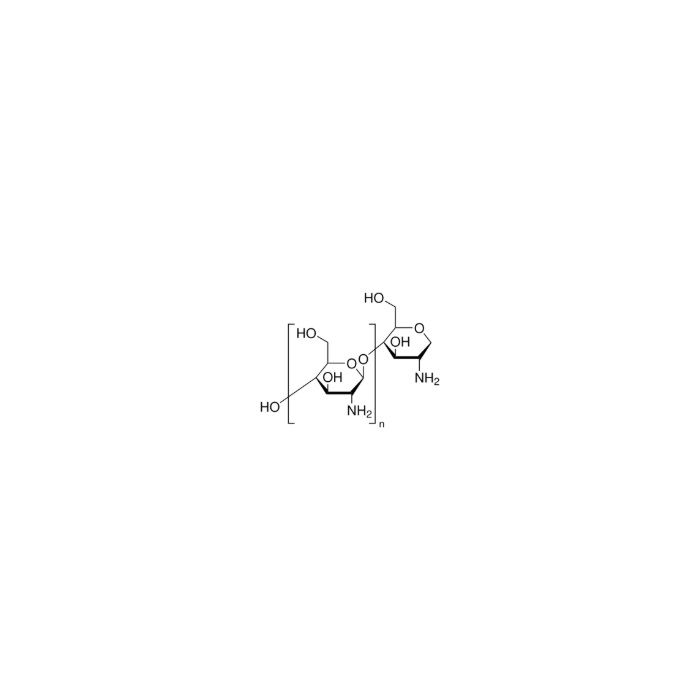
Chitosan , CAS No.9012-76-4

CAS: 9012-76-4 Cat. No.: C1516254 Summenformel: (C6H11NO4)n EG-Nummer: 618-480-0
Zu bestellen verfügbar
Nur noch %1 verfügbar
Storage
Protected from light,Room temperature
Shipped In
Normal
Preis
Ab 13,80 €
AVAILABLE TO ORDER

Spezifikationen

Storage
Protected from light,Room temperature
Verschickt in
Normal
Namen und Kennungen
IUPAC Name
methyl N-[(2S,3R,4R,5S,6R)-5-[(2S,3R,4R,5S,6R)-3-amino-5-[(2S,3R,4R,5S,6R)-3-amino-5-[(2S,3R,4R,5S,6R)-3-amino-5-[(2S,3R,4R,5S,6R)-3-amino-5-[(2S,3R,4R,5S,6R)-3-amino-5-[(2S,3R,4R,5S,6R)-3-amino-4,5-dihydroxy-6-(hydroxymethyl)oxan-2-yl]oxy-4-hydroxy-6-(hydroxymethyl)oxan-2-yl]oxy-4-hydroxy-6-(hydroxymethyl)oxan-2-yl]oxy-4-hydroxy-6-(hydroxymethyl)oxan-2-yl]oxy-4-hydroxy-6-(hydroxymethyl)oxan-2-yl]oxy-4-hydroxy-6-(hydroxymethyl)oxan-2-yl]oxy-2-[(2R,3S,4R,5R,6S)-5-amino-6-[(2R,3S,4R,5R,6R)-5-amino-4,6-dihydroxy-2-(hydroxymethyl)oxan-3-yl]oxy-4-hydroxy-2-(hydroxymethyl)oxan-3-yl]oxy-4-hydroxy-6-(hydroxymethyl)oxan-3-yl]carbamate
InChIKey
FLASNYPZGWUPSU-SICDJOISSA-N
InChI
1S/C56H103N9O39/c1-87-56(86)65-28-38(84)46(19(10-74)96-55(28)104-45-18(9-73)95-49(27(64)37(45)83)97-39-12(3-67)88-47(85)20(57)31(39)77)103-54-26(63)36(82)44(17(8-72)94-54)102-53-25(62)35(81)43(16(7-71)93-53)101-52-24(61)34(80)42(15(6-70)92-52)100-51-23(60)33(79)41(14(5-69)91-51)99-50-22(59)32(78)40(13(4-68)90-50)98-48-21(58)30(76)29(75)11(2-66)89-48/h11-55,66-85H,2-10,57-64H2,1H3,(H,65,86)/t11-,12-,13-,14-,15-,16-,17-,18-,19-,20-,21-,22-,23-,24-,25-,26-,27-,28-,29-,30-,31-,32-,33-,34-,35-,36-,37-,38-,39-,40-,41-,42-,43-,44-,45-,46-,47-,48+,49+,50+,51+,52+,53+,54+,55+/m1/s1
Isomere SMILES
COC(=O)N[C@@H]1[C@H]([C@@H]([C@H](O[C@H]1O[C@@H]2[C@H](O[C@H]([C@@H]([C@H]2O)N)O[C@@H]3[C@H](O[C@H]([C@@H]([C@H]3O)N)O)CO)CO)CO)O[C@H]4[C@@H]([C@H]([C@@H]([C@H](O4)CO)O[C@H]5[C@@H]([C@H]([C@@H]([C@H](O5)CO)O[C@H]6[C@@H]([C@H]([C@@H]([C@H](O6)CO)O[C@H]7[C@@H]([C@H]([C@@H]([C@H](O7)CO)O[C@H]8[C@@H]([C@H]([C@@H]([C@H](O8)CO)O[C@H]9[C@@H]([C@H]([C@@H]([C@H](O9)CO)O)O)N)O)N)O)N)O)N)O)N)O)N)O

Erweiterte Daten

Taxonomic Classification

Taxonomy Tree

KingdomOrganic compounds
SuperclassOrganic oxygen compounds
KlasseOrganooxygen compounds
SubclassCarbohydrates and carbohydrate conjugates
Intermediate Tree Nodes Not available
Direct ParentOligosaccharides
Alternative Parents Aminoglycosides  O-glycosyl compounds  Oxanes  Methylcarbamates  1,2-aminoalcohols  Secondary alcohols  Hemiacetals  Organic carbonic acids and derivatives  Acetals  Oxacyclic compounds  Monoalkylamines  Primary alcohols  Hydrocarbon derivatives  Carbonyl compounds  Organic oxides  Organopnictogen compounds  
Molecular FrameworkAliphatic heteromonocyclic compounds
Substituents Oligosaccharide - Aminoglycoside core - Glycosyl compound - O-glycosyl compound - Amino saccharide - Oxane - Methylcarbamate - Carbamic acid ester - 1,2-aminoalcohol - Secondary alcohol - Hemiacetal - Carbonic acid derivative - Acetal - Oxacycle - Organoheterocyclic compound - Organic nitrogen compound - Organonitrogen compound - Primary alcohol - Primary aliphatic amine - Primary amine - Hydrocarbon derivative - Carbonyl group - Organic oxide - Amine - Alcohol - Organopnictogen compound - Aliphatic heteromonocyclic compound
BeschreibungThis compound belongs to the class of organic compounds known as oligosaccharides. These are carbohydrates made up of 3 to 10 monosaccharide units linked to each other through glycosidic bonds.
External Descriptors Not available
Zertifikate (CoA, COO, BSE/TSE und Analyse-Diagramm)
C of A & Other Certificates(BSE/TSE, COO):
Analytical Chart:

Find and download the COA for your product by matching the lot number on the packaging.

12 results found

Lot NumberCertificate TypeDatumArtikel
I2623296I2623296Certificate of AnalysisSep 21, 2026 C1516254
I2623297I2623297Certificate of AnalysisSep 21, 2026 C1516254
I2623298I2623298Certificate of AnalysisSep 21, 2026 C1516254
I2623299I2623299Certificate of AnalysisSep 21, 2026 C1516254
H2613235H2613235Certificate of AnalysisAug 08, 2026 C1516254
H2613343H2613343Certificate of AnalysisAug 08, 2026 C1516254
H2613366H2613366Certificate of AnalysisAug 08, 2026 C1516254
H2613387H2613387Certificate of AnalysisAug 08, 2026 C1516254
E2627267E2627267Certificate of AnalysisApr 24, 2026 C1516254
E2627269E2627269Certificate of AnalysisApr 24, 2026 C1516254
E2627270E2627270Certificate of AnalysisApr 24, 2026 C1516254
E2627271E2627271Certificate of AnalysisApr 24, 2026 C1516254
Chemische und physikalische Eigenschaften
Schmelzpunkt (°C)102.5°C
Molekulargewicht1526.5
XLogP3-21.400
Hydrogen Bond Donor Count29
Hydrogen Bond Acceptor Count47
Rotatable Bond Count27
Exact Mass1525.64 Da
Monoisotopic Mass1525.64 Da
Topological Polar Surface Area808.000 Ų
Heavy Atom Count104
Formal Charge0
Complexity2630.000
Isotope Atom Count0
Defined Atom Stereocenter Count45
Undefined Atom Stereocenter Count0
Defined Bond Stereocenter Count0
Undefined Bond Stereocenter Count0
The total count of all stereochemical bonds0
Covalently-Bonded Unit Count1
Sicherheit und Gefahren (GHS)
Signal
Warning
Gefahrenhinweise

H401:Toxic to aquatic life

Sicherheitshinweise

P273:Avoid release to the environment.

P501:Dispose of contents/container to an approved waste disposal plant.

FAQs und Artikel
Key Judgments in Medical Hydrogel R&D: From Polymer Source and Crosslinking Strategy to Sterilization Planning, Scale-Up Feasibility, and Quality Control
Applications of Enzymatic Protein Crosslinking Systems in Gel Construction and Functional Evaluation
From Natural Cellulose to Nanocrystals: Structural Characteristics, Application Directions, and Industrialization Challenges of CNC
Natural Resins in Coating Formulations: Functional Positioning, Structure–Property Relationships, and Selection Validation
Signal Transduction Mechanism of Graphene Biosensors: From Molecular Recognition to Electrical/Optical Signal Readout and Materials Selection
Structure, Properties, and Mechanisms of Powdered Fragrances and Fragrance Delivery Materials: Stability, Release Mechanisms, and Selection Logic
How to Extend Fragrance Longevity in Personal and Home Care Products: Fragrance Structure, Surface Deposition, and Release Modulation
UVA Absorption Mechanism of Avobenzone: Keto–Enol Tautomerism, Photochemical Instability, and Formulation Photostabilization Strategies
Potential Mechanisms of p-Cymene in Problem-Prone Skin: Membrane Perturbation, Inflammatory Signaling Modulation, and Localized Delivery
How Arbutin Regulates Melanin Production: α/β Anomeric Configuration and Tyrosinase Action
Niacinamide Brightening Mechanisms and Formulation Design: Melanosome Transfer, pH Regulation, and Combination Strategies
Citations of This Product
Lösungsrechner
Bewertungen

Kundenbewertungen

Häufig gestellte Fragen

How should this product be stored?
Store at room temperature, protected from light. The material is light-sensitive — keep it in its original opaque or amber container.
How is this product shipped?
This product ships under standard ambient conditions. No temperature-controlled packaging is required.
What are the CAS number, molecular formula and molecular weight?
The CAS Number is 9012-76-4, the molecular formula is (C6H11NO4)n. InChIKey FLASNYPZGWUPSU-SICDJOISSA-N.
What documentation is provided?
Available product documentation, including Certificates of Analysis (COA), Safety Data Sheets (SDS), and specification sheets, is shown in the product document area. Document availability and access follow the current site policy.

Dürfen wir Sie über Rabattaktionen informieren?

Später erinnern

Vielen Dank! Bitte überprüfen Sie Ihren E-Mail-Posteingang, um zu bestätigen.

Hoppla! Benachrichtigungen sind deaktiviert.