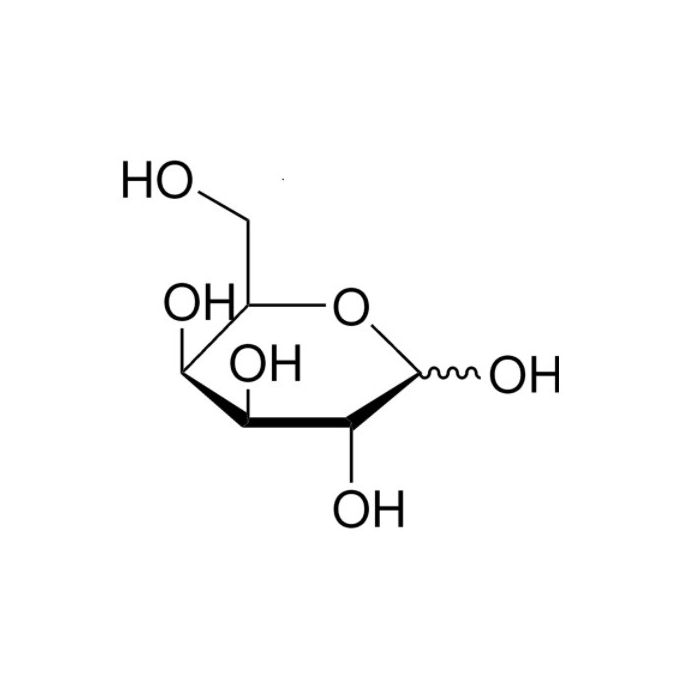
D-(+)-Galactose - for cell culture, suitable for insect cell culture, ≥99% , CAS No.59-23-4

CAS: 59-23-4 Cat. No.: G100369 Summenformel: C6H12O6 Molekulargewicht: 180.16 Beilstein Registry Number: 1724619 EG-Nummer: 200-416-4
Zu bestellen verfügbar
GRADE & PURITY for Cell culture ? Cell-culture grade — low endotoxin and contaminants to support viable cell growth. Use in mammalian/other cell culture media and supplements. Suitable for insect cell culture ? Insect cell-culture grade — suited to insect cell systems (e.g. Sf9, baculovirus). Use for protein expression and culture in insect cell lines. ≥99%
Synonyms
Lactoglucose | Dextrogalactose | D-Galactose | brain sugar | D-Galactopyranose
Storage
Room temperature,Argon charged
Shipped In
Normal
★
Size
Deutschland (EU)
USA*
Price
Qty
25g
G100369-25g
—
4 Auf Lager
14,66€
100g
G100369-100g
—
4 Auf Lager
43,30€
500g
G100369-500g
1 Auf Lager
1 Auf Lager
154,37€
Enter a quantity for the sizes you want to add.
🧪
Why this grade

for cell culture, suitable for insect cell culture, ≥99% für die Zellkultur,Geeignet für Insektenzellkulturen for sensitive chromatographic and analytical workflows requiring minimal baseline interference.

🌡

Storage & shipping

Room temperature,Argon charged Ships Normal Check lot-specific COA for exact specifications.

📋

Quality documents

SDS, COA, datasheet, and spec sheet available for download. Lot-specific COA accessible via lot number lookup.

📚

Literature proof

Cited in 212 peer-reviewed publications across chromatography, organic synthesis, and cross-coupling reactions.

Übersicht

The C-4 epimer of glucose.

product description:

Galactose is a constituent of lactose. It is one of the main nutrients for newborn infants and young children. It is produced in the body for the formation of lactose and is also a component of glycolipids (cerebrosides) and glycoproteins.

application:

D-(+)-Galactose has been used in cell line and culture medium to permits the cell growth arrest without altering the specific production rate of rh-tPA (qtPA).

Specifications

Synonyme
Lactoglucose | Dextrogalactose | D-Galactose | brain sugar | D-Galactopyranose
Spezifikationen & Reinheit
for cell culture, suitable for insect cell culture, ≥99%
Biochemische und physiologische Mechanismen
D-Galactose is the C-4 epimer of glucose sometimes used to study senescence.
Storage
Room temperature,Argon charged
Verschickt in
Normal
Note
für die Zellkultur, Geeignet für Insektenzellkulturen
Reinheit
≥99%
Namen und Kennungen
WGK Deutschland
3
RTECS
LW5490000
Molekulargewicht
180.16
Beilstein
1724619

Documentation

📋 Safety Data Sheet (SDS)

Comprehensive hazard, handling, storage, and regulatory compliance document.

Download SDS →

✅ Certificate of Analysis (COA)

Lot-specific quality data. Enter your lot number to retrieve the exact COA.

Look up COA →

📊 Datasheet

Quick-reference summary of product specifications and applications.

View datasheet →

🔬 Specification Sheet

Full quality attributes and acceptance criteria for this grade.

View spec sheet →

Advanced Data

Zertifikate (CoA, COO, BSE/TSE und Analyse-Diagramm)
C of A & Other Certificates(BSE/TSE, COO):
Analytical Chart:

Find and download the COA for your product by matching the lot number on the packaging.

35 results found

Lot NumberCertificate TypeDatumArtikel
E2622416Certificate of AnalysisMay 09, 2026 G100369
E2622415Certificate of AnalysisMay 09, 2026 G100369
E2622414Certificate of AnalysisMay 09, 2026 G100369
E2622309Certificate of AnalysisMay 09, 2026 G100369
L2523389Certificate of AnalysisDec 08, 2025 G100369
E2613051Certificate of AnalysisDec 08, 2025 G100369
L2523372Certificate of AnalysisDec 08, 2025 G100369
L2523374Certificate of AnalysisDec 08, 2025 G100369
L2523380Certificate of AnalysisDec 08, 2025 G100369
K2415489Certificate of AnalysisOct 17, 2024 G100369
I2518069Certificate of AnalysisOct 17, 2024 G100369
K2415487Certificate of AnalysisOct 17, 2024 G100369
G2524061Certificate of AnalysisOct 17, 2024 G100369
K2415488Certificate of AnalysisOct 17, 2024 G100369
K2415490Certificate of AnalysisOct 17, 2024 G100369
B2508084Certificate of AnalysisJul 05, 2024 G100369
H2408544Certificate of AnalysisJul 05, 2024 G100369
H2408545Certificate of AnalysisJul 05, 2024 G100369
H2408546Certificate of AnalysisJul 05, 2024 G100369
H2408547Certificate of AnalysisJul 05, 2024 G100369
H2408548Certificate of AnalysisJul 05, 2024 G100369
H2209448Certificate of AnalysisJul 19, 2022 G100369
K2327043Certificate of AnalysisJul 19, 2022 G100369
J2311048Certificate of AnalysisJul 19, 2022 G100369
H2209452Certificate of AnalysisJul 19, 2022 G100369
A2403048Certificate of AnalysisJul 19, 2022 G100369
H2209447Certificate of AnalysisJul 19, 2022 G100369
H2209446Certificate of AnalysisJul 19, 2022 G100369
D2301006Certificate of AnalysisJul 19, 2022 G100369
B2307208Certificate of AnalysisJul 19, 2022 G100369
B2307196Certificate of AnalysisJul 19, 2022 G100369
C2202600Certificate of AnalysisJan 20, 2022 G100369
C2202593Certificate of AnalysisJan 20, 2022 G100369
C2202592Certificate of AnalysisJan 20, 2022 G100369
C2202537Certificate of AnalysisJan 20, 2022 G100369
Chemische und physikalische Eigenschaften
LöslichkeitSoluble in water (68%) at 25 °C, pyridine, and alcohol (slightly).
EmpfindlichkeitMoisture sensitive.
Brechungsindexn20D 1.57
Spezifische Drehung [α]80 ° (C=10, H2O)
Siedepunkt (°C)527.1° C at 760 mmHg
Schmelzpunkt (°C)165-168°C
FAQs und Artikel
Suitable for Insect Cell Culture
For Cell Culture
Glucose Oxidase: A Versatile Biocatalyst Across Multiple Fields
An Introduction to Research-Grade Carbohydrates: Decoding the “Glycan Language” and a Product-Selection Guide (with Tables 1–3)
Sialyltransferases: Linkage Types, Structural Features, and Key Application Considerations
Glucose Content Determination: A Systematic Review of Detection Principles, Method Validation, and Research Application Frameworks
Hemicellulases: A Review of Substrate Specificity, Catalytic Systems, and Research and Industrial Applications
Pyran and the “Pyran Family” Research Selection Guide: Key Structural Points, a Classification Roadmap, and Experimental Selection Navigation
Progress in Research on Sugar-Nucleotide Metabolism Related to Ascorbate Biosynthesis in Plants
Formation of Nucleotide-Sugar Precursors and Regulatory Mechanisms in Plant Growth and Development
Galactose-Related Precursor Conversion and Redox Regulation in Plant Ascorbate Biosynthesis
Porous Graphitic Carbon (PGC) Chromatography Columns: Creating New Selectivity for Challenging Separations through Molecular Shape and the π-Electron Cloud on the Graphitic Surface
β-Galactosidase: Mechanism, Structural Basis, and Application Guide
Enzymatic Preparation of D-Mannose: Isomerization Conversion, Polysaccharide Hydrolysis, and Process Control
β-Galactosidase: Mechanism, Structural Basis, and Application Guide
Moisturizing Mechanisms of Tremella fuciformis Polysaccharides: From Polysaccharide Structure and Hydration Rheology to Dynamic Film Formation on the Skin Surface
Skin Mechanism of Action of Pro-Xylane: From C-Xyloside Priming and CS/DS Chain Remodeling to the Dermal–Epidermal Junction
Effect of Glycosylation on the Hydrophilic–Lipophilic Partitioning and Solubility Behavior of Natural Products—Quercetin, Isoquercitrin, and Rutin as Examples
Carbohydrate Oxidases: Catalytic Mechanisms and Bioanalytical Applications
Citations of This Product
Lösungsrechner
Bewertungen

Kundenbewertungen

Need help choosing the grade?

Our grade selection guide covers purity, stabilizer status, and application suitability for all variants in our catalog.

View for Cell culture grade guide → View Suitable for insect cell culture grade guide →

Shall we send you a message when we have discounts available?

Remind me later

Thank you! Please check your email inbox to confirm.

Oops! Notifications are disabled.