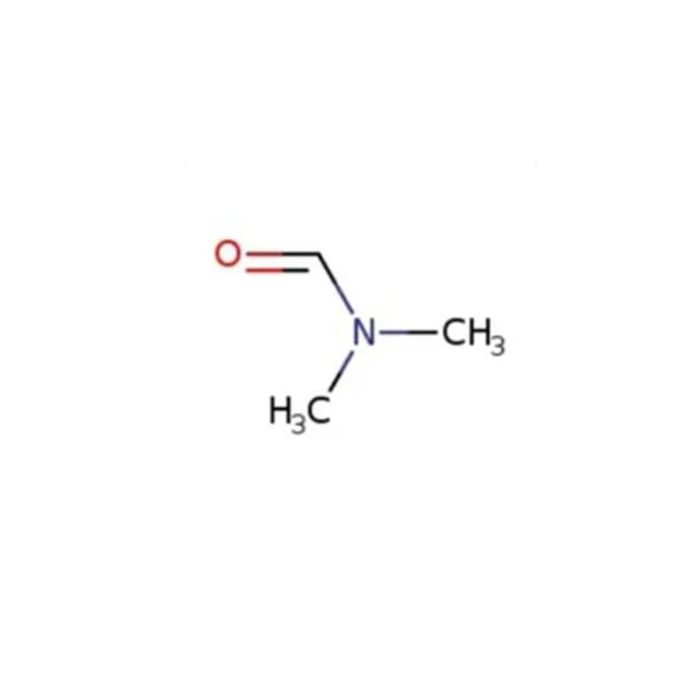
N,N-Dimethylformamide (DMF) - UPSS grade, Single metal impurity ≤ 0.1ppb , CAS No.68-12-2

CAS: 68-12-2 Cat. No.: D1523988 Summenformel: C3H7NO Molekulargewicht: 73.09 Beilstein Registry Number: 605365 EG-Nummer: 200-679-5
Zu bestellen verfügbar
GRADE & PURITY UPSS grade ? UPSS grade — a very high semiconductor purity tier above UPS. Use in advanced fabrication needing extremely low trace metals. Single metal impurity ≤ 0.1ppb
Storage
Room temperature,Argon charged
Shipped In
Normal
★
Size
Deutschland (EU)
USA*
Price
Qty
500ml
D1523988-500ml
Auf Bestellung · 8–12 Wochen
1.127,97€
Enter a quantity for the sizes you want to add.
🧪
Why this grade

UPSS grade, Single metal impurity ≤ 0.1ppb UPSS-Klasse for sensitive chromatographic and analytical workflows requiring minimal baseline interference.

🌡

Storage & shipping

Room temperature,Argon charged Ships Normal Check lot-specific COA for exact specifications.

📋

Quality documents

SDS, COA, datasheet, and spec sheet available for download. Lot-specific COA accessible via lot number lookup.

📚

Literature proof

Cited in 9428 peer-reviewed publications across chromatography, organic synthesis, and cross-coupling reactions.

Specifications

Spezifikationen & Reinheit
UPSS grade, Single metal impurity ≤ 0.1ppb
Storage
Room temperature,Argon charged
Verschickt in
Normal
Note
UPSS-Klasse
Namen und Kennungen
Kanonisches Lächeln
CN(C)C=O
IUPAC Name
N,N-dimethylformamide
InChIKey
ZMXDDKWLCZADIW-UHFFFAOYSA-N
INCHI
1S/C3H7NO/c1-4(2)3-5/h3H,1-2H3
Isomere SMILES
CN(C)C=O
WGK Deutschland
1
RTECS
LQ2100000
UN-Nummer
2265
Verpackungsgruppe
III
Molekulargewicht
73.09
Beilstein
605365
Reaxy-Rn
605365
Reaxys-RN_link_address
https://www.reaxys.com/reaxys/secured/hopinto.do?context=S&query=IDE.XRN=605365&ln=

Documentation

📋 Safety Data Sheet (SDS)

Comprehensive hazard, handling, storage, and regulatory compliance document.

Download SDS →

✅ Certificate of Analysis (COA)

Lot-specific quality data. Enter your lot number to retrieve the exact COA.

Look up COA →

📊 Datasheet

Quick-reference summary of product specifications and applications.

View datasheet →

🔬 Specification Sheet

Full quality attributes and acceptance criteria for this grade.

View spec sheet →

Advanced Data

Taxonomic Classification

Taxonomy Tree

KingdomOrganic compounds
SuperclassOrganic acids and derivatives
KlasseCarboxylic acids and derivatives
SubclassCarboxylic acid derivatives
Intermediate Tree Nodes Carboxylic acid amides
Direct ParentTertiary carboxylic acid amides
Alternative Parents Organopnictogen compounds  Organonitrogen compounds  Organic oxides  Hydrocarbon derivatives  Carbonyl compounds  
Molecular FrameworkAliphatic acyclic compounds
Substituents Tertiary carboxylic acid amide - Organic nitrogen compound - Organic oxygen compound - Organopnictogen compound - Organic oxide - Hydrocarbon derivative - Organooxygen compound - Organonitrogen compound - Carbonyl group - Aliphatic acyclic compound
BeschreibungThis compound belongs to the class of organic compounds known as tertiary carboxylic acid amides. These are compounds containing an amide derivative of carboxylic acid, with the general structure RN(R1)C(R2)=O (R1-R2 any atom but H).
External Descriptors a small molecule
Zertifikate (CoA, COO, BSE/TSE und Analyse-Diagramm)
C of A & Other Certificates(BSE/TSE, COO):
Analytical Chart:
Chemische und physikalische Eigenschaften
EmpfindlichkeitMoisture sensitive.
Brechungsindex1.4269
Flammpunkt (°F)136.4 °F
Flammpunkt (°C)58℃
Siedepunkt (°C)152.8°C
Schmelzpunkt (°C)-61°C
Molekulargewicht73.090 g/mol
XLogP3-1.000
Hydrogen Bond Donor Count0
Hydrogen Bond Acceptor Count1
Rotatable Bond Count0
Exact Mass73.0528 Da
Monoisotopic Mass73.0528 Da
Topological Polar Surface Area20.300 Ų
Heavy Atom Count5
Formal Charge0
Complexity33.900
Isotope Atom Count0
Defined Atom Stereocenter Count0
Undefined Atom Stereocenter Count0
Defined Bond Stereocenter Count0
Undefined Bond Stereocenter Count0
The total count of all stereochemical bonds0
Covalently-Bonded Unit Count1
FAQs und Artikel
CTSOBt Benzotriazole–Sulfonate Coupling Reagent: Carboxylic Acid Activation and Synthetic Application Value
From Photocatalytic Ring Opening to Skeletal Reconstruction: Reaction Logic and Synthetic Applications of Oxygen-Atom Replacement in Oxetanes
Logic for Selecting Amidation Reagents in Aqueous Media: Competing Reactions, Activated Intermediates, and Substrate Effects
Sulfonyl Hydrazide-Mediated Introduction of Small C(sp³) Fragments: Nickel-Catalyzed Cross-Coupling, Medicinal Chemistry Applications, and Reagent Selection
From Nucleophilic to Electrophilic BCB Synthetic Equivalents: Hypervalent-Iodine-Mediated Umpolung Design
From Functional-Group Transformation to Intramolecular Cyclization: Reaction-Pathway Analysis of TMSCl/DMF-Promoted Annulation and CuCN-Mediated Cascade Cyclization
Medicinal Chemistry Design of the Indazole Scaffold: Tautomerism, Molecular Recognition, Substitution-Site Design, and Synthetic Strategies
Discovery and Structural Optimization of the Noncovalent 3CL Protease Inhibitor S-217622
How Cyclization Changes Peptide Behavior: Conformational Preorganization, Skin Delivery, and Integrin Binding, Using Cyclopeptide-5 as an Example
How to Bypass α-Fluoride Elimination: Bromine-Transfer Capture and Oxidative Coupling of α,α-Difluorobenzylic Anions
Reactions and Applications of 3,3-Difluoroallyl Sulfonium Salts (DFASs): Small-Molecule gem-Difluoroallylation, Selective Peptide Modification, and Subsequent Functionalization
Why Primary and Secondary Amines Have Difficulty Participating Directly in the Classical Mitsunobu Reaction: Mechanism, Inversion of Configuration, and Reaction Scope of BEHT-Mediated Alcohol Amination
Mechanistic Basis of Acetyl Hexapeptide-8 in the Management of Expression Lines: SNARE Complex Interference, Constraints on Percutaneous Delivery, and Combination Strategies
Copper Tripeptide GHK-Cu and Skin Repair: From Copper Coordination Chemistry to Extracellular Matrix Remodeling
Direct Construction of Methylsulfonyl-Containing Heterocycles: Synthesis and Applications of Prefunctionalized Three-Carbon Vinamidinium Salts
Tether Effects in Intramolecular [2+2] Photocycloadditions: Straight and Crossed Regioselectivity and Stepwise C–C Bond Formation
Screening and Replacement of Green Solvents in Metallaphotoredox Catalysis: Reaction Compatibility and Process Feasibility
ACT-1014-6470 Kilogram-Scale Synthesis: N7-Selective Reductive Amination of an Unprotected Pyrazole, Subsequent N2 Alkylation, and Intramolecular Urea Formation
Bond-Formation Sequence and Process Improvement for 3-Bromo-6-alkyl-1,6-naphthyridin-5(6H)-ones: From Late-Stage N-Alkylation to Enamine Cyclization with Primary Amines
Citations of This Product
Lösungsrechner
Bewertungen

Kundenbewertungen

Need help choosing the grade?

Our grade selection guide covers purity, stabilizer status, and application suitability for all variants in our catalog.

View UPSS grade grade guide →

Shall we send you a message when we have discounts available?

Remind me later

Thank you! Please check your email inbox to confirm.

Oops! Notifications are disabled.