GRADE & PURITYMoligand™?Moligand™ — Aladdin's line of ligands and bioactive small molecules. Use for receptor, pathway, and binding studies needing defined small-molecule tools.≥98%
Moligand™,≥98% Moligand™ for sensitive chromatographic and analytical workflows requiring minimal baseline interference.
🌡
Storage & shipping
Protected from light,Store at -20°C Ships Ice chest + Ice pads Check lot-specific COA for exact specifications.
📋
Quality documents
SDS, COA, datasheet, and spec sheet available for download. Lot-specific COA accessible via lot number lookup.
📚
Literature proof
Cited in 0 peer-reviewed publications across chromatography, organic synthesis, and cross-coupling reactions.
Übersicht
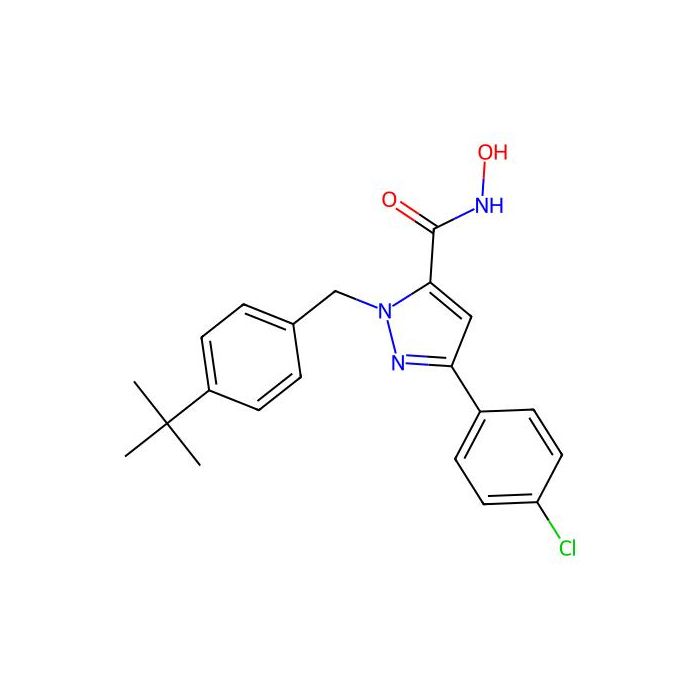
Nrf2-IN-1 is an inhibitor of nuclear factor-erythroid 2-related factor 2 (Nrf2) . Nrf2-IN-1 is developed for the research of acute myeloid leukemia (AML)
Specifications
Spezifikationen & Reinheit
Moligand™,≥98%
Biochemische und physiologische Mechanismen
Nrf2-IN-1 is an inhibitor of nuclear factor-erythroid 2-related factor 2 (Nrf2) . Nrf2-IN-1 is developed for the research of acute myeloid leukemia (AML).
Storage
Protected from light,Store at -20°C
Verschickt in
Ice chest + Ice pads
Dieses Produkt erfordert Kühlkettenversand. Grundversand und andere Economy-Optionen sind nicht verfügbar.
This compound belongs to the class of organic compounds known as phenylpyrazoles. These are compounds containing a phenylpyrazole skeleton, which consists of a pyrazole bound to a phenyl group.
External Descriptors
Not available
1. Djoumbou Feunang Y, Eisner R, Knox C, Chepelev L, Hastings J, Owen G, Fahy E, Steinbeck C, Subramanian S, Bolton E, Greiner R, and Wishart DS. ClassyFire: Automated Chemical Classification With A Comprehensive, Computable Taxonomy. Journal of Cheminformatics, 2016, 8:61.
Determine the necessary mass, volume, or concentration for preparing a solution.
Dilution Calculator
Determine the dilution needed to prepare a stock solution.
Reconstitution Calculator
Bewertungen
Kundenbewertungen
Application Protocols
No tested applications, recommended dilutions, or protocol parameters are provided in the Product Data for this item.
General workflow suggestions (not item-specific; for small-molecule screening):
Dissolve in DMSO to prepare a concentrated stock (e.g., 10–20 mM). Vortex and sonicate if needed; filter if particulate persists.
For biochemical assays, titrate concentrations over several logs (e.g., 10-point 3-fold serial dilution) and include vehicle controls.
For cell assays, confirm cytotoxicity/viability window (e.g., resazurin/ATP assays) parallel to pathway readouts.
Protect from light during handling and incubation (product data).
Record plate maps and compound tracking (barcode/lot) for data integrity.
Item-specific recommended concentrations, incubation times, or detection modalities: Not specified for this item; refer to CoA/Spec Sheet.
Biological Roles
General background (biochemistry; not item-specific claims):
Nrf2 (Nuclear factor erythroid 2–related factor 2) is a transcription factor that regulates antioxidant response elements (AREs) in genes controlling redox balance, xenobiotic metabolism, and cytoprotective pathways.
Under basal conditions, Keap1 targets Nrf2 for ubiquitination and proteasomal degradation. Electrophiles/oxidants modify Keap1 cysteines, stabilizing Nrf2, promoting nuclear translocation, and activating ARE-driven transcription.
Chemical probes that modulate the Nrf2–Keap1 axis are often used to study oxidative stress signaling, adaptive metabolism, and interactions with inflammation.
Relation to the product name:
The name “Nrf2-IN-1” suggests a compound intended for research on Nrf2 pathway inhibition, but the Product Data do not provide target-validation, potency, or selectivity specifics for this item. Accordingly, no item-specific biological role is asserted here.
Experimental considerations (general):
Assays frequently quantify NQO1, HO-1 expression or ARE-reporter activity to monitor pathway modulation.
It is advisable to confirm on-target effects using orthogonal assays (e.g., CRISPR/siRNA controls, thermal shift/engagement assays) and to benchmark against known reference probes, as available in the literature.
Buffer Applications
This compound is a small-molecule research tool and is not itself a buffering agent. Conventional buffer-system guidance (e.g., phosphate, HEPES, Tris) is therefore not directly applicable.
Practical notes (general):
Prepare working solutions of the compound in standard biological buffers suitable for your assay (e.g., HEPES, PBS) with a low percentage of DMSO if required for solubility.
Verify precipitation or adsorption in your specific buffer system, particularly at low ionic strength or extreme pH.
Item-specific buffer parameters (pKa, buffer capacity, ionic strength effects) are not relevant because the product is not intended to serve as a buffer component.
Green Alternatives
As a small-molecule screening compound, Nrf2-IN-1 is typically handled at milligram-to-gram scale and reconstituted in DMSO for biological assays; “green alternative” considerations primarily relate to solvent and workflow choices rather than replacement of the compound itself.
Greener practice considerations (general):
Prefer aqueous assay buffers with minimal DMSO (≤0.1–0.5% v/v final) to reduce organic solvent use while maintaining solubility.
Evaluate ethanol or MeCN as alternatives to DMF where feasible; these often have more favorable environmental and safety profiles than DMF.
Ethanol: greener, but limited solubility for some heteroaromatics; can affect cell physiology at >0.5–1%.
MeCN: good solvating power; higher volatility; toxicological considerations.
Because no item-specific solubility or stability data are provided, selection of greener alternatives should be empirically validated for your assay conditions.
Pharmaceutical Uses
No pharmacopeial status, excipient role, or cGMP manufacturing details are provided for this item. This product is sold strictly for research use only and is not intended for human or veterinary use.
Context (general):
Small-molecule probes labeled by pathway (e.g., “Nrf2-IN-1”) are typically used in discovery biology, target validation, and early assay development rather than in pharmaceutical formulations.
If transitioning a research compound into pre-formulation studies, investigators typically evaluate polymorphism, solubility/permeability (e.g., pH–solubility profiles), stability (light, pH, oxidative), and potential salt forms. None of these data are provided for this item; consult your internal development protocols.
Item-specific pharmaceutical/excipient information: Not specified for this item; refer to CoA/Spec Sheet.
Physical Properties
Item-specific physico-chemical data are not included in the Product Data. The following fields are therefore noted as unspecified for this catalog entry.
Appearance: Not specified for this item; refer to CoA/Spec Sheet.
Melting point (MP): Not specified for this item; refer to CoA/Spec Sheet.
Boiling point (BP): Not specified for this item; refer to CoA/Spec Sheet.
Density: Not specified for this item; refer to CoA/Spec Sheet.
Solubility profile (water/organic): Not specified for this item; refer to CoA/Spec Sheet.
logP/logD: Not specified for this item; refer to CoA/Spec Sheet.
pKa: Not specified for this item; refer to CoA/Spec Sheet.
Refractive index/UV cutoff: Not specified for this item; refer to CoA/Spec Sheet.
Practical guidance (general/literature-style, not item-specific):
Small-molecule screening compounds with Nrf2-pathway activity are commonly supplied as solids and are often reconstituted in DMSO for stock solutions due to broad solubilizing capability for heteroaromatic and polycyclic scaffolds (general practice).
If solubility limits are encountered, co-solvents (e.g., ethanol, DMF) or gentle warming and sonication may be used, followed by dilution into assay buffer containing a low final DMSO fraction (≤0.1–0.5%) to minimize biological interference (general practice). Always confirm compatibility with your assay.
Quality and Grades
Grade/Purity: Moligand™ (product data)
What Moligand™ typically signifies (general to Aladdin’s screening compounds):
Compounds curated for small-molecule libraries and target/pathway exploration, intended for in vitro and discovery research applications.
Emphasis on identity confirmation (e.g., NMR/MS/LC) and practical purity suitable for screening. Specific analytical specs (HPLC purity %, residual solvents, water content, metals, stabilizers) are item-dependent.
Item-specific notes for N651953:
Analytical specs (HPLC purity %, water, residual solvents, UV profile, stabilizers): Not specified for this item; refer to CoA/Spec Sheet.
Appearance and lot-to-lot documentation: Not specified for this item; refer to CoA/Spec Sheet.
Guidance on use:
For quantitative studies (e.g., potency ranking, SAR decisions), request or consult the lot CoA for assay-relevant parameters (purity basis, chromatographic method, detection wavelength) to ensure comparability across lots and vendors.
If ultra-low UV background or specific counter-ion form is required for your assay, confirm with technical support prior to purchase.
Regulatory/status:
Research-use only, not for human or veterinary use, drug, or diagnostic applications (product data).
Reaction and Applications
This product is offered as a small-molecule research tool rather than as a synthetic reagent. Therefore, classical synthetic “reaction applications” (e.g., use as a solvent, catalyst, or coupling partner) are not typically applicable.
Research application context (general):
Compounds labeled as “IN-1” for a pathway (here, Nrf2 by name) are commonly explored as chemical probes in cell-free or cellular assays to interrogate pathway biology, transcriptional responses, or stress signaling. The Product Data, however, does not provide validated application conditions for this specific item.
Typical workflows include preparation of DMSO stocks, plate-based dilution, and readouts such as reporter gene assays, target-proximal biomarkers, or downstream transcriptional signatures (general practices; not product-specific).
If you intend synthetic use:
No reactivity data, functional-group map, or stability profile is provided. Treat as an end-product molecule with unknown compatibility in standard organic transformations.
Please consult the CoA/SDS and, where available, literature tied to the CAS or CID to identify any verified assay conditions, concentration ranges, or target engagement methods specific to this compound.
Reaction Conditions
Classical synthetic reaction conditions are not applicable because this product is offered as a bioactive small molecule rather than a reagent.
Assay-preparation conditions (general best practices; not item-specific):
For cell-based assays, limit final DMSO to ≤0.1–0.5% v/v where possible and include vehicle controls.
If light-sensitive (product data indicate “protected from light”), use amber vials/plates and minimize exposure during handling.
Verify stability in assay media across the intended incubation time (e.g., 2–48 h) by LC–MS or HPLC, especially if working at elevated temperatures or in oxidative conditions.
Yields, rates, catalysts, or temperature ranges for chemical reactions are not relevant or provided for this item.
Safety and Handling
Safety information is limited in the Product Data; consult the SDS for authoritative guidance.
GHS Classification / Pictograms / H-Statements / Signal Word: Not specified for this item; refer to SDS.
Primary storage precautions: Store at −20°C, protected from light (product data). Avoid repeated freeze–thaw cycles of solutions.
General handling (good laboratory practice):
Use in a chemical fume hood; avoid inhalation of dust/aerosols.
Wear appropriate PPE: lab coat, safety glasses, and suitable gloves (e.g., nitrile). Consider double-gloving for DMSO solutions.
Prevent contact with skin, eyes, and clothing. Wash thoroughly after handling.
Incompatibilities (general): Strong oxidizers and strong acids/bases may degrade many heteroaromatic drug-like molecules; avoid mixing unless compatibility is validated (general precaution).
First-aid overview (general):
Inhalation: Move to fresh air; seek medical attention if symptoms persist.
Skin/Eye contact: Rinse with water for at least 15 minutes; remove contaminated clothing; seek medical attention if irritation continues.
Ingestion: Rinse mouth; do not induce vomiting; seek medical attention.
Environmental precautions (general): Avoid release to the environment. Collect spills with inert absorbent and dispose per institutional and local regulations.
Note: This product is for research use only (product data).
Solvent Selection
Given the absence of item-specific solubility data, solvent guidance below is based on general practice for small-molecule screening compounds.
Primary stock solvent (general): DMSO is commonly used due to broad solvating power and compatibility with biochemical and cell-based assays at low final percentages.
Alternative solvents (general): DMF, ethanol (EtOH), methanol (MeOH), or acetonitrile (MeCN) can be used for initial dissolution; subsequent dilution into aqueous buffers containing a small fraction of organic co-solvent.
Aqueous media: Direct water solubility is compound-dependent. If precipitation occurs on dilution, raise temperature slightly, add surfactant (e.g., 0.01–0.05% Tween-20), or increase buffer ionic strength as assay-compatible.
Polarity/Dielectric context (general): DMSO (ε ≈ 47), DMF (ε ≈ 37), MeCN (ε ≈ 37), MeOH (ε ≈ 33) support dissolution of polar/heteroatom-rich chemotypes common in pathway inhibitors.
Selection tips:
Start with 10–20 mM DMSO stock (general starting point; not item-specific), confirm clarity after vortex/sonication, then perform serial dilutions.
Filter sterilize (0.22 µm PTFE) if particulate persists and sterility is required for cell assays.
Verify compound tolerance to water, pH, light, and oxidation; store aliquots at −20°C protected from light to minimize degradation (product data + general practice).
Storage and Reconstitution
Storage (product data): Store at −20°C, protected from light. Shipments are made in an ice chest with ice pads.
Research use note: For research use only (product data).
Reconstitution and working-solution guidance (general; not item-specific):
Allow vial to equilibrate to room temperature in the dark before opening to avoid moisture condensation on cold solids.
Prepare concentrated DMSO stock solutions (commonly 10–20 mM) to minimize freeze–thaw; dispense into single-use aliquots in amber vials or light-protective tubes.
For aqueous use, dilute DMSO stocks into assay buffer with vigorous mixing; maintain low final DMSO (≤0.1–0.5% v/v) as compatible with your system.
If solubility is limited, consider co-solvents (EtOH, MeCN) or gentle warming/sonication. Confirm clarity and absence of precipitate prior to dosing.
Store aliquots at −20°C, protected from light; avoid repeated freeze–thaw. Typical stability of DMSO stocks can vary widely; verify by LC–MS/HPLC at defined intervals (general practice).
Item-specific stability data (shelf life, solution stability, hygroscopicity, light-sensitivity quantitation): Not specified for this item; refer to CoA/Spec Sheet and SDS.
Structure and Identity
Brief overview: Nrf2-IN-1 is listed as a small-molecule screening compound in Aladdin’s Moligand™ collection; detailed structural identifiers are not provided in the Product Data.
Product Name: Nrf2-IN-1 (SKU: N651953)
CAS: 1610022-76-8 (product data)
PubChem CID: 76900951 (product data)
InChIKey: 455301 (as provided in product data; note: atypical format vs standard 27-character InChIKey)
SMILES: Not specified for this item; refer to CoA/Spec Sheet.
Molecular Formula: Not specified for this item; refer to CoA/Spec Sheet.
Molecular Weight: Not specified for this item; refer to CoA/Spec Sheet.
Structural features (general):
Item-specific 2D/3D structural details are not supplied in the product record. Without SMILES/InChI, a definitive functional group/ring-system description cannot be provided.
Naming convention “Nrf2-IN-1” typically denotes a small-molecule tool compound intended to inhibit the Nrf2 pathway (general naming practice), but specific structural or target-binding features are not confirmed in the provided Product Data.
Documentation notes:
For authoritative identity confirmation (exact structure, stereochemistry, and analytical identifiers), please consult the item’s CoA/Specification Sheet or SDS. If needed, cross-reference the CAS and CID in external databases and verify alignment with the CoA to avoid registry mis-matches.
Synthetic Utility
This product is positioned as a finished small-molecule research probe rather than as a building block or reagent.
Building-block use: Not typically used as a synthetic building block; no reactive handle mapping (e.g., halogens, activated esters, boronates) is provided in the Product Data.
Named-reaction participation: Not applicable without a defined functional-group map.
Derivatization: Any SAR-oriented derivatization would require confirmed structure (SMILES/InChI) and characterization data, which are not provided here.
Guidance (general):
If you plan to derivatize for probe development (e.g., biotinylation, photoaffinity tagging, fluorescent labeling), obtain the exact structure from the CoA or primary literature corresponding to the CAS/CID and evaluate positions tolerant to substitution using available SAR reports.
For conjugation or immobilization, confirm availability of functional groups (amines, phenols, carboxyls) and assess stability to coupling conditions (carbodiimide, NHS-ester, click chemistry) based on the verified structure.
Target Specificity
Only information from Product Data may be listed here.
The product name “Nrf2-IN-1” implies a research compound intended to inhibit the Nrf2 pathway; however, the Product Data provide no validated target, binding partner, species selectivity, or potency/selectivity metrics.
Item-specific details:
Validated target/epitope: Not specified for this item; refer to CoA/Spec Sheet.
Assay-verified species reactivity: Not specified for this item; refer to CoA/Spec Sheet.
Clone/Isotype (if antibody): Not applicable.
Positive controls/standards: Not specified for this item; refer to CoA/Spec Sheet.
Users should consult supporting documentation or primary literature associated with the CAS/CID for any verified target-specific data before designing experiments.
Häufig gestellte Fragen
What is the purity of this product?
This product is supplied at ≥98% purity (chemical assay). Lot-specific values are stated on the Certificate of Analysis.
What is Moligand??
Moligand? is one of Aladdin Scientific's premium product lines, formulated for high-purity applications across multiple workflows. Compared to standard grades in the same workflow, Moligand? products typically offer tighter specifications, more rigorous QC, and stronger lot-to-lot consistency.
How should this product be stored?
Store at ?20 °C, protected from light. The material is light-sensitive — keep it in its original opaque or amber container.
How is this product shipped?
This product ships in an insulated container with ice pads. Unpack on arrival and transfer it to the storage condition stated above.
What are the CAS number, molecular formula and molecular weight?
The CAS Number is 1610022-76-8, the molecular formula is C21H22ClN3O2, and the molecular weight is 383.87 g/mol. InChIKey ZFDMUUNGVLREEC-UHFFFAOYSA-N.
What documentation is provided?
Available product documentation, including Certificates of Analysis (COA), Safety Data Sheets (SDS), and specification sheets, is shown in the product document area. Document availability and access follow the current site policy.
Need help choosing the grade?
Our grade selection guide covers purity, stabilizer status, and application suitability for all variants in our catalog.
Wir verwenden Cookies, um die ordnungsgemäße Funktion der Website sicherzustellen und, soweit zulässig, Ihr Nutzererlebnis zu verbessern. Sie können Ihre Einstellungen jederzeit unter „Einstellungen“ verwalten. Weitere Informationen finden Sie in unserer Cookie-Richtlinie.
Dürfen wir Sie über Rabattaktionen informieren?
Später erinnern
Vielen Dank! Bitte überprüfen Sie Ihren E-Mail-Posteingang, um zu bestätigen.
Products are supplied to verified businesses, institutions, and qualified professionals for research and development use only. Not for use in humans, animals, diagnosis, or therapy.


 J2620796