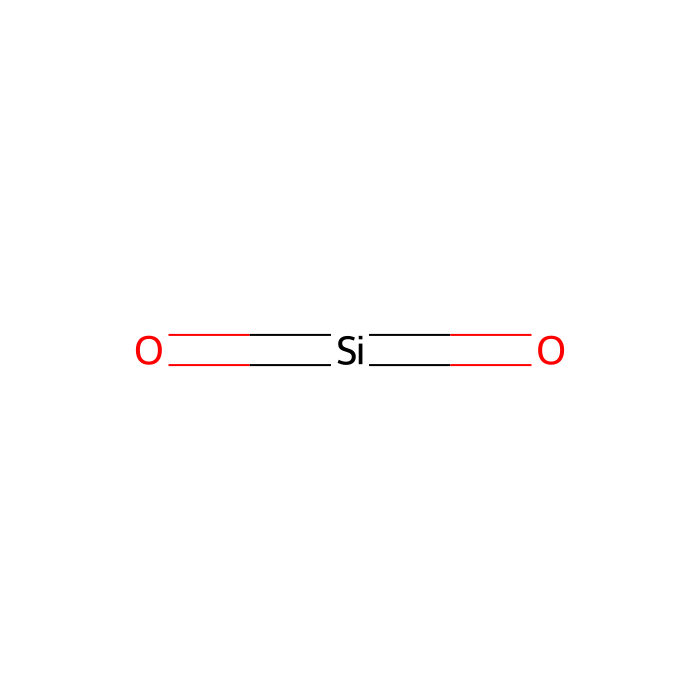
Silicon dioxide - PrimorTrace™, ≥99.99% metals basis, 1-3mm , CAS No.7631-86-9

CAS: 7631-86-9 Cat. No.: S118568 Summenformel: SiO2 Molekulargewicht: 60.08 EG-Nummer: 231-545-4
Zu bestellen verfügbar
QUALITÄT & REINHEIT PrimorTrace™ ? PrimorTrace™ — Aladdin's trace-metal-analysis line with ultra-low metal background. Use for ICP/AAS trace-metal work where contamination must be minimal. ≥99.99% metals basis 1-3mm
Synonyms
Rose quartz | Silica aerogel | Zeofree 80 | Carplex | Extrusil | Aerosil 200 | Sand | Silica, amorphous | Syton 2X | Silica gel | Silicon dioxide, fumed | Porasil | Silicon(IV) oxide | Nyacol | Quso G 30 | Vitasil 220 | Snowtex 30 | Tokusil TPLM | Manosil
Storage
Room temperature
Shipped In
Normal
★
Größe
Deutschland (EU)
USA*
Preis
Menge
5g
S118568-5g
Auf Bestellung · 8–12 Wochen
8,59€
25g
S118568-25g
—
3 Auf Lager
13,80€
100g
S118568-100g
—
4 Auf Lager
31,15€
500g
S118568-500g
1 Auf Lager
3 Auf Lager
124,87€
Enter a quantity for the sizes you want to add.
🧪
Warum diese Qualität

PrimorTrace™, ≥99.99% metals basis, 1-3mm PrimorTrace™ für empfindliche chromatographische und analytische Workflows, die minimale Basislinieninterferenzen erfordern.

🌡

Lagerung & Versand

Room temperature Versand Normal. Genaue Spezifikationen finden Sie im chargenspezifischen COA.

📋

Qualitätsdokumente

SDS, COA, Datenblatt und Spezifikationsblatt stehen zum Download bereit. Chargenspezifische COA über Chargennummernsuche abrufbar.

📚

Literaturbeleg

In 1546 peer-reviewten Publikationen zu Chromatographie, organischer Synthese und Kreuzkupplungsreaktionen zitiert.

Spezifikationen

Synonyme
Rose quartz | Silica aerogel | Zeofree 80 | Carplex | Extrusil | Aerosil 200 | Sand | Silica, amorphous | Syton 2X | Silica gel | Silicon dioxide, fumed | Porasil | Silicon(IV) oxide | Nyacol | Quso G 30 | Vitasil 220 | Snowtex 30 | Tokusil TPLM | Manosil
Spezifikationen & Reinheit
PrimorTrace™, ≥99.99% metals basis, 1-3mm
Storage
Room temperature
Verschickt in
Normal
Note
PrimorTrace™
Reinheit
≥99.99% metals basis
Namen und Kennungen
Pubchem Sid
Pubchem Sid Url
https://pubchem.ncbi.nlm.nih.gov/substance/508812131
Kanonisches Lächeln
O=[Si]=O
IUPAC Name
dioxosilane
InChIKey
VYPSYNLAJGMNEJ-UHFFFAOYSA-N
INCHI
1S/O2Si/c1-3-2
Isomere SMILES
O=[Si]=O
RTECS
VV7330000
Alternative CAS-Nummer
60676-86-0;112945-52-5
Molekulargewicht
60.08
Reaxy-Rn
6114654
Reaxys-RN_link_address
https://www.reaxys.com/reaxys/secured/hopinto.do?context=S&query=IDE.XRN=6114654&ln=

Dokumentation

📋 Sicherheitsdatenblatt (SDS)

Umfassendes Dokument zu Gefahren, Handhabung, Lagerung und Einhaltung regulatorischer Vorschriften.

<<<<<<< HEAD SDS herunterladen → ======= SDS herunterladen → >>>>>>> release248-p3

✅ Analysezertifikat (COA)

Chargenspezifische Qualitätsdaten. Geben Sie Ihre Chargennummer ein, um das genaue COA abzurufen.

COA nachschlagen →

📊 Datenblatt

Kurzübersicht über Produktspezifikationen und Anwendungen.

Datenblatt ansehen →

🔬 Spezifikationsblatt

Vollständige Qualitätsmerkmale und Akzeptanzkriterien für diese Qualität.

Spezifikationsblatt ansehen →

Erweiterte Daten

Taxonomic Classification

Taxonomy Tree

KingdomInorganic compounds
SuperclassMixed metal/non-metal compounds
KlasseMetalloid organides
SubclassMetalloid oxides
Intermediate Tree Nodes Not available
Direct ParentMetalloid oxides
Alternative Parents Metalloid salts  Inorganic salts  Inorganic oxides  
Molecular FrameworkNot available
Substituents Metalloid oxide - Inorganic oxide - Inorganic salt - Inorganic metalloid salt
BeschreibungThis compound belongs to the class of inorganic compounds known as metalloid oxides. These are inorganic compounds containing an oxygen atom of an oxidation state of -2, in which the heaviest atom bonded to the oxygen is a metalloid.
External Descriptors silicon oxide
3D-Struktur
Interaktives chemisches Strukturmodell


Zertifikate (CoA, COO, BSE/TSE und Analyse-Diagramm)
C of A & Other Certificates(BSE/TSE, COO):
Analytical Chart:

Find and download the COA for your product by matching the lot number on the packaging.

14 results found

Lot NumberCertificate TypeDatumArtikel
L2103290L2103290Certificate of AnalysisSep 09, 2025 S118568
E2411416E2411416Certificate of AnalysisMar 20, 2024 S118568
G23201094G23201094Certificate of AnalysisApr 18, 2023 S118568
G23201096G23201096Certificate of AnalysisApr 18, 2023 S118568
G23201099G23201099Certificate of AnalysisApr 18, 2023 S118568
H2619062H2619062Certificate of AnalysisApr 18, 2023 S118568
A2329025A2329025Certificate of AnalysisJun 04, 2022 S118568
B2306993B2306993Certificate of AnalysisJun 04, 2022 S118568
B2306996B2306996Certificate of AnalysisJun 04, 2022 S118568
G2220753G2220753Certificate of AnalysisJun 04, 2022 S118568
G2220756G2220756Certificate of AnalysisJun 04, 2022 S118568
G2220761G2220761Certificate of AnalysisJun 04, 2022 S118568
G2220930G2220930Certificate of AnalysisJun 04, 2022 S118568
K2217227K2217227Certificate of AnalysisJun 04, 2022 S118568
Chemische und physikalische Eigenschaften
Siedepunkt (°C)2230 °C (lit.)
Schmelzpunkt (°C)>1600 °C (lit.)
Molekulargewicht60.084 g/mol
XLogP3
Hydrogen Bond Donor Count0
Hydrogen Bond Acceptor Count2
Rotatable Bond Count0
Exact Mass59.9668 Da
Monoisotopic Mass59.9668 Da
Topological Polar Surface Area34.100 Ų
Heavy Atom Count3
Formal Charge0
Complexity18.300
Isotope Atom Count0
Defined Atom Stereocenter Count0
Undefined Atom Stereocenter Count0
Defined Bond Stereocenter Count0
Undefined Bond Stereocenter Count0
The total count of all stereochemical bonds0
Covalently-Bonded Unit Count1
FAQs und Artikel
Advanced Inorganic Materials for Solid State Lighting
Construction and application of single-walled carbon nanotube networks
Research Progress of Silicon Anode Materials for High Performance Lithium-ion Batteries
Activated Carbon and Adsorbent Essentials
A Panoramic Guide to Silicone Materials: Structural Mechanisms, Core Properties, Value Chain, and Product Categories
Microcrystalline Cellulose (MCC): A Comprehensive Primer and Selection Guide—Structural Features, Key Performance Metrics, and Application Scenarios
High-Refractive-Index vs Low-Refractive-Index Coating Materials: From AR/Waveguide Principles to a Formulation & Material-Selection Map (Including Product Category Tables A/B/C)
SOFC Solid Oxide Fuel Cells: From “What It Is and How It Generates Power” to a Key Materials Map, Application Scenarios, and Selection Navigation (Electrolytes / Electrodes / Interconnects / Sealing)
Panorama Guide to Lithium-Ion Battery Electrode Materials: Working Principles, Materials Map, and Selection Navigation (incl. Tables 1–4)
Optical & Optoelectronic Materials Selection Guide:Positioning materials, key metrics, and validation paths along “Generation → Guiding → Control → Readout” (with product navigation and Tables 1–4)
Ceramic Materials Guide: Basic Definitions, Classification Framework, and Research-Task-Oriented Selection (with Product Navigation and Tables 1–4)
Why Metal Nanocatalysts Can “Save Energy Yet Lose Performance Easily”: Durability Logic from Active Sites to Support/Interface Engineering (Including Selection Guide and Product Tables A–D)
Ferulic Acid: Structural Features, Preparation Routes, and Key Points for Research Applications
Applications of Self-Assembled Monolayers (SAMs), Microcontact Printing, and Soft Lithography in Surface Functionalization and Micro/Nanopatterning
Self-Assembled Nanodielectrics (SANDs): Self-Assembled Nanodielectric Layers for Low-Voltage Thin-Film Transistors (with Product Selection Guide)
Liquid Polyisoprene: Material Characteristics, Application Directions, and Selection Considerations
Polyetherimide (PEI): Structural Features, Main Properties, and Typical Application Directions
Mercapto Silane Coupling Agents: Structural Features, Classification, Applications, and Selection
Titanate Coupling Agents: Structural Features, Classification, Typical Applications, and Differences from Silane Coupling Agents
Experimental Selection and Outcome Assessment of Heterogeneous Metal Catalysts in Organic Synthesis
From Barium Titanate Dielectrics to Multilayer Ceramic Capacitors: Dielectric Properties and Experimental Evaluation of Barium Titanate-Based Ceramics
How Matting Agents in Coatings Build Low-Gloss Coating Surfaces: Mechanisms, Formulation Trade-Offs, and Product Selection
Four Core Applications of Epoxy Resins: Bonding, Protection, Load-Bearing, and Insulation Protection
Guide to Epoxy Resin Performance Design: System Composition, Key Properties, Process Control, and Application Selection
Guide to Selecting Polyurethane Coating Systems: Application Analysis for Wood, Flooring, Plastics, Automotive, and Industrial Protection
Fluorocarbon Resin Coating Formulation Design: Resin Selection, Supporting Systems, and Key Application Control Points
Comprehensive Performance Analysis of Polyurethane Coating Films: Soft/Hard Segment Structure, Microphase Separation, Crosslinking and Curing, and Selection of Representative Chemicals
Key Control Points in Polyurethane Coating Formulation Design and Application
Structure–Property Relationship of Silicone Resins: Mechanisms of Heat Resistance, Weatherability, Hydrophobicity, and Coating Performance Analysis
Silicone Resin Coating Formulation Design: From Application Conditions to Matching Resins, Pigments and Fillers, Curing, and Substrates
Potassium Fatty Acid Soaps: Structure and Formulation Applications—Production Processes, Alkalinity, Foam Control, and Low-Foam Cleaning
Causes, Diagnosis, and Control Strategies for Elevated Off-State Current in Semiconducting Single-Walled Carbon Nanotube Transistors
Selection and Formulation Design Guidelines for Phenolic Resins in Coatings: Applicable Scenarios, Application Limitations, and Performance Verification
Application Positioning, Scenario Selection, and Key Use Considerations for Chlorinated Rubber Resin in Coatings
Formulation Design of Chlorinated Rubber Coatings: Component Synergy and Performance Control
What Is Silica Sol: Mechanism of Action, Application Scenarios, and Selection Criteria for Nanosilica Dispersions
Applications and Selection of Polyester Resins in Industrial Coatings: Powder, Coil, Baking, Packaging, and Metal Coating Scenarios
Applicability Boundaries, Failure Risks, and Alternative System Selection for Chlorinated Rubber Resin in Coatings
Waterborne Resin Application Guide: Formulation Synergy, Troubleshooting, and Technology Development Trends
Diagnosis of Coating Performance Issues and Selection of Resin Modification Routes
Structural Design Logic of Common Resin Modification Technologies: Molecular Chain Structure, Functional Groups, Phase Structure, Crosslinked Networks, and Hybrid/Functional Design
Resin Polarity in Coating Formulations: From Molecular Structure to Dissolution, Compatibility, Interfacial Interactions, and Formulation Design
How to Select Thickeners for Strongly Acidic Cleaning Systems: Comparison of Thickening Mechanisms and Application Considerations for Fatty Amine Ethoxylates
Why Do Daily Chemical Products Become Opaque? Formation Mechanisms of Milky Turbidity, Pearlescence, and Coverage, and How to Select the Right Ingredients
Color-Development Mechanisms, Formulation Forms, and Selection/Application Logic of Colorants in Personal Care Products
Mechanism of Action and Selection Logic of Defoamers for Daily Chemical Products: Foam Stability, Foam-Breaking Mechanisms, and Representative Raw Material Analysis
Structure, Properties, and Mechanisms of Powdered Fragrances and Fragrance Delivery Materials: Stability, Release Mechanisms, and Selection Logic
Mechanisms and Troubleshooting of Foam Reduction in Personal and Household Care Formulations: Film Rupture, Weak Interfacial Films, Insufficient Surfactant Supply, and Phase-State Disturbance
Analysis of the Production Process of Hydroxypropyl Methylcellulose (HPMC) for Putty: Understanding Differences in Substitution Structure and Gelation Temperature from High-Ratio and Low-Ratio Formulations
Application of Conductive Carbon Black in Coatings: Selection Criteria, Dispersion Control, and Conductive Network Construction
Influencing Factors and Control Strategies for Blistering in Neutral Wall Putty: An Experimental Analysis Based on HPMC Dosage, Viscosity, and Ground Calcium Carbonate Fineness
How to Select Binding/Gel Materials for Neutral Wall Putty? A Comparison of Pregelatinized Starch, PVA, and Redispersible Polymer Powder Based on Four Application Trials
Causes and Mechanism Analysis of Delamination During Sanding of Water-Resistant Putty
Why Do Rust Spots Appear on Neutral Wall Putty? Iron Sources, Moisture Migration, Oxidative Color Development, and Prevention Measures
Common Problems and Formulation Adjustment Strategies for Neutral Putty Under High Summer Temperatures
Differences and Application Selection of Cassava- and Corn-Based Pregelatinized Starch in Neutral Putty Formulations
The Role, Selection, Cracking Risk Analysis, and Dosage Control of Bentonite in Neutral Putty
In Vitro Exposure Simulation and Bioaccessibility Assessment of Particulate Chemicals from Consumer Products Using Simulated Lung Fluid
Mechanism of Action of Porous Silica in Oil-Control Loose Powder: Pore Structure, Capillary Imbibition, and Surface Modification
UVA Absorption Mechanism of Avobenzone: Keto–Enol Tautomerism, Photochemical Instability, and Formulation Photostabilization Strategies
1,8-Naphthyridine-Based Aldose Reductase Inhibitors: Scaffold Construction, In Vitro Inhibitory Activity, and Directions for Structural Optimization
Why Primary and Secondary Amines Have Difficulty Participating Directly in the Classical Mitsunobu Reaction: Mechanism, Inversion of Configuration, and Reaction Scope of BEHT-Mediated Alcohol Amination
What Is Direct Compression? Process Characteristics, Suitability Criteria, and Excipient Selection
Solid Supports in Packed Gas Chromatography Columns: Definition, Mechanisms of Action, Classification, and Selection
Inflammasomes: Core Signaling Platforms and Targeted Research in Immunoinflammation
Citations of This Product
Lösungsrechner
Bewertungen

Kundenbewertungen

Dürfen wir Sie über Rabattaktionen informieren?

Später erinnern

Vielen Dank! Bitte überprüfen Sie Ihren E-Mail-Posteingang, um zu bestätigen.

Hoppla! Benachrichtigungen sind deaktiviert.