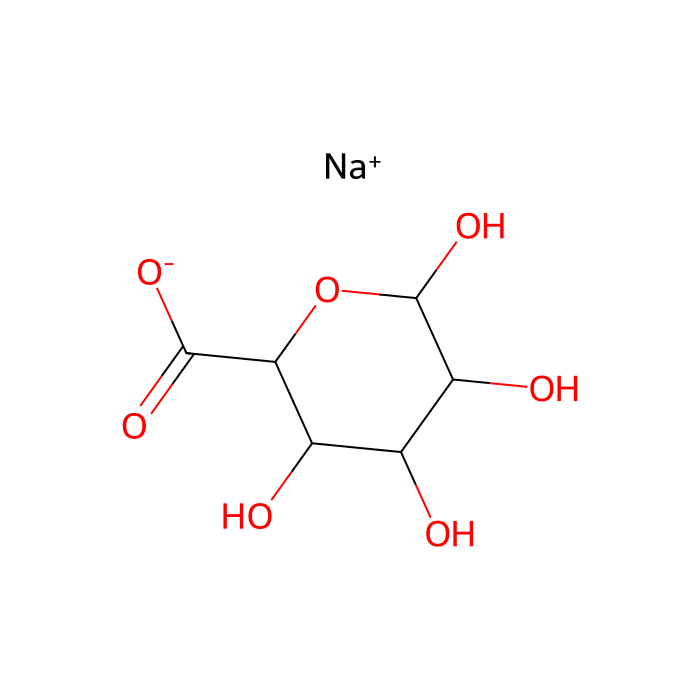
Sodium alginate - Biochemical, for immobilization of micro-organisms , CAS No.9005-38-3

CAS: 9005-38-3 Cat. No.: S100127 EG-Nummer: 618-415-6
Zu bestellen verfügbar
GRADE & PURITY Biochemical ? Biochemical grade — purity suited to biochemistry experiments and preparations. Use for enzyme, protein, and metabolic work where biocompatibility matters. for immobilization of micro-organisms
Synonyms
D-Galacturonic acid sodium salt, >=95.0% (T) | D-(+)-GALACTURONIC ACID SODIUM SALT | sodium;(2S,3R,4S,5R)-3,4,5,6-tetrahydroxyoxane-2-carboxylate | D-Galacturonic acid sodium salt | D-Galacturonic acid sodium salt, >=98.0% (T) | Alginic Acid Sodium Salt |
Storage
Room temperature,Desiccated
Shipped In
Normal
★
Size
Deutschland (EU)
USA*
Price
Qty
5g
S100127-5g
—
5 Auf Lager
23,34€
25g
S100127-25g
—
3 Auf Lager
51,11€
100g
S100127-100g
—
3 Auf Lager
202,10€
500g
S100127-500g
—
2 Auf Lager
277,59€
Enter a quantity for the sizes you want to add.
🧪
Why this grade

Biochemical, for immobilization of micro-organisms Biochemical for sensitive chromatographic and analytical workflows requiring minimal baseline interference.

🌡

Storage & shipping

Room temperature,Desiccated Ships Normal Check lot-specific COA for exact specifications.

📋

Quality documents

SDS, COA, datasheet, and spec sheet available for download. Lot-specific COA accessible via lot number lookup.

📚

Literature proof

Cited in 2554 peer-reviewed publications across chromatography, organic synthesis, and cross-coupling reactions.

Übersicht

Alginic acid sodium is a gelling and nontoxic anionic polysaccharide. The carboxylic acid groups on the alginic acid chain, renders it insoluble in water.However, converting alginic acid to its sodium form, enables it to solubilize in water easily.
Alginic acid sodium is used: in combination with chitosan, to fabricate a biodegradable porous scaffold for bone tissue engineering. to study the characteristics of a modified amphiphilic alginate derivative to the study the impact of alginate on the rate of lipid digestion by employing an in vitro digestion model in the preparation of alginate hydrogels as encapsulating agents of microparticles of β-galactosidae

Specifications

Synonyme
D-Galacturonic acid sodium salt, >=95.0% (T) | D-(+)-GALACTURONIC ACID SODIUM SALT | sodium;(2S,3R,4S,5R)-3,4,5,6-tetrahydroxyoxane-2-carboxylate | D-Galacturonic acid sodium salt | D-Galacturonic acid sodium salt, >=98.0% (T) | Alginic Acid Sodium Salt |
Spezifikationen & Reinheit
Biochemical, for immobilization of micro-organisms
Storage
Room temperature,Desiccated
Verschickt in
Normal
Note
Biochemical
Namen und Kennungen
Pubchem Sid508814503
IUPAC Namesodium;(2S,3R,4S,5R)-3,4,5,6-tetrahydroxyoxane-2-carboxylate
InChIKeyMSXHSNHNTORCAW-KSSASCOMSA-M
INCHI1S/C6H10O7.Na/c7-1-2(8)4(5(10)11)13-6(12)3(1)9;/h1-4,6-9,12H,(H,10,11);/q;+1/p-1/t1-,2+,3+,4-,6?;/m0./s1
Isomere SMILES [C@@H]1([C@H]([C@H](OC([C@@H]1O)O)C(=O)[O-])O)O.[Na+]
WGK Deutschland 1

Documentation

📋 Safety Data Sheet (SDS)

Comprehensive hazard, handling, storage, and regulatory compliance document.

Download SDS →

✅ Certificate of Analysis (COA)

Lot-specific quality data. Enter your lot number to retrieve the exact COA.

Look up COA →

📊 Datasheet

Quick-reference summary of product specifications and applications.

View datasheet →

🔬 Specification Sheet

Full quality attributes and acceptance criteria for this grade.

View spec sheet →

Advanced Data

Zertifikate (CoA, COO, BSE/TSE und Analyse-Diagramm)
C of A & Other Certificates(BSE/TSE, COO):
Analytical Chart:

Find and download the COA for your product by matching the lot number on the packaging.

24 results found

Lot NumberCertificate TypeDatumArtikel
E2620210Certificate of AnalysisMay 29, 2026 S100127
E2620208Certificate of AnalysisMay 29, 2026 S100127
E2514010Certificate of AnalysisMay 21, 2025 S100127
E2526028Certificate of AnalysisMay 21, 2025 S100127
E2526030Certificate of AnalysisMay 21, 2025 S100127
E2526032Certificate of AnalysisMay 21, 2025 S100127
D2521629Certificate of AnalysisApr 30, 2025 S100127
D2129189Certificate of AnalysisFeb 08, 2023 S100127
E23171106Certificate of AnalysisDec 05, 2022 S100127
E23171125Certificate of AnalysisDec 05, 2022 S100127
K2223657Certificate of AnalysisNov 12, 2022 S100127
K2223671Certificate of AnalysisNov 12, 2022 S100127
C2406031Certificate of AnalysisNov 12, 2022 S100127
L2021039Certificate of AnalysisOct 17, 2022 S100127
F2206450Certificate of AnalysisFeb 22, 2022 S100127
F2206453Certificate of AnalysisFeb 22, 2022 S100127
F2206454Certificate of AnalysisFeb 22, 2022 S100127
F2206455Certificate of AnalysisFeb 22, 2022 S100127
F2206456Certificate of AnalysisFeb 22, 2022 S100127
F2206457Certificate of AnalysisFeb 22, 2022 S100127
B2212410Certificate of AnalysisJan 08, 2022 S100127
B2212386Certificate of AnalysisJan 08, 2022 S100127
B2212385Certificate of AnalysisJan 08, 2022 S100127
B2212402Certificate of AnalysisJan 07, 2022 S100127
Chemische und physikalische Eigenschaften
EmpfindlichkeitHygroscopic
Schmelzpunkt (°C)119 °C
FAQs und Artikel
FITC-Labeled Polysaccharides—— The Polysaccharide World Under Fluorescent Probes
Biochemical Reagents
Immobilized Enzyme Technology and Its Applications in Biocatalysis
A Practical Guide to Fragrance Compositions: Turning a Black-Box Formula into an Engineerable System—Compatibility, Stability, Controlled Release, Traceability, and Selection
Panorama Guide to Lithium-Ion Battery Electrode Materials: Working Principles, Materials Map, and Selection Navigation (incl. Tables 1–4)
An Introduction to Research-Grade Carbohydrates: Decoding the “Glycan Language” and a Product-Selection Guide (with Tables 1–3)
Materials Can “Switch”: How Smart Polymers Respond to Temperature, pH, and Light (with Experimental Selection Tips & Product Navigation)
Understanding Hydrophilic Polymers in Aqueous Systems: Hydration Mechanisms, Structural Knobs, and Task-Oriented Selection Guide (Including Tables 1–3)
Biomedical Polymer Insights: Role-Based Task Map, Six Key Material Levers, and a Risk-Driven Evidence Chain (including the Product Navigation Guide and Product Tables 1–3)
Pharmaceutical Formulation and Delivery in Research Settings: Core Definitions, Controllable Frameworks and Practical Guidelines
Alginate : An Overview of Extraction and Purification Processes, Quality Identification, and Multidomain Applications
Review of the Structural Characteristics, Biological Functions, and Application Advances of Lycopene
Functional Framework of Starch Metabolism-Related Enzymes in Food Science Research and Mechanistic Analysis of Quality Regulation
Research Value of Polyelectrolyte Multilayers: Layer-by-Layer Design of Interfacial Composition, Mass Transport, and Function
Key Judgments in Medical Hydrogel R&D: From Polymer Source and Crosslinking Strategy to Sterilization Planning, Scale-Up Feasibility, and Quality Control
Injectable Thermosensitive Gels: Gelation Behavior, Rheological Properties, and Drug Release Characteristics
Applications of Enzymatic Protein Crosslinking Systems in Gel Construction and Functional Evaluation
Designing Hydrogel Scaffolds as Programmable Cell Microenvironments: From Click-Chemistry Functionalization to 3D Cell Culture Experimental Design
From Natural Cellulose to Nanocrystals: Structural Characteristics, Application Directions, and Industrialization Challenges of CNC
Thickening, Suspension, Auxiliary Stabilization, and Agglomeration Mechanisms of Xanthan Gum in Personal Care Formulations: From Molecular Structure to Processing Applications
From Structure to Rheology: Thickening, Stabilization, and Selection Logic of Cellulose Ethers for Personal Care Applications
Structure, Properties, and Mechanisms of Powdered Fragrances and Fragrance Delivery Materials: Stability, Release Mechanisms, and Selection Logic
How to Extend Fragrance Longevity in Personal and Home Care Products: Fragrance Structure, Surface Deposition, and Release Modulation
R&D Selection and Experimental Evaluation of Common Food Hydrocolloids
Experimental Applications of Carboxymethyl Cellulose (CMC) Solution in Enzyme Assays, Suspension Systems, and Functional Materials
Potential Mechanisms of p-Cymene in Problem-Prone Skin: Membrane Perturbation, Inflammatory Signaling Modulation, and Localized Delivery
Citations of This Product
Lösungsrechner
Bewertungen

Kundenbewertungen

Need help choosing the grade?

Our grade selection guide covers purity, stabilizer status, and application suitability for all variants in our catalog.

View Biochemical grade guide →

Shall we send you a message when we have discounts available?

Remind me later

Thank you! Please check your email inbox to confirm.

Oops! Notifications are disabled.