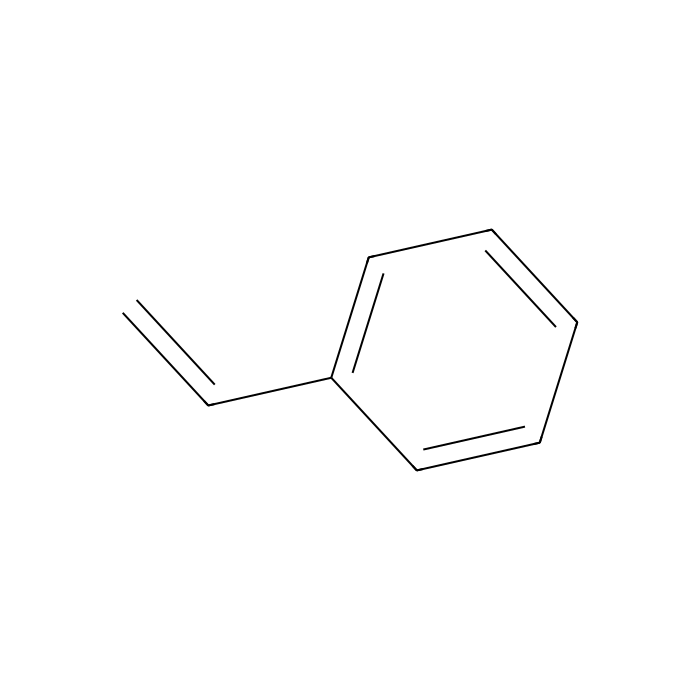
Styrene Standard - 2000ug/ml in Purge and Trap Methanol , CAS No.100-42-5

CAS: 100-42-5 Cat. No.: S128151 Summenformel: C8H8 Molekulargewicht: 104.15 Beilstein Registry Number: 1071236 EG-Nummer: 202-851-5
Zu bestellen verfügbar
QUALITÄT & REINHEIT 2000ug/ml in Purge and Trap Methanol
Synonyms
STYRENE|Ethenylbenzene|Vinylbenzene|Phenylethylene|100-42-5|Styrol|Benzene, ethenyl-|Cinnamene|Phenylethene|Styrolene|Phenethylene|Styrene monomer|Vinylbenzol|Vinyl benzene|Styropol SO|9003-53-6|Styren|Styrole|Benzene, vinyl-|Ethylene, phenyl-|Vinylbenzen
Storage
Store at -20°C
Shipped In
Ice chest + Ice pads,FedEx DG Service
★
Größe
Deutschland (EU)
USA*
Preis
Menge
1ml
S128151-1ml
—
2 Auf Lager

133,55€

174,33€
Speichern 40,78 € (23.39%)
Enter a quantity for the sizes you want to add.
🧪
Warum diese Qualität

2000ug/ml in Purge and Trap Methanol für empfindliche chromatographische und analytische Workflows, die minimale Basislinieninterferenzen erfordern.

🌡

Lagerung & Versand

Store at -20°C Versand Ice chest + Ice pads,FedEx DG Service. Genaue Spezifikationen finden Sie im chargenspezifischen COA.

📋

Qualitätsdokumente

SDS, COA, Datenblatt und Spezifikationsblatt stehen zum Download bereit. Chargenspezifische COA über Chargennummernsuche abrufbar.

📚

Literaturbeleg

In 810 peer-reviewten Publikationen zu Chromatographie, organischer Synthese und Kreuzkupplungsreaktionen zitiert.

Übersicht

Volatile Organic Compounds (VOCs) Single Component Standards US EPA Methods:502.2,524.2,8021,8021A,8021B,624,8240B,8260B

Spezifikationen

Synonyme
STYRENE | Ethenylbenzene | Vinylbenzene | Phenylethylene | 100-42-5 | Styrol | Benzene, ethenyl- | Cinnamene | Phenylethene | Styrolene | Phenethylene | Styrene monomer | Vinylbenzol | Vinyl benzene | Styropol SO | 9003-53-6 | Styren | Styrole | Benzene, vinyl- | Ethylene, phenyl- | Vinylbenzen
Spezifikationen & Reinheit
2000ug/ml in Purge and Trap Methanol
Storage
Store at -20°C
Verschickt in
Ice chest + Ice pads,FedEx DG Service
Dieses Produkt erfordert Kühlkettenversand. Grundversand und andere Economy-Optionen sind nicht verfügbar.
Namen und Kennungen
Isomere SMILES
C=CC1=CC=CC=C1
WGK Deutschland
1
UN-Nummer
2055
Verpackungsgruppe
III
Molekulargewicht
104.15
Beilstein
1071236

Dokumentation

📋 Sicherheitsdatenblatt (SDS)

Umfassendes Dokument zu Gefahren, Handhabung, Lagerung und Einhaltung regulatorischer Vorschriften.

<<<<<<< HEAD SDS herunterladen → ======= SDS herunterladen → >>>>>>> release248-p3

✅ Analysezertifikat (COA)

Chargenspezifische Qualitätsdaten. Geben Sie Ihre Chargennummer ein, um das genaue COA abzurufen.

COA nachschlagen →

📊 Datenblatt

Kurzübersicht über Produktspezifikationen und Anwendungen.

Datenblatt ansehen →

🔬 Spezifikationsblatt

Vollständige Qualitätsmerkmale und Akzeptanzkriterien für diese Qualität.

Spezifikationsblatt ansehen →

Erweiterte Daten

Zertifikate (CoA, COO, BSE/TSE und Analyse-Diagramm)
C of A & Other Certificates(BSE/TSE, COO):
Analytical Chart:

Find and download the COA for your product by matching the lot number on the packaging.

1 results found

Lot NumberCertificate TypeDatumArtikel
G2201096G2201096Certificate of AnalysisJun 07, 2022 S128151
Chemische und physikalische Eigenschaften
Brechungsindex1.55
Flammpunkt (°F)89.6 °F
Flammpunkt (°C)32°C
Siedepunkt (°C)145-146°C
Schmelzpunkt (°C)-31°C(lit.)
FAQs und Artikel
Make “Aryl Chlorides + Low Pd Loading + Scale-Up Reproducibility” Reliable: The Initiation and Durability Logic of Pd–NHC (Palladium–N-Heterocyclic Carbene) Cross-Coupling (with Selection Navigation and Product Tables)
Experimental Selection Logic for C-C Bond Construction: Understanding Fragment Coupling, Carbonyl Chain Extension, Olefination, and Late-Stage Bond-Forming Pathways by Bond-Forming Task
Experimental Decision-Making for Cross-Coupling Reactions: Target Bond Type, Substrate Combination, and Catalytic System Selection
Application and Selection Guide for Alkyd Resin Coatings: Advantages, Limitations, Formulation Control, and Modification Directions
Structural and Performance Design of Acrylic Resins for Coatings: Monomer Composition, Key Parameters, and Film Formation/Curing Mechanisms
When Should You Choose Silicone Resin? Selection Comparison with Epoxy, Acrylic, Polyurethane, Fluororesin, and Other Coating Resins
Film Formation and Curing Mechanisms of Polyester Resins for Coatings: From Functional Groups and Curing Systems to Crosslinked Networks
Vinyl Ester Resin Systems: Structural Features, Curing Mechanism, and Key Application Considerations
How to Select Vinyl-Related Resins: Building Formulation Judgment Based on Substrate, Performance Targets, and Failure Risks
Applicability Boundaries, Failure Risks, and Alternative System Selection for Chlorinated Rubber Resin in Coatings
Waterborne Resin Technology Explained: Waterborne Forms, Performance Balance, and a Technology Map
Guide to Common Waterborne Resin Types and Application-Based Selection: How to Choose Acrylics, PUD, Waterborne Epoxy, Waterborne Alkyd, VAE, and Related Chemicals
From Water to Film: Film-Formation Mechanisms and Performance Development of Waterborne Emulsions and Dispersions
Diagnosis of Coating Performance Issues and Selection of Resin Modification Routes
Mechanisms and Control of Coating Yellowing: From Chromophoric Structure Formation to Source Diagnosis and Formulation Optimization
Structural Design Logic of Common Resin Modification Technologies: Molecular Chain Structure, Functional Groups, Phase Structure, Crosslinked Networks, and Hybrid/Functional Design
Resin Polarity in Coating Formulations: From Molecular Structure to Dissolution, Compatibility, Interfacial Interactions, and Formulation Design
Key Variable in the Long-Term Stability of Waterborne Pigment Concentrates: How Dispersant Molecular Weight Distribution (MWD) Affects Pigment Dispersion, Surface Adsorption-Layer Formation, and Storage Stability
From Diverse Ketones to Three-Dimensional Spirocyclic Building Blocks: Reaction Design of [1.1.1]Propellane-Involved Ketone Ring Expansion
Tether Effects in Intramolecular [2+2] Photocycloadditions: Straight and Crossed Regioselectivity and Stepwise C–C Bond Formation
How to Evaluate Reaction Generality through Substrate Scope: From the Number of Examples to Standardized Substrate Selection
Citations of This Product
Lösungsrechner
Bewertungen

Kundenbewertungen

Häufig gestellte Fragen

How should this product be stored?
Store at ?20 °C. Freezer storage is required to maintain the specified shelf life.
How is this product shipped?
This product ships in an insulated container with ice pads. Unpack on arrival and transfer it to the storage condition stated above.
What are the CAS number, molecular formula and molecular weight?
The CAS Number is 100-42-5, the molecular formula is C8H8, and the molecular weight is 104.15 g/mol.
What documentation is provided?
Available product documentation, including Certificates of Analysis (COA), Safety Data Sheets (SDS), and specification sheets, is shown in the product document area. Document availability and access follow the current site policy.

Dürfen wir Sie über Rabattaktionen informieren?

Später erinnern

Vielen Dank! Bitte überprüfen Sie Ihren E-Mail-Posteingang, um zu bestätigen.

Hoppla! Benachrichtigungen sind deaktiviert.