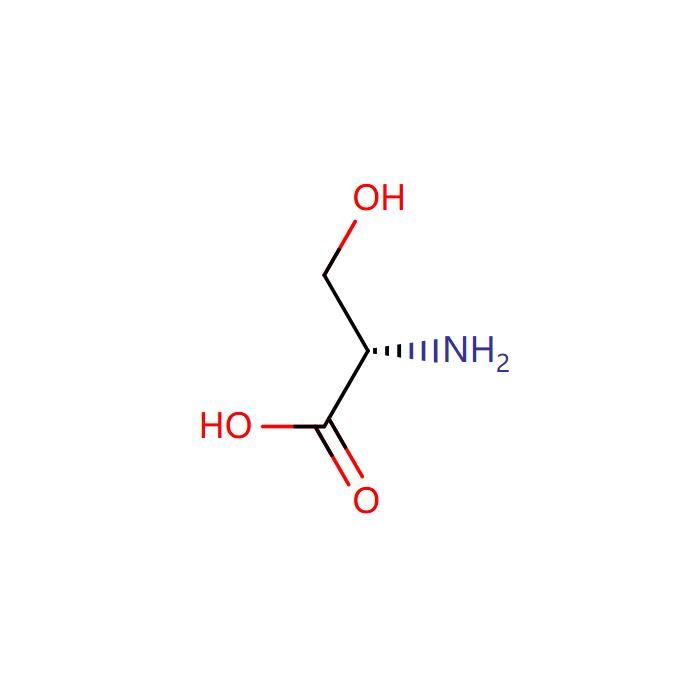
L-Serine - Moligand™, ≥99% , CAS No.56-45-1

CAS: 56-45-1 Cat. No.: S103483 Formula: HOCH2CH(NH2)CO2H Molecular Weight: 105.09 Beilstein Registry Number: 1721404 EC Number: 200-274-3
AVAILABLE TO ORDER
GRADE & PURITY Moligand™ ? Moligand™ — Aladdin's line of ligands and bioactive small molecules. Use for receptor, pathway, and binding studies needing defined small-molecule tools. ≥99%
Synonyms
Ser|beta-Hydroxy-L-alanine|SERINE [EP MONOGRAPH]|H-Ser|L-2-Amino-3-hydroxypropionic acid|Serina [Spanish]|SERINE [INN]|2-Amino-3-hydroxypropionic acid|3-Hydroxyalanine|L-SERINE [FCC]|L-Serine;|SERINE [MART.]|.beta.-Hydroxyalanine|(S)-(+)-2-Amino-3-hydroxypropionic acid|(S)-2-Amino-3-hydroxypropanoic acid|(S)-2-amino-3-hydroxy-Propanoic acid|(S)-2-Amino-3-hydroxypropionic acid|beta-Hydroxyalanine|SERINE [VANDF]|(S)-b-Amino-3-hydroxypropionate|alpha-Amino-beta-hydroxypropionic acid|Serine (L-Serine)|Serinum|L-SERINE [USP-RS]|SERINE (USP MONOGRAPH)|L-Alanine, 3-hydroxy-|L-3-Hydroxy-2-aminopropionic acid|Pharmakon1600-01301010|SERINE [INCI]|SERINE [USP MONOGRAPH]|Serina|(-)-Serine|(S)-beta-Amino-3-hydroxypropionate|l-2-Amino-3-hydroxy-propanoic acid|L-3-Hydroxy-2-aminopropionate|(2S)-2-amino-3-hydroxypropanoic acid|(2S)-2-amino-3-hydroxy-propanoic acid|ser|SERINE (II)|(S)-Serine|L-Serin|SER (IUPAC abbrev)|Serine (USP)|(S)-a-Amino-b-hydroxypropionate|(S)-a-Amino-b-hydroxypropionic acid|(S)-2-Amino-3-hydroxypropanoate|(S)-2-amino-3-hydroxy-Propanoate|SERINE [HSDB]|SERINE [II]|H-Ser-OH|L-(-)-Serine|L-SERINE (USP-RS)|serin|serine|2-amino-3-hydroxypropanoate|Serine, L-|2-Amino-3-hydroxypropanoic acid, (S)-|L-SERINE [JAN]|Serinum (Latin)|(L)-SERINE|l serine|SERINE (EP MONOGRAPH)|Serine (VAN)|Serine [USAN:INN]|(S)-alpha-Amino-beta-hydroxypropionate|3-hydroxy-L-Alanine|rac-serine|L-Serine,(S)|Serinum [Latin]|3h-l-serine|(S)-alpha-Amino-beta-hydroxypropionic acid|Propanoic acid, 2-amino-3-hydroxy-, (S)-|Racemic serine|b-Hydroxy-L-alanine|L-3-Hydroxy-alanine|SERINE [MI]|L-serine|SERINE [WHO-DD]|L-Serine - CAS 56-45-1|L-Serine (JP17)|(S)-(-)-Serine|(S)-b-Amino-3-hydroxypropionic acid|Lopac-S-4250
Storage
Room temperature,Desiccated
Shipped In
Normal
★
Size
Germany (EU)
USA*
Price
Qty
5g
S103483-5g
—
2 In stock
€8.59
25g
S103483-25g
—
2 In stock
€12.06
100g
S103483-100g
—
2 In stock
€19.87
500g
S103483-500g
—
2 In stock
€86.69
Enter a quantity for the sizes you want to add.

Specifications

Synonyms
Ser | beta-Hydroxy-L-alanine | SERINE [EP MONOGRAPH] | H-Ser | L-2-Amino-3-hydroxypropionic acid | Serina [Spanish] | SERINE [INN] | 2-Amino-3-hydroxypropionic acid | 3-Hydroxyalanine | L-SERINE [FCC] | L-Serine; | SERINE [MART.] | .beta.-Hydroxyalanine | (S)-(+)-2-Amino-3-hydroxypropionic acid | (S)-2-Amino-3-hydroxypropanoic acid | (S)- Show more
Specifications & Purity
Moligand™, ≥99%
Biochemical and Physiological Mechanisms
Endogenous agonist at the inhibitory glycine receptor.D-isomeralso available.
Storage
Room temperature,Desiccated
Shipped In
Normal
Grade
Moligand™
Purity
≥99%
Names and Identifiers
Pubchem Sid
Pubchem Sid Url
https://pubchem.ncbi.nlm.nih.gov/substance/488179970
SMILES
C(C(C(=O)O)N)O
IUPAC Name
(2S)-2-amino-3-hydroxypropanoic acid
InChIKey
MTCFGRXMJLQNBG-REOHCLBHSA-N
InChI
1S/C3H7NO3/c4-2(1-5)3(6)7/h2,5H,1,4H2,(H,6,7)/t2-/m0/s1
Isomeric SMILES
C([C@@H](C(=O)O)N)O
WGK Germany
1
RTECS
VT8100000
Molecular Weight
105.09
Beilstein
1721404
Reaxy-Rn
1721402
Reaxys-RN_link_address
https://www.reaxys.com/reaxys/secured/hopinto.do?context=S&query=IDE.XRN=1721402&ln=

Advanced Data

Taxonomic Classification

Taxonomy Tree

KingdomOrganic compounds
SuperclassOrganic acids and derivatives
ClassCarboxylic acids and derivatives
SubclassAmino acids, peptides, and analogues
Intermediate Tree Nodes Amino acids and derivatives - Alpha amino acids and derivatives
Direct ParentSerine and derivatives
Alternative Parents L-alpha-amino acids  Beta hydroxy acids and derivatives  Amino acids  Monocarboxylic acids and derivatives  Carboxylic acids  Primary alcohols  Organopnictogen compounds  Organic oxides  Monoalkylamines  Hydrocarbon derivatives  Carbonyl compounds  
Molecular FrameworkAliphatic acyclic compounds
Substituents Serine or derivatives - Alpha-amino acid - L-alpha-amino acid - Beta-hydroxy acid - Hydroxy acid - Amino acid - Carboxylic acid - Monocarboxylic acid or derivatives - Alcohol - Primary amine - Primary alcohol - Organooxygen compound - Organonitrogen compound - Hydrocarbon derivative - Primary aliphatic amine - Organic oxide - Organopnictogen compound - Carbonyl group - Organic oxygen compound - Amine - Organic nitrogen compound - Aliphatic acyclic compound
DescriptionThis compound belongs to the class of organic compounds known as serine and derivatives. These are compounds containing serine or a derivative thereof resulting from reaction of serine at the amino group or the carboxy group, or from the replacement of any hydrogen of glycine by a heteroatom.
External Descriptors Common amino acids
3D Structure
Interactive Chemical Structure Model


Associated Targets(Human)
GPRC6A Tchem G-protein coupled receptor family C group 6 member A (1 Activities)
Activity TypeActivity Value -log(M)Mechanism of ActionActivity ReferencePublications (PubMed IDs)
F2 Tclin Thrombin (11687 Activities)
Activity TypeRelationActivity valueUnitsAction TypeJournalPubMed IddoiAssay Aladdin ID
ESR1 Tclin Estrogen receptor alpha (17718 Activities)
Activity TypeRelationActivity valueUnitsAction TypeJournalPubMed IddoiAssay Aladdin ID
PGR Tclin Progesterone receptor (8562 Activities)
Activity TypeRelationActivity valueUnitsAction TypeJournalPubMed IddoiAssay Aladdin ID
CHRM2 Tclin Muscarinic acetylcholine receptor M2 (10671 Activities)
Activity TypeRelationActivity valueUnitsAction TypeJournalPubMed IddoiAssay Aladdin ID
HTR1A Tclin Serotonin 1a (5-HT1a) receptor (14969 Activities)
Activity TypeRelationActivity valueUnitsAction TypeJournalPubMed IddoiAssay Aladdin ID
ADRA2A Tclin Alpha-2a adrenergic receptor (9450 Activities)
Activity TypeRelationActivity valueUnitsAction TypeJournalPubMed IddoiAssay Aladdin ID
AR Tclin Androgen Receptor (11781 Activities)
Activity TypeRelationActivity valueUnitsAction TypeJournalPubMed IddoiAssay Aladdin ID
CHRM1 Tclin Muscarinic acetylcholine receptor M1 (12690 Activities)
Activity TypeRelationActivity valueUnitsAction TypeJournalPubMed IddoiAssay Aladdin ID
GABRA1 Tclin GABA receptor alpha-1 subunit (399 Activities)
Activity TypeRelationActivity valueUnitsAction TypeJournalPubMed IddoiAssay Aladdin ID
MAOA Tclin Monoamine oxidase A (11911 Activities)
Activity TypeRelationActivity valueUnitsAction TypeJournalPubMed IddoiAssay Aladdin ID
DRD1 Tclin Dopamine D1 receptor (9720 Activities)
Activity TypeRelationActivity valueUnitsAction TypeJournalPubMed IddoiAssay Aladdin ID
ACHE Tclin Acetylcholinesterase (18204 Activities)
Activity TypeRelationActivity valueUnitsAction TypeJournalPubMed IddoiAssay Aladdin ID
PTGS1 Tclin Cyclooxygenase-1 (9233 Activities)
Activity TypeRelationActivity valueUnitsAction TypeJournalPubMed IddoiAssay Aladdin ID
SLC6A2 Tclin Norepinephrine transporter (10102 Activities)
Activity TypeRelationActivity valueUnitsAction TypeJournalPubMed IddoiAssay Aladdin ID
SLC6A4 Tclin Serotonin transporter (12625 Activities)
Activity TypeRelationActivity valueUnitsAction TypeJournalPubMed IddoiAssay Aladdin ID
ADRA1A Tclin Alpha-1a adrenergic receptor (8359 Activities)
Activity TypeRelationActivity valueUnitsAction TypeJournalPubMed IddoiAssay Aladdin ID
OPRM1 Tclin Mu opioid receptor (19785 Activities)
Activity TypeRelationActivity valueUnitsAction TypeJournalPubMed IddoiAssay Aladdin ID
DRD3 Tclin Dopamine D3 receptor (14368 Activities)
Activity TypeRelationActivity valueUnitsAction TypeJournalPubMed IddoiAssay Aladdin ID
SLC6A3 Tclin Dopamine transporter (10535 Activities)
Activity TypeRelationActivity valueUnitsAction TypeJournalPubMed IddoiAssay Aladdin ID
KCNH2 Tclin HERG (29587 Activities)
Activity TypeRelationActivity valueUnitsAction TypeJournalPubMed IddoiAssay Aladdin ID
PDE3A Tclin Phosphodiesterase 3A (3309 Activities)
Activity TypeRelationActivity valueUnitsAction TypeJournalPubMed IddoiAssay Aladdin ID
HTR2B Tclin Serotonin 2b (5-HT2b) receptor (10323 Activities)
Activity TypeRelationActivity valueUnitsAction TypeJournalPubMed IddoiAssay Aladdin ID
TBXA2R Tclin Thromboxane A2 receptor (5717 Activities)
Activity TypeRelationActivity valueUnitsAction TypeJournalPubMed IddoiAssay Aladdin ID
PDE4A Tclin Phosphodiesterase 4A (1943 Activities)
Activity TypeRelationActivity valueUnitsAction TypeJournalPubMed IddoiAssay Aladdin ID
ADORA3 Tchem Adenosine A3 receptor (15931 Activities)
Activity TypeRelationActivity valueUnitsAction TypeJournalPubMed IddoiAssay Aladdin ID
HRH3 Tclin Histamine H3 receptor (10389 Activities)
Activity TypeRelationActivity valueUnitsAction TypeJournalPubMed IddoiAssay Aladdin ID
KDR Tclin Vascular endothelial growth factor receptor 2 (20924 Activities)
Activity TypeRelationActivity valueUnitsAction TypeJournalPubMed IddoiAssay Aladdin ID
CYP2D6 Tclin Cytochrome P450 2D6 (33882 Activities)
Activity TypeRelationActivity valueUnitsAction TypeJournalPubMed IddoiAssay Aladdin ID
CYP1A2 Tchem Cytochrome P450 1A2 (26471 Activities)
Activity TypeRelationActivity valueUnitsAction TypeJournalPubMed IddoiAssay Aladdin ID
SLC1A4 Tbio Neutral amino acid transporter A (18 Activities)
Activity TypeRelationActivity valueUnitsAction TypeJournalPubMed IddoiAssay Aladdin ID
CYP2C9 Tchem Cytochrome P450 2C9 (32119 Activities)
Activity TypeRelationActivity valueUnitsAction TypeJournalPubMed IddoiAssay Aladdin ID
CYP2C19 Tchem Cytochrome P450 2C19 (29246 Activities)
Activity TypeRelationActivity valueUnitsAction TypeJournalPubMed IddoiAssay Aladdin ID
CYP3A4 Tclin Cytochrome P450 3A4 (53859 Activities)
Activity TypeRelationActivity valueUnitsAction TypeJournalPubMed IddoiAssay Aladdin ID
POLK Tbio DNA polymerase kappa (8653 Activities)
Activity TypeRelationActivity valueUnitsAction TypeJournalPubMed IddoiAssay Aladdin ID
KDM4E Tchem Lysine-specific demethylase 4D-like (40243 Activities)
Activity TypeRelationActivity valueUnitsAction TypeJournalPubMed IddoiAssay Aladdin ID
SLC36A1 Tchem Proton-coupled amino acid transporter 1 (102 Activities)
Activity TypeRelationActivity valueUnitsAction TypeJournalPubMed IddoiAssay Aladdin ID
SLC1A5 Tchem Neutral amino acid transporter B(0) (65 Activities)
Activity TypeRelationActivity valueUnitsAction TypeJournalPubMed IddoiAssay Aladdin ID
Associated Targets(non-human)
Pkm Pyruvate kinase isozymes M1/M2 (66 Activities)
Activity TypeRelationActivity valueUnitsAction TypeJournalPubMed IddoiAssay Aladdin ID
Ggt1 Gamma-glutamyltranspeptidase 1 (36 Activities)
Activity TypeRelationActivity valueUnitsAction TypeJournalPubMed IddoiAssay Aladdin ID
lef Anthrax lethal factor (7585 Activities)
Activity TypeRelationActivity valueUnitsAction TypeJournalPubMed IddoiAssay Aladdin ID
BCHE Cholinesterase (8742 Activities)
Activity TypeRelationActivity valueUnitsAction TypeJournalPubMed IddoiAssay Aladdin ID
ffp 4'-phosphopantetheinyl transferase ffp (24982 Activities)
Activity TypeRelationActivity valueUnitsAction TypeJournalPubMed IddoiAssay Aladdin ID
Grin1 Glutamate NMDA receptor (6467 Activities)
Activity TypeRelationActivity valueUnitsAction TypeJournalPubMed IddoiAssay Aladdin ID
Slc16a10 Monocarboxylate transporter 10 (73 Activities)
Activity TypeRelationActivity valueUnitsAction TypeJournalPubMed IddoiAssay Aladdin ID
Gamma-glutamyltranspeptidase (21 Activities)
Activity TypeRelationActivity valueUnitsAction TypeJournalPubMed IddoiAssay Aladdin ID
GAP1 General amino-acid permease GAP1 (481 Activities)
Activity TypeRelationActivity valueUnitsAction TypeJournalPubMed IddoiAssay Aladdin ID
Slc1a5 Amino acid transporter (271 Activities)
Activity TypeRelationActivity valueUnitsAction TypeJournalPubMed IddoiAssay Aladdin ID
Mechanisms of Action
Certificates (CoA,COO,BSE/TSE and Analysis Chart)
C of A & Other Certificates(BSE/TSE, COO):
Analytical Chart:

Find and download the COA for your product by matching the lot number on the packaging.

65 results found

Lot NumberCertificate TypeDateItem
A2310205A2310205Certificate of AnalysisSep 22, 2026 S103483
A2310239A2310239Certificate of AnalysisSep 22, 2026 S103483
G2615644G2615644Certificate of AnalysisJul 17, 2026 S103483
F2629421F2629421Certificate of AnalysisJul 14, 2026 S103483
F2629426F2629426Certificate of AnalysisJul 14, 2026 S103483
F2629427F2629427Certificate of AnalysisJul 14, 2026 S103483
F2629570F2629570Certificate of AnalysisJul 14, 2026 S103483
A2616657A2616657Certificate of AnalysisJan 28, 2026 S103483
A2616649A2616649Certificate of AnalysisJan 28, 2026 S103483
A2616647A2616647Certificate of AnalysisJan 28, 2026 S103483
A2616642A2616642Certificate of AnalysisJan 28, 2026 S103483
A2616645A2616645Certificate of AnalysisJan 28, 2026 S103483
F2527242F2527242Certificate of AnalysisJul 09, 2025 S103483
F2527243F2527243Certificate of AnalysisJul 08, 2025 S103483
I2523047I2523047Certificate of AnalysisJul 08, 2025 S103483
F2527244F2527244Certificate of AnalysisJul 08, 2025 S103483
F2527245F2527245Certificate of AnalysisJul 08, 2025 S103483
F2527234F2527234Certificate of AnalysisJul 08, 2025 S103483
F2527233F2527233Certificate of AnalysisJul 08, 2025 S103483
L2516019L2516019Certificate of AnalysisJul 08, 2025 S103483
A2517486A2517486Certificate of AnalysisFeb 07, 2025 S103483
A2517485A2517485Certificate of AnalysisFeb 07, 2025 S103483
A2517484A2517484Certificate of AnalysisFeb 07, 2025 S103483
A2517483A2517483Certificate of AnalysisFeb 07, 2025 S103483
A2517482A2517482Certificate of AnalysisFeb 07, 2025 S103483
D2510036D2510036Certificate of AnalysisFeb 07, 2025 S103483
J2431466J2431466Certificate of AnalysisNov 08, 2024 S103483
J2431467J2431467Certificate of AnalysisNov 08, 2024 S103483
J2431468J2431468Certificate of AnalysisNov 08, 2024 S103483
J2431469J2431469Certificate of AnalysisNov 08, 2024 S103483
J2431470J2431470Certificate of AnalysisNov 08, 2024 S103483
I2404244I2404244Certificate of AnalysisJun 29, 2024 S103483
F2421518F2421518Certificate of AnalysisJun 29, 2024 S103483
F2421520F2421520Certificate of AnalysisJun 29, 2024 S103483
F2421519F2421519Certificate of AnalysisJun 29, 2024 S103483
E2423583E2423583Certificate of AnalysisMar 13, 2024 S103483
E2423580E2423580Certificate of AnalysisMar 13, 2024 S103483
E2410191E2410191Certificate of AnalysisMar 13, 2024 S103483
B2422150B2422150Certificate of AnalysisFeb 29, 2024 S103483
B2422158B2422158Certificate of AnalysisFeb 29, 2024 S103483
B2422159B2422159Certificate of AnalysisFeb 29, 2024 S103483
B2422148B2422148Certificate of AnalysisFeb 29, 2024 S103483
B2422149B2422149Certificate of AnalysisFeb 29, 2024 S103483
L2308044L2308044Certificate of AnalysisDec 19, 2023 S103483
H2331275H2331275Certificate of AnalysisSep 08, 2023 S103483
H2331267H2331267Certificate of AnalysisSep 08, 2023 S103483
H2331257H2331257Certificate of AnalysisSep 08, 2023 S103483
H2331245H2331245Certificate of AnalysisSep 08, 2023 S103483
H2331241H2331241Certificate of AnalysisSep 08, 2023 S103483
F23131268F23131268Certificate of AnalysisJun 14, 2023 S103483
F23131264F23131264Certificate of AnalysisJun 14, 2023 S103483
F23131265F23131265Certificate of AnalysisJun 14, 2023 S103483
F23131266F23131266Certificate of AnalysisJun 14, 2023 S103483
F23131267F23131267Certificate of AnalysisJun 14, 2023 S103483
A2310231A2310231Certificate of AnalysisJan 16, 2023 S103483
A2310230A2310230Certificate of AnalysisJan 16, 2023 S103483
A2310224A2310224Certificate of AnalysisJan 16, 2023 S103483
A2310214A2310214Certificate of AnalysisJan 16, 2023 S103483
D2328039D2328039Certificate of AnalysisJan 16, 2023 S103483
G2230165G2230165Certificate of AnalysisAug 06, 2022 S103483
G2230333G2230333Certificate of AnalysisAug 05, 2022 S103483
G2230167G2230167Certificate of AnalysisAug 05, 2022 S103483
G2230166G2230166Certificate of AnalysisAug 05, 2022 S103483
G2230163G2230163Certificate of AnalysisAug 05, 2022 S103483
E1809101E1809101Certificate of AnalysisMar 31, 2022 S103483
Chemical and Physical Properties
SolubilitySoluble in water. Insoluble in ethanol, ether and benzene
Specific Rotation[α]15° (C=10,HCl(1+5))
Melt Point(°C)228°C(dec.)(lit.)
Molecular Weight105.090 g/mol
XLogP3-3.100
Hydrogen Bond Donor Count3
Hydrogen Bond Acceptor Count4
Rotatable Bond Count2
Exact Mass105.043 Da
Monoisotopic Mass105.043 Da
Topological Polar Surface Area83.600 Ų
Heavy Atom Count7
Formal Charge0
Complexity72.600
Isotope Atom Count0
Defined Atom Stereocenter Count1
Undefined Atom Stereocenter Count0
Defined Bond Stereocenter Count0
Undefined Bond Stereocenter Count0
The total count of all stereochemical bonds0
Covalently-Bonded Unit Count1
Documents & Articles
β-Acyloxy Alkenyl Amides (AAAs): A New Approach to Amide Bond and Peptide Bond Construction Worth Attention
Silicon Reagent-Assisted Peptide Synthesis: Research Progress and Methodological Value of Peptide Bond Formation from Unprotected Substrates
From Analytical Instrument to Synthetic Platform: A New Strategy for Reconstructing Automated Flow Solid-Phase Peptide Synthesis with Standard Analytical HPLC
Functional Systems of Plasma Proteins in Metal Transport, Inflammatory Responses, and Tissue Injury
Progress in Research on the S-Adenosylmethionine Cycle and Regulatory Mechanisms of Methyltransfer Reactions
Methods and Applications for the Determination of Amino Acid Content and Composition
Experimental Selection of Burgess Reagent: A Decision Framework for Alcohol Dehydration, Primary Amide/Aldoxime Dehydration, and Oxazoline/Thiazoline Cyclization
Porous Graphitic Carbon (PGC) Chromatography Columns: Creating New Selectivity for Challenging Separations through Molecular Shape and the π-Electron Cloud on the Graphitic Surface
Performance Sources and Formulation Applications of Enzyme-Based Ingredients in Daily Chemical Products: Fermentation Transformation, Enzymatic Reactions, and Application Principles
Formation and Control of Carboxyl- and Hydroxyl-Related Impurities in Peptide Synthesis — Using Asp/Glu and Ser/Thr Residue Side Reactions as Examples
Analysis of Hydrolyzed Pearl as a Cosmetic Raw Material: Preparation Process, Active Components, and Skincare Formulation Applications
Moisturizing Mechanism of Polyglutamic Acid: From the γ-Glutamyl Structure to Hydration Networks and Surface Film-Forming Behavior
Mechanisms by Which Fructan-Rich Ophiopogon japonicus Tuberous Root Extract Supports Skin Moisturization and Barrier Function
Multilevel Moisturizing Mechanisms of Sodium Hyaluronate and Its Derivatives: Molecular Weight Modulation, Crosslinking, Acetylation, and Major Sites of Action
How Palmitoyl Pentapeptide-4 Acts on the Skin: From the KTTKS Sequence and Skin Delivery to Collagen Matrix Responses
The Combination Logic of Palmitoyl Tripeptide-1 and Palmitoyl Pentapeptide-4: Skin Delivery, Matrix Signaling, and Regulation of Collagen Homeostasis
Citations of This Product
Solution Calculators
Reviews

Customer Reviews

Application Protocols

No item-specific, tested application protocols are provided in the Product Data for SKU S103483.

General guidance (literature; non-item-specific)

  • Preparation of aqueous stock: Dissolve the required amount of L-Serine in ultrapure water to desired concentration (commonly 0.1–1.0 M for lab stocks). Adjust pH as needed; filter-sterilize (0.22 µm) for cell-related work. Store aliquots at 2–8 °C for short term; for extended storage, freeze at −20 °C to limit bioburden (see Storage tab for dry material guidance).
  • Use in peptide synthesis: Typically employ protected serine monomers (Fmoc-Ser(tBu)-OH). For solution-phase couplings, combine acid (1.0 equiv), amine (1.0–1.5 equiv), HATU/HBTU (1.1–1.2 equiv), and DIPEA (2–3 equiv) in dry DMF; stir 0.5–2 h at rt; monitor by HPLC.
  • Enzymatic assays: Prepare buffer containing L-Serine at the specified concentration for the enzyme of interest (e.g., serine hydroxymethyltransferase assays). Optimize pH and ionic strength empirically.

These are general literature practices and not validated protocols for this catalog item. Optimize and validate in your own laboratory setting.

Biological Roles

General, literature-based (non-item-specific)

  • Proteinogenic amino acid: L-Serine is incorporated into proteins at serine residues, whose side-chain hydroxyl frequently participates in catalytic mechanisms and is a common site of reversible phosphorylation (Ser/Thr kinases/phosphatases).
  • Central metabolism: Serves as a precursor to glycine via serine hydroxymethyltransferase, contributing one-carbon units to the folate cycle (generation of 5,10-methylene-THF). Also a precursor to cysteine (via the serine–sulfide pathway) and to sphingolipids (serine palmitoyltransferase).
  • Biosynthesis and interconversion: Synthesized from 3-phosphoglycerate; interconverted with D-serine by racemases in some organisms. D-Serine (not this product) acts as a co-agonist at NMDA receptors; L-serine’s roles are primarily anabolic/structural.
  • Osmolyte and stabilizer: Amino acids, including serine, can modulate protein stability and osmotic balance in cells.
  • Analytical relevance: Serine levels are commonly measured in metabolomics and flux studies to probe one-carbon metabolism and amino acid homeostasis.

Notes

  • This information describes endogenous biochemical roles and is provided for research context only. It does not imply suitability for diagnostic, therapeutic, or clinical use of SKU S103483.
Buffer Applications

Applicability note: L-Serine is not a classic Good’s buffer; however, as an amino acid with pKa values near 2.2 (carboxyl) and 9.2 (ammonium), it can serve as a simple buffer component at acidic (≈2–3) or basic (≈8–10) pH ranges. Around its isoelectric point (pI ~5.68), buffering capacity is minimal.

Practical guidance (literature; non-item-specific)

  • Acidic buffer (pH 2.2–3.0): Prepare a solution of L-Serine in water (e.g., 50–100 mM), adjust pH with HCl to target range. Suitable for methods requiring low-pH stabilization where chloride is acceptable.
  • Basic buffer (pH 8.5–9.5): Dissolve L-Serine (50–200 mM) and titrate with NaOH to the desired pH, forming serinate. Note increased nucleophilicity of the amine in this range may affect sensitive reagents.
  • Ionic strength: Add NaCl as needed to match physiological ionic strength. Filter-sterilize (0.22 µm) if sterility is required.
  • Compatibility: Amino acid buffers can interact with metal ions and enzymes; verify compatibility in bioassays. For precise pH control or minimal reactivity, consider dedicated buffers (HEPES, MOPS, phosphate) instead.

Limitations

  • Narrow buffering windows and potential participation in reactions (e.g., with activated esters) limit its use in synthesis/bioconjugation buffers. Prefer inert zwitterionic buffers for those applications.
Green Alternatives

Context: L-Serine is bio-based and typically produced by fermentation, aligning with green chemistry principles (renewable feedstocks, benign solvent—water). When choosing between amino acids or protected derivatives, consider solvent choice, protecting group economy, and waste minimization.

Comparison (literature; non-item-specific)

  • Feedstock origin: L-Serine is commonly derived from microbial fermentation of sugars (renewable), contrasting with petrochemical-derived chiral building blocks.
  • Solvent profile: Dissolves in water; many transformations can be run in aqueous or mixed aqueous systems, reducing reliance on hazardous organics. Protected derivatives often necessitate DMF/NMP—consider greener alternatives (propyl/ethyl carbonates, Me-THF/water biphasic) where feasible.
  • Protecting groups: Prefer acid-labile tBu for side-chain OH and base-labile Fmoc on the N-terminus to facilitate orthogonal deprotection with minimal hazardous reagents. Avoid benzyl protections if hydrogenolysis infrastructure or Pd waste are concerns.

Small comparison table (qualitative)

  • Unprotected L-Serine (water-soluble): Greenest medium; limited reactivity/selectivity in organic media.
  • Fmoc-Ser(tBu)-OH: Excellent for SPPS; uses DMF/NMP and piperidine (less green); high efficiency reduces waste via fewer recouplings.
  • Alternative bio-based building blocks (e.g., L-threonine): Similar renewable sourcing; may offer improved crystallinity but adds protecting-group complexity.

Practical guidance

  • Prioritize aqueous-phase steps and telescoped processes. Use coupling additives with improved safety profiles (e.g., DIC/OxymaPure) and minimize excess reagents. Evaluate solvent recycling for DMF/NMP if used.
Pharmaceutical Uses

General, formulation-focused (non-item-specific; no therapeutic claims)

  • Excipient/stabilizer: Amino acids, including L-Serine, are used in biopharmaceutical formulations as tonicity modifiers, pH adjusters (in limited ranges), and protein stabilizers during liquid storage or lyophilization. They can mitigate aggregation by preferential exclusion and modulate glass transition in cakes.
  • Process aid: Serves as a benign counter-ion or complexing species in certain crystallization or purification operations.
  • Media/supplements: Used in upstream bioprocess media development and feed formulations as a defined amino acid source.
  • Quality considerations: When used in formulation/process contexts, typical attributes include tight control of bioburden/endotoxin, trace metals, and residual solvents, along with optical purity. For parenteral applications, pharmacopoeial grades (e.g., USP/EP) may be required; this product is for research use only unless otherwise documented.

Guidance

  • Validate compatibility with actives and excipients; amino acids can interact with reducing sugars (Maillard chemistry) and activated esters. Monitor pH drift and osmolality over time. Employ appropriate sterilization (filtration) and nitrogen headspace if oxidative pathways are a concern.
Physical Properties

Item-specific specifications

  • Appearance: Not specified for this item; refer to CoA/Spec Sheet.
  • Molecular Weight: Not specified for this item; refer to CoA/Spec Sheet.

Literature/General (for L-Serine; non-item-specific)

  • Form: White crystalline solid; zwitterionic at neutral pH.
  • Melting point: ~222–226 °C (decomp.) (literature)
  • Solubility: Highly soluble in water; sparingly soluble in ethanol; practically insoluble in nonpolar solvents (literature). Typical aqueous solubility is high due to zwitterionic nature.
  • pKa values (25 °C, literature): pKa1 (–CO2H) ~2.2; pKa2 (–NH3+) ~9.2; pKa of side-chain OH ~13.6.
  • Isoelectric point (pI, literature): ~5.68.
  • LogP (octanol/water, literature): strongly negative (very hydrophilic; reported XlogP3 ≈ −3.1 for amino acids of similar polarity).
  • Optical rotation (literature, for L-form in water): positive; values depend on concentration and temperature; consult primary data for exact measurement.
  • Hygroscopicity: Mildly hygroscopic; may absorb moisture due to zwitterionic, hydrogen-bonding functionalities (general observation for crystalline amino acids).

Notes

  • Physical constants above are typical literature values for L-Serine and provided for planning purposes. They are not product specifications for SKU S103483. For certificate values, consult the CoA/Spec Sheet.
Quality & Grades

Item-specific

  • Grade/Line: Moligand™ (as provided)
  • Purity: Not specified for this item; refer to CoA/Spec Sheet.

Context and interpretation (general)

  • Moligand™: A proprietary Aladdin Scientific line name. In the absence of a detailed grade definition in the Product Data, users should consult the CoA/Spec Sheet for assay, chiral purity (ee/er), residual solvents, heavy metals, and microbiological limits where applicable.
  • Typical quality attributes for L-Serine used in research: assay by titration or HPLC ≥98–99% (literature norms), specific rotation to confirm L-configuration, water content by KF, and chromatographic purity profile (including related amino acids and racemate).
  • Stabilizers/Additives: None are typically required for crystalline amino acids; if any stabilizer or anti-caking agent is used, it will be declared on the CoA. For this item, stabilizers are not specified.
  • UV profile: Not generally critical for L-Serine (no strong chromophore); “HPLC grade” designations are uncommon for solids like amino acids.

Practical guidance

  • If using for peptide synthesis, verify optical purity, inorganic residuals, and bioburden/endotoxin as required by your process. For cell culture/media work, check bioburden and endotoxin if applicable to your application.
  • For regulatory or GMP-adjacent work, request lot-specific documentation (CoA, TDS, origin statement) and consider performing incoming identity (IR, 1H NMR in D2O/DCl, optical rotation) and purity testing.
Reaction & Applications

Focus: L-Serine as a chiral pool building block and as a biochemical component (research use only).

Synthetic/chemical applications (literature)

  • Peptide synthesis: Starting amino acid for incorporation of Ser residues; typically used as Fmoc-Ser(tBu)-OH or Boc-Ser(OBn)-OH to protect the side-chain hydroxyl. Coupling via HATU/HBTU/DIC+Oxyma with bases like DIPEA or collidine in DMF/NMP.
  • Chiral pool transformations: The β-hydroxyl/α-amino motif enables access to chiral epoxides, aziridines, oxazolines/oxazolidinones, and glyceraldehyde equivalents via protection, activation (e.g., tosylation of –CH2OH), and intramolecular cyclizations.
  • Mitsunobu chemistry: Inversion or conversion of the –CH2OH to ethers/esters under Mitsunobu conditions (DEAD/DIAD, PPh3) after appropriate protection of the amine/carboxyl.
  • Resolution/derivatization: Formation of diastereomeric salts/derivatives (e.g., Marfey’s reagent, FDAA) for enantiopurity analysis by HPLC.
  • Materials/ligand uses: Serine-derived ligands or polycondensates (e.g., poly(serine ester)) explored as biodegradable materials (literature).

Biochemical/analytical applications (literature)

  • Cell culture/media component: Carbon/nitrogen source and metabolic precursor; often included in defined media. Concentrations depend on system and should be optimized empirically.
  • Enzyme substrates: Substrate for serine dehydratase and serine hydroxymethyltransferase in metabolic assays.

Practical tips

  • For aqueous reactions, control pH to manage speciation (amine protonation vs carboxylate). For organic reactions, use protected derivatives to achieve solubility and chemoselectivity.
Reaction Conditions

General conditions (literature; non-item-specific)

  • Peptide couplings: 0.1–0.5 M in DMF/NMP with HATU or HBTU (1.0–1.2 equiv) and DIPEA (2–3 equiv) at 20–25 °C for 0.5–2 h; yields commonly 80–99% for protected serine derivatives. For aqueous-compatible couplings, EDC·HCl (1.1–1.5 equiv) + NHS or Oxyma in MES/Phosphate buffer pH 5.0–6.0 at 0–25 °C.
  • Protection steps: Boc protection with Boc2O (1.1–1.5 equiv) in aqueous dioxane or MeOH, pH 9–10 (NaHCO3/Na2CO3), 0–25 °C. Fmoc protection with Fmoc-OSu in aqueous acetone/THF at pH 8–9.
  • Side-chain protection: tBu protection via acid-catalyzed tert-butylation (often installed as Ser(tBu) using tBu-donor reagents during SPPS monomer synthesis); OBn via benzylation of the alcohol after masking the amine/carboxyl.
  • Mitsunobu conversions: DIAD/DEAD (1.2–1.5 equiv) and PPh3 (1.2–1.5 equiv) in THF/DMF at 0–25 °C; ensure N/CO2H protections to avoid side reactions; typical times 1–6 h.
  • Cyclizations: Formation of oxazolidinones from N-acyl serine using CDI or triphosgene in CH2Cl2/THF at 0–25 °C; intramolecular epoxide formation after alcohol activation (MsCl, Et3N, 0 °C → rt) then base (NaH, DBU) at 0–25 °C.

Practical notes

  • Speciation control: Buffer pH to maintain the desired ionic form during aqueous couplings. In organic media, water removal (azeotrope) and appropriate protection are key to high yields.
  • Analytics: Monitor by HPLC (UV 214 nm for peptides), LC–MS, and chiral HPLC for enantiopurity. Workups may require ion-exchange or reverse-phase purification for polar intermediates.
Safety & Handling

Item-specific hazard information

  • GHS Classification: Not specified for this item; refer to SDS.
  • Signal Word / Pictograms / H-Statements: Not specified for this item; refer to SDS.

General safety guidance (literature/typical for amino acids; not product-specific)

  • Expected hazards: L-Serine is generally regarded as low hazard for routine laboratory handling, but dust may cause mechanical irritation to eyes/respiratory tract. Avoid generating dust clouds.
  • PPE: Wear lab coat, safety glasses, and appropriate gloves (e.g., nitrile). Use dust control and local exhaust when handling powders.
  • First aid overview: If inhaled, move to fresh air; if in eyes, rinse with water for several minutes; if on skin, wash with soap and water; if ingested, rinse mouth. Seek medical advice if symptoms persist. Follow institutional SOPs.
  • Storage incompatibilities: Strong oxidizers and strong acids/bases can degrade amino acids; avoid contact. Avoid prolonged exposure to moisture to prevent caking or dissolution.
  • Fire safety: Non-flammable solid; combustible at high temperatures. Use water spray, CO2, dry chemical, or foam for surrounding fire. Thermal decomposition may release nitrogen oxides and carbon oxides.
  • Environmental: Low expected environmental hazard; minimize releases to drain as good laboratory practice.

Always defer to the SDS for SKU S103483 for authoritative hazard classification, exposure limits, and emergency procedures.

Solvent Selection

Applicability note: L-Serine is a zwitterionic crystalline solid rather than a solvent; “solvent selection” here refers to choosing media for dissolution or reaction.

General guidance (literature)

  • Polarity class: Highly polar, hydrogen-bond donor/acceptor; favors aqueous media.
  • Aqueous systems: Freely soluble in water across broad pH; solubility increases with ionic strength and temperature.
  • Alcohols: Sparingly soluble in lower alcohols (MeOH, EtOH); solubilization can be improved by slight basification (forming the serinate salt) or by water/alcohol mixtures.
  • Aprotic polar solvents: Poorly soluble in neat DMF/DMSO unless water is present; however, peptide coupling often proceeds in DMF/NMP when L-Serine is used as its protected derivatives (e.g., Fmoc- or Boc-Ser(OBn/OTBDMS)).
  • Nonpolar solvents (Et2O, hexanes, toluene): Practically insoluble.

Selection tips

  • For analytical prep: Use water or buffered aqueous mobile phases; add small percentages of MeOH/ACN if using RP-HPLC.
  • For biochemistry: Prepare in standard biological buffers (phosphate, HEPES) near physiological pH; filter-sterilize through 0.22 µm if sterility is required.
  • For synthesis: Employ protected serine derivatives in organic media; the free amino acid is best manipulated in water or biphasic systems with phase-transfer strategies if needed.
Storage & Reconstitution

Item-specific (from Product Data)

  • Storage Conditions (dry material): Room temperature, desiccated. Keep container tightly closed. Protect from moisture.
  • Shipped In: Normal.

Additional practical guidance (general; non-item-specific)

  • Shelf life: Amino acids are typically stable for years when kept dry, cool, and protected from light. For SKU S103483, confirm lot-specific retest/expiry on the CoA.
  • Handling: Minimize ambient humidity exposure to prevent caking or partial dissolution. Reseal promptly; consider using in a desiccator or with desiccant packs.
  • Reconstitution: For aqueous use, dissolve the required mass in ultrapure water to the target concentration. Adjust pH as needed with dilute HCl/NaOH (be aware of pKa ~2.2 and ~9.2). If sterility is required, filter-sterilize through 0.22 µm PTFE/PES. Prepare single-use aliquots to avoid repeated bioburden exposure.
  • Solution storage (general): Store neutral or slightly basic solutions at 2–8 °C for short-term (days to weeks). For long-term storage, freeze at −20 °C or below. Avoid repeated freeze–thaw cycles; thaw on ice and mix gently.
  • Compatibility: Avoid mixing with strong oxidants. In formulations containing activated esters or carbonyl-activating agents, serine may react; prepare fresh.

For authoritative instructions specific to this lot (including any assay, water, or impurity limits), consult the CoA/Spec Sheet for SKU S103483. Research use only.

Structure & Identity

Brief overview: L-Serine is a proteinogenic, chiral α-amino acid bearing a primary alcohol side chain.

Item-specific (from Product Data)

  • CAS: 56-45-1
  • CID: 5951
  • InChIKey: 227821 (as provided)
  • Grade/Line: Moligand™

Literature/General structural information (non-item-specific)

  • Common name: L-Serine (L-Ser)
  • Molecular formula (literature): C3H7NO3
  • Molecular weight (literature): 105.09 g/mol
  • Stereochemistry: L-configuration at the α-center (S configuration under CIP rules for the natural enantiomer)
  • Functional groups: α-amino (–NH2), α-carboxylic acid (–CO2H), primary alcohol side chain (–CH2OH)
  • 2D description in words: A two-carbon backbone bearing at Cα both an amino and a carboxylate group; the side chain on Cα is a hydroxymethyl (–CH2OH). In the zwitterionic form at neutral pH, the amine is protonated (–NH3+) and the carboxyl is deprotonated (–COO–).
  • SMILES (literature): NC@@HC(=O)O
  • InChIKey (literature): MTCFGRXMJLQNBG-REOHCLBHSA-N

Notes

  • The literature identifiers are provided for general reference only and are not item-specific specifications. Refer to the product CoA/Spec Sheet for definitive identity data for SKU S103483.
Synthetic Utility

Overview (literature)

  • Functional group set: α-Amino acid with a primary alcohol side chain enables orthogonal manipulation. Protecting groups unlock selective transformations (e.g., Boc- or Fmoc- on N; tBu or benzyl on side-chain OH; methyl/benzyl esters on CO2H).

Key transformations

  • Peptide bond formation: As free acid (or protected derivatives) couples efficiently with amines using carbodiimide (DIC/EDC) plus additives (HOBt/Oxyma), or uronium salts (HBTU/HATU/TBTU) under mild base.
  • Chiral pool derivations: Conversion to chiral epoxides via alcohol activation (e.g., MsCl/TsCl) followed by intramolecular SN2; preparation of oxazolines/oxazolidinones by cyclodehydration (e.g., with SOCl2/POCl3 or CDI) of N-acyl serine derivatives.
  • Side-chain diversification: Mitsunobu substitution, oxidative elaboration to aldehydes/acids, or protection → substitution → deprotection sequences to install O-alkyl/O-acyl groups.
  • Asymmetric induction: Serine-derived auxiliaries/ligands can impart chirality to downstream steps (e.g., aldolizations, cycloadditions) after conversion to tailored scaffolds.

Retrosynthetic value

  • Readily available, inexpensive, and renewable, L-Serine serves as an efficient entry point to β-hydroxy-α-amino architectures and 1,2-diamines (via aziridination/reduction sequences), reducing the need for asymmetric catalysis in early-stage routes.

Tips

  • Control chemoselectivity through staged protection. Water-compatible activation (e.g., EDC·HCl + NHS) allows bioconjugation in buffered media; for organic media, ensure thorough drying and use protected derivatives.
Target Specificity

Not applicable to this product type. L-Serine (SKU S103483) is a small-molecule amino acid, not an affinity reagent or biologic. No antigen/epitope/clone/isotype information is relevant. Refer instead to the sections on Synthetic Utility, Reaction Conditions, and Biological Roles for applicable details.

Frequently Asked Questions

What is the purity of this product?
This product is supplied at ≥99% purity (chemical assay). Lot-specific values are stated on the Certificate of Analysis.
What is Moligand??
Moligand? is one of Aladdin Scientific's premium product lines, formulated for high-purity applications across multiple workflows. Compared to standard grades in the same workflow, Moligand? products typically offer tighter specifications, more rigorous QC, and stronger lot-to-lot consistency.
How should this product be stored?
Store at room temperature, desiccated. Keep the container tightly closed with desiccant — the material is moisture-sensitive.
How is this product shipped?
This product ships under standard ambient conditions. No temperature-controlled packaging is required.
What are the CAS number, molecular formula and molecular weight?
The CAS Number is 56-45-1, the molecular formula is C3H7NO3, and the molecular weight is 105.09 g/mol. InChIKey MTCFGRXMJLQNBG-REOHCLBHSA-N.
What documentation is provided?
Available product documentation, including Certificates of Analysis (COA), Safety Data Sheets (SDS), and specification sheets, is shown in the product document area. Document availability and access follow the current site policy.

Shall we send you a message when we have discounts available?

Remind me later

Thank you! Please check your email inbox to confirm.

Oops! Notifications are disabled.