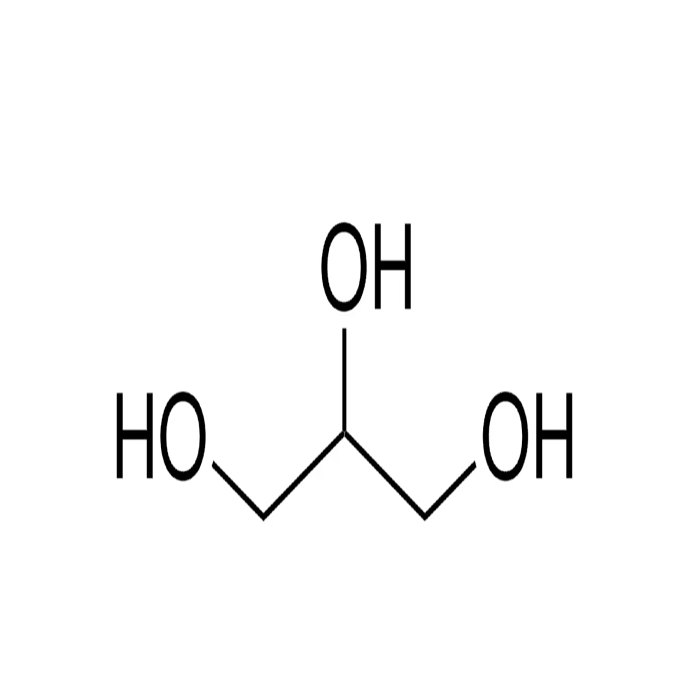
Glycerol - PharmPure™, USP, JP, BP, Ph.Eur. , CAS No.56-81-5

CAS: 56-81-5 Cat. No.: G116214 Fórmula: C3H8O3 Peso molecular: 92.09 Beilstein Registry Number: 635685 Número EC: 200-289-5
Disponible para pedir
CALIDAD & PUREZA PharmPure™ ? PharmPure™ — Aladdin's line of biopharmaceutical raw and starting materials. Use for pharma manufacturing inputs needing high purity and documentation. USP ? United States Pharmacopeia grade — meets USP monograph specs for pharmaceutical use. Use for drug manufacturing, QC, and applications requiring US compendial compliance. JP ? Japanese Pharmacopoeia grade — conforms to JP monograph standards. Use for pharmaceutical products subject to Japanese regulatory requirements. BP ? British Pharmacopoeia grade — conforms to BP monograph requirements. Use for pharmaceutical products marketed under UK/BP regulatory standards. Ph.Eur. ? European Pharmacopoeia grade — conforms to Ph.Eur. monographs across EU member states. Use for pharmaceutical work needing European compendial compliance.
Synonyms
Ophthalgan|Glycyl alcohol|Osmoglyn|1,2,3-trihydroxypropane|1,2,3-trihydroxypropanol|Pricerine 9091|GLYCEROL [EP MONOGRAPH]|GLYCERIN [USP-RS]|Glycerol [INN]|GLYCEROL (EP IMPURITY)|Glycerolum (INN-Latin)|Glysanin|Trihydroxypropane|Clyzerin, wasserfrei|DAG 35:0|GLYCERIN (II)|Glycerin (mist)|DAG(35:0)|GLYCEROL-(OD)3|Grocolene|DG 35:0|Glycerin,anhydrous|Glycerinum|Propanetriol (VAN)|Incorporation factor|Star|Vitrosupos|DG(31:3)|M 314429|GLYCERIN [USP MONOGRAPH]|DG(35:0)|GLYCERIN (USP MONOGRAPH)|Glycerin (USP:JAN)|Synthetic glycerine|90 Technical glycerine|PROPANE-1,2,3-TRIOL|Glicerina|1H-Thieno[3,4-d]iMidazole-4-pentanaMide, hexahydro-2-oxo-N-[6-oxo-6-(2-propenylaMino)hexyl]-, (3aS,4|Bulbold|GLYCERIN [II]|Glycerol (INN)|1,2,3-Propanetriol|INS NO.422|Monoctanoin Component D|Glycerin, anhydrous|Glycerol; Propane-1,2,3-Triol|Collyrium Fresh-Eye Drops|Glicerina [DCIT]|Glicerol (INN-Spanish)|glycerin|Glycerin base|Glycerin, synthetic|Citifluor AF 2|Clyzerin, wasserfrei [German]|Dagralax|Glycerolum|GOL|Glycerin mist|Heterochromatin-specific nonhistone chromosomal protein HP-1|Glyzerin|Synthetic glycerin|Glycerine|Glycerolum [INN-Latin]
Storage
Room temperature
Shipped In
Normal
★
Talla
Alemania (EU)
USA*
Precio
Cantidad
100ml
G116214-100ml
—
Disponible ≥10
10,33€
500ml
G116214-500ml
4 Disponible
Disponible ≥10
25,08€
Enter a quantity for the sizes you want to add.

Descripción general

Glycerol is useful in a variety of applications, glycerol is used as a solvent, plasticizer and humectant. In polyacrylamide gel electrophoresis, glycerol is used in sample preparation and gel formation. At a concentration of 5-10%, glycerol is used to increase the density of a sample so that it will layer at the bottom of a sample well. Additional uses include as an aid in casting gradient gels, a protein stabilizer and storage buffer component.
Useful for sample preparation/protein stabilization and as a storage buffer component.

Especificaciones

Sinónimos
Ophthalgan | Glycyl alcohol | Osmoglyn | 1,2,3-trihydroxypropane | 1,2,3-trihydroxypropanol | Pricerine 9091 | GLYCEROL [EP MONOGRAPH] | GLYCERIN [USP-RS] | Glycerol [INN] | GLYCEROL (EP IMPURITY) | Glycerolum (INN-Latin) | Glysanin | Trihydroxypropane | Clyzerin, wasserfrei | DAG 35:0 | GLYCERIN (II) | Glycerin (mist) | DAG(35:0) | GLYCE Show more
Especificaciones y pureza
PharmPure™, USP, JP, BP, Ph.Eur.
Condiciones de almacenamiento de almacenamiento
Room temperature
Enviado en
Normal
Grado
BP, JP, Ph.Eur., PharmPure™, USP
Nombres e identificadores
Sonrisas canónicas
OCC(O)CO
IUPAC Name
propane-1,2,3-triol
InChIKey
PEDCQBHIVMGVHV-UHFFFAOYSA-N
INCHI
1S/C3H8O3/c4-1-3(6)2-5/h3-6H,1-2H2
Isómeros SMILES
C(C(CO)O)O
WGK Alemania
1
Peso molecular
92.09
Beilstein
635685
Reaxy-Rn
635685
Reaxys-RN_link_address
https://www.reaxys.com/reaxys/secured/hopinto.do?context=S&query=IDE.XRN=635685&ln=

Datos avanzados

Taxonomic Classification

Taxonomy Tree

KingdomOrganic compounds
SuperclassOrganic oxygen compounds
ClaseOrganooxygen compounds
SubclassCarbohydrates and carbohydrate conjugates
Intermediate Tree Nodes Not available
Direct ParentSugar alcohols
Alternative Parents Secondary alcohols  Polyols  Primary alcohols  Hydrocarbon derivatives  
Molecular FrameworkAliphatic acyclic compounds
Substituents Sugar alcohol - Secondary alcohol - Polyol - Hydrocarbon derivative - Primary alcohol - Alcohol - Aliphatic acyclic compound
DescripciónThis compound belongs to the class of organic compounds known as sugar alcohols. These are hydrogenated forms of carbohydrate in which the carbonyl group (aldehyde or ketone, reducing sugar) has been reduced to a primary or secondary hydroxyl group.
External Descriptors a sugar alcohol
Estructura 3D
Modelo de Estructura Química Interactiva


Objetivos asociados (humanos)
F2 Tclin Thrombin (11687 Activities)
Activity TypeRelationActivity valueUnitsAction TypeJournalPubMed IddoiAssay Aladdin ID
ESR1 Tclin Estrogen receptor alpha (17718 Activities)
Activity TypeRelationActivity valueUnitsAction TypeJournalPubMed IddoiAssay Aladdin ID
PGR Tclin Progesterone receptor (8562 Activities)
Activity TypeRelationActivity valueUnitsAction TypeJournalPubMed IddoiAssay Aladdin ID
CHRM2 Tclin Muscarinic acetylcholine receptor M2 (10671 Activities)
Activity TypeRelationActivity valueUnitsAction TypeJournalPubMed IddoiAssay Aladdin ID
HTR1A Tclin Serotonin 1a (5-HT1a) receptor (14969 Activities)
Activity TypeRelationActivity valueUnitsAction TypeJournalPubMed IddoiAssay Aladdin ID
ADRA2A Tclin Alpha-2a adrenergic receptor (9450 Activities)
Activity TypeRelationActivity valueUnitsAction TypeJournalPubMed IddoiAssay Aladdin ID
AR Tclin Androgen Receptor (11781 Activities)
Activity TypeRelationActivity valueUnitsAction TypeJournalPubMed IddoiAssay Aladdin ID
CHRM1 Tclin Muscarinic acetylcholine receptor M1 (12690 Activities)
Activity TypeRelationActivity valueUnitsAction TypeJournalPubMed IddoiAssay Aladdin ID
MAOA Tclin Monoamine oxidase A (11911 Activities)
Activity TypeRelationActivity valueUnitsAction TypeJournalPubMed IddoiAssay Aladdin ID
DRD1 Tclin Dopamine D1 receptor (9720 Activities)
Activity TypeRelationActivity valueUnitsAction TypeJournalPubMed IddoiAssay Aladdin ID
ACHE Tclin Acetylcholinesterase (18204 Activities)
Activity TypeRelationActivity valueUnitsAction TypeJournalPubMed IddoiAssay Aladdin ID
PTGS1 Tclin Cyclooxygenase-1 (9233 Activities)
Activity TypeRelationActivity valueUnitsAction TypeJournalPubMed IddoiAssay Aladdin ID
SLC6A2 Tclin Norepinephrine transporter (10102 Activities)
Activity TypeRelationActivity valueUnitsAction TypeJournalPubMed IddoiAssay Aladdin ID
SLC6A4 Tclin Serotonin transporter (12625 Activities)
Activity TypeRelationActivity valueUnitsAction TypeJournalPubMed IddoiAssay Aladdin ID
ADRA1A Tclin Alpha-1a adrenergic receptor (8359 Activities)
Activity TypeRelationActivity valueUnitsAction TypeJournalPubMed IddoiAssay Aladdin ID
OPRM1 Tclin Mu opioid receptor (19785 Activities)
Activity TypeRelationActivity valueUnitsAction TypeJournalPubMed IddoiAssay Aladdin ID
DRD3 Tclin Dopamine D3 receptor (14368 Activities)
Activity TypeRelationActivity valueUnitsAction TypeJournalPubMed IddoiAssay Aladdin ID
SLC6A3 Tclin Dopamine transporter (10535 Activities)
Activity TypeRelationActivity valueUnitsAction TypeJournalPubMed IddoiAssay Aladdin ID
KCNH2 Tclin HERG (29587 Activities)
Activity TypeRelationActivity valueUnitsAction TypeJournalPubMed IddoiAssay Aladdin ID
PDE3A Tclin Phosphodiesterase 3A (3309 Activities)
Activity TypeRelationActivity valueUnitsAction TypeJournalPubMed IddoiAssay Aladdin ID
HTR2B Tclin Serotonin 2b (5-HT2b) receptor (10323 Activities)
Activity TypeRelationActivity valueUnitsAction TypeJournalPubMed IddoiAssay Aladdin ID
TBXA2R Tclin Thromboxane A2 receptor (5717 Activities)
Activity TypeRelationActivity valueUnitsAction TypeJournalPubMed IddoiAssay Aladdin ID
THRB Tclin Thyroid hormone receptor beta-1 (7926 Activities)
Activity TypeRelationActivity valueUnitsAction TypeJournalPubMed IddoiAssay Aladdin ID
PDE4A Tclin Phosphodiesterase 4A (1943 Activities)
Activity TypeRelationActivity valueUnitsAction TypeJournalPubMed IddoiAssay Aladdin ID
ADORA3 Tchem Adenosine A3 receptor (15931 Activities)
Activity TypeRelationActivity valueUnitsAction TypeJournalPubMed IddoiAssay Aladdin ID
HRH3 Tclin Histamine H3 receptor (10389 Activities)
Activity TypeRelationActivity valueUnitsAction TypeJournalPubMed IddoiAssay Aladdin ID
KDR Tclin Vascular endothelial growth factor receptor 2 (20924 Activities)
Activity TypeRelationActivity valueUnitsAction TypeJournalPubMed IddoiAssay Aladdin ID
ALDH1A1 Tchem Aldehyde dehydrogenase 1A1 (77053 Activities)
Activity TypeRelationActivity valueUnitsAction TypeJournalPubMed IddoiAssay Aladdin ID
KYAT1 Tbio Kynurenine--oxoglutarate transaminase I (96 Activities)
Activity TypeRelationActivity valueUnitsAction TypeJournalPubMed IddoiAssay Aladdin ID
ACR Tchem Acrosin (277 Activities)
Activity TypeRelationActivity valueUnitsAction TypeJournalPubMed IddoiAssay Aladdin ID
Lymphoblastoid cell (5959 Activities)
Activity TypeRelationActivity valueUnitsAction TypeJournalPubMed IddoiAssay Aladdin ID
LMNA Tbio Prelamin-A/C (36751 Activities)
Activity TypeRelationActivity valueUnitsAction TypeJournalPubMed IddoiAssay Aladdin ID
Objetivos asociados (no humanos)
Ppard Peroxisome proliferator-activated receptor delta (358 Activities)
Activity TypeRelationActivity valueUnitsAction TypeJournalPubMed IddoiAssay Aladdin ID
Abcb1b P-glycoprotein 1 (174 Activities)
Activity TypeRelationActivity valueUnitsAction TypeJournalPubMed IddoiAssay Aladdin ID
Oryctolagus cuniculus (11301 Activities)
Activity TypeRelationActivity valueUnitsAction TypeJournalPubMed IddoiAssay Aladdin ID
Rattus norvegicus (775804 Activities)
Activity TypeRelationActivity valueUnitsAction TypeJournalPubMed IddoiAssay Aladdin ID
Nfe2l2 Nuclear factor erythroid 2-related factor 2 (214 Activities)
Activity TypeRelationActivity valueUnitsAction TypeJournalPubMed IddoiAssay Aladdin ID
SARS-CoV-2 (38078 Activities)
Activity TypeRelationActivity valueUnitsAction TypeJournalPubMed IddoiAssay Aladdin ID
Mecanismos de acción
Certificados (CoA, COO, BSE/TSE y tabla de análisis)
C of A & Other Certificates(BSE/TSE, COO):
Analytical Chart:

Find and download the COA for your product by matching the lot number on the packaging.

73 results found

Lot NumberCertificate TypeFechaArticulo
K2611700K2611700Certificate of AnalysisNov 03, 2026 G116214
J2616156J2616156Certificate of AnalysisSep 24, 2026 G116214
I2616400I2616400Certificate of AnalysisSep 07, 2026 G116214
H2628098H2628098Certificate of AnalysisAug 05, 2026 G116214
I2227540I2227540Certificate of AnalysisJul 03, 2026 G116214
G2610173G2610173Certificate of AnalysisJul 01, 2026 G116214
D2608106D2608106Certificate of AnalysisApr 02, 2026 G116214
B2627307B2627307Certificate of AnalysisFeb 04, 2026 G116214
A2612168A2612168Certificate of AnalysisDec 24, 2025 G116214
K2513164K2513164Certificate of AnalysisNov 05, 2025 G116214
J2522245J2522245Certificate of AnalysisOct 13, 2025 G116214
I2516110I2516110Certificate of AnalysisSep 01, 2025 G116214
H2520001H2520001Certificate of AnalysisAug 18, 2025 G116214
I2517104I2517104Certificate of AnalysisAug 18, 2025 G116214
I2522099I2522099Certificate of AnalysisAug 18, 2025 G116214
H2513343H2513343Certificate of AnalysisJul 15, 2025 G116214
F2519256F2519256Certificate of AnalysisJun 13, 2025 G116214
F2505198F2505198Certificate of AnalysisMay 26, 2025 G116214
D2529304D2529304Certificate of AnalysisMar 31, 2025 G116214
C2512607C2512607Certificate of AnalysisMar 06, 2025 G116214
A2516261A2516261Certificate of AnalysisJan 15, 2025 G116214
L2430089L2430089Certificate of AnalysisDec 27, 2024 G116214
L2405617L2405617Certificate of AnalysisDec 04, 2024 G116214
J2410088J2410088Certificate of AnalysisSep 27, 2024 G116214
J2421336J2421336Certificate of AnalysisAug 28, 2024 G116214
J2421340J2421340Certificate of AnalysisAug 28, 2024 G116214
H2430614H2430614Certificate of AnalysisAug 28, 2024 G116214
J2629213J2629213Certificate of AnalysisAug 28, 2024 G116214
G2430001G2430001Certificate of AnalysisJul 25, 2024 G116214
G2404542G2404542Certificate of AnalysisJun 14, 2024 G116214
G2404523G2404523Certificate of AnalysisJun 14, 2024 G116214
F2420342F2420342Certificate of AnalysisJun 14, 2024 G116214
E2409210E2409210Certificate of AnalysisApr 29, 2024 G116214
D2408299D2408299Certificate of AnalysisMar 28, 2024 G116214
D2408306D2408306Certificate of AnalysisMar 28, 2024 G116214
B2419220B2419220Certificate of AnalysisJan 31, 2024 G116214
A2425047A2425047Certificate of AnalysisJan 12, 2024 G116214
A2402288A2402288Certificate of AnalysisNov 23, 2023 G116214
A2404009A2404009Certificate of AnalysisNov 23, 2023 G116214
A2404390A2404390Certificate of AnalysisNov 23, 2023 G116214
K2329432K2329432Certificate of AnalysisNov 23, 2023 G116214
A2404391A2404391Certificate of AnalysisNov 23, 2023 G116214
K2301421K2301421Certificate of AnalysisOct 24, 2023 G116214
J2312012J2312012Certificate of AnalysisOct 18, 2023 G116214
J2312171J2312171Certificate of AnalysisOct 18, 2023 G116214
J2311105J2311105Certificate of AnalysisOct 16, 2023 G116214
J2325322J2325322Certificate of AnalysisOct 16, 2023 G116214
J2311106J2311106Certificate of AnalysisOct 13, 2023 G116214
I2306077I2306077Certificate of AnalysisAug 31, 2023 G116214
H2311098H2311098Certificate of AnalysisAug 10, 2023 G116214
G2311734G2311734Certificate of AnalysisJun 15, 2023 G116214
E2329449E2329449Certificate of AnalysisMay 26, 2023 G116214
D2326700D2326700Certificate of AnalysisApr 20, 2023 G116214
D2326805D2326805Certificate of AnalysisApr 20, 2023 G116214
B2303986B2303986Certificate of AnalysisDec 29, 2022 G116214
B2303763B2303763Certificate of AnalysisDec 29, 2022 G116214
A2314137A2314137Certificate of AnalysisDec 29, 2022 G116214
L2217173L2217173Certificate of AnalysisNov 24, 2022 G116214
K2204964K2204964Certificate of AnalysisOct 22, 2022 G116214
I2227542I2227542Certificate of AnalysisSep 15, 2022 G116214
I2223573I2223573Certificate of AnalysisSep 15, 2022 G116214
H2220224H2220224Certificate of AnalysisAug 02, 2022 G116214
H2211368H2211368Certificate of AnalysisAug 02, 2022 G116214
G2214529G2214529Certificate of AnalysisJul 06, 2022 G116214
G2205218G2205218Certificate of AnalysisJun 28, 2022 G116214
G2205222G2205222Certificate of AnalysisJun 28, 2022 G116214
G2205219G2205219Certificate of AnalysisJun 28, 2022 G116214
E2219013E2219013Certificate of AnalysisMay 13, 2022 G116214
F2204466F2204466Certificate of AnalysisMay 13, 2022 G116214
F2204571F2204571Certificate of AnalysisMay 13, 2022 G116214
E2205022E2205022Certificate of AnalysisMar 12, 2022 G116214
D2213012D2213012Certificate of AnalysisMar 12, 2022 G116214
A2220402A2220402Certificate of AnalysisJan 06, 2022 G116214
Propiedades químicas y físicas
SolubilidadSoluble in water (>500 g/l) at 20 °C, methanol, ethanol, and DMSO. Insoluble in benzene, ether, chloroform, and fixed and volatile oils. Absorbs water from the air. Also absorbs hydrogen sulfide, hydrogen cyanide and sulfur dioxide.
SensibilidadHygroscopic.
Índice de refracción1.4746
Punto de inflamación (°F)320°F
Punto de inflamación (°C)176℃
Punto de ebullición (°C)290°C
Punto de fusión (°C)17.8°C
Peso molecular92.090 g/mol
XLogP3-1.800
Hydrogen Bond Donor Count3
Hydrogen Bond Acceptor Count3
Rotatable Bond Count2
Exact Mass92.0473 Da
Monoisotopic Mass92.0473 Da
Topological Polar Surface Area60.700 Ų
Heavy Atom Count6
Formal Charge0
Complexity25.200
Isotope Atom Count0
Defined Atom Stereocenter Count0
Undefined Atom Stereocenter Count0
Defined Bond Stereocenter Count0
Undefined Bond Stereocenter Count0
The total count of all stereochemical bonds0
Covalently-Bonded Unit Count1
Preguntas frecuentes y artículos
Competent E. coli Cell Preparation Using the Calcium Chloride Method
Methods of Lysate Preparation for Western Blotting
From Spec to Bench: Understanding and Using USP Grade Reagents
JP Grade Reagents Explained
BP grade: The British Pharmacopoeia Standard, Demystified
Comparing Guanidine Hydrochloride and Urea for Inclusion-Body Solubilization
Buffer exchange of a sample using a dialysis bag
Professional Guide to Streptavidin-Modified Proteins
Common Questions and Answers for SDS-PAGE Experiments
What Are the Differences Between Synthetic and Natural Phospholipids?
Standard Operating Procedure (SOP) for Bis-Tris Polyacrylamide Gel Electrophoresis (SDS-PAGE)
Protein Tris-Acetate Electrophoresis System Standard Operating Procedure
Buffer Additives to Prevent Protein Precipitation
Standard Operating Procedure (SOP) for the Protein Tris–Glycine Electrophoresis System
Protein Tris-Tricine Electrophoresis System Standard Operating Procedure
Differences Between Transformation and Transfection
Eight Common Lysis Buffers
How should laboratory strains be preserved?
How to Choose the Best Protein Purification Technique
Five Key Structural Features of Plasmids
Differences Among Antibodies for WB/FC/IP/ChIP/IF/IHC
Operational Guide for Fluorescent Labeling of Antibodies Using AF594 NHS Ester
General Principles of Antibody Labeling with NHS-Activated Esters, F/P Calculation, and Troubleshooting Guide
Bio-based Chemicals: From Platform Molecules to Application Scenarios — Trend Insights and Aladdin’s Product Portfolio
What is Ion Exchange Chromatography Used For? 4 Important Applications for Protein Purification
Technical Analysis and Clinical Applications of Lactate Dehydrogenase
Glucose Oxidase: A Versatile Biocatalyst Across Multiple Fields
Poly(vinyl alcohol) (PVA): From Basics to Selection Key Parameters, Freeze–Thaw vs. Chemical Crosslinking Hydrogel Routes, and an Aladdin Product List
Hematoxylin–Eosin (H&E) Staining Standard Operating Procedure (SOP)
A Practical Guide to Fragrance Compositions: Turning a Black-Box Formula into an Engineerable System—Compatibility, Stability, Controlled Release, Traceability, and Selection
Scientific Decision-Making for Chromatography Buffer Selection: Tris-HCl vs Phosphate Systems
Masson’s Trichrome Stain (Masson’s Trichrome) Standard Operating Procedure (SOP)
How to Purify Proteins by Ion-Exchange Chromatography Under Denaturing Condition
Electrophoretic Mobility Shift Assay (EMSA) Standard Operating Procedure (SOP)
Physicochemical Properties, Staining Mechanisms, and Practical Application Specifications of Hematoxylin
Installing a Redox Switch on Biomolecules: Principles, Conjugation Essentials, and an Application Guide for ATTO MB2 NHS ester
Laccase: Technical Characteristics, Optimization Strategies, and Industrial Application Progress
Practical Guide to Sodium Carboxymethyl Cellulose (CMC-Na): Thickening/Stabilizing Mechanisms, Key Controls for Solution Preparation, and Selection Navigation (including Table 1 and Tables A–C)
A Review of Ten Commonly Used Techniques for Detection, Quantification, and Interaction Analysis in Nucleic Acid Research
Salen-Catalyzed CO₂–Epoxide Ring-Opening Copolymerization (ROCOP) Guide: From Three-Way Chain-End Competition to Selective Control of Highly Alternating Polycarbonates and Reproducible Troubleshooting (Tables 1–4)
Methodological essentials for mineralization visualization: Alizarin Red S staining vs. Von Kossa silver staining
Phycocyanin: A Review of Sources, Structural Features, Production Processes, Applications, and Claimed Benefits
Haptoglobin (Hp): A Key Carrier in the Free Hemoglobin Clearance–Detoxification Axis, with Assays and Applications
Experimental Animal Numbering, Marking, Grouping, and Depilation: Standardized Procedures and Practical Considerations
Agarose Precast Gels: Composition, Advantages, and Application Workflows for Standardized Nucleic Acid Electrophoresis Matrices
Lipid Panel Testing in Research (TC, TG, HDL-C, LDL-C): Indicator System, Assay Principles, Technical Routes, and Application Overview
EMSA PAGE Precast Gels: Principle Alignment, Performance Advantages, and Application Scenarios
dsDNase-Mediated Hydrolysis of Double-Stranded DNA: Enzymatic Characteristics, Methodological Strategies, and Bioanalytical Applications
Functional Properties, Application Scenarios, and Manufacturing Processes of Maltotetraose (G4): A Review
Review of the Principles, Common Methods, and Key Application Considerations for the Determination of Glycerol and Triglyceride Contents
Functional Framework of Starch Metabolism-Related Enzymes in Food Science Research and Mechanistic Analysis of Quality Regulation
Metabolic Basis and Research Framework of Glycerol Utilization and Metabolic Reprogramming
Effects of Cell Sample Preservation Systems on Morphological Integrity, Anticoagulant Stability, and Analytical Results
Experimental Evaluation of Triphosgene in Organic Synthesis: Understanding Its Selection Logic Through Reaction Tasks
Comparative Analysis and Selection Strategies for Mounting Media in Immunological Experiments
Cell Apoptosis Detection by TUNEL Labeling: Signal Interpretation and Result Evaluation
Protein Structure Analysis: An Experimental Path from Defining the Question to Functional Validation
Microscopic Interpretation and Taxonomic Value of Iodine Staining Reaction in Fungal Spores
Alkyd Resins: From Oil/Fatty-Acid-Modified Polyesters to Autoxidative Drying — Understanding Their Structure and Film-Formation Mechanism
How Do Isocyanates and Polyols Affect the Performance of Polyurethane Coating Films: Structure, Raw Material Selection, and Performance Design Essentials
Comprehensive Performance Analysis of Polyurethane Coating Films: Soft/Hard Segment Structure, Microphase Separation, Crosslinking and Curing, and Selection of Representative Chemicals
Understanding Polyester Resins for Coatings: Structure Design, Key Indicators, and Coating Film Performance
Microbial Morphological Identification: Observation Systems, Staining Methods, and Result Interpretation
Polyurethane Coating Resins: Not a Single Resin, but a Designable High-Performance System
Phenolic-Modified Alkyd Resin: Performance Enhancement and Applications in Fast-Drying Industrial Coatings
Applications of Rosin and Modified Rosin Resins in Coatings and Inks: Structure–Property Relationships, Modification Pathways, and Usage Guidelines
Cashew Nut Shell Liquid (CNSL): From Cashew Processing By-Product to Reactive Bio-Based Raw Material for Coating Resins
Guide to Common Waterborne Resin Types and Application-Based Selection: How to Choose Acrylics, PUD, Waterborne Epoxy, Waterborne Alkyd, VAE, and Related Chemicals
Mechanisms and Control of Coating Yellowing: From Chromophoric Structure Formation to Source Diagnosis and Formulation Optimization
Resin Polarity in Coating Formulations: From Molecular Structure to Dissolution, Compatibility, Interfacial Interactions, and Formulation Design
Solvents, Co-solvents, and Solubilization Systems in Home and Personal Care Formulations: Classification, Functions, and Selection Guide
From Structure to Rheology: How Carbomer Forms Gel Structures and Enables Thickening, Suspension, and Auxiliary Emulsion Stabilization
Why Do Alcohols Differ in Function: Why Is Glycerol Mainly Moisturizing, Propylene Glycol Mainly Solubilizing, and Isopropyl Alcohol Fast-Drying? — Understanding Personal Care Formulation Functions from Structural Differences
Thickening, Suspension, Auxiliary Stabilization, and Agglomeration Mechanisms of Xanthan Gum in Personal Care Formulations: From Molecular Structure to Processing Applications
AES (Fatty Alcohol Polyoxyethylene Ether Sulfate) in Personal and Home-Care Cleansing Formulations: An Analysis of Structure, Performance, and Low-Temperature Flowability
Why Limonene Can Soften Greasy Soils Yet Is Difficult to Dissolve in Water: Understanding the Cleaning Mechanism and Formulation Applications of Naturally Derived Solvents from Molecular Structure
What Is Synthetic Biology? The Industrialization Pathway from Upstream Reagent Toolchains to Biomanufacturing Applications
Analysis of Structural Differences in Diols: Moisturization, Co-solvency, Skin Feel, and Formulation Selection for Propylene Glycol, Butylene Glycol, and Medium- to Long-Chain 1,2-Alkanediols
From Structure to Mechanism: Raw Material Structures and Surface Conditioning Mechanisms in Antistatic Systems for Daily Chemical Applications
What Is an Etchant? Etching Mechanisms for Revealing Metallographic Microstructures, Selection Methods, and Applications of Related Wet-Etching Reagents
Performance Sources and Formulation Applications of Enzyme-Based Ingredients in Daily Chemical Products: Fermentation Transformation, Enzymatic Reactions, and Application Principles
Mechanisms and Troubleshooting of Foam Reduction in Personal and Household Care Formulations: Film Rupture, Weak Interfacial Films, Insufficient Surfactant Supply, and Phase-State Disturbance
Why Are Daily Chemical Products Prone to Viscosity Thinning in Summer? Core Mechanisms, Troubleshooting Methods, and Solutions
Understanding Ceramides from the Perspective of the Stratum Corneum Lipid Barrier: Moisturizing and Barrier-Repair Mechanisms, Ingredient Selection, and Formulation Research Considerations
β-1,4-Galactosyltransferase 1: A Precise Glycosyltransferase in Glycan Biosynthesis
Experimental Applications of Carboxymethyl Cellulose (CMC) Solution in Enzyme Assays, Suspension Systems, and Functional Materials
Mechanistic Analysis of Topical Glutathione in Skincare: Cellular Redox Regulation, Skin Delivery Challenges, and SLN-Based Delivery Strategies
Establishment and Evaluation of Animal Models of Acute Kidney Injury (AKI/ARF)
Plant Tissue and Cell Wall Staining Methods: Selection of Light Green, Safranin, Fast Green, and Composite Staining Systems
Analysis of Hydrolyzed Pearl as a Cosmetic Raw Material: Preparation Process, Active Components, and Skincare Formulation Applications
The Dual-Targeted Skin-Brightening Mechanism of 4-MSK: Inhibiting Melanin Production and Reducing Epidermal Pigment Retention
Antioxidant Mechanisms of Ferulic Acid in Skincare, Vitamin C/E Synergy, and Stable Delivery Applications
Moisturizing Mechanism of Polyglutamic Acid: From the γ-Glutamyl Structure to Hydration Networks and Surface Film-Forming Behavior
Probiotics, Prebiotics, and Postbiotics in Skin Care: Conceptual Distinctions, Mechanisms of Action, and Their Applications in the Care of Dry, Itchy, and Rough Skin
How Do Collagen Peptides Act on the Skin? From Surface Hydration and Percutaneous Delivery to Fibroblasts and Collagen Homeostasis
The Moisturizing and Low-Moisture Protective Mechanisms of Trehalose: From Its α,α-1,1 Structure and Hydration Dynamics to In Vitro Skin Barrier Research
Protective and Potential Reparative Mechanisms of Prinsepia utilis Seed Oil on the Skin Barrier: Fatty Acid Composition, Epidermal Lipid Metabolism, and Research Evidence
Potential Mechanisms of Succinic Acid in Acne Care: From Dicarboxylic Acid–Base Equilibria to Metabolic Antagonism Among Skin Microorganisms
Structure, Stratum Corneum Distribution, and Stratum Corneum Conditioning Mechanism of Capryloyl Salicylic Acid: Barrier Effects and Safety Evaluation
Gentiana Root Extract and Gentiopicroside: Chemical Composition, Antioxidant and Inflammation-Modulating Mechanisms, and Their Potential Effects on Skin Barrier Homeostasis
The Sebum-Regulating Potential of Zinc PCA and Its Relationship with Stratum Corneum Hydration
Differences Between Cast CPU and Thermoplastic TPU in Structure, Processing, Performance, and Applications
Moisturizing Mechanisms of Tremella fuciformis Polysaccharides: From Polysaccharide Structure and Hydration Rheology to Dynamic Film Formation on the Skin Surface
Multilevel Moisturizing Mechanisms of Sodium Hyaluronate and Its Derivatives: Molecular Weight Modulation, Crosslinking, Acetylation, and Major Sites of Action
How Cyclization Changes Peptide Behavior: Conformational Preorganization, Skin Delivery, and Integrin Binding, Using Cyclopeptide-5 as an Example
How Does Collagen Tripeptide Act on the Skin: Stratum Corneum Delivery, Matrix Protection, and Regulation of Collagen Homeostasis
What Is “Plant Collagen”? Distinguishing Ingredient Types, Structural Differences, Production Methods, and Skincare Effects
How Arbutin Regulates Melanin Production: α/β Anomeric Configuration and Tyrosinase Action
Mechanisms of Action, Formulation Screening, and Safety Evaluation of Solubilizers, Hydrotropes, and Cosolvents in Drug-Delivery Systems
Mechanistic Basis of Acetyl Hexapeptide-8 in the Management of Expression Lines: SNARE Complex Interference, Constraints on Percutaneous Delivery, and Combination Strategies
How Ectoine Regulates Skin Hydration: Zwitterionic Structure, Preferential Hydration, and Barrier-Support Mechanisms
Structure, Emollient and Moisturizing Effects, and Source Identification of Squalane: From Complete Hydrogenation of Squalene to Stable Isotope Analysis
Stratum Corneum Penetration and Skin Mechanisms of Panthenol: Moisturization, Barrier Repair, and Soothing Effects
Basis of Bisabolol’s Effects on Skin: Structure and Lipid Affinity, Inflammation Modulation, Antimicrobial Activity, and Percutaneous Penetration Enhancement
Citations of This Product
Calculadoras de soluciones
Reseñas

Reseñas de cliente

¿Necesita ayuda para elegir la calidad?

Nuestra guía de selección de calidades cubre la pureza, el estado del estabilizador y la idoneidad de la aplicación para todas las variantes de nuestro catálogo.

Ver la guía de calidades PharmPure™ → Ver la guía de calidades USP → Ver la guía de calidades JP → Ver la guía de calidades BP → Ver la guía de calidades Ph.Eur. →

¿Quieres que te enviemos un mensaje cuando tengamos descuentos disponibles?

Recordármelo más tarde

¡Gracias! Por favor, revisa tu bandeja de entrada de correo electrónico para confirmar.

¡Vaya! Las notificaciones están desactivadas.