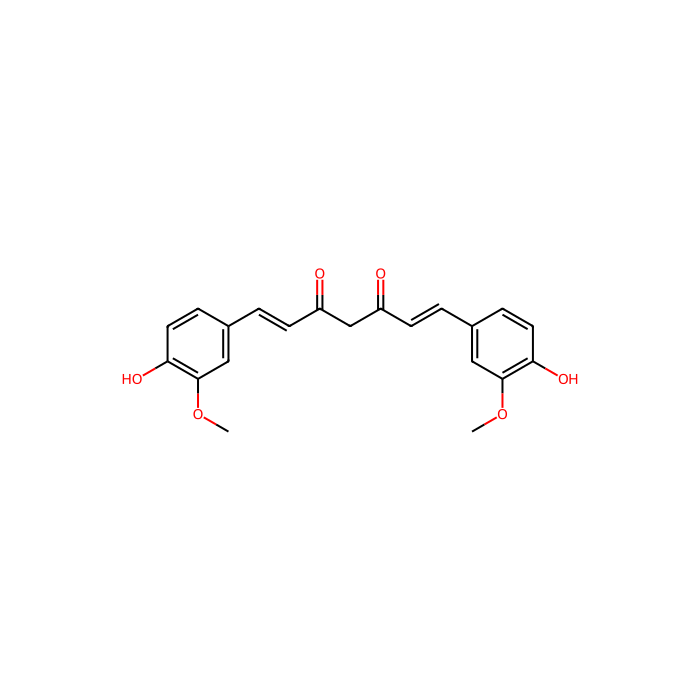
Curcumin - Moligand™, Natural extraction(isomer mixture) , CAS No.458-37-7

CAS: 458-37-7 Cat. No.: C400222 Formule: C21H20O6 Poids moléculaire: 368.38 Beilstein Registry Number: 2306965 Numéro CE: 207-280-5
DISPONIBLE À COMMANDE
QUALITÉ & PURETÉ Moligand™ ? Moligand™ — Aladdin's line of ligands and bioactive small molecules. Use for receptor, pathway, and binding studies needing defined small-molecule tools. Natural extraction(isomer mixture)
Synonyms
Natural Yellow 3|Turmeric yellow
Storage
Store at -20°C,Argon charged
Shipped In
Ice chest + Ice pads
★
Taille
Allemagne (EU)
USA*
Prix
Qté
5g
C400222-5g
—
2 En stock
8,59€
25g
C400222-25g
—
2 En stock
16,40€
100g
C400222-100g
—
9 En stock
41,56€
500g
C400222-500g
Sur commande · 8–12 semaines
124,00€
Enter a quantity for the sizes you want to add.

Spécifications

Synonymes
Natural Yellow 3 | Turmeric yellow
Spécifications et pureté
Moligand™, Natural extraction(isomer mixture)
Mécanismes biochimiques et physiologiques
A natural phenolic compound. Potent anti-tumor agent having anti-inflammatory and anti-oxidant properties. Curcumin has been cited as a potential chemopreventive agent, in addition to its chemotherapeutic activity.1 Induces apoptosis in cancer cells and inhibits phorbol ester-induced protein kinase C (PKC) activity. Reported to inhibit production of inflammatory cytokines by peripheral blood monocytes and alveolar macrophages. Potent inhibitor of EGFR tyrosine kinase and IκB kinase. Inhibits inducible nitric oxide synthase (iNOS), cycloxygenase and lipoxygenase. Easily penetrates into the cytoplasm of cells, accumulating in membranous structures such as plasma membrane, endoplasmic reticulum and nuclear envelope.Flavonoid derived from Curcuma longa plant. Potent antioxidant, anti-inflammatory, analgesic and anticancer agent. Lipooxygenase and cyclooxygenase inhibitor (IC 50 values are 8 and 52 μM, respectively). Blood-brain barrier permeable.
Application
Curcumin is used for boron quantification. It inhibits lipoxygenase and cyclooxygenase. It acts as a dietary supplement and is used in pharmaceutical industry. It acts as a food coloring agent and acts as a food additive.
Conditions de stockage de stockage
Store at -20°C,Argon charged
Expédié en
Ice chest + Ice pads
Ce produit nécessite l'expédition en chaîne froide. Les services terrestres et autres services économiques ne sont pas disponibles.
Grade
Moligand™
Note
Wherever possible, you should prepare and use solutions on the same day. However, if you need to make up stock solutions in advance, we recommend that you store the solution as aliquots in tightly sealed vials at -20°C. Generally, these will be useable for up to one month. Before use, and prior to opening the vial we recommend that you allow your product to equilibrate to room temperature for at least 1 hour. Need more advice on solubility, usage and handling? Please visit our frequently asked questions (FAQ) page for more details.
Noms et identifiants
Pubchem Sid
Pubchem Sid Url
https://pubchem.ncbi.nlm.nih.gov/substance/488191688
SMILES
COC1=C(C=CC(=C1)C=CC(=O)CC(=O)C=CC2=CC(=C(C=C2)O)OC)O
IUPAC Name
(1E,6E)-1,7-bis(4-hydroxy-3-methoxyphenyl)hepta-1,6-diene-3,5-dione
InChIKey
VFLDPWHFBUODDF-FCXRPNKRSA-N
InChI
1S/C21H20O6/c1-26-20-11-14(5-9-18(20)24)3-7-16(22)13-17(23)8-4-15-6-10-19(25)21(12-15)27-2/h3-12,24-25H,13H2,1-2H3/b7-3+,8-4+
Isomères SMILES
COC1=C(C=CC(=C1)/C=C/C(=O)CC(=O)/C=C/C2=CC(=C(C=C2)O)OC)O
WGK Allemagne
3
RTECS
MI5230000
CAS alternatif
94875-80-6
Poids moléculaire
368.38
Beilstein
2306965
Reaxys
2016701
Reaxys-RN_link_address
https://www.reaxys.com/reaxys/secured/hopinto.do?context=S&query=IDE.XRN=2016701&ln=

Données avancées

Taxonomic Classification

Taxonomy Tree

KingdomOrganic compounds
SuperclassPhenylpropanoids and polyketides
ClasseDiarylheptanoids
SubclassLinear diarylheptanoids
Intermediate Tree Nodes Not available
Direct ParentCurcuminoids
Alternative Parents Hydroxycinnamic acids and derivatives  Methoxyphenols  Styrenes  Phenoxy compounds  Methoxybenzenes  Anisoles  Beta-diketones  Alkyl aryl ethers  1-hydroxy-2-unsubstituted benzenoids  Enones  Acryloyl compounds  Ketones  Organic oxides  Hydrocarbon derivatives  
Molecular FrameworkAromatic homomonocyclic compounds
Substituents Curcumin - Hydroxycinnamic acid or derivatives - Methoxyphenol - Anisole - Phenoxy compound - Phenol ether - Styrene - Methoxybenzene - Phenol - 1,3-diketone - Alkyl aryl ether - 1-hydroxy-2-unsubstituted benzenoid - Benzenoid - 1,3-dicarbonyl compound - Monocyclic benzene moiety - Acryloyl-group - Alpha,beta-unsaturated ketone - Enone - Ketone - Ether - Organooxygen compound - Carbonyl group - Hydrocarbon derivative - Organic oxide - Organic oxygen compound - Aromatic homomonocyclic compound
DescriptionThis compound belongs to the class of organic compounds known as curcuminoids. These are aromatic compounds containing a curcumin moiety, which is composed of two aryl buten-2-one (feruloyl) chromophores joined by a methylene group.
External Descriptors aromatic ether - enone - polyphenol - beta-diketone - diarylheptanoid
Structure 3D
Modèle de structure chimique interactif


Cibles associées (humaines)
EP300 Tchem Histone acetyltransferase p300 (0 Activities)
Activity TypeActivity Value -log(M)Mechanism of ActionActivity ReferencePublications (PubMed IDs)
PTGES Tchem Prostaglandin E synthase (3 Activities)
Activity TypeActivity Value -log(M)Mechanism of ActionActivity ReferencePublications (PubMed IDs)
SNCA Tchem Alpha-synuclein (2 Activities)
Activity TypeActivity Value -log(M)Mechanism of ActionActivity ReferencePublications (PubMed IDs)
F3 Tclin Tissue factor (1 Activities)
Activity TypeActivity Value -log(M)Mechanism of ActionActivity ReferencePublications (PubMed IDs)
GLO1 Tchem Lactoylglutathione lyase (1 Activities)
Activity TypeActivity Value -log(M)Mechanism of ActionActivity ReferencePublications (PubMed IDs)
MAOA Tclin Amine oxidase [flavin-containing] A (1 Activities)
Activity TypeActivity Value -log(M)Mechanism of ActionActivity ReferencePublications (PubMed IDs)
APP Tclin Amyloid-beta A4 protein (3 Activities)
Activity TypeActivity Value -log(M)Mechanism of ActionActivity ReferencePublications (PubMed IDs)
CISD1 Tchem CDGSH iron-sulfur domain-containing protein 1 (1 Activities)
Activity TypeActivity Value -log(M)Mechanism of ActionActivity ReferencePublications (PubMed IDs)
EGFR Tclin Epidermal growth factor receptor erbB1 (33727 Activities)
Activity TypeRelationActivity valueUnitsAction TypeJournalPubMed IddoiAssay Aladdin ID
ESR1 Tclin Estrogen receptor alpha (17718 Activities)
Activity TypeRelationActivity valueUnitsAction TypeJournalPubMed IddoiAssay Aladdin ID
NR3C1 Tclin Glucocorticoid receptor (14987 Activities)
Activity TypeRelationActivity valueUnitsAction TypeJournalPubMed IddoiAssay Aladdin ID
ALOX5 Tclin Arachidonate 5-lipoxygenase (6568 Activities)
Activity TypeRelationActivity valueUnitsAction TypeJournalPubMed IddoiAssay Aladdin ID
AR Tclin Androgen Receptor (11781 Activities)
Activity TypeRelationActivity valueUnitsAction TypeJournalPubMed IddoiAssay Aladdin ID
VDR Tclin Vitamin D receptor (26531 Activities)
Activity TypeRelationActivity valueUnitsAction TypeJournalPubMed IddoiAssay Aladdin ID
TYR Tclin Tyrosinase (717 Activities)
Activity TypeRelationActivity valueUnitsAction TypeJournalPubMed IddoiAssay Aladdin ID
TSHR Tclin Thyroid stimulating hormone receptor (29986 Activities)
Activity TypeRelationActivity valueUnitsAction TypeJournalPubMed IddoiAssay Aladdin ID
MAOA Tclin Monoamine oxidase A (11911 Activities)
Activity TypeRelationActivity valueUnitsAction TypeJournalPubMed IddoiAssay Aladdin ID
ACHE Tclin Acetylcholinesterase (18204 Activities)
Activity TypeRelationActivity valueUnitsAction TypeJournalPubMed IddoiAssay Aladdin ID
PTGS1 Tclin Cyclooxygenase-1 (9233 Activities)
Activity TypeRelationActivity valueUnitsAction TypeJournalPubMed IddoiAssay Aladdin ID
MAOB Tclin Monoamine oxidase B (8835 Activities)
Activity TypeRelationActivity valueUnitsAction TypeJournalPubMed IddoiAssay Aladdin ID
PTGS2 Tclin Cyclooxygenase-2 (13999 Activities)
Activity TypeRelationActivity valueUnitsAction TypeJournalPubMed IddoiAssay Aladdin ID
PPARG Tclin Peroxisome proliferator-activated receptor gamma (15191 Activities)
Activity TypeRelationActivity valueUnitsAction TypeJournalPubMed IddoiAssay Aladdin ID
KCNH2 Tclin HERG (29587 Activities)
Activity TypeRelationActivity valueUnitsAction TypeJournalPubMed IddoiAssay Aladdin ID
ANPEP Tchem Aminopeptidase N (863 Activities)
Activity TypeRelationActivity valueUnitsAction TypeJournalPubMed IddoiAssay Aladdin ID
THRB Tclin Thyroid hormone receptor beta-1 (7926 Activities)
Activity TypeRelationActivity valueUnitsAction TypeJournalPubMed IddoiAssay Aladdin ID
RXRA Tclin Retinoid X receptor alpha (3637 Activities)
Activity TypeRelationActivity valueUnitsAction TypeJournalPubMed IddoiAssay Aladdin ID
CXCL8 Tchem Interleukin-8 (642 Activities)
Activity TypeRelationActivity valueUnitsAction TypeJournalPubMed IddoiAssay Aladdin ID
GSK3B Tclin Glycogen synthase kinase-3 beta (11785 Activities)
Activity TypeRelationActivity valueUnitsAction TypeJournalPubMed IddoiAssay Aladdin ID
POLB Tchem DNA polymerase beta (23632 Activities)
Activity TypeRelationActivity valueUnitsAction TypeJournalPubMed IddoiAssay Aladdin ID
HRH3 Tclin Histamine H3 receptor (10389 Activities)
Activity TypeRelationActivity valueUnitsAction TypeJournalPubMed IddoiAssay Aladdin ID
SRC Tclin Tyrosine-protein kinase SRC (10310 Activities)
Activity TypeRelationActivity valueUnitsAction TypeJournalPubMed IddoiAssay Aladdin ID
BCHE Tclin Butyrylcholinesterase (7174 Activities)
Activity TypeRelationActivity valueUnitsAction TypeJournalPubMed IddoiAssay Aladdin ID
APP Tclin Amyloid-beta A4 protein (8510 Activities)
Activity TypeRelationActivity valueUnitsAction TypeJournalPubMed IddoiAssay Aladdin ID
AHR Tclin Aryl hydrocarbon receptor (1071 Activities)
Activity TypeRelationActivity valueUnitsAction TypeJournalPubMed IddoiAssay Aladdin ID
ATP2A3 Tchem Sarcoplasmic/endoplasmic reticulum calcium ATPase 3 (6 Activities)
Activity TypeRelationActivity valueUnitsAction TypeJournalPubMed IddoiAssay Aladdin ID
GBA1 Tclin Beta-glucocerebrosidase (14647 Activities)
Activity TypeRelationActivity valueUnitsAction TypeJournalPubMed IddoiAssay Aladdin ID
HDAC8 Tclin Histone deacetylase 8 (4516 Activities)
Activity TypeRelationActivity valueUnitsAction TypeJournalPubMed IddoiAssay Aladdin ID
ALOX15B Tchem Arachidonate 15-lipoxygenase, type II (7244 Activities)
Activity TypeRelationActivity valueUnitsAction TypeJournalPubMed IddoiAssay Aladdin ID
CSNK1E Tclin Casein kinase I epsilon (1412 Activities)
Activity TypeRelationActivity valueUnitsAction TypeJournalPubMed IddoiAssay Aladdin ID
GAA Tclin Lysosomal alpha-glucosidase (35701 Activities)
Activity TypeRelationActivity valueUnitsAction TypeJournalPubMed IddoiAssay Aladdin ID
ALDH1A1 Tchem Aldehyde dehydrogenase 1A1 (77053 Activities)
Activity TypeRelationActivity valueUnitsAction TypeJournalPubMed IddoiAssay Aladdin ID
ALOX12 Tchem Arachidonate 12-lipoxygenase (3262 Activities)
Activity TypeRelationActivity valueUnitsAction TypeJournalPubMed IddoiAssay Aladdin ID
NR1H4 Tclin Bile acid receptor FXR (6228 Activities)
Activity TypeRelationActivity valueUnitsAction TypeJournalPubMed IddoiAssay Aladdin ID
HDAC2 Tclin Histone deacetylase 2 (3971 Activities)
Activity TypeRelationActivity valueUnitsAction TypeJournalPubMed IddoiAssay Aladdin ID
HSD17B1 Tchem Estradiol 17-beta-dehydrogenase 1 (2224 Activities)
Activity TypeRelationActivity valueUnitsAction TypeJournalPubMed IddoiAssay Aladdin ID
NFKB1 Tclin Nuclear factor NF-kappa-B p105 subunit (1459 Activities)
Activity TypeRelationActivity valueUnitsAction TypeJournalPubMed IddoiAssay Aladdin ID
HBB Tbio Hemoglobin beta chain (329 Activities)
Activity TypeRelationActivity valueUnitsAction TypeJournalPubMed IddoiAssay Aladdin ID
CASP1 Tchem Caspase-1 (6235 Activities)
Activity TypeRelationActivity valueUnitsAction TypeJournalPubMed IddoiAssay Aladdin ID
ATP2A2 Tchem Sarcoplasmic/endoplasmic reticulum calcium ATPase 2 (53 Activities)
Activity TypeRelationActivity valueUnitsAction TypeJournalPubMed IddoiAssay Aladdin ID
ALPG Tchem Alkaline phosphatase placental-like (1197 Activities)
Activity TypeRelationActivity valueUnitsAction TypeJournalPubMed IddoiAssay Aladdin ID
ALOX15 Tchem Arachidonate 15-lipoxygenase (7108 Activities)
Activity TypeRelationActivity valueUnitsAction TypeJournalPubMed IddoiAssay Aladdin ID
CASP7 Tchem Caspase-7 (3146 Activities)
Activity TypeRelationActivity valueUnitsAction TypeJournalPubMed IddoiAssay Aladdin ID
DYRK1A Tchem Dual-specificity tyrosine-phosphorylation regulated kinase 1A (6484 Activities)
Activity TypeRelationActivity valueUnitsAction TypeJournalPubMed IddoiAssay Aladdin ID
BACE1 Tchem Beta-secretase 1 (15641 Activities)
Activity TypeRelationActivity valueUnitsAction TypeJournalPubMed IddoiAssay Aladdin ID
MAPK8 Tchem c-Jun N-terminal kinase 1 (5038 Activities)
Activity TypeRelationActivity valueUnitsAction TypeJournalPubMed IddoiAssay Aladdin ID
PIN1 Tchem Peptidyl-prolyl cis-trans isomerase NIMA-interacting 1 (36611 Activities)
Activity TypeRelationActivity valueUnitsAction TypeJournalPubMed IddoiAssay Aladdin ID
HSD17B2 Tchem Estradiol 17-beta-dehydrogenase 2 (1671 Activities)
Activity TypeRelationActivity valueUnitsAction TypeJournalPubMed IddoiAssay Aladdin ID
CYP3A4 Tclin Cytochrome P450 3A4 (53859 Activities)
Activity TypeRelationActivity valueUnitsAction TypeJournalPubMed IddoiAssay Aladdin ID
Cibles associées (non humaines)
Coagulation factor III (5 Activities)
Activity TypeRelationActivity valueUnitsAction TypeJournalPubMed IddoiAssay Aladdin ID
Glo1 Glyoxalase I (4 Activities)
Activity TypeRelationActivity valueUnitsAction TypeJournalPubMed IddoiAssay Aladdin ID
Hsd11b1 11-beta-hydroxysteroid dehydrogenase 1 (202 Activities)
Activity TypeRelationActivity valueUnitsAction TypeJournalPubMed IddoiAssay Aladdin ID
PTGES Prostaglandin E synthase (10 Activities)
Activity TypeRelationActivity valueUnitsAction TypeJournalPubMed IddoiAssay Aladdin ID
Cruzipain (33337 Activities)
Activity TypeRelationActivity valueUnitsAction TypeJournalPubMed IddoiAssay Aladdin ID
Pde4d Phosphodiesterase 4D (4 Activities)
Activity TypeRelationActivity valueUnitsAction TypeJournalPubMed IddoiAssay Aladdin ID
Ppard Peroxisome proliferator-activated receptor delta (358 Activities)
Activity TypeRelationActivity valueUnitsAction TypeJournalPubMed IddoiAssay Aladdin ID
Mapk1 MAP kinase ERK2 (650 Activities)
Activity TypeRelationActivity valueUnitsAction TypeJournalPubMed IddoiAssay Aladdin ID
Hdac1 Histone deacetylase 1 (93 Activities)
Activity TypeRelationActivity valueUnitsAction TypeJournalPubMed IddoiAssay Aladdin ID
Hsd11b2 11-beta-hydroxysteroid dehydrogenase 2 (82 Activities)
Activity TypeRelationActivity valueUnitsAction TypeJournalPubMed IddoiAssay Aladdin ID
Pkm Pyruvate kinase isozymes M1/M2 (66 Activities)
Activity TypeRelationActivity valueUnitsAction TypeJournalPubMed IddoiAssay Aladdin ID
GAA Alpha-glucosidase (25 Activities)
Activity TypeRelationActivity valueUnitsAction TypeJournalPubMed IddoiAssay Aladdin ID
Iap Intestinal alkaline phosphatase (419 Activities)
Activity TypeRelationActivity valueUnitsAction TypeJournalPubMed IddoiAssay Aladdin ID
ftsZ Cell division protein ftsZ (97 Activities)
Activity TypeRelationActivity valueUnitsAction TypeJournalPubMed IddoiAssay Aladdin ID
HD1 Histone deacetylase (38 Activities)
Activity TypeRelationActivity valueUnitsAction TypeJournalPubMed IddoiAssay Aladdin ID
Streptococcus pneumoniae (31063 Activities)
Activity TypeRelationActivity valueUnitsAction TypeJournalPubMed IddoiAssay Aladdin ID
Pseudomonas aeruginosa (123386 Activities)
Activity TypeRelationActivity valueUnitsAction TypeJournalPubMed IddoiAssay Aladdin ID
Klebsiella pneumoniae (43867 Activities)
Activity TypeRelationActivity valueUnitsAction TypeJournalPubMed IddoiAssay Aladdin ID
Salmonella typhimurium (15756 Activities)
Activity TypeRelationActivity valueUnitsAction TypeJournalPubMed IddoiAssay Aladdin ID
Staphylococcus aureus (210822 Activities)
Activity TypeRelationActivity valueUnitsAction TypeJournalPubMed IddoiAssay Aladdin ID
Staphylococcus epidermidis (22802 Activities)
Activity TypeRelationActivity valueUnitsAction TypeJournalPubMed IddoiAssay Aladdin ID
Acinetobacter baumannii (41033 Activities)
Activity TypeRelationActivity valueUnitsAction TypeJournalPubMed IddoiAssay Aladdin ID
Escherichia coli (133304 Activities)
Activity TypeRelationActivity valueUnitsAction TypeJournalPubMed IddoiAssay Aladdin ID
Streptococcus mutans (2687 Activities)
Activity TypeRelationActivity valueUnitsAction TypeJournalPubMed IddoiAssay Aladdin ID
Streptococcus pyogenes (16140 Activities)
Activity TypeRelationActivity valueUnitsAction TypeJournalPubMed IddoiAssay Aladdin ID
Enterococcus faecium (13803 Activities)
Activity TypeRelationActivity valueUnitsAction TypeJournalPubMed IddoiAssay Aladdin ID
Bacillus pumilus (984 Activities)
Activity TypeRelationActivity valueUnitsAction TypeJournalPubMed IddoiAssay Aladdin ID
Bacillus subtilis (32866 Activities)
Activity TypeRelationActivity valueUnitsAction TypeJournalPubMed IddoiAssay Aladdin ID
Mycobacterium tuberculosis (203094 Activities)
Activity TypeRelationActivity valueUnitsAction TypeJournalPubMed IddoiAssay Aladdin ID
Enterococcus faecalis (29875 Activities)
Activity TypeRelationActivity valueUnitsAction TypeJournalPubMed IddoiAssay Aladdin ID
Pichia kudriavzevii (7448 Activities)
Activity TypeRelationActivity valueUnitsAction TypeJournalPubMed IddoiAssay Aladdin ID
Trypanosoma brucei (78846 Activities)
Activity TypeRelationActivity valueUnitsAction TypeJournalPubMed IddoiAssay Aladdin ID
Trypanosoma brucei brucei (13300 Activities)
Activity TypeRelationActivity valueUnitsAction TypeJournalPubMed IddoiAssay Aladdin ID
Plasmodium falciparum (966862 Activities)
Activity TypeRelationActivity valueUnitsAction TypeJournalPubMed IddoiAssay Aladdin ID
Cryptococcus neoformans (21258 Activities)
Activity TypeRelationActivity valueUnitsAction TypeJournalPubMed IddoiAssay Aladdin ID
Candida albicans (78123 Activities)
Activity TypeRelationActivity valueUnitsAction TypeJournalPubMed IddoiAssay Aladdin ID
Candida tropicalis (8381 Activities)
Activity TypeRelationActivity valueUnitsAction TypeJournalPubMed IddoiAssay Aladdin ID
Leishmania amazonensis (3813 Activities)
Activity TypeRelationActivity valueUnitsAction TypeJournalPubMed IddoiAssay Aladdin ID
Leishmania major (2877 Activities)
Activity TypeRelationActivity valueUnitsAction TypeJournalPubMed IddoiAssay Aladdin ID
Trypanosoma cruzi (99888 Activities)
Activity TypeRelationActivity valueUnitsAction TypeJournalPubMed IddoiAssay Aladdin ID
Trichomonas vaginalis (2376 Activities)
Activity TypeRelationActivity valueUnitsAction TypeJournalPubMed IddoiAssay Aladdin ID
Schistosoma mansoni (6170 Activities)
Activity TypeRelationActivity valueUnitsAction TypeJournalPubMed IddoiAssay Aladdin ID
Gallus gallus (1187 Activities)
Activity TypeRelationActivity valueUnitsAction TypeJournalPubMed IddoiAssay Aladdin ID
Caenorhabditis elegans (1055 Activities)
Activity TypeRelationActivity valueUnitsAction TypeJournalPubMed IddoiAssay Aladdin ID
Mus musculus (284745 Activities)
Activity TypeRelationActivity valueUnitsAction TypeJournalPubMed IddoiAssay Aladdin ID
Rattus norvegicus (775804 Activities)
Activity TypeRelationActivity valueUnitsAction TypeJournalPubMed IddoiAssay Aladdin ID
Hepatitis B virus (7925 Activities)
Activity TypeRelationActivity valueUnitsAction TypeJournalPubMed IddoiAssay Aladdin ID
Influenza A virus (11224 Activities)
Activity TypeRelationActivity valueUnitsAction TypeJournalPubMed IddoiAssay Aladdin ID
Stenotrophomonas maltophilia (1743 Activities)
Activity TypeRelationActivity valueUnitsAction TypeJournalPubMed IddoiAssay Aladdin ID
CHO (4503 Activities)
Activity TypeRelationActivity valueUnitsAction TypeJournalPubMed IddoiAssay Aladdin ID
Mécanismes d'action
Certificats (CoA, COO, BSE/TSE et tableau d'analyse)
C of A & Other Certificates(BSE/TSE, COO):
Analytical Chart:

Find and download the COA for your product by matching the lot number on the packaging.

28 results found

Lot NumberCertificate TypeDateArticle
A2329601A2329601Certificate of AnalysisNov 17, 2026 C400222
A2329604A2329604Certificate of AnalysisNov 17, 2026 C400222
D2621239D2621239Certificate of AnalysisMar 12, 2026 C400222
D2621237D2621237Certificate of AnalysisMar 12, 2026 C400222
D2621236D2621236Certificate of AnalysisMar 12, 2026 C400222
D2621235D2621235Certificate of AnalysisMar 12, 2026 C400222
I2524265I2524265Certificate of AnalysisJul 21, 2025 C400222
I2524264I2524264Certificate of AnalysisJul 21, 2025 C400222
I2524263I2524263Certificate of AnalysisJul 21, 2025 C400222
I2524178I2524178Certificate of AnalysisJul 21, 2025 C400222
C2610190C2610190Certificate of AnalysisJul 21, 2025 C400222
G2508076G2508076Certificate of AnalysisDec 11, 2024 C400222
A2513201A2513201Certificate of AnalysisDec 11, 2024 C400222
A2513203A2513203Certificate of AnalysisDec 11, 2024 C400222
A2521311A2521311Certificate of AnalysisDec 11, 2024 C400222
B2314434B2314434Certificate of AnalysisFeb 27, 2023 C400222
B2314435B2314435Certificate of AnalysisFeb 27, 2023 C400222
D2411084D2411084Certificate of AnalysisOct 12, 2022 C400222
D2408046D2408046Certificate of AnalysisOct 12, 2022 C400222
A2329622A2329622Certificate of AnalysisOct 12, 2022 C400222
G2508078G2508078Certificate of AnalysisOct 12, 2022 C400222
A2329609A2329609Certificate of AnalysisOct 12, 2022 C400222
A2329605A2329605Certificate of AnalysisOct 12, 2022 C400222
A2329602A2329602Certificate of AnalysisOct 12, 2022 C400222
A2329600A2329600Certificate of AnalysisOct 12, 2022 C400222
I2228193I2228193Certificate of AnalysisOct 09, 2022 C400222
I2202138I2202138Certificate of AnalysisDec 15, 2021 C400222
I2226215I2226215Certificate of AnalysisDec 15, 2021 C400222
Propriétés chimiques et physiques
SolubilitéSoluble in acetone, dimethylsufoxide, ethanol and dimethyl formamide. Insoluble in water.
SensibilitéAir sensitive
Point de fusion (°C)183°C
Poids moléculaire368.4
XLogP33.200
Hydrogen Bond Donor Count2
Hydrogen Bond Acceptor Count6
Rotatable Bond Count8
Exact Mass368.126 Da
Monoisotopic Mass368.126 Da
Topological Polar Surface Area93.100 Ų
Heavy Atom Count27
Formal Charge0
Complexity507.000
Isotope Atom Count0
Defined Atom Stereocenter Count0
Undefined Atom Stereocenter Count0
Defined Bond Stereocenter Count2
Undefined Bond Stereocenter Count0
The total count of all stereochemical bonds2
Covalently-Bonded Unit Count1
Sécurité et dangers (GHS)
Pictogramme(s)
Signal
Warning
Mentions de danger

H315:Causes skin irritation

H319:Causes serious eye irritation

H335:May cause respiratory irritation

Conseils de prudence

P261:Avoid breathing dust/fume/gas/mist/vapors/spray.

P264:Wash hands [and …] thoroughly after handling.

P271:Use only outdoors or in a well-ventilated area.

P280:Wear protective gloves/protective clothing/eye protection/face protection.

P321:Specific treatment (see ... on this label).

P302+P352:IF ON SKIN: wash with plenty of water.

P304+P340:IF INHALED: Remove person to fresh air and keep comfortable for breathing.

P305+P351+P338:IF IN EYES: Rinse cautiously with water for several minutes. Remove contact lenses if present and easy to do - continue rinsing.

P362+P364:Take off contaminated clothing and wash it before reuse.

P405:Store locked up.

P403+P233:Store in a well-ventilated place. Keep container tightly closed.

P501:Dispose of contents/container to an approved waste disposal plant.

P264+P265:Wash hands [and …] thoroughly after handling. Do not touch eyes.

P337+P317:If eye irritation persists: Get medical help.

P332+P317:If skin irritation occurs: Get medical help.

P319:Get medical help if you feel unwell.

WGK Allemagne
3
RTECS
MI5230000
Reaxys
2016701
Reaxys-RN_link_address
https://www.reaxys.com/reaxys/secured/hopinto.do?context=S&query=IDE.XRN=2016701&ln=
FAQ et articles
Hedgehog Signaling
PI3K-Akt-mTORC Signaling
Epigenetic Modifiers
Origins and Structure of Vanillin (Vanillic Aldehyde):Recommended Precursors and Reference Materials
How to Map the NF-κB Pathway and Choose Inhibitors: Bringing Inflammatory Transcriptional Output into a “Controllable Range” (Tables A–F)
Antioxidant Enzyme Networks in Skin Cells and Their Applications in Skincare and Cosmetics
Color-Development Mechanisms, Formulation Forms, and Selection/Application Logic of Colorants in Personal Care Products
Summary of Research Advances in Oxidative Stress
Curcumin
Curcumin
Hedgehog Signaling
If the DNA Sequence Remains Unchanged, Why Does Gene Expression Change? Core Mechanisms and Research Methods of Epigenetic Regulation
Mechanisms of Action, Representative Compounds, and Research Applications of Senolytics
Antidiabetic Mechanisms, Representative Bioactive Compounds, and Research Applications of Natural Products
Regulatory Mechanisms of Aging-Related Nutrient Sensing, Inflammation, and Homeostatic Signaling Pathways
Molecular Mechanisms by Which Natural Products Regulate Adipose Browning
Citations of This Product
Calculateurs de solution
Avis

Avis des clients

Application Protocols

No item-specific, validated application protocols are provided for this product. For research uses, consider the following general starting points (literature-based; not product specifications):

  • Stock solution preparation

    • Dissolve curcumin at 10–50 mM in anhydrous DMSO under low light. Vortex and, if necessary, warm gently (≤40 °C). Filter through PTFE (0.22 µm) for spectroscopic/biochemical work.
  • Spectroscopy

    • For UV–Vis, dilute stocks into ethanol or buffered aqueous media containing 0.1–1% DMSO to 5–50 µM; record spectra promptly and protect cuvettes from light.
  • Metal complexation screening

    • Mix curcumin (50–200 µM) with metal salts (50–200 µM) in EtOH/H2O (1:1) at pH 7–8; monitor shifts at ~420–450 nm and fluorescence changes for complex formation.
  • Conjugate addition tests

    • Combine curcumin (1 eq) with thiol/amine nucleophile (1–1.5 eq) and catalytic base in MeOH or DMSO at room temperature; analyze by LC–MS.

Please adapt conditions to your system, and consult the primary literature for detailed, application-specific procedures.

Biological Roles
  • General biochemical context (literature; no clinical claims)

    • Curcumin is a natural product from Curcuma longa (turmeric), classified as a diarylheptanoid polyphenol. It exhibits antioxidant and redox-active behavior via its phenolic and enolic functionalities, capable of scavenging radicals and chelating redox-active metals in model systems.
    • It interacts with lipid membranes and hydrophobic protein regions; binding to amyloid aggregates has been reported, altering fluorescence emission—useful in biophysical assays and imaging method development.
    • The compound’s keto–enol tautomerism and phenolic acidity lead to pH-dependent spectral shifts, enabling ratiometric sensing applications in vitro.
  • Enzymatic and binding considerations (in vitro, literature)

    • Reported to modulate activities of various enzymes and transcription-related proteins in biochemical assays; however, such interactions are often pleiotropic and assay-condition dependent. Use stringent controls to avoid nonspecific aggregation and colloidal interference.
    • Metal chelation (e.g., Cu, Fe) can influence oxidative processes in cell-free systems; complexation also tunes photophysics for probe design.
  • Practical laboratory guidance

    • For biological assays, prepare fresh DMSO stocks, dilute into buffered systems with surfactants (e.g., 0.01–0.1% nonionic) to reduce aggregation, and protect from light.
    • Verify lack of endotoxin or bioburden if using in sensitive cell-free enzymology. This product is for research use only; not intended for diagnostic or therapeutic applications.
Buffer Applications

Curcumin is not a buffering agent and is not typically used to prepare pH buffer systems.

  • Practical note
    • In buffered assays, curcumin is usually introduced as a DMSO (or ethanol) stock and diluted into the working buffer. The apparent solubility increases in mildly basic buffers due to phenolic deprotonation, but alkaline conditions can accelerate degradation; prepare immediately before use and minimize light exposure.
    • If constant pH is critical during spectral measurements, use well-established buffers (e.g., phosphate, HEPES, Tris) and verify that buffer components do not chelate metals intended for curcumin complexation studies.
Green Alternatives

Because curcumin is the reagent itself, “green alternatives” primarily concern solvent systems and processing choices when using or formulating curcumin.

  • Greener solvent choices (literature guidance)

    • Prefer bio-based or low-toxicity solvents such as ethanol, isopropanol, ethyl acetate, or 2-methyltetrahydrofuran (2-MeTHF) over chlorinated solvents.
    • For high-dipole media, consider Cyrene (dihydrolevoglucosenone) or propylene carbonate as partial replacements for DMF/DMAc, noting solubility trade-offs relative to DMSO.
  • Comparison (general; not product specifications)

    • DMSO vs Cyrene: DMSO offers highest solubility and chemical inertia for curcumin but has disposal/odor concerns; Cyrene is bio-derived and safer but may provide lower solubility and different polarity.
    • EtOH vs ACN: Ethanol is renewable and less hazardous; acetonitrile may give cleaner baselines for spectroscopy but is petrochemical-derived and more toxic.
  • Process considerations

    • Use minimal effective organic cosolvent in aqueous assays (≤1% v/v) and incorporate cyclodextrins or green surfactants to enhance apparent solubility.
    • Employ LED or amber lighting to reduce photodegradation losses and energy consumption during handling.
    • Scale-up crystallizations can use ethanol/ethyl acetate systems rather than halogenated solvents.
  • Trade-offs

    • Some greener solvents may alter tautomeric equilibria or photophysical properties; re-optimize conditions (e.g., extinction coefficients, quantum yields) when switching media.
Pharmaceutical Uses

No therapeutic or clinical uses are claimed for this product. Content below concerns formulation roles and standards from open literature; it does not pertain to medical application.

  • Excipients and colorants (literature)

    • Curcumin and related curcuminoids are used as natural colorants in foods and some cosmetic/pharmaceutical preparations (e.g., “E100” in food applications). In pharmaceutics research, curcumin is explored as a chromophore in imaging and as a component of experimental delivery systems.
  • Formulation considerations (general)

    • Poor aqueous solubility necessitates solubilization strategies (cyclodextrins, lipids, nanoemulsions, polymeric carriers) for research formulations. Photostability improves when encapsulated in hydrophobic matrices.
    • For analytical method development (e.g., QC of colored products), curcumin serves as a model analyte for HPLC-UV/fluorescence method validation due to its strong chromophore.
  • Compliance note

    • This item is provided for research use only. No pharmacopeial grade, residual solvent limits, or impurity profiles are specified here; consult the CoA/Spec Sheet if regulated-use suitability is being evaluated.
Physical Properties
  • Item-specific (from Product Data)

    • Appearance: Not specified for this item; refer to CoA/Spec Sheet.
  • Literature values (typical; not product specifications)

    • Physical state/color: yellow–orange crystalline solid (intensely colored chromophore)
    • Melting point: ~183–186 °C (literature; some reports note decomposition near melting)
    • Density: ~1.3 g/cm³ (approx., literature estimates)
    • Solubility: very low in water (µg/mL scale); soluble in polar aprotic and organic solvents such as DMSO, DMF, acetone, ethyl acetate, and ethanol; improved solubility under basic conditions due to deprotonation of phenols
    • LogP (octanol/water): ~3.0–3.6 (literature range, method-dependent)
    • pKa values: phenolic deprotonations typically reported around pKa1 ~8–9 and pKa2 ~9–10; enolic acidity lower (higher pKa)
    • UV–Vis: strong absorption in visible region; λmax ~420–430 nm in ethanol; molar absorptivity high (chromophoric conjugated system)
    • Fluorescence: weak-to-moderate, environment- and solvent-dependent; emission often observed in green region; enhanced in hydrophobic microenvironments (literature)
  • Practical notes (general)

    • Solubility is sharply improved in dry DMSO; for aqueous work, use cosolvents, cyclodextrins, surfactants, or basic buffers to generate soluble phenolate forms.
    • Sensitive to alkaline hydrolysis and photodegradation; handle under subdued light when quantitation matters.
Quality and Grades
  • Item-specific (from Product Data)

    • Grade/Purity: Moligand™
  • What Moligand™ implies (general guidance)

    • The Moligand™ designation indicates suitability as a molecular ligand/scaffold for research use in coordination chemistry, probe development, and molecular recognition studies. Such materials are typically curated for structural integrity and performance as ligands rather than for chromatographic background standards.
    • Curcumin’s β-diketone/enol motif and phenolic groups provide multidentate coordination to metals (e.g., Cu(II), Ni(II), Fe(III)), consistent with ligand-focused applications.
  • Purity and analytical controls

    • Specific purity percentage, residual solvent limits, water content, and metal traces: Not specified for this item; refer to CoA/Spec Sheet.
    • For quantitative applications (e.g., photophysics), request and review CoA for HPLC purity, UV–Vis baseline, and ash/metals if relevant to metal-binding studies.
  • Stabilization and handling considerations

    • No stabilizer information is provided for this item; refer to CoA/Spec Sheet.
    • Because curcumin can degrade under light/alkaline conditions, quality is best preserved by light protection, low temperature (−20 °C), and an inert headspace (argon), as provided in the storage guidance.
  • Fit-for-purpose notes

    • For ligand chemistry, confirm absence of inhibitory impurities (e.g., strong chelators, peroxides) that could compete in metal-binding studies.
    • For spectroscopy, verify batch-specific molar absorptivity and emission characteristics if absolute photophysical data are required.
Reaction and Applications

As a conjugated diarylheptanoid with a β-diketone and two phenolic OH groups, curcumin serves as a versatile ligand, chromophore, and Michael acceptor in synthetic and materials chemistry.

  • Coordination/chelation (literature)

    • The enolized 1,3-diketone and adjacent phenolic donors enable bidentate/tridentate binding to transition metals (e.g., Cu(II), Ni(II), Fe(III)). Curcumin complexes are used in sensing, catalysis studies, and materials (thin films, coatings). Complexation often shifts absorption/emission spectra and enhances stability.
  • Conjugate addition and derivatization

    • The conjugated enone segments can undergo 1,4-addition with soft nucleophiles (e.g., thiols, amines) under mild base or catalysis, useful for bioconjugation models and probe synthesis.
    • O-alkylation/acylation of phenolic OH under basic conditions (e.g., K2CO3, alkyl halide in acetone/DMF) produces curcumin ethers/esters, tuning solubility and electronic properties.
  • Functional materials and sensing

    • Strong visible absorption and environment-sensitive fluorescence underpin applications as polarity/viscosity probes and for amyloid-binding studies (literature). Metal–curcumin complexes have been explored as colorimetric/fluorimetric sensors.
  • Synthetic access and analog generation

    • Curcumin analogs ("curcuminoids") are commonly synthesized via base-catalyzed condensations of substituted benzaldehydes with 1,3-diketones (e.g., acetylacetone) in the presence of boron complexation (Knölker/McOmie-type protocols), enabling systematic SAR on the chromophore and donor groups.
  • Practical tips

    • Maintain anhydrous, oxygen- and light-minimized conditions for sensitive transformations. Use degassed solvents for photophysical studies to limit oxidative quenching.
Reaction Conditions

The following are general literature conditions for transformations involving curcumin; they are guidance only and not specifications for this product.

  • O-Alkylation of phenolic OH (to form ethers)

    • Typical: Curcumin, alkyl halide (1.2–2.0 equiv), K2CO3 (2–3 equiv) in dry acetone or DMF, 25–60 °C, 2–16 h. Monitor by TLC/HPLC. Workup by filtration and solvent removal; purify by chromatography.
  • Metal complexation (e.g., Cu(II), Ni(II))

    • Dissolve curcumin in ethanol or methanol with a few drops of base (Et3N or NaOAc). Add metal salt (acetate, chloride) in alcohol; stir at RT to 50 °C for 1–6 h. Complex precipitates or can be isolated after solvent reduction. Stoichiometries 1:1 or 2:1 (ligand:metal) are common; colors deepen (bathochromic shift in UV–Vis).
  • Conjugate (Michael) addition with thiols

    • Curcumin, thiol (1–2 equiv), catalytic base (e.g., DBU 5–10 mol% or NaOMe 5 mol%) in MeOH/EtOH or DMSO, 20–40 °C, 1–4 h. Products may require protection strategies to avoid over-addition; inert atmosphere and low light improve reproducibility.
  • Hydrogenation of double bonds

    • Curcumin in EtOH/EtOAc, 5–10 wt% Pd/C (5–10 mol% Pd), H2 (1–3 atm), RT to 40 °C, 2–8 h, giving partially or fully hydrogenated curcuminoids. Monitor to avoid over-reduction of the diketone.
  • Photophysics/sample preparation

    • Spectroscopic solutions: 10–50 µM in EtOH/DMSO; protect from light; record baseline immediately due to potential drift from degradation, especially at basic pH.
Safety and Handling
  • Item-specific (from Product Data)

    • Storage conditions: Store at −20 °C, Argon charged
    • Shipped in: Ice chest + ice pads
    • Research use note: For research use only
    • GHS classification, signal word, pictograms, and H-statements: Not specified for this item; refer to CoA/Spec Sheet and SDS.
  • General safety considerations (literature/practice; defer to SDS for authoritative guidance)

    • Hazard overview: Curcumin is generally considered of low acute toxicity, but fine powders may cause mechanical eye/respiratory irritation. Avoid dust formation and inhalation.
    • PPE: Use lab coat, safety goggles, and suitable gloves (e.g., nitrile). Employ dust control and handle in a fume hood when weighing solutions or generating aerosols.
    • Incompatibilities: Strong bases accelerate degradation/hydrolysis; strong oxidants may react with the phenolic/enolic system. Light (UV/visible) promotes photodecomposition; minimize exposure.
    • First aid (general): If inhaled, move to fresh air. For skin/eye contact, rinse with plenty of water for at least 15 minutes; remove contaminated clothing. If ingested or in case of irritation persisting, seek medical attention.
    • Fire safety: Organic solid; combustible. Use CO2, dry chemical, or foam. Thermal decomposition may produce irritating fumes.
    • Environmental: Avoid release to the environment. Collect spills with inert absorbent; dispose of waste according to institutional and local regulations.
  • Special risks and handling tips

    • Protect from light and moisture; purge headspace with inert gas after each use to limit oxidation.
    • When preparing concentrated DMSO stocks, filter-sterilize if needed through PTFE and store aliquots to avoid repeated freeze–thaw.
Solvent Selection

Curcumin is hydrophobic and polyphenolic with a conjugated β-diketone core; solvent choice strongly affects solubility, tautomeric balance, and photophysics.

  • Polarity/miscibility (literature, general)

    • Water: very poor solubility at neutral pH; phenolate formation at basic pH improves apparent solubility but may accelerate degradation.
    • Polar aprotic: DMSO and DMF offer the highest solubility and chemical stability (in the dark). Acetone and acetonitrile provide moderate solubility.
    • Protic solvents: Ethanol, methanol, and isopropanol dissolve curcumin moderately; useful for spectroscopic work (λmax ~420–430 nm in EtOH).
    • Esters/ethers: Ethyl acetate and 2-MeTHF can dissolve curcumin; ethers require protection from peroxide formation when stored long-term (general ether caution).
  • Practical recommendations

    • Stock solutions: Prepare 10–50 mM in anhydrous DMSO; for aqueous assays, dilute into buffer containing 0.1–1% DMSO or employ cosolvents/cyclodextrins/surfactants to prevent precipitation.
    • Light/alkaline sensitivity: Work under subdued light; avoid prolonged exposure in basic media unless deprotonated forms are intended.
  • Quick comparison (general)

    • DMSO: maximal solubility and stability; best for concentrated stocks.
    • EtOH: convenient for spectroscopy and thin films; lower solubility than DMSO.
    • ACN/Acetone: good for reactions and intermediate polarity systems; monitor evaporation rates.
    • Aqueous buffers: use only with solubilizers or at controlled basic pH with immediate use.
Storage and Reconstitution
  • Item-specific (from Product Data)

    • Storage conditions: Store at −20 °C, Argon charged
    • Shipped in: Ice chest + ice pads
  • Reconstitution (general guidance for this compound class; not product specifications)

    • Solvents: For concentrated stocks, use anhydrous DMSO (preferred) or ethanol. Typical stock concentrations: 10–50 mM.
    • Technique: Bring container to room temperature under inert atmosphere to minimize condensation. Open under low light. Add solvent, vortex thoroughly, and sonicate briefly if needed. Avoid heating above ~40 °C.
    • Filtration: For spectroscopic/biochemical applications, sterile-filter through 0.22 µm PTFE.
  • Aliquoting and light protection

    • Dispense single-use aliquots into amber vials or foil-wrap clear vials. Minimize headspace and re-purge with argon before freezing. Avoid repeated freeze–thaw cycles.
  • Short-term handling

    • Keep solutions protected from light and use freshly prepared working solutions, especially in basic media. At neutral pH in the dark, solutions in DMSO/EtOH are relatively stable over typical experiment times.
  • Stability notes

    • Curcumin is susceptible to photodegradation and base-catalyzed decomposition. Maintain low temperature, exclude light, and use inert gas to preserve integrity.
    • Appearance and additional stability parameters: Not specified for this item; refer to CoA/Spec Sheet.
Structure and Identity

Curcumin is a conjugated diarylheptanoid (a polyphenolic natural product) featuring two substituted phenyl rings connected by a heptadienedione linker.

  • Item-specific (from Product Data)

    • CAS: 458-37-7
    • SKU: C400222
    • Grade: Moligand™
    • InChIKey: 377648 (as provided)
    • SMILES: Not specified for this item; refer to CoA/Spec Sheet.
  • Literature/computed identifiers (for reference; not product specifications)

    • Preferred IUPAC name (literature): (1E,6E)-1,7-bis(4-hydroxy-3-methoxyphenyl)hepta-1,6-diene-3,5-dione
    • Molecular formula (literature): C21H20O6
    • Molecular weight (literature): ~368.38 g/mol
    • InChIKey (literature): VZTZQHOHFJXLGU-SSZKJWHZSA-N
    • Typical SMILES (literature): COc1cc(/C=C/C(=O)CC(=O)/C=C/c2cc(OC)c(O)cc2)ccc1O
  • Structural features (general description)

    • Two aromatic rings each bearing a phenolic OH and a meta-methoxy substituent (4-hydroxy-3-methoxyphenyl units).
    • Central 1,3-diketone within a 1,7-diarylheptadienedione framework, strongly conjugated (extended π-system).
    • Exists in keto–enol tautomerism; enol form is stabilized by intramolecular H-bonding and conjugation.
    • Geometry: approximately planar conjugated backbone with E-configured double bonds at C1–C2 and C6–C7 (literature: predominantly E,E).
  • 2D structure in words

    • A para-hydroxy, meta-methoxy phenyl ring — trans C=C — β-diketone — trans C=C — para-hydroxy, meta-methoxy phenyl ring; the phenolic OH groups flank the conjugated linker, enabling chelation and H-bonding.
Synthetic Utility

Curcumin’s framework offers multiple handles for derivatization and complexation, making it a useful scaffold in synthetic, coordination, and materials chemistry.

  • Reactive motifs

    • β-Diketone system capable of keto–enol tautomerism: enolate formation enables coordination to metals and further functionalization (e.g., Claisen condensations on analogs, if suitably protected).
    • Conjugated enones: serve as Michael acceptors for nucleophilic additions (thiols, amines), enabling conjugation to small molecules, polymers, or surfaces.
    • Phenolic OH groups: undergo O-alkylation/acylation to modulate solubility and electronic properties; selective protection can direct downstream chemistry.
  • Named/related transformations (literature)

    • Etherification with alkyl halides (Williamson-type) under K2CO3/acetone or Cs2CO3/DMF.
    • Metal complexation to give chelates with Cu(II), Ni(II), Zn(II), Al(III), often in alcoholic solvents with mild base; complexes show bathochromic shifts useful for sensing.
    • Hydrogenation of the C=C bonds (Pd/C, H2) to tune chromophore and reactivity; selective reductions can produce dihydrocurcuminoids.
  • Retrosynthetic perspective

    • Curcumin analogs arise from condensation of substituted benzaldehydes (e.g., vanillin derivatives) with 1,3-diketones (e.g., acetylacetone) under boron-mediated or base-catalyzed conditions, facilitating structure–property studies across electronics and binding.
Target Specificity

Not applicable for this chemical reagent. No antibody, enzyme, or biologic targeting parameters are provided for this item. If using curcumin as a probe in binding studies, any target selectivity must be established empirically under your specific assay conditions.

Besoin d'aide pour choisir la qualité ?

Notre guide de sélection des qualités couvre la pureté, le statut du stabilisant et l'adéquation à l'application pour toutes les variantes de notre catalogue.

Voir le guide des qualités Moligand™ →

Souhaitez-vous que nous vous envoyions un message lorsque des réductions seront disponibles?

Me rappeler plus tard

Merci ! Veuillez vérifier votre boîte de réception e-mail pour confirmer.

Oups ! Les notifications sont désactivées.