Human IgG (Biotin) - Isotype Control Antibody, IgG

Cat. No.: Ab180314
Disponible para pedir
CALIDAD & PUREZA ExactAb™ ? ExactAb™ — Aladdin's antibody line emphasizing precision and validated quality. Use for reliable, specificity-validated antibody applications. Validated ? Validated grade — performance confirmed in defined applications before release. Use when you want documented assurance the reagent works as stated. See COA
Application
Flow Cytometry
Host species
Human
Isotype
Human IgG
Conjugation
Biotin
★
Talla
USA
Alemania (EU)*
Precio
Cantidad
10μg
Ab180314-10μg
Disponible ≥10
—
51,90US$
100μg
Ab180314-100μg
3 Disponible
—
103,90US$
500μg
Ab180314-500μg
1 Disponible
—
219,90US$
Enter a quantity for the sizes you want to add.
🧪
Por qué esta calidad

ExactAb™, Validated, See COA ExactAb™,Validated para flujos de trabajo cromatográficos y analíticos sensibles que requieren una interferencia mínima de la línea base.

🌡

Almacenamiento y envío

Store at 2-8°C,Protected from light,Do not freeze Envío Wet ice,Do not freeze. Consulte el COA específico del lote para conocer las especificaciones exactas.

📋

Documentos de calidad

SDS, COA, ficha técnica y hoja de especificaciones disponibles para descargar. COA específico del lote accesible mediante búsqueda por número de lote.

📚

Prueba documental

Citado en 0 publicaciones revisadas por pares sobre cromatografía, síntesis orgánica y reacciones de acoplamiento cruzado.

Descripción general

Application:
Flow: ≤0.5 μg/test
For flow cytometric staining, the suggested use of this reagent is ≤0.5 μg per million cells in 100 µL staining volume or 100 µL of whole blood.

Especificaciones

Product Name
Human IgG (Biotin) - Isotype Control Antibody, IgG
Sinónimos
Biotin-conjugated Human Polyclonal antibody | Biotin Human IgG - Isotype Control | Human IgG
Especificaciones y pureza
ExactAb™, Validated, See COA
Especies hospedadoras
Human
Conjugación
Biotin
Grado
ExactAb™, Validated
Isotipo
IgG
Método de purificación
Affinity chromatography
Concentración
See COA
Product Line
Productos biológicos
Almacenamiento y envío
Condiciones de almacenamiento de almacenamiento
Store at 2-8°C,Protected from light,Do not freeze
Enviado en
Wet ice,Do not freeze
Estabilidad y almacenamiento
The antibody solution should be stored undiluted between 2°C and 8°C, and protected from prolonged exposure to light. Do not freeze.
Imágenes

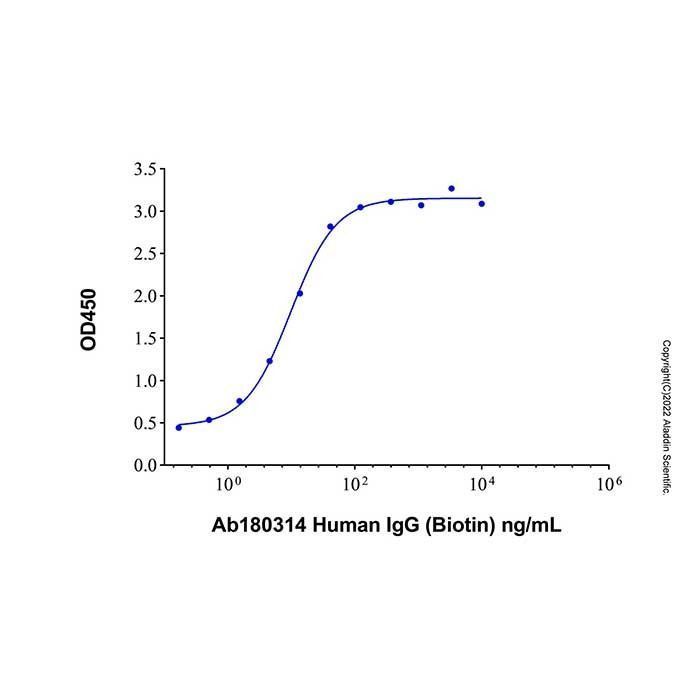
Human IgG (Biotin) (Ab180314) - ELISA
Human IgG (Biotin) (Ab180314) was tested by direct ELISA. The plate was coated with Goat Anti-Human IgG Antibody (Ab170447). A serial dilution of Human IgG (Biotin) (Ab180314) was used as the secondary antibody. A HRP-streptavidin (np156148) was used at 1/20000 dilution for this ELISA.

Human IgG (Biotin) (Ab180314) - Flow Cytometry
Human peripheral blood lymphocytes are stained with Recombinant CD3 Antibody (APC) (Ab178034) and Recombinant CD73 Antibody (Biotin) (Ab176030) (Right), followed by Recombinant Streptavidin Protein (R-PE) (rp156150). Lymphocytes are stained with Recombinant CD3 Antibody (APC) (Ab178034) and Human IgG (Biotin) (Ab180314) (Left).

Aplicación
Aplicación
Dilution info
Flow Cytometry

≤0.5μg/test

For flow cytometric staining, the suggested use of this reagent is ≤0.5 μg per million cells in 100 µL staining volume.

Documentación

📋 Hoja de datos de seguridad (SDS)

Documento completo sobre peligros, manipulación, almacenamiento y cumplimiento normativo.

<<<<<<< HEAD Descargar SDS → ======= Descargar SDS → >>>>>>> release248-p3

✅ Certificado de análisis (COA)

Datos de calidad específicos del lote. Introduzca su número de lote para obtener el COA exacto.

Buscar COA →

📊 Ficha técnica

Resumen de referencia rápida de las especificaciones y aplicaciones del producto.

Ver ficha técnica →

🔬 Hoja de especificaciones

Atributos de calidad completos y criterios de aceptación para esta calidad.

Ver hoja de especificaciones →

Datos avanzados

Certificados (CoA, COO, BSE/TSE y tabla de análisis)
C of A & Other Certificates(BSE/TSE, COO):
Analytical Chart:

Find and download the COA for your product by matching the lot number on the packaging.

4 results found

Lot NumberCertificate TypeFechaArticulo
ZJ24F0707747ZJ24F0707747Certificate of AnalysisApr 17, 2026 Ab180314
ZJ24F0707748ZJ24F0707748Certificate of AnalysisApr 17, 2026 Ab180314
ZJ24F0707749ZJ24F0707749Certificate of AnalysisApr 17, 2026 Ab180314
ZJ24R0600724ZJ24R0600724Certificate of AnalysisJun 21, 2024 Ab180314
Preguntas frecuentes y artículos
Immunoprecipitation Protocol for Native Proteins
General Immunoprecipitation Protocol
RNA Immunoprecipitation (RIP) Protocol
Guidelines for Using Isotype Control Antibodies
Flow Cytometry Using Methanol Permeabilization
Fixation and Permeabilization Protocol for Transcription Factor Flow Cytometry
Immunoglobulins (Ig): Structural Basis, Functional Mechanisms, and Practical Considerations—A Technical Review
Calculadoras de soluciones
Reseñas

Reseñas de cliente

Application Protocols

Only protocols explicitly provided in the product data may be listed as item-specific. For this SKU, no tested applications, recommended dilutions, or procedural steps are specified.

  • Tested applications: Not specified for this item; refer to CoA/Spec Sheet.
  • Recommended dilutions: Not specified for this item; refer to CoA/Spec Sheet.
  • Positive/negative controls: Not specified for this item; refer to CoA/Spec Sheet.

Guidance: For general use of biotinylated IgG in ELISA, Western blot, IHC/ICC, flow cytometry, or biosensor loading, consult standard protocols and optimize empirically for your system. Contact Aladdin Scientific technical support with your application details (platform, matrices, detection system) for tailored advice.

Biological Roles

General background (literature): Human immunoglobulin G (IgG) is the predominant antibody isotype in serum and interstitial fluid. It mediates antigen neutralization, opsonization, complement activation (class- and glycoform-dependent), and Fc receptor engagement on effector cells. IgG comprises subclasses (IgG1–IgG4) with distinct effector profiles and hinge flexibility. N‑glycosylation of the Fc region modulates effector function and stability.

Relevance of biotinylation (research context): Biotinylation of human IgG introduces an exogenous handle for avidin/streptavidin binding without inherently changing the antigen-binding paratope when labeling is controlled. This allows:

  • Sensitive detection in immunoassays using streptavidin‑enzyme or streptavidin‑fluorophore conjugates.
  • Oriented immobilization on streptavidin-functionalized surfaces for kinetic analyses (e.g., BLI, SPR) and capture assays.
  • Construction of multivalent scaffolds via streptavidin tetramers to explore avidity effects in binding studies.

Note: The biological roles described are general to IgG and provided for conceptual context. This SKU is a research reagent; no clinical or in vivo use is implied. Subclass, glycosylation profile, and any functional characterizations specific to this item are not specified and should be confirmed in the CoA/Spec Sheet if relevant to your application.

Buffer Applications

While this product is not a traditional buffering agent, successful use depends on appropriate buffer systems for stability, low background, and robust binding (general guidance):

  • Working/dilution buffers: 1× PBS (10 mM phosphate, 137 mM NaCl, 2.7 mM KCl, pH 7.2–7.6) or 1× TBS (20–50 mM Tris, 150 mM NaCl, pH 7.4–8.0). Filter (0.2 µm) and degas if needed.
  • Blocking buffers: 1–5% BSA or casein in PBS/TBS; fish gelatin or commercial blockers can further lower nonspecific adsorption, especially on polystyrene.
  • Wash buffers: PBS/TBS with 0.01–0.05% Tween‑20 (PBST/TBST) to reduce background while preserving streptavidin–biotin interactions.
  • Storage/diluent additives (if compatible): 0.1% BSA as a carrier protein to minimize adsorption losses; 1–5 mM EDTA to chelate trace metals; 0.02–0.05% sodium azide as a preservative where allowed (verify compatibility with downstream enzymes and safety policies).
  • Avoid: biotin in buffers or samples, which competes for streptavidin binding and can reduce signal in detection workflows.

Item-specific buffer composition, pH, and any preservatives used in this SKU are not specified; refer to the CoA/Spec Sheet. Always validate buffer choices empirically for your assay and ensure compatibility with any detection enzymes (e.g., avoid phosphate with alkaline phosphatase).

Green Alternatives

This product is an aqueous bioconjugate; environmental considerations center on buffer selection and detection chemistry rather than organic solvent choice.

Greener practice options (general):

  • Aqueous-only workflows: Favor PBS/TBS buffers and water-based blocking/washing solutions; avoid unnecessary organic cosolvents and azide when compatible with your system and biosafety requirements.
  • Enzyme reporters vs. metal-containing labels: HRP or AP with eco-friendlier substrates (e.g., TMB with proper neutralization) can be less environmentally persistent than some nanoparticle tags.
  • Replace DAB (hazardous) with safer chromogens when possible; ensure correct waste segregation.
  • Use reusable streptavidin matrices with validated regeneration protocols to reduce solid waste.

Comparison (general considerations):

  • Biotin–streptavidin systems: very high affinity enables lower reagent usage and fewer repeat runs, reducing consumables.
  • Directly labeled antibodies (fluorophore/enzyme): remove one binding step (streptavidin) and can reduce total reagent use but may increase photochemical hazards or require organic solvents during conjugate manufacture.

Item-specific environmental attributes (e.g., preservative identity/concentration, packaging recyclability) are not specified for this item; consult the SDS and product documentation for waste and disposal guidance. Always follow institutional green lab policies for buffer preparation, energy use (cold storage at 2–8°C), and waste minimization.

Pharmaceutical Uses

This product is designated “For research use only” and is not intended for human or veterinary administration, diagnostic procedures, or therapeutic applications.

Research/manufacturing-adjacent contexts (general, non-clinical):

  • Assay system suitability and process controls: Biotinylated human IgG can serve as a positive control or calibration reagent in streptavidin-based ligand-binding assays used during bioprocess development and analytical method qualification.
  • Platform development: Useful in evaluating biotin–streptavidin capture steps, plate/bead performance, or biosensor immobilization strategies in preclinical assay development.
  • Device or surface characterization: Assess binding capacity and uniformity of streptavidin-functionalized materials.

No pharmacopeial monograph, excipient status, or cGMP suitability is specified for this item. If use in regulated workflows is contemplated (e.g., QC testing of investigational materials), obtain and review the lot-specific CoA, SDS, supplier quality documentation, and change-control statements to determine fitness-for-purpose.

Physical Properties

Item-specific physical data are not provided for this antibody conjugate.

Item-specific values:

  • Appearance: Not specified for this item; refer to CoA/Spec Sheet.
  • Concentration, buffer composition, pH, stabilizers/preservatives: Not specified for this item; refer to CoA/Spec Sheet.
  • Extinction coefficient (A280) for concentration determination: Not specified for this item; refer to CoA/Spec Sheet.

General/literature characteristics for human IgG (for context only):

  • Typical molecular mass (intact IgG): ~150 kDa (monomer, non-reducing). Biotinylation minimally shifts apparent MW.
  • Isoelectric point (pI): commonly ~6–9 depending on subclass and glycosylation.
  • Solubility: high solubility in aqueous isotonic buffers (e.g., PBS, TBS); denatures/precipitates in strong organic solvents, extremes of pH, or high temperatures.
  • Stability: improved by neutral pH (7.2–7.6), physiological ionic strength, carrier protein (e.g., BSA) to reduce adsorption, and nonionic surfactants (e.g., 0.01–0.05% Tween‑20) to limit aggregation (general practice).
  • Biotin–streptavidin/avidin interaction: exceptionally high affinity (Kd ~10^−14–10^−15 M, literature), enabling robust capture and detection in heterogeneous assays.

Important: Do not treat the above as specifications for this SKU. For exact buffer, concentration, and any preservatives (e.g., sodium azide), consult the product CoA or Specification Sheet.

Quality and Grades
  • Grade/Purity: ExactAb™, Validated (as stated for this item).

What this means (context for professional users):

  • ExactAb™: While proprietary to the supplier, such designations typically denote rigorous production controls tailored for antibody reagents, emphasizing lot-to-lot consistency, defined buffer systems, and traceable source documentation. The exact criteria for ExactAb™ are not specified for this item; consult the CoA/Spec Sheet for acceptance parameters.
  • Validated: Indicates that performance has been evaluated against predefined criteria in relevant assays. Specific validated applications, species cross-reactivity, and performance metrics are not specified for this item; refer to the CoA/Spec Sheet for details.

Item-specific notes:

  • Biotin conjugation introduces a critical quality attribute: biotin:IgG substitution ratio (B/I). This item’s B/I value is not specified; consult the CoA. Over- or under-labeling can impact binding and background.
  • Purity, residual free biotin, preservative content (e.g., sodium azide), aggregate level (e.g., by SEC), and endotoxin are not specified for this item and should be verified on the lot documentation if relevant to your workflow.

Use considerations:

  • For quantitative work (e.g., calibration standards, bridging immunoassays), request or verify certificate data for concentration determination method (A280 vs. amino acid analysis), extinction coefficient used, and biotinylation chemistry.
  • Maintain the specified cold-chain: shipped on wet ice (do not freeze); store at 2–8°C protected from light (do not freeze). Document lot and expiration for regulated workflows.
Reaction and Applications

As a biotinylated human IgG, this reagent enables high-affinity capture and detection via streptavidin/avidin systems across immunoassay platforms (general literature). Typical application families include:

  • Solid-phase capture: Immobilize on streptavidin-coated plates, beads, biosensors, or membranes to create oriented IgG surfaces, calibration standards, or blocking/challenge reagents in ligand-binding assays.
  • Detection probe: Use in ELISA, Western blot, IHC/ICC, and flow cytometry with streptavidin‑HRP/AP or streptavidin‑fluorophore reporters for signal generation.
  • Bridging/anti-drug antibody (ADA) formats: Serve as a biotinylated binding partner in double-antigen or bridging assay designs (assay development context).
  • Affinity enrichment: Pull-down of anti-human IgG binding species from mixtures using streptavidin matrices.

Practical tips (general):

  • Control free biotin: Serum and cell culture components contain biotin that can compete with binding; include biotin depletion or sufficient washing steps.
  • Optimize B/I (biotin:IgG): Over-labeling can impair antigen binding; under-labeling reduces signal. Verify lot-specific B/I on the CoA (not specified here).
  • Block and wash: Use protein blockers (e.g., BSA, casein) and low Tween‑20 to lower background. Validate detergent levels to avoid disrupting complexes.
  • Avoid freeze-thaw: This item must not be frozen; store 2–8°C protected from light.

Manufacturer-stated applications for this SKU are not provided; the above are general use cases for biotinylated IgG and should be optimized empirically.

Reaction Conditions

Classical chemical reaction conditions do not apply. For practical use, consider the binding/assay conditions governing biotin–streptavidin and IgG–ligand interactions (general literature guidance):

  • Biotin–streptavidin binding: near-diffusion-limited association with very high affinity (Kd ~10^−14–10^−15 M). Typical incubations of 15–60 minutes at room temperature (20–25°C) or 30–120 minutes at 2–8°C are sufficient for plate- or bead-based assays. Gentle agitation improves kinetics.
  • Buffer: PBS or TBS, pH 7.2–8.0; maintain ionic strength to preserve IgG structure. Include 0.01–0.05% Tween‑20 in washes to reduce nonspecific binding; optimize to avoid disrupting complexes.
  • Temperature: Conduct binding and washing at ambient or 2–8°C depending on assay sensitivity and background. Avoid elevated temperatures that can denature IgG.
  • Concentration range: Optimize empirically; start with 0.05–2 µg/mL for detection probes on membranes/plates and adjust based on signal-to-noise. For capture on biosensors, load to a response level that avoids mass transport limitation.
  • Interferences: Free biotin in samples (e.g., serum, cell culture media supplements) competes strongly with biotinylated IgG; consider biotin depletion or use non-biotin detection strategies in high-biotin matrices.

Item-specific recommended conditions, working concentrations, and validated applications are not specified for this SKU; consult the CoA/Spec Sheet and optimize for your system.

Safety and Handling
  • GHS/CLP: Not specified for this item; refer to SDS for authoritative classification.
  • Signal word / H-statements / Pictograms: Not specified for this item; refer to SDS.
  • Research Use: For research use only.

Good laboratory practice (general guidance for protein conjugates):

  • Personal protective equipment: lab coat, gloves (nitrile), safety glasses. Avoid skin/eye contact and ingestion. Handle in clean area to prevent contamination.
  • Handling: Keep protected from light (as specified). Avoid foaming and vigorous vortexing that can denature/aggregate IgG. Minimize repeated warming-cooling cycles.
  • Storage incompatibilities: Avoid strong oxidizers, proteases, extreme pH, and organic solvents or chaotropes unless specifically formulated. Avoid copper surfaces that may catalyze oxidation.
  • Special risks: Although biotin is not photolabile, this product is specified to be protected from light; follow label to maintain performance of the conjugate and any light-sensitive excipients. Do not freeze (as specified) to prevent aggregation/precipitation and loss of activity.
  • First aid (overview; defer to SDS): After skin contact, wash with soap and water. Eye contact—rinse cautiously with water for several minutes. If inhaled (aerosol), move to fresh air. If ingested, rinse mouth and seek medical attention. Provide SDS to physician.
  • Spill/cleanup: Absorb small spills with inert material, clean with aqueous detergent. Decontaminate surfaces with appropriate disinfectant if bio-derived material handling policies apply.

Always consult the product SDS and institutional biosafety policies before use.

Solvent Selection

This product is an aqueous protein reagent rather than a small-molecule solute. Classic “solvent selection” is not typically applicable. Instead, focus on compatible buffer systems and excipients.

General guidance (literature/practice):

  • Primary diluents: phosphate-buffered saline (PBS, pH ~7.2–7.6) or Tris-buffered saline (TBS, pH ~7.4–8.0). Maintain isotonic ionic strength (e.g., 1× PBS ≈ 137 mM NaCl; 1× TBS ≈ 150 mM NaCl) to preserve IgG structure.
  • Additives to reduce nonspecific adsorption/aggregation: 0.1–1% BSA or 0.1–0.5% gelatin; 0.01–0.05% Tween‑20 for wash/dilution buffers in immunoassays.
  • Avoid: strong organic solvents (acetonitrile, methanol, DMSO) and chaotropes (6–8 M urea, guanidine) unless intentionally performing denaturing workflows; extremes of pH (<5 or >9) can compromise stability.
  • Metal chelation: include 1–5 mM EDTA if metal-catalyzed oxidation is a concern and does not interfere with downstream steps.

When to choose PBS vs. TBS (general):

  • PBS: preferred for most ELISA, WB, IHC, and flow cytometry; phosphate can inhibit alkaline phosphatase assays.
  • TBS: better with alkaline phosphatase detection and in some systems where phosphate precipitates with divalent cations.

Item-specific buffer composition and recommended diluent are not specified for this item; consult the CoA/Spec Sheet for exact formulation.

Storage and Reconstitution

Item-specific storage and shipping conditions (as stated):

  • Store at 2–8°C.
  • Protect from light.
  • Do not freeze.
  • Shipped on wet ice; do not freeze during transit.

Reconstitution:

  • Not specified for this item; refer to CoA/Spec Sheet. If supplied as a liquid, use directly and avoid freeze–thaw cycles. If supplied lyophilized (not specified), reconstitute per the CoA with the recommended buffer and volume.

Handling recommendations (general best practices consistent with the above):

  • Mix gently by inversion—avoid vigorous vortexing or foaming.
  • Prepare only the volume needed for immediate use; keep the stock solution at 2–8°C and protected from light during use.
  • Use low-protein-binding plastics or pre-blocked glassware; consider adding carrier protein (e.g., 0.1% BSA) to working solutions if compatible with your assay.
  • Record the open date and plan usage before the labeled expiration; inspect for turbidity or precipitate before use.

Note: Exact buffer composition, concentration, and any preservatives for this SKU are not specified and should be confirmed on the CoA/Spec Sheet. Always follow the label and SDS for definitive handling instructions.

Structure and Identity

Human IgG (Biotin) is a biotin-conjugated immunoglobulin G derived from human source material. As an IgG-class antibody, it is a Y‑shaped glycoprotein comprising two identical heavy chains (~50 kDa each) and two identical light chains (~25 kDa each), forming two antigen-binding Fab arms and one Fc domain (literature). Biotinylation typically occurs via N‑hydroxysuccinimide (NHS)-ester coupling to accessible ε‑lysine residues on the IgG surface, yielding a streptavidin/avidin-reactive tracer or capture ligand (general, literature).

Item-specific identifiers:

  • Molecular Formula: Not specified for this item; refer to CoA/Spec Sheet.
  • Molecular Weight: Not specified for this item; refer to CoA/Spec Sheet.
  • SMILES / InChI / InChIKey / CAS / CID: Not specified for this item; refer to CoA/Spec Sheet.

Literature descriptors (general for human IgG):

  • Typical apparent MW (non-reducing): ~150 kDa; reducing SDS-PAGE: heavy chain ~50 kDa, light chain ~25 kDa.
  • Structural features: disulfide-linked H2L2 heterotetramer; N‑glycan(s) on Fc; multiple lysine biotinylation sites possible; hinge region confers flexibility.

Note: The above structural details are general for human IgG and are provided for context only; lot-specific identity, conjugation chemistry, and substitution ratio (biotin:IgG) are not specified for this item and should be confirmed on the CoA/Spec Sheet.

Synthetic Utility

Not typically applicable. This SKU is a biotinylated human immunoglobulin G reagent intended for biochemical and immunoassay workflows, not for use as a synthetic organic chemistry building block or catalyst.

If your broader project includes bioconjugation or surface functionalization steps (general guidance):

  • The biotin moiety enables site-independent, high-affinity capture on streptavidin/avidin surfaces, which can substitute for covalent coupling chemistries in device prototyping.
  • For covalent strategies, common protein coupling approaches include NHS-ester (amine-targeting), maleimide (thiol-targeting), and click chemistry (azide/alkyne) — but such chemistries pertain to custom conjugation and are not part of this item’s specified attributes.

For synthetic applications (e.g., small-molecule synthesis, cross-coupling, catalysis), refer to appropriate reagents and solvents in the catalog. This antibody reagent is best leveraged in assay development, capture/detection workflows, and biomolecular interaction studies.

Target Specificity

Only target information provided by the product data may be listed here. For this SKU, no antigen target, clone, isotype subclass, or species reactivity details are specified.

  • Antigen/epitope: Not specified for this item; refer to CoA/Spec Sheet.
  • Host/isotype/subclass: Not specified for this item; refer to CoA/Spec Sheet.
  • Species cross-reactivity: Not specified for this item; refer to CoA/Spec Sheet.
  • Clone/catalog origin: Not specified for this item; refer to CoA/Spec Sheet.

Note: The product name “Human IgG (Biotin)” indicates a biotin-conjugated human immunoglobulin G molecule. It is not, by itself, an antibody against a defined exogenous target unless otherwise specified. Verify any intended binding specificity and use case with lot documentation.

Preguntas frecuentes

What does ExactAb? mean?
ExactAb? indicates the product has been validated for use in rigorous antibody validation workflows. Validation may include positive/negative control samples, signal-to-noise testing, and protocol-specific QC. Lot-specific test data is published on the Certificate of Analysis where available.
What does Validated mean?
Validated indicates the product has been validated for use in rigorous antibody validation workflows. Validation may include positive/negative control samples, signal-to-noise testing, and protocol-specific QC. Lot-specific test data is published on the Certificate of Analysis where available.
How should this product be stored?
Store at 2–8 °C, protected from light. Do not freeze. Freezing may cause irreversible damage to this material.
How is this product shipped?
This product ships chilled on wet ice. Unpack on arrival and transfer it to the storage condition stated above.
What documentation is provided?
Available product documentation, including Certificates of Analysis (COA), Safety Data Sheets (SDS), and specification sheets, is shown in the product document area. Document availability and access follow the current site policy.
Which species reactivity has this antibody been validated against?
Validated reactivity is listed on the PDP and on each lot's datasheet. We validate against the most commonly tested species for the target (Human IgG (Biotin)); cross-reactivity in untested species may exist but is not guaranteed. Contact technical support for specific species inquiries.

¿Necesita ayuda para elegir la calidad?

Nuestra guía de selección de calidades cubre la pureza, el estado del estabilizador y la idoneidad de la aplicación para todas las variantes de nuestro catálogo.

Ver la guía de calidades Validated → Ver la guía de calidades ExactAb™ →

Artículos relacionados

Human IgG - Isotype Control Antibody, for WB,CLIA,LF,EIA,PRTIA various applications, generated in Human, >95%, IgG
Human IgG2-Kappa - Isotype Control Antibody, Human IgG2
Human IgG3-kappa - Isotype Control Antibody, Human IgG3
IgG1-kappa humana, anti-Spike RBD - Isotype Control Antibody, specific to Spike RBD, Human IgG1
IgG4-kappa humana - Isotype Control Antibody, IgG4
IgG humana (FITC) - Isotype Control Antibody, IgG
IgG humana (APC) - Isotype Control Antibody, IgG
IgG humana (PE) - Isotype Control Antibody, IgG
IgG1(P331S/E430G)-kappa humana, anti-HEL - Isotype Control Antibody, specific to HEL, Human IgG1(P331S/E430G)
IgG1(D265A/N297A)-kappa humana, anti-HEL - Isotype Control Antibody, specific to HEL, Human IgG1(D265A/N297A)
IgG1(K409R/E356D/M358L)-kappa humana, anti-HEL - Isotype Control Antibody, specific to HEL, Human IgG1(K409R/E356D/M358L)
IgG1(P329G/E356D/M358L)-kappa humana, anti-HEL - Isotype Control Antibody, specific to HEL, Human IgG1(P329G/E356D/M358L)
Human IgG1(F405L)-kappa, anti-HEL - Isotype Control Antibody, specific to HEL, Human IgG1(F405L)
Human IgG1(N297Q)-kappa, anti-HEL - Isotype Control Antibody, specific to HEL, Human IgG1(N297Q)
Human IgG1(N297S)-kappa, anti-HEL - Isotype Control Antibody, specific to HEL, Human IgG1(N297S)
Human IgG1(E233A/L235A)-kappa, anti-HEL - Isotype Control Antibody, specific to HEL, Human IgG1(E233A/L235A)
Human IgG1(K214R/N297A)-kappa, anti-HEL - Isotype Control Antibody, specific to HEL, Human IgG1(K214R/N297A)
Human IgG1(K214R/L234A/L235A)-kappa, anti-HEL - Isotype Control Antibody, specific to HEL, Human IgG1(K214R/L234A/L235A)
Human IgG1(N297A/E356D/M358L)-kappa, anti-HEL - Isotype Control Antibody, specific to HEL, Human IgG1(N297A/E356D/M358L)
Human IgG1(L234F/L235E)-kappa, anti-HEL - Isotype Control Antibody, specific to HEL, Human IgG1(L234F/L235E)
Human IgG1(D265A)-kappa, anti-HEL - Isotype Control Antibody, specific to HEL, Human IgG1(D265A)
Human IgG1(K214R/L234F/L235E/P331S)-kappa, anti-HEL - Isotype Control Antibody, specific to HEL, Human IgG1(K214R/L234F/L235E/P331S)
Human IgG1(K214R/E356D/M358L)-kappa, anti-HEL - Isotype Control Antibody, specific to HEL, Human IgG1(K214R/E356D/M358L)
Human IgG1(L234A/L235A/G237A)-kappa, anti-HEL - Isotype Control Antibody, specific to HEL, Human IgG1(L234A/L235A/G237A)
Human IgG1(L234A/L235A/F405L)-kappa, anti-HEL - Isotype Control Antibody, specific to HEL, Human IgG1(L234A/L235A/F405L)
Human IgG1(D270N)-kappa, anti-HEL - Isotype Control Antibody, specific to HEL, Human IgG1(D270N)
Human IgG4(S228P)-kappa, anti-HEL - Isotype Control Antibody, specific to HEL, Human IgG4(S228P)
Human IgG1(N297A)-kappa, anti-HEL - Isotype Control Antibody, specific to HEL, Human IgG1(N297A)
Human IgG4(S228P/L235E/P329G)-kappa, anti-HEL - Isotype Control Antibody, specific to HEL, Human IgG4(S228P/L235E/P329G)
Human IgG1-lambda1, anti-Spike RBD - Isotype Control Antibody, specific to Spike RBD, Human IgG1
Human IgG1-lambda2, anti-Spike RBD - Isotype Control Antibody, specific to Spike RBD, Human IgG1
Human IgG1-kappa (AF405), anti-Spike RBD - Isotype Control Antibody, specific to Spike RBD
Human IgG1-kappa (AF647), anti-Spike RBD - Isotype Control Antibody, specific to Spike RBD
Human IgG1-kappa (APC), anti-Spike RBD - Isotype Control Antibody, specific to Spike RBD
Human IgG1-kappa (Biotin), anti-Spike RBD - Isotype Control Antibody, specific to Spike RBD
Human IgG1-kappa (AF700), anti-Spike RBD - Isotype Control Antibody, specific to Spike RBD
Human IgG1-kappa (FITC), anti-Spike RBD - Isotype Control Antibody, specific to Spike RBD
Human IgG1-kappa (AF555), anti-Spike RBD - Isotype Control Antibody, specific to Spike RBD
Human IgG (AF647) - Isotype Control Antibody
Human IgG (AF488) - Isotype Control Antibody
Human IgG (AF700) - Isotype Control Antibody
Human IgG (AF405) - Isotype Control Antibody
Human IgG (AF555) - Isotype Control Antibody

¿Quieres que te enviemos un mensaje cuando tengamos descuentos disponibles?

Recordármelo más tarde

¡Gracias! Por favor, revisa tu bandeja de entrada de correo electrónico para confirmar.

¡Vaya! Las notificaciones están desactivadas.