
Structure–Function Relationships of Ganoderma lucidum Extract: Skin-Protective Effects of Polysaccharides and Triterpenoids and Formulation Delivery Strategies
Structure–Function Relationships of Ganoderma lucidum Extract: Skin-Protective Effects of Polysaccharides and Triterpenoids and Formulation Delivery Strategies
Introduction
Ganoderma lucidum extract used in skincare products is not a structurally defined single compound, but rather a mixture composed of polysaccharides, triterpenoids, sterols, proteins, glycoproteins, and other accompanying constituents. The specific Ganoderma species, the part used, the cultivation method, and the extraction process can all alter the types and proportions of these constituents. Therefore, raw materials carrying the same label of “Ganoderma lucidum extract” may differ considerably in their actual chemical composition and skincare effects.
The source of the raw material and the extraction method determine the active-constituent profile; polysaccharide structure determines solubility, skin distribution, and cellular effects; polysaccharides and triterpenoids regulate inflammaging through oxidative-stress and inflammatory-signaling pathways, respectively; surface hydration, epidermal differentiation, and inflammation control collectively support barrier function; and formulation combinations and delivery methods determine whether these constituents remain stable in the formulation and reach appropriate sites of action.
1 Raw Material Source and Extraction Method Determine the Active-Constituent Profile
1.1 What Constituents Are Present in Ganoderma lucidum Extract?
The fruiting body, mycelium, and spores of Ganoderma lucidum can all be used as extraction materials. Differences in cell-wall composition, secondary metabolites, and protein content among these parts result in extracts with distinct chemical characteristics.
The principal constituents of Ganoderma lucidum that are closely related to skin research include the following categories.
Constituent Type | Principal Structures or Representative Constituents | Research Directions Related to Skin Effects |
Polysaccharides | β-Glucans, heteropolysaccharides, acidic polysaccharides, polysaccharide–protein complexes | Surface hydration, film formation, oxidative-stress regulation, and modulation of immune and inflammatory signaling |
Triterpenoids | Lanostane-type triterpenoids, including ganoderic acids, ganoderenic acids, and lucidenic acids | Regulation of inflammatory signaling, protection against oxidative damage, and studies of keratinocyte differentiation |
Glycoproteins and protein complexes | Complex structures formed by polysaccharide chains bound to proteins | Cell migration, protection against oxidative stress, and skin-delivery research |
Sterols | Ergosterol and related sterols | Membrane interactions and regulation of inflammation |
Fatty acids and other small molecules | Fatty acids of different chain lengths, phenolic compounds, and nucleoside constituents | Antioxidant activity, formulation compatibility, and supportive biological activity |
Polysaccharides and triterpenoids are the two most extensively studied classes of constituents in Ganoderma lucidum extracts. Polysaccharides are strongly hydrophilic and are mainly recovered in aqueous extracts, whereas most Ganoderma triterpenoids are relatively low in polarity and are extracted more efficiently with organic solvents such as ethanol. A 2025 study using ultra-performance liquid chromatography coupled with quadrupole time-of-flight mass spectrometry identified 105 compounds in an ethanol extract of Ganoderma lucidum, including 100 triterpenoids and five fatty acids, demonstrating that ethanol extraction can produce a constituent profile dominated by triterpenoids.[1]
1.2 How Extraction Methods Alter Raw Material Properties
Extraction or Processing Method | Principal Enriched Constituents | Effects on Raw Material Properties |
Hot-water extraction | Water-soluble polysaccharides, glycoproteins, and some proteins | Produces an extract dominated by hydrophilic macromolecules and suitable for aqueous formulations |
Dilute-alcohol or high-concentration ethanol extraction | Triterpenoids, sterols, some fatty acids, and phenolic compounds | Increases the proportion of hydrophobic small molecules, requiring solutions for aqueous-phase dispersion and precipitation control |
Enzyme-assisted extraction | Polysaccharides and oligosaccharides released from cell walls | May improve extraction yield and alter the molecular weight and branching structure of some polysaccharides |
Ultrasound- or microwave-assisted extraction | Mixtures of polysaccharides and small molecules | Shortens extraction time; excessive treatment intensity may cause polysaccharide-chain cleavage |
Fermentation treatment | Extracellular polysaccharides, oligosaccharides, peptides, and fermentation-derived transformation products | Alters molecular weight, monosaccharide proportions, and the composition of accompanying constituents |
Fractional precipitation and chromatographic purification | Polysaccharide fractions with defined molecular-weight or charge characteristics | Facilitates structure–activity relationship studies and the establishment of quality standards |
The extraction process affects both yield and molecular structure. Temperature, duration, pH, mechanical shear, and enzymatic treatment may all alter polysaccharide-chain length, degree of branching, and spatial conformation. When evaluating Ganoderma lucidum polysaccharide raw materials, parameters beyond total polysaccharide content should be considered, including β-glucan content, monosaccharide composition, glycosidic-linkage type, molecular-weight distribution, protein proportion, and solution state.[2,3]
2 The Structure of Ganoderma lucidum Polysaccharides Determines Solubility, Skin Distribution, and Biological Activity
2.1 Ganoderma lucidum Polysaccharides Do Not Have a Single Fixed Structure
Ganoderma lucidum polysaccharides consist of multiple types of sugar chains. Some contain glucose as the predominant monosaccharide and are classified as glucans, whereas others also contain galactose, mannose, arabinose, xylose, fucose, or glucuronic acid and are classified as heteropolysaccharides or acidic polysaccharides.
Frequently studied Ganoderma lucidum β-glucans commonly contain β-(1→3)-linked main chains and β-(1→6)-linked branches. Polysaccharides containing β-(1→4), β-(1→6), and β-(1→3,6) linkages have also been isolated from Ganoderma lucidum spores and mycelia. Differences in glycosidic linkages, branch positions, and monosaccharide proportions alter chain flexibility, hydration behavior, and cellular-recognition characteristics.[2–4]
2.2 Molecular Weight Affects Viscosity, Film Formation, and Diffusion
High-molecular-weight polysaccharides have a large hydrodynamic volume, and their sugar chains readily become entangled. They therefore generally exhibit higher viscosity and stronger surface film-forming capacity. Their principal sites of action are the aqueous phase of the formulation, the skin surface, and the stratum corneum, where they can improve surface water retention, reduce the sensory perception of dryness, and prolong the residence time of the raw material on the skin.
A moderate reduction in molecular weight may improve the dissolution rate and dispersion uniformity of polysaccharides, making a greater proportion of sugar-chain segments accessible. Excessive molecular-weight reduction, however, may weaken viscosity, film formation, and surface-retention capacity. Raw material design should therefore select a molecular-weight range according to the intended function rather than simply pursuing lower molecular weight.
2.3 Branching and Spatial Conformation Affect Cellular Responses
Some Ganoderma lucidum β-D-glucans can form rigid triple-helical chains in phosphate-buffered solution. A 2018 study separated a Ganoderma lucidum β-D-glucan into fractions of different molecular weights and found that all fractions retained triple-helical characteristics in solution and promoted lymphocyte proliferation and morphological changes in macrophages. The higher-molecular-weight fractions produced a more pronounced increase in macrophage release of interleukin-6 and tumor necrosis factor-α.[4]
These findings indicate that the effects of Ganoderma lucidum polysaccharides on immune signaling are jointly determined by molecular weight, branching pattern, spatial conformation, concentration, and cellular state. High-molecular-weight, triple-helical glucans may enhance the responses of certain immune cells, whereas low-molecular-weight or structurally distinct polysaccharides may reduce inflammatory signaling in models of excessive inflammation.
2.4 How Structural Characteristics Translate into Skin Effects
The relationship between the structure of Ganoderma lucidum polysaccharides and their skin effects can be summarized as follows:
Monosaccharide composition, glycosidic linkages, and branching structure
→ Molecular weight, conformation, charge, and hydration behavior
→ Solubility, viscosity, film-forming capacity, and formulation stability
→ Residence on the skin surface, distribution in the stratum corneum, and local release
→ Moisturization, antioxidant defense, and regulation of inflammatory signaling
The intercellular regions of the stratum corneum consist of highly ordered lipid layers and represent the principal barrier to the diffusion of hydrophilic macromolecules into deeper skin layers. Without specialized delivery design, high-molecular-weight Ganoderma lucidum polysaccharides are mainly distributed on the skin surface and within the stratum corneum. Their entry into the viable epidermis is influenced by molecular weight, aggregation state, carrier system, and stratum corneum integrity. This distribution is suitable for hydration, film formation, and regulation of the stratum corneum microenvironment.[14]
3 How Inflammaging Develops
3.1 What Is Inflammaging?
Inflammaging refers to a persistent, low-grade inflammatory state that develops with increasing age and prolonged environmental exposure. It generally occurs without a clearly defined source of acute infection and is sustained by oxidative damage, declining organelle function, accumulation of senescent cells, barrier impairment, and insufficient resolution of inflammation.
The skin is continuously exposed to ultraviolet radiation, air pollution, dryness, temperature fluctuations, glycation products, and repeated irritation. These factors can increase reactive oxygen species (ROS), damage DNA, membrane lipids, proteins, and mitochondria, and activate inflammatory and cellular-senescence programs.[5,17]
3.2 The Vicious Cycle of Inflammaging
The central process can be represented as follows:
Ultraviolet radiation, pollution, dryness, and metabolic stress
→ Increased ROS, impaired mitochondrial function, and DNA damage
→ Activation of stress pathways, including nuclear factor-κB and mitogen-activated protein kinases
→ Increased inflammatory cytokines, chemokines, and matrix metalloproteinases
→ Entry of keratinocytes and fibroblasts into senescent or low-repair states
→ Persistent release of inflammatory mediators and proteases through the senescence-associated secretory phenotype
→ Slower epidermal renewal, extracellular-matrix degradation, and impaired barrier structure
→ Increased water loss and easier access of external irritants and microbial components to the viable epidermis
→ Generation of new oxidative and inflammatory stimuli
The senescence-associated secretory phenotype (SASP) is an important amplification step in this cycle. After senescent cells cease normal proliferation, they can continue to secrete interleukins, chemokines, growth factors, and matrix-degrading enzymes, thereby affecting neighboring cells and the tissue microenvironment.
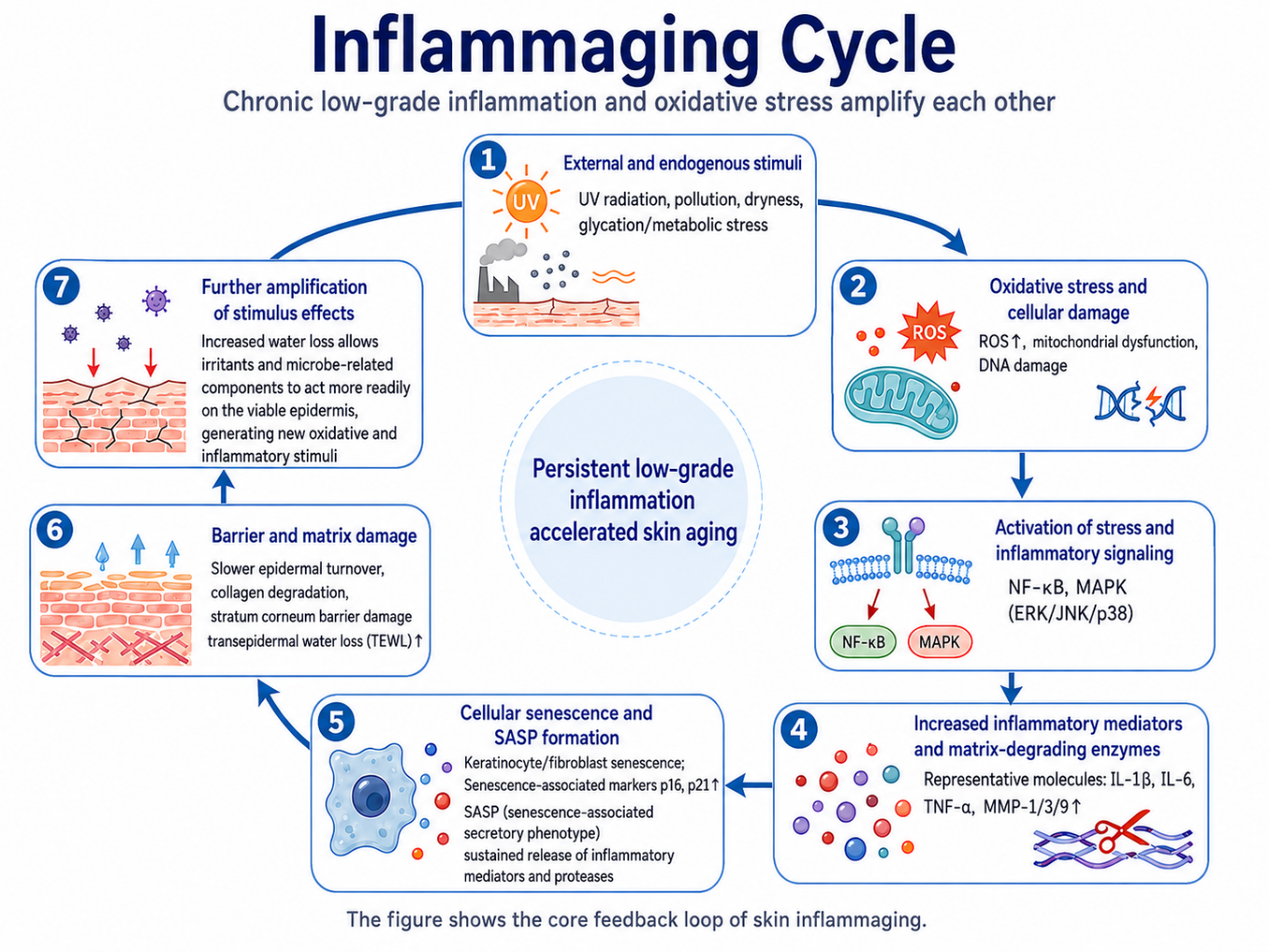
Keratinocyte and mouse-skin models of ultraviolet B (UVB)-induced damage have shown that increases in the cellular-senescence markers p16 and p21 are accompanied by increases in interleukin-1β, interleukin-6, matrix metalloproteinase-1, matrix metalloproteinase-3, and matrix metalloproteinase-9, together with enhanced nuclear factor-κB and mammalian target of rapamycin signaling.[6]
4 How Ganoderma lucidum Polysaccharides Regulate Oxidative Stress
4.1 Free-Radical Scavenging
Some Ganoderma lucidum polysaccharides exhibit scavenging activity in assays involving 2,2-diphenyl-1-picrylhydrazyl radicals, ABTS radicals, hydroxyl radicals, and superoxide anions. Direct scavenging activity is associated with reducing termini, hydroxyl groups, uronic acids, bound proteins, and accompanying phenolic constituents.
Results obtained with different Ganoderma lucidum polysaccharides vary considerably in chemical antioxidant assays. Purity, molecular weight, protein proportion, and residual small molecules can all affect the measured values.
4.2 Activation of Keap1–Nrf2–ARE Antioxidant Defense
Under basal conditions, Kelch-like ECH-associated protein 1 (Keap1) promotes the degradation of nuclear factor erythroid 2-related factor 2 (Nrf2). When the redox state changes, Nrf2 is stabilized and translocates into the nucleus, where it binds to antioxidant response elements (AREs) and promotes the expression of multiple antioxidant and detoxification enzymes.
Major downstream molecules include:
① Heme oxygenase-1;
② NAD(P)H quinone oxidoreductase 1;
③ Glutamate–cysteine ligase;
④ Glutathione transferases;
⑤ Enzymes involved in glutathione synthesis and peroxide reduction.
In a hydrogen peroxide-induced injury model using human skin fibroblasts, multiple Ganoderma lucidum polysaccharide fractions reduced intracellular ROS and malondialdehyde levels, increased the activities of superoxide dismutase, catalase, and glutathione peroxidase, and promoted the expression of Nrf2 and its downstream antioxidant genes.[8]
4.3 Reduction of ROS-Driven Collagen-Degradation Signaling
ROS can directly oxidize cellular constituents and can also activate extracellular signal-regulated kinase, c-Jun N-terminal kinase, and p38 within the mitogen-activated protein kinase (MAPK) pathway. This subsequently increases activator protein-1 (AP-1) activity and promotes the expression of matrix metalloproteinases (MMPs).
MMP-1 participates in the initial cleavage of type I and type III fibrillar collagen. A sustained increase in MMP expression accelerates dermal-matrix damage, loosens collagen-fiber organization, and reduces tissue mechanical stability.
In UVB-damaged human skin fibroblasts, treatment with Ganoderma lucidum polysaccharides reduced ROS levels and the proportion of senescence-associated β-galactosidase-positive cells, decreased MMP-1, and increased the type I procollagen-related CICP indicator.[7]
4.4 Protection of Keratinocytes by Triterpenoid-Enriched Extracts
Ethanol extracts of Ganoderma lucidum are rich in triterpenoid constituents. In hydrogen peroxide-damaged HaCaT human keratinocytes, a specific Ganoderma lucidum ethanol extract increased cell viability, reduced early apoptosis, and modulated stress-related signaling involving protein kinase B, extracellular signal-regulated kinase, p53, and p21. The extract also promoted keratinocyte migration, indicating that this triterpenoid-enriched Ganoderma lucidum ethanol extract may contribute to protection against oxidative damage and re-epithelialization-related processes.[10]
5 How Ganoderma lucidum Polysaccharides and Triterpenoids Regulate Inflammatory Signaling
5.1 The TLR4–NF-κB Pathway
Toll-like receptor 4 (TLR4) recognizes bacterial lipopolysaccharide and certain tissue damage-associated signals. Following receptor activation, adaptor proteins such as myeloid differentiation primary response 88 initiate kinase cascades that promote the translocation of nuclear factor-κB (NF-κB) into the nucleus and the expression of inflammatory genes.
The principal process is as follows:
Lipopolysaccharide or damage-associated signals
→ TLR4 activation
→ Activation of the IKK complex and degradation of IκB
→ Nuclear translocation of NF-κB
→ Increased expression of interleukin-1β, interleukin-6, tumor necrosis factor-α, and inducible nitric oxide synthase
Persistent NF-κB activation also enhances SASP, linking chronic inflammation with cellular senescence.
5.2 Combined Regulation by Polysaccharides and Ganoderic Acid A
A 2025 study isolated a low-molecular-weight β-D-glucan, GLP-1, whose main chain consisted of alternating β-(1→3) and β-(1→4) linkages. When ganoderic acid A and GLP-1 were combined at a mass-concentration ratio of 1:4, the combination reduced nitric oxide, ROS, interleukin-1β, interleukin-6, and tumor necrosis factor-α, increased interleukin-10, and improved mitochondrial membrane potential in lipopolysaccharide-stimulated RAW264.7 mouse macrophages. Gene and protein analyses showed that the combination inhibited TLR4/NF-κB signaling.[9]
These findings provide experimental support for the combined regulation of inflammation by Ganoderma lucidum polysaccharides and triterpenoids. Their possible complementary effects include:
① Polysaccharides participate in the regulation of cell-surface signaling, redox balance, and mitochondrial homeostasis;
② Ganoderic acid A, as a relatively lipophilic small molecule, may act on membrane-associated and intracellular signaling processes;
③ A reduction in ROS may alleviate redox-sensitive activation of NF-κB;
④ A reduction in inflammatory cytokines may in turn decrease the generation of additional ROS by immune cells and mitochondria.
5.3 Polysaccharide Structure and Cellular State Jointly Determine the Inflammatory Response
Under different experimental conditions, Ganoderma lucidum polysaccharides may exhibit different directions of immunomodulatory activity.
Polysaccharide and Experimental State | Observed Effect | Functional Interpretation |
High-molecular-weight, triple-helical β-glucans applied to resting immune cells | Promote lymphocyte proliferation and increase the release of certain inflammatory cytokines | Enhance immune recognition and cellular responses |
A specific low-molecular-weight β-D-glucan applied to lipopolysaccharide-stimulated macrophages | Reduces inflammatory cytokines and ROS when combined with ganoderic acid A | Regulates excessively activated inflammatory signaling |
Crude polysaccharide extracts without adequate structural characterization | Results are influenced by accompanying proteins, phenolic compounds, and small molecules | Efficacy should be interpreted together with raw material quality standards |
6 How Ganoderma lucidum-Derived Constituents Support Skin Barrier Function
6.1 Surface Hydration and Film Formation by Polysaccharides
Ganoderma lucidum polysaccharides contain numerous hydroxyl groups that can bind water through hydrogen bonding and form a hydrated film on the skin surface. This action can increase surface hydration of the stratum corneum, improve dryness, roughness, and frictional feel, and reduce rapid water loss under low-humidity conditions.
A 2026 study used a β-(1→3,1→6)-glucan-enriched polysaccharide obtained from cultured mycelia. After 30 participants used the product continuously for 28 days, instrumental measurements showed a 7.5% increase in skin hydration relative to baseline, together with certain improvements in wrinkle, skin-brightness, and erythema indices.[11]
This human study used a before-and-after comparison design and reflects the short-term use results of a specific mycelial polysaccharide and a specific formulation.
6.2 Barrier Functions of Filaggrin, Loricrin, and Involucrin
Filaggrin is generated through the processing of its precursor protein, profilaggrin, and participates in keratin-fiber aggregation and compaction of corneocytes. Further degradation of filaggrin produces free amino acids and their derivatives, which are important components of the natural moisturizing factor.
Loricrin is an important structural protein of the cornified envelope and strengthens the peripheral structure of corneocytes through crosslinking. Involucrin provides a crosslinking scaffold during the early formation of the cornified envelope. Together, these three proteins participate in terminal keratinocyte differentiation and the establishment of stratum corneum structure.[18]
6.3 Regulation of Barrier-Related Indicators by Fermented Ganoderma lucidum Polysaccharides
A polysaccharide fraction obtained by co-fermentation of white Ganoderma lucidum and Laminaria japonica increased filaggrin, loricrin, involucrin, aquaporin 3, and caspase-14-related indicators in UVB-damaged HaCaT keratinocytes and also modulated kallikrein 7, MMP-9, and inflammatory cytokines. The study linked these effects to transient receptor potential vanilloid 4–Keap1/Nrf2 signaling.[12]
Such fermented raw materials contain Laminaria japonica polysaccharides, Ganoderma lucidum metabolites, proteins, and fermentation-derived transformation products. Their effects therefore reflect the complete fermented fraction rather than a single Ganoderma lucidum β-glucan.
6.4 Effects of Ganoderma lucidum Triterpenoids on Keratinocyte Differentiation
A 2026 study investigated an antler-shaped Ganoderma lucidum extract rich in lucidenic acid A. In HaCaT cells, the extract increased filaggrin and loricrin messenger RNA expression, whereas isolated lucidenic acid A increased filaggrin and involucrin messenger RNA expression. Both the extract and the isolated compound also reduced the release of interleukin-1β and tumor necrosis factor-α induced by Staphylococcus aureus.[13]
These findings indicate that the effects of Ganoderma lucidum extracts on barrier-related differentiation may involve polysaccharides, triterpenoids, and other accompanying constituents.
6.5 How Barrier Improvement May Reduce New Inflammatory Stimuli
Impaired barrier function increases transepidermal water loss (TEWL) and disrupts the hydration state of the stratum corneum and the organization of intercellular lipids. External irritants, pollutants, and microbial components can then more readily reach the viable epidermis and induce keratinocytes to release inflammatory mediators.
The protective sequence that may develop after barrier improvement is as follows:
Improved surface hydration and corneocyte differentiation → Increased continuity and mechanical stability of the stratum corneum → Reduced water loss and entry of irritants → Reduced keratinocyte stress → Decreased release of inflammatory cytokines and proteases → Reduced secondary damage to barrier proteins and cell junctions
Ganoderma lucidum polysaccharides mainly provide hydration, film formation, and cellular-signaling regulation, whereas reconstruction of the stratum corneum lipid structure still requires lipid constituents such as ceramides, cholesterol, and free fatty acids.[14]
7 Rationale for Combination with Ceramides and Hyaluronic Acid
7.1 Combination with Ceramides: Complementarity Between Aqueous-Phase Protection and the Lipid Barrier
The intercellular lipids of the stratum corneum consist mainly of ceramides, cholesterol, and free fatty acids. These lipids form continuous lamellar structures that regulate outward water loss and the entry of external substances.[14]
Ganoderma lucidum polysaccharides and ceramides act on different components of the barrier.
Constituent | Principal Site of Action | Principal Function |
Ganoderma lucidum polysaccharides | Aqueous phase of the formulation, skin surface, and stratum corneum | Bind water, form a hydrated film, and regulate oxidative stress and inflammation |
Ceramides | Intercellular lipid regions of the stratum corneum | Participate in lamellar lipid organization and reduce barrier permeability |
Cholesterol | Intercellular lipid regions of the stratum corneum | Regulates lipid-layer fluidity and phase behavior |
Free fatty acids | Intercellular lipid regions of the stratum corneum | Participate in lipid-layer organization and maintenance of an acidic surface environment |
A rational combination strategy is to disperse Ganoderma lucidum polysaccharides stably in the aqueous phase and to combine ceramides with cholesterol, fatty acids, and suitable emulsifiers to construct lamellar emulsions or lipid particles. From a formulation-design perspective, this combination can address hydration, inflammation-related regulation, and lipid-barrier supplementation through distinct mechanisms.
7.2 Combination with Hyaluronic Acid: Construction of a Polysaccharide-Based Hydration System
Hyaluronic acid is a highly hydrophilic glycosaminoglycan with hygroscopic, viscoelastic, and rheology-modifying properties. Topically applied hyaluronic acid primarily improves surface hydration, smoothness, and film formation, and its performance is influenced by molecular weight, crosslinking, and chemical modification.[15]
The combination of Ganoderma lucidum polysaccharides and hyaluronic acid may be used to construct a composite hydration system:
① Hyaluronic acid provides water binding, lubrication, and viscoelasticity;
② Ganoderma lucidum polysaccharides provide film formation, surface water retention, and oxidative-stress regulation;
③ Combinations of different molecular weights can regulate immediate skin feel and the duration of moisturization.
When the two hydrophilic polymers are used together, the total polymer concentration must be controlled. Excessively high concentrations may increase stringiness, tackiness, pilling, and uneven film formation after drying. Electrolytes, preservatives, cationic polymers, and emulsifying systems may also alter polysaccharide-chain extension and aggregation.
7.3 Comparison of Combination Strategies
Combination | Primary Objective | Key Formulation Considerations |
Ganoderma lucidum polysaccharides + ceramide system | Complementarity between aqueous-phase protection and the lipid barrier | Ceramide dispersion, lipid proportions, lamellar structure, and emulsion stability |
Ganoderma lucidum polysaccharides + hyaluronic acid | Improve hydration, film formation, and sensory properties | Molecular-weight pairing, total polymer concentration, viscosity, and pilling control |
Ganoderma lucidum polysaccharides + triterpenoids | Simultaneously regulate oxidative stress and inflammatory signaling | Separate loading in aqueous and lipid phases, triterpenoid solubilization, and polysaccharide stability |
Ganoderma lucidum polysaccharides + ceramides + hyaluronic acid | Establish a hydration–lipid–inflammation-regulation combination | Avoid excessive thickening and balance absorption feel with sustained barrier support |
8 Formulation Delivery Determines Whether Active Constituents Reach Appropriate Sites
8.1 The Focus of Polysaccharide Delivery Is Dispersion, Retention, and Release
The principal formulation challenges associated with high-molecular-weight Ganoderma lucidum polysaccharides include slow dissolution, chain entanglement, aggregation and precipitation, microbial risk, and viscosity drift. Suitable formulation forms include hydrogels, gel emulsions, lamellar emulsions, film-forming serums, and hydrophilic vesicular systems.
Polysaccharide-delivery design should address the following:
① Maintaining the polysaccharide in a water-soluble or uniformly dispersed state;
② Preventing molecular aggregation and sedimentation during long-term storage;
③ Controlling film thickness and dry-down feel on the skin surface;
④ Prolonging contact time with the stratum corneum;
⑤ Determining, according to the intended function, whether local release into the upper viable epidermis needs to be increased.
When high-molecular-weight polysaccharides are used for surface hydration, there is no need to pursue extensive delivery into the dermis. When they are intended to regulate keratinocyte signaling, local bioavailability may be increased through molecular-weight control, carrier encapsulation, and design of stratum corneum affinity.
8.2 The Focus of Triterpenoid Delivery Is Solubilization and Skin Distribution
Triterpenoids such as ganoderic acids, ganoderenic acids, and lucidenic acids have limited solubility in water. Direct incorporation into aqueous formulations may lead to precipitation, crystallization, adsorption to the container, and a reduction in effective concentration.
Suitable formulation approaches include oil-phase solubilization, phospholipid vesicles, nanoemulsions or microemulsions, nanostructured lipid carriers, cyclodextrin inclusion complexes, and lamellar liquid-crystalline emulsions.
Delivery systems should improve triterpenoid dispersion while controlling irritation and disruption of stratum corneum lipids.
8.3 Polysaccharides and Triterpenoids Are Suitable for Separate Phase Loading
Ganoderma lucidum raw materials containing both polysaccharides and triterpenoids exhibit a pronounced hydrophilic–lipophilic difference. A relatively rational formulation structure is:
Standardized Ganoderma lucidum polysaccharides carried in the aqueous phase + Ganoderma lucidum triterpenoids carried in the oil phase, phospholipid systems, or inclusion carriers + A lamellar emulsifying interface controlling the release of both classes of constituents
This phase-separated design can reduce polysaccharide aggregation and triterpenoid precipitation while independently regulating surface residence, stratum corneum distribution, and release into the viable epidermis.
8.4 Research Example of Microemulsion Delivery
A 2025 study formulated a Ganoderma lucidum glycoprotein into a water-in-oil microemulsion. The system had a mean droplet size of approximately 19 nm and an encapsulation efficiency of 96.17%. In a 36-hour in vitro skin-permeation experiment, the cumulative permeation rate of the microemulsion was 20.98%, compared with 5.31% for the glycoprotein aqueous solution. The microemulsion also reduced ROS, inflammatory cytokines, and certain MMP-related indicators in HaCaT cells and a UV-damaged rat model.[16]
This study indicates that delivery systems can substantially alter the stability and skin distribution of Ganoderma lucidum-derived macromolecular complexes. The specific effects depend on carrier composition, surfactants, particle size, skin model, and active-constituent structure.
9 Current Stage of the Evidence
Research Level | Representative Findings | Conclusions Supported |
Chemical and structural studies | Identification of polysaccharide glycosidic linkages, molecular weight, triple-helical conformation, and triterpenoid composition | Demonstrates that different Ganoderma lucidum raw materials do not share a uniform chemical structure or formulation behavior |
Human skin fibroblasts | Reduced ROS, MMP-1, and the proportion of senescent cells, with enhancement of Nrf2-related defenses | Supports mechanisms involving antioxidant activity and protection against photodamage |
HaCaT keratinocytes | Regulation of barrier proteins, cell migration, inflammatory cytokines, and oxidative stress | Supports research on epidermal differentiation and barrier function |
RAW264.7 macrophages | A specific low-molecular-weight polysaccharide combined with ganoderic acid A inhibits TLR4/NF-κB signaling | Supports a mechanism of combined polysaccharide–triterpenoid regulation of inflammation |
Animal skin models | A glycoprotein microemulsion improves UV-damage-related indicators | Supports the delivery system and local skin effects |
Short-term human-use studies | A specific β-glucan-enriched raw material increases skin hydration after 28 days of use | Supports the short-term moisturizing performance of the specific raw material and formulation |
Current research on the skin effects of Ganoderma lucidum extracts is primarily based on cellular experiments. Human evidence is mainly derived from specific mycelial polysaccharides and specific formulations, and no unified standards have yet been established for raw material type, use concentration, or study design.
10 Classification and Research Applications of Representative Chemicals Related to the Active Constituents of Ganoderma lucidum Extract, Polysaccharide Structure, Oxidative-Stress and Inflammatory Regulation, Skin Barrier, and Formulation Delivery
Table 1. Characteristic Ganoderma lucidum Triterpenoids, Sterols, and Nucleosides
Category | CAS No. | Aladdin Cat. No. | Name | Specification or Purity | Product Features and Applications |
Ganoderic acid A-type lanostane triterpenoid | 81907-62-2 | Ganoderic acid A | ≥98% | Used for chromatographic and mass-spectrometric identification of ganoderic acid A, comparison of constituents in ethanol extracts, and studies of polysaccharide–triterpenoid co-regulation of inflammatory signaling. | |
Ganoderic acid B-type lanostane triterpenoid | 81907-61-1 | Ganoderic acid B | Moligand™, ≥97% | Used to study the chromatographic retention and mass-spectral fragments of ganoderic acid B, triterpenoid composition, and constituent differences among different Ganoderma lucidum raw materials. | |
Ganoderic acid C2-type lanostane triterpenoid | 103773-62-2 | Ganoderic acid C2 | ≥98% | Used for qualitative analysis of ganoderic acid C2, triterpenoid fingerprinting, comparison of ethanol-extraction processes, and structure–activity studies. | |
Ganoderic acid D-type lanostane triterpenoid | 108340-60-9 | Ganoderic acid D | ≥99% | Used for liquid-chromatographic and mass-spectrometric analysis of ganoderic acid D, comparison of triterpenoid composition, and studies of cellular effects. | |
Ganoderic acid DM-type lanostane triterpenoid | 173075-45-1 | Ganoderic acid DM | ≥99% | Used for identification of ganoderic acid DM, expansion of triterpenoid profiles, extract-quality comparisons, and structure–activity studies. | |
Ganoderic acid F-type lanostane triterpenoid | 98665-15-7 | Ganoderic acid F | ≥95% | Used for chromatographic and mass-spectrometric identification of ganoderic acid F, analysis of Ganoderma lucidum triterpenoid composition, and comparison of different extract fractions. | |
Ganoderic acid G-type lanostane triterpenoid | 98665-22-6 | Ganoderic acid G | ≥98% | Used for identification of ganoderic acid G, triterpenoid fingerprinting, and studies of structural differences among ganoderic acid homologues. | |
Ganoderic acid H-type lanostane triterpenoid | 98665-19-1 | Ganoderic acid H | ≥98% | Used for chromatographic analysis of ganoderic acid H, comparison of triterpenoid composition among different parts of Ganoderma lucidum, and cellular-activity screening. | |
Lucidenic acid A-type C27 triterpenoid | 95311-94-7 | Lucideric acid A | ≥98% | Used for identification of lucidenic acid A, analysis of C27 triterpenoid composition, and studies of barrier-related indicators in keratinocytes. | |
Lucidenic acid B-type C27 triterpenoid | 95311-95-8 | Lucidenic acid B | ≥98% | Used for chromatographic separation and mass-spectrometric identification of lucidenic acid B, analysis of C27 triterpenoid composition, and studies of structural differences. | |
Ganoderma lucidum fungal sterol constituent | 57-87-4 | Ergosterol | ≥97% | Used for analysis of sterol composition in Ganoderma lucidum, raw material identification, evaluation of ethanol extracts, and sterol-related cellular studies. | |
Ganoderma lucidum purine nucleoside constituent | 58-61-7 | Adenosine | Moligand™, ultrapure grade, ≥99.5% | Used for analysis of nucleoside constituents in Ganoderma lucidum, comparison of aqueous-extract composition, development of chromatographic methods, and studies of cellular metabolism. |
Table 2. Products Related to the Monosaccharide Composition, Glucan Linkage Patterns, and Film-Forming Properties of Ganoderma lucidum Polysaccharides
Category | CAS No. | Aladdin Cat. No. | Name | Specification or Purity | Product Features and Applications |
Glucose composition reference | 50-99-7 | D-(+)-Glucose | Anhydrous grade, UltraBio™, ≥99.5% (HPLC), sum of enantiomers | Used for derivatization-based chromatographic analysis of glucose in Ganoderma lucidum polysaccharide hydrolysates, determination of composition ratios, and evaluation of glucan characteristics. | |
Galactose composition reference | 59-23-4 | D-(+)-Galactose | High-purity grade, ≥99% | Used for qualitative and quantitative analysis of galactose in Ganoderma lucidum heteropolysaccharides, monosaccharide-ratio analysis, and comparison of polysaccharide fractions. | |
Mannose composition reference | 3458-28-4 | D-(+)-Mannose | Moligand™, ≥99% | Used for compositional analysis, derivatization-based detection, and sugar-chain characterization of mannose in Ganoderma lucidum heteropolysaccharides and glycoproteins. | |
Xylose composition reference | 58-86-6 | D-Xylose | Moligand™, ≥99% | Used for chromatographic identification and content comparison of xylose in Ganoderma lucidum heteropolysaccharides and for compositional analysis of different extract fractions. | |
Fucose composition reference | 2438-80-4 | L-Fucose | Low endotoxin, Moligand™, ≥99% | Used for monosaccharide-composition analysis of fucose-containing Ganoderma lucidum heteropolysaccharides, detection of low-abundance sugars, and sugar-chain structural studies. | |
Glucuronic acid composition reference | 6556-12-3 | D-Glucuronic acid | Moligand™, ≥98% | Used to determine the glucuronic acid composition, charge characteristics, and acidic-polysaccharide content of Ganoderma lucidum acidic polysaccharides. | |
Barley-derived β-D-glucan structural reference | 9041-22-9 | β-D-Glucan from barley | ≥95% | Used for comparison with Ganoderma lucidum β-glucans in terms of glucan content, solution properties, molecular weight, conformation, and cellular responses. | |
Linear β-(1→3)-glucan structural reference | 54724-00-4 | Curdlan | ≥80%, from glucose fermentation | Used to study linear β-(1→3)-glucan linkage patterns, gel formation, chain conformation, and structure–activity relationships. | |
Branched β-glucan structural reference | 9008-22-4 | Laminarin, from brown algae | — | Used for comparative studies of β-(1→3)-linked main chains and β-(1→6)-linked branches, low-molecular-weight glucans, and immune responses. | |
Pullulan-type α-glucan film-forming reference | 9057-02-7 | Pullulan | — | Used to study α-glucan structure, solubility, viscosity, surface film formation, and moisturizing-performance comparisons with Ganoderma lucidum polysaccharides. |
Table 3. Reagents Related to the Extraction, Deproteinization, Fractional Purification, and Structural Analysis of Ganoderma lucidum Polysaccharides
Category | CAS No. | Aladdin Cat. No. | Name | Specification or Purity | Product Features and Applications |
Solvent for alcohol precipitation of aqueous extracts and ethanol extraction of triterpenoids | 64-17-5 | E111989 | Ethanol | Guaranteed reagent, water ≤0.3% | Used for alcohol precipitation, fractionation, and washing of Ganoderma lucidum aqueous extracts and for extraction of ethanol-soluble constituents such as Ganoderma lucidum triterpenoids and sterols. |
Washing and dehydration solvent for polysaccharide precipitates | 67-64-1 | A399740 | Acetone (regulated precursor chemical) | Histology grade, ≥99.5% | Used for washing Ganoderma lucidum polysaccharide precipitates, sample dehydration, removal of some lipid-soluble impurities, and processing of histological samples. |
Halogenated organic phase for deproteinization systems | 67-66-3 | C1506334 | Chloroform (regulated precursor chemical) | Molecular biology grade | Used with n-butanol to form a deproteinization system for removing free proteins and interfacial impurities from crude Ganoderma lucidum polysaccharides. |
Alcohol auxiliary reagent for deproteinization systems | 71-36-3 | n-Butanol (NBA) | Guaranteed reagent, ≥99% | Used with chloroform to form a deproteinization system, promote protein denaturation and phase-interface separation, and purify crude Ganoderma lucidum polysaccharides. | |
Cross-linked dextran gel-filtration medium | 9004-54-0 | Sephadex® G-50 | BioReagent, DNA grade, molecular biology grade, fine | Used for gel filtration, desalting, buffer exchange, and removal of small-molecule impurities from Ganoderma lucidum polysaccharides and glycoproteins. | |
Reagent for acid hydrolysis of polysaccharides | 76-05-1 | Trifluoroacetic acid (TFA) | For protein sequencing, ≥99% | Used for hydrolysis of Ganoderma lucidum polysaccharides, monosaccharide release, screening of hydrolysis conditions, and subsequent monosaccharide-composition analysis. | |
Precolumn derivatization reagent for monosaccharides | 89-25-8 | 1-Phenyl-3-methyl-5-pyrazolone (PMP) | Moligand™, ≥99% | Used for precolumn derivatization, liquid-chromatographic separation, and composition-ratio determination of monosaccharides released from hydrolyzed Ganoderma lucidum polysaccharides. | |
Color-developing reagent for total-sugar colorimetry | 108-95-2 | Phenol | UltraBio™, molecular biology grade, ≥99.5% | Used in the phenol–sulfuric acid method to determine total sugars in Ganoderma lucidum extracts, polysaccharide recovery, and sugar content in different purified fractions. | |
Dehydration and color-development medium for total-sugar colorimetry | 7664-93-9 | S485807 | Sulfuric acid (regulated precursor chemical) | Guaranteed reagent, suitable for analysis, ≥98% | Used for carbohydrate dehydration and color development in the phenol–sulfuric acid method to determine the total-sugar content of Ganoderma lucidum extracts and polysaccharide fractions. |
Oxidizing reagent for vicinal-diol structures | 7790-28-5 | Sodium periodate | ACS, ≥99.8% | Used for periodate oxidation of Ganoderma lucidum polysaccharides, identification of vicinal-diol structures, and auxiliary analysis of glycosidic-linkage patterns. | |
Reducing reagent for Smith degradation | 16940-66-2 | S432207 | Sodium borohydride (regulated explosive precursor) | purum p.a., ≥96% | Used for reduction of periodate-oxidation products, Smith degradation, and auxiliary analysis of linkage structures in Ganoderma lucidum polysaccharides. |
Anhydrous solvent for polysaccharide methylation reactions | 67-68-5 | Dimethyl sulfoxide (DMSO) | Anhydrous grade, ≥99.9% | Used to dissolve samples in Ganoderma lucidum polysaccharide methylation reactions and to prepare stock solutions of hydrophobic pathway-modulating compounds. | |
Reagent for complete methylation of polysaccharides | 74-88-4 | Iodomethane | ≥99% | Used for complete methylation of Ganoderma lucidum polysaccharides and analysis of glycosidic-linkage positions, branching sites, and sugar-chain backbones. | |
Probe for the triple-helical conformation of β-glucans | 573-58-0 | Congo red | Indicator | Used in Congo red–alkaline solution systems to assist in evaluating the triple-helical conformation of Ganoderma lucidum β-glucans and related conformational changes. | |
Alkaline reagent for conformational analysis and methylation | 1310-73-2 | Sodium hydroxide | BP, low endotoxin, European Pharmacopoeia (Ph. Eur.), NF, ≥98%, pellets | Used to adjust alkalinity in Congo red conformational assays, conduct alkaline treatment of polysaccharides, and prepare methylation-reaction systems. |
Table 4. Products Related to Oxidative Stress, Free-Radical Detection, Inflammatory Models, and Signaling-Pathway Validation
Category | CAS No. | Aladdin Cat. No. | Name | Specification or Purity | Product Features and Applications |
Hydrogen peroxide-type inducer of cellular oxidative stress | 7722-84-1 | Hydrogen peroxide solution | Suitable for microbiology, 3% | Used to establish oxidative-injury models in keratinocytes and skin fibroblasts and to evaluate reactive oxygen species, antioxidant enzymes, and cellular-protective effects. | |
Organic peroxide-type inducer of oxidative stress | 75-91-2 | tert-Butyl hydroperoxide (TBHP) | 70% in H₂O | Used to establish models of sustained cellular oxidative stress, membrane-lipid peroxidation, and mitochondrial functional damage. | |
Toll-like receptor 4 inflammatory-model stimulant | 93572-42-0 | Lipopolysaccharide (LPS) | From Escherichia coli 055:B5, purified by trichloroacetic acid extraction | Used to establish macrophage inflammatory models and study Toll-like receptor 4–nuclear factor-κB signaling and inflammatory-cytokine release. | |
Fluorescent probe for intracellular reactive oxygen species | 4091-99-0 | 2′,7′-Dichlorodihydrofluorescein diacetate (DCFH-DA) | ≥97% | Used to detect changes in intracellular reactive oxygen species following treatment with Ganoderma lucidum polysaccharides, triterpenoids, and formulation carriers. | |
ABTS radical-reaction reagent | 30931-67-0 | 2,2′-Azino-bis(3-ethylbenzothiazoline-6-sulfonic acid) diammonium salt [AzBTS-(NH₄)₂] | ≥98% | Used to compare the radical-scavenging capacity and total antioxidant capacity of Ganoderma lucidum extracts, polysaccharides, and triterpenoids. | |
DPPH stable-radical detection reagent | 1898-66-4 | 2,2-Diphenyl-1-picrylhydrazyl, containing 10–20% benzene | ≥97% (HPLC) | Used to evaluate the chemical radical-scavenging capacity and concentration-dependent effects of Ganoderma lucidum polysaccharides, triterpenoids, and composite extracts. | |
Water-soluble vitamin E analogue antioxidant reference | 53188-07-1 | Quinone Dimethyl Acrylate | ≥98%, white | Used as a reference for comparing radical-scavenging capacity, total antioxidant capacity, and the antioxidant potency of different Ganoderma lucidum extracts. | |
Thiol-type cellular antioxidant reference | 616-91-1 | N-Acetyl-L-cysteine (NAC) | PharmPure™, USP, Moligand™, European Pharmacopoeia (Ph. Eur.), ≥98.5% | Used as a reference for cellular reactive-oxygen-species scavenging, support of glutathione synthesis, and evaluation of the antioxidant effects of Ganoderma lucidum constituents. | |
Nuclear factor erythroid 2-related factor 2 activation reference | 4478-93-7 | Sulforaphane | Moligand™, ≥95% | Used as a reference for activation of the nuclear factor erythroid 2-related factor 2–antioxidant response element pathway and expression of antioxidant enzymes. | |
Nuclear factor erythroid 2-related factor 2 pathway-inhibition tool | 846557-71-9 | ML385, Nrf2 inhibitor | Moligand™, ≥99% | Used to verify the involvement of nuclear factor erythroid 2-related factor 2 in antioxidant-enzyme expression and cellular protection induced by Ganoderma lucidum polysaccharides. | |
Nuclear factor-κB pathway-inhibition tool | 19542-67-7 | BAY 11-7082, IκBα kinase inhibitor | Moligand™, ≥98% | Used to inhibit IκBα phosphorylation and nuclear factor-κB signaling activation and to study inflammatory-cytokine expression and the regulatory mechanisms of Ganoderma lucidum constituents. | |
p38 mitogen-activated protein kinase inhibition tool | 152121-47-6 | SB-203580, p38 MAPK inhibitor | Moligand™, ≥98% (HPLC) | Used to study the involvement of p38 signaling in oxidative stress, inflammatory responses, cellular senescence, and matrix metalloproteinase expression. | |
MEK1/2 inhibition tool | 109511-58-2 | U0126, MKK inhibitor | Moligand™, ≥98% | Used to interfere with the MEK1/2–extracellular signal-regulated kinase pathway and to study ultraviolet-induced damage, oxidative stress, and related cellular signaling. | |
c-Jun N-terminal kinase inhibition tool | 129-56-6 | Anthra[1,9-cd]pyrazol-6(2H)-one | Moligand™, ≥98% | Used to interfere with c-Jun N-terminal kinase–activator protein-1 signaling and to investigate mechanisms related to inflammation and matrix degradation. | |
Tetrazolium-salt cell-viability detection reagent | 298-93-1 | Thiazolyl Blue Tetrazolium Bromide | ≥98% | Used to evaluate cell viability and cytotoxicity following treatment with Ganoderma lucidum polysaccharides, Ganoderma lucidum triterpenoids, pathway-modulating compounds, and delivery carriers. |
Table 5. Products Related to Skin Hydration, Combination with Hyaluronic Acid, and Stratum Corneum Lipid Research
Category | CAS No. | Aladdin Cat. No. | Name | Specification or Purity | Product Features and Applications |
Small-molecule polyol humectant | 56-81-5 | Glycerol | Anhydrous grade, UltraBio™, molecular biology grade, ≥99.5% (GC) | Used in basic systems for stratum corneum hydration and moisturizing formulations and in studies combining Ganoderma lucidum polysaccharides with small-molecule humectants. | |
Sodium hyaluronate-type anionic moisturizing polymer | 9067-32-7 | Sodium hyaluronate | European Pharmacopoeia (Ph. Eur.) | Used to study Ganoderma lucidum polysaccharide–sodium hyaluronate composite hydration networks, rheological properties, film formation, and formulation stability. | |
Animal-derived hyaluronic acid moisturizing polymer | 9004-61-9 | Hyaluronic acid | Moligand™, from rooster comb | Used to study macromolecular surface moisturization, film formation, viscoelasticity, and hydration performance following combination with Ganoderma lucidum polysaccharides. | |
Cholesterol analytical reference material | 57-88-5 | Cholesterol purity reference material | Analytical standard, ≥99.7% | Used for chromatographic quantification of cholesterol, compositional calibration of stratum corneum lipid models, and ratio studies of ceramide–fatty acid systems. | |
Linoleic acid-type unsaturated barrier fatty acid | 60-33-3 | Linoleic acid | Moligand™, ≥99% (GC) | Used to study essential fatty-acid composition in the stratum corneum, acylceramide-related processes, lipid combinations, and oxidative stability. | |
C18/C16 saturated fatty acid mixture | 57-11-4 | Stearic acid | Moligand™, C18:40%, C16:60% | Used in stratum corneum lipid models containing C18/C16 saturated fatty acids and for studies of lamellar emulsions, lipid-phase behavior, and formulation rheology. | |
C18 ceramide structural compound | 2304-81-6 | N-Stearoyl-D-erythro-sphingosine | ≥99% | Used to study ceramide structures with a defined acyl chain, lipid-bilayer organization, membrane-phase behavior, and barrier permeability. | |
Phytosphingosine-type long-chain base | 554-62-1 | Glycolipid | ≥98% | Used to study the phytosphingosine backbone, raw materials for ceramide synthesis, stratum corneum sphingolipid composition, and barrier-related processes. | |
Ceramide NP-type barrier lipid | 178436-06-1 | Ceramide 3B | ≥95% | Used in ceramide NP-related stratum corneum lipid models and for studies of lamellar structures, barrier-oriented combinations, and water retention. |
Table 6. Products Related to Hydrogels, Surfactants, Phospholipids, Cyclodextrins, and Oil-Phase Delivery
Category | CAS No. | Aladdin Cat. No. | Name | Specification or Purity | Product Features and Applications |
Chitosan-type cationic polysaccharide carrier | 9012-76-4 | Chitosan | Medium viscosity, 200–400 mPa·s | Used in studies of Ganoderma lucidum polysaccharide composite films, adhesive hydrogels, nanoparticles, microcapsules, and sustained-release systems. | |
Sodium alginate-type anionic gel carrier | 9005-38-3 | Alginic acid sodium salt, from brown algae | Medium viscosity | Used in Ganoderma lucidum polysaccharide hydrogels, ionically cross-linked microspheres, microencapsulation, skin-retention systems, and controlled-release studies. | |
Thermosensitive block-polyether gel carrier | 9003-11-6 | Pluronic® F-127 | BioReagent, for cell culture, granular waxy | Used in thermosensitive hydrogels and polymeric micelles and for solubilization of Ganoderma lucidum triterpenoids, local retention of active constituents, and sustained-release studies. | |
Polysorbate-type nonionic surfactant | 9005-65-6 | Tween® 80 | Viscous liquid, preservative-free, low peroxide; low carbonyl | Used for emulsification and solubilization of Ganoderma lucidum triterpenoids and for studies of interfacial stability in nanoemulsions, microemulsions, and lipid particles. | |
Sunflower-derived natural phospholipid mixture | 8002-43-5 | Phospholipids from sunflower, non-GMO | Natural, with ≥60% phosphatidylcholine | Used to construct liposomes, vesicles, lamellar emulsions, and systems in which Ganoderma lucidum polysaccharides and triterpenoids are separately loaded into aqueous and lipid phases. | |
Single dipalmitoylphosphatidylcholine phospholipid | 63-89-8 | 1,2-Dipalmitoyl-sn-glycero-3-phosphocholine (DPPC) | Moligand™, ≥99% | Used to study phospholipid bilayers of defined composition, liposomes, membrane interactions, and encapsulation of Ganoderma lucidum triterpenoids. | |
Hydroxypropyl-β-cyclodextrin inclusion carrier | 128446-35-5 | Cyclodextrin HPB | PharmPure™, USP | Used for inclusion-based solubilization of Ganoderma lucidum triterpenoids, inhibition of crystallization, aqueous dispersion, release-behavior studies, and formulation-stability evaluation. | |
β-Cyclodextrin inclusion carrier | 7585-39-9 | β-Cyclodextrin | ≥98% | Used to prepare Ganoderma lucidum triterpenoid inclusion complexes and to compare solubility, thermal stability, and sustained-release performance. | |
Squalane-type nonpolar oil-phase carrier | 111-01-3 | Squalane | ≥98% | Used for oil-phase dispersion of Ganoderma lucidum triterpenoids, construction of emulsions and lipid carriers, and studies of emollient performance and formulation compatibility. |
Note: The products listed above are representative Aladdin research products. Additional product specifications, grades, and Certificates of Analysis may be retrieved from the Aladdin website using the product name, CAS number, or catalog number.
References
[1] Lin X, Chen D, Chen S, et al. UPLC-Q-TOF/MS-based study on chemical composition, in vivo metabolites, and tissue distribution of ethanol extract of Ganoderma lucidum. Journal of Pharmaceutical and Biomedical Analysis. 2025;263:116886. DOI: 10.1016/j.jpba.2025.116886.
[2] Yang M, Qin X, Liu X. A review of polysaccharides from Ganoderma lucidum: Preparation methods, structural characteristics, bioactivities, structure-activity relationships and potential applications. International Journal of Biological Macromolecules. 2025;303:140645. DOI: 10.1016/j.ijbiomac.2025.140645.
[3] Deng Y, Lei J, Luo X, et al. Prospects of Ganoderma polysaccharides: Structural features, structure-function relationships, and quality evaluation. International Journal of Biological Macromolecules. 2025;309(Pt 2):142836. DOI: 10.1016/j.ijbiomac.2025.142836.
[4] Liu Y, Tang Q, Zhang J, et al. Triple helix conformation of β-D-glucan from Ganoderma lucidum and effect of molecular weight on its immunostimulatory activity. International Journal of Biological Macromolecules. 2018;114:1064–1070. DOI: 10.1016/j.ijbiomac.2018.03.054.
[5] Furman D, Auwerx J, Bulteau AL, et al. Skin health and biological aging. Nature Aging. 2025;5:1195–1206. DOI: 10.1038/s43587-025-00901-6.
[6] Dai Q, Wang Z, Wang X, et al. Vorinostat attenuates UVB-induced skin senescence by modulating NF-κB and mTOR signaling pathways. Scientific Reports. 2025;15:10905. DOI: 10.1038/s41598-025-95624-4.
[7] Zeng Q, Zhou F, Lei L, et al. Ganoderma lucidum polysaccharides protect fibroblasts against UVB-induced photoaging. Molecular Medicine Reports. 2017;15:111–116. DOI: 10.3892/mmr.2016.6026.
[8] Shi X, Cheng W, Wang Q, et al. Exploring the protective and reparative mechanisms of G. lucidum polysaccharides against H₂O₂-induced oxidative stress in human skin fibroblasts. Clinical, Cosmetic and Investigational Dermatology. 2021;14:1481–1496. DOI: 10.2147/CCID.S334527.
[9] Shi D, Xu X, Wang J, et al. Synergistic anti-inflammatory effects of Ganoderma lucidum polysaccharide and ganoderic acid A on LPS-induced RAW264.7 cells by inhibition of TLR4/NF-κB activation. International Journal of Biological Macromolecules. 2025;309(Pt 2):143074. DOI: 10.1016/j.ijbiomac.2025.143074.
[10] Abate M, Pepe G, Randino R, et al. Ganoderma lucidum ethanol extracts enhance re-epithelialization and prevent keratinocytes from free-radical injury. Pharmaceuticals. 2020;13(9):224. DOI: 10.3390/ph13090224.
[11] Huang CF, Chang JF, Yang HS, Hsu CP, Lin CC. In vitro and in vivo evaluation of the skincare bioactivity of β-1,3;1,6-glucans-rich Ganoderma lucidum polysaccharides. Molecules. 2026;31(10):1740. DOI: 10.3390/molecules31101740.
[12] Jiang X, Sun Q, Chen Y, et al. Light repair effect of polysaccharides component from white Ganoderma lucidum and Laminaria japonica fermentation broth attenuates epidermal barrier dysfunction via TRPV4-Keap-1/Nrf2 pathway. Bioresources and Bioprocessing. 2025;12(1):113. DOI: 10.1186/s40643-025-00949-7.
[13] Kim YL, Roh KB, Jeon K, et al. Lucidenic acid A-rich antler-shaped Ganoderma lucidum extract enhances skin barrier and suppresses Staphylococcus aureus infection. Korean Journal of Pharmacognosy. 2026;57(1):71–79. DOI: 10.22889/KJP.2026.57.1.71.
[14] Bouwstra JA, Nădăban A, Bras W, McCabe C, Bunge A, Gooris GS. The skin barrier: An extraordinary interface with an exceptional lipid organization. Progress in Lipid Research. 2023;92:101252. DOI: 10.1016/j.plipres.2023.101252.
[15] Bravo B, Correia P, Gonçalves Junior JE, Sant’Anna B, Kerob D. Benefits of topical hyaluronic acid for skin quality and signs of skin aging: From literature review to clinical evidence. Dermatologic Therapy. 2022;35(12):e15903. DOI: 10.1111/dth.15903.
[16] Jin Y, Jia X, Fan D, et al. Ganoderma lucidum glycoprotein microemulsion: Improved transdermal delivery and protective efficacy in UV-induced cell and animal models. Molecules. 2025;30(22):4489. DOI: 10.3390/molecules30224489.
[17] Beaziz J, Avallone G, Langer K, et al. Skin aging: Mechanistic insights and targeted therapeutic strategies. Journal of Allergy and Clinical Immunology. 2026 May 27:S0091-6749(26)00370-2. Online ahead of print. DOI: 10.1016/j.jaci.2026.05.015.
[18] Furue M. Regulation of filaggrin, loricrin, and involucrin by IL-4, IL-13, IL-17A, IL-22, AHR, and NRF2: Pathogenic implications in atopic dermatitis. International Journal of Molecular Sciences. 2020;21(15):5382. DOI: 10.3390/ijms21155382.
For more related articles, please see below:
Antioxidant Mechanisms, Stability, and Delivery Strategies of Resveratrol in Skincare Research
Beneath the Skin: Protein- and Peptide-Based Actives in Skincare and Aesthetic Medicine
Hyaluronidase: Unlocking a “Magic Enzyme” in Biomedicine
Trehalose: Physicochemical Characteristics, Manufacturing Processes, and Application Guidelines
Sources, Biological Functions, Isolation/Characterization, and Emerging Applications of Exosomes
Applicability Comparison of Vitronectin, Laminin and Fibronectin in Cell Culture Coating Systems
Ferulic Acid: Structural Features, Preparation Routes, and Key Points for Research Applications
Role of Sphingolipid Metabolic Remodeling in Apoptotic and Inflammatory Signaling
How to decipher the whitening code?
Niacin (Vitamin B3): Structural Features, Metabolic Roles, and Application Landscape
The "Six Key Checkpoints" of Skin Lightening
Tyrosinase: a key regulatory enzyme in melanin synthesis and its biological and applied significance
Enzymatic Hydroxylation Mechanism of Salicylate Conversion to Catechol