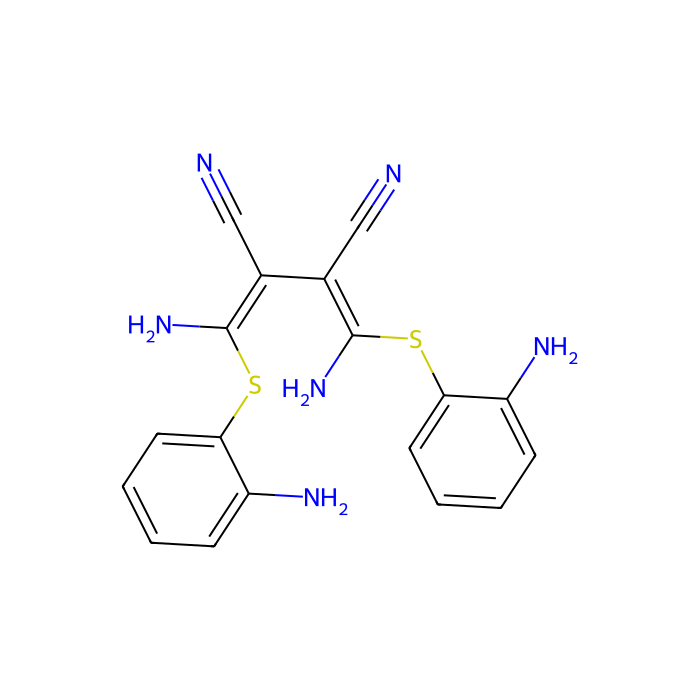
U0126 - Moligand™, ≥98% , CAS No.109511-58-2

CAS: 109511-58-2 Cat. No.: U274745 Formula: C18H16N6S2 Molecular Weight: 380.49 PubChem CID: 3006531
AVAILABLE TO ORDER
GRADE & PURITY Moligand™ ? Moligand™ — Aladdin's line of ligands and bioactive small molecules. Use for receptor, pathway, and binding studies needing defined small-molecule tools. ≥98%
Synonyms
1,4-Diamino-2,3-dicyano-1,4-bis(2-aminophenylthio)butadiene | bis[Amino[(2-aminophenyl)thio]methylene]-butanedinitrile (9CI) | bis[Amino(o-aminophenylthio)methylene]-succinonitrile (6CI) | 2,3-Bis[amino[(2-aminophenyl)thio]methylene]butanedinitrile | U015
Storage
Store at -20°C,Argon charged,Desiccated
Shipped In
Ice chest + Ice pads
★
Size
USA
Germany (EU)*
Price
Qty
1mg
U274745-1mg
3 In stock
—
$61.90
5mg
U274745-5mg
3 In stock
—
$246.90
10mg
U274745-10mg
1 In stock
—
$326.90
25mg
U274745-25mg
2 In stock
—
$782.90
Enter a quantity for the sizes you want to add.
🧪
Why this grade

Moligand™, ≥98% Moligand™ for sensitive chromatographic and analytical workflows requiring minimal baseline interference.

🌡

Storage & shipping

Store at -20°C,Argon charged,Desiccated Ships Ice chest + Ice pads Check lot-specific COA for exact specifications.

📋

Quality documents

SDS, COA, datasheet, and spec sheet available for download. Lot-specific COA accessible via lot number lookup.

📚

Literature proof

Cited in 6 peer-reviewed publications across chromatography, organic synthesis, and cross-coupling reactions.

Overview

Store at +4°C. Store under desiccating conditions. The product can be stored for up to 12 months.

Specifications

Synonyms
1,4-Diamino-2,3-dicyano-1,4-bis(2-aminophenylthio)butadiene | bis[Amino[(2-aminophenyl)thio]methylene]-butanedinitrile (9CI) | bis[Amino(o-aminophenylthio)methylene]-succinonitrile (6CI) | 2,3-Bis[amino[(2-aminophenyl)thio]methylene]butanedinitrile | U015
Specifications & Purity
Moligand™, ≥98%
Biochemical and Physiological Mechanisms
Selective non-competitive inhibitor of MAP kinase kinase (MKK). Inhibits MKK1, MKK2 (IC 50 values of 0.07 and 0.06 μM, respectively) and MKK5 with little or no effect on a wide range of other kinases. Centrally active following systemic administration in
Storage
Store at -20°C,Argon charged,Desiccated
Shipped In
Ice chest + Ice pads
This product requires cold chain shipping. Ground and other economy services are not available.
Grade
Moligand™
Note
Wherever possible, you should prepare and use solutions on the same day. However, if you need to make up stock solutions in advance, we recommend that you store the solution as aliquots in tightly sealed vials at -20°C. Generally, these will be useable for up to one month. Before use, and prior to opening the vial we recommend that you allow your product to equilibrate to room temperature for at least 1 hour. Need more advice on solubility, usage and handling? Please visit our frequently asked questions (FAQ) page for more details.
Purity
≥98%
Names and Identifiers
Pubchem Sid
Pubchem Sid Url
https://pubchem.ncbi.nlm.nih.gov/substance/504762284
Canonical Smiles
C1=CC=C(C(=C1)N)SC(=C(C#N)C(=C(N)SC2=CC=CC=C2N)C#N)N
IUPAC Name
(2Z,3Z)-2,3-bis[amino-(2-aminophenyl)sulfanylmethylidene]butanedinitrile
InChIKey
DVEXZJFMOKTQEZ-JYFOCSDGSA-N
INCHI
1S/C18H16N6S2/c19-9-11(17(23)25-15-7-3-1-5-13(15)21)12(10-20)18(24)26-16-8-4-2-6-14(16)22/h1-8H,21-24H2/b17-11+,18-12+
Isomeric SMILES
C1=CC=C(C(=C1)N)S/C(=C(/C(=C(/SC2=CC=CC=C2N)\N)/C#N)\C#N)/N
PubChem CID
3006531
Molecular Weight
380.49

Documentation

📋 Safety Data Sheet (SDS)

Comprehensive hazard, handling, storage, and regulatory compliance document.

<<<<<<< HEAD Download SDS → ======= Download SDS → >>>>>>> release248-p3

✅ Certificate of Analysis (COA)

Lot-specific quality data. Enter your lot number to retrieve the exact COA.

Look up COA →

📊 Datasheet

Quick-reference summary of product specifications and applications.

View datasheet →

🔬 Specification Sheet

Full quality attributes and acceptance criteria for this grade.

View spec sheet →

Advanced Data

Taxonomic Classification

Taxonomy Tree

KingdomOrganic compounds
SuperclassOrganosulfur compounds
ClassThioethers
SubclassAryl thioethers
Intermediate Tree Nodes Not available
Direct ParentAryl thioethers
Alternative Parents Aniline and substituted anilines  Ketene acetals  Sulfenyl compounds  Nitriles  Organopnictogen compounds  Monoalkylamines  Hydrocarbon derivatives  
Molecular FrameworkAromatic homomonocyclic compounds
Substituents Aryl thioether - Aniline or substituted anilines - Monocyclic benzene moiety - Benzenoid - Ketene acetal or derivatives - Carbonitrile - Sulfenyl compound - Nitrile - Amine - Organonitrogen compound - Primary amine - Hydrocarbon derivative - Primary aliphatic amine - Organopnictogen compound - Organic nitrogen compound - Aromatic homomonocyclic compound
DescriptionThis compound belongs to the class of organic compounds known as aryl thioethers. These are organosulfur compounds containing a thioether group that is substituted by an aryl group.
External Descriptors substituted aniline - enamine - dinitrile
3D Structure
Interactive Chemical Structure Model


Associated Targets(Human)
VDR Tclin Vitamin D receptor (26531 Activities)
Activity TypeRelationActivity valueUnitsAction TypeJournalPubMed IddoiAssay Aladdin ID
MAPK11 Tchem MAP kinase p38 beta (2785 Activities)
Activity TypeRelationActivity valueUnitsAction TypeJournalPubMed IddoiAssay Aladdin ID
LCK Tclin Tyrosine-protein kinase LCK (9212 Activities)
Activity TypeRelationActivity valueUnitsAction TypeJournalPubMed IddoiAssay Aladdin ID
MAPK14 Tchem MAP kinase p38 alpha (12866 Activities)
Activity TypeRelationActivity valueUnitsAction TypeJournalPubMed IddoiAssay Aladdin ID
GSK3B Tclin Glycogen synthase kinase-3 beta (11785 Activities)
Activity TypeRelationActivity valueUnitsAction TypeJournalPubMed IddoiAssay Aladdin ID
PRKCZ Tchem Protein kinase C zeta (2414 Activities)
Activity TypeRelationActivity valueUnitsAction TypeJournalPubMed IddoiAssay Aladdin ID
MAP2K6 Tchem Dual specificity mitogen-activated protein kinase kinase 6 (1284 Activities)
Activity TypeRelationActivity valueUnitsAction TypeJournalPubMed IddoiAssay Aladdin ID
MYLK Tchem Myosin light chain kinase, smooth muscle (1267 Activities)
Activity TypeRelationActivity valueUnitsAction TypeJournalPubMed IddoiAssay Aladdin ID
STK3 Tchem Serine/threonine-protein kinase MST2 (3069 Activities)
Activity TypeRelationActivity valueUnitsAction TypeJournalPubMed IddoiAssay Aladdin ID
CSNK1D Tchem Casein kinase I delta (4546 Activities)
Activity TypeRelationActivity valueUnitsAction TypeJournalPubMed IddoiAssay Aladdin ID
MAP2K5 Tchem Dual specificity mitogen-activated protein kinase kinase 5 (650 Activities)
Activity TypeRelationActivity valueUnitsAction TypeJournalPubMed IddoiAssay Aladdin ID
SRC Tclin Tyrosine-protein kinase SRC (10310 Activities)
Activity TypeRelationActivity valueUnitsAction TypeJournalPubMed IddoiAssay Aladdin ID
MAP2K3 Tchem Dual specificity mitogen-activated protein kinase kinase 3 (632 Activities)
Activity TypeRelationActivity valueUnitsAction TypeJournalPubMed IddoiAssay Aladdin ID
CHEK2 Tchem Serine/threonine-protein kinase Chk2 (4015 Activities)
Activity TypeRelationActivity valueUnitsAction TypeJournalPubMed IddoiAssay Aladdin ID
PDPK1 Tchem 3-phosphoinositide dependent protein kinase-1 (3758 Activities)
Activity TypeRelationActivity valueUnitsAction TypeJournalPubMed IddoiAssay Aladdin ID
AKT2 Tchem Serine/threonine-protein kinase AKT2 (4301 Activities)
Activity TypeRelationActivity valueUnitsAction TypeJournalPubMed IddoiAssay Aladdin ID
IKBKB Tchem Inhibitor of nuclear factor kappa B kinase beta subunit (5554 Activities)
Activity TypeRelationActivity valueUnitsAction TypeJournalPubMed IddoiAssay Aladdin ID
AURKB Tchem Serine/threonine-protein kinase Aurora-B (6805 Activities)
Activity TypeRelationActivity valueUnitsAction TypeJournalPubMed IddoiAssay Aladdin ID
PIM1 Tchem Serine/threonine-protein kinase PIM1 (9629 Activities)
Activity TypeRelationActivity valueUnitsAction TypeJournalPubMed IddoiAssay Aladdin ID
PKN2 Tchem Protein kinase N2 (1991 Activities)
Activity TypeRelationActivity valueUnitsAction TypeJournalPubMed IddoiAssay Aladdin ID
CSK Tchem Tyrosine-protein kinase CSK (2395 Activities)
Activity TypeRelationActivity valueUnitsAction TypeJournalPubMed IddoiAssay Aladdin ID
RPS6KA5 Tchem Ribosomal protein S6 kinase alpha 5 (3355 Activities)
Activity TypeRelationActivity valueUnitsAction TypeJournalPubMed IddoiAssay Aladdin ID
PRKD1 Tchem Protein kinase C mu (1904 Activities)
Activity TypeRelationActivity valueUnitsAction TypeJournalPubMed IddoiAssay Aladdin ID
PLK1 Tchem Serine/threonine-protein kinase PLK1 (28605 Activities)
Activity TypeRelationActivity valueUnitsAction TypeJournalPubMed IddoiAssay Aladdin ID
CTRB1 Tchem Beta-chymotrypsin (261 Activities)
Activity TypeRelationActivity valueUnitsAction TypeJournalPubMed IddoiAssay Aladdin ID
RPS6KA1 Tchem Ribosomal protein S6 kinase alpha 1 (2796 Activities)
Activity TypeRelationActivity valueUnitsAction TypeJournalPubMed IddoiAssay Aladdin ID
CAMK1 Tchem CaM kinase I alpha (1664 Activities)
Activity TypeRelationActivity valueUnitsAction TypeJournalPubMed IddoiAssay Aladdin ID
MAP2K2 Tclin Dual specificity mitogen-activated protein kinase kinase 2 (1262 Activities)
Activity TypeRelationActivity valueUnitsAction TypeJournalPubMed IddoiAssay Aladdin ID
MAP2K4 Tchem Dual specificity mitogen-activated protein kinase kinase 4 (1051 Activities)
Activity TypeRelationActivity valueUnitsAction TypeJournalPubMed IddoiAssay Aladdin ID
MAPK13 Tchem MAP kinase p38 delta (2605 Activities)
Activity TypeRelationActivity valueUnitsAction TypeJournalPubMed IddoiAssay Aladdin ID
MAPKAPK2 Tchem MAP kinase-activated protein kinase 2 (4814 Activities)
Activity TypeRelationActivity valueUnitsAction TypeJournalPubMed IddoiAssay Aladdin ID
MAPKAPK5 Tchem MAP kinase-activated protein kinase 5 (2831 Activities)
Activity TypeRelationActivity valueUnitsAction TypeJournalPubMed IddoiAssay Aladdin ID
ALDH1A1 Tchem Aldehyde dehydrogenase 1A1 (77053 Activities)
Activity TypeRelationActivity valueUnitsAction TypeJournalPubMed IddoiAssay Aladdin ID
ROCK2 Tclin Rho-associated protein kinase 2 (6206 Activities)
Activity TypeRelationActivity valueUnitsAction TypeJournalPubMed IddoiAssay Aladdin ID
MAPK9 Tchem c-Jun N-terminal kinase 2 (4655 Activities)
Activity TypeRelationActivity valueUnitsAction TypeJournalPubMed IddoiAssay Aladdin ID
MAPK10 Tchem c-Jun N-terminal kinase 3 (3396 Activities)
Activity TypeRelationActivity valueUnitsAction TypeJournalPubMed IddoiAssay Aladdin ID
MAP2K1 Tclin Dual specificity mitogen-activated protein kinase kinase 1 (4127 Activities)
Activity TypeRelationActivity valueUnitsAction TypeJournalPubMed IddoiAssay Aladdin ID
PRKCA Tchem Protein kinase C alpha (5923 Activities)
Activity TypeRelationActivity valueUnitsAction TypeJournalPubMed IddoiAssay Aladdin ID
MAPK3 Tchem MAP kinase ERK1 (4725 Activities)
Activity TypeRelationActivity valueUnitsAction TypeJournalPubMed IddoiAssay Aladdin ID
PRKACA Tchem cAMP-dependent protein kinase alpha-catalytic subunit (3475 Activities)
Activity TypeRelationActivity valueUnitsAction TypeJournalPubMed IddoiAssay Aladdin ID
DYRK1A Tchem Dual-specificity tyrosine-phosphorylation regulated kinase 1A (6484 Activities)
Activity TypeRelationActivity valueUnitsAction TypeJournalPubMed IddoiAssay Aladdin ID
MAPK8 Tchem c-Jun N-terminal kinase 1 (5038 Activities)
Activity TypeRelationActivity valueUnitsAction TypeJournalPubMed IddoiAssay Aladdin ID
AKT1 Tchem Serine/threonine-protein kinase AKT (9192 Activities)
Activity TypeRelationActivity valueUnitsAction TypeJournalPubMed IddoiAssay Aladdin ID
PDK1 Tchem Pyruvate dehydrogenase kinase isoform 1 (2021 Activities)
Activity TypeRelationActivity valueUnitsAction TypeJournalPubMed IddoiAssay Aladdin ID
SGK1 Tchem Serine/threonine-protein kinase Sgk1 (2343 Activities)
Activity TypeRelationActivity valueUnitsAction TypeJournalPubMed IddoiAssay Aladdin ID
RPS6KA3 Tchem Ribosomal protein S6 kinase alpha 3 (4284 Activities)
Activity TypeRelationActivity valueUnitsAction TypeJournalPubMed IddoiAssay Aladdin ID
MAP2K7 Tchem Dual specificity mitogen-activated protein kinase kinase 7 (1145 Activities)
Activity TypeRelationActivity valueUnitsAction TypeJournalPubMed IddoiAssay Aladdin ID
RPS6KB1 Tchem Ribosomal protein S6 kinase 1 (4456 Activities)
Activity TypeRelationActivity valueUnitsAction TypeJournalPubMed IddoiAssay Aladdin ID
CHEK1 Tchem Serine/threonine-protein kinase Chk1 (6846 Activities)
Activity TypeRelationActivity valueUnitsAction TypeJournalPubMed IddoiAssay Aladdin ID
MAPK12 Tchem MAP kinase p38 gamma (2776 Activities)
Activity TypeRelationActivity valueUnitsAction TypeJournalPubMed IddoiAssay Aladdin ID
Associated Targets(non-human)
ampC Beta-lactamase AmpC (62480 Activities)
Activity TypeRelationActivity valueUnitsAction TypeJournalPubMed IddoiAssay Aladdin ID
Mapk1 MAP kinase ERK2 (650 Activities)
Activity TypeRelationActivity valueUnitsAction TypeJournalPubMed IddoiAssay Aladdin ID
Hdac6 Histone deacetylase 6 (222 Activities)
Activity TypeRelationActivity valueUnitsAction TypeJournalPubMed IddoiAssay Aladdin ID
Streptomyces (126 Activities)
Activity TypeRelationActivity valueUnitsAction TypeJournalPubMed IddoiAssay Aladdin ID
Plasmodium falciparum (966862 Activities)
Activity TypeRelationActivity valueUnitsAction TypeJournalPubMed IddoiAssay Aladdin ID
Caenorhabditis elegans (1055 Activities)
Activity TypeRelationActivity valueUnitsAction TypeJournalPubMed IddoiAssay Aladdin ID
Influenza A virus (11224 Activities)
Activity TypeRelationActivity valueUnitsAction TypeJournalPubMed IddoiAssay Aladdin ID
Dengue virus (413 Activities)
Activity TypeRelationActivity valueUnitsAction TypeJournalPubMed IddoiAssay Aladdin ID
COS-7 (515 Activities)
Activity TypeRelationActivity valueUnitsAction TypeJournalPubMed IddoiAssay Aladdin ID
MDCK (10148 Activities)
Activity TypeRelationActivity valueUnitsAction TypeJournalPubMed IddoiAssay Aladdin ID
mdh Malate dehydrogenase (29 Activities)
Activity TypeRelationActivity valueUnitsAction TypeJournalPubMed IddoiAssay Aladdin ID
GCN5 Histone acetyltransferase GCN5 (89 Activities)
Activity TypeRelationActivity valueUnitsAction TypeJournalPubMed IddoiAssay Aladdin ID
Mapt Microtubule-associated protein tau (6 Activities)
Activity TypeRelationActivity valueUnitsAction TypeJournalPubMed IddoiAssay Aladdin ID
Nfe2l2 Nuclear factor erythroid 2-related factor 2 (214 Activities)
Activity TypeRelationActivity valueUnitsAction TypeJournalPubMed IddoiAssay Aladdin ID
Impa1 Inositol monophosphatase 1 (16203 Activities)
Activity TypeRelationActivity valueUnitsAction TypeJournalPubMed IddoiAssay Aladdin ID
ffp 4'-phosphopantetheinyl transferase ffp (24982 Activities)
Activity TypeRelationActivity valueUnitsAction TypeJournalPubMed IddoiAssay Aladdin ID
FTL Ferritin light chain (43324 Activities)
Activity TypeRelationActivity valueUnitsAction TypeJournalPubMed IddoiAssay Aladdin ID
Mapk1 Mitogen-activated protein kinase 1 and 3 (ERK2 and ERK1) (70 Activities)
Activity TypeRelationActivity valueUnitsAction TypeJournalPubMed IddoiAssay Aladdin ID
Middle East respiratory syndrome-related coronavirus (220 Activities)
Activity TypeRelationActivity valueUnitsAction TypeJournalPubMed IddoiAssay Aladdin ID
Junin virus (193 Activities)
Activity TypeRelationActivity valueUnitsAction TypeJournalPubMed IddoiAssay Aladdin ID
Mechanisms of Action
Certificates (CoA,COO,BSE/TSE and Analysis Chart)
C of A & Other Certificates(BSE/TSE, COO):
Analytical Chart:

Find and download the COA for your product by matching the lot number on the packaging.

10 results found

Lot NumberCertificate TypeDateItem
E2618113E2618113Certificate of AnalysisMay 27, 2026 U274745
J2429531J2429531Certificate of AnalysisMay 06, 2026 U274745
J2429532J2429532Certificate of AnalysisMay 06, 2026 U274745
J2429533J2429533Certificate of AnalysisMay 06, 2026 U274745
J2429534J2429534Certificate of AnalysisMay 06, 2026 U274745
H2430063H2430063Certificate of AnalysisJun 09, 2025 U274745
I2220672I2220672Certificate of AnalysisJul 12, 2023 U274745
I2220679I2220679Certificate of AnalysisJul 12, 2023 U274745
I2220680I2220680Certificate of AnalysisJul 12, 2023 U274745
I2220681I2220681Certificate of AnalysisJul 12, 2023 U274745
Chemical and Physical Properties
SolubilitySoluble in DMSO to 100 mM
Molecular Weight380.500 g/mol
XLogP32.000
Hydrogen Bond Donor Count4
Hydrogen Bond Acceptor Count8
Rotatable Bond Count5
Exact Mass380.088 Da
Monoisotopic Mass380.088 Da
Topological Polar Surface Area202.000 Ų
Heavy Atom Count26
Formal Charge0
Complexity610.000
Isotope Atom Count0
Defined Atom Stereocenter Count0
Undefined Atom Stereocenter Count0
Defined Bond Stereocenter Count2
Undefined Bond Stereocenter Count0
The total count of all stereochemical bonds2
Covalently-Bonded Unit Count1
Documents & Articles
Small-Molecule Inhibitors: A Practical Guide for Research Selection — A Minimal Evidence Chain and Scenario-Based Validation Framework (Including a Selection Matrix, Case Cards, and Product Tables 1–4)
FGF2-Induced Angiogenesis Model: Standard Operating Procedure (Protocol)
Adrenomedullin (ADM): Molecular Features, Signaling Mechanisms, and Research and Translational Applications of a Multisystem Vasoactive Peptide
Roles and Mechanisms of Proteases in Respiratory and Vascular Diseases
Molecular Network of the Kinin System in Pain and Neural Regulation
The uPA/uPAR System in Cell Migration and Microenvironment Remodeling
Inflammatory Signaling Pathway Research Guide: Danger Signal Recognition, Core Signaling Modules, Detection Readouts, and Representative Research Reagents
Neuronal Signal Transduction Mechanisms and Disease Research
MAPK/ERK Signaling Pathway: RAS–RAF–MEK–ERK Cascade Regulation, Cellular Functional Outputs, and Research Tool Applications
Role of the CD2-CD58 Signaling Axis in Immune Synapse Formation, Immune Regulation, and Targeted Therapy
Gentiana Root Extract and Gentiopicroside: Chemical Composition, Antioxidant and Inflammation-Modulating Mechanisms, and Their Potential Effects on Skin Barrier Homeostasis
How Palmitoyl Pentapeptide-4 Acts on the Skin: From the KTTKS Sequence and Skin Delivery to Collagen Matrix Responses
Potential Mechanisms of p-Cymene in Problem-Prone Skin: Membrane Perturbation, Inflammatory Signaling Modulation, and Localized Delivery
Mechanisms of Retinol Action in the Skin: From Metabolic Activation and RAR/RXR-Mediated Transcriptional Regulation to Epidermal Renewal and Collagen Homeostasis
Mechanisms by Which PDRN Participates in Skin Repair: A2A Receptor-Related Signaling, Nucleotide Salvage, and Extracellular Matrix Remodeling
p38 MAPK Signaling Pathway: Activation Mechanisms, MK2 Functional Output, and Experimental Interpretation
Citations of This Product
Solution Calculators
Reviews

Customer Reviews

Application Protocols

No tested applications or assay protocols are specified in the product data for SKU U274745. The following are general, literature-informed preparation practices and are not product specifications.

General solution preparation

  • Stock: Dissolve in anhydrous DMSO to 10–50 mM. Vortex and, if needed, gently warm (≤37°C) to aid dissolution.
  • Aliquoting: Dispense single-use aliquots to avoid repeated freeze–thaw. Flush headspace with inert gas if possible.
  • Working solutions: Dilute into prewarmed media or buffer with rapid mixing. Maintain final DMSO within assay tolerance (often ≤0.1–0.5% v/v for cell culture; verify locally).

Controls and validation

  • Include a vehicle control (matching DMSO %).
  • Confirm concentration by UV or LC where critical.
  • Assess short-term stability of working solutions over the assay timeframe.

Note: For specific cell models, exposure times, or readouts, consult primary literature and optimize empirically.

Biological Roles

Item-specific bioactivity details are not provided in the product data for SKU U274745. The following notes summarize how compounds of this class are commonly used in research, based on literature, and are not product specifications.

General/literature context

  • U0126 is widely cited in the research literature as a pathway-probing small molecule used to study intracellular signaling cascades. It is often employed as a reference tool compound in cell culture and biochemical experiments to interrogate upstream–downstream relationships.
  • Typical usage patterns include transient exposure of cells or lysates to defined micromolar concentrations prepared from DMSO stocks, with appropriate vehicle controls.
  • Researchers frequently examine effects on phosphorylation states and transcriptional readouts downstream of targeted signaling modules using Western blotting, ELISA, or reporter assays.

Experimental considerations (general)

  • Validate identity/purity of each lot and confirm expected activity in your system with positive controls.
  • Carefully manage solvent percentages and exposure times to minimize off-target solvent effects.
  • Include orthogonal controls (e.g., a structurally distinct reference compound) to strengthen mechanistic conclusions.

No claims are made regarding clinical utility, therapeutic effects, or diagnostic performance. For product-specific potency, selectivity, and target annotations, consult primary literature and verify under your experimental conditions.

Buffer Applications

This item is a hydrophobic small-molecule research ligand and is not used as a classical buffering agent.

Practical notes

  • Stock solutions are typically prepared in anhydrous DMSO, then diluted into physiological buffers (e.g., PBS, HBSS, culture media) immediately before use.
  • To avoid precipitation, add the DMSO stock last with rapid mixing, and keep final DMSO within the tolerance of your biological system (often ≤0.1–0.5% v/v in cell culture; literature guidance).
  • If higher apparent aqueous solubility is required, consider co-solvents (ethanol), surfactants (e.g., 0.01–0.1% nonionic detergent), or cyclodextrin carriers, verifying compatibility with the assay.

No pKa or buffer capacity data are applicable for making buffered solutions with this compound.

Green Alternatives

Sustainability considerations for handling and using small-molecule research ligands like U0126 focus on solvent choice, scale minimization, and waste management rather than replacing the active itself.

Greener practice options (general guidance)

  • Prefer aqueous-compatible workflows where feasible by minimizing DMSO carryover (e.g., final DMSO ≤0.1% v/v) and using miniaturized assay formats (384–1536 well) to cut solvent use.
  • Choose less hazardous solvents for cleaning and analytics when performance allows (e.g., ethanol over chlorinated solvents; ACN/water over DMF for LC methods).
  • Implement solvent recycling for ACN/MeOH in analytical labs.
  • Use right-first-time design of experiments (DoE) to reduce repeats and waste.

Comparison of common vehicles (general)

  • DMSO: Excellent solubilizer; low volatility reduces VOC emissions but complicates waste treatment. Use sparingly and segregate waste.
  • Ethanol: Renewable sources available; higher volatility but lower toxicity profile; may have solubility limits.
  • PEG-400 or cyclodextrins: Can enhance aqueous delivery for some ligands, potentially reducing DMSO usage; verify compatibility with your assay.

Note: There is no direct “green substitute” for the active ligand function of U0126 in pathway studies. Focus sustainability efforts on solvent selection, microscale execution, and proper waste segregation.

Pharmaceutical Uses

No pharmaceutical or clinical use is claimed or implied for this product. It is supplied strictly for research use only.

Research/formulation context (general)

  • Role in R&D: U0126 is often used as a reference tool compound in discovery biology and is sometimes formulated into DMSO-based dosing solutions or into simple vehicles for in vivo research in the literature. Any such uses must comply with institutional approvals and regulations.
  • Excipient status: Not an approved excipient; no pharmacopeial monograph is indicated for this compound.
  • Manufacturing: Not intended for GMP manufacturing or clinical supply.

Always consult institutional guidelines for handling investigational research chemicals. Do not use in humans or for diagnostic procedures.

Physical Properties

Item-specific measured properties are not provided in the listing for SKU U274745.

Item-specific facts (from Product Data)

  • Appearance: Not specified for this item; refer to CoA/Spec Sheet.
  • Molecular weight: Not specified for this item; refer to CoA/Spec Sheet.

General/literature guidance (not item specifications; verify against CoA)

  • Physical state: U0126 is commonly encountered as an off-white to tan solid in research supply. Actual appearance can vary by lot; rely on CoA.
  • Solubility (literature): Typically soluble in DMSO; limited aqueous solubility is commonly reported. Ethanol or methanol can dissolve at lower concentrations; aqueous buffers usually require cosolvent or surfactant.
  • Stock solutions (literature practice): Frequently prepared at 10–50 mM in anhydrous DMSO, then diluted into media immediately before use to minimize precipitation.
  • Partitioning: As an aromatic small molecule, moderate hydrophobicity is commonly noted; precise logP/logD must be taken from validated references for the exact structure.

Do not use the above as specifications. For validated parameters such as melting point, water content, residual solvents, or spectral identity, consult the CoA/Spec Sheet for the exact lot supplied.

Quality & Grades

Item-specific facts (from Product Data)

  • Grade/Purity: Moligand™

About Moligand™ (general explanation)

  • Moligand™ denotes a research screening/ligand quality suitable for biochemical and cell-based studies where identity and performance as a reference compound are the priorities. Compared with commodity grades, Moligand™ items are typically handled with additional care in packaging, inert atmosphere, and moisture control to preserve integrity.

What this means in practice

  • Identity control: Expect structure-confirmation by spectroscopic methods (e.g., NMR, MS, HPLC) appropriate for a research ligand. The exact methods and acceptance criteria are stated on the CoA/Spec Sheet for the lot.
  • Performance: While not an analytical-reagent or pharmaceutical GMP grade, Moligand™ quality targets consistent behavior in screening applications and assays when properly stored and handled.
  • Stabilization/packaging: For this item, the listing specifies argon-charged and desiccated storage, indicating sensitivity to moisture/oxygen and/or slow hydrolysis/oxidation pathways. Maintain these conditions to retain potency and purity.

Not provided in listing

  • Exact purity assay, residual solvent limits, water content, metals, UV cutoff: Not specified for this item; refer to CoA/Spec Sheet.

Recommendation

  • Record lot number in all experiments and attach CoA to data packages to ensure reproducibility across screening campaigns.
Reaction & Applications

This product is supplied as a research small-molecule ligand and is not primarily intended as a general-purpose synthetic reagent.

Applicable uses (research context; literature)

  • Reference compound: Frequently used as a positive control or pathway probe in biochemical and cell-based experiments. Stocks are commonly prepared in anhydrous DMSO and added to assays at defined concentrations.
  • Analytical control: May serve as a system suitability or retention-time standard in LC/LC–MS methods for pathway inhibitor panels or library QC.

Not typically applicable

  • It is not commonly used to drive or mediate classical synthetic organic transformations (e.g., catalysis, coupling, or stoichiometric reagents). For synthetic chemistry workflows, consider dedicated reagents covered under those application areas.

Practical tips

  • Maintain inert, dry handling to limit degradation.
  • Track freeze–thaw cycles of DMSO stocks; aliquot to single-use vials to preserve consistency.
  • Verify concentration by absorbance or LC quant when rigorous dosing is required.

Note: Any biological application must be designed and interpreted under institutional approvals. Consult primary literature for specific assay designs; item-specific application data are not provided in this listing.

Reaction Conditions

Classical reaction-condition guidance (e.g., catalysts, temperatures, yields) does not apply because U0126 is not used as a reagent to drive synthetic transformations.

Practical handling conditions (applicable to solution preparation; general literature guidance)

  • Dissolution: Prepare concentrated stocks in anhydrous DMSO (e.g., 10–50 mM). Gentle warming (≤37°C) and vortexing/sonication can assist dissolution. Avoid prolonged heating.
  • Dilution: Add the DMSO stock to aqueous buffers or media as the final component with vigorous mixing to avoid local supersaturation and precipitation.
  • Light/moisture: Protect from light and humidity; maintain under inert gas during storage and minimize air exposure during weighing.
  • Filtration: If sterility is required, 0.22 μm PTFE or PES filtration of the final working solution is typical.

For any procedure-specific conditions (e.g., assay times, dosing schedules), consult peer-reviewed literature and validate under your experimental setup. Item-specific protocol data are not provided in this listing.

Safety & Handling

Item-specific hazard data were not provided in the listing. Handle under institutional chemical hygiene plans and consult the SDS prior to use.

Item-specific facts (from Product Data)

  • Storage: Store at −20°C, argon charged, desiccated.
  • Shipping: Ice chest + ice pads.
  • GHS classification, pictograms, signal word, and H-statements: Not specified for this item; refer to SDS.

General safety guidance (not a substitute for SDS)

  • PPE: Use lab coat, safety glasses, and appropriate chemically resistant gloves; avoid inhalation and skin contact. Work in a fume hood when weighing/opening.
  • Dust/solid handling: Minimize dust generation; use antistatic and local exhaust. Close containers promptly to limit moisture uptake and oxidative degradation.
  • Incompatibilities: Avoid strong oxidizers and strong acids/bases unless compatibility is known. Protect from light and humidity as a precaution for aromatic research ligands.
  • First aid (general): If inhaled—move to fresh air; if on skin—wash with soap and water; if in eyes—rinse cautiously with water for several minutes; if ingested—rinse mouth and seek medical attention. Provide SDS to medical personnel.
  • Waste: Collect in appropriately labeled organic waste per institutional and local regulations.

Always defer to the product-specific SDS for authoritative hazard, toxicological, and disposal information.

Solvent Selection

Guidance for dissolving and delivering U0126 in research workflows.

Item-specific facts (from Product Data)

  • No solvent recommendations are specified for this item.

General/literature guidance (not item specifications)

  • Primary solvent: DMSO is the most commonly reported solvent for U0126 stock solutions due to its strong solubilizing power for aromatic small molecules and excellent miscibility with aqueous buffers at low percentages.
  • Alternative organic solvents: Ethanol or methanol may dissolve U0126 at modest concentrations; DMF or acetonitrile can be considered for certain analytical preparations. Verify compatibility with downstream biology or analytics.
  • Aqueous vehicles: Direct dissolution in water or PBS is typically poor; instead, prepare a DMSO stock and dilute into buffer immediately before use, keeping final DMSO ≤0.1–0.5% v/v when required by sensitive systems.
  • Filtration: If sterile solutions are needed, dissolve fully in solvent, then 0.22 μm filter. Avoid filters that shed extractables in strong solvents.

Small comparison (general)

  • DMSO: maximal solubility, biologically tolerated at low %; may affect membrane properties at higher %.
  • Ethanol: acceptable in some assays up to 0.5–1% v/v; volatility and precipitation upon dilution can be limiting.
  • DMF/ACN: useful for analytical injections; limited use in live-cell assays due to cytotoxicity.

Always confirm solution stability and concentration by UV/LC where applicable.

Storage & Reconstitution

Item-specific facts (from Product Data)

  • Storage conditions: Store at −20°C, argon charged, desiccated.
  • Shipping: Ice chest + ice pads.
  • Research Use Note: For research use only.

Recommended handling (general best practices)

  • Upon receipt: Allow the sealed container to equilibrate to room temperature in a desiccator before opening to avoid condensation.
  • Inert atmosphere: Maintain argon or nitrogen headspace after each use. Reseal promptly; if available, use glovebox or dry box for weighing.
  • Light/moisture protection: Store in amber, tightly sealed vials with desiccant. Keep away from light and humidity.

Reconstitution (general)

  • Solvent: Use anhydrous DMSO for primary stocks unless your protocol specifies otherwise.
  • Concentration: Common laboratory stocks are 10–50 mM (literature). Adjust based on your solubility and assay needs.
  • Aliquots: Prepare single-use aliquots and freeze at −20°C to minimize freeze–thaw. Record preparation date and concentration on each vial.

Stability notes

  • Avoid repeated thawing; thaw quickly, use immediately, and refreeze unused aliquots once if necessary.
  • Inspect for discoloration or precipitation; if observed, prepare a fresh solution and check potency with a control assay.

For definitive shelf-life and retest intervals, consult the product’s CoA/Spec Sheet for your lot.

Structure & Identity

Overview: This product is U0126 (SKU U274745), commonly supplied as a research biochemical. Item-specific structural identifiers beyond the CAS are not provided in the product data.

Item-specific facts (from Product Data)

  • Product name: U0126
  • CAS: 109511-58-2
  • Grade/Purity: Moligand™
  • SMILES: Not specified for this item; refer to CoA/Spec Sheet.
  • InChIKey: 73724 (truncated/not definitive in listing); for definitive identifier refer to CoA/Spec Sheet.
  • Molecular formula: Not specified for this item; refer to CoA/Spec Sheet.
  • Molecular weight: Not specified for this item; refer to CoA/Spec Sheet.

General/literature notes (for contextual understanding; not item specifications)

  • U0126 is widely referenced in the literature as a small-molecule research tool compound used in cell signaling studies. Structural depictions typically show a multi-ring, heteroatom-containing scaffold consistent with an aromatic small molecule research ligand.
  • Typical 2D description (literature): polyaromatic small molecule containing heteroatoms and amide/ether/aryl motifs depending on supplier/representation; exact atom connectivity must be verified against the specific lot documentation (CoA/SDS).

Important: For exact structural identifiers (canonical SMILES, InChI, formula, exact mass), always consult the Certificate of Analysis (CoA) or the Safety Data Sheet (SDS) specific to your vial/lot.

Synthetic Utility

This product is a finished small-molecule research ligand rather than a synthetic building block, and it is not typically used to perform or facilitate chemical transformations.

Notes for synthetic chemists

  • As an aromatic, heteroatom-containing compound, U0126 may be sensitive to strong acids/bases, oxidants, and prolonged heating. Avoid conditions that could cleave sensitive linkages or promote oxidation.
  • If derivatization is desired for probe development (e.g., tagging, photoaffinity), consult primary literature for established synthetic routes to structural analogs rather than modifying the supplied material, which may contain stabilizers or be sensitive to moisture/oxygen.

Recommendation

  • Source appropriate intermediates or starting materials for synthetic campaigns. Use this product primarily as a reference standard or biological tool compound where purity, identity, and stability are maintained.
Target Specificity

Item-specific target annotations, selectivity profiles, potency (IC50/Ki), and off-target data are not provided in the product data for SKU U274745.

Per instructions, this section reports only product-data content. Please refer to the product’s CoA/Spec Sheet and SDS, and consult peer-reviewed literature for detailed target specificity information appropriate to your application.

Research Use Only: Not for use in humans or for diagnostic procedures.

Frequently Asked Questions

What is the purity of this product?
This product is supplied at ≥98% purity (chemical assay). Lot-specific values are stated on the Certificate of Analysis.
What is Moligand??
Moligand? is one of Aladdin Scientific's premium product lines, formulated for high-purity applications across multiple workflows. Compared to standard grades in the same workflow, Moligand? products typically offer tighter specifications, more rigorous QC, and stronger lot-to-lot consistency.
How should this product be stored?
Store at ?20 °C, desiccated, under argon. It is supplied under an argon blanket; reseal under inert gas after each use.
How is this product shipped?
This product ships in an insulated container with ice pads. Unpack on arrival and transfer it to the storage condition stated above.
What are the CAS number, molecular formula and molecular weight?
The CAS Number is 109511-58-2, the molecular formula is C18H16N6S2, and the molecular weight is 380.49 g/mol. InChIKey DVEXZJFMOKTQEZ-JYFOCSDGSA-N.
What documentation is provided?
Available product documentation, including Certificates of Analysis (COA), Safety Data Sheets (SDS), and specification sheets, is shown in the product document area. Document availability and access follow the current site policy.

Shall we send you a message when we have discounts available?

Remind me later

Thank you! Please check your email inbox to confirm.

Oops! Notifications are disabled.