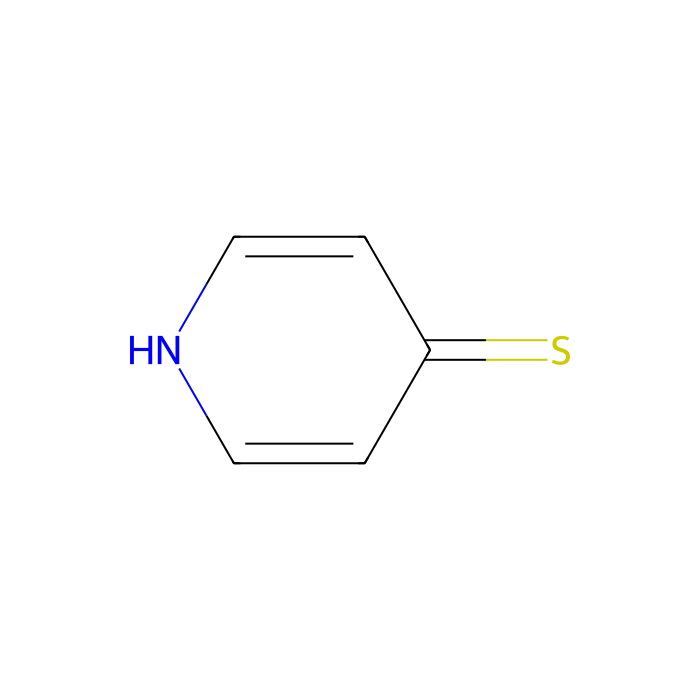
This compound belongs to the class of organic compounds known as dihydropyridines. These are compounds containing a dihydropyridine moiety, which is a semi-saturated pyridine derivative with two double bonds.
External Descriptors
Not available
1. Djoumbou Feunang Y, Eisner R, Knox C, Chepelev L, Hastings J, Owen G, Fahy E, Steinbeck C, Subramanian S, Bolton E, Greiner R, and Wishart DS. ClassyFire: Automated Chemical Classification With A Comprehensive, Computable Taxonomy. Journal of Cheminformatics, 2016, 8:61.
Determine the necessary mass, volume, or concentration for preparing a solution.
Dilution Calculator
Determine the dilution needed to prepare a stock solution.
Reconstitution Calculator
Reviews
Customer Reviews
Application Protocols
No vendor-tested bioassay protocols are provided in the Product Data.
General research procedures (literature-informed, for guidance only):
SAM formation on gold:
Prepare a 0.1 mM solution of 4-mercaptopyridine in degassed ethanol under inert atmosphere.
Immerse clean Au substrates for 12 h at room temperature.
Rinse thoroughly with ethanol; dry under nitrogen. Characterize by contact angle, XPS, or SERS.
Thioester synthesis (acyl chloride route):
Dissolve 4-mercaptopyridine (1.0 equiv) in dry DCM at 0 °C under argon; add triethylamine (1.2 equiv).
Slowly add the acyl chloride (1.1 equiv); stir 1–2 h to completion (TLC/LC-MS).
Quench, wash, dry, and purify by column chromatography.
These example workflows are non-certified guidelines. Optimize for your specific substrates and consult primary literature.
Biological Roles
This product is intended for research use only. No biological function is assigned in the Product Data.
General context (literature):
4-Mercaptopyridine is not a known endogenous metabolite. As a small heteroaromatic thiol, it can participate in thiol–disulfide exchange reactions relevant to biomimetic redox studies.
The pyridine ring can be protonated, enabling pH-responsive behavior in materials interfacing with biological systems (e.g., pH-tunable surface charge on SAMs).
Disulfide-linked derivatives (e.g., 4,4′-dithiodipyridine) are used as reagents to probe free thiols in peptides/proteins via exchange reactions, serving as spectroscopic/analytical tools (research context).
No claims are made for clinical or therapeutic use.
Buffer Applications
Not typically used as a buffer component. 4-Mercaptopyridine lacks the appropriate conjugate acid/base pair pKa spacing and low toxicity profile expected for biological buffers.
Practical note (research context):
In redox studies, it may be included in buffered systems as a reactant or probe. Choose buffers that do not complex strongly with soft sulfur (avoid heavy-metal contaminants) and that maintain the desired thiol/thiolate ratio (pH control). Phosphate or HEPES buffers are commonly compatible, but verify that they do not interfere with your analytical readout.
Green Alternatives
Green chemistry perspective focuses on solvent selection, odor management, and redox control rather than replacing the heteroaromatic thiol functionality outright.
Potential alternatives and trade-offs (literature/general):
For SAM formation on Au:
Alternative thiols: cysteamine (2-aminoethanethiol) or mercaptohexanol are more water-compatible; however, they lack the pyridine reporter functionality and different surface packing/ordering.
Solvent choice: switch from chlorinated solvents to ethanol or water/ethanol mixtures when compatible with assembly and cleanliness.
For acyl-transfer chemistry (thioesters):
Replace halogenated solvents with acetonitrile or 2-MeTHF. 2-MeTHF is bio-based and less volatile than THF but may alter solubility and rates.
Use greener coupling systems (e.g., CDI in acetonitrile) to avoid urea waste from carbodiimides; evaluate E-factors.
Odor and exposure minimization:
Conduct operations in closed systems or with efficient capture (activated carbon) to limit thiol emissions.
Comparison snapshot (qualitative):
Ethanol vs DCM for SAM prep: Ethanol reduces halogenated solvent use, is safer, and typically effective for Au–S assembly, with minimal performance loss.
2-MeTHF vs THF for couplings: 2-MeTHF offers improved sustainability; verify solubility of 4-mercaptopyridine and coupling reagents beforehand.
Note: Functional replacement of 4-mercaptopyridine may compromise target properties (SERS response, N-denticity); greener practice often centers on solvent/process optimization.
Pharmaceutical Uses
No pharmaceutical excipient or compendial status is provided in the Product Data. This material is supplied for laboratory research use only.
General formulation context (literature):
Heteroaromatic thiols are occasionally used as synthetic intermediates to prepare prodrugs or linkers via thioester or disulfide chemistry. 4-Mercaptopyridine can serve as a leaving group in acyl-transfer constructs due to the stability of the corresponding 4-pyridinethiolate.
Any use in GMP or clinical manufacturing would require a defined grade, detailed impurity profile, and regulatory assessment—none of which are specified for this item.
Physical Properties
Note: No item-specific specifications are provided in the Product Data. Values below are literature/typical and for general reference only; they are not certificate specifications.
Phase/appearance: Not specified for this item; refer to CoA/Spec Sheet. (Product Data)
Molecular weight: ~111.16 g/mol (literature)
Molecular formula: C5H5NS (literature)
Melting point: typically reported ~110–116 °C (literature, varies with purity and hydration)
Boiling behavior: tends to decompose/oxidize before distillation; thiols often show strong odor (literature, qualitative)
Density: Not specified for this item; see literature sources.
pKa (pyridinium N–H, conjugate acid): ~5.2 for pyridine; substitution may shift slightly (literature, context value)
pKa (thiol S–H): often in the ~5–7 range for activated aryl thiols; exact value context-dependent (literature)
LogP/logD: not widely standardized; aryl thiols are moderately polarizable and show enhanced solubility in polar organics (literature, qualitative)
Solubility profile (qualitative, literature):
Soluble in polar aprotic solvents (e.g., DMF, DMSO, acetonitrile) and alcohols; limited solubility in nonpolar hydrocarbons.
Forms salts (pyridinium or thiolate) that can markedly increase water solubility.
Refractive index/UV cutoff: Not specified for this item; refer to CoA/Spec Sheet.
Practical note: The S–H group can oxidize to the disulfide (4,4′-dithiodipyridine) upon exposure to air/oxidants; physical data may reflect sample history.
Quality & Grades
Grade/Purity: Not specified for this item; refer to CoA/Spec Sheet.
Stabilizers/Inhibitors: Not specified for this item; refer to CoA/Spec Sheet. 4-Mercaptopyridine typically does not require added stabilizer but is susceptible to oxidation to the disulfide; suppliers may package under inert gas (Product Data indicates argon charge).
Context for professional use (general guidance):
Research grade materials are intended for laboratory R&D. If you require chromatography-grade or trace-metal–screened material for surface or catalytic studies, request a detailed specification sheet and CoA for: assay method, residual solvents, water content (Karl Fischer), related substances (notably 4,4′-dithiodipyridine), and metals.
For surface science (e.g., SAM formation on Au), low-oxide/low-disulfide content is often critical. Ask for peroxide/sulfur-oxide and disulfide content data if applicable.
Packaging under inert gas and cold-chain shipment (as provided for this item) help maintain reduced thiol state.
Reaction & Applications
This heteroaromatic thiol is widely used in synthesis, surface science, and redox chemistry.
Key application families (literature/general):
Surface functionalization and SAMs: The thiol anchors to Au/Ag/Cu surfaces forming self-assembled monolayers; the pyridine ring can modulate surface charge and coordinate additional metals or H-bond partners. Often used as a SERS reporter due to strong ring modes.
Thioester formation: Serves as a nucleophile to generate 4-pyridinyl thioesters from carboxylic acids or acyl chlorides. These thioesters are useful acyl-transfer reagents and intermediates in peptide-mimetic ligations.
Disulfide chemistry: Air or I2 oxidation affords 4,4′-dithiodipyridine (4-PDS), a reagent widely used in thiol-disulfide exchange assays. The reversible formation/cleavage of the disulfide under reducing conditions (e.g., DTT, TCEP) is synthetically valuable.
Conjugation reactions: Participates in thiol–ene, thiol–yne, and thio-Michael additions to activated alkenes (e.g., acrylates, maleimides) under radical or base-catalyzed conditions.
Ligand/chelation: The N,S-dentate motif can bind soft metals (Au, Ag, Cu, Pd), impacting catalysis and materials assembly.
Practical tips:
Control oxidation: Work under inert atmosphere; include trace base or radical inhibitors as appropriate.
For SAMs: Clean metal substrates rigorously; use micromolar to millimolar ethanolic solutions; allow several hours to overnight assembly; rinse thoroughly to remove physisorbed species.
For thioesters: Employ anhydrous conditions; acyl chlorides react readily at 0–25 °C; for acids, use carbodiimide coupling with catalytic DMAP to enhance rates.
Reaction Conditions
General, literature-based guidance; adjust to your system. These are not item-specific specifications.
Thioester formation from acyl chlorides:
Solvent: dry DCM, THF, or acetonitrile.
Base: pyridine or triethylamine (1.1–2.0 equiv) to neutralize HCl.
Temperature: 0–25 °C.
Time: 0.5–4 h, typically high conversion with monitoring by TLC/LC-MS.
Thioester formation from carboxylic acids (carbodiimide route):
Solvent: dry DMF or acetonitrile; catalytic DMAP (0.05–0.1 equiv) often beneficial.
Reagents: EDC·HCl or DIC (1.1–1.5 equiv).
Temperature: 20–25 °C.
Time: 2–16 h depending on substrate sterics.
Thiol–ene additions:
Initiation: photochemical (365–405 nm) with Type I photoinitiator or thermal radical source (AIBN).
Solvent: acetonitrile, toluene, or bulk; oxygen exclusion improves rates/selectivity.
Temperature: ambient to 80 °C (thermal), minutes to hours.
Disulfide formation/reduction:
Oxidation: air/O2 in ethanol or acetonitrile (hours to overnight) or I2 (0.5 equiv) at 0–25 °C for rapid coupling.
Reduction: DTT or TCEP in aqueous/organic mixtures; NaBH4 in protic solvents at 0–25 °C.
SAM assembly on Au (surface science):
Solution: 0.01–1 mM in degassed ethanol or isopropanol.
Substrate conditioning: plasma/UV-ozone cleaned or freshly evaporated gold.
Immersion: 1–24 h; rinse with solvent; dry under N2.
Note: Exclude oxygen and moisture where thiolate formation or radical pathways are involved to minimize disulfide byproducts.
Safety & Handling
Item-specific hazard fields (GHS, H-statements, pictograms) are not provided in the Product Data. Always consult the SDS for authoritative safety information.
General hazards for aryl thiols (literature/general guidance):
Can cause skin and eye irritation; may cause respiratory irritation upon dust/vapor exposure.
Strong, characteristic thiol odor; use in a chemical fume hood.
Readily oxidizes to the disulfide; oxidation can be exothermic in presence of strong oxidants.
PPE: Lab coat, suitable chemical-resistant gloves (e.g., nitrile), splash goggles; handle in a fume hood.
Incompatibilities (general): strong oxidizing agents, strong bases/acids (can promote side reactions/disulfide exchange), and soft-metal salts that can form stable complexes.
Handling tips specific to thiols:
Minimize air exposure to limit oxidation; purge headspace with inert gas after opening.
Use dry, oxygen-free solvents for sensitive applications (e.g., surface assembly, thioester synthesis).
Segregate from materials susceptible to sulfur contamination (e.g., certain catalysts sensitive to sulfur poisoning).
First aid overview (general):
Skin/eye contact: rinse with water for several minutes; remove contaminated clothing; seek medical attention as needed.
Inhalation: move to fresh air; obtain medical attention if symptoms persist.
Ingestion: rinse mouth; do not induce vomiting; seek medical attention.
Storage (Product Data): Store at −20 °C under argon; keep container tightly closed; protect from light/air to limit oxidation.
SDS disclaimer: Refer to the product’s SDS for complete hazard classifications, response statements, and disposal guidance.
Solvent Selection
Relevance: 4-Mercaptopyridine is a heteroaromatic thiol. Solvent choice influences its ionization state, oxidation rate, and reactivity.
Polarity/miscibility (literature/general):
Readily soluble in polar aprotic solvents (DMF, DMSO, acetonitrile) and in alcohols; limited solubility in alkanes and other nonpolar media.
Aqueous solubility increases substantially upon protonation of the ring nitrogen (acidic media) or deprotonation of the thiol to the thiolate (basic media).
When to choose which solvent:
SAMs on Au/Ag: ethanol or isopropanol (degassed, anhydrous) are commonly used to minimize competing adsorption and oxidation.
Thioester formation/couplings: dry DCM, DMF, or acetonitrile with amide-coupling reagents (e.g., EDC/HOBt or DIC) often give clean conversions.
Redox/disulfide chemistry: buffered aqueous-organic mixtures can be tuned to control thiol/disulfide equilibria.
Practical tips:
Degas and dry solvents to limit oxidative dimerization.
In basic media, expect rapid formation of the thiolate; in strongly acidic media, pyridinium formation can alter solubility and nucleophilicity.
Small comparison (literature, qualitative):
Ethanol: good for SAM assembly; easy handling; moderate oxidation risk.
DMF/DMSO: excellent solubilizers; may complicate downstream workup if strong odors need to be minimized.
Storage & Reconstitution
Storage conditions (Product Data): Store at −20 °C, Argon charged. Keep container tightly closed. Shipments are made in an ice chest with ice pads to maintain a cool chain.
Rationale: The thiol is prone to air oxidation to the disulfide; low temperature and inert atmosphere help preserve the reduced form.
Handling:
Allow vial to equilibrate to room temperature before opening to avoid condensation.
Open and handle under inert gas when possible; promptly re-seal and re-purge headspace with argon or nitrogen after use.
Reconstitution/dissolution (general guidance):
Use dry, oxygen-free solvents such as ethanol, acetonitrile, DMF, or DMSO.
Typical working concentrations for solution-phase synthesis: 10–200 mM; for SAMs: 0.01–1 mM in ethanol.
Stability notes (general):
Protect from light and air. Monitor for formation of 4,4′-dithiodipyridine (disulfide) by TLC/LC-MS if material is stored for extended periods.
If oxidation occurs, the disulfide can be reduced in situ using standard reductants (e.g., TCEP, DTT) when compatible with the application.
Spec sheet/CoA: For any item-specific stability limits, water content, or impurity profile, refer to the CoA/Spec Sheet.
Structure & Identity
Brief description: 4-Mercaptopyridine (pyridine-4-thiol) is a bifunctional heteroaromatic bearing a pyridine nitrogen and a para-thiol group, enabling N- and S-coordination and redox-active S–H chemistry.
Item-specific (Product Data):
SKU: M118290
CAS: 4556-23-4
InChIKey: 83096 (as provided)
SMILES: Not specified for this item; refer to CoA/Spec Sheet.
Storage: Store at −20 °C, Argon charged (Product Data)
Aromatic six-membered ring containing one ring nitrogen (pyridine).
A thiol (–SH) substituent at the 4-position (para to the ring nitrogen), enabling disulfide formation and Au–S binding.
The ring nitrogen is basic (can be protonated to pyridinium), while the thiol is weakly acidic and redox-active.
2D topology in words: a planar pyridine ring with N at position 1 and an –SH group at position 4, opposite the ring nitrogen.
Synthetic Utility
Functional-group leverage:
Thiol (–SH): nucleophilic at sulfur; participates in S-alkylation/acylation; readily oxidized to disulfide; engages in thiol–ene/–yne additions and thio-Michael reactions (literature).
Pyridine nitrogen: basic and Lewis-basic site; can be protonated (tunable solubility/reactivity) or used for metal coordination; can direct ortho-lithiation in other pyridine systems (contextual literature note).
Representative transformations (literature):
Thioester synthesis: R–COCl or activated acids + 4-mercaptopyridine → R–COS–Py (good acyl-transfer agents; the pyridinethiolate is a competent leaving group).
Disulfide toggling: 2 R–S–H ⇌ R–S–S–R (air, I2, or electrochemical oxidation; reduction with DTT/TCEP/NaBH4).
Conjugate additions: S-centered addition to α,β-unsaturated carbonyls (base or radical initiation), enabling rapid tagging or polymer end-group modification.
Surface immobilization: Au–S bond formation creates SAMs; the exposed pyridine can be further functionalized or protonated for interfacial studies.
Why choose 4-mercaptopyridine:
Provides a built-in spectroscopic handle (aromatic pyridine) and N-denticity absent in aliphatic thiols, facilitating SERS detection and post-assembly coordination chemistry.
Target Specificity
Not applicable. This product is a small-molecule reagent, not an antibody or biologic. No target/epitope/isotype data are provided or relevant.
We use cookies to ensure the website functions properly and, where permitted, to improve your experience. You can manage your preferences at any time in Settings. Learn more in our Cookie Policy.
Shall we send you a message when we have discounts available?
Remind me later
Thank you! Please check your email inbox to confirm.
Products are supplied to verified businesses, institutions, and qualified professionals for research and development use only. Not for use in humans, animals, diagnosis, or therapy.

 K2202340