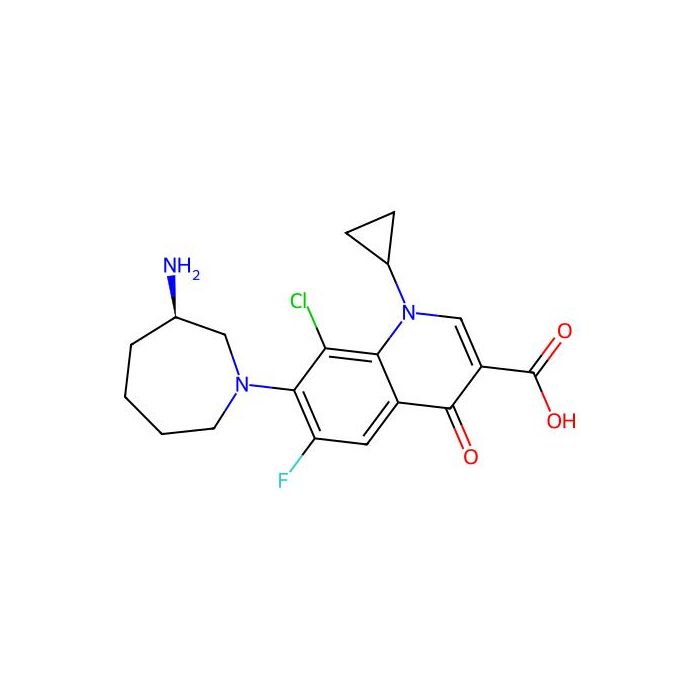
Besifloxacin - Moligand™,≥99% , CAS No.141388-76-3

CAS: 141388-76-3 Cat. No.: B710574 Formula: C19H21ClFN3O3 Molecular Weight: 393.8 PubChem CID: 10178705
AVAILABLE TO ORDER
GRADE & PURITY Moligand™ ? Moligand™ — Aladdin's line of ligands and bioactive small molecules. Use for receptor, pathway, and binding studies needing defined small-molecule tools. ≥99%
Storage
Store at 2-8°C,Argon charged
Shipped In
Wet ice
★
Size
USA
Germany (EU)*
Price
Qty
5mg
B710574-5mg
Made to order · 8–12 wks
$99.90
25mg
B710574-25mg
Made to order · 8–12 wks

$295.90

$344.90
Save $49.00 (14.21%)
100mg
B710574-100mg
Made to order · 8–12 wks
$969.90
Enter a quantity for the sizes you want to add.
🧪
Why this grade

Moligand™,≥99% Moligand™ for sensitive chromatographic and analytical workflows requiring minimal baseline interference.

🌡

Storage & shipping

Store at 2-8°C,Argon charged Ships Wet ice Check lot-specific COA for exact specifications.

📋

Quality documents

SDS, COA, datasheet, and spec sheet available for download. Lot-specific COA accessible via lot number lookup.

📚

Literature proof

Cited in 0 peer-reviewed publications across chromatography, organic synthesis, and cross-coupling reactions.

Specifications

Specifications & Purity
Moligand™,≥99%
Storage
Store at 2-8°C,Argon charged
Shipped In
Wet ice
This product requires cold chain shipping. Ground and other economy services are not available.
Grade
Moligand™
Purity
≥99%
Product Properties
ALogP
1.1
Names and Identifiers
Canonical Smiles
C1CCN(CC(C1)N)C2=C(C=C3C(=C2Cl)N(C=C(C3=O)C(=O)O)C4CC4)F
IUPAC Name
7-[(3R)-3-aminoazepan-1-yl]-8-chloro-1-cyclopropyl-6-fluoro-4-oxoquinoline-3-carboxylic acid
InChIKey
QFFGVLORLPOAEC-SNVBAGLBSA-N
INCHI
1S/C19H21ClFN3O3/c20-15-16-12(18(25)13(19(26)27)9-24(16)11-4-5-11)7-14(21)17(15)23-6-2-1-3-10(22)8-23/h7,9-11H,1-6,8,22H2,(H,26,27)/t10-/m1/s1
Isomeric SMILES
C1CCN(C[C@@H](C1)N)C2=C(C=C3C(=C2Cl)N(C=C(C3=O)C(=O)O)C4CC4)F
PubChem CID
10178705
Molecular Weight
393.8

Documentation

📋 Safety Data Sheet (SDS)

Comprehensive hazard, handling, storage, and regulatory compliance document.

Download SDS →

✅ Certificate of Analysis (COA)

Lot-specific quality data. Enter your lot number to retrieve the exact COA.

Look up COA →

📊 Datasheet

Quick-reference summary of product specifications and applications.

View datasheet →

🔬 Specification Sheet

Full quality attributes and acceptance criteria for this grade.

View spec sheet →

Advanced Data

Taxonomic Classification

Taxonomy Tree

KingdomOrganic compounds
SuperclassOrganoheterocyclic compounds
ClassQuinolines and derivatives
SubclassQuinoline carboxylic acids
Intermediate Tree Nodes Not available
Direct ParentQuinoline carboxylic acids
Alternative Parents Fluoroquinolones  Chloroquinolines  Aminoquinolines and derivatives  Hydroquinolones  Hydroquinolines  Pyridinecarboxylic acids  Dialkylarylamines  Azepanes  Aryl chlorides  Benzenoids  Aryl fluorides  Vinylogous amides  Heteroaromatic compounds  Amino acids  Carboxylic acids  Azacyclic compounds  Monocarboxylic acids and derivatives  Hydrocarbon derivatives  Monoalkylamines  Organic oxides  Organochlorides  Organofluorides  Organooxygen compounds  Organopnictogen compounds  
Molecular FrameworkAromatic heteropolycyclic compounds
Substituents Quinoline-3-carboxylic acid - Fluoroquinolone - Aminoquinoline - Dihydroquinolone - Chloroquinoline - Haloquinoline - Dihydroquinoline - Pyridine carboxylic acid or derivatives - Pyridine carboxylic acid - Dialkylarylamine - Tertiary aliphatic/aromatic amine - Azepane - Aryl chloride - Aryl fluoride - Benzenoid - Aryl halide - Pyridine - Heteroaromatic compound - Vinylogous amide - Amino acid - Tertiary amine - Amino acid or derivatives - Azacycle - Carboxylic acid derivative - Carboxylic acid - Monocarboxylic acid or derivatives - Primary aliphatic amine - Organonitrogen compound - Organooxygen compound - Organic nitrogen compound - Organic oxide - Primary amine - Organic oxygen compound - Amine - Organopnictogen compound - Hydrocarbon derivative - Organohalogen compound - Organochloride - Organofluoride - Aromatic heteropolycyclic compound
DescriptionThis compound belongs to the class of organic compounds known as quinoline carboxylic acids. These are quinolines in which the quinoline ring system is substituted by a carboxyl group at one or more positions.
External Descriptors Not available
3D Structure
Interactive Chemical Structure Model


Associated Targets(non-human)
Hdac6 Histone deacetylase 6 (222 Activities)
Activity TypeRelationActivity valueUnitsAction TypeJournalPubMed IddoiAssay Aladdin ID
Streptococcus sanguinis (314 Activities)
Activity TypeRelationActivity valueUnitsAction TypeJournalPubMed IddoiAssay Aladdin ID
Streptococcus pneumoniae (31063 Activities)
Activity TypeRelationActivity valueUnitsAction TypeJournalPubMed IddoiAssay Aladdin ID
Fusobacterium sp. (55 Activities)
Activity TypeRelationActivity valueUnitsAction TypeJournalPubMed IddoiAssay Aladdin ID
Pseudomonas aeruginosa (123386 Activities)
Activity TypeRelationActivity valueUnitsAction TypeJournalPubMed IddoiAssay Aladdin ID
Legionella pneumophila (143 Activities)
Activity TypeRelationActivity valueUnitsAction TypeJournalPubMed IddoiAssay Aladdin ID
Enterobacter cloacae (7976 Activities)
Activity TypeRelationActivity valueUnitsAction TypeJournalPubMed IddoiAssay Aladdin ID
Klebsiella pneumoniae (43867 Activities)
Activity TypeRelationActivity valueUnitsAction TypeJournalPubMed IddoiAssay Aladdin ID
Proteus vulgaris (5823 Activities)
Activity TypeRelationActivity valueUnitsAction TypeJournalPubMed IddoiAssay Aladdin ID
Bacteroides fragilis (1445 Activities)
Activity TypeRelationActivity valueUnitsAction TypeJournalPubMed IddoiAssay Aladdin ID
Staphylococcus aureus (210822 Activities)
Activity TypeRelationActivity valueUnitsAction TypeJournalPubMed IddoiAssay Aladdin ID
Staphylococcus epidermidis (22802 Activities)
Activity TypeRelationActivity valueUnitsAction TypeJournalPubMed IddoiAssay Aladdin ID
Staphylococcus haemolyticus (1695 Activities)
Activity TypeRelationActivity valueUnitsAction TypeJournalPubMed IddoiAssay Aladdin ID
Staphylococcus hominis (482 Activities)
Activity TypeRelationActivity valueUnitsAction TypeJournalPubMed IddoiAssay Aladdin ID
Acinetobacter baumannii (41033 Activities)
Activity TypeRelationActivity valueUnitsAction TypeJournalPubMed IddoiAssay Aladdin ID
Acinetobacter calcoaceticus (618 Activities)
Activity TypeRelationActivity valueUnitsAction TypeJournalPubMed IddoiAssay Aladdin ID
Moraxella catarrhalis (3334 Activities)
Activity TypeRelationActivity valueUnitsAction TypeJournalPubMed IddoiAssay Aladdin ID
Neisseria meningitidis (411 Activities)
Activity TypeRelationActivity valueUnitsAction TypeJournalPubMed IddoiAssay Aladdin ID
Citrobacter koseri (193 Activities)
Activity TypeRelationActivity valueUnitsAction TypeJournalPubMed IddoiAssay Aladdin ID
Citrobacter freundii (1864 Activities)
Activity TypeRelationActivity valueUnitsAction TypeJournalPubMed IddoiAssay Aladdin ID
Klebsiella aerogenes (4963 Activities)
Activity TypeRelationActivity valueUnitsAction TypeJournalPubMed IddoiAssay Aladdin ID
Escherichia coli (133304 Activities)
Activity TypeRelationActivity valueUnitsAction TypeJournalPubMed IddoiAssay Aladdin ID
Klebsiella oxytoca (929 Activities)
Activity TypeRelationActivity valueUnitsAction TypeJournalPubMed IddoiAssay Aladdin ID
Morganella morganii (1291 Activities)
Activity TypeRelationActivity valueUnitsAction TypeJournalPubMed IddoiAssay Aladdin ID
Proteus mirabilis (3894 Activities)
Activity TypeRelationActivity valueUnitsAction TypeJournalPubMed IddoiAssay Aladdin ID
Serratia marcescens (3237 Activities)
Activity TypeRelationActivity valueUnitsAction TypeJournalPubMed IddoiAssay Aladdin ID
Haemophilus influenzae (8812 Activities)
Activity TypeRelationActivity valueUnitsAction TypeJournalPubMed IddoiAssay Aladdin ID
Peptostreptococcus sp. (78 Activities)
Activity TypeRelationActivity valueUnitsAction TypeJournalPubMed IddoiAssay Aladdin ID
Staphylococcus warneri (476 Activities)
Activity TypeRelationActivity valueUnitsAction TypeJournalPubMed IddoiAssay Aladdin ID
Streptococcus salivarius (87 Activities)
Activity TypeRelationActivity valueUnitsAction TypeJournalPubMed IddoiAssay Aladdin ID
Streptococcus sp. (212 Activities)
Activity TypeRelationActivity valueUnitsAction TypeJournalPubMed IddoiAssay Aladdin ID
Streptococcus agalactiae (1777 Activities)
Activity TypeRelationActivity valueUnitsAction TypeJournalPubMed IddoiAssay Aladdin ID
Streptococcus pyogenes (16140 Activities)
Activity TypeRelationActivity valueUnitsAction TypeJournalPubMed IddoiAssay Aladdin ID
Enterococcus faecium (13803 Activities)
Activity TypeRelationActivity valueUnitsAction TypeJournalPubMed IddoiAssay Aladdin ID
Clostridium perfringens (1165 Activities)
Activity TypeRelationActivity valueUnitsAction TypeJournalPubMed IddoiAssay Aladdin ID
Listeria monocytogenes (2626 Activities)
Activity TypeRelationActivity valueUnitsAction TypeJournalPubMed IddoiAssay Aladdin ID
Enterococcus faecalis (29875 Activities)
Activity TypeRelationActivity valueUnitsAction TypeJournalPubMed IddoiAssay Aladdin ID
Cutibacterium acnes (887 Activities)
Activity TypeRelationActivity valueUnitsAction TypeJournalPubMed IddoiAssay Aladdin ID
Staphylococcus saprophyticus (562 Activities)
Activity TypeRelationActivity valueUnitsAction TypeJournalPubMed IddoiAssay Aladdin ID
Streptococcus mitis (390 Activities)
Activity TypeRelationActivity valueUnitsAction TypeJournalPubMed IddoiAssay Aladdin ID
Acinetobacter lwoffii (550 Activities)
Activity TypeRelationActivity valueUnitsAction TypeJournalPubMed IddoiAssay Aladdin ID
Stenotrophomonas maltophilia (1743 Activities)
Activity TypeRelationActivity valueUnitsAction TypeJournalPubMed IddoiAssay Aladdin ID
Staphylococcus lugdunensis (349 Activities)
Activity TypeRelationActivity valueUnitsAction TypeJournalPubMed IddoiAssay Aladdin ID
Streptococcus constellatus (189 Activities)
Activity TypeRelationActivity valueUnitsAction TypeJournalPubMed IddoiAssay Aladdin ID
Streptococcus equinus (217 Activities)
Activity TypeRelationActivity valueUnitsAction TypeJournalPubMed IddoiAssay Aladdin ID
Streptococcus oralis (178 Activities)
Activity TypeRelationActivity valueUnitsAction TypeJournalPubMed IddoiAssay Aladdin ID
Streptococcus intermedius (230 Activities)
Activity TypeRelationActivity valueUnitsAction TypeJournalPubMed IddoiAssay Aladdin ID
Mechanisms of Action
Certificates(CoA,COO,BSE/TSE and Analysis Chart)
C of A & Other Certificates(BSE/TSE, COO):
Analytical Chart:

Find and download the COA for your product by matching the lot number on the packaging.

3 results found

Lot NumberCertificate TypeDateItem
F2603278Certificate of AnalysisJan 09, 2026 B710574
F2603279Certificate of AnalysisJan 09, 2026 B710574
F2603280Certificate of AnalysisJan 09, 2026 B710574
Chemical and Physical Properties
Molecular Weight393.800 g/mol
XLogP31.100
Hydrogen Bond Donor Count2
Hydrogen Bond Acceptor Count7
Rotatable Bond Count3
Exact Mass393.126 Da
Monoisotopic Mass393.126 Da
Topological Polar Surface Area86.900 Ų
Heavy Atom Count27
Formal Charge0
Complexity656.000
Isotope Atom Count0
Defined Atom Stereocenter Count1
Undefined Atom Stereocenter Count0
Defined Bond Stereocenter Count0
Undefined Bond Stereocenter Count0
The total count of all stereochemical bonds0
Covalently-Bonded Unit Count1
Documents & Articles
Solution Calculators
Reviews

Customer Reviews

Application Protocols

Item-specific validated protocols, recommended dilutions, and tested applications are not provided in the Product Data for SKU B710574. Refer to the CoA/Spec Sheet or SDS for any available in‑house test methods.

General research preparation guidance (non‑validated; for context only):

  • Prepare a concentrated DMSO stock (e.g., 10–50 mM) under low light. Vortex until fully dissolved.
  • For biochemical assays, dilute the DMSO stock into buffer to achieve ≤1% final DMSO where possible. Include appropriate negative/positive controls.
  • For LC‑MS reference solutions, prepare 0.1–1.0 mg/mL in acetonitrile:water (1:1) with 0.1% formic acid; store aliquots at low temperature and protect from light.

These general steps are not a substitute for method validation. Adapt to your system and consult primary literature as needed.

Biological Roles

General mechanistic context (literature; not a medical claim):

  • Besifloxacin is a member of the fluoroquinolone class that targets bacterial DNA processing enzymes. Fluoroquinolones bind to DNA–enzyme complexes of DNA gyrase and topoisomerase IV, stabilizing cleavage intermediates and impairing DNA replication and transcription in susceptible bacteria.
  • The quinolone pharmacophore comprises the 4‑oxo–3‑carboxylate motif, which coordinates a Mg2+–water bridge in the enzyme–DNA complex; the C‑6 fluorine and N‑1 cyclopropyl generally enhance potency and spectrum in the class.
  • The C‑7 basic substituent (pyrrolidinyl in besifloxacin) modulates target preference, permeability, and efflux susceptibility. The 8‑chloro substituent can influence photoreactivity and activity profiles.

Biophysical properties relevant to assays (literature/general):

  • Amphoteric behavior leads to pH‑dependent charge states (anionic, zwitterionic, or cationic), which affect membrane interaction and protein binding.
  • Strong UV chromophore facilitates detection in protein-binding assays (UV or fluorescence quenching) and in chromatographic analytics.

Research use guidance:

  • Use as a positive control ligand in enzymology or microbiology research to benchmark assay dynamic range and to study resistance mechanisms (mutations in GyrA/GyrB or ParC/ParE). Avoid any clinical interpretation—this product is for research use only.
Buffer Applications

This product is a small-molecule ligand, not a buffering agent. It is not typically used to prepare defined pH buffer systems.

Practical note for assays:

  • When preparing aqueous assay solutions, choose a buffer appropriate to your biological system (e.g., 10–50 mM HEPES, phosphate, or Tris) and adjust pH considering the amphoteric nature of fluoroquinolones. Include a co‑solvent (e.g., 1–10% DMSO or ethanol) only as needed to fully dissolve the compound before dilution.
  • Filter sterilize (0.2 µm) and use low‑binding plastics to minimize adsorption at low concentrations.
Green Alternatives

As a solid active small molecule, besifloxacin itself is not replaceable by a “greener reagent.” However, its handling and processing can be greener by solvent and process choices.

Greener handling strategies (literature/general):

  • Prefer water or aqueous buffers when feasible by using an appropriate salt form (e.g., HCl) and pH adjustment, reducing reliance on high-boiling dipolar aprotics.
  • If an organic co‑solvent is required, consider ethanol or isopropanol in place of DMF/DMAc/NMP where compatible with the assay or process.
  • For chromatography, use water–ethanol or water–acetonitrile gradients; avoid chlorinated solvents for sample prep unless needed.
  • Minimize DMSO volumes in screening campaigns by preparing higher-concentration master stocks and performing aqueous dilutions close to the point of use.

Comparison of common choices (general):

  • DMSO vs ethanol: DMSO offers superior solubilization but is less benign; ethanol is greener but may limit concentration and has higher volatility.
  • DMF/NMP vs aqueous buffers: DMF/NMP provide strong solvency yet have higher environmental and health hazards; buffered aqueous systems with small % of ethanol or DMSO are preferred when solubility allows.

Waste minimization:

  • Consolidate dilute analytical wastes; use micro-scale sample prep and 96/384-well miniaturization to reduce solvent usage.
  • Employ solid-phase or membrane-based cleanup to replace liquid–liquid extractions where applicable.
Pharmaceutical Uses

No clinical/therapeutic claims are made. For research and development contexts only.

Formulation and QC roles (literature/general):

  • Reference material: Used as a chemical reference standard in analytical method development and quality control workflows for fluoroquinolone-containing products (e.g., to develop stability-indicating HPLC/LC‑MS methods, impurity profiling, and dissolution testing protocols in R&D labs).
  • Salt screening: The amphoteric structure enables preparation of pharmaceutically acceptable salts (e.g., hydrochloride) for solubility/crystallinity studies in preformulation research.
  • Excipient status: Besifloxacin is not an excipient; it functions as an active substance in pharmaceutical contexts. In research labs, it may be incorporated into prototype dosage forms or ophthalmic-like vehicles strictly for non-clinical testing.

Regulatory note:

  • This catalog item is designated “For research use only.” It is not manufactured under cGMP for human administration. Any pharmacopeial compliance, residual solvent limits, or impurity thresholds required for clinical products are outside the scope of this item and must not be inferred without a dedicated GMP supply and documentation.
Physical Properties

Item-specific physical specifications (this lot):

  • Appearance: Not specified for this item; refer to CoA/Spec Sheet.
  • Molecular Formula: Not specified for this item; refer to CoA/Spec Sheet.
  • Molecular Weight: Not specified for this item; refer to CoA/Spec Sheet.

Literature/general reference values (for context; not product specifications):

  • Chemical class: Fluoroquinolone carboxylic acid with a basic amine; amphoteric (zwitterion possible around neutral pH).
  • Acid–base behavior (literature): pKa (carboxylic acid) typically ~5.5–6.5; pKa (tertiary amine on side chain) typically ~8.5–10 for analogous fluoroquinolones. Besifloxacin specifically is reported in literature to be diprotic with an acidic and a basic site.
  • Solubility (literature): Sparingly soluble in water as the free base; readily soluble in polar aprotic solvents (DMSO, DMF) and more soluble in aqueous media as salts (e.g., hydrochloride).
  • Partitioning (literature): Fluoroquinolones often show moderate lipophilicity (logP ca. 1–2) with pH‑dependent distribution (logD7.4 < logP due to ionization).
  • UV/Vis (literature): Strong UV absorption associated with the quinolone chromophore (useful for HPLC-UV at 254–280 nm).

Notes:

  • Do not treat literature values as specifications for this item. For any exact numeric property relevant to your method (mp/bp, water content, UV cutoff, metals), consult the Aladdin CoA/Spec Sheet for SKU B710574.
Quality & Grades
  • Grade/Purity: Moligand™

About Moligand™ grade (general description):

  • Moligand™ denotes small-molecule ligands curated for research applications such as target engagement studies, biochemical assays, and medicinal chemistry SAR. Emphasis is typically on identity confirmation and suitability for bioassay preparation (e.g., compatibility with DMSO stocks), rather than chromatographic solvent specifications.

What this means for this item:

  • Identity: Expect rigorous structural identification (e.g., NMR/HRMS/LC) suitable for screening and reference work. Exact test methods and acceptance criteria are defined on the CoA/Spec Sheet.
  • Purity reporting: The exact purity assay, residual solvents, water content, or inorganic residues for SKU B710574 are Not specified for this item; refer to CoA/Spec Sheet.
  • Stabilization: No stabilizer information was provided for this item. If stabilizers or counterions are relevant (e.g., conversion to a salt), this will appear on the CoA.
  • Fit for purpose: Prepared for research use (not for human or veterinary use). Suitable for stock solution preparation in common assay solvents (DMSO, aqueous buffers with co‑solvent) when filtered and handled aseptically as needed.

Documentation:

  • For method development (HPLC retention, UV response, assay cutoff), use the lot-specific CoA. Request spectral data packages if required by your QA procedures.
Reaction & Applications

Manufacturer applications: Not specified in the Product Data. The following are research-typical uses for besifloxacin as a small‑molecule standard in chemistry/biochemistry labs (not medical/clinical):

Research and analytical applications (literature/general):

  • Reference standard: Calibration or system suitability in HPLC/LC‑MS methods for fluoroquinolones; stability-indicating method development under ICH stressors (acid/base, oxidation, light, heat).
  • Biochemical target engagement: Positive control ligand in gyrase/topoisomerase biochemical assays and binding studies; surface plasmon resonance (SPR) and DSF/thermal shift experiments.
  • Medicinal chemistry: Benchmark for SAR comparisons within quinolone series; pH‑dependent permeability/solubility profiling; salt screening.

Chemistry handling/derivatization:

  • Salt formation: Prepare defined acid addition salts (e.g., HCl, sulfate) to modulate solubility/crystallinity.
  • Prodrug/derivative exploration: Activation of the C‑3 carboxylic acid (e.g., HATU/EDC mediated) to form esters/amides for mechanistic probes; N‑alkylation on the side chain for SAR, ensuring stereochemistry is retained.

Practical tips:

  • Drying: If needed, dry from high‑vacuum at ambient temperature to avoid thermal stress; maintain inert atmosphere per product guidance.
  • Sample prep for analytics: Use low‑adsorption plasticware for dilute solutions; pre‑wet filters with solvent to minimize analyte loss.
  • Photostability: Minimize exposure to strong UV during analysis to reduce secondary photoproducts typical of quinolone chromophores.
Reaction Conditions

General literature guidance for derivatizing fluoroquinolone scaffolds like besifloxacin (for probe or prodrug synthesis). These are NOT specifications for this item but representative conditions.

  • Amide coupling at C‑3 carboxyl:

    • Solvent: DMF, DCM, or mixed DMF/DCM; or MeCN for more volatile workups.
    • Reagents: HATU (1.1–1.5 eq) or EDC·HCl (1.2–1.5 eq) with an additive (e.g., HOAt/HOBt) and base (DIPEA, 2–4 eq).
    • Temperature/time: 0–25 °C, 1–16 h, protected from light. Monitor by LC‑MS.
    • Expected outcome: Formation of amide derivatives; workup by aqueous quench and extraction or direct purification by RP‑HPLC.
  • Esterification (for prodrug models):

    • Method A: DCC (1.1 eq) and DMAP catalytic in DCM or THF, 0–25 °C.
    • Method B: Acid chloride route (SOCl2, 2–3 eq) in toluene or DCM, catalytic DMF, then add alcohol and base.
  • Quaternization of tertiary amine:

    • Reagents: Alkyl halides (e.g., MeI, benzyl bromide) in MeCN or acetone; 20–40 °C; monitor for over-alkylation.
  • Salt formation:

    • Dissolve base in minimal alcohol/acetone and add stoichiometric HCl in ether or gaseous HCl at 0–5 °C; isolate the crystalline salt by filtration.

Analytical controls:

  • Use photoprotected vials; verify identity by HRMS and purity by HPLC (UV 254–280 nm). Assess residual coupling reagents and halide content if applicable.
Safety & Handling

Authoritative safety information is provided in the SDS. The following is general guidance for laboratory handling of besifloxacin as a research chemical.

GHS classification (item-specific):

  • Signal Word: Not specified for this item; refer to SDS.
  • Hazard/Pictograms: Not specified for this item; refer to SDS.

General laboratory precautions (good practice):

  • Avoid inhalation of dust and contact with skin/eyes. Handle in a chemical fume hood or glove box when weighing.
  • PPE: Lab coat, safety glasses or goggles, and appropriate chemical-resistant gloves (e.g., nitrile). Consider double-gloving for prolonged handling in DMSO.
  • Hygiene: Wash hands thoroughly after handling. Prevent cross-contamination of biological areas due to the compound’s antibacterial activity.

Stability and incompatibilities (general):

  • Store under inert atmosphere (argon, as specified) at 2–8 °C; protect from moisture. Avoid prolonged exposure to light to minimize potential photodegradation of quinolone chromophores.
  • Incompatible materials: Strong oxidizers or strong acids/bases may cause degradation; avoid reactive acylation/alkylation reagents unless performing controlled derivatization.

First-aid (overview; defer to SDS):

  • Inhalation: Move to fresh air; seek medical advice if symptoms occur.
  • Skin/eye contact: Rinse with water for at least 15 minutes; remove contaminated clothing; obtain medical attention if irritation persists.
  • Ingestion: Rinse mouth; do not induce vomiting; seek medical advice.

Waste: Collect solids/solutions as halogenated organic waste if dissolved in chlorinated solvents; otherwise according to local regulations for pharmaceutical actives.

Solvent Selection

Compound type: amphoteric fluoroquinolone with a carboxylic acid and a basic tertiary amine. Solubility and ionization are highly pH‑dependent.

Practical solvent guidance (literature/general):

  • Stock solutions for bioassays: DMSO (analytical/spectrophotometric grade) is commonly used up to 10–50 mM. Filter through 0.2 µm if sterility is required.
  • Aqueous work: The free base is sparingly water‑soluble at neutral pH. Solubility increases in acidic media (protonated amine) or as a defined salt (e.g., HCl). For neutral pH buffers, include a small % of co-solvent (5–20% DMSO or ethanol) or form the salt in situ.
  • Synthetic/analytical solvents: DMF, DMAc, NMP, methanol, ethanol, and acetonitrile generally dissolve fluoroquinolones. Avoid strong basic media if maintaining the intact carboxylic acid is important.

Miscibility/polarity (general properties of typical solvents):

  • DMSO: polar aprotic, fully miscible with water—useful for serial dilutions.
  • Methanol/ethanol: protic, volatile, miscible with water—use with caution for long-term storage due to potential esterification only under activated conditions.
  • Acetonitrile: polar aprotic, low UV background—useful for HPLC sample prep.

Selection tips:

  • Choose the salt form or pH that maximizes solubility while preserving the intended ionization state for your assay (e.g., neutral vs cationic).
  • For LCMS, avoid high salt buffers; use ACN/H2O with 0.1% formic acid or ammonium formate as needed.
Storage & Reconstitution

Item-specific storage and shipping:

  • Storage Conditions: Store at 2–8 °C, Argon charged (per Product Data).
  • Shipped In: Wet ice (per Product Data).

General handling best practices:

  • Keep container tightly closed under inert gas. Minimize headspace exchanges and avoid moisture ingress. Protect from strong light to limit potential photodegradation of quinolone chromophores.
  • Allow vial to equilibrate to room temperature before opening to prevent condensation.

Reconstitution guidance (literature/general; adjust to your assay):

  • DMSO stock: Prepare at 10–50 mM. Mix thoroughly to ensure complete dissolution. If particulates remain, gently warm to 25–30 °C and sonicate briefly. Optionally sterile-filter (0.20 µm PTFE) for cell-free assays.
  • Aqueous solutions: For higher aqueous solubility, adjust to acidic pH or use an appropriate salt form. When diluting DMSO stocks into buffers (e.g., HEPES, PBS), add slowly with vigorous mixing to prevent precipitation; keep final DMSO ≤1–2% if required by bioassays.
  • Aliquoting: Split stock into single-use aliquots to avoid repeated freeze–thaw of DMSO solutions. Store aliquots at 2–8 °C (short term) or below −20 °C (longer term) as appropriate for your workflow.

Stability notes:

  • Exact shelf life and solution stability are Not specified for this item; refer to CoA/Spec Sheet. Always inspect for discoloration or precipitate before use.
Structure & Identity

Besifloxacin is a third‑generation fluoroquinolone chemotype.

  • SKU: B710574
  • Product Name: Besifloxacin
  • CAS: 141388-76-3
  • Grade/Purity: Moligand™ (see Quality & Grades)
  • Category: 全部 / 可售 / 化学和生化试剂

Item-specific identifiers from Product Data:

  • InChIKey: Not specified for this item; refer to CoA/Spec Sheet. (The string provided in Product Data is nonstandard.)
  • SMILES: Not specified for this item; refer to CoA/Spec Sheet.

Literature structural information (for contextual use only):

  • Chemotype: Fluoroquinolone (1,4-dihydro-4-oxo-3-quinolinecarboxylic acid core)
  • Typical substituents (literature): 1‑cyclopropyl, 6‑fluoro, 8‑chloro, and a 7‑(3S)-3‑aminomethyl‑pyrrolidinyl moiety; contains a carboxylic acid (C‑3) and a 4‑keto group.
  • Functional groups: Aromatic quinolone system, carboxylic acid, tertiary amine (basic side chain), halogens (F, Cl), ketone.
  • Stereochemistry: One chiral center on the C‑7 side chain (literature: S configuration).

2D structure description (general):

  • A fused bicyclic quinolone ring (benzene fused to a 4‑quinolinone) bearing F at C‑6 and Cl at C‑8, a carboxylate at C‑3, and a 1‑cyclopropyl at N‑1; the C‑7 nitrogen bears a chiral pyrrolidinyl substituent with an aminomethyl group.
Synthetic Utility

Besifloxacin is typically a target molecule rather than a starting material. Nonetheless, its functional groups allow limited derivatization and tool compound synthesis (literature/general):

Transformations from the C‑3 carboxylic acid:

  • Amide/ester formation via standard peptide-coupling reagents (e.g., EDC/HOBt, HATU, COMU) to make probes, prodrugs, or immobilized analogs (e.g., for affinity matrices). Control conditions to avoid racemization on the C‑7 side chain.
  • Activation as acid chloride (SOCl2, oxalyl chloride) under carefully controlled conditions, followed by nucleophile addition (alcohols/amines). Protect the quinolone core from harsh conditions to limit halogen loss or ring opening.

Modifications on the C‑7 side chain:

  • Quaternization or N‑alkylation of the tertiary amine to tune solubility and binding; install linkers (e.g., azido- or alkyne-terminating chains) for click-chemistry tagging.
  • Formation of defined acid addition salts (HCl, mesylate) to adjust solid-state properties for crystallography or analytical standards.

Labeling and conjugation:

  • Isotopic labeling (2H, 13C, 15N) of specific positions for LC‑MS internal standards is common in fluoroquinolone analytics.

Cautions:

  • The 8‑chloro can be susceptible to substitution or photolysis under aggressive conditions; maintain mild temperatures and exclude light where possible.
Target Specificity

No antibody/biologic content is associated with this catalog item. Target specificity parameters such as antigen, isotype, epitope, or species reactivity are not applicable to small molecules like besifloxacin.

For biochemical context (literature/general, not a product claim): besifloxacin is widely used as a reference ligand for bacterial DNA gyrase and topoisomerase IV. Exact binding constants and selectivity depend on assay conditions and are not specified for this item.

Need help choosing the grade?

Our grade selection guide covers purity, stabilizer status, and application suitability for all variants in our catalog.

View Moligand™ grade guide →

Shall we send you a message when we have discounts available?

Remind me later

Thank you! Please check your email inbox to confirm.

Oops! Notifications are disabled.